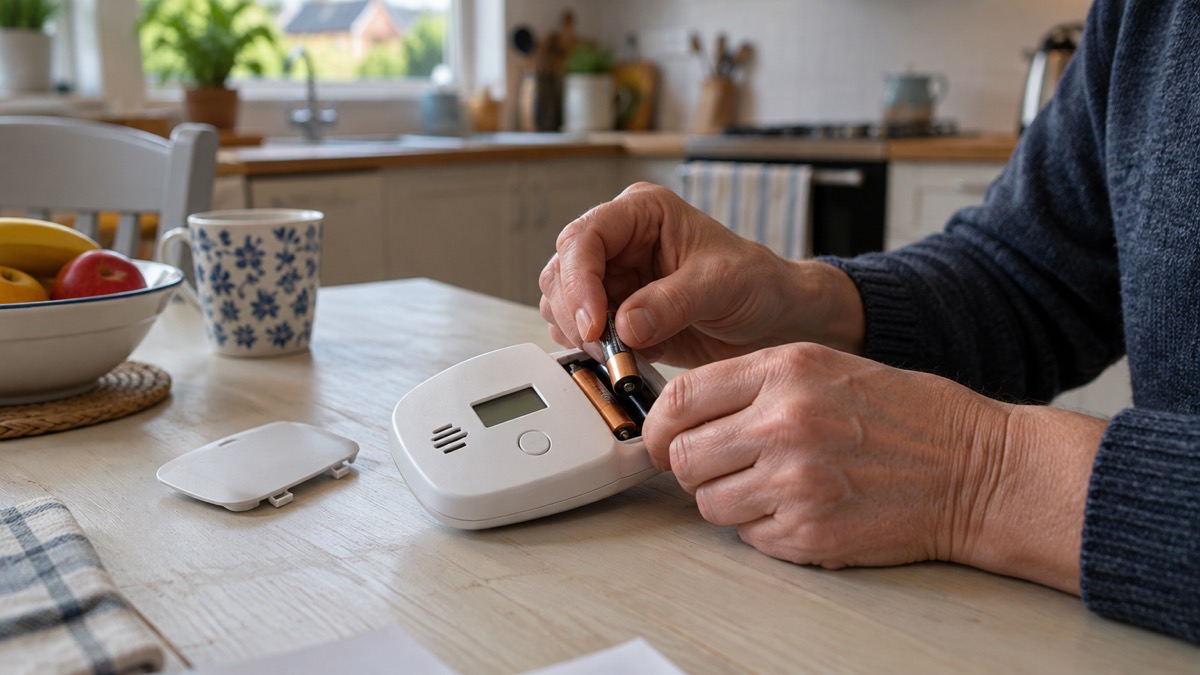
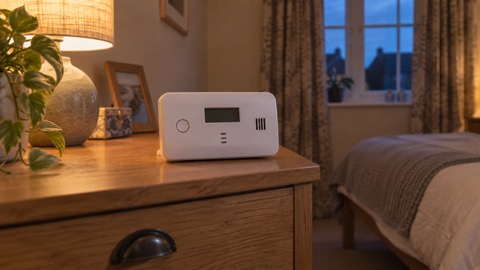
The FireAngel FA6812 is a battery-powered carbon monoxide alarm with a small screen that shows the CO level in parts per million (ppm) as it changes, rather than only sounding when a threshold is crossed1. It runs on two AA batteries, which the maker says last more than three years under normal conditions, and the sensor inside is designed to last 10 years, after which the whole unit is replaced3.
If it sounds, do not wait to work out why. The maker's instruction is to open all windows and doors immediately, turn off any fuel-burning appliances if it is safe to do so, move everyone including pets outside into fresh air, and call the Gas Emergency Service on 0800 111 9991. The screen reading is worth noting before you leave, because you can report the ppm figure to the engineer1.
The rest of this page covers what the alarm does, how quickly it responds at different CO levels, what each beep and screen code means, how to look after the batteries, and when to replace it. It is a guide to one product, not a comparison, and it does not replace the advice of your fire and rescue service or the NHS.
What the FA6812 is and what it does
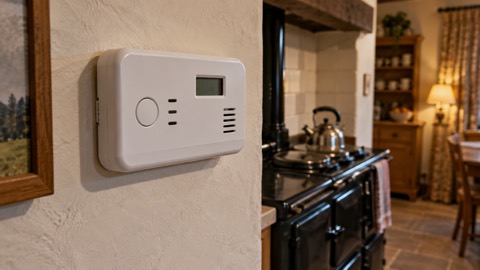
The FA6812 is a digital carbon monoxide alarm with an LCD display that shows CO levels in real time1. In standby mode the screen displays the current CO level, so a household can see a reading of zero on a normal day and watch it climb if something is wrong4. The sensor is electrochemical, and the maker describes it as an advanced electrochemical sensor that continuously monitors carbon monoxide1.
That live display is the main thing that separates this model from a basic alarm. A conventional CO alarm only tells you when it has decided the level is dangerous. The FA6812 shows the number, which is useful in two situations: when you want to know whether a faint smell or a headache is worth worrying about, and when an engineer asks what the reading was. The independent CO-Gas Safety charity notes that digital alarms of this kind show low level CO readings, and that some models can run diagnostic reports showing whether an alarm was activated, at what level and when5.
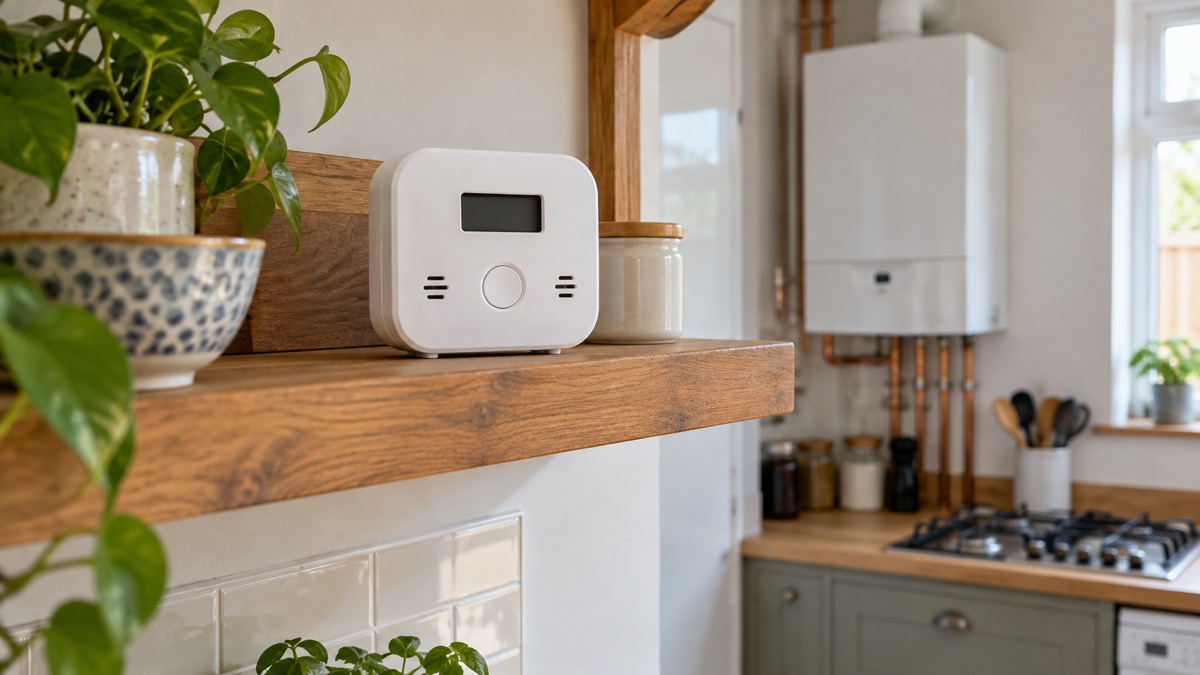
It also has a memory function that indicates a previous CO alarm activation, so an event that happened while the house was empty is not simply lost2. The maker lists it as suitable for wall mounting, free standing or portable use, and as suitable for vehicles and leisure accommodation as well as homes2.
Specifications
The figures below are the maker's own, from the datasheet and manual. Where the maker's documents give slightly different wording for the same specification, both are shown.
| Specification | Figure |
|---|---|
| Product type | Carbon monoxide alarm with digital display2 |
| Sensor | Electrochemical, 10 year sensor life1 |
| Display | LCD showing current CO level in ppm1 |
| Alarm sound level | 85dB(A) at 3m (minimum)2 |
| Power supply | 3V DC, 2 x AA replaceable batteries (included)2 |
| Battery life | Exceeds 3 years under normal operating conditions3 |
| Battery service life | 5 year battery service life2 |
| Dimensions | 120mm wide x 73mm high x 35.5mm deep2 |
| Weight | 146g1 |
| Operating temperature | -10°C to 40°C3 |
| Operating humidity | 25% to 95% RH, non condensing2 |
| Storage temperature | -20°C to +50°C2 |
| Standards | EN 50291-1:2018 and EN 50291-2:20193 |
| Warranty | 3 years from date of purchase3 |
The maker's product page also states that the unit carries CE and UKCA marks and is certified to BS EN 50291-1:2018 and BS EN 50291-2:20191. The maker's manual says its response times meet the requirements of the European standard EN 50291-1: 2018 and EN 50291-2:20191. Check the label on your own unit if you need to confirm what it is certified to.
How quickly it alarms
The FA6812 does not wait for one fixed level. It responds at thresholds set by EN 50291, and the time it takes depends on how much CO is present1.
The logic behind those figures matters for a household. At 50ppm, a level the standard treats as worth warning about over an hour or so, you have time to act calmly. At 300ppm, the alarm gives you three minutes, which is why the instruction to get out first and investigate later is written the way it is. The maker's manual sets out what different exposures do to the body: at 200ppm, slight headache, fatigue, dizziness and nausea after 2 to 3 hours; at 400ppm, frontal headaches within 1 to 2 hours and life threatening after 3 hours; at 800ppm, dizziness, nausea and convulsions within 45 minutes, unconsciousness within 2 hours and death within 2 to 3 hours3.
Two practical points follow. First, the alarm may respond to brief exhaust gas emissions, for example during the initial start-up of an appliance or engine, so a short chirp at the moment a boiler fires is not the same as a sustained alarm3. Second, depending on the level of CO detected, it can take up to 10 minutes to clear the sensor and for the alarm to stop, so silence does not always mean the air is clear3.
Beeps, flashes and screen codes
The FA6812 uses sound, light and text on the screen together, and each combination means something different. The maker's indicator table sets them out4.
| What you see and hear | What it means | What to do |
|---|---|---|
| Chirp and red flash in a series of 4, then 2 seconds of silence, repeating | CO detected at a dangerous level4 | Get everyone into fresh air and call 0800 111 9991 |
| Screen shows 'AL', red flash, chirp every 40 seconds | A CO alarm occurred while you were out4 | Check the memory, ventilate, and treat the property as having had CO present1 |
| Single chirp every 40 seconds with amber LED flash, low battery icon on screen | Battery low4 | Replace the batteries as soon as possible4 |
| Two chirps every 40 seconds, warning icon flashing, 'Err' on screen | Fault detected4 | Replace the alarm as soon as possible4 |
| Three chirps every 40 seconds, indicator flashes three times | End of life reached4 | Replace the alarm immediately4 |
The low battery chirp and the fault chirp can both be temporarily silenced by pressing the test button, and the maker's Sleep Easy feature allows a low battery chirp to be silenced overnight for 8 hours1. That is a convenience, not a fix: the batteries still need replacing, and a fault still means the unit is on its way out.
If the alarm sounds: what to do, in order
The maker's own instructions set out what to do, and they are worth following in the order given1.
- Open all windows and doors immediately1.
- Turn off any fuel-burning appliances if it is safe to do so1.
- Move everyone, including pets, outside into fresh air1.
- Call the Gas Emergency Service on 0800 111 9991.
- Note the ppm reading on the screen and report it to the engineer1.
- Do not re-enter the property until the alarm has stopped3.
If anyone has symptoms, the NHS lists headache, dizziness, feeling sick or being sick, feeling weak, tiredness and confusion, chest and muscle pain, shortness of breath, flushing of the face and loss of vision7. The Health and Safety Executive adds breathlessness, loss of consciousness, erratic behaviour and visual problems8. Fire and rescue services across the UK describe the same set: a headache, tiredness, drowsiness, dizziness, chest pains, nausea and flu-like symptoms9. Public Health Wales notes that the symptoms are similar to flu, food poisoning, viral infections and tiredness, and can easily be mistaken for something less serious13, and Mid and West Wales Fire and Rescue Service makes the same point in Welsh14.
That similarity to flu is the reason a CO alarm matters. If several people in the house feel unwell at the same time, or symptoms ease when they go outside and return when they come back in, treat it as a possible CO problem and act. For the full picture of symptoms and what to do next, see Carbon Monoxide Poisoning Symptoms and What to Do If Your CO Alarm Sounds or You Suspect Carbon Monoxide.
Batteries: 2 x AA, lasting more than 3 years
The FA6812 takes two AA alkaline batteries, and they are included in the box1. The maker says battery life exceeds 3 years under normal operating conditions, and separately lists a 5 year battery service life3. The manual names the batteries it has been tested with: Gold Peak AA GN15A, Energizer AA E91, Raymax AA LR6 and Duracell AA MN15003. The product page says to replace with any standard AA alkaline battery from brands such as Duracell, Energizer or similar1.
Battery life is not a guarantee. The maker warns that prolonged exposure to extreme high or low temperatures may reduce the life of the batteries, which matters if the alarm sits in a cold porch, a hot conservatory or a caravan that is shut up for the winter3. The recommended operating range is -10°C to 40°C, and the maker recommends fitting it where the temperature stays within that range for earliest warning3.
When you change the batteries, check the alarm is secure and make sure the batteries do not dislodge when you remove the unit from the wall3. If the low battery chirp has been silenced overnight, replace the batteries the next day rather than leaving it. For more on the general question of battery types and alarm power, see Sealed 10-Year or Replaceable Battery Alarms.
Where to fit it, and using it in a caravan or motorhome
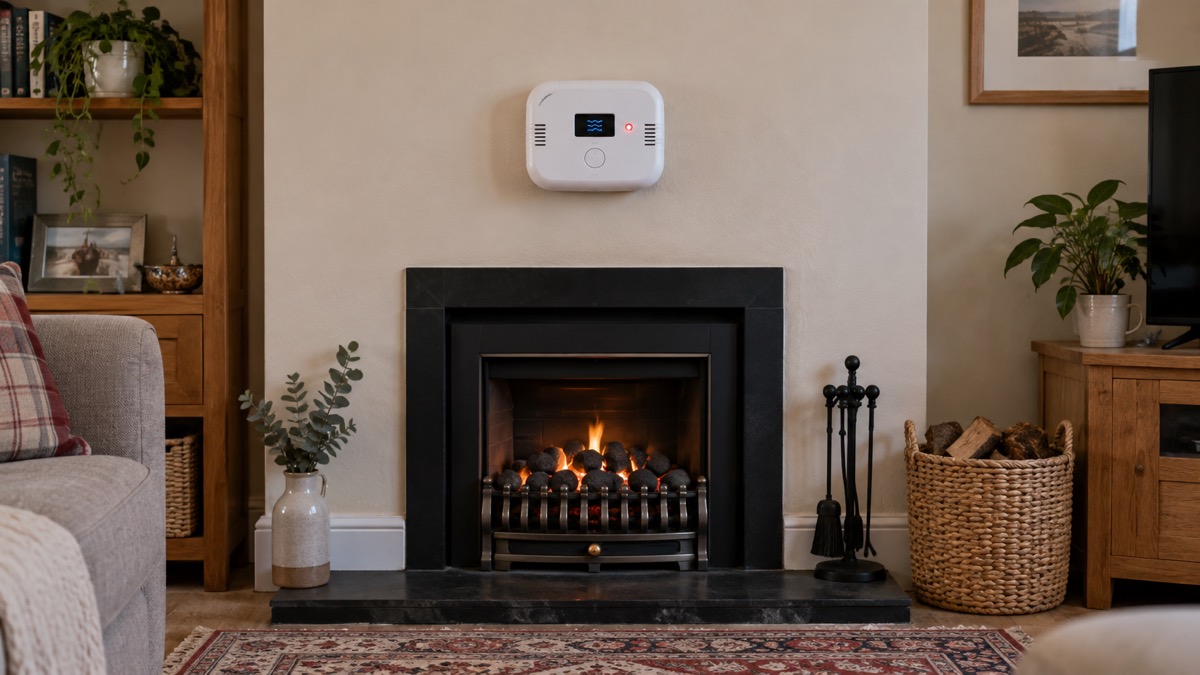
The maker's installation advice is specific. Fit a CO alarm in every room that contains a fuel-burning appliance such as a boiler, gas fire, gas cooker or wood-burning stove1. Wall mount it at least 150mm below the ceiling and between 1m and 3m horizontally from the CO source, or stand it free standing on a shelf1. In bedrooms, position it at head height for maximum protection overnight1. If the ceiling slopes, put it on the high side of the room, and if there is a partition, put it on the same side as the potential source3.
Do not install it directly above a cooker or inside an enclosed cupboard, and avoid places where temperatures regularly exceed 40°C or drop below -10°C, or where humidity is above 95%1. The maker also says the alarm must be installed by a competent person able to install it according to the instructions3.
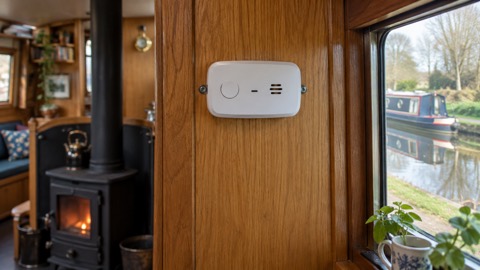
For caravans, campervans and motorhomes, the maker says to place the alarm near any gas appliance or heating system1. The datasheet lists it as suitable for vehicles and leisure accommodation, and as suitable for wall, free standing or portable installation2. It weighs 146g, which is light enough to move between a vehicle and a tent1.
Testing monthly and replacing the alarm after 10 years

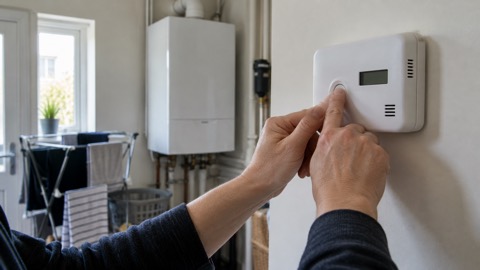
The maker's maintenance schedule is simple: test the alarm every month, vacuum it every 3 months, and replace it every 10 years3. To test, press and hold the test button; the alarm will sound, the red LED will flash, and the LCD display will show a test reading1. The sensor life is 10 years, and the maker says to replace the unit after 10 years of operation3.
The end of life warning is not subtle. If the device chirps three times every 40 seconds and the indicator flashes three times, it has reached the end of its life and needs to be replaced immediately4. The product page describes the same thing as an EOL alert meaning the 10-year sensor has expired1.
For the wider question of when alarms of any kind need replacing, see When to Replace a Smoke, Heat or CO Alarm and How Often to Test Smoke and CO Alarms. If you are choosing between alarm types, Carbon Monoxide Alarms: What They Do and How to Choose sets out the options, and Where to Put a Carbon Monoxide Alarm covers positioning in more detail.
False alarms, memory and clearing the history
The FA6812 can be triggered by things other than CO from a faulty appliance. The maker's manual warns that exposure to hydrogen can cause unwanted alarms, and that this can occur from some battery charging activities and from the curing of concrete3. It also says not to expose the alarm to fumes from petrol, diesel, solvents, greases, alcohols and organic cleaning fluids3. If you are charging a large battery, painting, or working with solvents in the same room, ventilate and keep the alarm away from the fumes.
If CO was detected while you were away, the device flashes red, chirps every 40 seconds and displays 'AL' on screen1. Pressing the test button shows the maximum ppm reached during the last alarm, and pressing and holding the test button clears the alarm history4. The product page describes the same as pressing the test button to clear the memory indicator1.
The silence mode has limits. The maker says the alarm will not silence if more than 150ppm has been detected, and that silence mode can only be activated once until CO returns to negligible levels3. When silence mode is activated, the silence icon appears and the icon continues to flash red4. If you are in any doubt about whether an alarm is false, treat it as real.
Support, warranty and where to get help
FireAngel's UK technical support can be reached on 0330 094 5830, by email at technicalsupport@fireangeltech.com, or online at www.fireangeltech.com/support15. The company says its support specialists are based in the UK and can help with product advice, installation queries and troubleshooting by phone, email or live chat18. Have the batch number and installation date ready when you contact them15. The manual is also available in large text and other formats on request3.
The warranty on the FA6812 is 3 years from the date of purchase, and the maker states that this does not affect your statutory rights3. Some other FireAngel models carry a 7 year life guarantee, but that is not the figure given for this model5. Keep your receipt.
If your alarm was fitted by a fire and rescue service, the route to support may be different: Greater Manchester Fire and Rescue Service, for example, directs people to FireAngel on freephone 0800 141 2561 for alarms it has fitted19.
For the wider picture, the FireAngel brand page covers the company's range, and Home Emergencies: Fire, Carbon Monoxide, Gas Leaks and Burst Pipes is the starting point for what to do in a range of household emergencies. If you need to know whether a CO alarm can detect a gas leak, Can a Carbon Monoxide Alarm Detect a Gas Leak? answers that directly, and Do I Need a Carbon Monoxide Alarm? covers the legal and practical position.
Sources (19)
- FA6812-EUX10 Digital Carbon Monoxide Alarm, FireAngel, 2026-10-28
- FA6812EU LCD CO Alarm Datasheet, FireAngel, 2025-09
- FA6812 and FA6813 EU Manual, FireAngel, 2026
- FA6812 LCD Indicator Table, FireAngel, 2026
- About CO Alarms, CO-Gas Safety, 2024-02-18
- FireAngel Product FAQs, FireAngel, 2026-10-29
- Carbon Monoxide Poisoning, NHS, 2025-12-16
- Gas Safety FAQs, Health and Safety Executive, 2026
- Carbon Monoxide, Devon and Somerset Fire and Rescue Service, 2025-11-18
- Chimney Safety, Greater Manchester Fire and Rescue Service, 2026-10-29
- Home Safety, Belfast City Council, 2026-10-29
- Carbon Monoxide Awareness, Staffordshire Fire and Rescue Service, 2026-10-29
- Carbon Monoxide, Public Health Wales, 2025-12-08
- Diogelwch Carbon Monocsid, Mid and West Wales Fire and Rescue Service, 2026-10-29
- FA6813 Manual, FireAngel, 2024-09
- HT-630 Manual, FireAngel, 2019-05
- HW1-R Manual, FireAngel, 2024-09
- Carbon Monoxide Safety, FireAngel, 2026-07-31
- Problem With Your Smoke or Heat Alarm, Greater Manchester Fire and Rescue Service, 2026-10-29
 FireAngel FA3313 CO Alarm
 FireAngel FA3322 CO Alarm
 FireAngel FA3820 CO Alarm
 FireAngel FA6813 CO Alarm
 FireAngel FA6829S CO Alarm
 FireAngel CW1-PF CO Alarm
 FireAngel W2-CO-10X CO Alarm
 FireAngel FP1820W2-R CO Alarm
 Kidde K7DCO CO Alarm
 Kidde K5DCO CO Alarm
 Kidde K10LLDCO CO Alarm
 Kidde K10LLCO CO Alarm