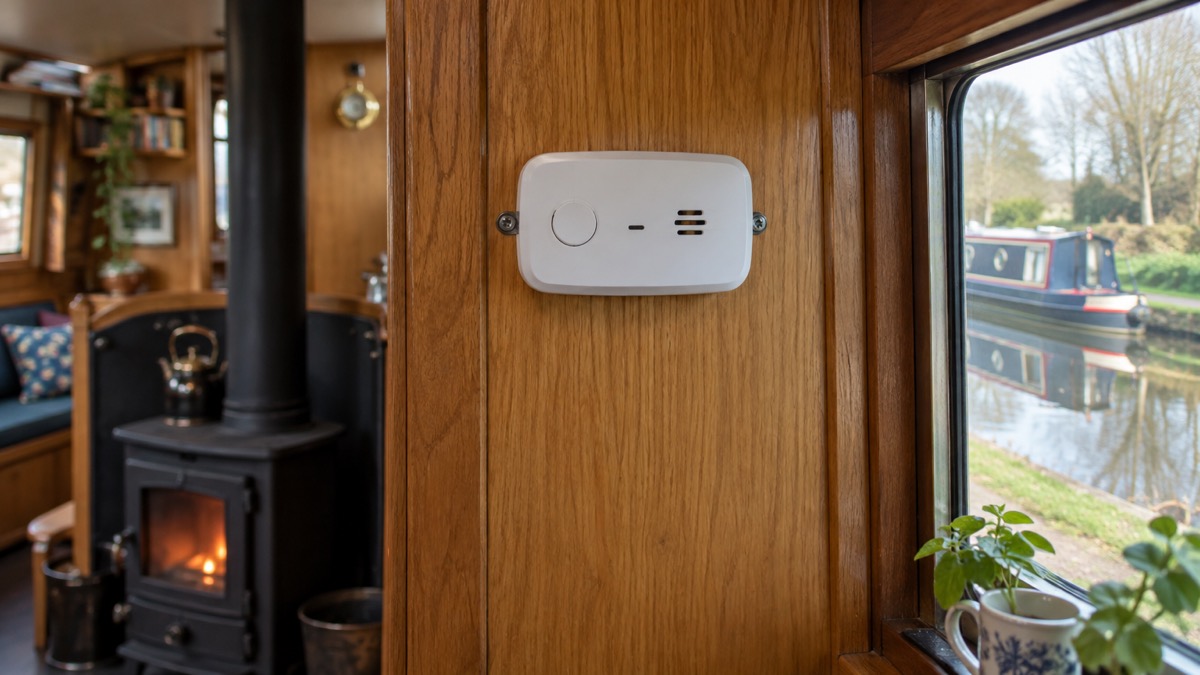
The FireAngel FP1820W2-R is a battery-powered carbon monoxide alarm for the home, with a sealed lithium battery the maker rates for 10 years and a sounder rated at 85dB(A) at 3 metres1. It detects carbon monoxide from 50ppm, and when it is linked to other FireAngel alarms in the Pro Connected range, a carbon monoxide alert sounds as four beeps across the network, while a fire alert sounds as three3.
For an ordinary household, the practical points are these. It is a CO alarm, not a smoke alarm, so it belongs near a fuel-burning appliance, a boiler or a fireplace, and in the rooms where people sleep. It can work on its own, or as part of a wireless network of up to 50 devices within a radio range of 35 metres3. It is sealed for life, so there is no battery to change, but the whole unit has a 10-year lifespan and is then replaced3.
This page sets out what the alarm does, its specifications, how the linked warning works, how to add it to a network, and how to use it safely. It does not tell you which alarm to buy: it tells you what this one can and cannot do, so you can judge whether it fits your home.
What the FP1820W2-R is and what it suits
The FP1820W2-R is a smart carbon monoxide alarm in the FireAngel Pro Connected range. On its own it is a straightforward CO alarm: it watches the air for carbon monoxide and sounds a loud alarm if it finds it. Paired with a Smart Gateway, it lets you review alerts and test the alarm from your phone1. The distributor describes it as battery powered, with a sealed lithium battery, an electro-chemical sensor and LED indicators, and lists it as suitable for rooms with fuel-burning appliances, garages and boiler rooms3.
That combination of a sealed battery and a radio link is what makes it useful in an ordinary home. A CO alarm with a mains lead needs an electrician and a fixed position; this one can be stood on a shelf or screwed to a wall with the fixings supplied, and it can still join a network3. The distributor lists it as suitable for caravans, camping and boats, and it is certified to BS EN 50291-2 for camping, caravans and boats as well as BS EN 50291-1 for domestic use3. That makes it a reasonable choice for a holiday caravan or a boat cabin as well as a house.
It is not a smoke alarm and it will not warn you of fire. FireAngel's own guidance for the Pro Connected range points anyone wanting combined protection to a dedicated CO alarm or a combination smoke and CO unit6. If you are building a full alarm system, this is the CO part of it, and you will want smoke and heat alarms alongside it. Our guide to carbon monoxide alarms explains what a CO alarm does and how to choose one, and where to put a carbon monoxide alarm covers siting.
Specifications: alarms from 50ppm at 85dB
The maker's datasheet and the distributor's listing give the figures a household needs to judge whether the alarm suits a room and a wall. Where the two differ, the maker's figure is given first.
| Specification | Figure | Source |
|---|---|---|
| Alarm sound level | 85dB(A) at 3m (minimum) | Maker datasheet2 |
| CO alarm level | From 50ppm | Distributor3 |
| Battery type | 10 year sealed for life lithium | Maker datasheet2 |
| Lifespan | 10 years | Distributor3 |
| Operating temperature | +4°C to +38°C | Maker datasheet2 |
| Radio frequency range | 35 metres | Distributor3 |
| Radio linking frequency | 868.499MHz | Distributor3 |
| Maximum linked devices | 50 | Distributor3 |
| Dimensions | 95mm high, 114mm wide, 40mm deep | Distributor3 |
| Weight | 190g | Distributor3 |
| Relative humidity | Up to 93% | Distributor3 |
| Warranty | Five years | Distributor3 |
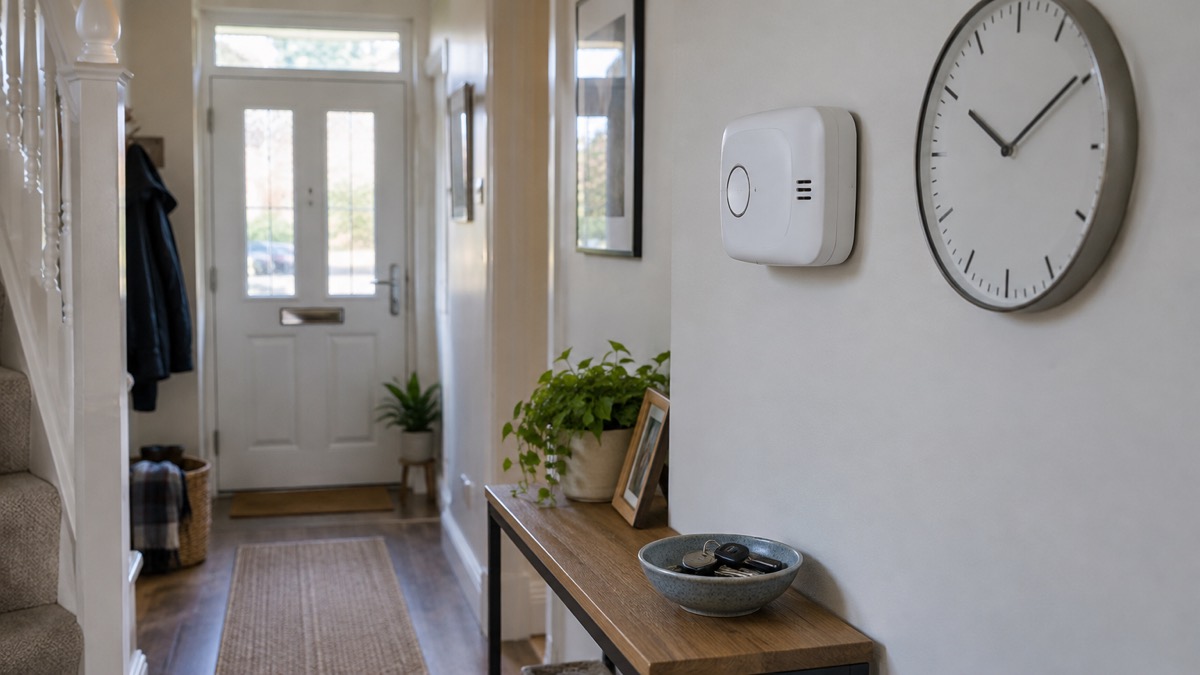
The 85dB(A) at 3 metres is the maker's minimum figure, which is the number to trust if you are judging whether it will wake someone in a bedroom2. The distributor lists the sound level simply as 85dB3. The 50ppm detection level is the distributor's figure3; it means the alarm is designed to respond once carbon monoxide reaches that concentration, not to give a reading at lower levels.
The dimensions and weight matter for siting: at 95mm by 114mm by 40mm and 190g, it is small enough to sit on a shelf or a windowsill as well as on a wall3. The operating range of +4°C to +38°C is the one to watch. A garage, an unheated caravan or a loft can fall outside it, and an alarm outside its rated conditions is not working as designed2.
A sealed lithium battery that lasts 10 years
The FP1820W2-R runs on a 10-year sealed for life lithium battery2. There is no battery to buy, fit or forget, which removes the most common reason a household alarm stops working. The Scottish Government's guidance on alarms notes that sealed alarms have long-life lithium batteries which can last up to 10 years7. The distributor gives the unit's lifespan as 10 years3, and Which? lists a 10-year battery lifetime and a five-year warranty8.
The trade-off is that when the battery reaches the end of its life, the whole alarm is replaced, not just the cell. That is why the 10-year lifespan and the five-year warranty are different numbers: the warranty covers the first five years, the battery is expected to last the full ten3. Plan to replace the unit at the end of its life rather than waiting for it to fail. Our guide to when to replace a smoke, heat or CO alarm sets out the general rule.
The sealed battery also means the alarm is always on. There is no moment when someone has taken the battery out to use elsewhere, which is a common cause of a dead alarm in a rented or previously occupied home. The LED indicators show at a glance whether the alarm is operational or has a low battery9. If the alarm starts to chirp, do not assume it is a fault: check the indicator and the maker's guidance. Our page on why a carbon monoxide alarm is beeping covers the patterns.
Four beeps means carbon monoxide: how the linked network warns you
The most important thing to know about a linked FireAngel network is the difference between three beeps and four. FireAngel states that for smoke or fire detection the system alarms with three beeps, and if carbon monoxide is detected there will be four beeps4. The same pattern is repeated across the Pro Connected range's product pages5. When one alarm detects danger, every alarm in the network sounds, so a CO alarm in the kitchen can raise the alarm in a bedroom5.
That matters because carbon monoxide is colourless and odourless, and a CO alarm in a distant room is no use if nobody hears it. FireAngel's own support article describes the network as ideal for a remote location such as a garage or a summerhouse, because when one sounds they all sound4. The distributor lists the warning type as an audible alarm sounder3.
The maker's general CO alarm guidance describes the sound as four loud beeps and a break, repeated until the sensor is clear of carbon monoxide4. That is the behaviour to expect: it does not stop until the air clears, which is a signal to act, not to wait.
Linking it to other alarms: up to 50 devices within 35 metres
The FP1820W2-R can be linked wirelessly to other FireAngel alarms. The distributor gives a maximum of 50 linked devices and a radio frequency range of 35 metres3. FireAngel's own product pages describe the Pro Connected range as wirelessly interlinked, so that if one sounds, every alarm in the home sounds, and it can be monitored through the FireAngel Pro Connected app12. The link is a protected radio frequency, so there is no need to run cables between the alarms5.
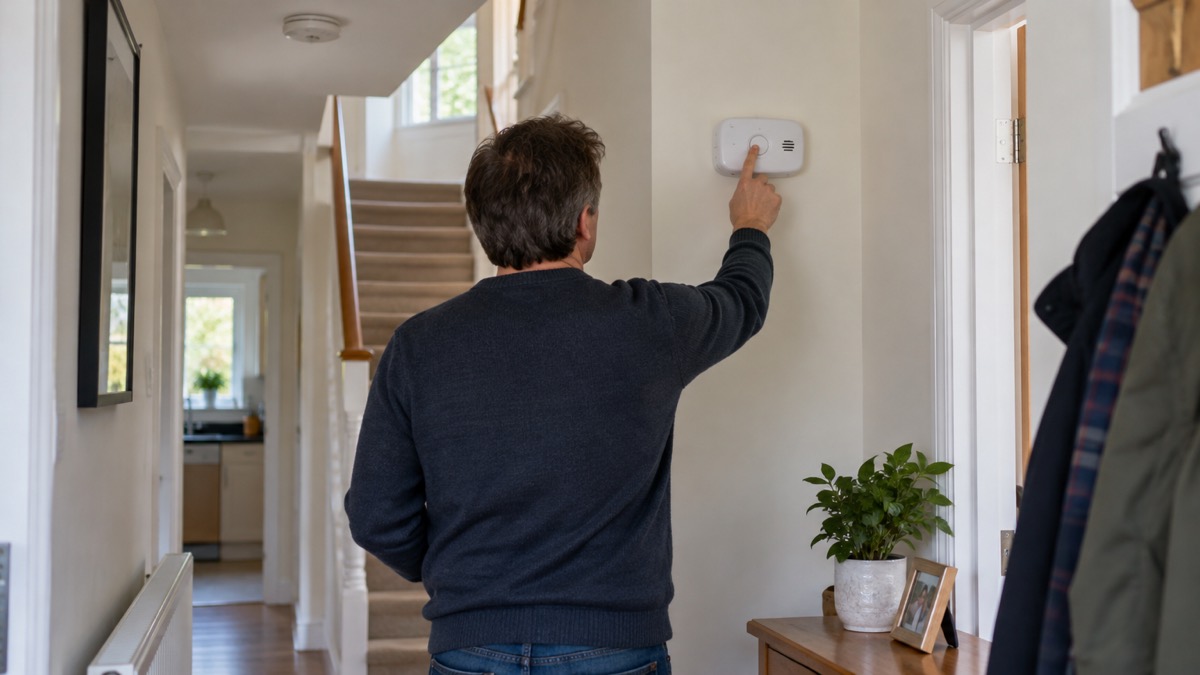
The 35-metre figure is the range to plan around. It is a radio range, not a guarantee through thick walls, so a large or unusually built house may need the alarms placed with that in mind. FireAngel gives an example network of 7 smoke alarms, 3 heat alarms, 3 carbon monoxide alarms and a Gateway as one that will be completely secure and protect a whole home10. That is an illustration of scale, not a rule for every house.
Adding an alarm to a network is done with the learn button on the back, using a ballpoint pen to push and release it. The red LED next to the learn button flashes briefly then lights up for approximately five seconds, and during those five seconds you press the test button on an alarm already in the network5. The new alarm confirms with two cycles of three loud beeps if it is a smoke or heat alarm, and the red LED on its wireless module flashes to show it has been learned in5. If the test button is not pressed quickly enough, the process fails and you repeat it5. Any alarm already in the network can act as the first alarm, so you do not have to learn in to every alarm5.
Two rules from FireAngel's support article are worth knowing before you start. If you are joining a wired network to a wireless one, make sure there is only one wireless connection into each wired network5. And never mix other manufacturers' alarms into a FireAngel network: FireAngel states the products will not function correctly and this will affect the levels of fire and CO protection4. Our guide to interlinked alarms explains how linking works in general.
Using it safely: placement, temperature and silencing
Place the alarm where carbon monoxide would reach it. The distributor lists bedrooms, hallways, kitchens and living rooms as positions, and head height as the installation position, with freestanding or wall-mounted fixing3. It is suitable for rooms with fuel-burning appliances, garages and boiler rooms3. Keep it within +4°C to +38°C and up to 93% relative humidity2. In a caravan or boat, that means not leaving it in a cold locker or a hot cab over summer.
To silence a linked network, press the central test button on any alarm in the system. FireAngel states this silences all the alarms except the one that has detected danger or needs further investigation6. That last alarm keeps sounding so you can find it. Never treat silencing as a fix for a real CO alert: if the alarm is responding to carbon monoxide, the answer is fresh air and finding the source, not pressing a button.
The alarm is certified to BS EN 50291-1 for domestic use and BS EN 50291-2 for camping, caravans and boats, and is CE marked and Kitemarked3. FireAngel's wider range carries the BSI Kitemark and is independently certified14. Our guide to alarm standards explains what those marks mean.
Support, warranty and where to get help
The FP1820W2-R carries a five-year warranty according to the distributor3, and Which? lists a five-year warranty alongside the 10-year battery lifetime8. FireAngel's Pro Connected range page refers to replacement eligibility within 3 to 5 years of purchase9, so keep your proof of purchase and check the terms that apply to your unit.
FireAngel's customer support specialists are based in the UK and can help with product advice, installation queries and troubleshooting by phone, email or live chat15. The company has been a UK brand since 1998 and is based in Coventry14. If your alarm was fitted by Greater Manchester Fire and Rescue Service and is still covered by its guarantee, the fire service directs you to FireAngel on freephone 0800 141 256116. For general help with a smoke or heat alarm problem, your local fire and rescue service also offers advice16.
If you need help because of a disability or you are on a priority register, ask your supplier or local authority about the Priority Services Register, which is the route to extra support in a power cut or an emergency. Our guide to alarms for deaf and hard of hearing people covers strobe and vibrating options, and FireAngel notes that its strobe and pad does not require an internet connection, communicating with compatible alarms by secure radio frequency4.
Sources (16)
- FP1820W2-R Smart Carbon Monoxide Alarm, FireAngel, 2026
- FP1820W2-R Data Sheet, FireAngel, 2024
- Smart Home Alarm Starter Kit FireAngel Pro Connected FAKIT3, Safelincs, 2026
- FireAngel Product FAQs, FireAngel, 2026
- Interlinking Multiple Smoke and Heat Alarms in the FireAngel Pro Connected Range, FireAngel, 2024
- FP1640W2-R Smart Smoke Alarm, FireAngel, 2026
- Fire and Smoke Alarms in Scottish Homes: Where and What to Buy, Scottish Government, 2024
- Carbon Monoxide Symptoms, Which?, 2026
- Our Solutions, FireAngel, 2026
- Pro Connected Smart Accessible Control Unit, FireAngel, 2026
- FP1720W2-R Pro Connected Kitchen Heat Alarm, FireAngel, 2026
- FP2620W2-R Smart Smoke Alarm, FireAngel, 2026
- FA3322 Carbon Monoxide Alarm, FireAngel, 2026
- Smoke Alarm Guide, FireAngel, 2026
- Carbon Monoxide Safety, FireAngel, 2026
- Problem With Your Smoke or Heat Alarm, Greater Manchester Fire and Rescue Service, 2026
 FireAngel FA3313 CO Alarm
 FireAngel FA3322 CO Alarm
 FireAngel FA3820 CO Alarm
 FireAngel FA6812 CO Alarm
 FireAngel FA6813 CO Alarm
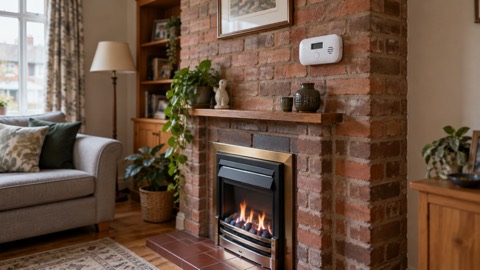 FireAngel FA6829S CO Alarm
 FireAngel CW1-PF CO Alarm
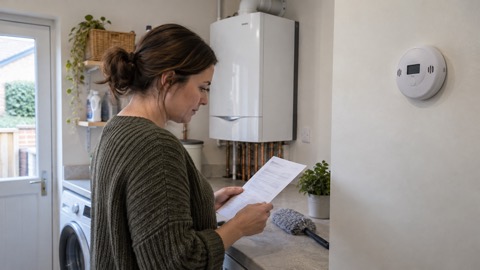 FireAngel W2-CO-10X CO Alarm
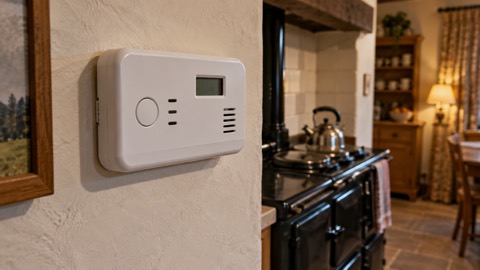 Kidde K7DCO CO Alarm
 Kidde K5DCO CO Alarm
 Kidde K10LLDCO CO Alarm
 Kidde K10LLCO CO Alarm