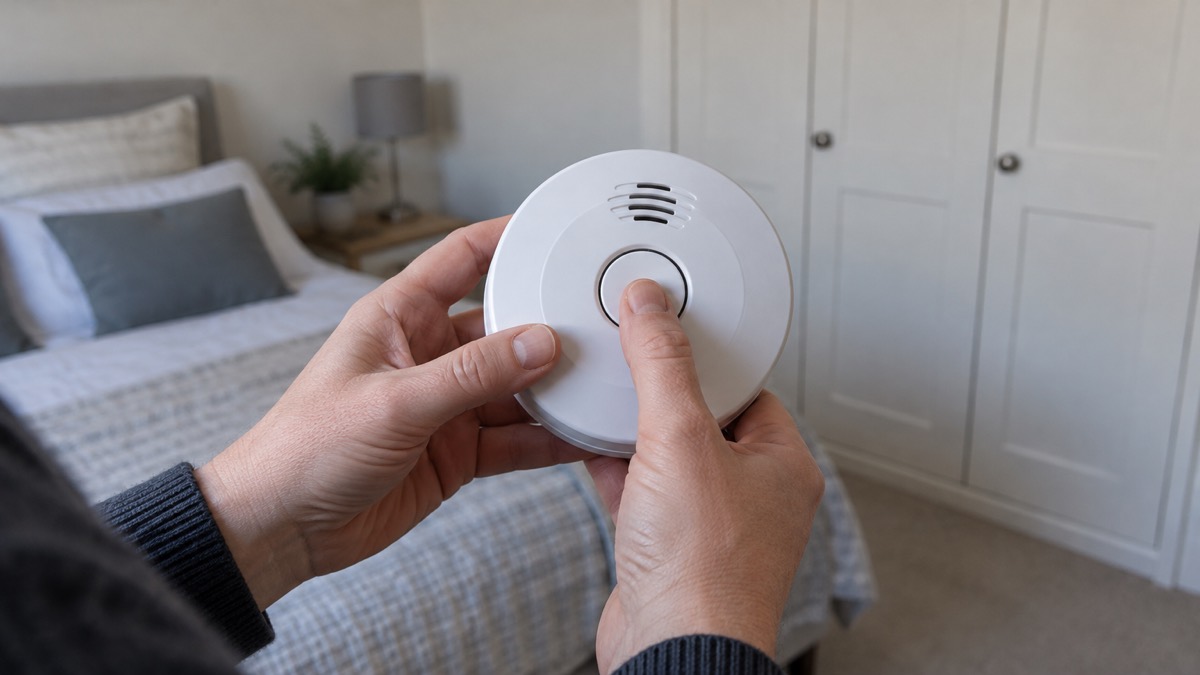
The Kidde 10Y29 is a battery-powered optical smoke alarm for the home, built around a sealed lithium battery that the retailer says is designed to last 10 years without replacement1. It sounds at 85dB, measures 104mm across and 45mm deep, and weighs 170g, so it is a compact unit for a bedroom, hallway or living room ceiling1. It is certified to BS EN 14604: 2005 and listed as suitable for installations complying with BS 5839-6 Grade F1, the grade for battery-powered alarms with a 10 year long-life battery1.
What that means in practice is simple: you fit it, test it, and otherwise leave it alone until it tells you it is near the end of its life. There is no annual battery to buy, and the battery is tamper-proof, so it cannot be removed1. The trade-off is that when the alarm reaches the end of its service, the whole unit is replaced rather than re-battered.
This page sets out what the alarm is, its specifications, where fire services advise fitting smoke alarms, how to keep it working, and what to do when it chirps or reaches the end of its 10 years. It is one alarm in a wider picture: for the full range of options, see Smoke Alarms: Types and How to Choose One.
What the Kidde 10Y29 is and what it does
The 10Y29 is an optical smoke alarm, which means it uses a sensor that responds to smoke rather than heat1. The retailer describes it as ideal for common living areas, and lists bedrooms, hallways and living rooms as its positioning1. It is a standalone alarm: it is not wired into the mains and it does not link to other alarms, so it protects the room it is in and sounds its own 85dB alarm when it senses smoke1.
It has a combined test and hush button. The hush function silences false alarms, and the same button runs a low volume test so you can check the alarm without the full 85dB blast1. The test facility covers the full circuit, horn, battery and alarm, and an LED shows power on and alarm activation1. An on/off switch activates automatically when the alarm is fitted to its base, so the alarm is live once mounted1.
The casing is rigid plastic, and the alarm is described as suitable for indoor use in the home1. It is not a carbon monoxide alarm and will not detect CO: for that you need a separate CO alarm, and the Carbon Monoxide Alarms: What They Do and How to Choose page explains the difference. If you want one unit that does both, see Combined Smoke and CO Alarm or Separate Alarms.
Specifications at a glance
The figures below come from the retailer's product listing for the 10Y291. Where a specification decides whether the alarm suits your room, it is worth checking before you buy.
| Specification | Kidde 10Y29 |
|---|---|
| Product type | Optical smoke alarm1 |
| Power | Battery powered, standalone1 |
| Battery | Sealed lithium, built in, lasts the life of the alarm, guaranteed1 |
| Sound level | 85dB1 |
| Dimensions | 45mm high x 104mm diameter1 |
| Weight | 170g1 |
| Operating temperature | 0°C to +40°C1 |
| Relative humidity | 0% to 85%1 |
| Installation position | Ceiling, fixed with screws (included)1 |
| Connection | Standalone1 |
| Certification | BS EN 14604: 2005; CE marked; suitable for BS 5839-6 Grade F11 |
| Warranty | 10 year warranty1 |
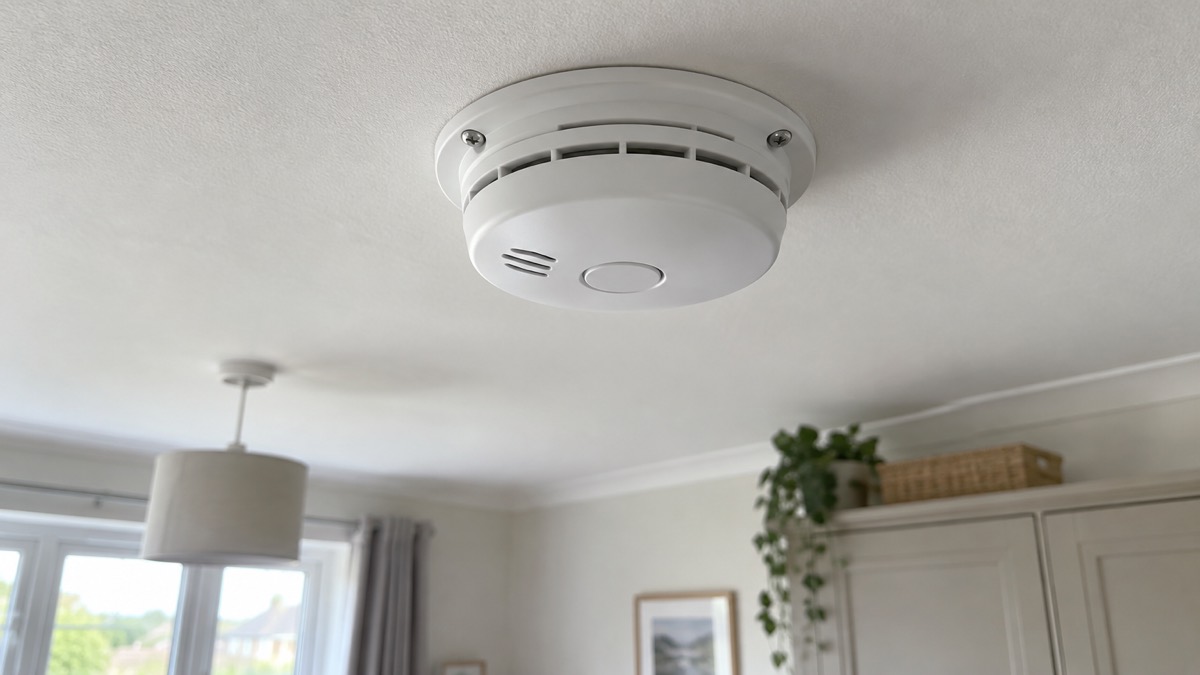
The retailer also lists the alarm as only 10cm in diameter, which is the same 104mm figure rounded1. The 85dB sounder is the level fire services rely on to wake people, though if anyone in the household is deaf or hard of hearing, sound alone may not be enough: the Smoke and CO Alarms for Deaf and Hard of Hearing People page covers the alternatives.
The sealed 10-year battery and what it means for upkeep
The 10Y29's battery is sealed lithium, built in, and the retailer says it lasts the lifetime of the alarm and is guaranteed1. The Scottish Government describes sealed battery alarms as sealed tamper-proof units with long-life lithium batteries that can last up to 10 years4. That is the appeal: no annual battery change, no drawer of spare batteries, and no risk of someone removing the battery and forgetting to replace it.
The trade-off is that the battery cannot be changed. When it runs down, the alarm is finished and the whole unit is replaced. Fire services are clear that a ten-year alarm needs replacing every ten years2, and the National Fire Chiefs Council reminds people to replace smoke alarms every 10 years, warning that alarms fitted in a new build may already be past their 10-year lifecycle3.
Upkeep is therefore light but not zero. Test the alarm with its test button regularly: the 10Y29 has a full circuit, horn, battery and alarm test facility, with a reduced volume test function5. If it ever fails to sound, replace it5.
Standards: BS EN 14604 and BS 5839-6 Grade F1
The 10Y29 is certified to BS EN 14604: 2005, the standard for smoke alarms, and is CE marked1. The retailer also lists it as suitable for installations complying with BS 5839-6 Grade F1, which it describes as battery powered with a 10 year long-life battery1. BS 5839-6 is the British Standard that sets out how fire detection should be installed in homes, and its grades describe the power source and how much backup an alarm has.
Grade F1 sits at the simpler end: a battery-powered alarm with a long-life battery, suited to a single alarm or a small set-up rather than a whole-house interlinked system. If you are fitting alarms to a larger home, or want every alarm to sound together, the grade and the wiring matter more, and the Alarm Standards: BS 5839-6, BS EN 50291 and System Grades page explains the grades in full.
One point of uncertainty: the retailer's listing also carries a second certification line describing the alarm as Kitemarked and CE marked, alongside the BS EN 14604 and Grade F1 line6. The two descriptions are not identical, and the listing does not reconcile them. If the Kitemark matters to your decision, check the marking on the alarm itself or ask the retailer before you buy.
Where to fit it
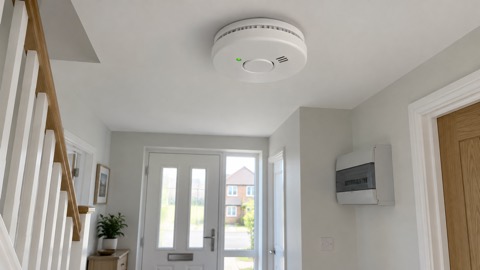
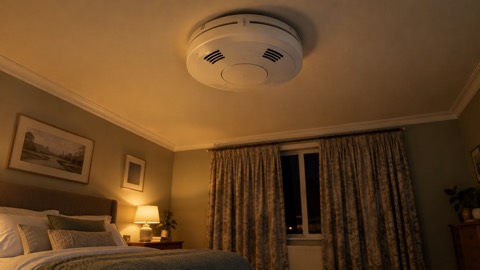
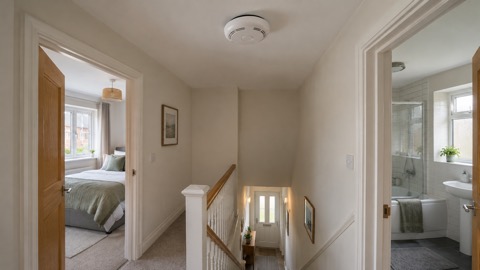
The retailer lists bedrooms, hallways and living rooms as the 10Y29's positioning, and describes it as ideal for common living areas1. It is fitted to the ceiling with the screws supplied1. Fire and rescue services across the UK give consistent advice on where smoke alarms belong: on every level of the home, in hallways and landings, and in the rooms where people spend time and sleep.
In England, the Fire Kills campaign and individual fire services advise fitting alarms on each level and testing them regularly7. For the detail on positions, including how far to keep an alarm from walls and light fittings, see Where to Fit Smoke Alarms, and for how many you need, How Many Smoke Alarms Does a House or Flat Need?.
Before you drill, check where cables run. Electricity safety guidance is to check where cables are before drilling or breaking out walls and ceilings8. If you are mounting near downlights, note that fittings should be designed and installed to minimise heat transfer into ceiling voids9, and keep the alarm clear of anything that could interfere with its sensor.
Fitting, testing and living with the alarm
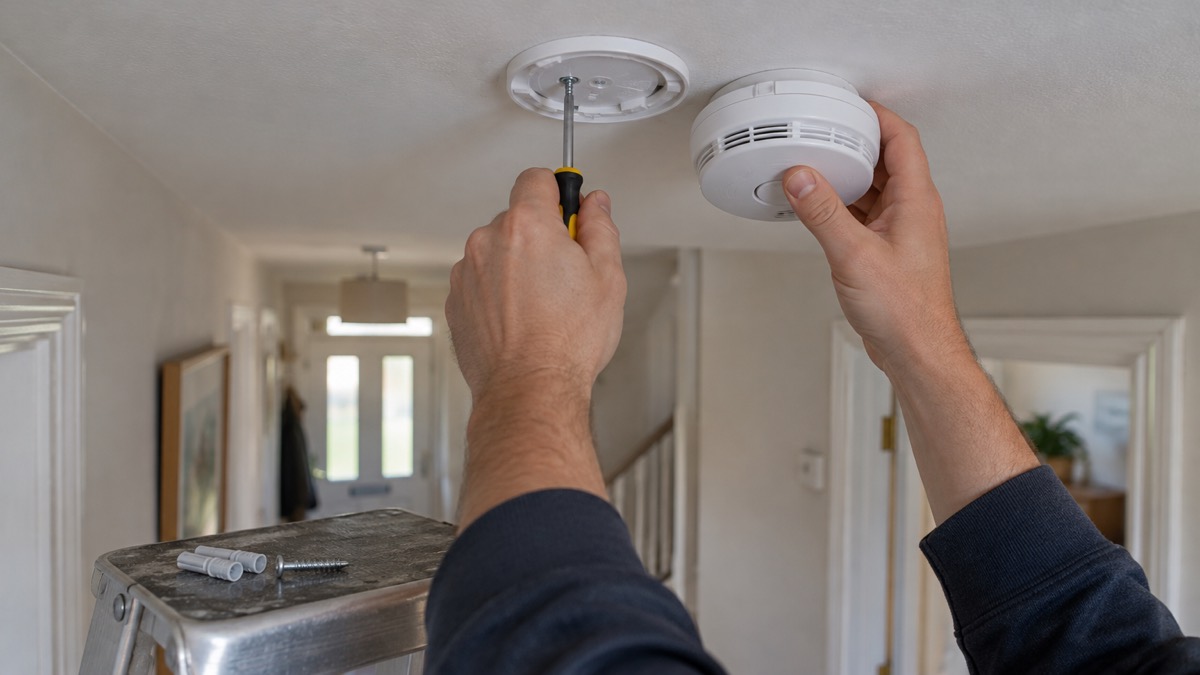
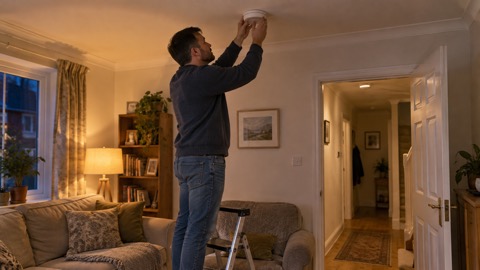
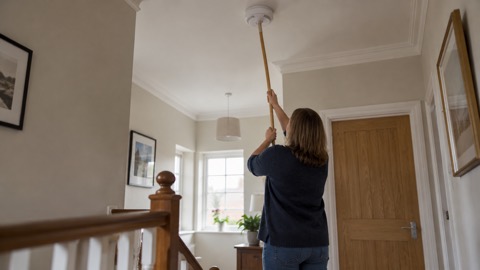
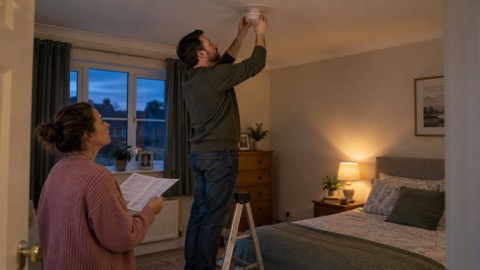
Fitting is a screw-fixing job: the box contains the alarm, a base plate, the sealed battery, a screw fixing set and an instruction manual1. The battery is already built in, so there is nothing to connect beyond mounting the base and twisting the alarm on. The on/off switch activates automatically when the alarm is fitted to its base1.
Once fitted, test it with the test button and check that the full circuit, horn and battery test passes1. The hush button silences false alarms, and the low volume test lets you check the alarm without the full sound1. If the alarm goes off when you are cooking, the hush function is the first thing to reach for; the How to Stop Smoke Alarm False Alarms page has more on reducing nuisance alarms.
If you are replacing an old alarm, the maker's guidance for its own products is to insert a screwdriver into the indicated slot between the alarm and the base, angle it slightly downwards, and slide the alarm away10. The 10Y29 comes with its own base plate, and the retailer gives no compatibility with other makers' bases, so treat a replacement as a new fitting rather than a swap onto an old base.
When the alarm warns it needs replacing
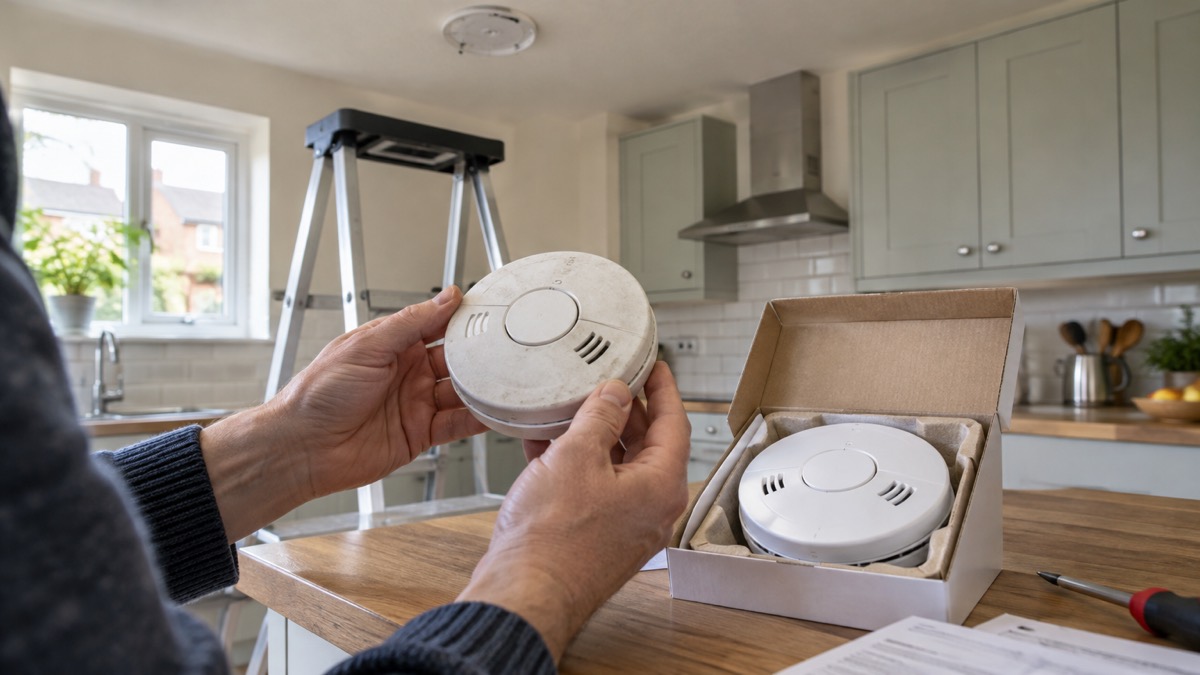
A sealed-battery alarm has no battery to change, so a regular chirp is the signal that the unit is at the end of its life. Lincolnshire Fire and Rescue advises that if a smoke alarm beeps on a regular basis, you should replace the battery, or if it has a built-in battery, replace the alarm immediately, and that a ten-year alarm needs replacing every ten years2. Dorset and Wiltshire Fire and Rescue Service gives the same seven-day rule: replace the alarm or its battery immediately, and certainly within seven days12.
The end-of-life signal is a chirp at intervals. For carbon monoxide alarms, chirping every 30 seconds is the sign that the alarm is ready to be replaced13. The 10Y29 carries a warning signal that alerts you when the alarm needs to be replaced2. If your 10Y29 chirps, do not wait: fit a new alarm.
There is a second clock as well as the chirp. A ten-year alarm needs replacing every ten years3. Write the fitting date on the alarm or in your diary so you know when the 10 years are up. If you rent, your landlord must repair or replace smoke and carbon monoxide alarms once informed and found to be faulty14.
Linking, hearing and other alarms
The 10Y29 is standalone, so it will not set off other alarms and other alarms will not set it off1. That is fine for a single room or a small flat, but in a larger home, or where someone is deaf or hard of hearing, interlinked alarms are the better fit. Interconnecting or linking alarms are useful in larger properties and for people who are D/deaf or hard of hearing, and when one alarm senses smoke, every alarm goes off11. Fire services advise asking a qualified electrician to fit linked alarms16.
For people with hearing difficulties, there are further options. Interlinked smoke alarms can be connected to a telecare, carecall or lifeline system17, and specialist deaf alert equipment can be fitted alongside a compliant interlinked system18. The Interlinked Alarms: How Linking Works page explains the choices, and Wireless or Wired Interlinked Alarms compares the two.
If you are deciding between a sealed-battery alarm like the 10Y29 and one with a replaceable battery, the Sealed 10-Year or Replaceable Battery Alarms page sets out the trade-offs. If you are choosing between battery and mains power, see Battery or Mains Smoke Alarms.
Support, warranty and disposal
The 10Y29 carries a 10 year warranty1. Kidde's whole-home range is described as guaranteed for 10 years, and the sealed battery is guaranteed for the lifetime of the alarm19. Keep the receipt and the manual, and if the alarm fails within the warranty period, contact the retailer or Kidde. Kidde's alarms are sold online and in leading independent stores as well as national retailers, and the company can be contacted through its website or on 01753 76639220.
When the alarm reaches the end of its life, dispose of it responsibly. The Scottish Government advises that some but not all types of alarm can be recycled at recycling centres, and that you should look on the alarm for information or check with the manufacturer21. The 10Y29 is listed as covered by Valpak's WEEE Distributor Take-back Scheme1, so ask the retailer about take-back when you replace it.
Sources (21)
- Kidde 10Y29 10 Year Optical Smoke Alarm, Safelincs, 2026-10-29
- Fire alarms and carbon monoxide detectors, Lincolnshire County Council, 2026-10-29
- NFCC reminds people to replace smoke alarms every 10 years, National Fire Chiefs Council, 2024-06-18
- Fire and smoke alarms in Scottish homes: where and what to buy, Scottish Government, 2024-08-14
- Bedtime checks, Scottish Fire and Rescue Service, 2024-02-06
- Longlife Battery Powered Optical Smoke Alarm - Kidde 10Y29, Safelincs (www.safelincs.co.uk)
- Fire prevention, Fire Kills, 2026-03-25
- Public safety leaflet: electricity around the home, SSEN, 2018-10
- Downlights, Electrical Safety First, 2026-10-25
- How do I replace my alarm?, Aico, 2026-10-28
- Problems with smoke alarms, Dorset and Wiltshire Fire and Rescue Service, 2026
- Smoke alarms, Dorset and Wiltshire Fire and Rescue Service, 2026-02-17
- What to do when a carbon monoxide detector goes off, Which?, 2026-07-14
- Additional advice for tenants, Greater Manchester Fire and Rescue Service, 2026-10-29
- Smoke alarms, Cheshire Fire and Rescue Service, 2026-07-27
- Fire safety for people with hearing difficulties, Dorset and Wiltshire Fire and Rescue Service, 2026
- Hearing and sight difficulties, Dorset and Wiltshire Fire and Rescue Service, 2025-11-19
- Sensory support, South Lanarkshire Council, 2026-10-29
- About CO: Alarms, CO-Gas Safety, 2024-02-18
- About CO: Alarms 2, CO-Gas Safety, 2024-02-18
- Fire and smoke alarms in Scottish homes: installation of alarms, Scottish Government, 2024-08-14
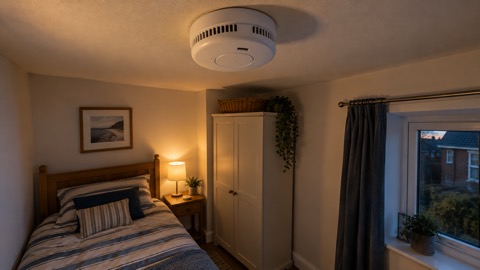 FireAngel FP2620W2-R Alarm
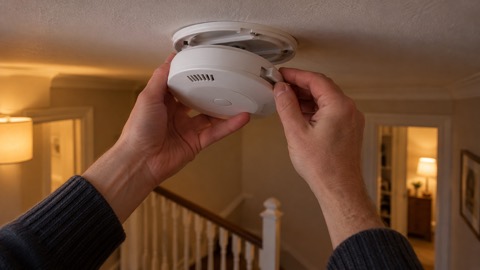 FireAngel ST-632 Smoke Alarm
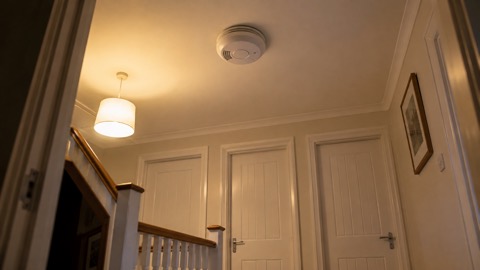 FireAngel ST-750 Smoke Alarm
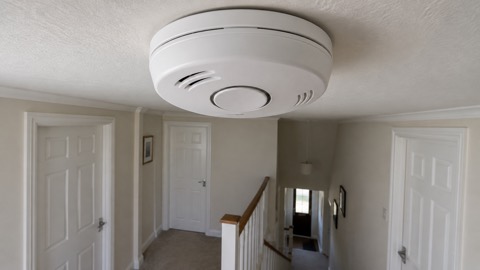 FireAngel SW1 Smoke Alarm
 FireAngel SW10 Smoke Alarm
 FireAngel SB1 Smoke Alarm
 FireAngel SM-SN-1 Smoke Alarm
 FireAngel FA6611 Smoke Alarm
 FireAngel FA6615 Smoke Alarm
 FireAngel FA8620BW Alarm
 Kidde 2030-DSR Smoke Alarm
 Kidde 2030-DCR CO Alarm