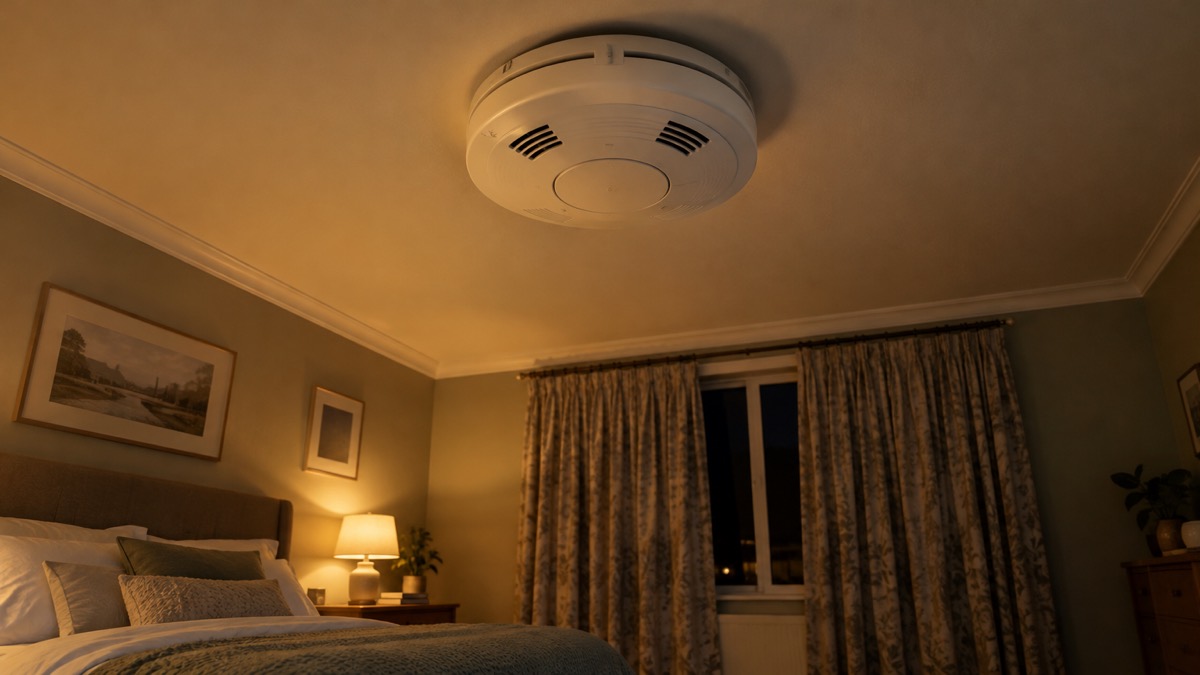
The FireAngel FA6615 is a battery-powered optical smoke alarm: a standalone unit that runs on two AA alkaline batteries and sounds an 85dB(A) alarm at 3 metres when it senses smoke1. It is designed for hallways, landings, bedrooms, living rooms and leisure vehicles, and it is not interlinked, so it warns the room it is in rather than every room at once2. If you are choosing one, the things that decide it are the optical sensor, the replaceable batteries, the quiet test function and the fact that it fits the baseplate of several older FireAngel models3.
If it sounds continuously, treat it as real. FireAngel's own instruction is that a continuous loud alarm means smoke has been detected, so evacuate immediately and call 9993. Every fire and rescue service in the UK gives the same message in four words: get out, stay out, call 9995. Do not stop to investigate, gather belongings or look for the source.
The rest of this page covers what the alarm does, how to test it without waking the house, what its beeps and red light mean, where it should and should not be fitted, and how to replace an older FireAngel alarm on the same baseplate. It is a smoke alarm only: it does not detect carbon monoxide, and FireAngel says so plainly3.
What the FA6615 is and what it suits
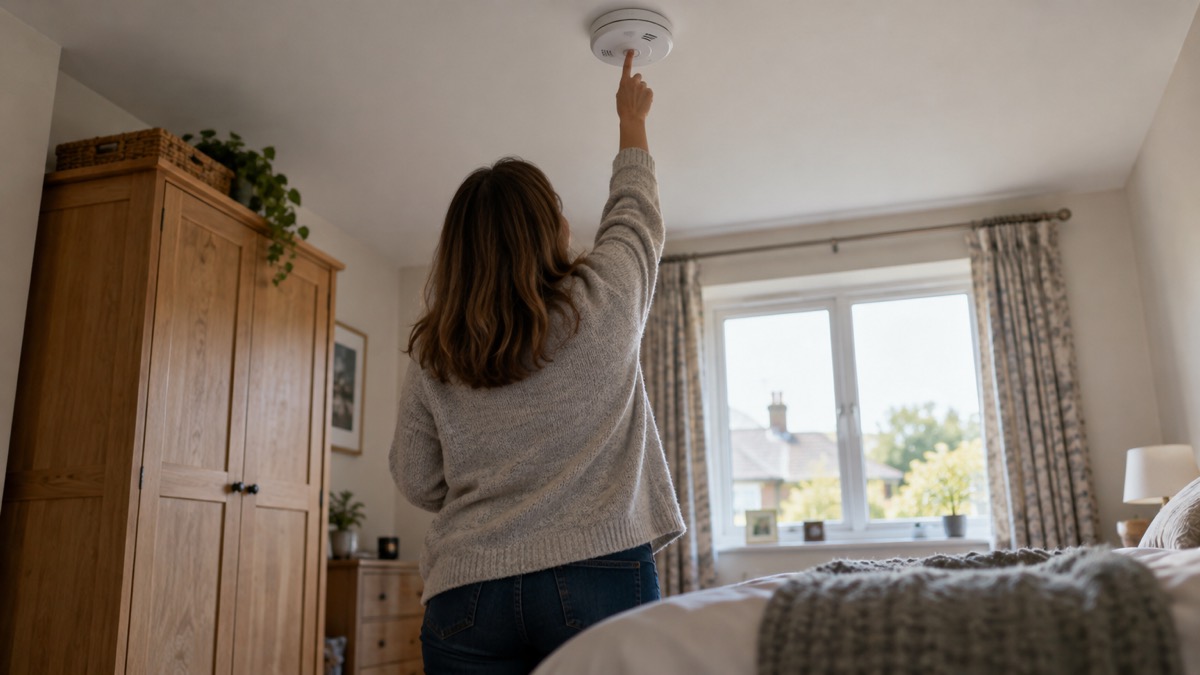
The FA6615 is a battery powered optical smoke alarm, and the maker's manual lists it alongside the FA6611 and FA6620 as an optical smoke alarm1. The optical sensor is the part that matters for an ordinary household: FireAngel says it rapidly detects slow-burning fires while reducing nuisance alarms from cooking fumes3. Slow, smouldering fires, the kind that start in upholstery or a pile of paperwork, are exactly the ones that give a household the least warning, so an optical sensor in a hallway or landing is doing useful work.
It is powered by two AA alkaline batteries, which are included and can be swapped in seconds when needed1. The distributor describes those batteries as designed to power the alarm for 5 years, which is the figure to plan around rather than a promise that the batteries will always last that long2. The maker gives a 5 year warranty on the alarm1.
The unit is small and light: 118.1mm in diameter and 31.5mm deep, weighing 185g1. It is certified to EN 14604:2005+AC:2008, the standard for smoke alarm devices, and the maker lists CE and UKCA marking1. FireAngel describes its range as BSI Kitemark independently certified and lists a compliant range for England, Wales and Scotland6.
It suits hallways, landings, bedrooms, living rooms and leisure vehicles3. It does not suit a kitchen, a bathroom or a garage, for reasons set out below. And it is a standalone alarm: the distributor lists its connection type as standalone, so it does not talk to other alarms in the house2. If you want alarms that all sound together, that is a different choice, covered in Interlinked Alarms: How Linking Works.
Specifications at a glance
| Specification | Figure | Source |
|---|---|---|
| Type | Battery powered optical smoke alarm | 1 |
| Sensor | Optical | 1 |
| Sound level | 85dB(A) at 3m (minimum) | 1 |
| Batteries | 2 x AA alkaline, replaceable, included | 1 |
| Battery life | Designed to power the alarm for 5 years | 2 |
| Operating temperature | +4°C to +38°C | 1 |
| Storage temperature | -20°C to +60°C | 1 |
| Operating humidity | Up to 90% RH, non-condensing | 1 |
| Storage humidity | Up to 93% RH, non-condensing | 1 |
| Dimensions | 118.1mm diameter x 31.5mm depth | 1 |
| Weight | 185g | 1 |
| Standard | EN 14604:2005+AC:2008 | 1 |
| Warranty | 5 years | 1 |
| Connection | Standalone | 2 |
The distributor lists slightly different physical figures, giving a height of 32mm, a diameter of 118mm and a weight of 190g2. Where the maker and the retailer differ, the maker's figures are the ones to rely on.
A continuous alarm means get out and call 999
A continuous loud alarm from this unit means smoke has been detected, and the maker's instruction is to evacuate immediately and call 9993. That is not a cautious suggestion; it is the whole point of the device. The national Fire Kills campaign puts it in four words: get out, stay out, call 9995.
What that looks like in practice:
- Raise the alarm for anyone else in the house as you go.
- Leave by the nearest safe exit, closing doors behind you if you can.
- Get everyone to a meeting point away from the building.
- Call 999 and stay out. Do not go back in for possessions or pets.
Surrey Fire and Rescue Service gives the same sequence for anyone who discovers signs of fire: raise the alarm, get out using the nearest fire exit and call 9997. Warwickshire's guidance is that the Fire and Rescue Service should be called on 9998. The Cabinet Office's preparedness campaign is equally direct: get out, stay out, call 9999.
If you hear a neighbour's alarm sounding repeatedly and cannot see or contact them, Cheshire Fire and Rescue Service advises trying to contact them, and if you cannot, calling 999. Do not attempt to enter the property yourself10.
"A continuous loud alarm means smoke has been detected, evacuate immediately and call 999."
Having an escape plan matters as much as the alarm. Greater Manchester Fire and Rescue Service publishes guidance on knowing your escape routes, and our own guide to How to Make a Fire Escape Plan walks through it for a household. If you cannot get out, there is separate advice in What to Do If You Cannot Escape a Fire.
Testing: one press for a quiet test, two for full volume
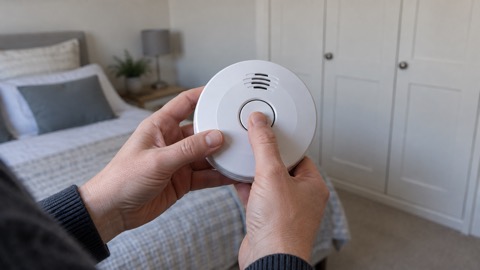
FireAngel's instruction is to test the alarm at least once a week and vacuum around it every six months to remove dust3. The large central button makes weekly testing simple, and the quiet test function checks the alarm at a lower volume without waking the household3.
The two test modes work like this:
- One press: a self-test at a reduced volume, at least 10dB below full volume2.
- Two presses: a self-test at full alarm volume, 85dB at 3 metres2.
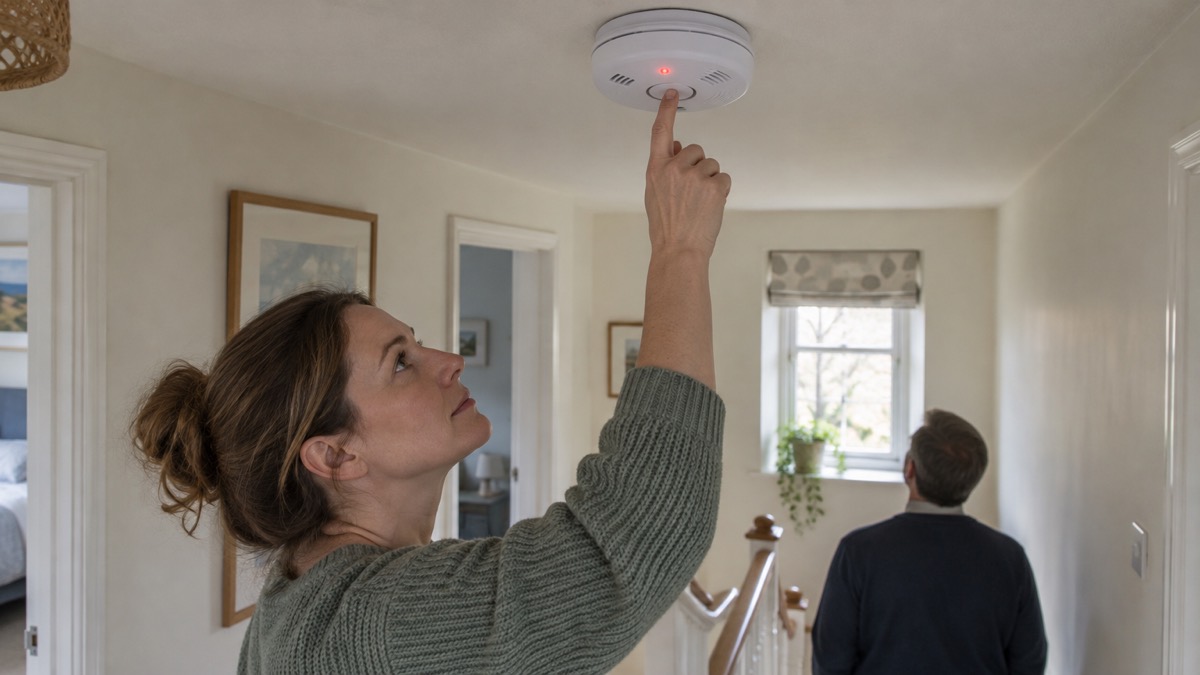
The quiet test is genuinely useful in a household with a sleeping baby or a night shift worker, but it is not a substitute for the full test. Use the quiet test for the routine weekly check and the full volume test when you want to be sure the sounder itself is working, for example after fitting new batteries. The maker's datasheet describes the quiet test as supporting discreet testing at a lower volume compared with standard alarms1.
If the alarm does not respond to the test button at all, that is a fault, not a nuisance. Greater Manchester Fire and Rescue Service's guidance on problems with smoke and heat alarms is a sensible next step, and our page on Why Does My Smoke Alarm Keep Chirping? covers the common causes of odd behaviour. For the wider question of how often to test, see How Often to Test Smoke and CO Alarms.
What the beeps and the red light mean
The FA6615 uses two simple signals: a red light and a beep. The red LED flashes approximately every 40 seconds to confirm the alarm is active and working normally3. The datasheet describes the same behaviour as an operating light that flashes approximately every 40 seconds confirming the alarm is powered1.
The beep is the warning. A single chirp at regular intervals usually means the battery is running low3. The datasheet is more specific: the alarm beeps approximately every 40 seconds when the battery needs replacing1. That is the same interval as the normal red flash, which is why people sometimes confuse the two. The difference is the sound: a light flash is normal, a chirp is not.
| Signal | What it means | What to do |
|---|---|---|
| Red LED flash about every 40 seconds | Alarm is active and working normally | Nothing; this is normal3 |
| Single chirp at regular intervals | Battery is running low | Fit fresh AA batteries3 |
| LED stops flashing entirely | Batteries may need replacing | Check and replace the batteries3 |
| Continuous loud alarm | Smoke has been detected | Evacuate immediately and call 9993 |
If the LED stops flashing entirely, the batteries may need replacing3. That is a useful check for an alarm in a spare room that nobody hears: a silent, dark alarm is not protecting anyone.
Silencing a low-battery chirp overnight
The FA6615-R has a Sleep Easy function that silences low-battery chirps for up to 8 hours, so a depleted battery will not disturb your rest3. FireAngel's datasheet for a related model describes the same function as allowing a low battery chirp to be silenced for 8 hours, usable up to 10 times12.
Treat that as a delay, not a repair. The chirp will return, and an alarm running on a failing battery is not giving you the protection you paid for. Fit fresh AA batteries the next morning. If you are being kept awake by a chirp tonight, our page on Why Does My Smoke Alarm Keep Chirping? sets out the options.
Where to fit it, and where not to
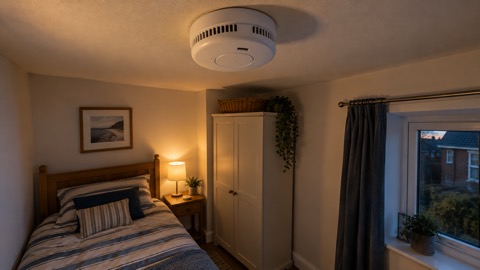
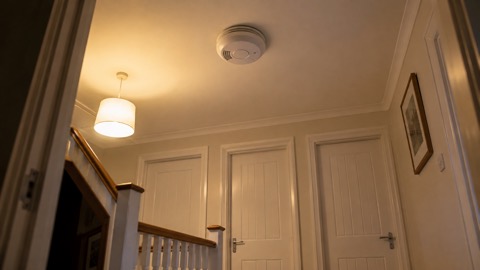
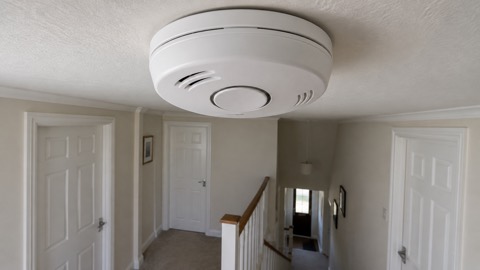
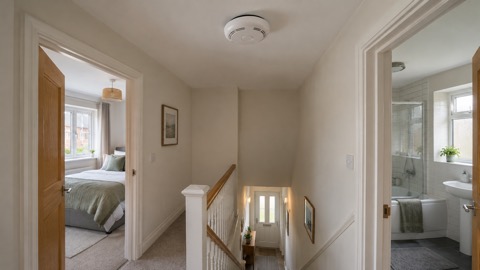
FireAngel's advice is to install a smoke alarm on every level of the home, ideally in the circulation space on each floor such as the hallway and landing, as well as bedrooms, living rooms and dining rooms3. That matches the general principle behind the Fire Kills campaign, which is built around working smoke alarms on every level5.
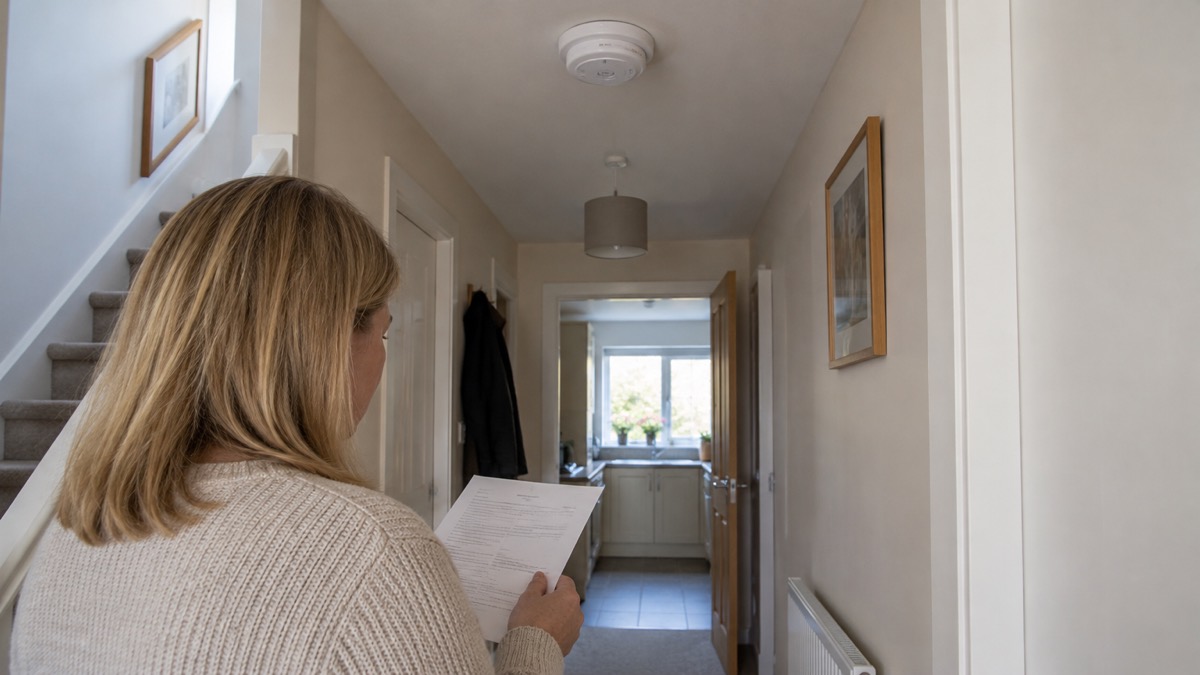
Positioning is specific. On a ceiling, fit it at least 300mm from any wall or light fitting3. On a wall, mount it 150 to 300mm below the ceiling and at least 300mm from the nearest wall3. The unit can be fixed to a wall or ceiling, and fixings are supplied1.
Where not to fit it is just as important. FireAngel says not to install this smoke alarm in kitchens, bathrooms, garages, or areas where steam, condensation or cooking fumes are common, and to avoid excessively dusty or damp locations3. The reason is nuisance alarms: cooking fumes, steam or dust near the sensor will set it off, and an alarm that cries wolf gets disabled, which is the worst outcome of all.
For a kitchen, the usual answer is a heat alarm rather than a smoke alarm. The Scottish Fire and Rescue Service notes that heat alarms can help you avoid false alarms caused by cooking fumes, for example frying food or burning toast13. Our pages on Heat Alarms: What They Do and Where They Go and Heat Alarm or Smoke Alarm: Which Goes Where cover that choice. For the full picture on siting, see Where to Fit Smoke Alarms and How Many Smoke Alarms Does a House or Flat Need?.
Stopping cooking false alarms
If the alarm does go off while you are cooking, the maker's advice is to press the test button to silence it temporarily and vacuum the unit regularly3. The datasheet lists the alarm as reducing nuisance cooking alarms, which reflects the optical sensor's design rather than a guarantee1.
The better fix is prevention: keep the alarm out of the kitchen, and keep dust off the sensor. If you are getting repeated false alarms from a unit that is correctly sited, our page on How to Stop Smoke Alarm False Alarms goes through the causes.
Cleaning dust from the sensor
FireAngel's instruction is to vacuum around the alarm every six months to remove dust3. Dust near the sensor is one of the common causes of nuisance alarms, so this is maintenance, not housework. Do not open the casing or try to clean inside the sensing chamber; vacuum around the outside and leave the internals alone.
Use in caravans, campers and leisure vehicles
The FA6615 is suitable for leisure accommodation, and the maker's datasheet lists it as such1. The distributor describes it as suitable for leisure accommodation vehicles, such as campers and caravans2. It can be fixed to a wall or ceiling with the fixings supplied1.
The temperature range is the thing to watch. Operating temperature is +4°C to +38°C, and storage temperature is -20°C to +60°C1. A heated caravan in summer sits comfortably inside that range; an unheated one in a hard frost may not. If you store the alarm in a vehicle over winter, bring it inside before the temperature drops, and check it before your first trip of the season.
A caravan alarm is not a substitute for one in your home, and a home alarm is not a substitute for one in the caravan. Fit both. For the wider question of alarms in temporary or unusual accommodation, our section on Home Emergencies: Fire, Carbon Monoxide, Gas Leaks and Burst Pipes is the place to start.
Replacing an ST-620, ST-622, ST-625 or ST-750 on the same baseplate
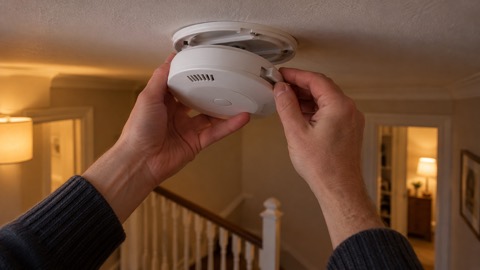
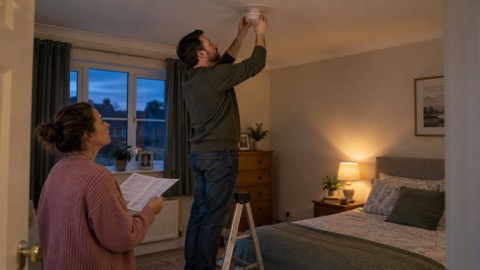
One of the practical reasons people search for this model is that it drops onto an existing FireAngel baseplate. FireAngel describes the FA6615-R as a direct replacement for the ST-625, ST-622, ST-620 and ST-750, fitting the existing baseplate with a simple swap3. The maker's support article says the FA6615-R fits the same baseplate as the ST-625 with a simple swap14. FireAngel's page for the ST-622 says you can replace an end of life ST-622 with a FireAngel FA6615-R optical smoke alarm with no new base plate required15. The distributor confirms that both alarms use the same base plate2.
That matters because it turns a job that might need a screwdriver and a ladder into a twist and a click. It also means you can replace an alarm that has reached the end of its life without redecorating the ceiling.
| Old model | Replacement route |
|---|---|
| ST-625 | Same baseplate, simple swap14 |
| ST-622 | Same baseplate, no new base plate required15 |
| ST-620 | Existing baseplate3 |
| ST-750 | Existing baseplate3 |
The ST-620 was discontinued by the manufacturer in 2018, so any remaining units are well past their intended life and should be replaced rather than repaired. Our page on When to Replace a Smoke, Heat or CO Alarm covers how to judge when an alarm has had its day. If you are replacing an ST-750 specifically, there is a dedicated page at FireAngel ST-750 Smoke Alarm.
Carbon monoxide: what this alarm does not do
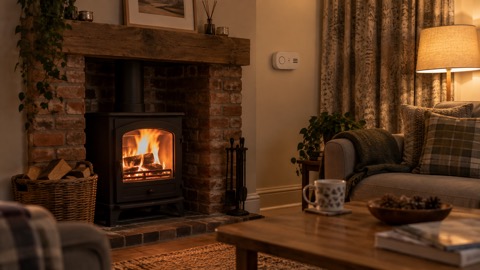
This is a smoke alarm only and does not detect carbon monoxide3. That is the single most important limitation to understand. A smoke alarm cannot warn you about CO, because CO is invisible, colourless and has no smell, and it does not produce smoke.
If your home has a gas boiler, a gas hob, a solid fuel stove, a wood burner, an open fire or an attached garage, you need a separate carbon monoxide alarm as well. FireAngel sells CO alarms and recommends full home protection with a range that includes carbon monoxide alarms, water leak sensors and temperature and humidity sensors16. The independent CO-Gas Safety charity notes that FireAngel CO alarms can be powered by either a replaceable battery or a sealed for life power pack, and that some models can run diagnostic reports to show whether an alarm was activated, at what level and when17.
Our guides on Carbon Monoxide Alarms: What They Do and How to Choose and Where to Put a Carbon Monoxide Alarm cover the choice. If you already have a CO alarm and it is beeping, see Why Is My Carbon Monoxide Alarm Beeping?. If you suspect CO right now, What to Do If Your CO Alarm Sounds or You Suspect Carbon Monoxide is the page to read first.
Standards, grades and what F2 means for you
The FA6615 is certified to EN 14604:2005+AC:2008, the European standard for smoke alarm devices1. The distributor lists the FA6615-R as suitable for installations complying to BS 5839-6: 2019 Grade F22.
Grade F2 is the grade for a system of one or more mains-free alarms with a built-in standby supply. In plain terms, it describes a battery-powered alarm that will keep working if the mains fails, which is exactly what this unit is. It is not a Grade D system, which is the mains-powered, interlinked arrangement typically required in new-build homes and rented flats. If you are fitting an alarm to satisfy a landlord's obligation or a building regulation, check which grade applies before you buy; our page on Alarm Standards: BS 5839-6, BS EN 50291 and System Grades explains the grades.
For a household choosing an alarm for a hallway or landing, the practical question is simpler: does it have a sealed or replaceable battery, does it have a test button you will actually press, and does it suit the room? This one has replaceable batteries and a large central button1. Our comparison of Sealed 10-Year or Replaceable Battery Alarms sets out the trade-off.
Support, warranty and where to get help
FireAngel's customer support specialists are based in the UK and can help with product advice, installation queries and troubleshooting by phone, email or live chat18. The company describes itself as a UK brand established since 19986.
If you have a problem with a current smoke alarm, Staffordshire Fire and Rescue Service directs residents to telephone 0800 141 256119. Greater Manchester Fire and Rescue Service gives the same number for FireAngel alarms fitted by the service and still covered by the guarantee20.
The alarm carries a 5 year warranty from the maker1. The independent CO-Gas Safety charity notes that FireAngel alarms feature the option of a 7 year life guarantee on some models, so check the paperwork for the model you actually have rather than assuming21.
If you are unsure whether your alarm is working, your local fire and rescue service can help. Many offer home fire safety visits; Staffordshire Fire and Rescue Service, for example, runs them19. Our page on How Fire and Rescue Services Respond to a Call explains what happens when you dial 999.
Sources (22)
- FireAngel FA6615 Datasheet, FireAngel, 2024-09
- FireAngel FA6615-R 5 Year Battery Optical Smoke Alarm, Safelincs, 2026-10-29
- FireAngel FA6615-R Optical Smoke Alarm, FireAngel, 2026-10-28
- FA6611, FA6615, FA6620 and FA6720-R Smoke and Heat Alarm Manual, FireAngel, 2024-09
- Smoke Alarms, Dorset and Wiltshire Fire and Rescue Service, 2026
- Smoke Alarm Guide, FireAngel, 2026-07-15
- Automatic Fire Alarms, Surrey County Council, 2026-09-07
- Fire Alarm Systems, Warwickshire County Council, 2026-10-29
- Domestic Fire, Cabinet Office Prepare, 2026-10-12
- Smoke Alarms, Cheshire Fire and Rescue Service, 2026-07-27
- FireAngel FA8620BW-R Smoke Datasheet, FireAngel, 2026-07
- FireAngel SP510 FA4250BW Spec Datasheet, FireAngel, 2026-06
- Kitchen Safety, Scottish Fire and Rescue Service, 2024-11-11
- FireAngel Product FAQs, FireAngel, 2026-10-29
- FireAngel ST-622 Thermoptek Smoke Alarm, FireAngel, 2026-08-21
- FireAngel FA7312-EUX4, FireAngel, 2026-10-28
- About CO: Alarms, CO-Gas Safety, 2024-02-18
- Carbon Monoxide Safety, FireAngel, 2026-07-31
- Home Fire Safety Visits, Staffordshire Fire and Rescue Service, 2026-10-29
- Problem With Your Smoke or Heat Alarm, Greater Manchester Fire and Rescue Service, 2026-10-29
- CO Alarms, CO-Gas Safety, 2024-02-18
- Reminder Not to Cut Corners With Electrical Safety This Christmas, Wiltshire and Swindon Prepared, 2026-10-25
 FireAngel FP2620W2-R Alarm
 FireAngel ST-632 Smoke Alarm
 FireAngel ST-750 Smoke Alarm
 FireAngel SW1 Smoke Alarm
 FireAngel SW10 Smoke Alarm
 FireAngel SB1 Smoke Alarm
 FireAngel SM-SN-1 Smoke Alarm
 FireAngel FA6611 Smoke Alarm
 FireAngel FA8620BW Alarm
 Kidde 2030-DSR Smoke Alarm
 Kidde 2030-DCR CO Alarm
 Kidde 10Y29 Smoke Alarm