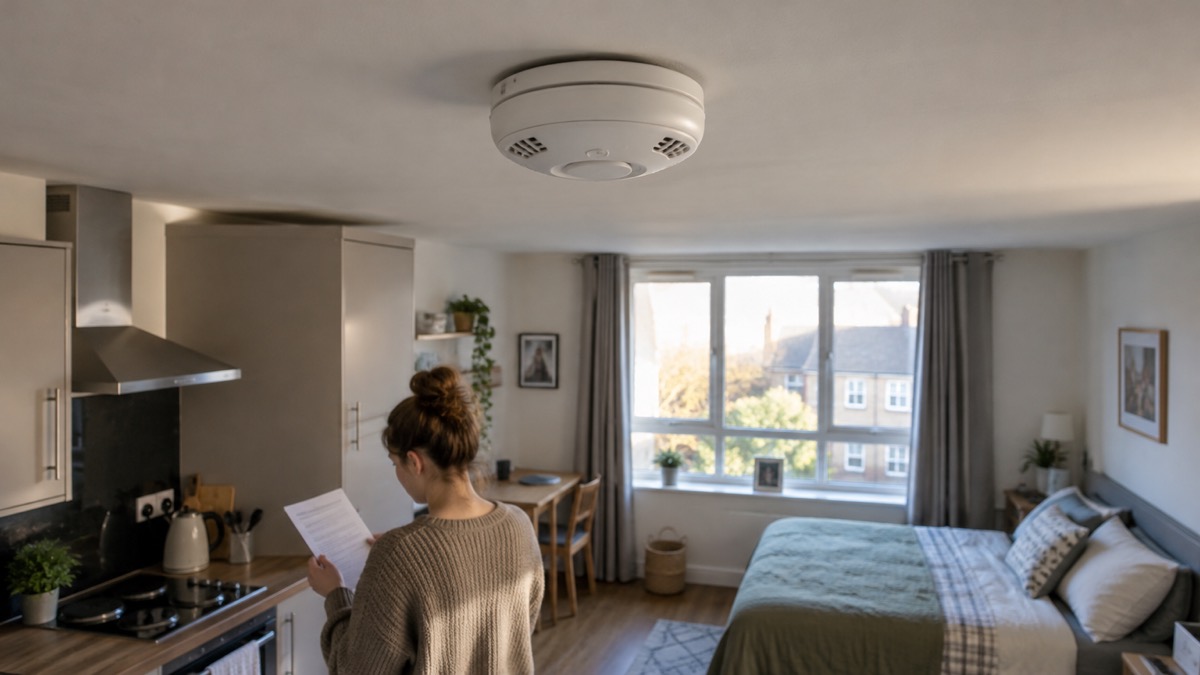
The FireAngel Spec+ SP540 is a single ceiling alarm that watches for three things at once: smoke, fast-rising heat and carbon monoxide. FireAngel describes it as a Grade D1 alarm combining smoke, Class A1 heat and carbon monoxide detection1. It is mains powered at AC 230V / 50Hz, with a rechargeable lithium backup battery the maker says is designed to last the life of the alarm2.
That combination matters for an ordinary household because it covers the two most common home dangers with one fitting. Smoke and heat detection give early warning of a fire; carbon monoxide detection gives warning of a colourless, odourless gas that ordinary smoke alarms cannot sense. The maker gives it a 10-year lifespan and a 10-year warranty1.
This page sets out what the SP540 detects, its specifications, how the mains and battery backup work, how Bluetooth linking lets alarms across a building sound together, where to fit it, what its chirps and lights mean, how to test and silence it, and how to reach FireAngel support. It is a description of one product, not a comparison with others.
What the SP540 detects: smoke, heat and carbon monoxide in one unit
The SP540 is a multi-sensor alarm. Its sensor technology combines optical, electrochemical, UltraSense, Thermoptek and Thermistek detection, with Class A1 heat detection under a hidden heat cap2. In plain terms, the optical sensor looks for smoke, the electrochemical sensor looks for carbon monoxide, and the heat sensing responds to a rapid rise in temperature. The maker says the dual sensor technology provides fast, accurate detection and reduces nuisance alarms2.
A heat sensor is not the same as a smoke sensor. It responds to heat rather than smoke, which is why heat alarms are often used where cooking or steam would set off a smoke alarm. FireAngel's own guidance describes heat alarms as ideal for kitchens, garages or unconverted lofts3. The SP540 combines heat sensing with smoke and CO detection in one unit, so it can serve spaces where a smoke-only alarm would be prone to false alarms, while still watching for carbon monoxide.
The alarm also has features aimed at everyday life. Night Sensing senses ambient light and reduces the brightness of the green power LED to prevent sleep disturbance2. A bug mesh and automatic dust compensation help keep the sensor accurate across the product's lifespan, with the maker saying the bug mesh prevents small insects and debris from triggering the alarm and dust compensation reduces nuisance alarms from dust buildup1.
Carbon monoxide is the reason a combined unit earns its place. It is produced by faulty or poorly ventilated fuel-burning appliances, and a standard smoke alarm will not detect it. If you want to understand the gas itself, see our guide to carbon monoxide alarms and to what to do if your CO alarm sounds.
Specifications at a glance
The maker's datasheet gives the SP540's technical figures. These are the numbers that decide where it can go and what it can do.
| Specification | Figure |
|---|---|
| Product type | Multi-sensor smoke, heat and CO alarm, Grade D11 |
| Sensor technology | Optical, electrochemical, UltraSense, Thermoptek and Thermistek, Class A1 heat detection2 |
| Supply voltage | AC 230V / 50Hz2 |
| Battery | Mains powered with 10-year rechargeable lithium backup (Panasonic)2 |
| Alarm sound level | More than 85 dB at 3m2 |
| Dimensions | W148 x D45mm2 |
| Weight | 328g2 |
| Installation positions | Ceiling or wall2 |
| Wireless protocol | Bluetooth Low Energy (BLE) 2.4GHz2 |
| Wireless range | 35m or less (more than 120m in clear air)2 |
| Operating temperature | -10°C to +40°C2 |
| Storage temperature | -20°C to +55°C2 |
| Operating and storage humidity | 10% to 95% RH, non-condensing2 |
| Plastic material | PC/ABS2 |
| Warranty | 10 years2 |
The maker lists the unit as certified to EN 14604:2005 + AC:2008, BS 5446-2:2003 and EN 50291-1:2018, with reference SGS PT/25/GEN/07302. The product page separately states it is tested and certified to EN14604 for domestic smoke detection1. The two FireAngel documents do not set out the full certification list in the same way, so treat the datasheet as the fuller technical statement.
Power and backup: mains with a 10-year rechargeable battery
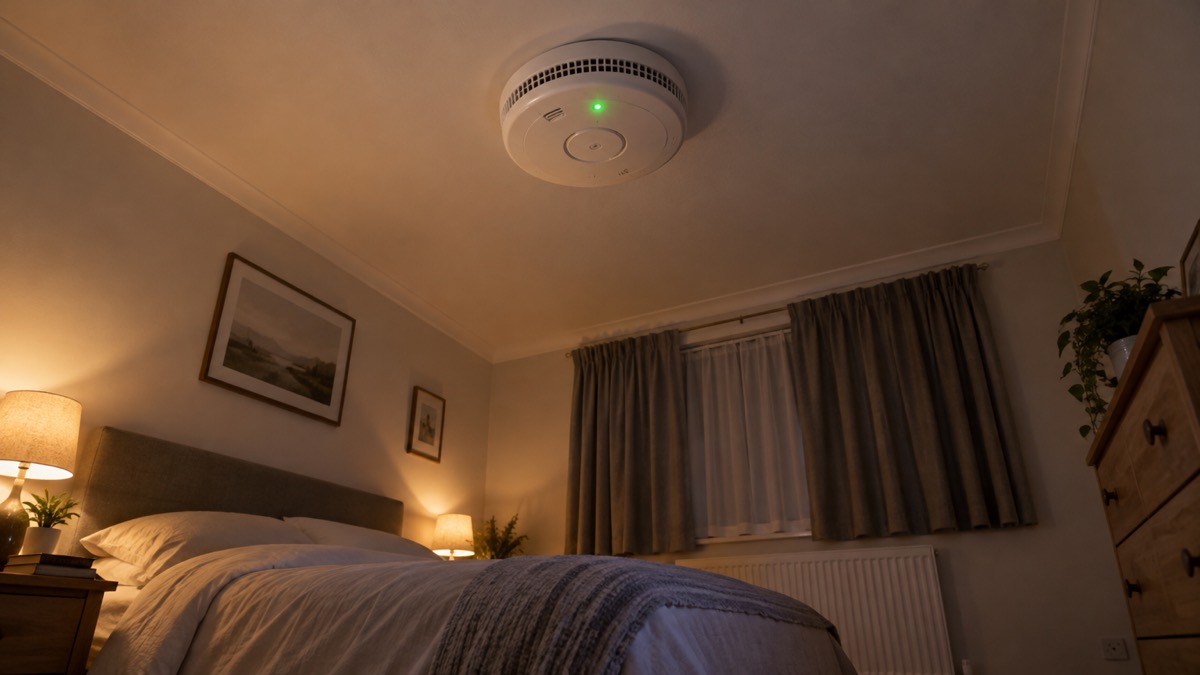
The SP540 is not a battery-only alarm. It runs from the mains at AC 230V / 50Hz and holds a Panasonic rechargeable lithium backup battery that the maker says is designed to last for the life of the alarm1. The point of that arrangement is continuity: with mains power and a rechargeable lithium backup, the maker says it maintains protection during power interruptions1.
That matters in a power cut, when a mains-only alarm without backup would fall silent. The backup keeps the unit working, and the maker describes the battery as a 10-year rechargeable lithium battery included to maintain protection during power interruptions1. Because the battery is rechargeable and built in, there is no annual battery to swap out; the unit is designed to run for its lifespan and then be replaced.
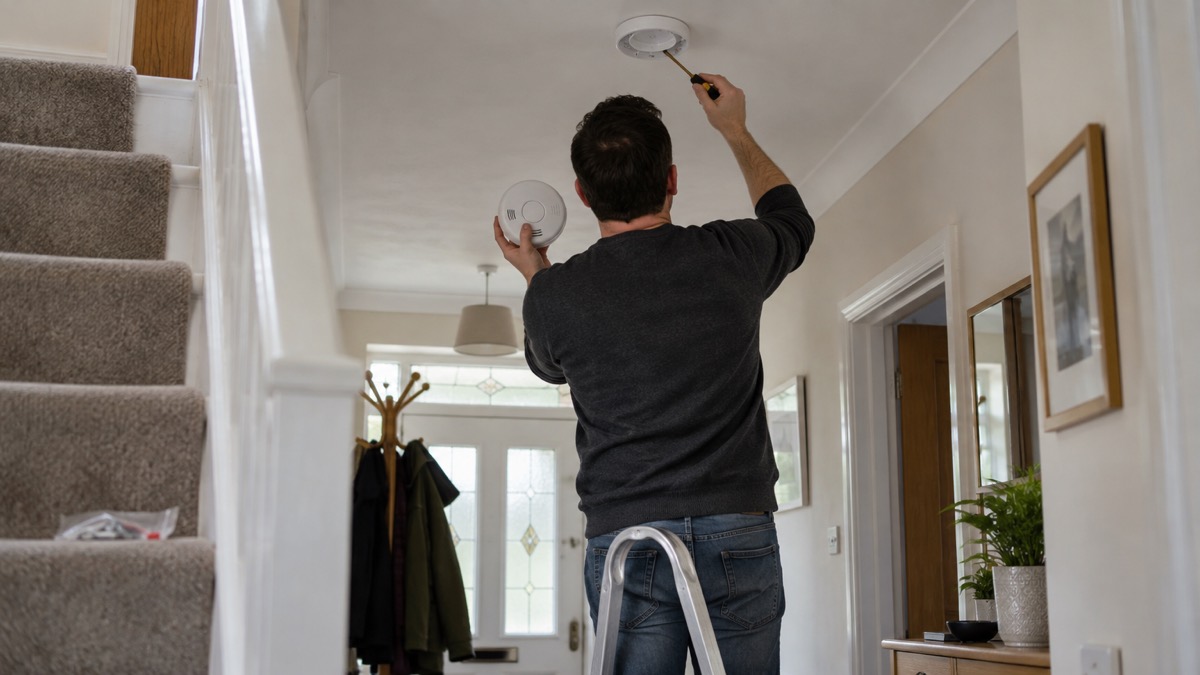
Installation is by a qualified person, since the alarm connects to mains wiring. The maker says the pushlock AC terminal block reduces installation time1. The SP540 is described as designed for professional installations across domestic, social housing, HMOs, new build and private rented properties1, so the fitting is a job for an electrician rather than a DIY task.
If you are weighing up whether a mains alarm or a battery-only one suits your home, our comparison of battery or mains smoke alarms sets out the trade-offs.
Linking alarms: Bluetooth interlink for up to 50 devices
The SP540 has Bluetooth Low Energy built in, so it can be wirelessly interlinked with other compatible alarms without extra modules. The maker says the built-in BLE interlink comes as standard, with an optional hardwired connection for flexible interconnection and coordinated alerts1. The datasheet describes Bluetooth as on board with no need for additional modules, with low power consumption, data encryption and high reliability2.
The linking limit is where FireAngel's documents need care. The SP540 product page says BLE interconnection allows up to 50 devices to be linked for whole-building coverage1, and the datasheet gives a maximum of 50 connected devices, wired and wireless2. The Spec+ range pages for the heat alarm and the heat and CO alarm also state up to 50 alarms can be wirelessly interconnected4. However, the combined manual for the SP500 to SP540 range says the FireAngel Bluetooth range is designed to be wirelessly interlinked with up to 50 products6, while a separate manual for other FireAngel Bluetooth models gives a figure of up to 20 products7.
Linking is what turns separate alarms into a system. When one alarm senses smoke, heat or carbon monoxide, the linked alarms sound too, so a fire in the kitchen is heard in upstairs bedrooms. The maker says BLE prevents interference or cross-connection with devices outside the network4, which keeps a neighbouring system from setting yours off. For how linking works across different makes and systems, see our guide to interlinked alarms.
The Spec+ range is compatible with dedicated accessories, including the SP565 Hardwired Controller and the SP560 Wireless Controller3. These are for controlling and extending the system rather than for detection.
Where to fit it: ceilings, walls and which rooms
The SP540 can be mounted on a ceiling or a wall2. FireAngel lists it as suitable for installation in open-plan kitchen and dining areas, bedrooms, hallways and landings1. Those are the rooms where people sleep, pass through and cook, and where early warning buys the most time.
The maker's guidance on heat alarms is useful context for the SP540's heat sensing. FireAngel says heat alarms are ideal for kitchens, garages or unconverted lofts3. A garage or loft is often cold, dusty or both, so check the operating limits before fitting any alarm there: the SP540 is rated for -10°C to +40°C and 10% to 95% RH non-condensing2. A space that regularly falls outside those figures is not within the unit's rating.
Placement follows the same principles as any smoke alarm: on the ceiling in the middle of a room or a hallway, away from dead air in corners, and clear of steam and cooking fumes where possible. For the detail on siting, see our guides to where to fit smoke alarms and where to put a carbon monoxide alarm. If you are deciding between a heat alarm and a smoke alarm for a particular room, our comparison of heat alarm or smoke alarm explains which suits where.
What the chirps and the yellow LED mean
The SP540 uses a yellow fault LED and chirps to tell you what it needs. The maker sets out the patterns clearly, and they are worth learning before you need them.
| Signal | What it means | What to do |
|---|---|---|
| Yellow LED flashes once with a chirp every 40 seconds | Low battery1 | Deal with the low battery warning; use Sleep Easy overnight if needed1 |
| Yellow LED flashes twice with 2 chirps every 40 seconds | Fault detected1 | Treat as a fault and seek support1 |
| Yellow LED flashes with 3 chirps every 40 seconds | End of life reached1 | Replace the alarm within 30 days1 |
The low battery warning is the one most households meet first. The SP540 has a Sleep Easy function that allows a low battery chirp to be silenced for 8 hours, and the maker says this can be used up to 10 times2. The product page adds that Sleep Easy stops low battery beeps overnight without compromising smoke or carbon monoxide protection1. That is the right way to use it: to get a night's sleep, not to ignore the warning for good.
The fault signal, two flashes and two chirps every 40 seconds, means the unit has detected a problem with itself1. A fault is not a low battery and should not be silenced indefinitely; contact FireAngel support.
The end of life signal is the one that ends the alarm's service. When the SP540 reaches the end of its life, the yellow LED flashes with 3 chirps every 40 seconds, and the maker says the alarm must be replaced within 30 days1. The datasheet describes an end of life indication giving a clear reminder to replace the alarm2. For more on the general pattern of alarm beeps, see why does my smoke alarm keep chirping and why is my carbon monoxide alarm beeping.
Testing, silencing and keeping it working
The SP540 is built to be tested without waking the house. The maker says a quiet self-test checks your alarm at a volume at least 10dB below full level without disturbing others, and a double-press gives a full 85dB test1. Use the quiet test for routine checks and the full test when you want to confirm the sounder really is at full volume.
The alarm also keeps a record of what it has heard. The maker says the alarm memory lasts 7 days, the LED flashes for the first 3 days, and you press test to recall events or hold it to clear the memory1. That is useful if you come home to a flashing light and want to know whether the alarm sounded while you were out.
For nuisance alarms, the SP540 has Smart Silence, which the maker says allows you to stop an alerting alarm from chirping for 10 minutes1. Use it to clear smoke from burnt toast, not to disable the alarm. The maker's design features, the bug mesh and dust compensation, are there to reduce false alarms in the first place1.
Testing should be part of a household routine. For how often to test, see our guide to how often to test smoke and CO alarms. For the wider picture of alarm types, see smoke alarms: types and how to choose one.
Standards, Scottish rules and the 10-year warranty
The SP540 is certified to EN 14604:2005 + AC:2008, BS 5446-2:2003 and EN 50291-1:2018, with reference SGS PT/25/GEN/07302. Those are the standards for domestic smoke detection, heat detection and carbon monoxide detection respectively. FireAngel also states that its alarms carry the BSI Kitemark and are independently certified8.
The maker says the SP540 is approved for use in Scotland under the Scottish Tolerable Standard and meets BS 5839-6 requirements for domestic installations1. That matters because Scotland has its own alarm rules, which differ from England's. FireAngel describes its compliant range as covering England, Wales and Scotland8. If you need the detail of what each nation requires, see our guide to alarm standards and to Wales and Northern Ireland alarm rules.
The warranty is 10 years, which the maker describes as manufacturer-backed cover for a full decade of protection and support1. That matches the 10-year lifespan the maker gives the unit1. In practice, the alarm and its warranty run out together, and the end of life signal tells you when to replace it.
FireAngel is a UK brand established since 1998, with UK-based customer support specialists who can help with product advice, installation queries and troubleshooting by phone, email or live chat8. For the maker's wider range, see our FireAngel brand page.
Support, the app and what comes in the box
FireAngel's technical support can be reached on 0330 094 5830, by email at technicalsupport@fireangeltech.com, or online at www.fireangeltech.com/support10. The maker gives support hours of 9am to 5pm Monday to Friday and an address at Vanguard Centre, Sir William Lyons Road, Coventry CV4 7EZ12. FireAngel's customer support team can also be reached on 0330 094 5830 for login difficulties with its apps13.
The maker's datasheet lists the Angel Pro app as a way to extract and share product status and data reporting2. That is a reporting function, not a replacement for the alarm's own sounder. FireAngel's connected ranges use apps for setup and monitoring; for example, its FireAngel One range uses the Angel Connect app, available for iOS and Android, with pairing by pressing the test button three times14. The SP540's own datasheet names the Angel Pro app rather than Angel Connect, so check which app applies to your unit before relying on either.
The box contains the alarm unit, a ceiling base plate, screws and wall plugs, a dust cover already fitted, and an installation and user guide1. You will also need a mains supply, since the unit runs at AC 230V / 50Hz2.
If you are fitting alarms across a whole home, our guides to how many smoke alarms a house needs and to combined or separate alarms will help you plan. For the wider subject of fire and carbon monoxide safety at home, start with Home Emergencies.
Sources (14)
- Spec+ SP540 Multi-Sensor Smoke, Heat & Carbon Monoxide Alarm, FireAngel, 2026-09-28
- SP540 Spec Datasheet, FireAngel, 2026-06
- FireAngel product FAQs, FireAngel, 2026-10-29
- Spec+ Heat Alarm, FireAngel, 2026-09-28
- Spec+ Multi-Sensor Heat and CO Alarm, FireAngel, 2026-09-28
- Combined manual SP500 to SP540, FireAngel, 2026
- Smoke, Heat and Combo Manual (BLE), FireAngel, 2026-05-08
- Smoke Alarm Guide, FireAngel, 2026-07-15
- Carbon Monoxide Safety, FireAngel, 2026-07-31
- HW1-R Manual, FireAngel, 2024-09
- FA3313, FA3322, FA3328, FA3820 EU Manual, FireAngel, 2024-09
- FP1640W2-R Manual, FireAngel, 2019-05
- FireAngel Pro Connected App - FireAngel, FireAngel
- Angel Connect App, FireAngel, 2026-10-28
 FireAngel Spec+ SP520 Alarm
 FireAngel Spec+ SP530 Alarm
 FireAngel One Smart Alarm
 Kidde K10SCO Smoke and CO Alarm
 Hispec RF10-PRO Smoke and Heat