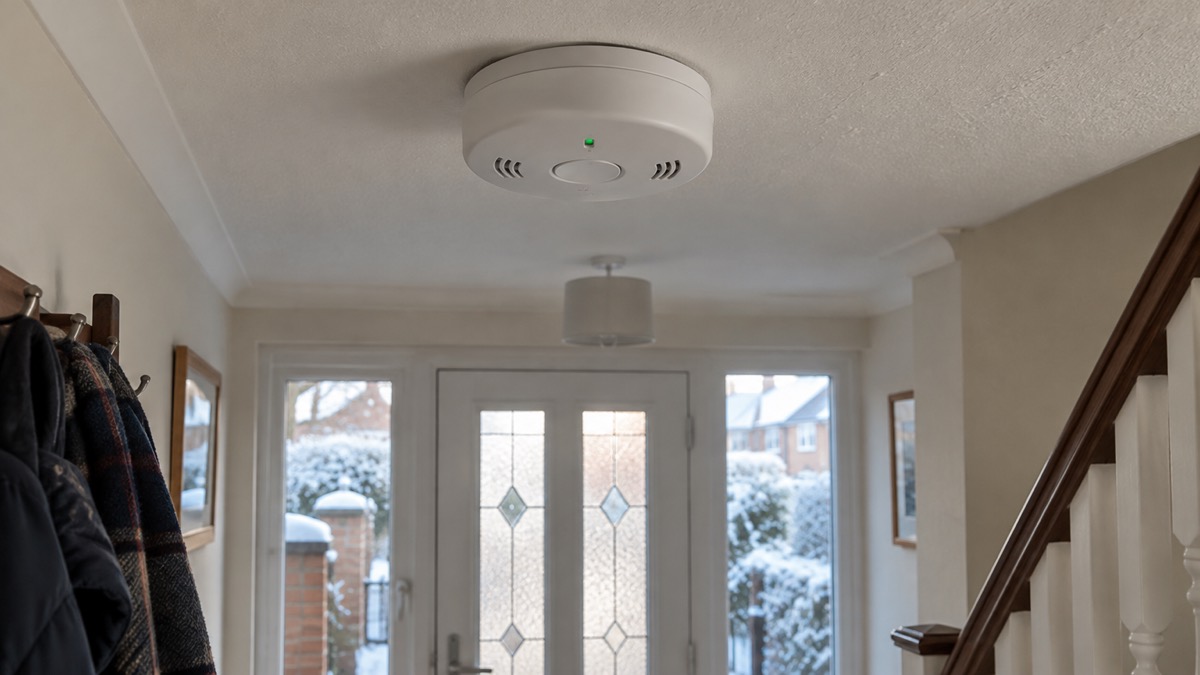
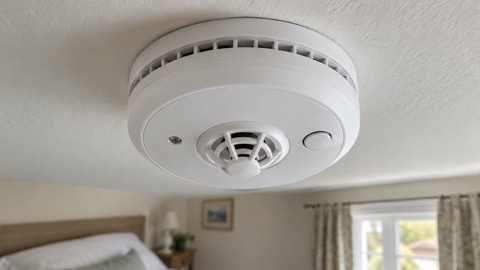
The Kidde K10SCO is a single ceiling or wall unit that watches for two different dangers at once: smoke from a fire, and carbon monoxide, the gas that gives no warning of its own. It uses an optical sensor for smoke and an electrochemical sensor for carbon monoxide, and the distributor lists carbon monoxide detection from 30ppm1. When it triggers, it sounds an 85dB alarm and speaks: it announces "FIRE! FIRE!" or "WARNING! CARBON MONOXIDE!" depending on which danger it has found1.
It is a battery alarm, running on two replaceable AA alkaline cells that come in the box, and it is listed as suitable for BS 5839-6:2019 Grade F2 installations1. The listed lifespan is 10 years, matched by a 10-year warranty, and it gives low battery and end-of-life warnings so you are not left guessing when it needs attention1.
If you already have a Kidde 10SCO, the K10SCO fits the existing baseplate, so an upgrade is a swap rather than a rewiring job1. This page sets out what the alarm does, what its warnings mean, where to fit it, how to look after the batteries and what to do at the end of its life.
One alarm for smoke and carbon monoxide
Smoke alarms and carbon monoxide alarms do different jobs. Warwickshire Fire and Rescue Service puts it plainly: "CO alarms are specifically designed to detect carbon monoxide, while smoke alarms are designed to detect smoke and fire"2. The same service warns that "They are not a substitute for one another and both types of alarm should be installed in your house"3. A carbon monoxide alarm exists to detect the presence of carbon monoxide gas in order to prevent carbon monoxide poisoning4.
The K10SCO answers both needs in one unit. The distributor describes it as a combined optical smoke and electrochemical carbon monoxide alarm1. That matters because carbon monoxide is undetectable by all human senses1: you cannot see it, smell it or taste it, so without a sensor you get no warning until symptoms appear. A smoke sensor gives you the early warning of a fire starting, and the CO sensor covers the invisible hazard from a faulty boiler, cooker or fire.
What it cannot do is replace a full alarm system. It is a standalone unit, not interlinked with other alarms, so it protects the area it is fitted in rather than the whole house at once1. If you want alarms that talk to each other, that is a different arrangement; our page on interlinked alarms explains how linking works. If you are weighing up whether one combined unit or two separate alarms suits your home, see combined or separate alarms.
The case for a combined unit is strongest where space or wiring is limited and you want both protections in one place, for example in a hallway outside a room with a fuel-burning appliance. The case for separate alarms is that each can go exactly where its own sensor works best. Our guide to carbon monoxide alarms and our guide to smoke alarms set out the choices in more detail.
Two sensors and what each one detects
The K10SCO carries two sensing technologies. The smoke side is optical, which responds to the smoke a fire gives off. The carbon monoxide side is electrochemical, a sensor type built to react to CO in the air1.
The carbon monoxide figures are the ones to read carefully. The retailer lists a CO alarm level of from 50ppm for the 10SCO1, and the maker's own listing for the K10SCO gives the same figure, from 50ppm3. The maker's support material for its CO alarms describes an alarm that is "highly responsive to CO at levels of around 30ppm"5. Treat the lower figure as the point at which the sensor starts to respond and the higher as the alarm threshold.
| Feature | What the distributor lists |
|---|---|
| Smoke sensor | Optical1 |
| CO sensor | Electrochemical1 |
| CO detection level | From 30ppm1 |
| CO alarm level | From 50ppm1 |
| Memory function | Smoke and CO memory1 |
| Connection | Standalone1 |
| Power | Battery powered1 |
The memory function is worth knowing about. If the alarm has sounded while you were out, the memory records that it happened, so you can check whether there was an event rather than assuming the alarm was faulty1. Our page on why your CO alarm is beeping covers the different patterns of sound and what each one means.
What the alarm tells you: sound, speech and lights
The K10SCO warns in more than one way. The distributor lists an audible alarm sounder and an audible voice alert, with a sound level of 85dB1. The voice is specific: the alarm announces "FIRE! FIRE!" or "WARNING! CARBON MONOXIDE!" depending on which danger has been detected, combined with an alarm beep sequence1. That distinction matters in the middle of the night, when a spoken word tells you which danger you are dealing with before you are fully awake.
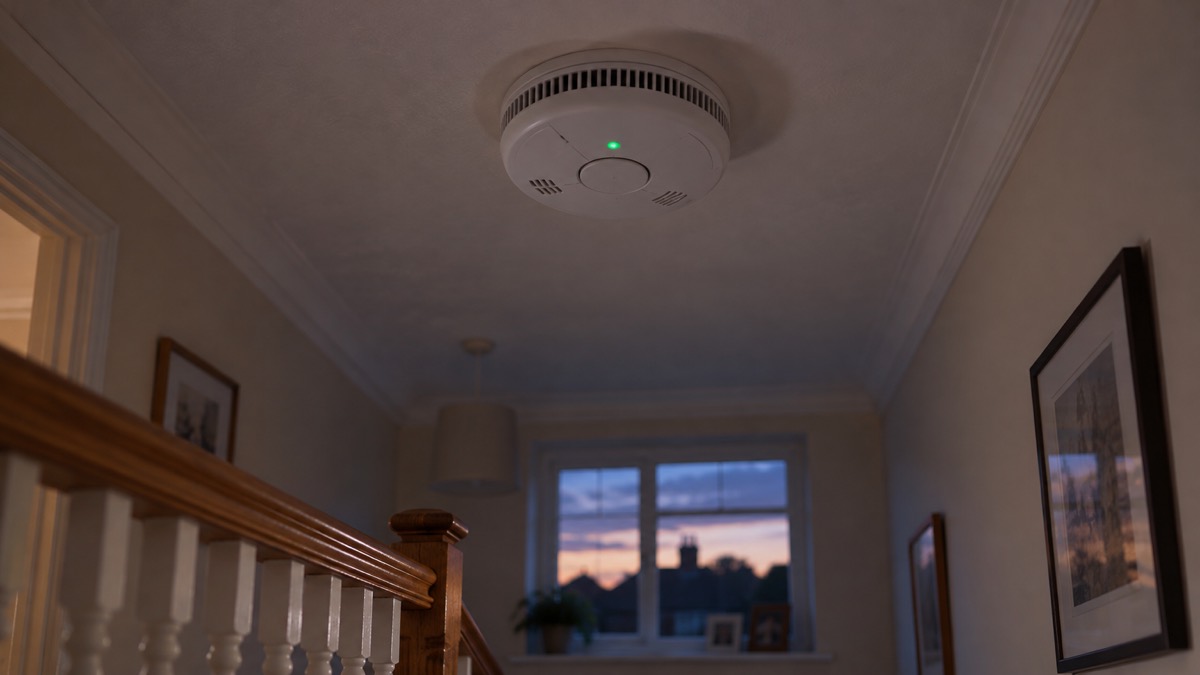
The unit also uses coloured lights. The distributor lists a green light for normal operation, an amber light for low battery or fault, and a red light for smoke or carbon monoxide detected or hush mode1.
A test and hush button sits in the centre of the unit for easy operation1. Pressing it tests the alarm, and it also hushes a nuisance alarm temporarily1. Testing is not optional housekeeping: the Royal Society for the Prevention of Accidents advises householders to "Test alarms weekly"6. Our page on how often to test alarms sets out a routine you can keep to.
Fitting it: Grade F2 and the existing baseplate
The K10SCO is listed as suitable for BS 5839-6:2019 Grade F2 installations1. Grade F2, as the distributor describes it, means battery powered with replaceable cells1. That is the grade to quote if you are checking whether the alarm meets a requirement for your home, and our page on alarm standards and system grades explains what the grades mean in practice.
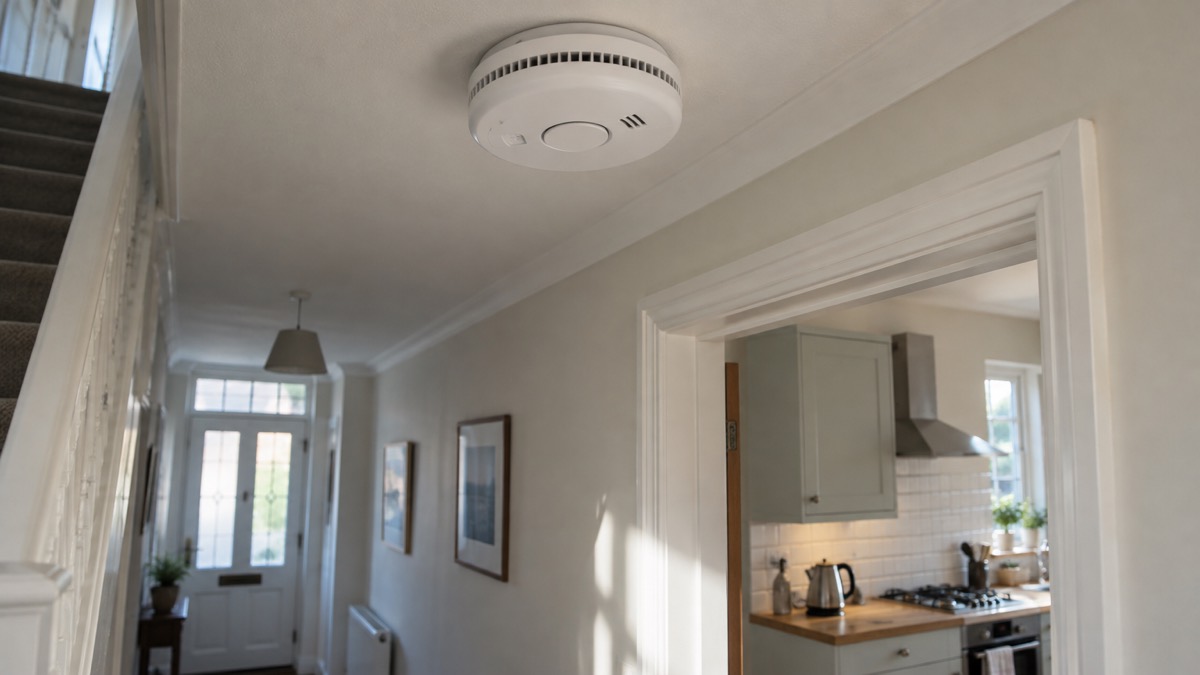
Fitting is straightforward if you are replacing an older Kidde unit. The K10SCO fits the existing Kidde 10SCO baseplate for simple upgrades1, so the screws stay where they are and the new alarm twists on. If you are starting from scratch, the box includes a screw fixing set with screws and rawl plugs1.
Where you put it decides how well it works. The maker's guidance for optical smoke alarms is to fit the alarm in the hallway next to the kitchen "To avoid false alarms from cooking fumes, such as burnt toast"7. That is the single most useful siting rule for this unit, because the smoke sensor is optical and optical sensors are the ones most likely to react to cooking. Our page on where to fit smoke alarms and our page on where to put a CO alarm go through the positions room by room.
If you are deciding how many alarms your home needs, our guide to how many smoke alarms a house or flat needs covers the question, and our fire safety checklist gives you a room by room routine.
Batteries: two AA cells and the low battery warning
The K10SCO runs on two replaceable AA alkaline batteries, and they are included in the box1. The alarm has a central Test/Hush button for easy operation1. That is a small design point with a practical benefit: a battery change is a two minute job rather than a job you put off.
The alarm gives a low battery warning and an end-of-life warning1. When the low battery warning sounds, change the cells promptly. A smoke and CO alarm with a flat battery protects nobody, and the warning exists precisely so you are never caught out. Our page on why your smoke alarm keeps chirping explains the difference between a low battery chirp and other faults.
| Battery fact | What the distributor lists |
|---|---|
| Type | 2 x replaceable AA alkaline batteries, included1 |
| Chemistry | Alkaline1 |
| Compartment | Front loading, for easy replacement1 |
| Warnings | Low battery and end-of-life1 |
If you would rather never change a battery, sealed lithium alarms exist that last their full service life without replacement cells. Our comparison of sealed 10 year or replaceable battery alarms sets out the trade offs, and our page on battery or mains alarms covers the wiring question.
Ten year life, warranty and safe disposal
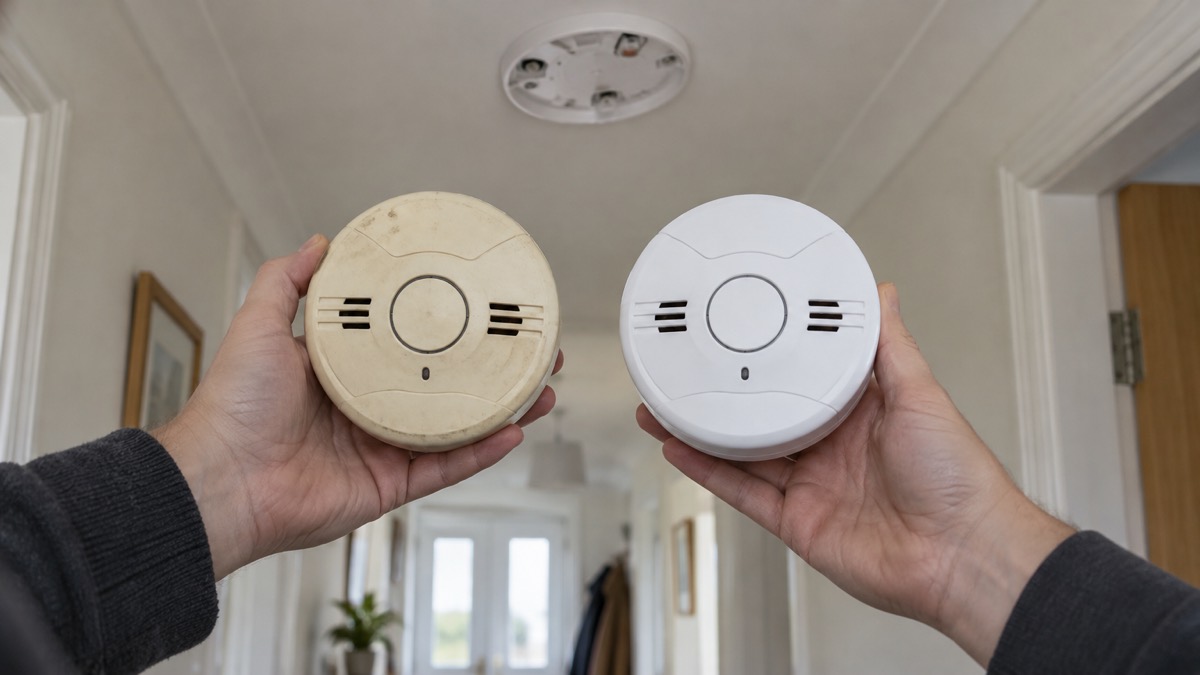
The distributor lists a lifespan of 10 years and a 10-year warranty for the K10SCO1. The same figures appear for the 10SCO, with a product life of 10 years and a 10-year warranty8. Independent guidance on Kidde's carbon monoxide range describes alarms "fully certified by BSI to EN50291-Part 1 and guaranteed for 10 years"9.
The end of life is signalled, not silent. The distributor lists an audible alert when the alarm needs replacing after its service life8. When that alert sounds, the alarm has reached the end of its working life and needs replacing. Our page on when to replace a smoke, heat or CO alarm explains why the sensor, not the battery, is usually what decides the date.
Disposal is covered too. The distributor lists take back under Valpak's WEEE Distributor Take-back Scheme1, which is the route for electrical waste rather than the household bin. If you are unsure where to take an old alarm, ask the retailer you bought it from about their take back arrangements.
On certification, the distributor lists BS EN 14604:2005 for smoke and BS EN 50291-1:2018 for carbon monoxide in domestic use, with CE marking and BS 5839-61. One distributor page also lists BS 5839-6 under standards8, so the documents describe the certification slightly differently. If you need to confirm the exact marking for a specification, check the label on the unit itself.
Where to get help and support
Kidde alarms are sold online and in leading independent stores as well as national retailers including Argos, Homebase, Asda, Amazon and Costco, and the company can be reached at www.kiddesafetyeurope.co.uk or on 01753 7663929. For questions about a specific unit, the instruction manual in the box is the first place to look, and the maker's support line is the second.
If your alarm sounds and you suspect carbon monoxide, do not wait to finish reading. Our page on what to do if your CO alarm sounds or you suspect carbon monoxide sets out the steps, and our guide to carbon monoxide poisoning symptoms helps you recognise the signs. For a fire, our page on what to do if a fire starts in your house covers the sequence, and our guide to how fire and rescue services respond to a call explains what happens after you dial.
One safety notice is worth knowing about even though it does not concern this alarm. In February 2024, affected batches of the Kidde CO2 Klem Valve, made between 01/2022 and 05/2023, were withdrawn from the market over a risk of detachment and CO2 discharge, UK customers were sent a safety notice, and a retrofit safety guard was made available. If you own one, check the batch and follow the notice. Our page on how to check if an electrical product has been recalled explains how to check any product you own.
For households that need extra help, our guide to extra help in an emergency covers older, disabled and medically dependent households, and our page on smoke and CO alarms for deaf and hard of hearing people covers alarms that use vibration and flashing lights rather than sound alone.
Sources (9)
- Kidde K10SCO CO and Smoke Detector, Safelincs, 2026-10-29
- Smoke alarms and CO detectors, Warwickshire County Council, 2026-10-29
- Safe home heating, Warwickshire County Council, 2026-10-29
- CO awareness, Fireblitz, 2025-11-18
- Sense CO, FireAngel, 2025-11-27
- Child safety hub: fire, RoSPA, 2026-10-26
- Alarm types, Aico, 2026-10-28
- Kidde 10SCO Combination 10 Year Carbon Monoxide and Smoke Alarm, Safelincs, 2026-10-29
- About CO: alarms, CO-Gas Safety, 2024-02-18
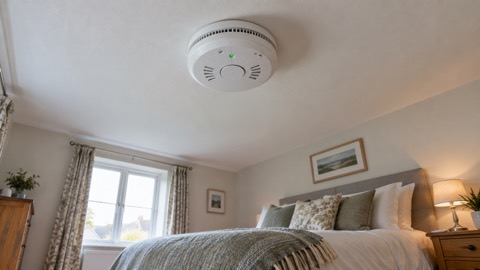 FireAngel Spec+ SP520 Alarm
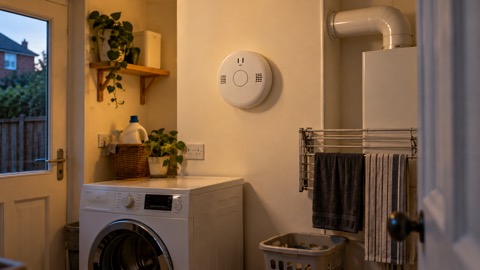 FireAngel Spec+ SP530 Alarm
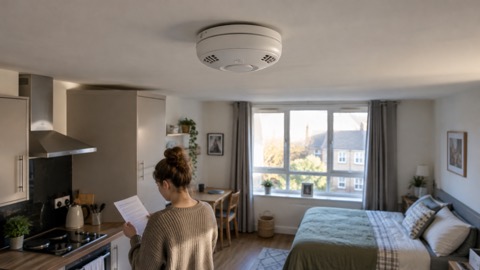 FireAngel Spec+ SP540 Alarm
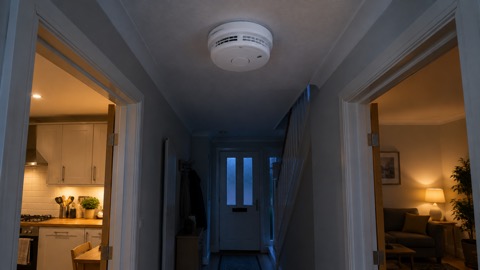 FireAngel One Smart Alarm
 Hispec RF10-PRO Smoke and Heat