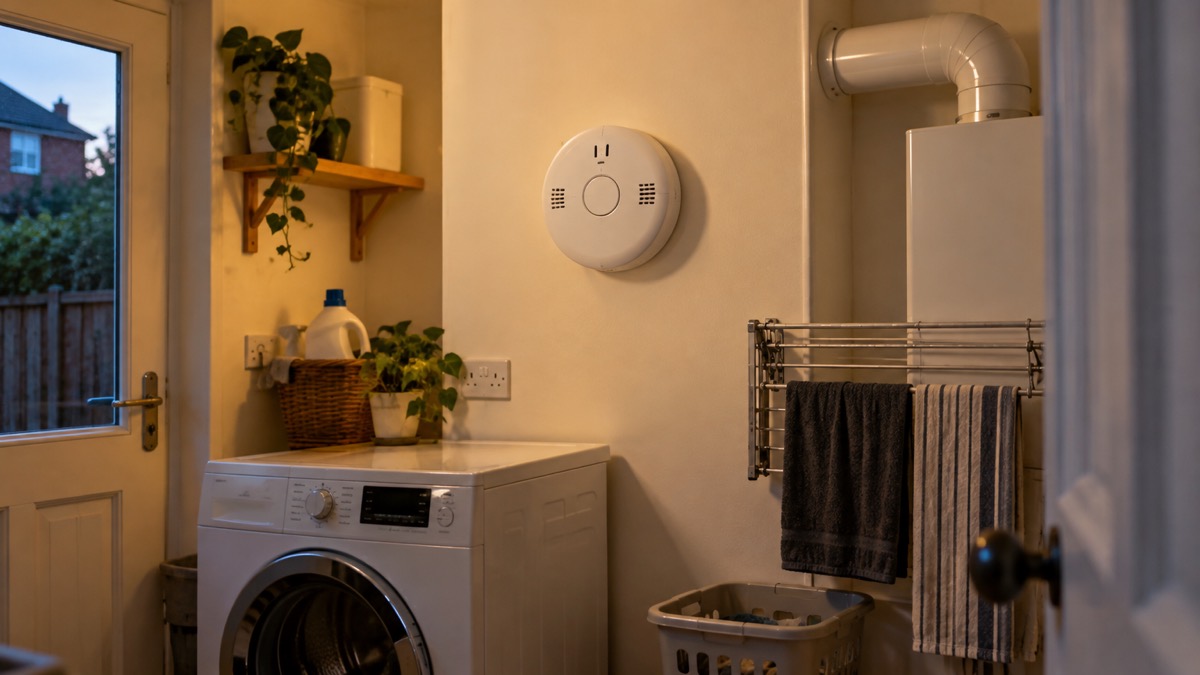
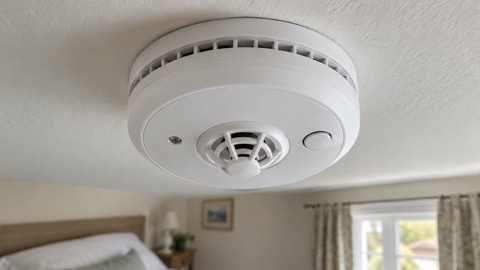
The FireAngel Spec+ SP530 is a mains-powered alarm that watches for two different dangers in the same unit: a fast-rising temperature and carbon monoxide. The maker describes it as a Grade D1 alarm combining Class A1 heat detection with carbon monoxide detection, tested and certified to BS 5446-2:2003 for domestic heat detection1. It is designed for the rooms where a smoke alarm would be a nuisance and a heat alarm alone would miss a gas risk: kitchens, boiler rooms, garages and utility rooms1.
It runs on 230V mains power with a 10-year rechargeable lithium battery back-up, so it keeps protecting the household during a power cut2. Bluetooth Low Energy interlink comes as standard, and the maker says up to 50 devices can be linked for whole-building coverage1. A yellow light and a chirp tell you when something needs attention, and the maker gives a clear pattern for each condition.
If you are deciding what to fit across a whole home, this alarm sits alongside smoke alarms rather than replacing them. It is a heat and carbon monoxide alarm, not a smoke alarm, and it belongs in the rooms where cooking fumes or boiler flues would set off a smoke detector. The sections below cover what it does, where to fit it, how it is powered, how linking works, what its signals mean, and the standards it meets.
What the SP530 does: heat and carbon monoxide detection in one Grade D1 alarm
The SP530 is a multi-sensor alarm. Its heat side uses Class A1 detection with a hidden heat cap, and the maker's datasheet describes Thermistek enhanced sensing, a high performance thermistor and predictive monitoring that are intended to give a quicker response to fires2. Its carbon monoxide side uses electrochemical sensing2. The two technologies share one casing and one set of indicators.
The maker states the alarm is tested and certified to BS 5446-2:2003 for domestic heat detection, and separately certified to EN 50291-1:2018 for carbon monoxide detection1. It also meets BS 5839-6 requirements for domestic installations and is approved for use in Scotland under the Scottish Tolerable Standard1. In plain terms, it is built to the standards a domestic heat alarm and a domestic carbon monoxide alarm are expected to meet.
What it does not do is detect smoke. That matters when you plan a home: a heat alarm responds to rising temperature, so it is slower to react to a slow, smouldering fire than a smoke alarm would be. The maker positions this unit for rooms where smoke detection is impractical, and pairs it with smoke alarms elsewhere. If you are working out which alarm goes in which room, the guide to heat alarms and the comparison of a heat alarm or smoke alarm set out the choice.
The alarm has a 10-year lifespan and a 10-year warranty1. At the end of its life it gives a clear reminder to replace it, with a yellow light and three chirps every 40 seconds, and the maker says it must be replaced within 30 days of that signal1. The unit also has a quiet self-test that checks the alarm at a volume at least 10dB below full level, and a double-press runs a full 85dB test1.
Where to fit it: kitchens, boiler rooms, garages and utility rooms
The maker lists the SP530 as suitable for installation in kitchens, boiler rooms, garages and utility rooms1. FireAngel's guidance for its mains-powered heat alarms gives the same set of rooms and adds attics: kitchens, utility rooms, boiler rooms, attics and garages3. The logic is that these are the places where heat and carbon monoxide risks concentrate, and where a smoke alarm would be prone to false alarms.
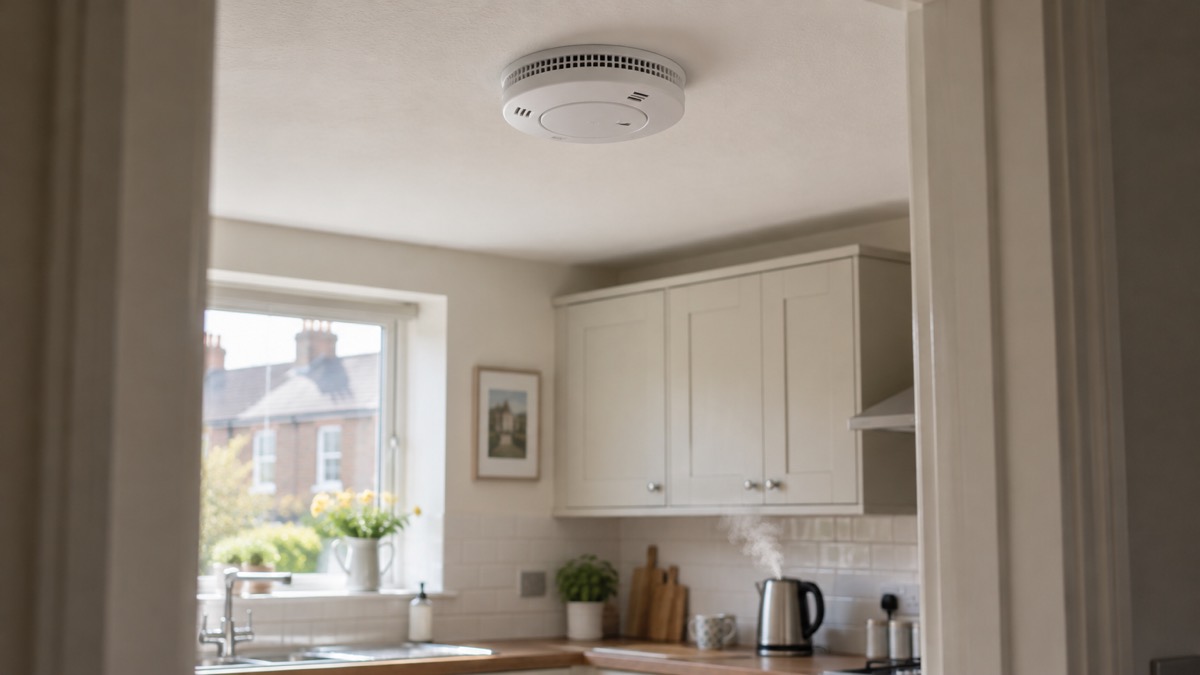
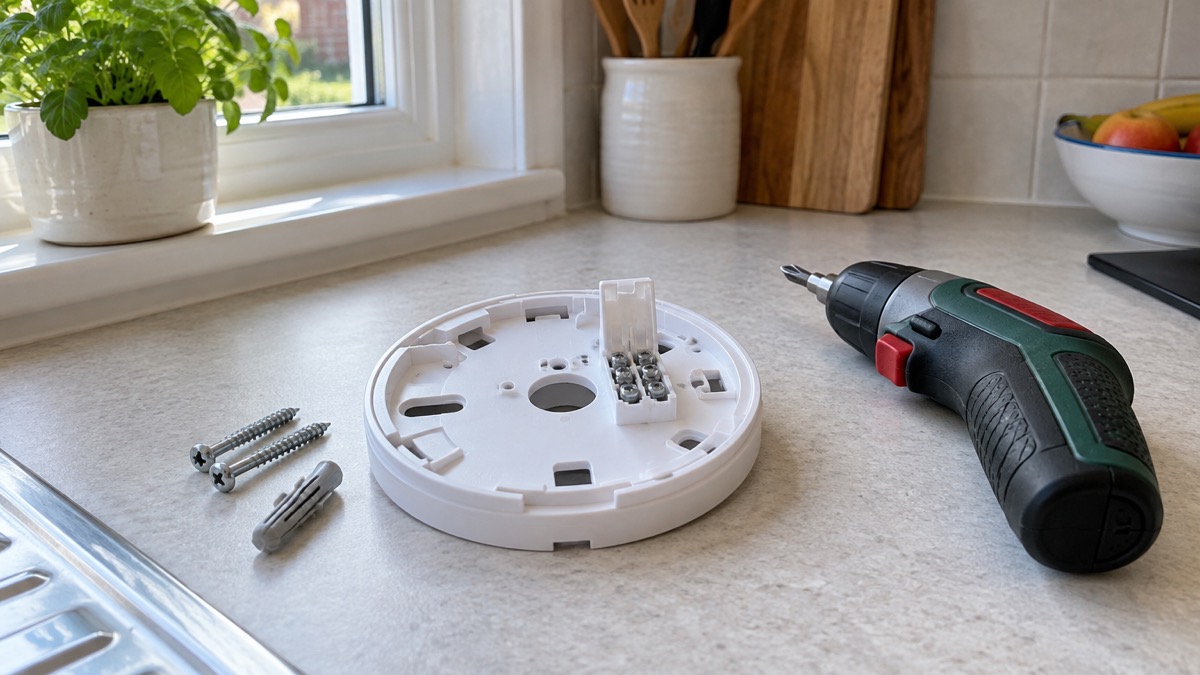
The datasheet gives both ceiling and wall as installation positions2. Heat rises, so a ceiling position or high on a wall in the room being protected is the natural choice. The unit is 148mm wide and 45mm deep and weighs 312g, so it needs a fixing that can take that weight; the box includes a ceiling base plate, screws and wall plugs1. The maker also lists a lever clip installation and a Pushlock AC terminal block intended to reduce installation time1.
The operating range decides which rooms are suitable. The maker gives -10°C to +40°C and 10% to 95% relative humidity, non-condensing2. A garage that drops below -10°C in winter, or a boiler room that runs very humid, may fall outside that. Check the room's typical conditions before fitting, and if in doubt ask FireAngel's UK-based support team, who handle installation queries4.
- Kitchen: heat and carbon monoxide in one unit, away from the immediate cooking zone.
- Boiler room: watches the appliance and the flue area for carbon monoxide as well as heat.
- Garage: suits the maker's temperature range, but check winter lows.
- Utility room: a common home for a boiler or tumble dryer, and a room the maker lists1.
Carbon monoxide is produced by fuel-burning appliances that are not burning cleanly, and an alarm in the boiler room is one line of defence. The guide to carbon monoxide alarms explains what they do and how to choose one, and where to put a carbon monoxide alarm covers positioning in more detail.
Power: mains 230V with a 10-year rechargeable lithium back-up
The SP530 is a mains-powered alarm. The maker gives a supply voltage of AC 230V / 50Hz and a battery described as mains powered with a 10-year rechargeable lithium battery back-up2. The product page puts it plainly: with AC mains power and a rechargeable lithium backup, it maintains protection during power interruptions1.
That back-up matters in a power cut. A mains alarm without a battery would go silent exactly when other systems in the home are also failing. The rechargeable cell keeps the unit working, and the maker gives it a 10-year life alongside the alarm's 10-year lifespan1. The datasheet also lists a low battery warning, so the unit tells you when the back-up is failing rather than simply stopping2.
There is nothing for the household to charge or replace in normal use. The battery is rechargeable and sealed into the unit's design, and the maker's 10-year warranty runs alongside the 10-year lifespan1. When the alarm reaches end of life, the whole unit is replaced, not just the battery.
If you want to understand how mains and battery alarms compare in general, the guide to battery or mains smoke alarms covers the trade-offs, and sealed or replaceable battery alarms explains the difference between sealed and replaceable cells.
Linking alarms: Bluetooth interlink for up to 50 devices
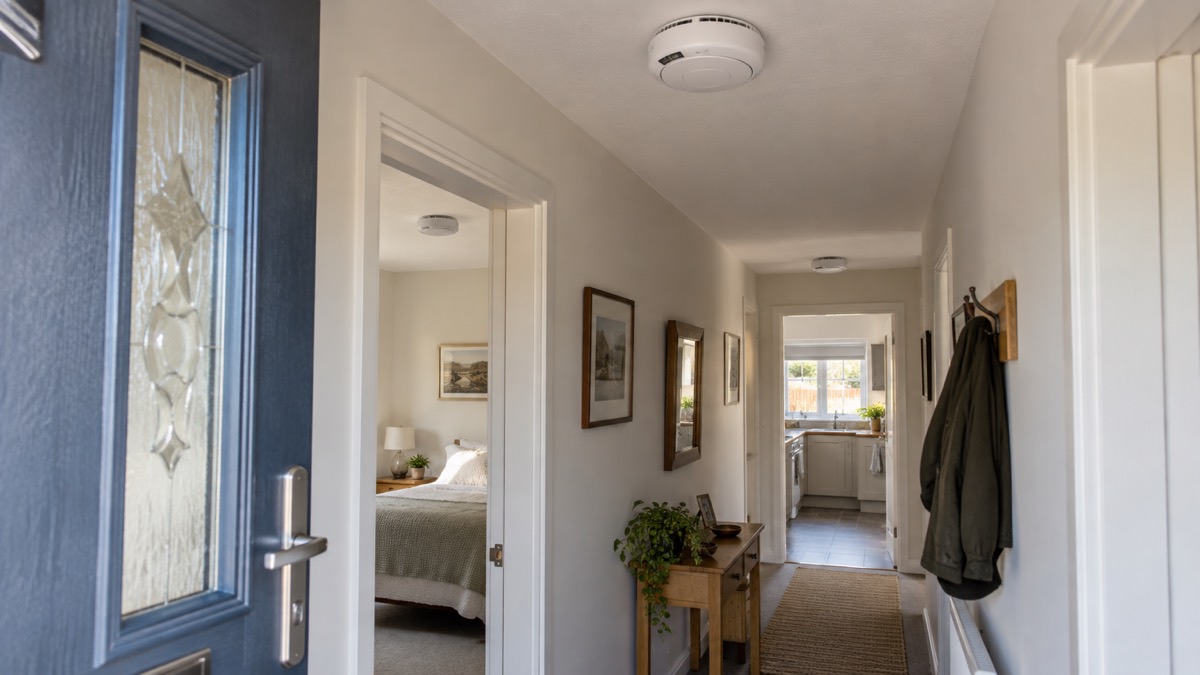
The SP530 has Bluetooth Low Energy built in, with no need for additional modules, and the maker cites low power consumption, data encryption and high reliability2. The wireless protocol is BLE at 2.4GHz, with a wireless range given as up to 35m, or more than 120m in clear air2.
The maker's headline figure is up to 50 devices. The product page says interconnection allows up to 50 devices to be linked for whole-building coverage1. The datasheet gives a maximum of 50 connected devices, wired and wireless2. The Spec+ range pages repeat the figure: BLE enables up to 50 alarms to be wirelessly interconnected, delivering a coordinated whole-building response5.
One FireAngel manual for the Bluetooth range gives a different figure, describing products designed to be wirelessly interlinked with up to 20 products within the range7. The SP530's own datasheet and product page both give 50, and the range pages give 50, so treat 50 as the figure for this alarm and check the manual supplied with your unit if you are planning a large network.
Linking means that when one alarm sounds, the others in the network sound too, so a heat or carbon monoxide event in the kitchen is heard upstairs. The maker says BLE prevents interference or cross-connection with devices outside the network5. The Spec+ range is also compatible with dedicated accessories, including the SP565 Hardwired Controller and the SP560 Wireless Controller8. The product page notes that an optional hardwired connection is available alongside the standard Bluetooth interlink1.
For the general principles, see interlinked alarms: how linking works and the comparison of wireless or wired interlinked alarms.
What the lights and chirps mean
The SP530 uses a yellow fault light and a chirp to tell you what is wrong, and the maker gives a distinct pattern for each condition1. Reading the pattern correctly saves a needless replacement and, more importantly, stops a real fault being ignored.
| Signal | What it means | What to do |
|---|---|---|
| Yellow light flashes once with a chirp every 40 seconds | Low battery1 | The back-up is failing; check the unit and seek advice |
| Yellow light flashes twice with two chirps every 40 seconds | Fault detected1 | The alarm is not working as it should; seek advice |
| Yellow light flashes with three chirps every 40 seconds | End of life1 | Replace the alarm within 30 days1 |
The maker also builds in features to stop the alarm disturbing sleep. Night sensing detects low ambient light and reduces the brightness of the green power light2. Sleep Easy mode stops low battery beeps overnight without compromising smoke or carbon monoxide protection1. The alarm memory lasts 7 days, the light flashes for the first 3 days, and you can press test to recall events or hold 10s to clear the memory1. Smart silence stops an alerting alarm from chirping for 10 minutes1.
If your alarm is chirping and you are not sure why, why does my smoke alarm keep chirping and why is my carbon monoxide alarm beeping cover the common causes. For testing routines, see how often to test smoke and CO alarms.
Standards it meets in England, Wales and Scotland
The SP530 is certified to BS 5446-2:2003 for heat detection and EN 50291-1:2018 for carbon monoxide detection, with SGS certification PT/25/GEN/07302. The maker states it meets BS 5839-6 requirements for domestic installations and is approved for use in Scotland under the Scottish Tolerable Standard1. FireAngel's own guide lists England, Wales and Scotland as the compliant range for its alarms9.
The standards matter because they are what a landlord, a builder or a fire risk assessor will look for. BS 5839-6 is the standard for fire detection in domestic premises, and the guide to alarm standards: BS 5839-6, BS EN 50291 and system grades explains what the grades mean. The SP530 is a Grade D1 alarm, which the maker describes as combining Class A1 heat and carbon monoxide detection1.
For Wales and Northern Ireland, the rules differ from England, and the guide to Wales and Northern Ireland: alarm rules and fire services sets out the arrangements. If you are fitting alarms as part of building work or a rented property, check the current requirements for your nation before you buy.
The maker's UK support is based in the UK and can help with product advice, installation queries and troubleshooting by phone, email or live chat4. FireAngel lists a freephone support number, 0800 141 256110. FireAngel is a UK brand established since 19989.
Specifications at a glance
| Specification | Figure |
|---|---|
| Product type | Multi-sensor heat and CO alarm, Grade D11 |
| Heat detection | Class A1 with hidden heat cap2 |
| CO detection | Electrochemical2 |
| Supply voltage | AC 230V / 50Hz2 |
| Back-up | 10-year rechargeable lithium2 |
| Sound level | More than 85 dB at 3m2 |
| Wireless | BLE 2.4GHz, range up to 35m, more than 120m in clear air2 |
| Maximum connected devices | 50, wired and wireless2 |
| Operating temperature | -10°C to +40°C2 |
| Operating humidity | 10% to 95% RH, non-condensing2 |
| Storage temperature | -20°C to +55°C2 |
| Dimensions | 148mm wide by 45mm deep2 |
| Weight | 312g2 |
| Casing | PC/ABS2 |
| Lifespan and warranty | 10 years1 |
The maker's datasheet also lists the Angel Pro app, which can extract and share product status and data reporting2. That is a way to check the alarm's condition without reaching it, not a replacement for the alarm's own sounder and lights. FireAngel also makes a connected range, FireAngel One, of smoke, heat and carbon monoxide alarms designed to provide protection throughout the home11, and the brand page at FireAngel covers the wider range.
If you are choosing between a combined unit and separate alarms, the comparison of combined smoke and CO alarm or separate alarms sets out the trade-offs. The Spec+ range also includes the SP520 smoke and heat alarm and the SP540 smoke, heat and CO alarm, which add smoke detection to the mix.
Sources (11)
- Spec+ Multi-Sensor Heat & Carbon Monoxide Alarm, FireAngel, 2026-09-28
- SP530 Spec Datasheet, FireAngel, 2026-06
- Installing your FireAngel mains powered heat alarm, FireAngel, 2024-10-17
- Carbon monoxide safety, FireAngel, 2026-07-31
- Spec+ Heat Alarm, FireAngel, 2026-09-28
- Spec+ Multi-Sensor Smoke, Heat & Carbon Monoxide Alarm, FireAngel, 2026-09-28
- GN6659R1-FA8620BW-FA8720BW-FA8922BW-Smoke-Heat-and-Combo-Manual-Draft-10-NEW-BLE-INFO.pdf, FireAngel Safety Technology Limited
- FireAngel FAQs: product, FireAngel, 2026-10-29
- Smoke alarm guide, FireAngel, 2026-07-15
- Problem with your smoke or heat alarm, Manchester Fire and Rescue Service, 2026-10-29
- Angel Connect app, FireAngel, 2026-10-20
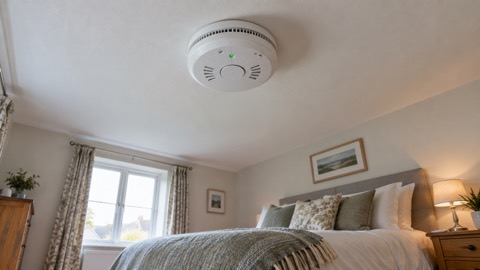 FireAngel Spec+ SP520 Alarm
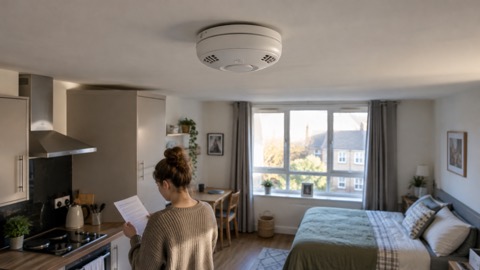 FireAngel Spec+ SP540 Alarm
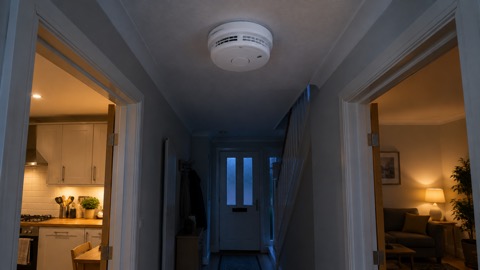 FireAngel One Smart Alarm
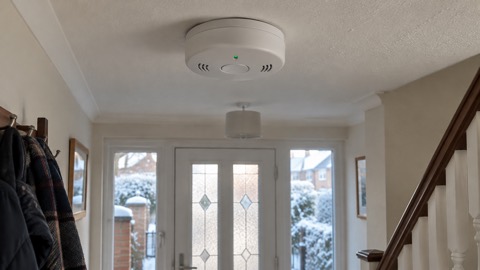 Kidde K10SCO Smoke and CO Alarm
 Hispec RF10-PRO Smoke and Heat