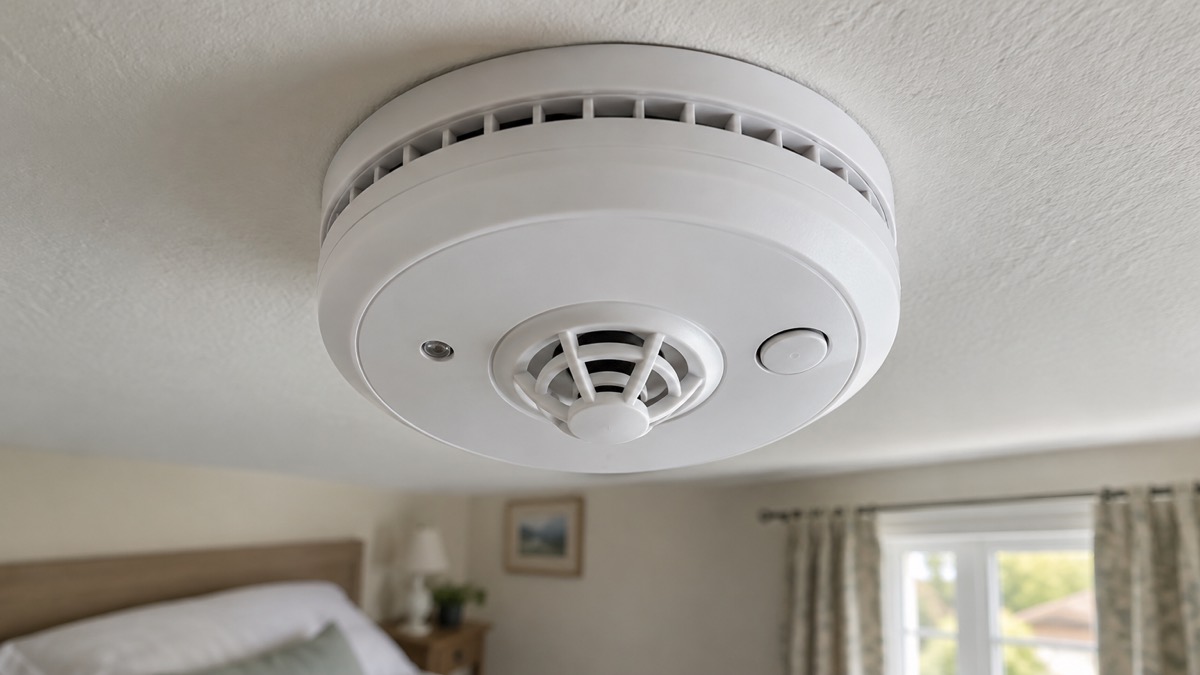
The Hispec RF10-PRO range is a set of mains powered alarms that link to each other by radio or by wire, so that a fire detected in one room raises the alarm throughout the home. There are two main versions: a multi-sensor smoke and heat alarm for bedrooms, hallways and living rooms, and a heat alarm for kitchens, garages and unoccupied lofts1. Both run on 230V mains with a sealed rechargeable lithium battery as backup, and both sound at 85dB at 3 metres1.
If you are choosing between them, the decision is about where the alarm goes, not which is better. A heat alarm responds to heat and is designed for rooms where cooking fumes, dust or exhaust would set off a smoke alarm; the maker is clear that it is not a life safety device against smoke3. A smoke or multi-sensor alarm belongs in the rooms you sleep in and the routes you escape through1.
This page sets out what each version does, the specifications that decide an installation, where to fit each one, how the interlink works, and how to test, silence and replace an alarm at the end of its life. It also covers the warranty, the sealed battery and how to reach Hispec.
What the RF10-PRO range is and what each version does
The RF10-PRO smoke and heat alarm is a mains powered multi-sensor containing both smoke and heat detection, described by the distributor as giving advanced detection of smoke and fire1. It is a ceiling mounted unit with LED indicators and a combined test and hush button for easy maintenance, and it connects by radio interlink or by wire1. The distributor positions it for bedrooms, hallways and living rooms1.
The RF10-PRO heat alarm is the heat-only member of the range. It uses a heat sensor and is described as suitable for kitchens, garages and unoccupied loft spaces2. It connects by radio interlink, has LED indicators, and is ceiling mounted with screws included2. The maker's manual describes the HSA/BH/RF10-PRO as a heat alarm with built-in wireless interconnection and a 10 year sealed lithium battery3.
The range is sold as individual alarms rather than as a kit, so you choose the mix of smoke, heat and multi-sensor units your home needs5. The alarms are made of plastic and are intended for home use5. The heat alarm is certified to BS 5446-2: 20036, and the maker's manual gives the approval as BS EN5446-2:20033. The distributor also lists the smoke and heat alarm as suitable for installations needing to comply with BS 5839-6 Grade D11. A product standard and an installation grade are different things, so if your installation has to meet a specific grade, confirm the certificate with the supplier before you buy.
Specifications: what the figures mean for your home
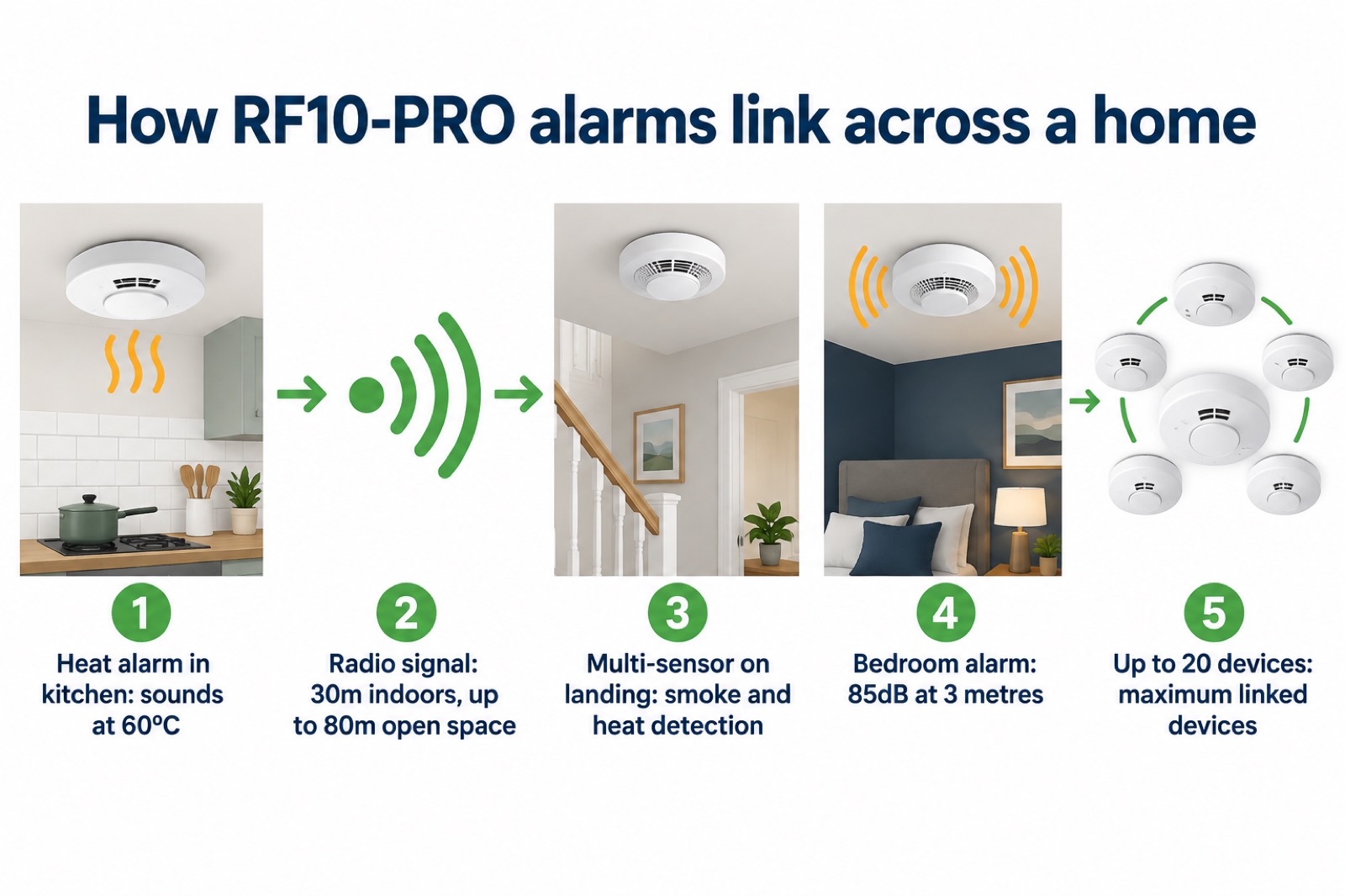
The headline figures are the same across the range where it matters most: both alarms sound at 85dB at 3 metres, which is the volume that wakes most people in a normal house1. Both are rated for 0°C to +40°C, so they suit ordinary heated rooms but not unheated outbuildings in hard frost1. The smoke and heat alarm is listed at 10% to 90% relative humidity, while the heat alarm is listed at 0% to 90%1.
| Specification | Smoke and heat (multi-sensor) | Heat alarm |
|---|---|---|
| Sensor | Smoke and heat combined1 | Heat2 |
| Sound level | 85dB at 3 metres1 | 85dB2 |
| Operating temperature | 0°C to +40°C1 | 0°C to +40°C2 |
| Relative humidity | 10% to 90%1 | 0% to 90%2 |
| Dimensions | 63mm high, 120mm diameter1 | 60mm high, 120mm diameter2 |
| Weight | 158g1 | 162g2 |
| Power | 230V mains with backup battery1 | 230V mains with backup battery2 |
| Interlink | Radio and wired1 | Radio interlink2 |
| Maximum linked devices | 201 | 202 |
| Warranty | 5 years1 | 5 years2 |
The maker's manual for the heat alarm gives a slightly different humidity figure, 10% to 90%, against the distributor's 0% to 90%3. Where they differ, the maker's figure is the one to plan around. The manual also gives the heat alarm's activation temperature as 60ºC, its radio frequency as 868MHz, and a recommended spacing of 7.5m3.
The practical reading of these figures is simple. The 85dB sound level is loud enough to be heard through a closed bedroom door in a typical house, and the interlink is what carries it from the kitchen to the landing. The temperature and humidity limits mean the alarm belongs inside the heated envelope of the home, not in a shed or an unheated garage that drops below freezing.
Radio interlink: up to 20 alarms, 30m indoors and 80m in open space
The RF10-PRO alarms link by radio so that when one sounds, the others join in. The distributor gives the radio range as 30m indoors and up to 80m in open areas, with a maximum of 20 linked devices2. The maker's manual gives the same figures: a maximum of 20 units, transmitting and receiving up to 80m in open space and 30m indoors3.
Those distances are best-case figures in clear air. In a real house, walls, floors and metal objects reduce the range, and the manual's 30m indoor figure already assumes some obstruction. If you are linking alarms across a large house or between floors, plan the layout so that each alarm is within a sensible distance of at least one other, rather than relying on a single long hop from one end of the building to the other.
The heat alarm can transmit and receive with other RF10-PRO alarms, including smoke alarms and heat alarms, so a mixed system of smoke, heat and multi-sensor units works as one network3. The manual also lists a compatible control unit, the HSSA/CU/RF10-PRO, for installations that use one3.
For a wider explanation of how linked systems behave, including what happens when one alarm is triggered, see Interlinked Alarms: How Linking Works. If you are deciding between a wired and a wireless system, Wireless or Wired Interlinked Alarms sets out the trade-offs.
The heat alarm sounds at 60ºC and belongs in kitchens, garages and lofts
The HSA/BH/RF10-PRO heat alarm activates at 60ºC3. That is the temperature at which the sensor decides there is a fire rather than ordinary warmth, and it is why the alarm is suited to rooms where a smoke alarm would keep going off. The distributor describes the heat sensor as suitable for kitchens, garages and unoccupied loft spaces2.
Official and independent guidance agrees on the principle. Warwickshire Fire and Rescue Service recommends heat alarms for the kitchen and garage7. The Scottish Fire and Rescue Service says heat alarms are useful in any room where there are high levels of fumes, smoke or dust, such as garages, lofts and boiler rooms8. The alarm maker Aico recommends fitting heat alarms in the kitchen and garage9, and FireAngel advises considering heat alarms in areas prone to false alarms such as kitchens and garages10.
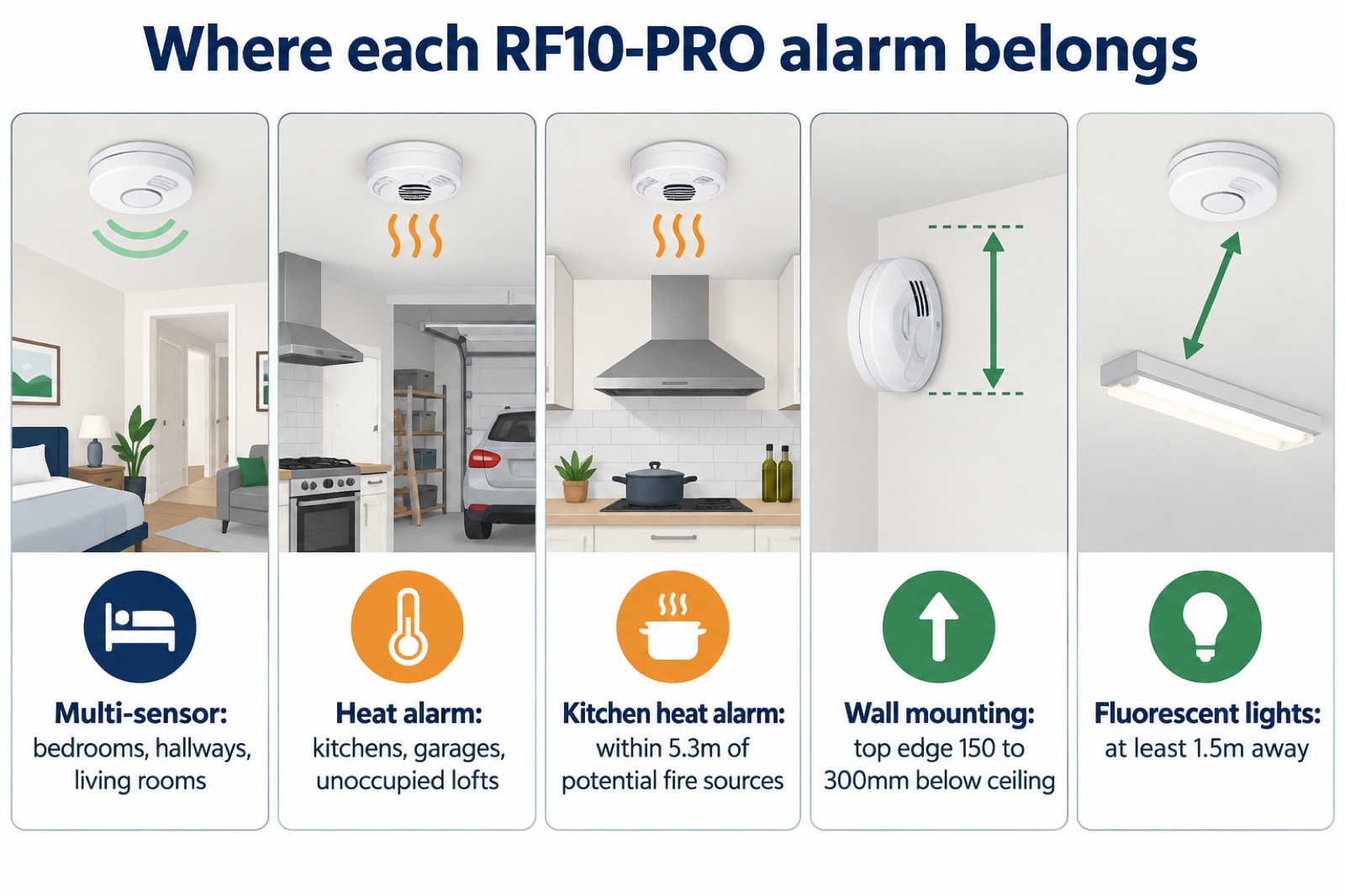
The maker's manual adds a placement rule that matters in a kitchen: heat alarms located in kitchens, garages, boiler rooms and similar spaces should be within 5.3m (17ft) of potential fire sources3. A heat alarm on the far side of a large kitchen from the cooker is within the letter of the instruction but not its purpose.
For the full comparison of where each type belongs, see Heat Alarm or Smoke Alarm: Which Goes Where and Heat Alarms: What They Do and Where They Go.
Where to fit each alarm, and where not to
Both RF10-PRO versions are ceiling mounted, and the distributor supplies screws for fixing1. The maker's manual gives the detail that decides a good installation. On a wall, put the top edge of the alarm between 150 and 300mm below the ceiling, keeping at least 300mm from room corners3. Locate the unit at least 1.5m from fluorescent light fittings and route wiring at least 1m away from them, because electrical noise can affect the radio link3.
For a single storey home, the manual's minimum protection advice is to fit a smoke alarm in a corridor or hallway between the sleeping and living areas, placed as near to the living areas as possible3. In rooms with sloping or peaked ceilings, the manual says to follow its Figure 3ii, because "dead air" at the apex may not allow smoke to enter the alarm3.
The distributor's positioning guidance puts the smoke and heat alarm in bedrooms, hallways and living rooms1, and the heat alarm in kitchens, garages and unoccupied loft spaces2. FireAngel's guidance on smoke alarm placement, based on BS 5839-6, lists hallway, landing, living room, bedroom, airing and meter cupboards, loft and garage for maximum LD1 protection, and says a smoke alarm is not recommended in a kitchen, where a heat alarm should go instead11.
Where not to fit an alarm, the maker's manual for the HSA/BP/10 smoke alarm gives a list that applies to alarm siting generally: avoid places where the temperature may fall below 0°C or rise above 40°C for extended periods, humid areas such as bathrooms, kitchens and shower rooms, near decorative objects or light fittings, fume filled environments such as garages, near radiators or wall vents, very dusty or dirty environments, and insect infected areas12. The RF10-PRO heat alarm is the exception for kitchens and garages, because that is what it is designed for.
For room by room guidance, see Where to Fit Smoke Alarms and How Many Smoke Alarms Does a House or Flat Need?.
Mains power, the sealed battery and replacing the alarm after 10 years
Both RF10-PRO versions are 230V mains powered with a backup battery1. The smoke and heat alarm uses a rechargeable lithium battery as backup1, and the heat alarm uses a rechargeable lithium battery too2. The maker's manual describes the heat alarm's battery as a 3V lithium battery with a 10 year sealed life3. The battery is sealed in and not for replacement: the manual states "BATTERY SEALED-IN NOT FOR REPLACEMENT"3.
That sealed battery shapes the whole life of the alarm. When the battery reaches the end of its life, you replace the whole unit rather than the battery. The manual says that if the heat alarm emits a short beep once every 40 seconds, the battery is at the end of its life and the detector should be replaced immediately3. The low voltage warning is given for at least 30 days, so there is time to act, but not unlimited time3.
The wider rule is the same for all smoke and heat alarms: replace them every ten years or when the replace by date is reached4. The HSA/BP/10 manual makes the same point for its own alarm, saying it must be replaced after 10 years because sensitive electronic components may become less effective12. The RF10-PRO heat alarm's manual gives a normal operation indicator: the LED should flash approximately once a minute, and if the red LED does not flash every 40 seconds, replace the whole heat alarm unit3. A yellow LED on the front cover means there may be dust inside or the unit cannot function properly, and the user should replace it with a new heat alarm3.
For the general replacement timetable, see When to Replace a Smoke, Heat or CO Alarm. If you are weighing a sealed battery against a replaceable one, Sealed 10-Year or Replaceable Battery Alarms explains the difference.
Testing, silencing and keeping the alarm working
The RF10-PRO smoke and heat alarm has a combined test and hush button for easy maintenance1. The maker's manual for the HSA/BP/10 smoke alarm gives the testing routine in detail: test your alarm once a week, and push and hold the test button for approximately 3 seconds, or at least 20 seconds to trigger other alarms12. After the Test/Hush button has been pressed, wait 10 minutes before additional testing, because the smoke alarm is less sensitive to smoke during that period12. On the HSA/BH/RF10-PRO heat alarm, the maker states that the LED should flash approximately once a minute in normal operation, and that if the red indicator light does not flash every 40 seconds you should replace the whole heat alarm unit9.
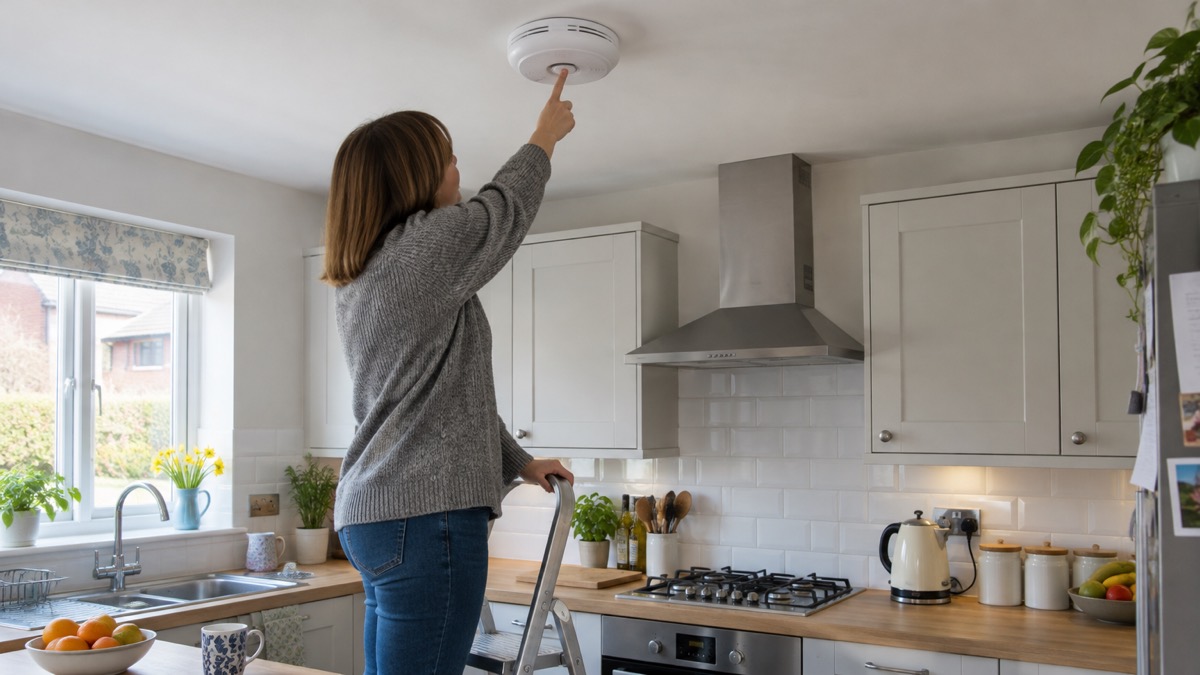
To silence a false alarm on the HSA/BP/10, press the Test/Hush button for 1 second. The alarm enters a dormant period for 10 minutes, after which normal operation resumes12. If the low battery chirp is sounding, holding the Test/Hush button for 1 second silences it for 10 hours while the alarm continues to function, and the maker recommends replacing the alarm as soon as possible after that period12.
The maker's advice on persistent false alarms is to relocate the device away from potential fume sources, and if false alarms continue with no smoke present, the alarm may need maintenance or cleaning12. The HSA/BP/10 manual recommends a monthly inspection, checking for dirt, dust or insects, removing debris with a vacuum cleaner or soft brush, wiping with a damp cloth and testing after cleaning12. The distributor describes the HSA/BP/10 as having advanced sensing technology to reduce false alarms13.
For more on quietening an alarm without disabling it, see How to Stop Smoke Alarm False Alarms and How Often to Test Smoke and CO Alarms.
Scottish, Welsh and Northern Ireland rules, and the standards behind them
The distributor states that the RF10-PRO smoke and heat alarm is suitable for both the Welsh and Scottish updated 2022 legislation, and that it suits installations needing to comply with BS 5839-6 Grade D11. The heat alarm is listed against Scottish Legislation (2022), Welsh Legislation (2022) and Northern Ireland Legislation (2024)2.
Those statements describe what the alarm is suitable for, not what the law requires in your home. The legal requirements are set by each nation's government, and they change. Before you buy, check the current guidance for where you live, and if you are a landlord or installing in a flat, check the grade your building needs. The Alarm Standards: BS 5839-6, BS EN 50291 and System Grades page explains what the grades mean, and Wales and Northern Ireland: Alarm Rules and Fire Services covers the devolved rules in more detail.
The heat alarm is certified to BS 5446-2: 20036, and the maker's manual gives the approval as BS EN5446-2:20033. The distributor also lists the smoke and heat alarm as suitable for BS 5839-6 Grade D1 installations1. A product standard and an installation grade are different kinds of statement, so if your installation has to meet a specific grade, confirm the certificate with the supplier before you commit.
Support, warranty and disposing of an old alarm
The distributor lists a 5 year manufacturer's warranty on both the RF10-PRO smoke and heat alarm and the heat alarm1. The maker's manual for the heat alarm gives the warranty as 5 years excluding the battery, from the date of purchase under normal use and service3. The HSA/BP/10 manual gives its warranty as 5 years including the battery12. Keep your proof of purchase, because the warranty runs from the date you bought the alarm.
For help, the maker's manual gives HiSPEC customer services as customerservices@hispec.co.uk and 01257 262 197, with the website at www.hispec.co.uk and the UK address at Unit 21, Drumhead Road, Chorley North Business Park, Chorley, PR6 7BX12. Use those details for warranty questions, replacement advice or an alarm that is not behaving as the instructions describe.
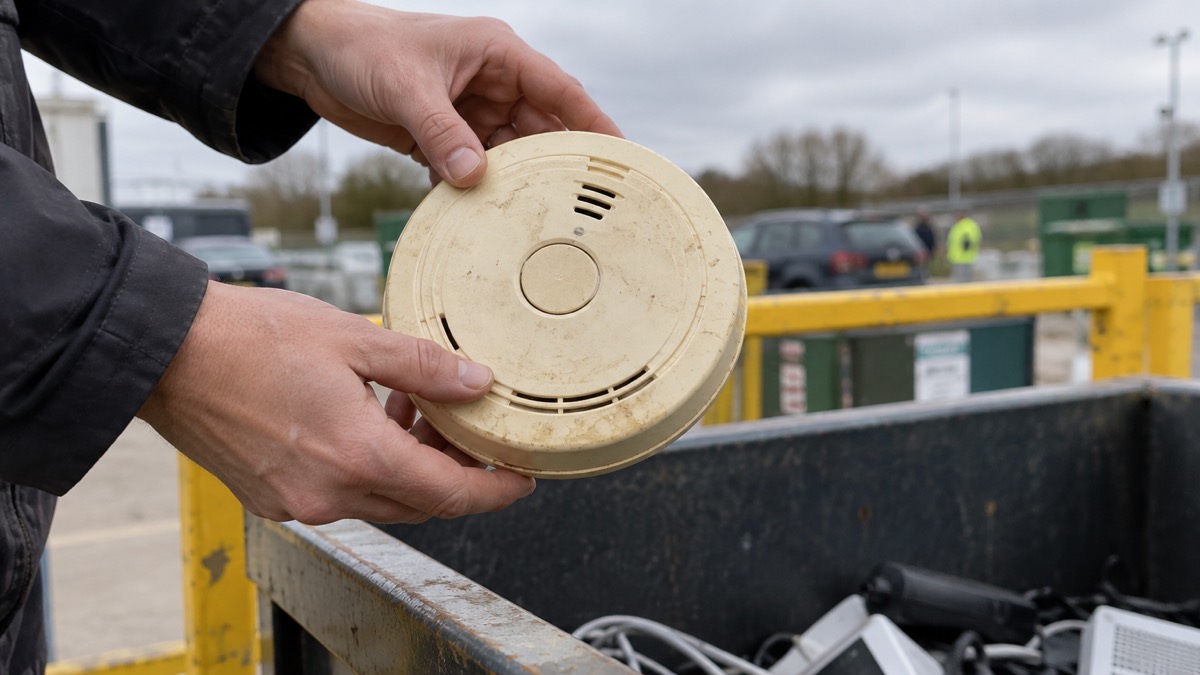
When an alarm reaches the end of its life, dispose of it properly. The HSA/BP/10 manual says not to dispose of the alarm in a fire, and to take it to your local recycling centre rather than putting it in normal household waste12. The distributor lists the RF10-PRO smoke and heat alarm and heat alarm as covered by Valpak's WEEE Distributor Take-back Scheme1. Ask your council or the retailer about take-back when you replace an alarm.
If you use the Safespec app, the HSA/BP/10 manual describes extracting actuation data: press Download Alarm Data, press Test/Silence 4 times, and hold the phone facing the alarm until the status report appears12. The manual describes downloading data from the fire alarm and exporting reports through the app12. Follow the on-screen steps in the version you have.
For the wider picture on choosing alarms for a household, start with Smoke Alarms: Types and How to Choose One and the Home Emergencies: Fire, Carbon Monoxide, Gas Leaks and Burst Pipes section. If you are planning a full installation, the Fire Safety Checklist for Your Home and Bedtime Fire Safety Checks help you put the alarms into a routine.
Sources (13)
- Hispec RF-PRO Mains Powered Smoke and Heat Alarm with Lithium Backup, Safelincs, 2026-10-29
- Hispec RF-PRO Mains Powered Heat Alarm with Lithium Battery Backup, Safelincs, 2026-10-29
- HSA/BH/RF10-PRO Instructions, HiSPEC, 2024
- Ovens and Grills, Electrical Safety First, 2026-10-25
- Hispec RF-PRO Mains Powered Smoke and Heat Alarms with Lithium Battery Backup, Safelincs, 2026-10-29
- Hispec RF-PRO Range Sealed Lithium Battery Wireless Heat and Smoke Alarms, Safelincs, 2026-10-29
- Fire Safety at Home: Alarms and Sprinklers, Warwickshire County Council, 2026-10-29
- Kitchen Safety, Scottish Fire and Rescue Service, 2024-11-11
- Alarm Types, Aico, 2026-10-28
- SB1-R Optical Smoke Alarm, FireAngel, 2026-10-28
- FS2126-T Specification Smoke Alarm, FireAngel, 2026-10-14
- HSA/BP/10 and HSA/BP/RF10-PRO Instructions, HiSPEC, 2025
- Battery Operated Optical Smoke Alarm Hispec HSA/BP/10, Safelincs, 2026-10-29
 FireAngel Spec+ SP520 Alarm
 FireAngel Spec+ SP530 Alarm
 FireAngel Spec+ SP540 Alarm
 FireAngel One Smart Alarm
 Kidde K10SCO Smoke and CO Alarm