
Hispec is a UK safety supplier based in Chorley, and the product of its own that a household is most likely to meet is a sealed battery carbon monoxide alarm, the Hispec HSA/BC/10. That alarm is listed with a product lifespan of 10 years, is CE marked and UKCA marked, and is listed as meeting Scottish, Welsh and Northern Ireland legislation1. For a household getting ready for a power cut, a cold snap or a night in a caravan, that is the piece of kit worth understanding first.
Carbon monoxide is the danger that does not announce itself, and it becomes more likely exactly when households improvise: a heater brought in during a power cut, a camping stove used indoors, a generator run in the wrong place. An alarm is the part of the plan that works while you sleep. The rest of this page sets out what Hispec makes for that job, how long it lasts, how to keep it working, and how to reach the team behind it.
Where Hispec sits in the wider market matters less than what the alarm does for your household. Product safety in the UK is led by the Office for Product Safety and Standards, which is the policy lead for product safety in the UK2. That is the framework a marked alarm sits inside. Your job is simpler: fit it, test it, and know when it expires.
What Hispec makes for a household getting ready
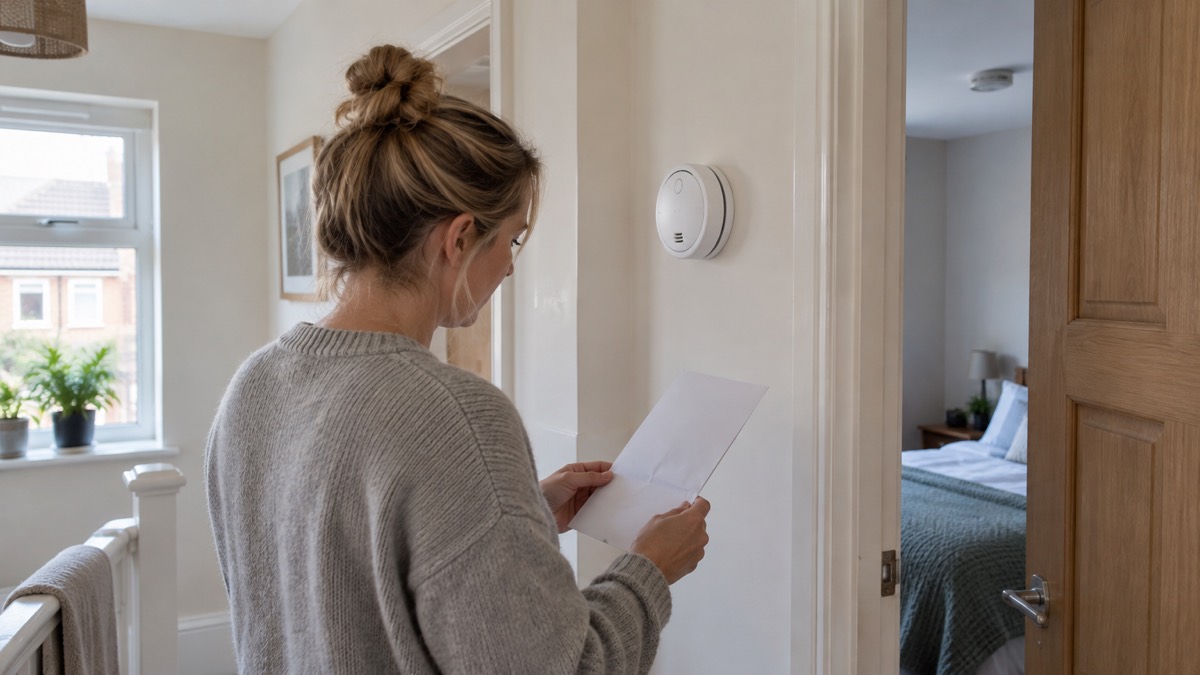
The confirmed product in the material behind this page is a carbon monoxide alarm. It is a sealed unit with a battery designed to last the life of the alarm, listed with a 10 year product lifespan1. That single fact changes how you plan. You are not buying a detector you will re-battery every year; you are buying a fixed term of protection, and the date on the unit is the date you diarise to replace it.
For preparedness, the alarm belongs in the same conversation as your emergency kit and your home emergencies plan, because carbon monoxide is a home emergency that gives no warning of its own. The situations a UK household actually faces are ordinary ones: a boiler or flue fault, a blocked chimney, a portable heater used in a room with the door shut, a barbecue or generator brought too close to an open window. An alarm does not stop any of those happening. It tells you to get out and call for help.
The distributor listing also records the alarm as suitable for caravans, camping and boats1. That matters for a household whose emergency plan includes leaving home: a caravan used as a fallback during a flood or a long power cut is a small, sealed space with a cooking appliance in it, and the same alarm can travel with you.
Carbon monoxide alarms: what the kit does and how long it lasts
A carbon monoxide alarm is a life safety device, not a comfort gadget. It senses the gas and sounds an alarm so that people can get out into fresh air and call the emergency services. The Hispec HSA/BC/10 is listed with a 10 year product lifespan, which is the figure to plan around1. Write the fit date on the unit or in your phone, and treat the tenth year as the point to replace it, not the point to start thinking about it.
The markings are the second thing to check. The listing records the alarm as CE marked and UKCA marked1. Those marks are how a household can tell, at a glance, that a product has been placed on the market under the UK's product safety framework, which the Office for Product Safety and Standards leads2. If a unit arrives without them, that is a reason to query it with the supplier before you fit it.
The third thing is where it is legal and appropriate to fit it. The listing records the alarm as meeting Scottish Legislation (2022), Welsh Legislation (2022) and Northern Ireland Legislation (2024)1. Those are the standards the distributor states the product is built to, and they are the reason the same unit can be sold across the four nations. If you live in England, the same marked product is what you would look for; the listing simply does not name an English standard separately.
| What to check | What the listing states | Why it matters to a household |
|---|---|---|
| Lifespan | 10 years1 | Diarise replacement at the tenth year |
| Markings | CE marked and UKCA marked1 | Confirms it is placed on the market under UK product safety rules2 |
| Legislation listed | Scottish (2022), Welsh (2022), Northern Ireland (2024)1 | The standards the distributor says it meets |
| Suitability | Caravan, camping and boats1 | Can travel with a household that has to leave home |
Keeping an alarm ready through a power cut or a cold snap
The point of a sealed battery alarm is that it keeps working when the mains does not. A power cut takes out heating controls, pumps and sometimes the boiler itself, and households respond by bringing in alternative heat. That is the moment the risk rises. Keep the alarm fitted, keep it clear of dust and grease, and test it on the schedule the maker gives you rather than only when you remember.
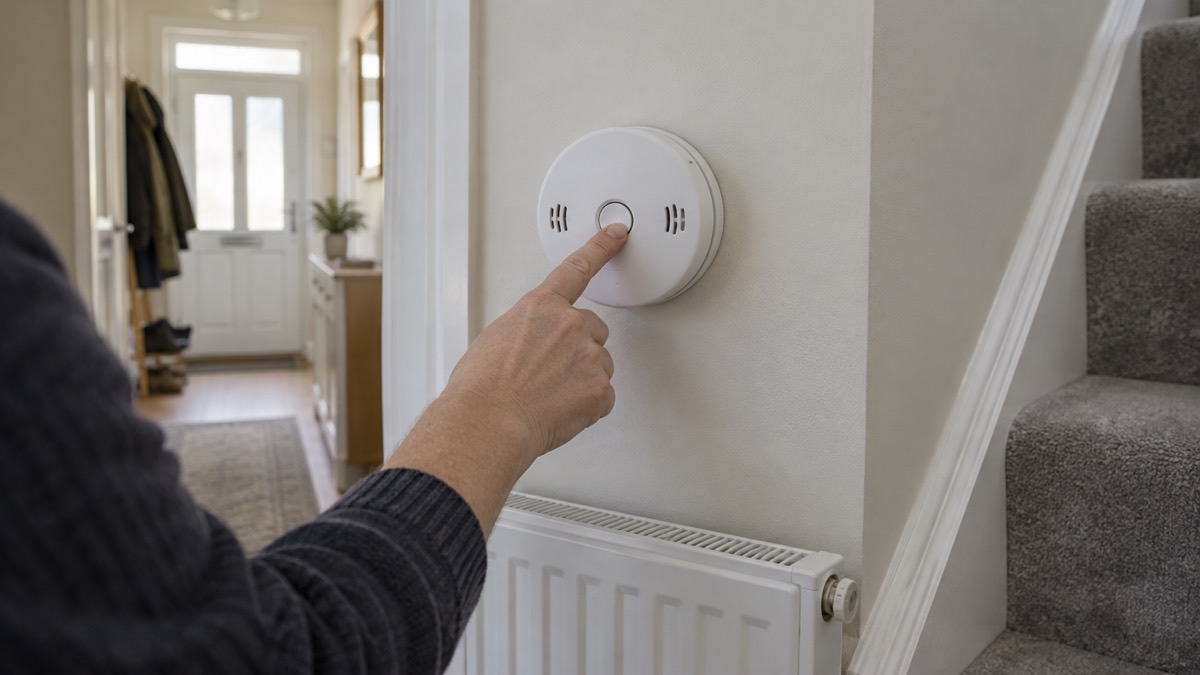
Winter is when the pressure builds. A carbon monoxide alarm is the backstop for the way households heat and ventilate their homes when it is cold. It does not replace ventilation, servicing or common sense, and it should never be treated as permission to run an appliance indoors that is not meant to be there.
If you are building a household plan around a long outage, read the power cuts and heating and cooking guides alongside this page. The alarm is one line in that plan: it covers the risk that the alternative heat source produces carbon monoxide. The rest of the plan covers warmth, light and food.
Where to buy Hispec kit and how delivery works
Hispec products reach households through the trade rather than a single High Street chain. The pattern that matters when you order is the working day cut-off. Comparable UK safety suppliers publish a next working day service with a time limit: one maker offers next working day delivery for orders placed by 11:00 Monday to Friday, subject to destination and courier availability4, and another offers next working day delivery on orders made before 4:30pm5. Those are other suppliers' terms, given here because they show the shape of the arrangement, not Hispec's own.
The practical advice is the same either way. Order early in the day, check the cut-off on the supplier's own page at the moment you order, and do not assume a Friday afternoon order will arrive before the weekend. If you are buying an alarm because a cold snap is forecast, order before the forecast, not after it.
A second route is collection. Where a supplier runs a trade counter, collection lets you take the unit away the same day and check the markings on the box before you pay. That is worth doing for a life safety product: you can confirm the markings and the lifespan date on the unit itself before it goes on the wall.
Technical support, certification and compliance
Technical support for Hispec products is handled by the Chorley team, according to the supplier listing6. For a household, that means questions about fitting, lifespan and suitability have a route back to the people who know the product, rather than a general call centre. Use it before you fit an alarm in an unusual place, such as a boat or a caravan, where the listing records the unit as suitable1.
Compliance is the part a household can check for itself. The alarm is CE marked and UKCA marked1, and the listing records it as meeting Scottish, Welsh and Northern Ireland legislation1. Product safety in the UK is led by the Office for Product Safety and Standards2, and the government's resilience planning recognises that supply chains themselves need watching, with a new Supply Chain Centre set up to work with businesses and international allies to diagnose acute vulnerabilities and threats7. That is background, not something a household acts on, but it explains why markings and recalls are worth taking seriously.
Recalls are the other half of compliance. When a product is recalled, the notice tells you exactly what to do and who to contact. A recent example shows the pattern: the Habico coloured sand recall asks customers to contact the company on 0113 263 1500 or at sales@habico.co.uk8. Read any recall notice for a safety product in full and follow its contact route rather than a general enquiry address.
Orders for Fire and Rescue Services and the wider safety net
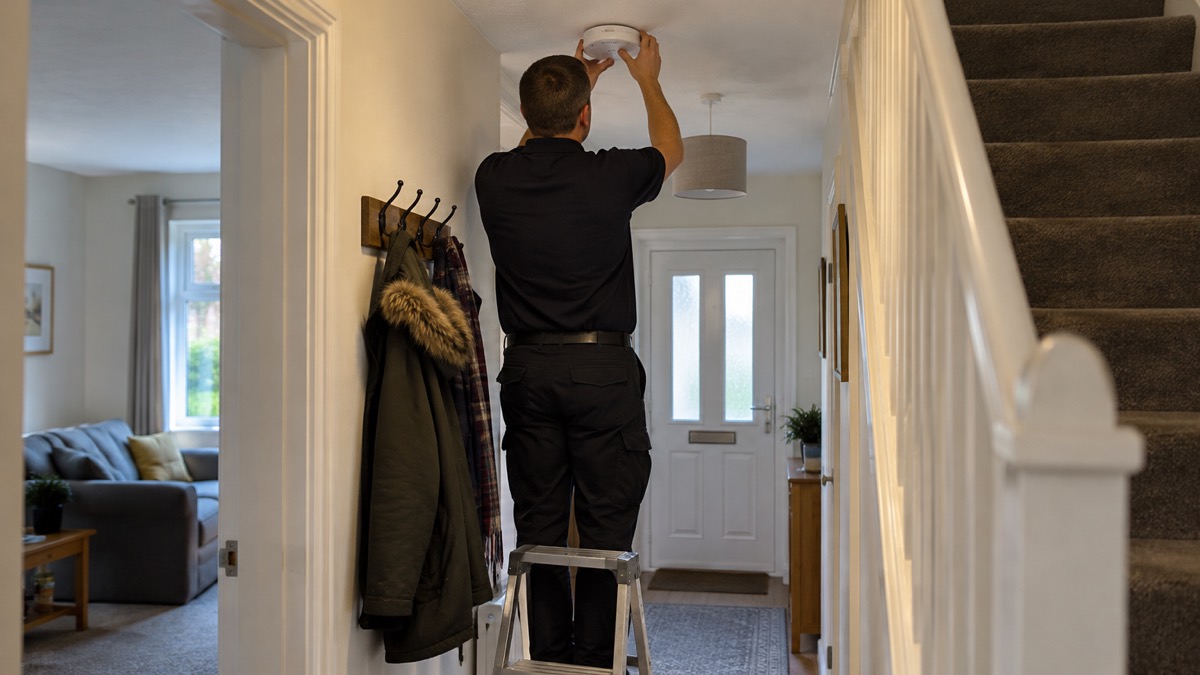
Hispec supplies the trade, and the trade includes the fire and rescue services. That matters to a household indirectly: the same channels that stock alarms for brigades stock them for installers and landlords, which is why the product turns up through wholesalers rather than only in retail packaging.
The fire and rescue service itself is a source of free help for households at higher risk. Norfolk Fire and Rescue Service offers free home fire safety visits for Norfolk residents who have a heightened fire risk9, and Norfolk and Suffolk Fire and Rescue Services offer free home fire safety visits for eligible residents who have a heightened fire risk10. If you or someone you care for is older, disabled or living with a condition that makes escape harder, ask your local service what it offers.
For households where someone cannot escape unaided, a residential personal emergency evacuation plan is a written statement recording what they should do in a fire11. The fire and rescue service will only use that information to help them plan a safe and effective response if a fire in your building occurs12. That is the formal version of the conversation an alarm starts.
How to contact Hispec and where to get help
Contact Hispec through the route printed on your product paperwork or the supplier's listing, and use the Chorley team for technical questions about fitting and lifespan. Keep the packaging and the receipt until the unit is fitted and tested, so that any query about markings or the lifespan date can be settled quickly.
If you cannot reach the maker, the wider safety net still works. Trading Standards advice is available through the Citizens Advice consumer service on 0808 223 113313. In Northern Ireland, carbon monoxide advice is available from HSENI on 0800 0320 12114. For a suspected gas escape or a carbon monoxide alarm sounding, leave the building and call the emergency services; do not wait to finish a call to a supplier.
Scams are part of the picture too. If you receive a suspicious email or text claiming to be from a safety supplier, send suspicious emails to report@phishing.gov.uk or texts to 772615. A household that has just been frightened by an alarm is exactly the household a scammer will target with a fake replacement offer.
Sources (15)
- Hispec 10 Year Battery Carbon Monoxide Alarm, Safelincs, 2026-10-29
- Product safety campaigns, Peterborough City Council
- Home - Hispec, Hispec
- Sediment Reduction Cartridge 9E04 for Duo systems, Doulton, 2026-10-28
- Domestic smoke and heat alarms, UltraFire, 2026-11-02
- Trade Customers - Hispec, Hispec
- UK Government Resilience Action Plan, GOV.UK, 2025-07-14
- Product recall: Habico Ltd 350g jars of coloured sand, GOV.UK, 2026-07-09
- Home fire safety check, Norfolk County Council, 2026-10-29
- Stay warm and well this winter, Norfolk and Suffolk ICB, 2026-10-16
- Residential Personal Emergency Evacuation Plans (PEEPs), GOV.UK, 2025-07-04
- Residential Personal Emergency Evacuation Plans (RPEETs), North Yorkshire Fire and Rescue Service, 2026-03-30
- Safety advice for older people, Nottinghamshire County Council, 2025-10-02
- Home fire safety, Northern Ireland Fire and Rescue Service, 2026-10-14
- Synnovis cyber attack: statement from NHS England, NHS England, 2024-06-21
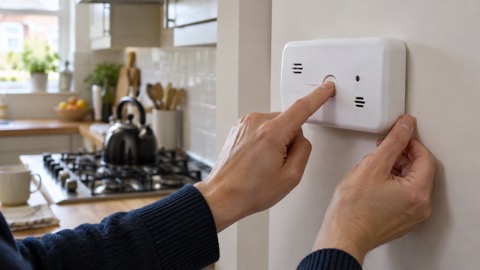 Hispec HSA/BC/10 Carbon Monoxide Alarm
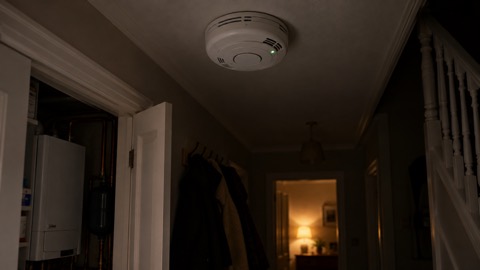 Hispec RF10 PRO
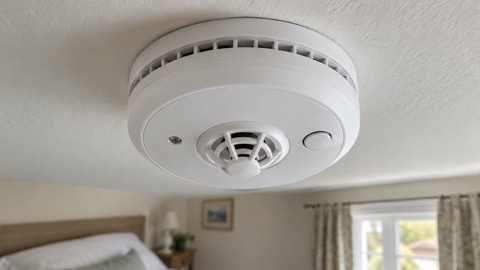 Hispec RF10-PRO Smoke and Heat Alarm