
Aico is a United Kingdom manufacturer of fire and carbon monoxide alarms for homes, and has been in domestic fire and carbon monoxide protection since 19901. Its range covers the three alarm types a UK household needs: smoke alarms, heat alarms for kitchens where smoke alarms would be set off by cooking, and carbon monoxide alarms for rooms with fuel-burning appliances. To help households work out which alarms suit their home, Aico has created a product selector on its website1.
The range splits into two broad kinds. Sealed battery alarms, such as the Ei208 Carbon Monoxide Alarm, carry a battery designed to power them for ten years and are fitted by the householder without wiring1. Many alarms in the range can also be linked together, by wire or by radio, so that when one alarm senses danger, every alarm in the house sounds3.
This page sets out what Aico makes for UK homes, how the sealed battery and mains ranges differ, how wireless linking works, what the standards mean when you are choosing, and the recall affecting one Aico heat detector that you should check before buying or fitting. For the wider picture of fire and carbon monoxide safety at home, see Home Emergencies: Fire, Carbon Monoxide, Gas Leaks and Burst Pipes.
What Aico makes for UK homes
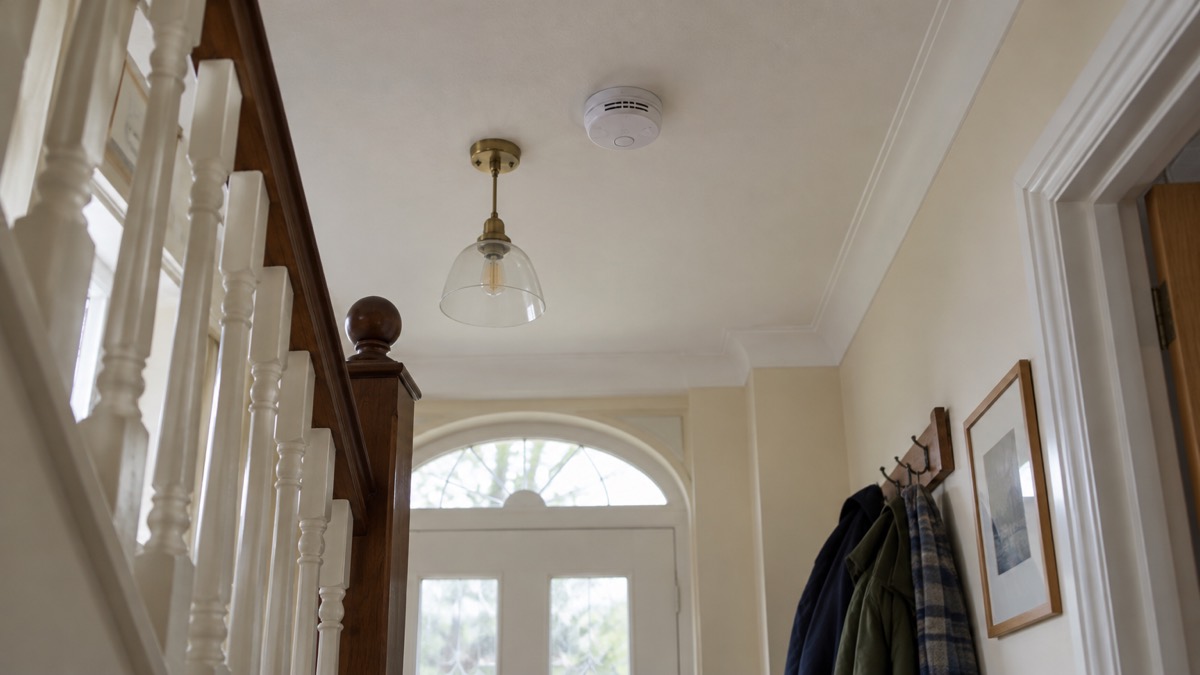
Aico's product range addresses the two dangers that official guidance treats separately: fire and carbon monoxide. Fire and rescue services are explicit that the two alarm types do different jobs and that neither substitutes for the other. Warwickshire Fire and Rescue Service's guidance states that "CO alarms are specifically designed to detect carbon monoxide, while smoke alarms are designed to detect smoke and fire"7, and its home heating advice adds that "they are not a substitute for one another and both types of alarm should be installed in your house"8. A household fitted with Aico alarms therefore needs both smoke or heat alarms and a carbon monoxide alarm wherever fuel is burned.
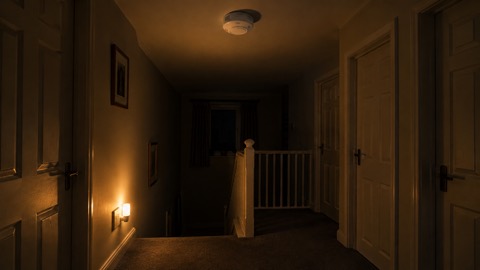
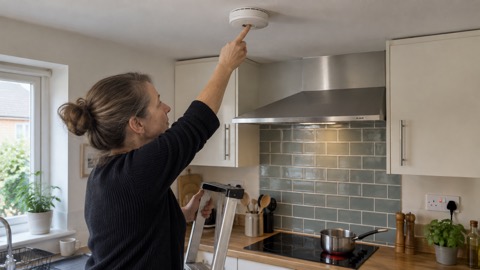
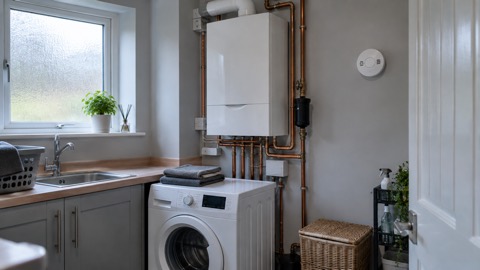
Within that, Aico makes alarms for each place in the house. Official sensory support guidance from South Lanarkshire Council names three Aico products by type: the Ei208WRF battery interlinked carbon monoxide alarm, the Ei650RF battery interlinked radioLINK+ smoke alarm, and the Ei603RF battery interlinked radioLINK+ heat alarm3. The pattern is consistent: a smoke alarm for circulation spaces and living areas, a heat alarm for the kitchen, and a carbon monoxide alarm for rooms with a fuel-burning appliance. The product pages on this site cover the Aico Ei146e Optical Smoke Alarm, the Aico Ei144e Heat Alarm, the Aico Ei208 Carbon Monoxide Alarm, the Aico Ei3016 Optical Smoke Alarm and the Aico Ei3024 Multi-Sensor Alarm.
The reason a household wants all of this in place is straightforward. Carbon monoxide has no smell and no taste, and official advice across the UK is uniform that an alarm is the only reliable warning. Devon and Somerset Fire and Rescue Service notes that carbon monoxide alarms "are available from DIY and hardware stores"9. The Health and Safety Executive for Northern Ireland adds that CO alarms "are also sold in many retail outlets including DIY/hardware stores, online sales, supermarkets and trade retail stores, and manufactured by a wide range of companies"10, which is the market Aico sits in.
Sealed powered-for-life alarms: the Ei208W and Ei208WD series
The Ei208 series is Aico's battery-powered carbon monoxide alarm range. The maker describes it plainly: "Keep your home safe with the battery-powered Ei208 Carbon Monoxide Alarm"1. The key specification for a household is the power source. Which?, testing the Aico Ei208 Carbon Monoxide Alarm, records its power source as a "10-year sealed battery"2. That means no battery changes for the life of the alarm: you fit it, test it regularly, and replace the whole unit at the end of its ten-year life.
The series is standalone rather than interlinked. Which? lists the Ei208 as "Standalone" on the standalone-or-interlinked question2, so it sounds on its own and does not trigger the rest of the house. That suits a flat or a single-storey home with one fuel-burning appliance, and it suits anyone who wants to add carbon monoxide protection without an electrician. If you need every alarm in the house to sound together, look instead at the interlinked models in the range, covered below.
Within the series, the difference between the Ei208W and the Ei208WD is a data feature. The maker's product page for the Ei208 states that the range includes "built-in AudioLINK+ data extraction technology"1. In practice this lets the alarm's stored data be extracted through its sounder, which is useful after a carbon monoxide event or during a service, when you or an engineer want to see what the alarm recorded. Both versions carry the same sealed, powered-for-life battery design; the WD adds the data extraction.
| Model | Power | Linked or standalone | Notable feature |
|---|---|---|---|
| Ei208W | 10-year sealed battery2 | Standalone2 | Carbon monoxide detection |
| Ei208WD | Sealed powered-for-life unit | Can be upgraded or supplied with RF modules | Same series as the Ei208W |
| Ei208WRF | Battery | Interlinked by radio3 | Links wirelessly with other alarms |
For the fuller guide to carbon monoxide risks, symptoms and alarms, see Home Emergencies: Fire, Carbon Monoxide, Gas Leaks and Burst Pipes.
Hardwired mains alarms
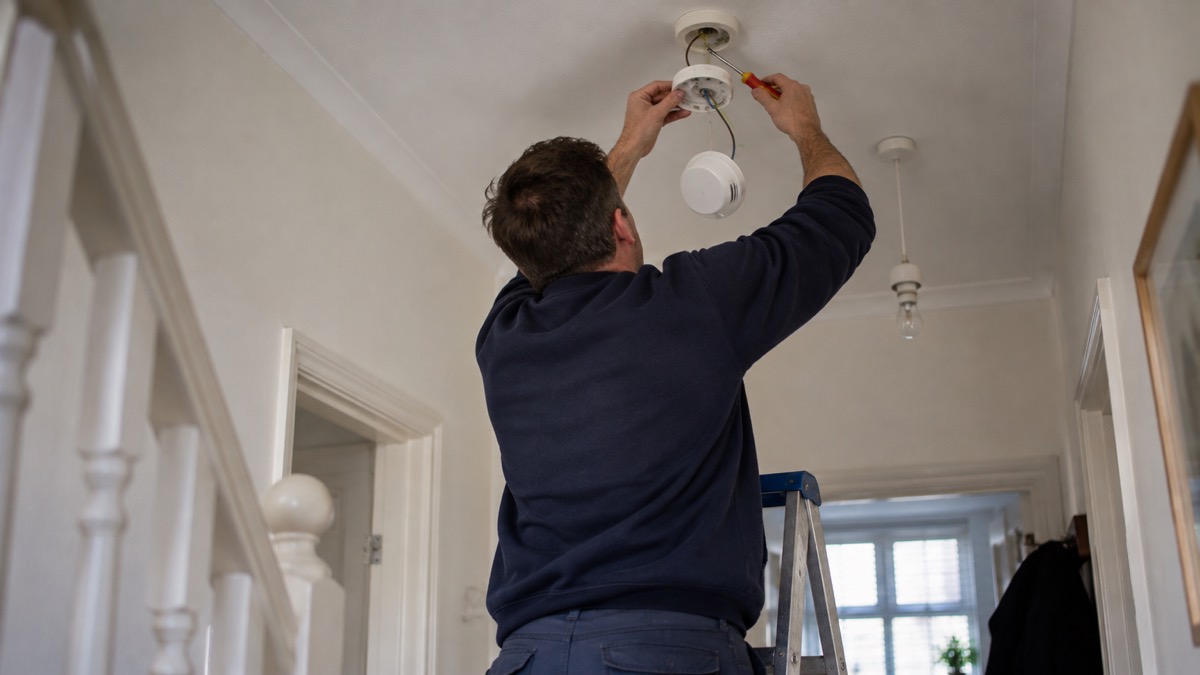
Aico's mains-powered range runs off the household electricity supply. The example with the fullest independent record is the Ei3028 Heat and Carbon Monoxide Alarm, which Which? tested in July 2025. Its power source is "mains powered with a 10-year sealed back-up battery"2, so a power cut does not silence it: the sealed battery carries it. Which? also records it as "Interlinked", able to be "linked with other related Aico alarms", with a "10-year battery life, five-year warranty"2. The five-year warranty is the figure to note when comparing against the sealed battery range.
Mains alarms are the type official guidance expects a qualified electrician to fit. The Scottish Government's guidance on fire and smoke alarms in Scottish homes states that "any qualified electrician can fit the mains-wired type"11. Hardwiring also opens the second route to interlinking: Scottish Government guidance on the tolerable standard notes that "alarms can be interlinked via wires (hardwired) or wirelessly (by radio communication)"4. A hardwired Aico system therefore suits a household that is already having electrical work done, is rewiring, or wants the alarms wired into the circuits permanently, with the wireless route available where running wires between floors would be disruptive.
The trade-off against the sealed battery range is installation. A battery alarm is a householder's job; a mains alarm needs an electrician. What you get back is the back-up battery arrangement and, on the Ei3028, a combined heat and carbon monoxide sensor in one unit on the ceiling, which reduces the number of separate devices a kitchen or utility room needs. When the mains range is paired with the Aico Ei3016 Optical Smoke Alarm or the Aico Ei3024 Multi-Sensor Alarm elsewhere in the house, the interlinking means a kitchen heat alarm can sound the upstairs smoke alarms.
Adding an RF module to link alarms
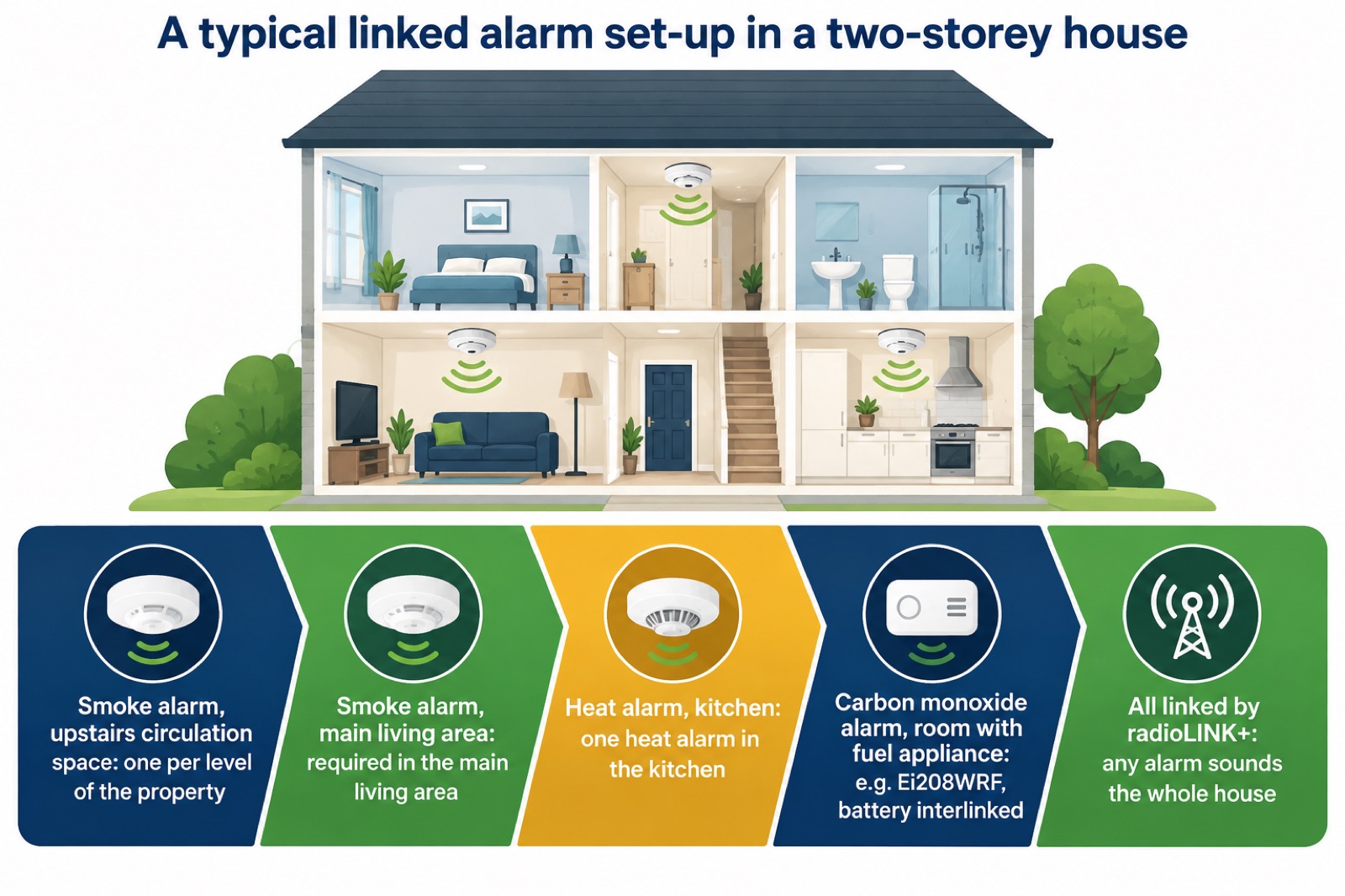
Interlinking is the feature that turns a set of individual alarms into a whole-house system. When alarms are linked, the alarm that detects the problem sounds every other alarm in the network, so a fire in the kitchen wakes people sleeping upstairs. Aico's route for this without wiring is its RadioLINK+ technology: the Ei208WRF RadioLINK+ battery carbon monoxide alarm connects wirelessly with all other Aico wireless interconnection products via RadioLINK+ radio frequency3.
The battery interlinked route matters for households that cannot easily run wires, including older properties, flats with limited access to voids, and anyone fitting alarms room by room over time. The same council guidance also names the "Aico Ei208WRF battery interlinked carbon monoxide alarm"3, so the carbon monoxide protection can join the same wireless network rather than standing alone. Scottish Government guidance confirms the principle generally: alarms "can be interlinked via wires (hardwired) or wirelessly (by radio communication)"4.
How many alarms to install follows official guidance rather than the maker's marketing. South Lanarkshire Council's guidance states that "typically, one smoke alarm is required on each level of the property and in the main living area" and that "one heat alarm should be installed in the kitchen"3. A typical two-storey house therefore wants a smoke alarm upstairs, a smoke alarm downstairs in the main living area, a heat alarm in the kitchen, and a carbon monoxide alarm in any room with a fuel-burning appliance, all linked so that any one of them sounds the others.
Certification: alarms tested to BS EN 50291
The single most important label on any carbon monoxide alarm is the standard it is tested to. Official advice across all four UK nations is consistent on this point, and it applies to Aico's carbon monoxide alarms as much as any other maker's.
- Warwickshire Fire and Rescue Service: "Look for one that meets the British Standard BS EN 50291 to ensure its effectiveness is guaranteed."7
- NHS inform Scotland: "make sure you have a carbon monoxide alarm (BS EN 50291 compliant) fitted"12
- The Health and Safety Executive: "Before purchasing a CO alarm, always ensure it complies with British Standard EN 50291 and carries a British or European approval mark, such as a Kitemark"13
A household buying an Aico carbon monoxide alarm should check the product marking and packaging for the standard, exactly as these bodies advise, and look for a Kitemark or equivalent approval mark alongside it13. The Health and Safety Executive's advice to check for the standard and an approval mark before purchasing applies to any carbon monoxide alarm on the shelf, whatever the brand13.
For smoke and heat alarms, the equivalent check is the fire alarm standard on the product, and the same discipline applies: buy from a reputable source and check the marking before you fit. The Scottish Government's buying guidance for alarms in Scottish homes covers both types and where to buy them11.
Choosing alarms for each room
The practical starting point for working out which Aico alarms your home needs is the room-by-room pattern in the official guidance above: one smoke alarm on each level and in the main living area, one heat alarm in the kitchen, and a carbon monoxide alarm wherever fuel is burned3. Aico has created a product selector to help homeowners ascertain exactly which alarms they need, and offers expert technical support and advice on alarm selection, siting and installation1.
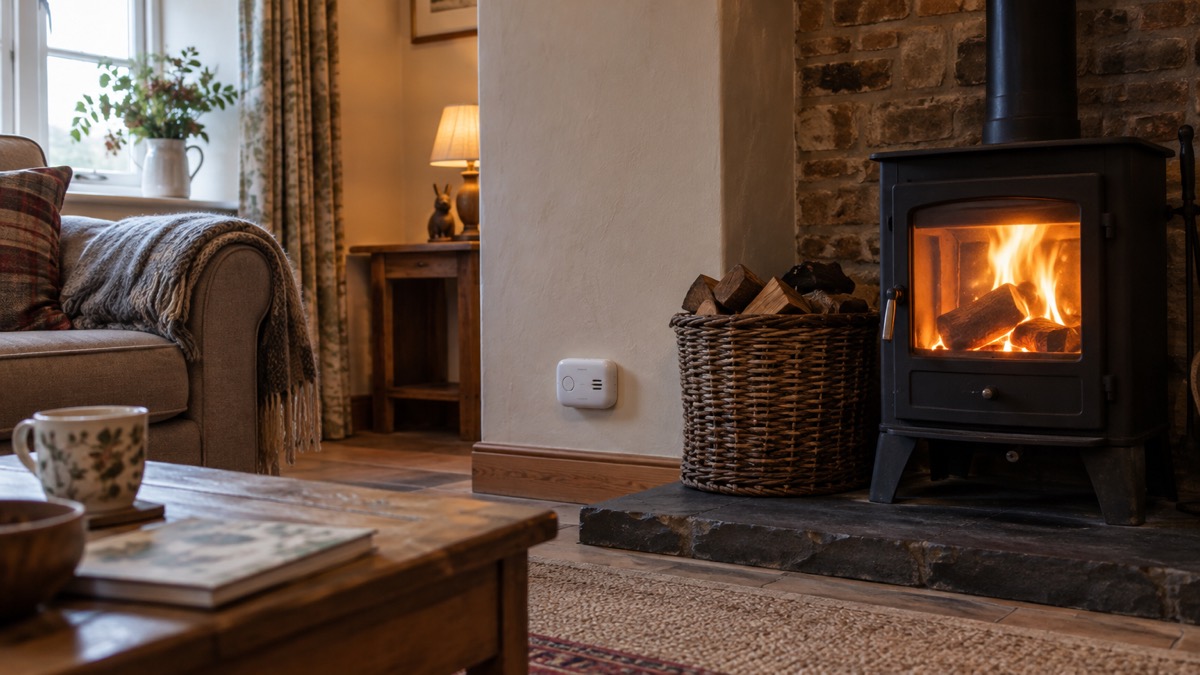
Siting matters as much as selection. Warwickshire's guidance on carbon monoxide alarms is to "install them according to the manufacturer's instructions, typically at a low level, as CO tends to sink to the ground"14. That instruction carries two parts of equal weight: follow the maker's own instructions for the specific alarm, and expect carbon monoxide alarms to sit lower than smoke alarms, which go on the ceiling. Every Aico alarm ships with the maker's siting instructions, and those instructions govern where the unit goes.
Two circumstances deserve special attention. Households with solid fuel appliances, such as log burners, are told by Cumberland Council to make sure they have a working carbon monoxide alarm15, and the HSE's advice to owner-occupifiers is to ensure any CO alarm complies with BS EN 50291 and carries an approval mark before purchase13. Households that include someone older, disabled or medically dependent, who may need more time to respond to an alarm, should also read Extra Help in an Emergency, since early warning through interlinked alarms matters most where evacuation is slower.
Where to buy Aico alarms in the UK
Aico alarms are sold through the same channels official guidance describes for alarms generally. North Yorkshire Fire and Rescue Service notes that "smoke alarms can be purchased from most DIY stores and some supermarkets"16. The Scottish Government's guidance states that "you can buy both types of alarms online or in store from a number of retailers, and any qualified electrician can fit the mains-wired type"11. London Fire Brigade's carbon monoxide safety booklet advises that "CO alarms should be bought from reputable DIY stores and supermarkets, or directly from most energy suppliers"17. The HSE adds that "CO alarms cost from £15 and can be purchased in most hardware shops"13, a useful floor for budgeting, though prices of specific Aico models vary by retailer and are not given here.
The consistent word across all of this guidance is "reputable". Before purchasing, the Health and Safety Executive advises, always ensure the alarm complies with British Standard EN 50291 and carries a British or European approval mark, such as a Kitemark13. For mains-wired models, the same buying trip should include arranging a qualified electrician to fit them11.
Support, warranty and registering your alarms
Aico has created a product selector to help homeowners ascertain exactly which alarms they need1. The warranty figure recorded independently is the Ei3028's five-year warranty2; check the documentation that comes with each alarm for the warranty that applies to that model.
One habit official guidance recommends for any product with a battery is registration. Fire and rescue services, advising on lithium-ion battery products, put it in general terms: "Register your product with the manufacturer to validate any warranties, batteries are usually included in warranties. Registering makes it easier for manufacturers to contact you in the event of safety or recall information"18. The logic applies to any alarm with a sealed battery: registration means the maker can reach you if a safety notice is issued. Fire Scotland also advises on registering appliances, noting you will typically need "the model name or number, serial number, purchase date"19.
Safety notice: the Ei3014 heat detector recall
The recall notice describes the product as "a white, battery-powered heat detector" and records the corrective action plainly: "The product has been recalled from end users"6. The notice lists the country of origin as the United Kingdom20. This is the only Aico recall in the sources used for this page, and it affects a specific model in specific batches rather than the range as a whole. The lesson for any household is the one the fire and rescue services give: know which alarms you have, keep a note of batch and serial numbers, and register products so a maker can reach you if something goes wrong18.
If your kitchen heat alarm is an Ei3014, check the batch number on the unit against the three listed above before assuming it is affected. If it is, arrange a replacement promptly, because a recalled heat detector should not be counted as part of your fire detection while the recall stands. The Aico Ei144e Heat Alarm page covers the heat alarm role in the kitchen, and Home Emergencies covers the wider fire and carbon monoxide plan for your household.
Sources (20)
- Ei208 Battery CO Alarm product page, Aico, 2026
- Carbon monoxide detectors review, Which?, July 2025
- Sensory support: alarms for deaf and hard of hearing households, South Lanarkshire Council, 2026
- Tolerable standard guidance: satisfactory fire and carbon monoxide detection, Scottish Government, 2023
- Carbon monoxide (CO), Public Health Wales, 2025
- Product recall: Aico Ei3014 Heat Detector, UK Government, 2025
- Smoke alarms and CO detectors, Warwickshire Fire and Rescue Service, 2026
- Safe home heating: CO and smoke alarms, Warwickshire Fire and Rescue Service, 2026
- Carbon monoxide safety at home, Devon and Somerset Fire and Rescue Service, 2026
- Carbon monoxide alarms, Health and Safety Executive for Northern Ireland, 2026
- Fire and smoke alarms in Scottish homes: where and what to buy, Scottish Government, 2024
- How to stay safe in cold weather, NHS inform Scotland, 2026
- Domestic gas: frequently asked questions for owner-occupiers, Health and Safety Executive, 2026
- Safe home heating: CO alarm standards, Warwickshire Fire and Rescue Service, 2026
- How to prevent fire in your home, Cumberland Council, 2026
- Safe at home: frequently asked questions, North Yorkshire Fire and Rescue Service, 2026
- Carbon monoxide safety booklet, London Fire Brigade, 2019
- E-bikes and e-scooters fire safety, Mid and West Wales Fire and Rescue Service, 2026
- Electrical safety at home, Scottish Fire and Rescue Service, 2025
- Aico Ei3014 Heat Detector recall details, London Borough of Bromley, 2025
 Aico Ei146e Optical Smoke Alarm
 Aico Ei144e Heat Alarm
 Aico Ei208 Carbon Monoxide Alarm
 Aico Ei3016 Optical Smoke Alarm
 Aico Ei3024 Multi-Sensor Alarm
 Aico Ei3014 Heat DetectorSome units recalled
 Aico Ei650RF Interlinked Smoke Alarm
 Aico Ei603RF Interlinked Heat Alarm