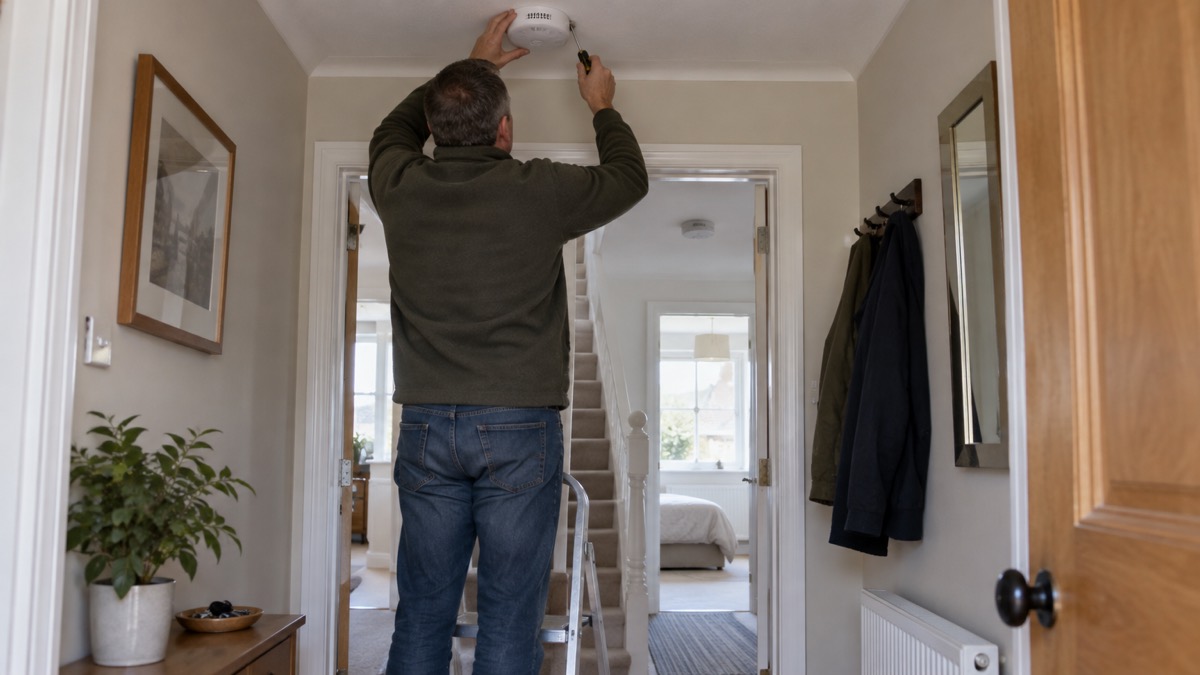
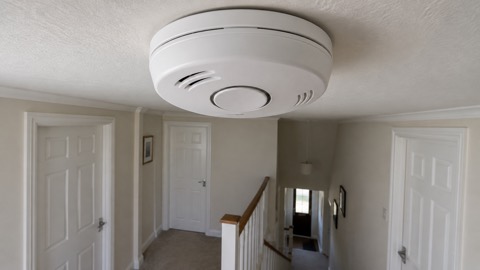
The Aico Ei3016 is a mains powered optical smoke alarm from the Aico Ei3000 Series, wired into the home's electrical supply and fitted to the ceiling. It is designed for bedrooms, hallways and living rooms, sounds at 85dB, and is 150mm across and 55mm deep1. It is one part of a household's fire warning, not the whole of it: fire services advise at least one working smoke alarm on every level of the home, and a flat on more than one level needs a detector on each floor2.
If you are choosing an alarm for a hallway, landing or bedroom and want to know whether this one suits, the short answer is that it is a conventional mains wired smoke alarm for those rooms, and it is listed as compliant with Scottish legislation from 20221. What decides whether it is right for your home is less the model than the wiring, the linking and the siting: mains powered alarms need to be installed by a qualified electrician and have a backup battery for power cuts4.
This page sets out what the Ei3016 is and does, how it links with other alarms, where it should go, how to test and clean it, what its beeps mean, and when the whole unit has to be replaced. It does not cover every alarm on the market; for that, see Smoke Alarms: Types and How to Choose One.
Specifications at a glance
The Ei3016 is an optical sensor alarm, which means it detects smoke rather than heat. It is a wired, mains powered unit rather than a battery only alarm, and it carries a Grade D1 rating, meaning mains power with a ten year longlife backup1. The retailer lists it as suitable for the home, with LED indicators and screw fixings included1.
| Specification | Detail |
|---|---|
| Product range | Aico Ei3000 Series1 |
| Sensor type | Optical1 |
| Power type | Mains powered (230V)1 |
| Connection | Wired1 |
| Grade | Grade D1: mains powered, 10 year longlife backup1 |
| Sound level | 85dB1 |
| Diameter | 150mm1 |
| Height | 55mm1 |
| Installation position | Ceiling1 |
| Positioning | Bedrooms, hallways, living rooms1 |
| Display | LED indicators1 |
| Fixing | Screws included1 |
| Warranty | 5 years1 |
The retailer's listing gives the certification reference BS 5839-6 for this alarm1. If the certification matters to you, for example for a building control sign off or a landlord's record, ask the supplier or manufacturer to confirm in writing which standard the unit is certified to. For background on what the grades mean, see Alarm Standards: BS 5839-6, BS EN 50291 and System Grades.
Whichever model you choose, fire services advise looking for one with a British Standard Kitemark symbol2. A smoke alarm is a warning device that detects smoke at the earliest stages of a fire, so the point of the specification is simply that it works when the fire is still small2.
Linking up to 12 alarms so they all sound together
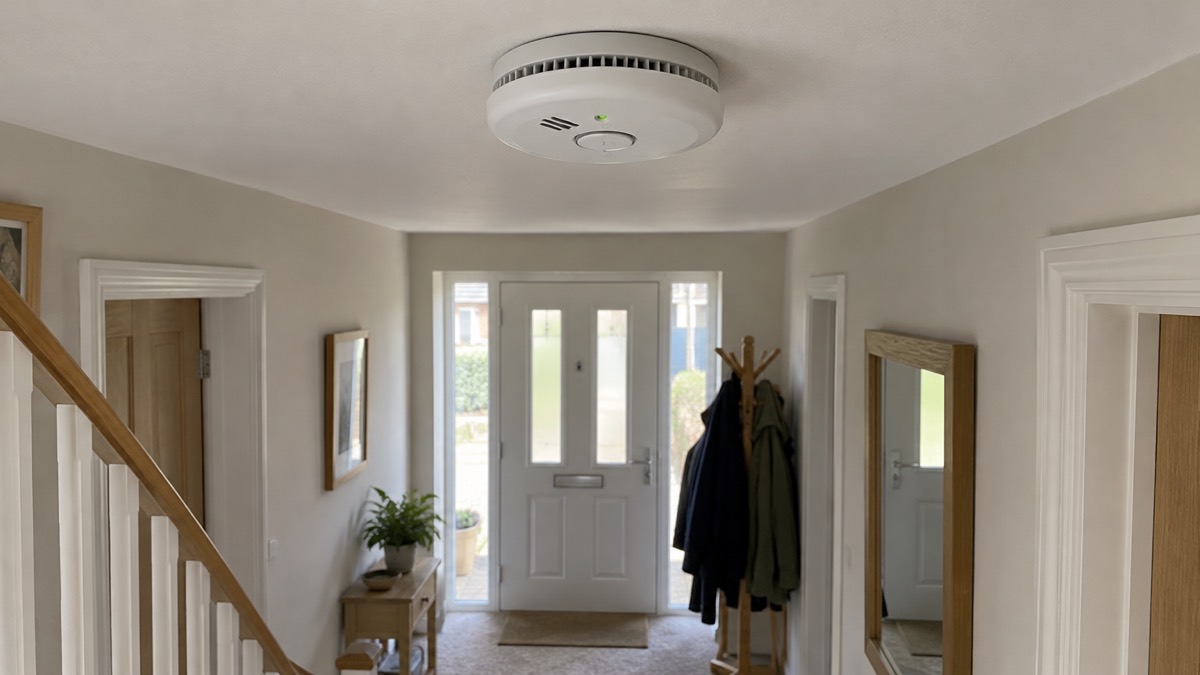
One alarm sounding in an upstairs landing is of limited use to someone asleep in a back bedroom with the door shut. That is why fire services put such weight on interlinking: when one alarm detects a fire, they all go off together, giving everyone in the home early warning5. Interconnecting alarms are described by fire services as useful in larger properties and for people who are deaf or hard of hearing, precisely because every alarm sounds when one senses smoke5.
The Ei3016 is a wired alarm in the Aico Ei3000 Series1. Linked alarms are useful in larger properties and for people who are D/deaf or hard of hearing: when one alarm senses smoke, every alarm goes off4. The practical effect is that a smoke alarm in the hall, a heat alarm in the kitchen and an alarm on the landing all raise the same alert across the house.
- Test the link, not just the alarm. Fire services advise that all interlinked alarms should sound when testing, and that if they do not sound, you should fit a new alarm6.
- Plan for the whole house. At least one working smoke alarm on every level is the baseline, and a flat over more than one level needs a detector on each floor2.
- Think about who sleeps where. For those with limited mobility, an alarm should be fitted where they sleep7.
Linking is also how specialist alerts reach the right person. Where someone has a hearing impairment, fire services advise checking whether they can hear a sounding alarm from the place where they usually sleep, and if not, arranging interlinked smoke and heat alarms with an interlinked strobe light and vibrating pad, so that a vibrating and visual alert is given if any alarm in the home activates8. For more on how these systems fit together, see Interlinked Alarms: How Linking Works.
Where to fit it: ceiling positions within 7.5m
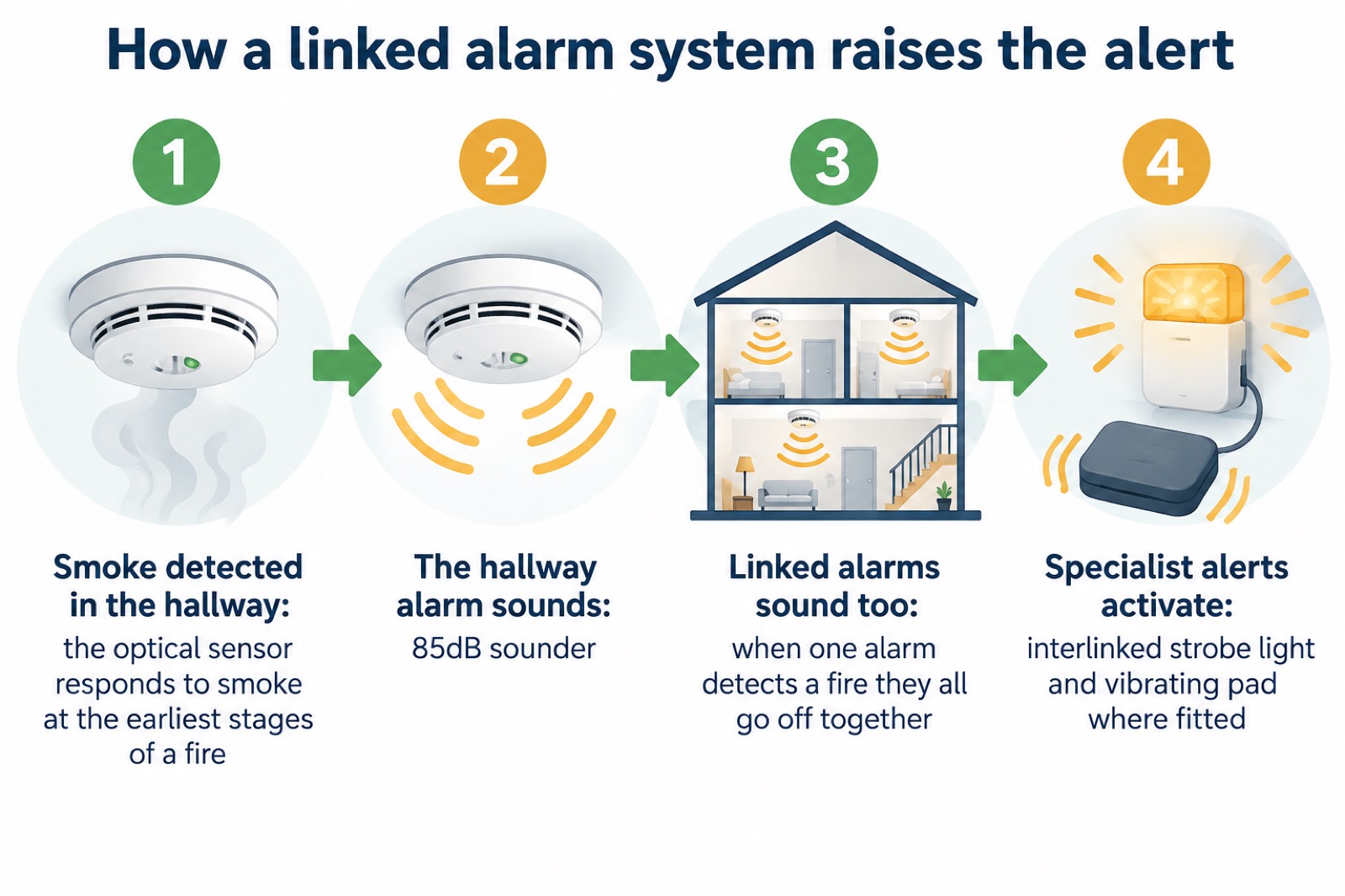
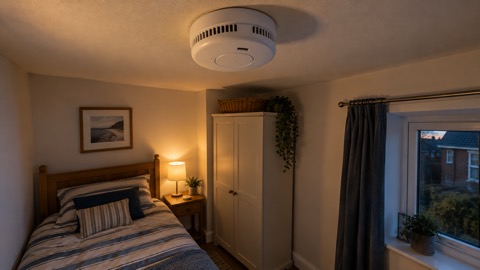
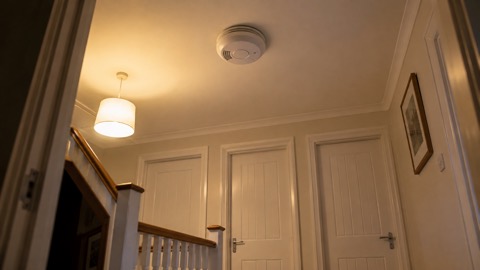
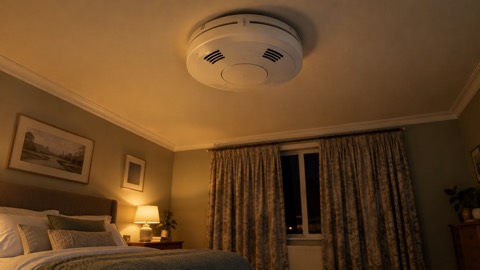
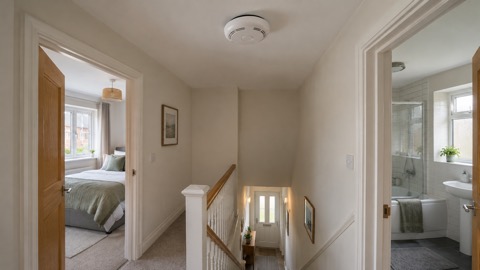
The Ei3016 is designed for ceiling mounting, and the retailer lists bedrooms, hallways and living rooms as its positions1. That matches the general advice from fire services: fit at least one smoke alarm on every level of your home4, and in Scotland the standard goes further, requiring a smoke alarm in the living room and in circulation spaces such as hallways and landings9.
The 7.5m figure is the reach of the alarm's coverage in a typical installation, and it is why a long hallway or landing often needs more than one unit rather than a single alarm at one end. The practical rules that follow from the siting advice are:
- Ceiling, not wall, for this model. The Ei3016 is listed for ceiling installation1.
- Every level covered. At least one smoke alarm on every level of the home4.
- Bedrooms, hallways and living rooms. These are the rooms the Ei3016 is listed for1.
- Keep it clear. Do not box an alarm in or cover it; it needs air to sense smoke.
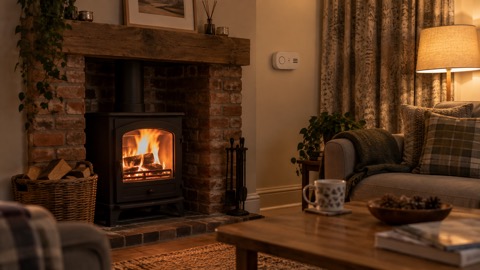
If you are fitting a carbon monoxide alarm at the same time, the siting rules are different: official guidance says a CO alarm should be ceiling mounted and at least 300mm from any wall, or wall mounted at least 150mm below the ceiling and higher than any door or window in the room, unless the manufacturer says otherwise10. Do not apply those measurements to a smoke alarm, or the reverse. For the detail on siting, see Where to Fit Smoke Alarms and How Many Smoke Alarms Does a House or Flat Need?.
Installation needs a qualified electrician
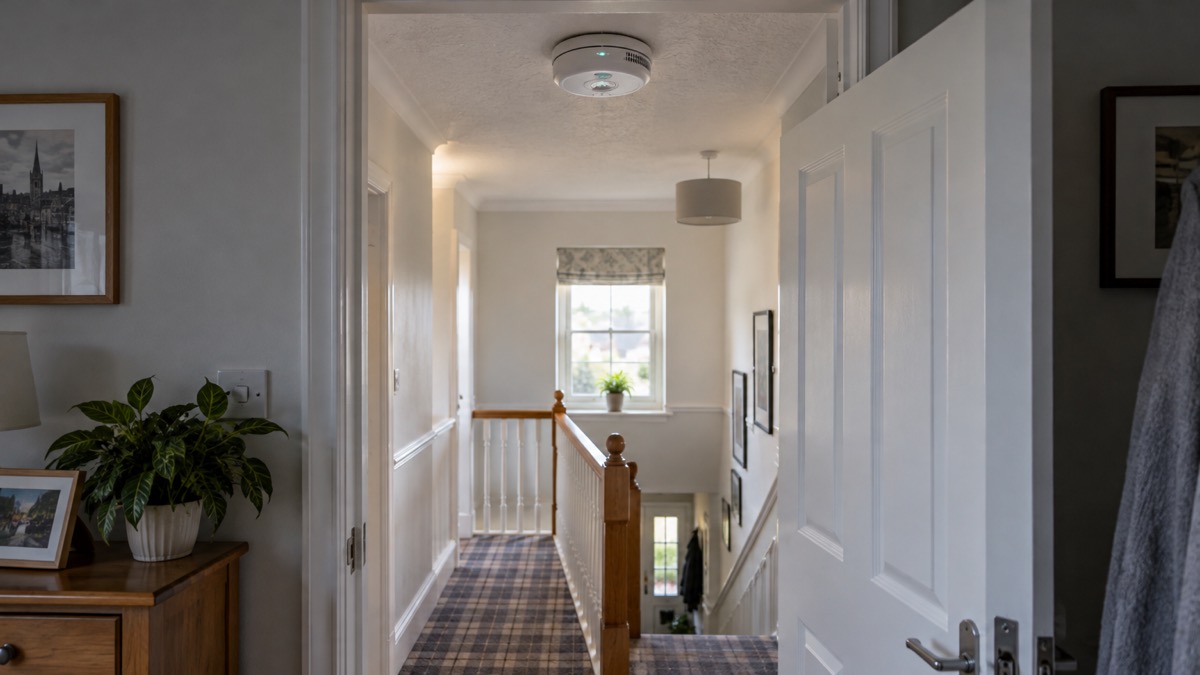
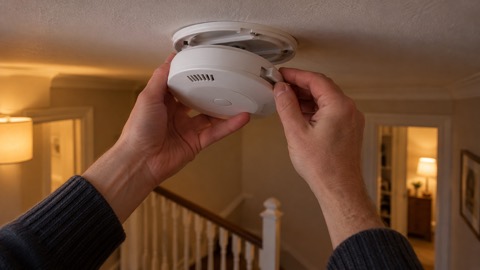
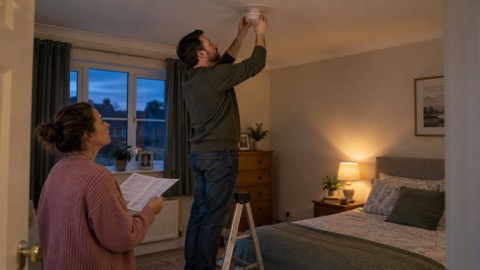
The Ei3016 is a wired, mains powered alarm, and mains powered alarms need to be installed by a qualified electrician and have a backup battery in case of a power cut4. That is not a formality: the unit takes its power from the home's fixed wiring, so fitting one means working on that wiring, and the general principle fire services apply to electrical work in the home is that it should be done by someone competent to do it11.
The retailer lists screw fixings as included1, which covers mounting the base to the ceiling. It does not make the electrical connection a DIY job. If you are having electrical work done anyway, for example fitting an outdoor socket for plug-in solar panels, fire services advise using a qualified and competent installer for the electrical work12, and the same applies here.
Landlords also have to keep a record of previous safety checks and issue the current record to the tenant15, and where access is needed for maintenance or safety check work, the tenancy contract should allow it, though nobody may use force to enter the property16. If you are a tenant and the alarm is not working, put the request in writing and keep a copy.
Testing it every week and cleaning it every six months
A working smoke alarm greatly reduces the risk of injury or death due to fire17, and the whole value of the Ei3016 depends on it being tested. Fire services advise that hard-wired, mains powered smoke alarms should be tested weekly, as well as replaced in line with the manufacturer's guidelines14. Some fire services put the minimum at least monthly4; weekly is the safer habit and the one to build into a routine.
Testing is simple: press the test button on the unit and confirm the alarm sounds. If the alarms are interlinked, check that the others sound too, because all interlinked alarms should sound when testing, and if they do not, you should fit a new alarm6.
- Weekly: press the test button and listen for the sounder14.
- Weekly, if linked: confirm every linked alarm sounds, not just the one you pressed6.
- Six monthly: clean the unit. Dust and insects can cause false alarms, so give the casing a gentle clean following the manufacturer's instructions.
- After any building work: test again, because dust from sanding and drilling is a common cause of false alarms.
If false alarms are a recurring problem, the cause is usually siting or dust rather than the alarm itself. See How to Stop Smoke Alarm False Alarms and Why Does My Smoke Alarm Keep Chirping?.
What to do when it sounds or beeps
A continuous alarm means smoke has been detected. Treat it as real until you know otherwise: get everyone out, close doors behind you, and call 999 from outside. The household plan for this is set out in What to Do If a Fire Starts in Your House and How to Make a Fire Escape Plan.
A short chirp at intervals is different: it usually signals a fault or a low backup battery. On a mains powered alarm with a longlife backup, a chirp is a prompt to check the unit rather than to ignore it. If the alarm is interlinked and one unit chirps, check the whole system, because a fault on one unit can affect the warning the others give.
Two other sounds are worth knowing about, because households sometimes confuse them with an alarm fault. The Emergency Alerts service can make a phone play a loud siren-like sound even if it is set to silent, vibrate for around 10 seconds, read the alert aloud if accessibility settings are enabled, and display information about the emergency and the actions to take18. That is a national alert on your phone, not your smoke alarm. And if an electrical appliance's control is making a buzzing sound when switched on or giving off a smell, fire services advise replacing the appliance19; that is a fault in the appliance, not in the alarm.
If there is a fire and someone is hurt, call 999 and stay calm while you wait20. The ambulance service's own advice is to stay calm20, and the fire service will tell you what to do when you call.
Replace the whole alarm after ten years
Smoke alarms usually need replacing after ten years13, and for a ten year alarm you will need to replace the whole alarm every ten years4. Mains wired alarms should be replaced every ten years9, and fire services advise replacing the whole unit after 10 years2. The Ei3016 is a Grade D1 unit with a ten year longlife backup1, so the ten year mark applies to it.
The reason is that the sensor degrades with age even when the alarm still sounds when tested. A unit that passes its weekly test at year eleven is not the same as a new one. The maker states that most of its alarms have a 10-year life, after which they should be replaced2.
- Note the fitting date on the unit or in a household file when it is installed.
- Replace the whole unit, not just the backup battery, at ten years2.
- Replace linked alarms together where they were fitted as one system, so the whole house stays covered.
- Check for recalls before and during replacement; see How to Check If an Electrical Product Has Been Recalled.
Alarms for people who need more than a sounder
Fire services advise that for anyone with impaired hearing there are sensory alarms available which include a vibrating pad and flashing light, and that you should contact your GP to arrange an assessment11. People who are deaf or hard of hearing can get mains powered alarms with strobe lights and a vibrating pad, which can go underneath the pillow at night5, and some alarms come with an emergency light that comes on when the alarm is triggered, which is particularly suitable for people who are deaf or hard of hearing5.
Where a specialist alarm is being chosen, fire services advise choosing products that meet British Standard BS5446-3:201523. The practical steps for a household are:
- Check the bedroom test. Can the person hear a sounding alarm from where they usually sleep? If not, act8.
- Arrange the assessment. Contact the GP to arrange an assessment for sensory alarms11.
- Link the specialist alert in. An interlinked strobe light and vibrating pad gives a vibrating and visual alert if any alarm in the home activates8.
- Tell the fire service. Fire and rescue services offer home safety visits; your local service can advise on what is available where you live.
For more detail, see Smoke and CO Alarms for Deaf and Hard of Hearing People and Fire Risk Checks for a Vulnerable Person's Home.
Kit that goes with it, and where it does not belong
The Ei3016 covers smoke detection in bedrooms, hallways and living rooms1. It is not the right alarm for every room, and the fire services are clear about the alternatives.
| Room or space | Alarm type fire services recommend | Why |
|---|---|---|
| Hallways, landings, living rooms, bedrooms | Smoke alarm, such as the Ei30161 | Early warning of smoke from a fire starting elsewhere2 |
| Kitchen | Heat alarm24 | Responds to heat rather than smoke, so cooking does not set it off |
| Garage | Heat alarm24 | Same reason: dust and fumes rather than smoke |
| Rooms with a boiler or wood burner | Carbon monoxide alarm9 | Fixed combustion appliances can produce carbon monoxide |
A heat alarm in the kitchen linked to the same system means the whole house still gets warning without the alarm crying wolf every time something browns under the grill. For the comparison, see Heat Alarm or Smoke Alarm: Which Goes Where and Heat Alarms: What They Do and Where They Go.
The Ei3016 is listed for indoor home use in the rooms above1, so a cold loft or an unheated garage is outside what the product information describes. If you need cover in an outbuilding, ask the manufacturer or a qualified electrician which alarm is rated for that space. The same caution applies to keeping the house warm in a cold snap: official advice is to conserve heat by using just one or two adjacent rooms, isolated by closing doors or hanging blankets over doorways, with the kitchen and an adjoining room usually good choices25. That advice is about keeping people warm, not about where to put alarms, but it is a reminder that unheated spaces behave differently.
Where to get help and advice
If you are unsure which alarm to choose or where to put it, your local fire and rescue service can advise. Oxfordshire Fire and Rescue Service, for example, offers guidance on the best alarm to choose and where to put it on 08000 325999 or by email at fire-cfsteam@oxfordshire.gov.uk26. Other services offer home safety visits; contact your own service to ask what is available.
- Renting: your landlord must provide a smoke alarm13, and private landlords are legally required to provide working smoke alarms14. Report a faulty alarm in writing.
- Buying or fitting: use a qualified electrician for mains wired alarms4.
- Hearing impairment: contact your GP to arrange an assessment for sensory alarms11.
- After a fire: see What to Do After a Fire in Your House.
- In a flat: see What to Do If There Is a Fire in Your Block of Flats.
The rules differ across the UK. Scotland's standard requires a smoke alarm in the living room and in circulation spaces such as hallways and landings, a heat alarm in the kitchen, a carbon monoxide alarm where there are fixed combustion appliances such as boilers and wood burners, and all alarms ceiling mounted and interlinked9. The Housing (Scotland) Act 1987 is being amended to reflect the new requirements8. The Ei3016 is listed as compliant with Scottish legislation from 20221. For Wales and Northern Ireland, see Wales and Northern Ireland: Alarm Rules and Fire Services.
Sources (26)
- Ei 3000RF Series Mains Powered Smoke & Heat Alarms with Lithium Backup, Safelincs, 2026-10-29
- Smoke and heat alarms, Greater Manchester Fire and Rescue Service, 2026-10-29
- Fire safety in the home (accessible version), GOV.UK, 2022-05-25
- Fire safety in the home, Suffolk County Council, 2021-11
- Alarms, London Fire Brigade, 2026-02-17
- Bedtime checks, Scottish Fire and Rescue Service, 2024-02-06
- Home fire safety, Northern Ireland Fire and Rescue Service, 2026-10-14
- Additional advice for carers, Greater Manchester Fire and Rescue Service, 2026-10-29
- Heat and smoke alarm standards for Scottish homes, Scottish Government, 2026-10-29
- Carbon monoxide alarms in private rented properties: guidance, Scottish Government, 2021-02-16
- Other safety, Northern Ireland Fire and Rescue Service, 2026-10-22
- Plug-in solar panels: safety advice for residents and homeowners, London Fire Brigade, 2026-10-25
- Fire safety advice in your flat, Greater Manchester Fire and Rescue Service, 2026-10-29
- Safe and well booklet, Cheshire Fire and Rescue Service, 2026-04
- Student and rented accommodation, North Yorkshire Fire and Rescue Service, 2026-09-21
- Gas safety: frequently asked questions, Health and Safety Executive, 2026
- Home safety advice, Essex Prepared, 2026-10-29
- Emergency Alerts service, Croydon Council, 2026
- Electric blankets, Humberside Fire and Rescue Service, 2026-10-29
- What to do when the ambulance is coming, South Western Ambulance Service NHS Foundation Trust, 2026-10-29
- Fire and smoke alarms in Scottish homes, Scottish Government, 2024-08-14
- Product recall: Aico Ei3014 Heat Detector, Office for Product Safety and Standards, 2025-05-29
- Smoke alarms, Cheshire Fire and Rescue Service, 2026-07-27
- Alarms and sprinklers, Warwickshire County Council, 2026-10-29
- Are you ready?, Culham Parish Council, 2025-09
- Smoke alarms, Oxfordshire County Council, 2026
 FireAngel FP2620W2-R Alarm
 FireAngel ST-632 Smoke Alarm
 FireAngel ST-750 Smoke Alarm
 FireAngel SW1 Smoke Alarm
 FireAngel SW10 Smoke Alarm
 FireAngel SB1 Smoke Alarm
 FireAngel SM-SN-1 Smoke Alarm
 FireAngel FA6611 Smoke Alarm
 FireAngel FA6615 Smoke Alarm
 FireAngel FA8620BW Alarm
 Kidde 2030-DSR Smoke Alarm
 Kidde 2030-DCR CO Alarm