
The Aico Ei3014 is a mains powered heat alarm with a 10-year rechargeable lithium cell back-up, made for kitchens, garages and other rooms where smoke and fumes would keep setting off an ordinary smoke alarm1. It does not detect smoke or carbon monoxide. It watches for heat, and it sounds when the temperature around it reaches 58°C2.
If you already have one, the first thing to do is check whether it came from the recalled batch. A small production batch went out with plastic coverings that wrongly said the alarm could also detect carbon monoxide, and the product was recalled from end users3. The three affected batch numbers are listed below. If yours is one of them, stop relying on it and follow the recall notice.
For a household getting ready for emergencies, the Ei3014 is the piece of the alarm system that keeps working in the room where fires most often start, without the false alarms a smoke alarm would give you every time you fry something. It is not a standalone device: the maker's manual is clear that it must be interconnected with smoke or multi-sensor alarms to give early warning4. This page covers what it does, where it goes, how to keep it ready and what to do if yours is affected.
What to do if your Ei3014 is from a recalled batch
The recall was issued on 29 May 2025 and covers the Aico Ei3014 Heat Detector, notified by Local Authority Trading Standards under PSD notification number 2504-02853. The corrective action is that the product has been recalled from end users3. The reason is a labelling fault, not a failure to detect heat: a small quantity of Ei3014 heat alarms were produced with plastic coverings which incorrectly stated that they could also detect carbon monoxide, so a household could believe it had carbon monoxide cover when it did not5.
Check the batch number on your alarm against these three:
| Affected batch numbers |
|---|
| Ei3014-25W08C002-00223 |
| Ei3014-25W08C002-00196 |
| Ei3014-25W08C002-00150 |
The Office for Product Safety and Standards says the issue has been isolated to a small production batch and affected consumers have been contacted directly5. If you have not been contacted, you are most likely outside the batch, but check the number rather than assume. If your alarm is affected, stop treating it as carbon monoxide protection straight away and follow the recall notice. The general rule for any recalled electrical product applies: stop using the product immediately, follow the manufacturer's instructions, and arrange repair, replacement or return if required7. Our guide to checking whether an electrical product has been recalled walks through the same steps for other appliances.
What the Ei3014 heat alarm is and what it detects
A heat alarm contains a thermistor which detects a substantial increase in temperature, indicating there could be a fire8. The Ei3014 uses a high-performance thermistor heat sensor and is described by its maker as suited to detecting heat build-up from large flaming fires1. It activates at 58°C and above1. In practice that means it is looking for the room itself heating up, not for the first wisp of smoke.
That difference is the whole point of the product. A smoke alarm in a kitchen goes off when you burn toast; a heat alarm waits until there is real heat. The maker says the alarm is ideal for picking up on large-flaming fires, and lists kitchen and garage as its suitable rooms1. Its manual widens that to kitchens, garages, boiler houses and other areas where there are normally high levels of fumes, smoke or dust4. The fire and rescue service in Northern Ireland likewise says heat detectors should be fitted in the kitchen9.
What it will not do is give you early warning of a slow, smouldering fire, because there is little heat to detect. That is why it belongs in a system with smoke alarms elsewhere, not instead of them. If you are weighing up which type goes where, our page on heat alarms and where they go sets the two types side by side, and heat alarm or smoke alarm takes the comparison further.
Ei3014 or Ei3014 Heat Detector: one alarm under two names
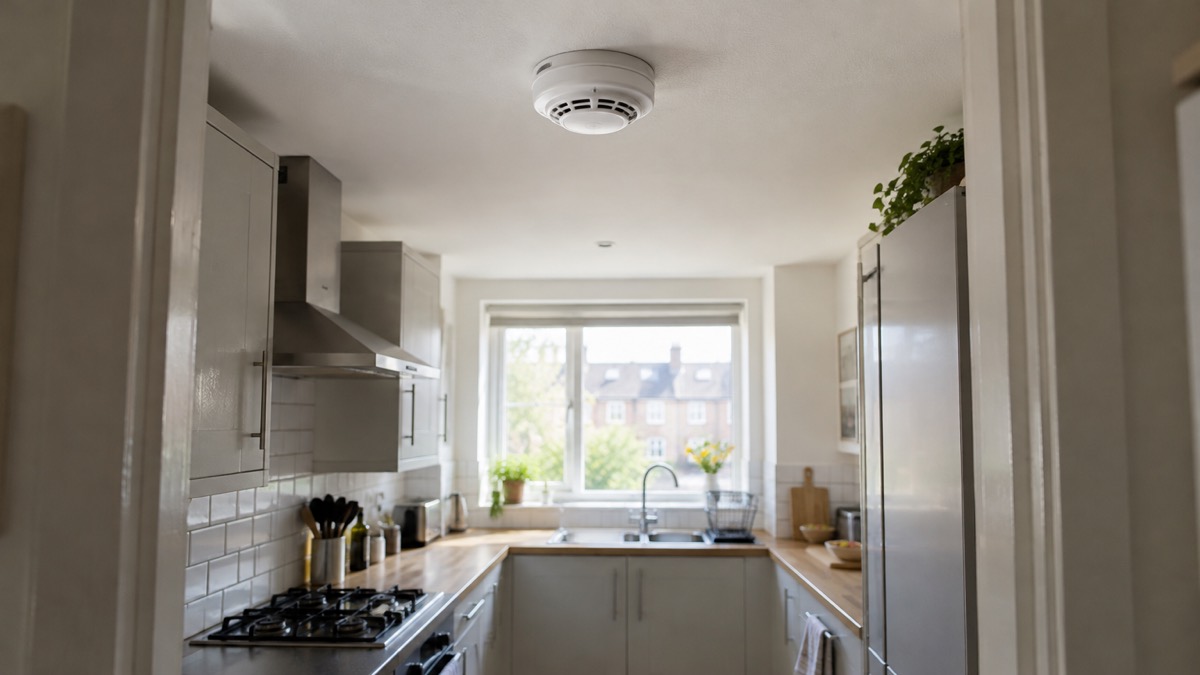
You will see the product sold and listed as the Aico Ei3014 Heat Alarm and, in the safety notice, as the Aico Ei3014 Heat Detector. They are the same alarm. The safety notice classifies it as a heat detector under electrical appliances and equipment, and describes it as a white, battery-powered heat detector with the United Kingdom as its country of origin3. The maker's own pages call it the Ei3014 Heat Alarm1.
The naming matters for one practical reason: if you are searching recall lists or product registers, search under both. The recall is recorded against the heat detector name, so a household that only knows its alarm as a heat alarm could miss it.
The maker's manual identifies the Ei3014 as a heat alarm with a Class A1 heat detection sensor4. It appears in the maker's Declaration of Performance alongside the Ei3024, under DoP No.18-0001, and the manual says the declaration may be consulted at www.eielectronics.com/compliance6. The declared standard for the alarm is BS 5446-2:20032. If you are comparing alarm standards more broadly, our page on alarm standards explains what those designations mean for a household.
Specifications: 58°C trigger, Class A1 thermistor sensor and 10-year back-up cell
The figures that decide whether this alarm suits a room are few, and they are all the maker's own.
| Specification | Figure | Source |
|---|---|---|
| Sensor | Thermistor Class A1, activates at 58°C | 10 |
| Trigger temperature | 58°C and above | 1 |
| Power | Mains powered, 10-year rechargeable lithium cell back-up | 1 |
| Standby power consumption | 0.25W | 10 |
| Operating temperature | , 10°C to 40°C | 2 |
| Lifespan | 10 years | 2 |
| Standard | BS 5446-2:2003 | 2 |
| Data extraction | AudioLINK+ enabled | 1 |
| SmartLINK | Compatible via the Ei3000MRF Module | 2 |
| Suitable rooms | Kitchen, garage | 1 |
The 58°C trigger is the number to hold on to. Aico's heat alarms are equipped with a thermistor sensor that activates when temperatures of 58°C are reached11, and the maker's support pages put the same figure plainly: their heat alarms respond to heat build-up, triggering at 58°C12. That is well above any normal room temperature, which is why cooking steam and summer heat will not set it off, and why it takes a real fire to reach it.
The 10-year rechargeable lithium cell back-up is what makes the alarm useful in a power cut. The alarm runs from the mains, and the cell keeps it going if the supply fails, so a household that loses power in a storm has not lost its kitchen alarm at the same moment. The maker gives the alarm a 10-year lifespan, which is the point at which the whole unit is replaced rather than repaired2. Our page on when to replace a smoke, heat or CO alarm covers that timing for all alarm types.
The Ei3014 must be interconnected with smoke or multi-sensor alarms
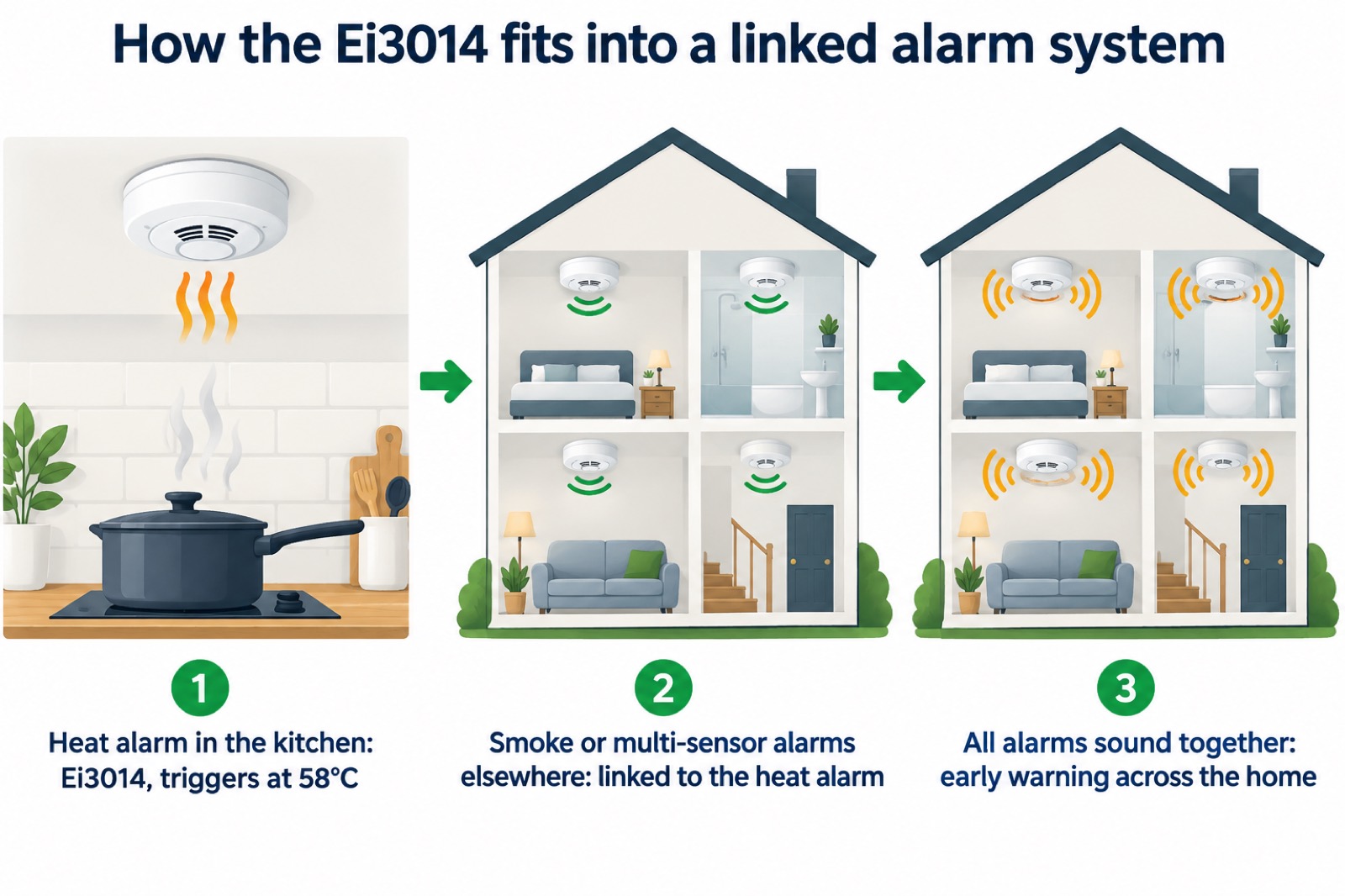
This is the condition that decides whether the Ei3014 is right for your home at all. The maker's manual states that heat alarms must always be interconnected to smoke or multi-sensor fire alarms to ensure early warning4. It goes further: the alarm can only be used as part of a fire detection system, interconnected with Aico or Ei Electronics mains powered multi-sensor fire or smoke alarms4.
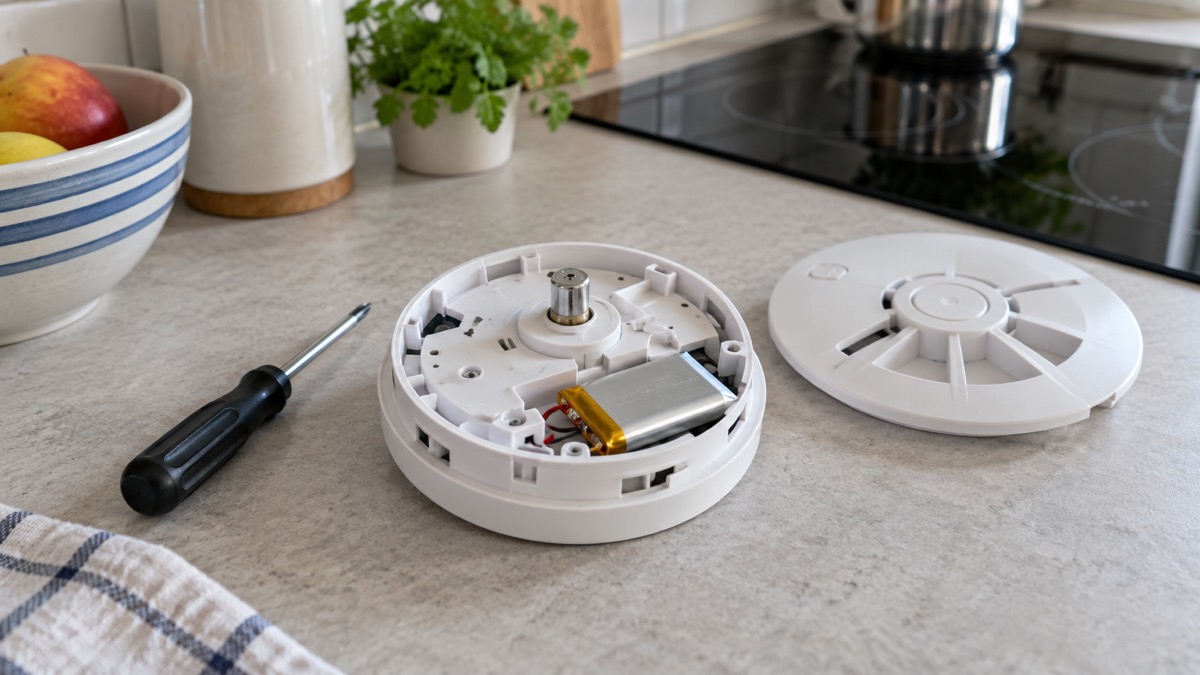
The reason is straightforward once you have read the section above. A heat alarm waits for 58°C. In a room away from the fire, that warning may come later than a smoke alarm would have given it. Linked together, a fire detected anywhere in the system sounds every alarm in the house, including the one by your bed. Used alone, the Ei3014 protects one room and tells nobody else.
The maker says the Ei3014 is compatible with all other Aico mains powered devices, and that it works with hard-wired, RadioLINK or hybrid interconnecting systems1. In the maker's own room-by-room guidance, heat alarms such as the Ei3014, Ei630 and Ei44e are the recommendation for kitchens and garages13. If you are building or extending a system, our pages on interlinked alarms and on wireless or wired interlinked alarms explain how the linking is done. The Aico smoke and multi-sensor alarms that would sit alongside it include the Ei3016 optical smoke alarm and the Ei3024 multi-sensor alarm.
Where to fit it, and at least 1 m from a sink or cooker
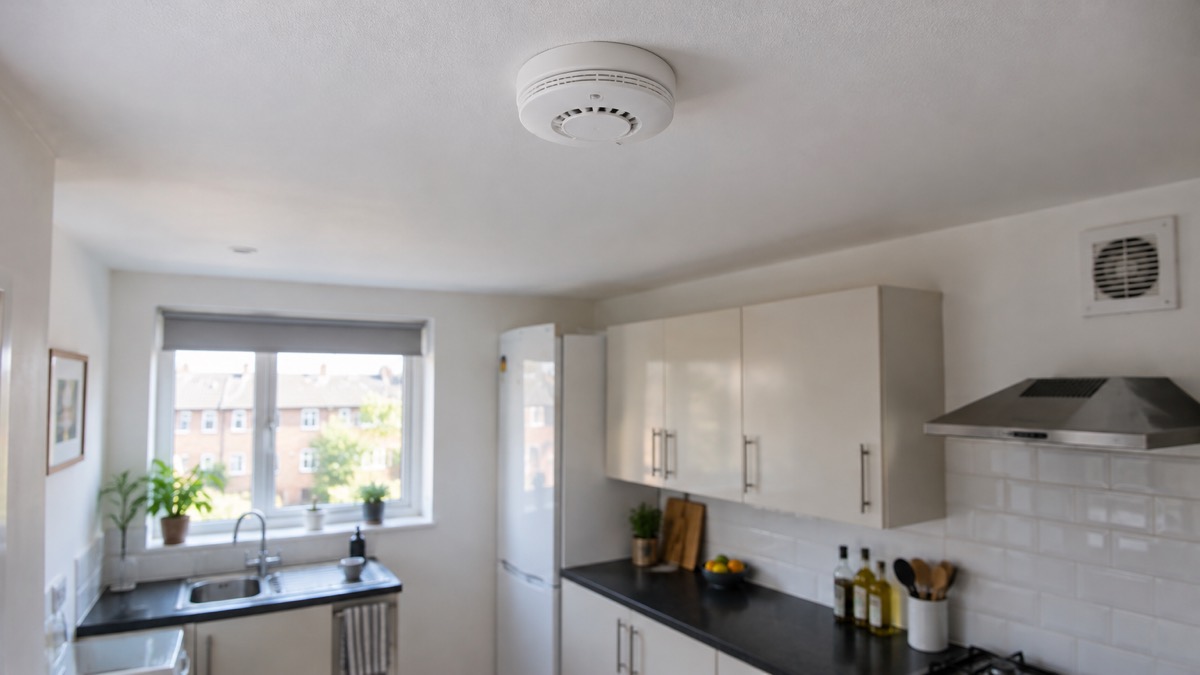
Fit the Ei3014 in the kitchen or garage, on the ceiling, and keep it clear of the places where steam and cooking heat rise. The maker's manual is specific: do not locate heat alarms directly above a sink or cooker, and keep at least 1 m horizontal distance between these items and the alarm6. That single rule prevents most of the nuisance triggering a heat alarm would otherwise suffer.
The maker's siting article adds the reasoning behind heat alarm placement in general: heat alarms contain a thermistor which detects a substantial increase in temperature, indicating there could be a fire8. The fire and rescue service in Northern Ireland says heat detectors should be fitted in the kitchen9. The maker's manual lists the rooms it suits as kitchens, garages, boiler houses and other areas where there are normally high levels of fumes, smoke or dust4.
A few practical points for a household fitting one:
- Ceiling, not wall, and clear of the cooker hood. The maker's rule is not to locate heat alarms directly above a sink or cooker, and to keep at least 1 m horizontal distance between these items and the alarm6.
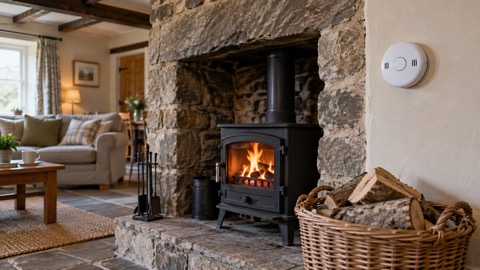
- Not a substitute for a carbon monoxide alarm. A carbon monoxide detector should be fitted in the same room as any new or replacement heating appliance such as a boiler, which is inside a building and not designed solely for cooking14.
- Check the whole system, not just this alarm. A heat alarm that is not linked to anything is doing half its job4.
Lifespan, guarantee and standards
The Ei3014 is built to a 10-year life. The maker gives the alarm a lifespan of 10 years2, and the data sheet describes the back-up as a 10 year life10. The maker's product page states a 10 Year Guarantee1, while the data sheet gives a 5 year (limited) warranty10. The two documents disagree on the guarantee period, so check the paperwork that came with your unit rather than relying on either figure alone.
The declared standard is BS 5446-2:20032. For a household, the practical meaning is that the alarm is made and declared to a published fire alarm standard, and that the maker keeps a formal record of its performance.
Keeping it ready over its life comes down to a short routine:
- Test it as the maker instructs. The maker's guidance on testing and replacement is set out in its support material12.
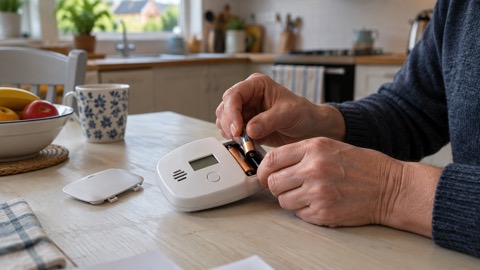
- Keep the back-up cell healthy. The cell is rechargeable and charged from the mains, so the alarm needs to be on its mains supply, not isolated at the consumer unit6.
- Replace the whole alarm at 10 years. The maker gives the lifespan as 10 years2.
- Recheck the recall list if you move house or inherit an alarm. The recall covers specific batches, so check the unit against the list rather than assume5.
If you need to swap an alarm out, our page on how to replace a fire alarm covers the steps. For the wider picture of how alarms fit a household plan, start with Home Emergencies and the fire safety checklist for your home.
Sources (14)
- Ei3014 Heat Alarm, Aico, 2026-10-28
- Ei3014 Heat Alarm, Aico, 2026
- Product recall: Aico Ei3014 Heat Detector 2504-0285, GOV.UK, 2025-05-29
- Ei3014, Ei3016, Ei3024 UK Series Instructions, Aico, 2025
- Product recall notice: Aico Ei3014 Heat Detector, London Borough of Bromley, 2025-06-02
- Ei3024, Ei3016, Ei3014 Instructions (updated), Aico, 2024
- Registering your e-bike or e-scooter for safety alerts and product recalls | London Fire Brigade, London Fire Brigade
- Where to put smoke alarms, Aico, 2023-11-01
- Home fire safety, Northern Ireland Fire and Rescue Service
- Aico Data Sheet Ei3014, Aico, 2019-03
- Beyond smoke: the role of heat alarms in comprehensive home fire safety, Aico, 2026-09-29
- Products FAQs, Aico, 2026
- How to replace a fire alarm, Aico, 2026-09-29
- Guide to carbon monoxide safety, OFTEC, 2026-10-29

 FireAngel FA3313 CO Alarm
 FireAngel FA3322 CO Alarm
 FireAngel FA3820 CO Alarm
 FireAngel FA6812 CO Alarm
 FireAngel FA6813 CO Alarm
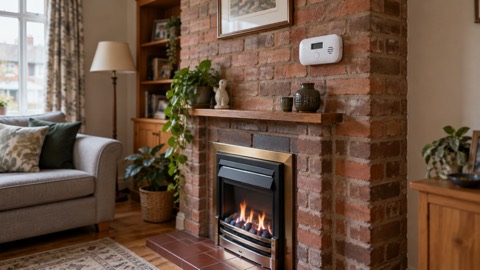 FireAngel FA6829S CO Alarm
 FireAngel CW1-PF CO Alarm
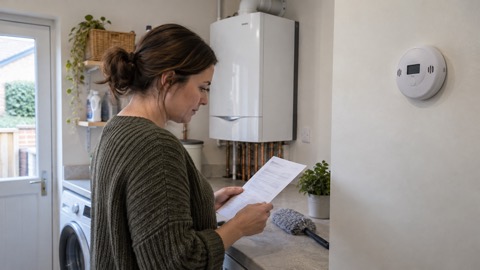 FireAngel W2-CO-10X CO Alarm
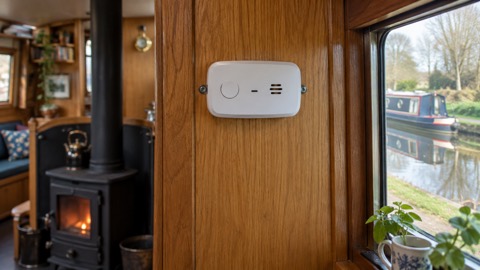 FireAngel FP1820W2-R CO Alarm
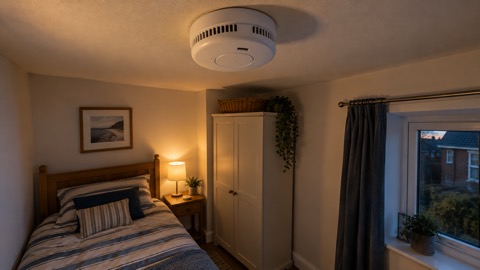 FireAngel FP2620W2-R Alarm
 FireAngel ST-632 Smoke Alarm
 FireAngel ST-750 Smoke Alarm