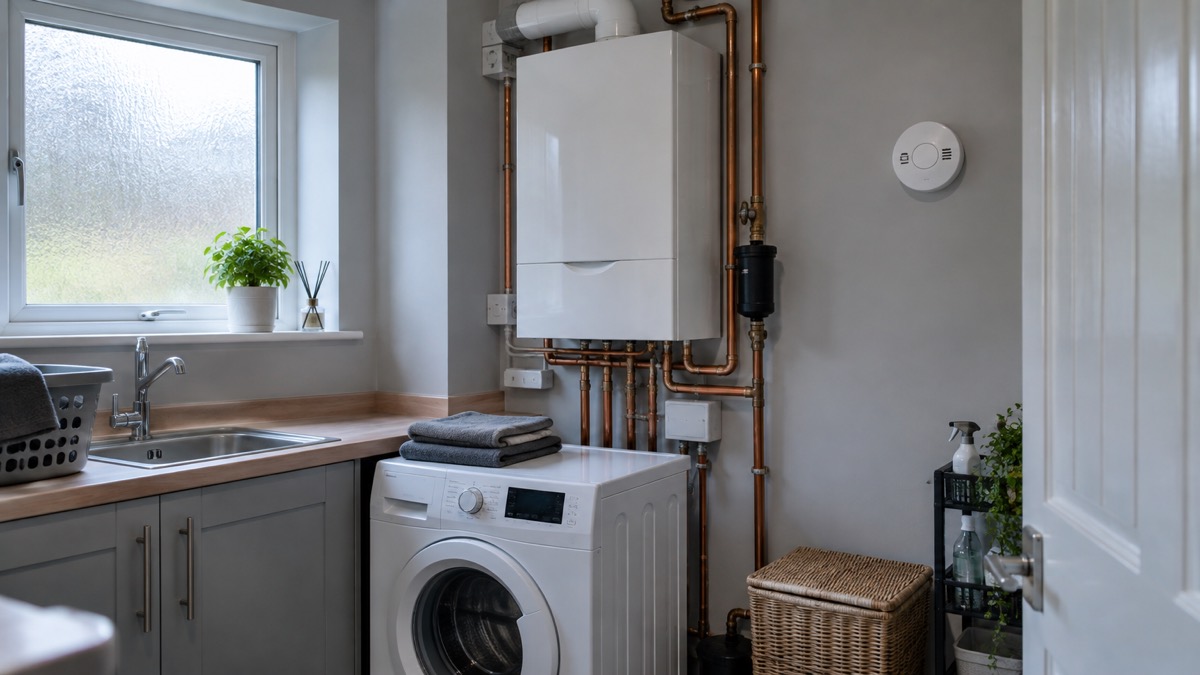
The Aico Ei208 is a standalone battery carbon monoxide alarm: it runs on its own battery, is not wired into the mains and is not linked to other alarms1. It makes a noise when carbon monoxide reaches a dangerous level, which is the whole point of having one2. Carbon monoxide is a gas you cannot see, taste or smell, so an alarm is often the only warning a household gets.
If the Ei208 sounds, treat it as a real carbon monoxide emergency, not a nuisance. North Wales Fire and Rescue Service advises leaving the building immediately, calling the emergency services if anyone feels unwell, and not going back in until it has been declared safe3. If your alarm is sounding, call the Gas Emergency Helpline on 0800 111 9994. If someone is showing signs of poisoning or has collapsed, get them outside, call 999 and ask for an ambulance5.
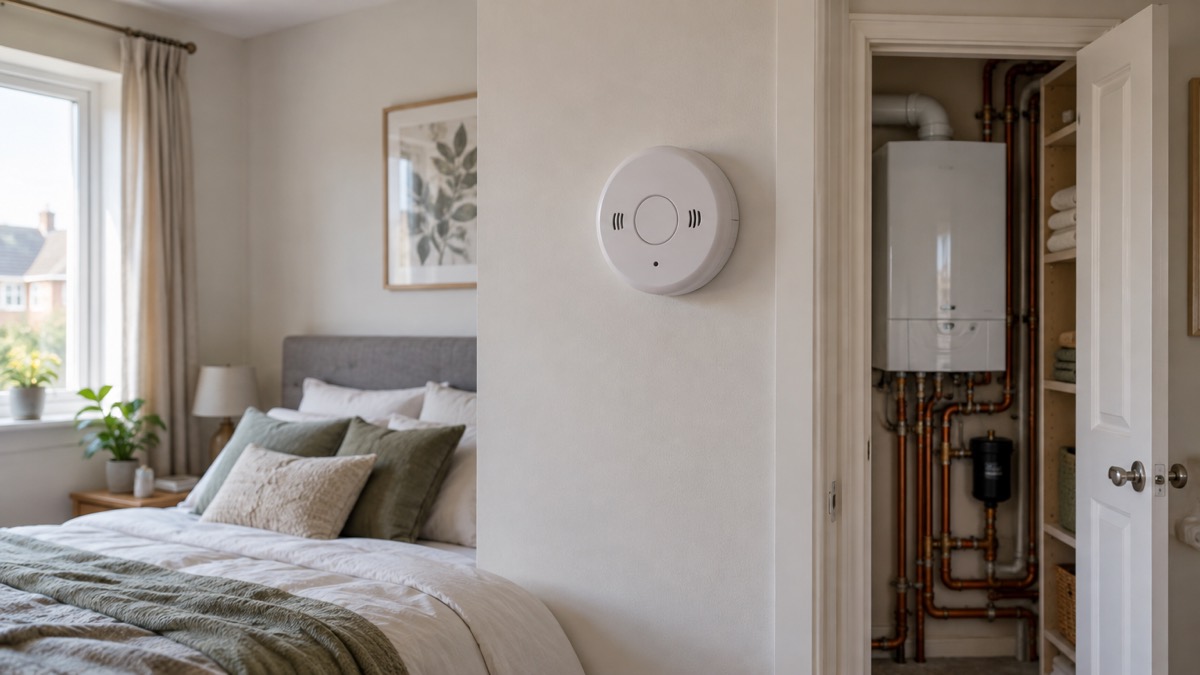
Where you put it matters as much as having it. Scottish Government guidance for private rented homes says a carbon monoxide detector in the space containing the combustion appliance should be sited between 1m and 3m from the appliance, and not placed in a cupboard or other small enclosed space6. The same distances are the practical rule for any home.
What the Aico Ei208 is and what it does
The Ei208 is a carbon monoxide alarm, not a smoke alarm and not a heat alarm. Its job is to make a noise if there are dangerous levels of carbon monoxide in a place2. It is a standalone unit, so it does not depend on being wired into a circuit or on other alarms in the house being present1. That makes it straightforward to add to a room that has a fuel-burning appliance, or to take with you when you stay somewhere else.
When you buy any CO alarm, look for the marking. Westminster City Council's fire safety guidance says to buy only alarms marked with the current British Standard BS EN 502917. That marking tells you the alarm has been made to a recognised standard for detecting carbon monoxide.
The Ei208 has a hush and test button, and LED indicators that show the alarm's status1. Which.co.uk's review of the alarm also records a five-year warranty and that alarm reports can be downloaded to a smartphone1. Those are the features the review lists; check the maker's own instructions for how the report function works on your unit.
| Feature | What it means for your household |
|---|---|
| Standalone | No wiring to the mains and no link to other alarms needed1 |
| Battery powered | Runs on its own battery rather than mains power1 |
| Hush and test button | Lets you test the alarm and silence it when appropriate1 |
| LED indicators | Show the alarm's status at a glance1 |
| Alarm reports to a smartphone | The review records that reports can be downloaded to a phone1 |
| Five-year warranty | The review records a five-year warranty1 |
If the Ei208 sounds, treat it as a carbon monoxide emergency
An alarm sounding is not a test and not a warning to be silenced and forgotten. Fire and rescue services are consistent on this. Warwickshire Fire and Rescue Service says that if the alarm sounds or you suspect carbon monoxide because of symptoms such as headaches, dizziness or nausea, you should leave your home, call 999 and seek medical attention, and not re-enter until professionals say it is safe9. Northern Ireland Fire & Rescue Service says that for a CO emergency where occupants are at risk, call 999 and ask for an ambulance and the Fire & Rescue Service, and get out and stay out10.
If you suspect carbon monoxide is present, HSENI sets out a checklist known as TASK11:
- Turn off or extinguish the heating source or appliance if it is safe to do so.
- Ventilate your home by opening windows and doors, and stay outside in the fresh air.
- Seek medical help if you feel unwell.
- Keep all heating sources and appliances off until they have been serviced, or the chimney or flues cleaned, by a qualified professional.
If you feel ill or have any symptoms of carbon monoxide poisoning after your alarm goes off, contact your doctor immediately or call 999 for an ambulance1. The NHS advises getting one alarm for each room of your home containing appliances that burn gas, oil, coal or wood2. For the full picture of symptoms and what to do, see what to do if your CO alarm sounds or you suspect carbon monoxide and carbon monoxide poisoning symptoms.
Where to put it: 1 to 3 metres from the appliance
The distance between the alarm and the appliance is the detail most households get wrong. Scottish Government guidance for private rented properties says a carbon monoxide detector in the space containing the combustion appliance should be sited between 1m and 3m from the appliance, and should not be placed in a cupboard or other small enclosed space6. The same guidance covers awkward positions: if a boiler is in a small space such as a cupboard, the detector should be sited outside the space, with the appropriate distance between appliance and detector of between 1 and 3 metres12. If a boiler is in an attic, the detector should ideally be sited between 1 and 3 metres from the appliance in the attic, with another interlinked detector outside the attic near the hatch; where that is not possible, a detector sited outside the attic as near the hatch as possible is acceptable12.
Height matters too. The Scottish guidance says a detector should be ceiling mounted and positioned at least 300 mm from any wall, or wall mounted and positioned at least 150 mm below the ceiling and higher than any door or window in the room, unless the manufacturer indicates otherwise12. Always follow the maker's own siting instructions for your model where they differ.
Manchester Fire and Rescue Service recommends placing a carbon monoxide alarm in rooms where you have a fixed combustion appliance, such as a gas fire, gas boiler, log burner or open fireplace13. It also advises buying and installing an audible CO alarm online or from DIY shops14.
Rooms that need a CO alarm
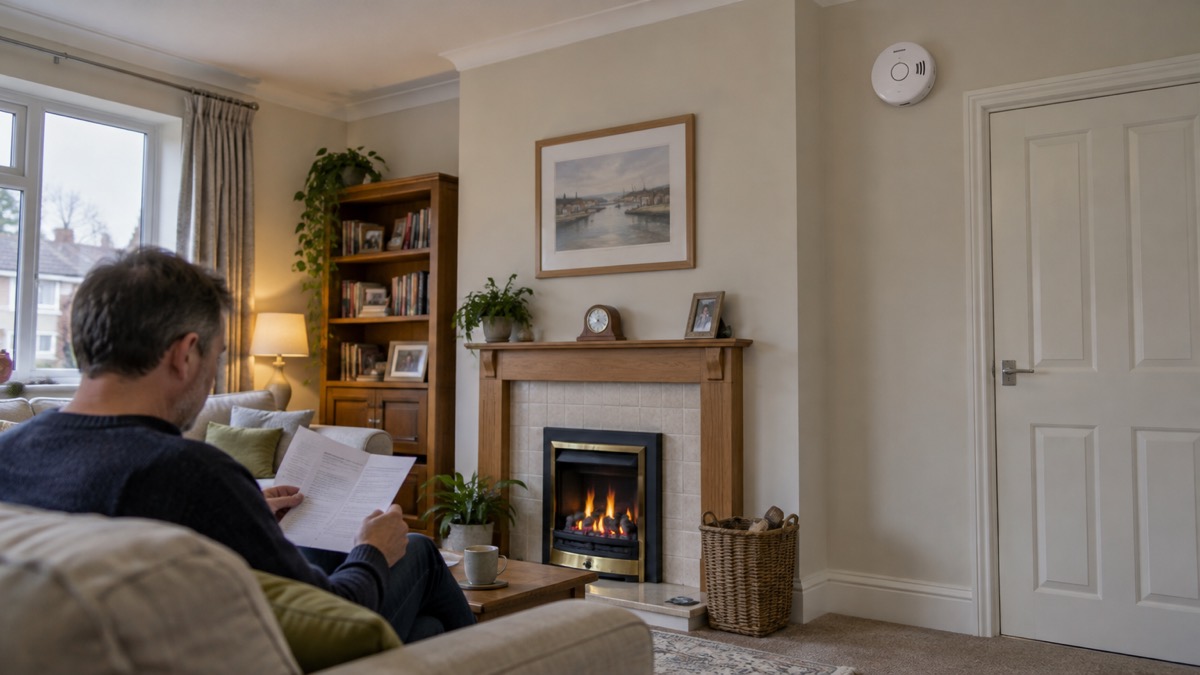
The rule of thumb from the NHS is simple: get one alarm for each room of your home containing appliances that burn gas, oil, coal or wood2. London Fire Brigade goes further, advising a CO alarm in all rooms containing fuel burning appliances, with the alarm able to be heard throughout your home, and suggests you may wish to keep a CO alarm in the bedroom5. It also advises using audible alarms or alarms for hard of hearing people, and avoiding colour change or black spot indicator tools5.
Warwickshire Fire and Rescue Service says every household should have at least one CO alarm installed, with additional units recommended for each floor, near sleeping areas, and in proximity to potential CO sources such as gas appliances, wood-burning stoves or attached garages9. Northern Ireland Fire & Rescue Service says any room with a fuel-burning appliance, such as a gas boiler, fireplace or wood-burning stove, should have a working carbon monoxide alarm15. Greater Manchester Fire and Rescue Service advises making sure a CO alarm is installed in the same room as portable heaters16.
Solid fuel appliances are common enough that this is not a niche concern. A Denbighshire Council report on its housing stock counted 185 solid fuel properties, made up of 107 Charnwood and 78 multi-fuel appliances, meaning log burners or open fires17. If you have a log burner or open fire, it belongs on the list of rooms that need an alarm.
| Room or situation | What the advice says |
|---|---|
| Any room with a gas, oil, coal or wood appliance | One alarm per room2 |
| Rooms with a gas boiler, gas fire, log burner or open fireplace | Fit a CO alarm18 |
| Bedroom | You may wish to keep one there so it wakes you5 |
| Room with a portable heater | Make sure a CO alarm is in the same room16 |
| Holiday accommodation | Take a CO alarm with you and use it19 |
Rented homes: what your landlord must fit
If you rent, the law gives you a baseline. In England, a CO alarm is legally required in any room with a fixed combustion appliance, excluding gas cookers, under the Smoke and Carbon Monoxide Alarm (England) Regulations 2015 (amended 2022), and Scotland and Wales have similar requirements12. Your landlord must provide one if you rent your home20. If you rent in England, your landlord must fit a carbon monoxide alarm in each room used as living accommodation containing a gas, oil or solid fuel appliance, and in Wales a landlord must ensure there is an alarm in any room that has a gas, oil or solid fuel appliance they have installed12.
Landlords also have duties around disability. Scottish guidance says landlords have a duty to make reasonable adjustments to properties for disabled people, and therefore require to provide deaf alerts compatible with the new interlinked systems6. If you live in a building with areas shared by other tenants, your landlord has legal obligations under the Fire Safety Order as well as the Housing Act for those shared areas20.
If you rent and your alarm is missing or faulty, contact your landlord in the first instance and ask them to fit the equipment; if the landlord does not assist, report the problem promptly to your local authority14. For more on tenant rules, see fire safety for tenants and Wales and Northern Ireland: alarm rules and fire services.
Testing the alarm and reading its status lights
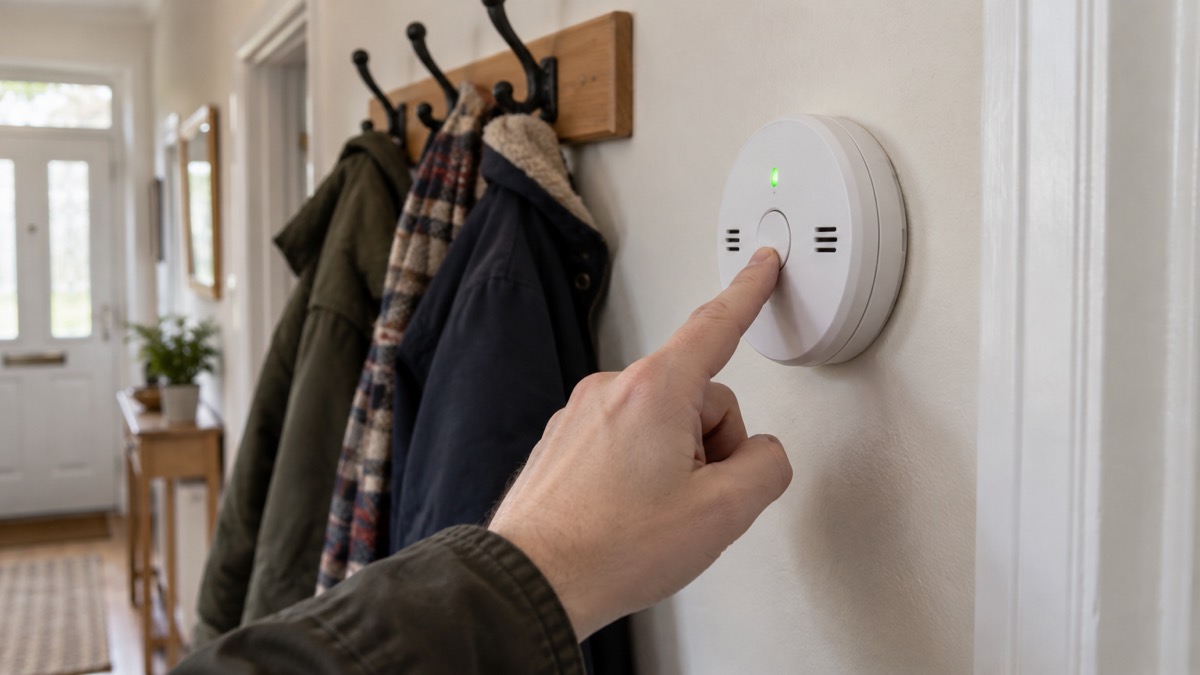
Test your alarm regularly. Northern Ireland Fire & Rescue Service's home fire safety advice includes testing your smoke alarm regularly, and the same habit applies to a CO alarm21. The Ei208 has a hush and test button and LED indicators that show the alarm's status1. Use the test button as the maker instructs, and check the indicator lights so you know what normal looks like before you need to rely on it.
If the alarm beeps or chirps outside a real event, do not assume it is a fault and ignore it. Check the maker's instructions for what each light and sound means on your unit. For general help, see why is my carbon monoxide alarm beeping? and how often to test smoke and CO alarms.
Hearing impairment, travel and other practical questions
If someone cannot hear an ordinary alarm. Aico makes fire alarm accessories for deaf and hard of hearing people, and the maker states these are easy to install and compatible with its RadioLINK wireless interconnection technology18. London Fire Brigade advises using audible alarms or hard of hearing alarms, and avoiding colour change or black spot indicator tools5. If you or someone you care for uses telecare services, approach the supplier about linked-in smoke and CO detection5. For more, see smoke and CO alarms for deaf and hard of hearing people.
Taking an alarm away. Public Health Wales advises taking a CO alarm with you and using it on holiday19. A free-standing alarm is the practical choice for this, and fire and rescue services suggest keeping one in the bedroom so it would wake you while you sleep5.
Generators and other fuel-burning equipment. If you use a generator, UK public health advice is to place it outdoors at least 6 metres or 20 feet away, with the exhaust facing away from windows or doors15. Never run one indoors or in a garage attached to the house.
The Ei3014 recall. In 2025 the Office for Product Safety and Standards recalled the Aico Ei3014 Heat Detector because a small production batch carried plastic coverings wrongly stating it could also detect carbon monoxide; the Ei3014 detects heat only. If you own one, check the recall notice and follow its instructions. The Ei208 is a separate carbon monoxide alarm. For more on checking products, see how to check if an electrical product has been recalled.
Warranty, reports and where to get help
Which.co.uk's review records a five-year warranty on the Ei208 and that alarm reports can be downloaded to a smartphone1. Keep your receipt and the maker's instructions, and check the warranty terms with Aico if you need to claim. For the maker's wider range, see Aico.
If you need help understanding what to fit, your local fire and rescue service can advise. Devon and Somerset Fire and Rescue Service offers home safety visits4. If you are worried about a gas appliance, use a Gas Safe registered engineer; the Health and Safety Executive sets out who can carry out gas safety checks14.
For the wider picture, start with carbon monoxide alarms: what they do and how to choose, where to put a carbon monoxide alarm and do I need a carbon monoxide alarm?. The home emergencies section covers fire, gas leaks and burst pipes, and extra help in an emergency covers older, disabled and medically dependent households.
Sources (21)
- Carbon monoxide alarm review, Which?, 2026
- Carbon monoxide poisoning, NHS, 2025
- Carbon monoxide safety, North Wales Fire and Rescue Service, 2026
- Book a home safety visit, Devon and Somerset Fire and Rescue Service, 2026
- Carbon monoxide safety, London Fire Brigade, 2026
- Tolerable Standard guidance: satisfactory fire and carbon monoxide detection, Scottish Government, 2023
- Fire safety in the home, Westminster City Council, 2017
- Additional Advice for Tenants - Greater Manchester Fire Rescue Service, Greater Manchester Fire Rescue Service
- Safe home heating, Warwickshire County Council, 2026
- Home fire safety, Northern Ireland Fire & Rescue Service, 2026
- Carbon monoxide, Health and Safety Executive Northern Ireland, 2026
- Carbon monoxide alarms in private rented properties guidance, Scottish Government, 2021
- Carbon Monoxide - Greater Manchester Fire Rescue Service, Greater Manchester Fire Rescue Service
- Carbon monoxide, Greater Manchester Fire and Rescue Service, 2026
- Keeping warm or cool in extreme weather, UK Government, 2025
- Cost of living leaflet, Greater Manchester Fire and Rescue Service, 2026
- Scrutiny report: housing heating, Denbighshire County Council, 2025
- Fire alarm accessories for the hard of hearing, Aico, 2026
- Carbon monoxide, Public Health Wales, 2026
- Fire safety for tenants, Devon and Somerset Fire and Rescue Service, 2026
- At home for the holidays, safe for the season, Northern Ireland Fire & Rescue Service, 2025