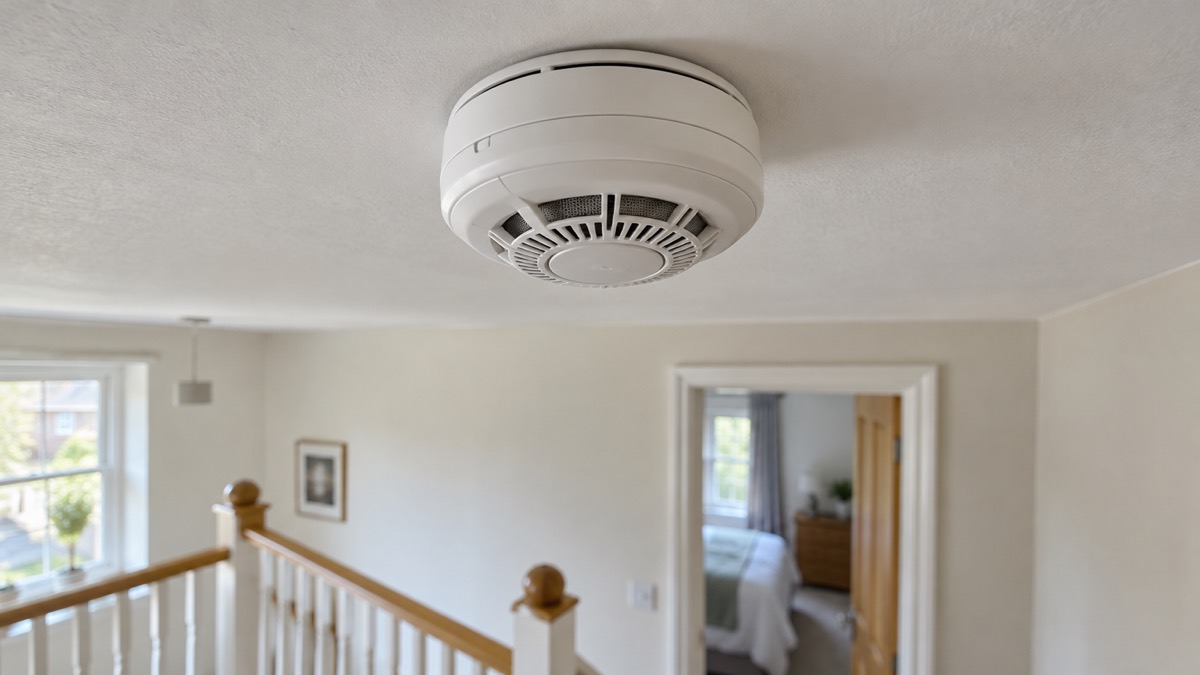
A multi-sensor alarm is a smoke alarm that watches for fire in more than one way, and the Aico Ei3024 is one of them. What matters most for an ordinary household is not the badge on the box but where the alarm goes, how many you have, whether they talk to each other, and whether they are tested and replaced on time. Get those right and any properly marked alarm will do its job: working smoke alarms can buy you valuable time to get out, stay out and call 9991.
The basic rule is simple. Every home should have a minimum of one working smoke alarm per floor, and a heat alarm in the kitchen2. In Scotland, every home should have one heat alarm in the kitchen as part of the same standard3. Fit them to the ceiling, keep them away from bathrooms and steamy doorways, and link them if you can, so that when one detects a fire they all sound together4.
This page sets out where to fit a multi-sensor alarm, where never to fit one, why linking matters, how often to test, when to replace, and what the safety marks on the box mean. It also covers the recall that affected a different Aico product, the Ei3014 heat detector, so that owners can check their own alarms.
What the Aico Ei3024 is, and what it suits
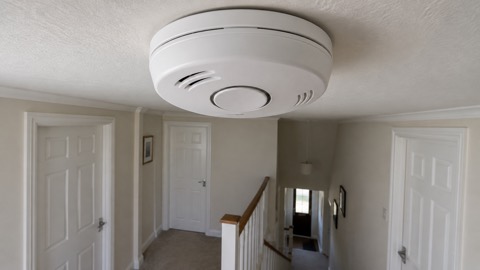
The Ei3024 is a multi-sensor alarm, which means it uses more than one sensing method to detect a fire. That matters because different fires produce different things: some give off smoke quickly, others smoulder, and a kitchen fire can produce heat with little smoke. A multi-sensor alarm is designed to catch a wider range of fires than a single-sensor alarm, and it suits the places where a smoke alarm is recommended: living rooms, hallways, landings and dining rooms7.
It is not a heat alarm and it is not a carbon monoxide alarm. Those are separate jobs. A heat alarm belongs in the kitchen and garage8, and a carbon monoxide alarm belongs wherever there is a fuel-burning appliance9. If you want one device to cover smoke and heat, or smoke, heat and carbon monoxide, those exist as combined units, but the Ei3024 is a smoke alarm and should be treated as one.
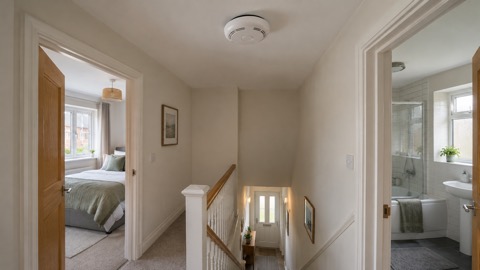
Where it suits best is the circulation space of a home: the hall and landing, the living room, the dining room. Those are the rooms where a smoke alarm gives the earliest warning of a fire that starts at night or in a room you have left. The alarm is fixed to the ceiling, and the maker's own instructions for the model should be followed for wiring, interconnection and battery behaviour, because those details vary between versions of the same product.
Where to fit a multi-sensor alarm in your home
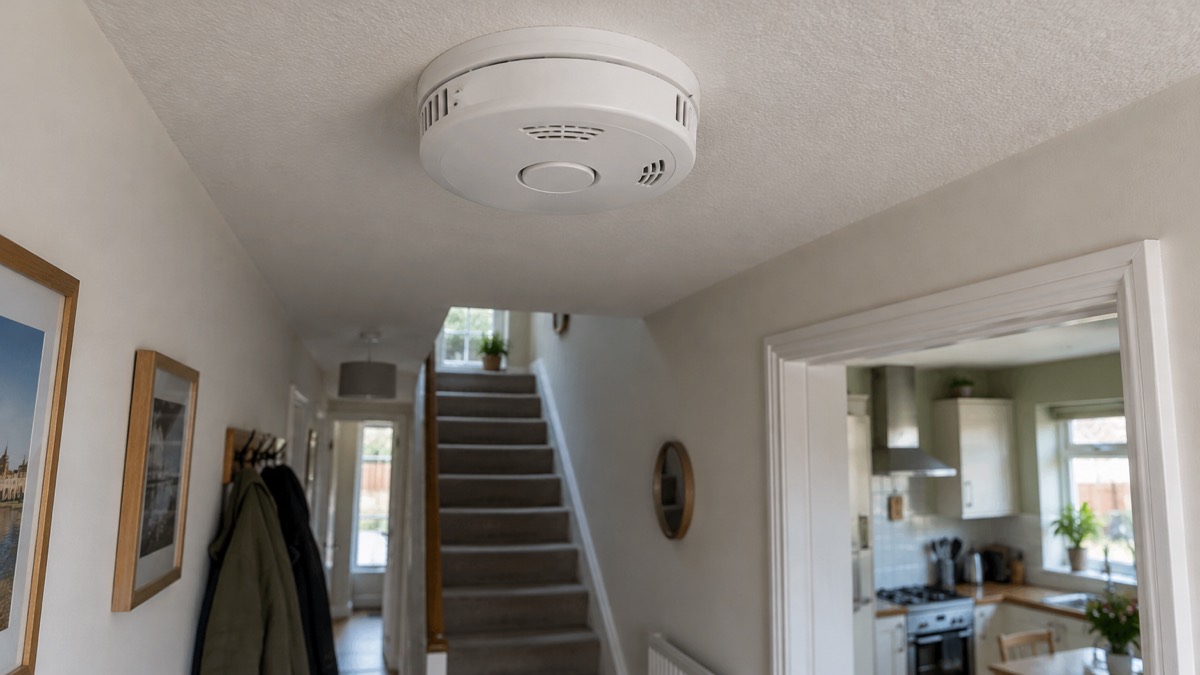
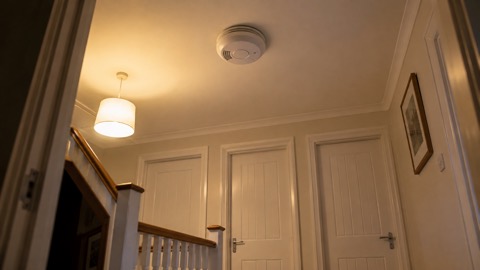
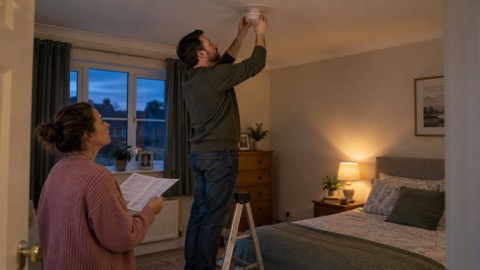
Fit at least one alarm on every floor, with a heat alarm in the kitchen. That is the standard the fire and rescue services across the UK work to: every home should have a minimum of one working smoke alarm per floor, and a heat alarm in the kitchen2. The same advice appears in campaign guidance: fit a working smoke alarm on every floor of your home and a heat alarm in your kitchen, so you are alerted quickly if there is a fire2. In Scotland, every home should have one heat alarm in the kitchen as part of the same standard3.
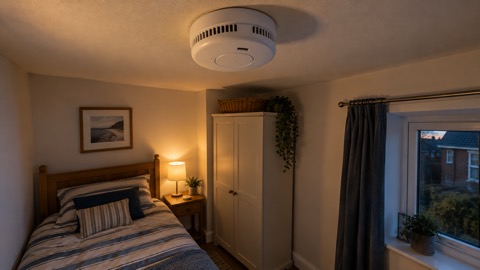
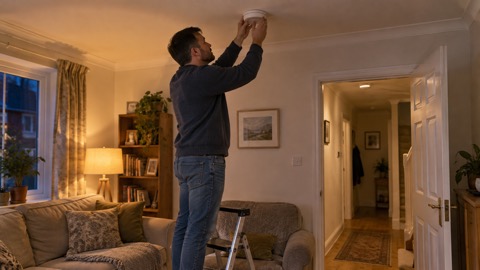
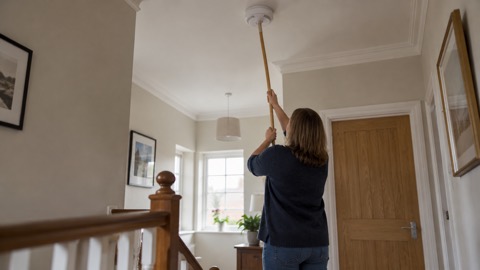
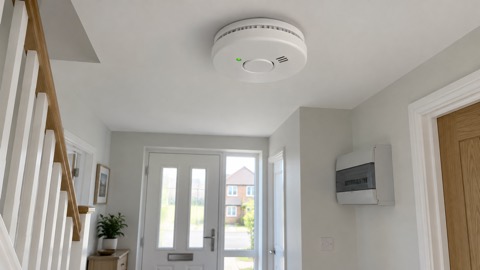
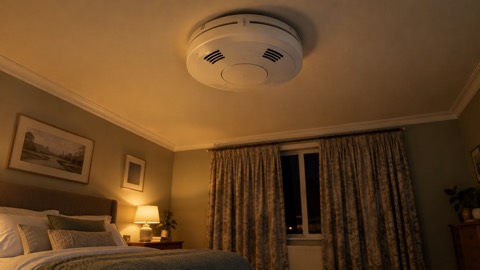
Fix it to the ceiling, at least 30 centimetres (12 inches) from any wall or light fitting5. The reason is airflow: smoke rises and spreads across the ceiling, and an alarm too close to a wall or a light fitting sits in a dead air pocket where smoke may not reach it. The same guidance says to fit the alarm as close to the centre of the room as possible5. Scottish guidance is blunt about the mounting: all smoke and heat alarms should be attached to the ceiling and be interlinked3.
| Room | What to fit | Why |
|---|---|---|
| Hall and landing | Smoke or multi-sensor alarm | Earliest warning of a fire elsewhere in the home7 |
| Living room, dining room | Smoke or multi-sensor alarm | Rooms where fires start and where people sit7 |
| Kitchen | Heat alarm | Smoke alarms are set off by cooking; heat alarms are not10 |
| Garage | Heat alarm | Recommended alongside the kitchen8 |
| Bedroom | Smoke alarm where you smoke indoors | Fire service advice for indoor smokers1 |
If you smoke indoors, fit a smoke alarm in the rooms where you smoke1. Smoking is one of the leading causes of fires that kill in the home, and a cigarette that falls between cushions or onto bedding can smoulder for a long time before it flames. The alarm in that room is what wakes you.
Where an alarm must never go
Do not fit an alarm in the bathroom, as steam may trigger the alarm5. The same warning appears across fire service guidance: do not fit smoke alarms in kitchens or bathrooms where smoke or steam could set them off accidentally, and install a heat alarm in the kitchen instead10. Dementia fire safety guidance puts it plainly: smoke alarms should not be in the kitchen and bathroom as heat and vapour from cooking and bathing can set them off unnecessarily11.
A false alarm is not a small nuisance. It teaches a household to ignore the alarm, to take the battery out, or to stop testing it, and that is how people die in fires that a working alarm would have caught. Keep smoke alarms out of steamy doorways and bathrooms, and keep them out of the kitchen, where a heat alarm does the job without the false triggers.
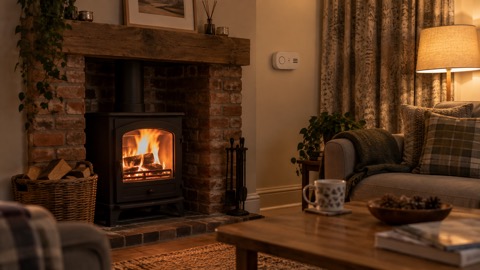
Carbon monoxide alarms have their own placement rules, and they are not the same as smoke alarms. Place carbon monoxide alarms in all rooms where there is a solid fuel burning appliance, such as a gas cooker, boiler, solid fuel burner or open fire9. Do not put a carbon monoxide alarm in cupboards, behind furniture, or near outside doors, windows or ventilation equipment such as extractor fans12. If you have a carbon monoxide alarm as well, see where to put a carbon monoxide alarm.
Interlinked alarms: why linking matters for slower escapes
Interlinked alarms are when one alarm is triggered and all the alarms go off simultaneously13. That single change is the difference between an alarm that wakes the person in the room where the fire started and one that wakes everyone in the house. Interlinked alarms are particularly important where a person has any issues that may prevent or delay their escape14.
Some battery or mains alarms can be interlinked so that when one alarm detects a fire they all go off together, giving a warning wherever you are in the home15. That matters most for people with mobility issues that may prevent or delay escape, and for anyone who sleeps with a door closed or on a different floor from the kitchen. Interconnecting or linking alarms are also useful in larger properties and for people who are deaf or hard of hearing16.
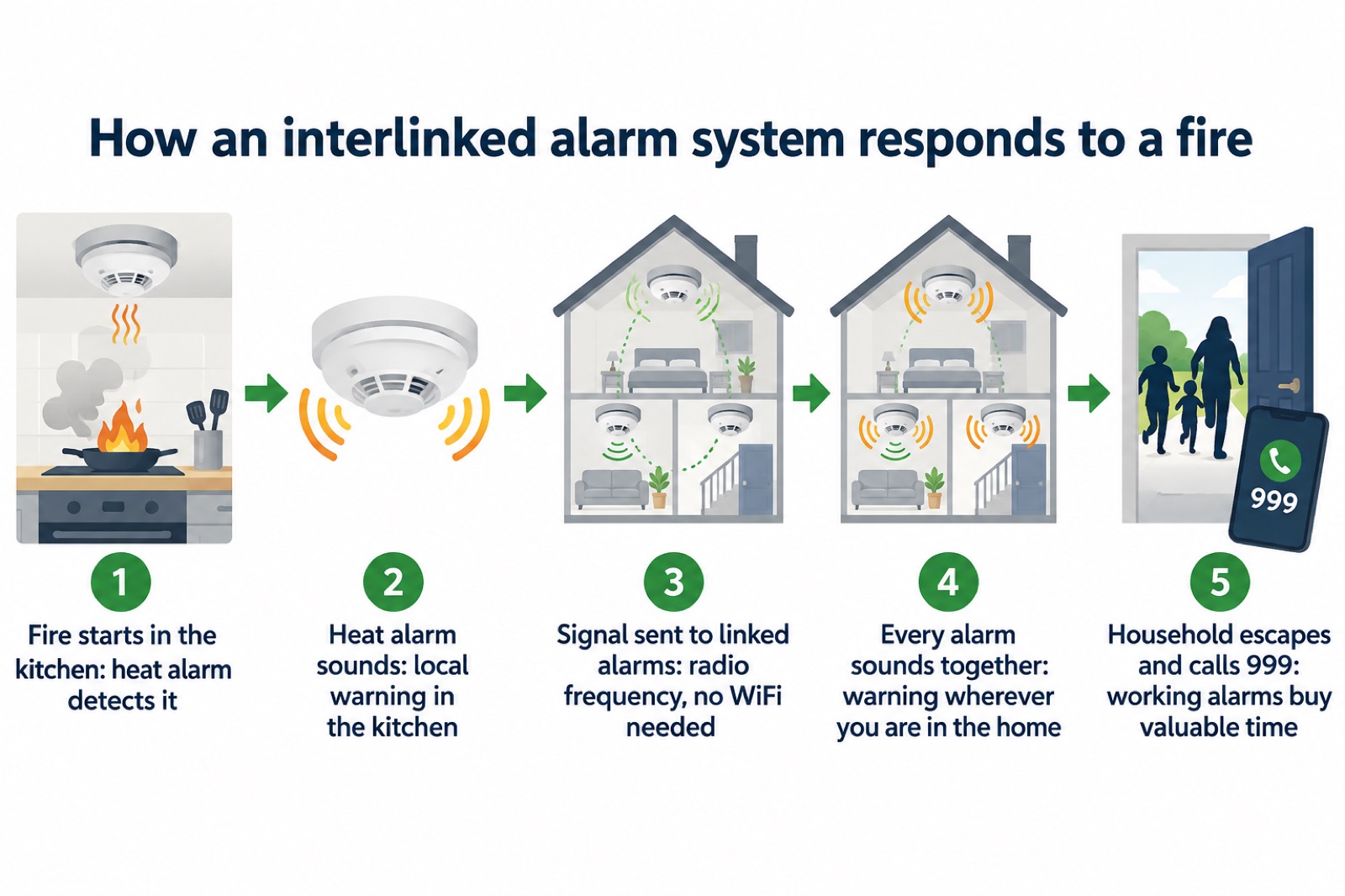
The linking is done by radio frequency and does not need WiFi, whether the alarms are sealed battery or mains-wired13. That is worth knowing if your broadband goes down in a power cut: the alarms still talk to each other. If someone in the home is deaf or hard of hearing, consider interlinked smoke alarms that connect to the telecare, carecall or lifeline system18, and see smoke and CO alarms for deaf and hard of hearing people. For how linking works in practice, see interlinked alarms.
Test monthly, ideally every week
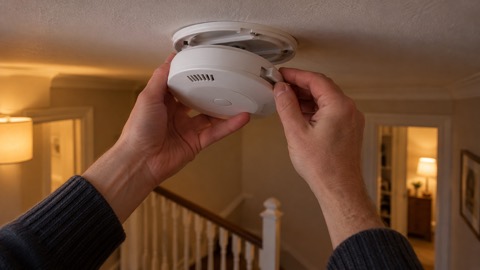
Test your alarms monthly, and ideally every week. The fire and rescue services advise testing alarms at least once a month, and ideally every week19. A monthly test is the minimum that keeps an alarm honest, and a weekly press of the test button takes seconds and catches a failing battery or a faulty unit before it matters.
Testing is not the same as maintaining. A mains-wired alarm with a backup battery still needs the test button pressed, because the test checks the sounder and the sensing circuit, not just the power supply. If an alarm chirps, do not ignore it: a chirp is usually a low battery or a fault, and the answer is to replace the battery or the unit, not to silence it. For the specific causes, see why does my smoke alarm keep chirping.
- Press the test button on every alarm once a month, and ideally once a week16.
- Check that every alarm in a linked system sounds when you test one of them13.
- Replace a chirping alarm's battery, or the alarm itself if it is sealed or at the end of its life20.
- Replace every alarm every ten years, or when the replace by date is reached6.
Replace every ten years, or by the replace-by date
Mains-wired alarms should be replaced every 10 years6. The sensing chamber inside an alarm degrades over time, and an alarm that is ten years old may still beep when tested but respond more slowly to real smoke. The same ten-year rule applies to other household safety equipment: electric blankets should be replaced every 10 years and tested every 2 years21.
The replace-by date is usually printed on the alarm itself, often on a label on the back or the side. Write it down when you fit the alarm, and diarise it. If you move into a home with alarms already fitted, check the date before you trust them: an alarm of unknown age is an alarm you should replace. For more on the timing, see when to replace a smoke, heat or CO alarm.
What the safety marks on an alarm mean
Make sure any alarms you purchase are marked with a British Standards or European (CE) safety mark, which shows they are approved, tested and safe7. The same advice appears across the fire services: make sure any alarms you buy are marked with a current British Standards or European (CE) safety mark22. For smoke and heat alarms, that mark is the evidence that the device has been tested to a recognised standard rather than assembled to no standard at all14.
Carbon monoxide alarms have their own mark. Before purchasing a carbon monoxide alarm, always ensure it complies with British Standard EN 50291 and carries a British or European approval mark, such as a Kitemark23. Carbon monoxide alarms must have a CE marking and proof of the EN50291 standard on the packaging and the product24. That marking guarantees the alarm has been tested to detect carbon monoxide at the levels that matter, rather than merely detecting some gas.
| Mark or standard | What it covers | Where to look |
|---|---|---|
| British Standards or CE mark | Smoke and heat alarms approved, tested and safe7 | On the alarm and its packaging |
| BS EN 50291 | Carbon monoxide alarms23 | On the packaging and the product24 |
| BS 5839-6 | Fire detection systems in buildings, including rented homes25 | In the installation specification |
| Kitemark | A British or European approval mark for CO alarms23 | On the alarm |
If you are choosing between alarm types, the standards are explained in more detail in alarm standards, and the choice between smoke and heat alarms in heat alarm or smoke alarm.
The Aico Ei3014 heat detector recall
In May 2025 the Office for Product Safety and Standards recalled the Aico Ei3014 Heat Detector26. A small production batch of Ei3014 heat alarms carried plastic coverings wrongly stating they could also detect carbon monoxide, and the product was recalled from end users26. The recall notice explains that some units were labelled as detecting carbon monoxide when they detect heat only27.
That matters because a heat detector is not a carbon monoxide alarm. A heat alarm responds to a rise in temperature, and it will not warn you of carbon monoxide, which is colourless and odourless. If you own an Ei3014, check the recall notice and follow the instructions given there. If you have a heat alarm in the kitchen and no carbon monoxide alarm near a fuel-burning appliance, fit one: place carbon monoxide alarms in all rooms where there is a solid fuel burning appliance9.
The Ei3024 is a different product from the Ei3014, and the recall does not apply to it. But the lesson does: check the label on any alarm against what it actually does, and never assume a heat alarm covers carbon monoxide. For more on checking products, see how to check if an electrical product has been recalled.
Alarms in a garage, and other awkward places
A heat alarm is recommended for the kitchen and garage8. A garage is a difficult place for a smoke alarm: exhaust fumes, dust, sawdust and cold damp air can all set a smoke alarm off, and a heat alarm is less easily fooled. If you fit an alarm in a garage, check the maker's instructions for the temperatures and conditions the unit is rated for, because an unheated garage can fall below the range a domestic alarm is designed for.
The same caution applies to lofts and outbuildings. A smoke alarm in a cold, dusty loft may chirp or false alarm, and an alarm that is out of its temperature range may not work when it is needed. Fit alarms where the maker says they can go, and keep the main coverage in the heated part of the home.
Three-storey homes and larger properties
In a three-storey home, the principle is the same as anywhere else: at least one working smoke alarm on every floor, plus a heat alarm in the kitchen2. That means an alarm on the ground floor, one on the first floor and one on the second, with the kitchen covered by a heat alarm. Interlinked alarms are particularly useful over several levels, because when one detects a fire they all go off together4.
Stairs are the escape route, so the alarm on the landing above the stairs is the one that matters most at night. Keep the stairs clear, and make sure everyone in the house knows what the alarm sounds like and what to do when it goes off. For the plan itself, see how to make a fire escape plan.
Rented homes: what the rules require
In England, landlords must install smoke alarms on every floor and carbon monoxide alarms in rooms with fixed combustion appliances, excluding gas cookers, and repair or replace faulty alarms, under regulations that came into force on 1 October 202228. Housing guidance recommends that all rented homes are equipped with smoke alarms and heat detectors which are mains-powered with integral battery back-up, wirelessly interlinked and installed by a competent electrician to British Standard BS 5839-6:2019 Grade D LD225.
In Scotland, carbon monoxide alarm duties for private rented properties are set out in guidance issued under sections 13(1)(g) and 13(6) of the Housing (Scotland) Act 2006, inserted by section 22 of the Housing (Scotland) Act 201429. In Northern Ireland, the Private Tenancies Act requires carbon monoxide alarms to be installed in privately rented homes and places a duty on landlords to repair them30. If you rent and your alarms are missing or faulty, report it to your landlord in writing and keep a copy.
What to do when the alarm sounds
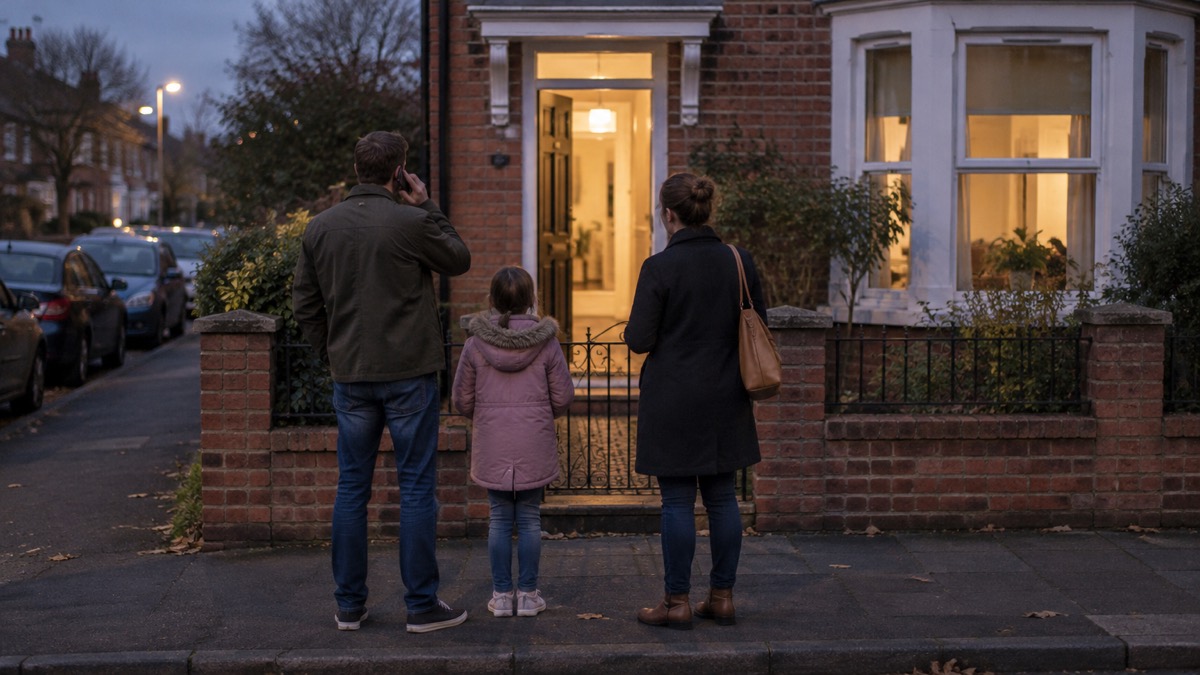
Get out, stay out and call 999. Working smoke alarms can buy you valuable time to get out, stay out and call 9991. Do not stop to investigate, do not go back for possessions, and do not assume it is a false alarm until you are outside. If you cannot escape, see what to do if you cannot escape a fire.
A carbon monoxide alarm is different. If your carbon monoxide alarm is beeping, immediately get out of the building and call the relevant helpline for the fuel type, then call a registered engineer to check all fuel-burning appliances31. Do not open windows and wait indoors, and do not assume a beep is a low battery until you have ruled out carbon monoxide. For the full sequence, see what to do if your CO alarm sounds.
Sources (30)
- Smoking, Greater Manchester Fire and Rescue Service, 2026
- Stay Fire Safe campaign, Greater Manchester Fire and Rescue Service, 2026
- What each home needs, Scottish Government, 2024
- fire-safety-in-the-home-v4, Home Office
- Smoke alarms, Staffordshire Fire and Rescue Service, 2026
- Where and what to buy, Scottish Government, 2024
- Detectors, Surrey County Council, 2026
- Alarms and sprinklers, Warwickshire County Council, 2026
- Extreme weather winter guide, London Fire Brigade, 2025
- Advice for parents and guardians, Devon and Somerset Fire and Rescue Service, 2026
- Dementia fire safety, North Wales Fire and Rescue Service, 2026
- Carbon monoxide leaflet, Bedfordshire Fire and Rescue Service, 2026
- Smoke and heat alarms, Scottish Fire and Rescue Service, 2025
- Smoke alarms and heat alarms, London Fire Brigade, 2026
- Smoke alarms for vulnerable people, Devon and Somerset Fire and Rescue Service, 2026
- Home fire safety, Greater Manchester Fire and Rescue Service, 2026
- Alarms for carers and support workers, London Fire Brigade, 2025
- Smoke alarms, Cornwall Council, 2026
- Best carbon monoxide detectors - Which?, Which?
- Electrical safety, Mid and West Wales Fire and Rescue Service, 2026
- Smoke alarms, Devon and Somerset Fire and Rescue Service, 2026
- Gas safety FAQ for owner occupiers, Health and Safety Executive, 2026
- Fire and community safety, Oxfordshire County Council, 2026
- Housing standards, Cherwell District Council, 2026
- Product recall: Aico Ei3014 Heat Detector, Office for Product Safety and Standards, 2025
- Product recall notice, London Borough of Bromley, 2025
- Smoke and Carbon Monoxide Alarm (Amendment) Regulations 2022, Greater Manchester Fire and Rescue Service, 2022
- Carbon monoxide alarms in private rented properties guidance, Scottish Government, 2021
- Think CO resources and useful information, Gas Safe Charity, 2026
- Carbon monoxide | Devon and Somerset Fire and Rescue Service, Devon and Somerset Fire and Rescue Service
 FireAngel FP2620W2-R Alarm
 FireAngel ST-632 Smoke Alarm
 FireAngel ST-750 Smoke Alarm
 FireAngel SW1 Smoke Alarm
 FireAngel SW10 Smoke Alarm
 FireAngel SB1 Smoke Alarm
 FireAngel SM-SN-1 Smoke Alarm
 FireAngel FA6611 Smoke Alarm
 FireAngel FA6615 Smoke Alarm
 FireAngel FA8620BW Alarm
 Kidde 2030-DSR Smoke Alarm
 Kidde 2030-DCR CO Alarm