
BLACK+DECKER is a familiar name on UK shelves for power tools, and the same brand also covers a small number of household electrical items, including a digital thermal leak detector. If you are building an emergency kit, the useful question is not which model is best but what each type of kit does for your household when the power goes off, a storm is forecast or a pipe starts leaking. The answer is usually modest: a torch, a charged power bank and a spare battery do more for most homes than a garage full of tools.
The official advice for a power cut is short and practical. Fire and rescue services say the essentials that could help you cope are battery candles, torches and batteries, and a mobile phone power pack1. Before a storm, the government's storm guidance is to charge mobile phones, power banks and any back-up batteries for medical equipment in case there is a power cut2. Most power cuts do not last very long, but the preparation is the same either way3.
This page sets out what BLACK+DECKER makes that bears on that preparation, how to keep batteries and chargers safe, how to check a model number and register a product, and where to go for support, warranty and recall information. It does not rank products or compare makers. For the wider picture, start with Getting Started: Preparing Your Household for an Emergency.
What BLACK+DECKER makes for UK households
BLACK+DECKER's range for the home is built around tools and small electrical items rather than around emergency kit as such. The one household product with a clear preparedness use in the maker's own listing is the BLACK+DECKER TLD100-XJ Digital Thermal Leak Detector, a handheld device with an LED display that the maker says can check if HVAC works properly and diagnose engine misfires and more7. In a home, that means tracing where heat is escaping or where a draught is coming in, which matters in a cold snap when you are trying to keep one room warm.
The rest of the range that matters for a household plan is the power tool side: cordless tools that run on rechargeable lithium-ion batteries, and the chargers that go with them. Fire and rescue services list power tools among the everyday items that contain rechargeable batteries, alongside phones, e-bikes, e-scooters, mobility scooters, laptops and vapes8. That single fact shapes everything else on this page: a tool battery is a lithium-ion battery, and lithium-ion batteries need to be charged, stored and disposed of with care.
For a household getting ready for emergencies, the sensible way to think about the brand is by job. Lighting and phone charging cover a power cut. A jump starter or charger covers a flat car battery in bad weather. Cordless tools cover repairs after a storm, a flood or a break-in. None of these is a substitute for the core kit that official guidance describes, which is why the sections below link each type back to the guide that covers it in full.
Power cut kit: what each type does for your home
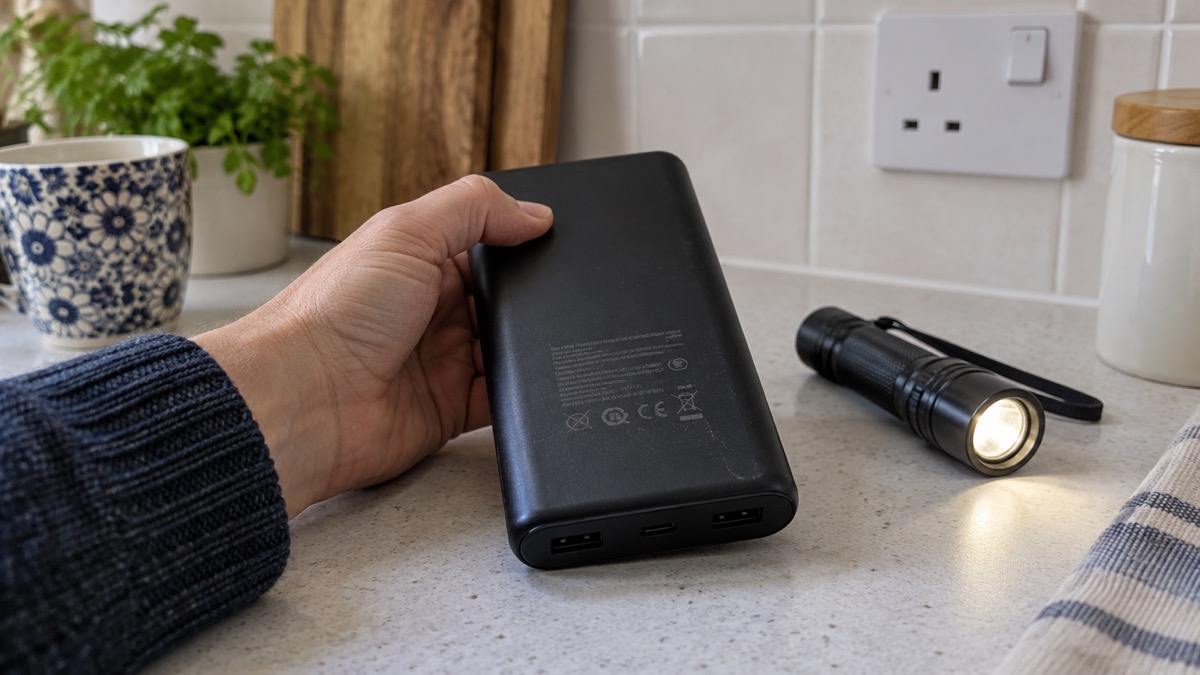
A power cut is the emergency most households meet first, and the official kit list is deliberately small. Fire and rescue services in Scotland and the Met Office both describe the essentials as battery candles, torches and batteries, and a mobile phone power pack1. Everything else is an extra. The table below sets out what each type of kit does when the mains goes off, and which guide covers it.
| Kit type | What it does in a power cut | What it cannot do | Guide |
|---|---|---|---|
| Torch or work light | Lights a room, a stairwell or a fuse board without a flame | Run indefinitely; needs batteries or charge | Emergency Lighting at Home |
| Power bank | Recharges a phone so you can call 105 or check updates | Power heating, cooking or white goods | Staying Informed and in Touch |
| Jump starter | Starts a car with a flat battery | Run anything in the home | Storms, Snow and Ice |
| Cordless tool battery | Runs a drill or saw for repairs | Be connected to the home's wiring | Home Emergencies |
Two rules sit above the kit. First, turn off all electrical equipment except a light or a radio, so that the supply does not surge when it returns1. Second, know who to call: dial 105 for a power cut, a number given by councils and the Scottish Government's preparedness campaign alike4. Most power cuts do not last very long, but a storm can stretch that, and the Power Cuts: A Household Guide covers what to do hour by hour.
Torches and work lights
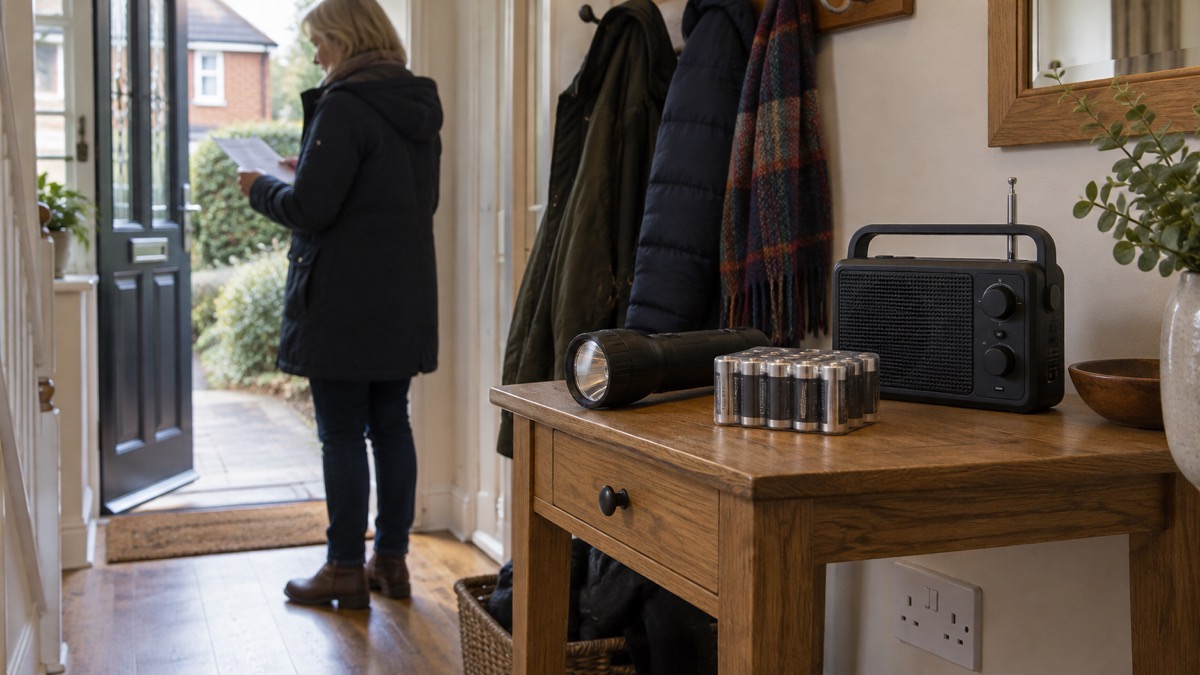
Light is the first thing a household misses in a power cut, and it is also where the most avoidable accidents happen. Official guidance is consistent: keep torches and batteries, and keep them where you can find them in the dark1. A battery-operated radio tuned to the local radio station belongs in the same place, because it keeps working when mobile data and broadband do not13.
BLACK+DECKER's contribution here is on the tool side rather than the torch side. The TLD100-XJ has an LED display, which is a display type rather than a light for a room, and the maker lists the box contents as one thermal detector7. If you are buying lighting for emergencies, the Emergency Lighting at Home: Torches, Lanterns and Candles guide sets out the options, including the case for battery candles over naked flames.
Jump starters and battery chargers
A flat car battery is a winter problem rather than a power cut problem, but it strands a household just the same. Official winter driving advice is to carry an in-car phone charger and a portable battery charger, jump leads, an ice scraper and de-icer, a reflective warning triangle (ideally two), sunglasses and a blanket15. A jump starter is the portable version of the jump leads: it holds enough charge to turn an engine over without a second vehicle.
The safety record here is worth knowing, because jump starters and power banks are the same kind of product inside. The Office for Product Safety and Standards has published a recall for a Fast Charge Jump Starter 260 and Power Bank, sold under the Ring Automotive brand, with the barcode 5055175250144 and batch 38/21, described as a black and blue power bank intended for use as a jump starter for motorcycles, cars, 4 x 4s and vans, with an LED torch and a power bank for phones and tablets16. The same office has published recalls for power banks sold under other names, including POM Power Banks17, the Anker 321 Power Bank (PowerCore 5K, Black) A111218 and Anker Power Banks A1681, A1689 and A164719. None of these is a BLACK+DECKER product, and none should be read as a comment on BLACK+DECKER kit. They are there to make one point: check any power bank or jump starter you own against the recall lists before you rely on it.
For the household plan, a jump starter earns its place if you depend on a car for work, caring or medical appointments. Charge it while the power is on, keep it in the house rather than the boot in freezing weather, and check it before the winter. The Storms, Snow and Ice: A Household Guide covers the wider winter kit.
Power tools and batteries for home repairs
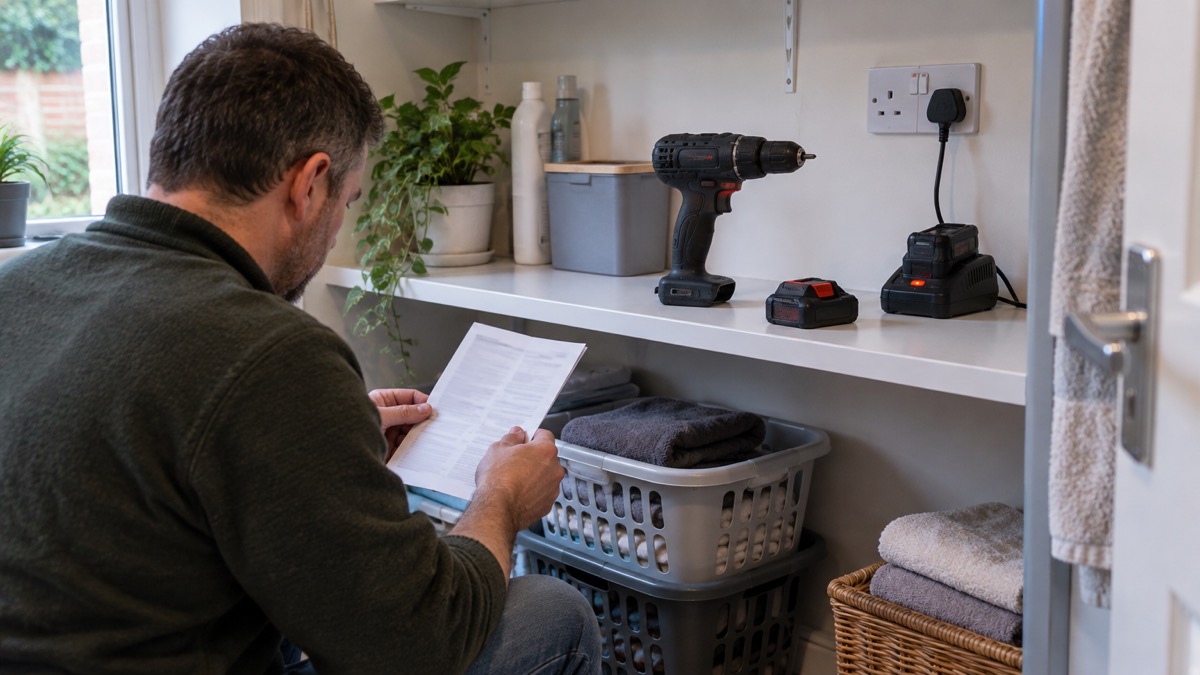
Cordless power tools come into their own after an emergency rather than during one. A storm that brings down a fence, a flood that lifts a floorboard or a break-in that damages a door all call for a drill, a saw and a charged battery. The preparedness value is in having the tool, the right bit or blade, and a battery that holds charge when you pick it up.
Fire and rescue services treat power tool batteries as part of the same lithium-ion family as phone and laptop batteries, and their advice is to always follow the manufacturer's instructions for using, charging, storing and disposing of rechargeable batteries8. That is the whole of the safety case in one sentence: the maker's manual for your tool is the authority on how to charge it, how long to leave it and where to store it.
A cordless tool battery is not a home backup supply. It cannot be connected to your home's wiring, and it will not run a fridge or a boiler. If you are thinking about backup power for the home, the Backup Power at Home: A Household Guide sets out what is possible and what the safety limits are. For repairs after a specific incident, see Home Emergencies: Fire, Carbon Monoxide, Gas Leaks and Burst Pipes.
Safe charging and storage
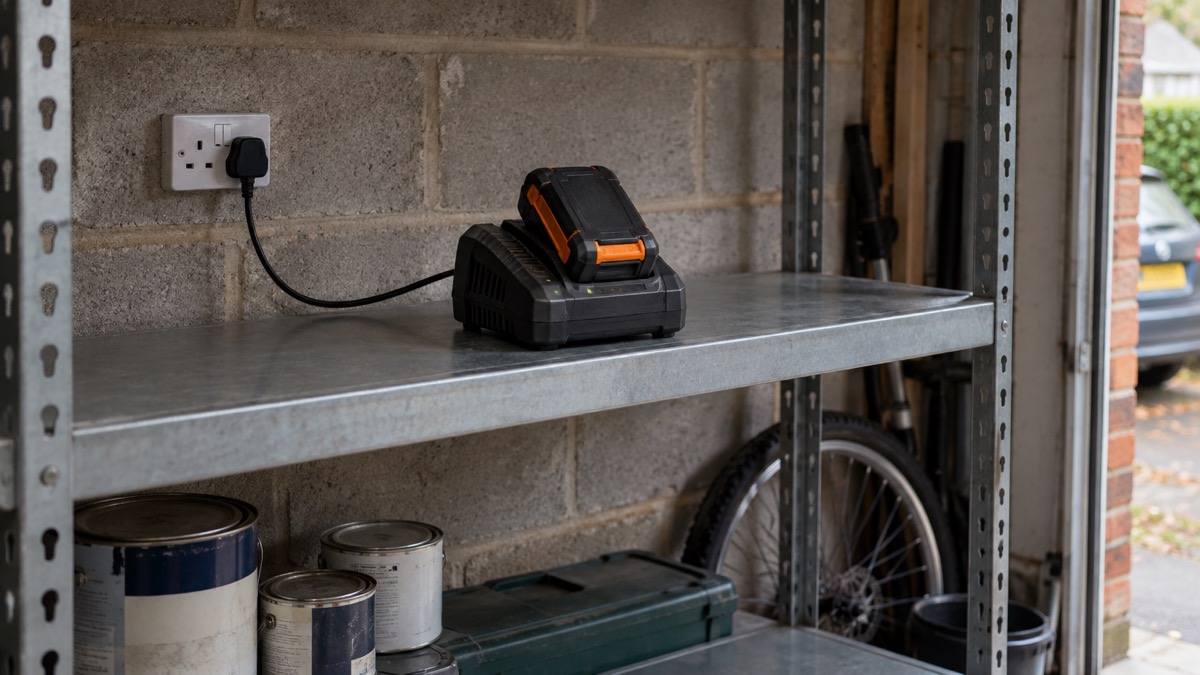
Lithium-ion batteries are safe when they are treated as the maker instructs and dangerous when they are not. The fire and rescue service position is blunt: always follow the manufacturer's instructions for using, charging, storing and disposing of rechargeable batteries8. The TLD100-XJ's maker listing gives its battery type as lithium ion, which puts it in the same category as the rest7.
The practical rules for a household are these:
- Charge on a hard, flat, non-flammable surface, not on a bed, sofa or carpet, and not under a pile of clothes.
- Charge while you are awake and at home, not overnight, so you would notice heat, a smell or smoke.
- Keep chargers and batteries away from damp, and never charge anything that has been wet.
- Use the charger that came with the tool or the maker's own replacement, not a generic one.
- Store batteries out of direct sunlight and away from anything that could puncture or crush them.
Keeping kit ready for an emergency
Kit that is not checked is kit you cannot count on. Official household emergency kit lists are consistent about the small things: spare batteries at home21, a torch and batteries13, a notepad and pencil for writing down information when the phone is dead22, and a list of useful telephone numbers kept with the kit13. Northern Ireland's household emergency kit guidance adds the same point about keeping essential items in the same place within the home, so that anyone can find them in a hurry24.
A simple routine keeps BLACK+DECKER kit and the rest of the household kit usable:
- Pick a date twice a year, at the clock changes, and test every torch and radio.
- Charge power banks and tool batteries to full, then top them up again at the next check.
- Write the model and serial number of each electrical item in the notepad and keep it with the kit.
- Check the recall lists for anything with a battery, using the Office for Product Safety and Standards notices and the Electrical Safety First website6.
- Replace any battery that no longer holds charge, using the maker's own part.
Somerset Council's preparedness guidance puts the same idea in household terms: make up a home emergency pack, prepare an evacuation checklist, and keep a basic emergency kit in your vehicle depending on the time of year26. The Emergency Kit: What a UK Household Should Keep Ready guide has the full list.
Safety notices and recalls
Manufacturers issue product recall notices if an electrical appliance could develop a fault, including a risk of electric shock or fire6. The system works only if you can be reached, which is why registration matters and why checking the lists matters more.
For any appliance, the fire service advice is to check for recalls or safety notices on the Electrical Safety First website25. For products with a battery, check the recall notices issued by the Office for Product Safety and Standards, and contact the retailer where you bought the product if you are unsure27. If an appliance is not listed as recalled it should be safe to use, but if you have concerns about its safety, contact the retailer or manufacturer6.
Support, warranty and spare parts
BLACK+DECKER's own product listing for the TLD100-XJ states a 2 Year Warranty, and the maker's wording is that it will repair, without charge, any defects due to faulty materials or workmanship within the specified warranty7. That is the maker's own commitment for its own product, and it is the first place to go if something fails in normal use.
For anything else, the route is the same in three steps. First, find the model name or number and the serial number on the product, and have the purchase date to hand, because those are the details registration and support both ask for6. Second, register the product with the maker so they can contact you with safety information or recall notices27. Third, if you need a replacement battery or charger, go to the maker rather than a marketplace seller, because the maker's part is the one matched to the tool and its safety testing.
The same registration logic applies to any appliance in the home. Fire and rescue services advise registering your appliance so manufacturers can contact you about faults or recalls25. It takes a few minutes and it is the difference between hearing about a fault and finding out the hard way.
Sources (28)
- Power cuts, Scottish Fire and Rescue Service, 2026-10-25
- Storms, UK Government preparedness campaign, 2026-10-19
- Generators, Wiltshire and Swindon Prepared, 2026-10-25
- Emergency home emergency plan, Royal Borough of Windsor and Maidenhead, 2025-10
- Be battery aware, Greater Manchester Fire and Rescue Service, 2026-10-29
- Electrical safety, Scottish Fire and Rescue Service, 2025-02-27
- TLD100-XJ Digital Thermal Leak Detector, BLACK+DECKER, 2026
- Battery safety, Greater Manchester Fire and Rescue Service, 2026-10-29
- Stay safe in a thunderstorm, Met Office, 2026-10-25
- Emergency plan, Ready Scotland, 2026-03-24
- Emergency, Basingstoke and Deane Borough Council, 2026-10-29
- Emergency plan, Ready Scotland, 2026-10-29
- Be prepared, Lancaster City Council, 2026-10-26
- Strong winds and heavy rain warning: information and advice, nidirect, 2026-01-27
- 6 things to do to prepare your vehicle for winter weather, Met Office, 2026-10-25
- Product recall: Fast Charge Jump Starter 260 and 9000mAH Power Bank, Office for Product Safety and Standards, 2024-03-01
- Product recall: POM Power Banks sold by TK Maxx, Office for Product Safety and Standards, 2026-06-01
- Product recall: Anker 321 Power Bank (PowerCore 5K, Black) A1112, Office for Product Safety and Standards, 2024-08-09
- Product recall: Anker Power Banks A1681, A1689 and A1647, Office for Product Safety and Standards, 2025-07-23
- E-bikes and e-scooters, Scottish Fire and Rescue Service, 2026-10-25
- Emergency kit checklist, Neath Port Talbot Council, 2026-10-29
- Get help and advice in an emergency, Lincolnshire County Council, 2026-10-29
- Planning for an emergency: kit, Wiltshire Council, 2026-10-29
- Household emergency kit, nidirect, 2026-07-06
- White goods, Cheshire Fire and Rescue Service, 2026-05-20
- Preparing for emergencies, Somerset Council, 2026-09-17
- Registering your e-bike or e-scooter for safety alerts and product recalls, London Fire Brigade, 2026-10-25
- How to check if your tumble dryer is a fire risk, London Fire Brigade, 2026-10-25
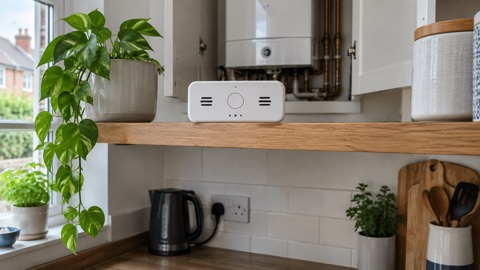 BLACK+DECKER BDCO10 Carbon Monoxide Alarm
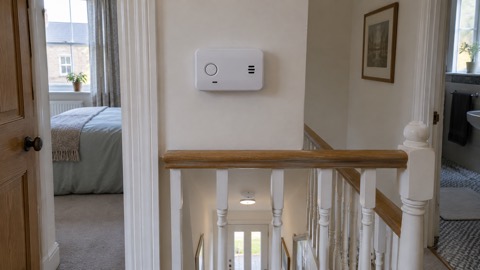 BLACK+DECKER RF Interlink Carbon Monoxide Alarm