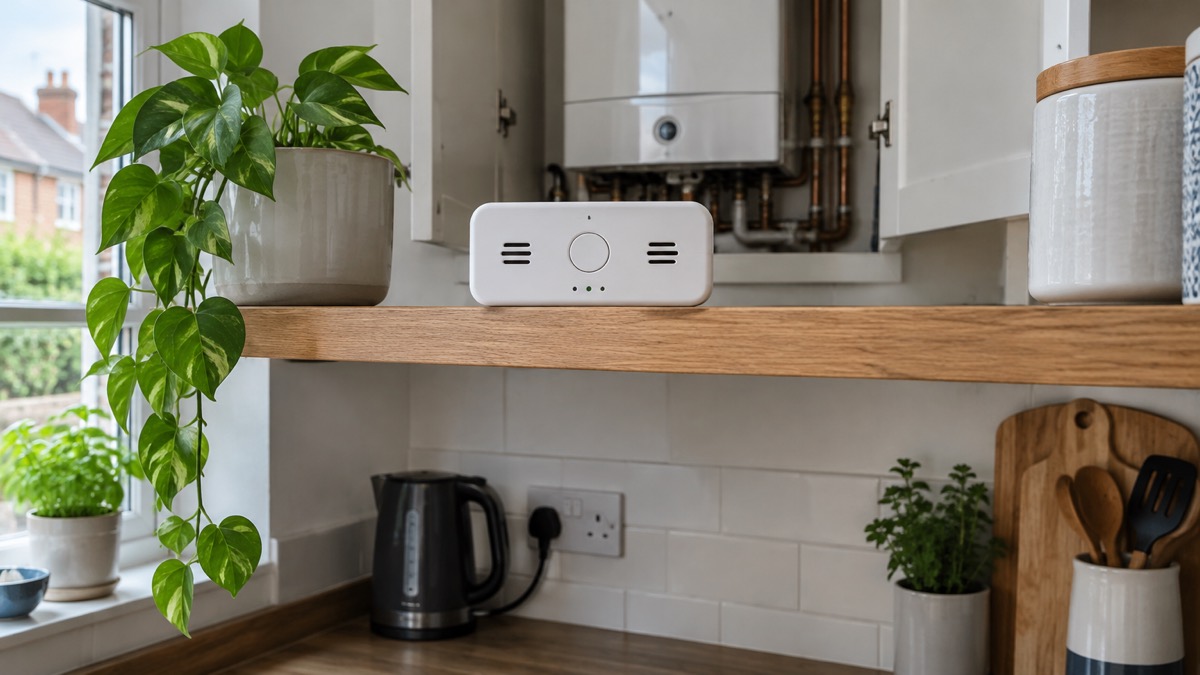
The BLACK+DECKER BDCO10 is a standalone carbon monoxide alarm with a sealed lithium battery that the distributor says lasts ten years, matched to a ten-year product lifespan. It sounds an 85dB alarm when carbon monoxide reaches 50ppm, and it is certified to BS EN 50291-1 for domestic use and BS EN 50291-2 for camping, caravans, boats and travel1. In plain terms: you fit it once, test it weekly, and replace the whole unit when it reaches the end of its life rather than changing a battery.
Carbon monoxide is the reason the device matters. It has no colour, no smell and no taste, so an alarm is the only reliable way to know it is there. The BDCO10 is aimed at households that want a fit-and-forget unit for the kitchen or boiler cupboard, and at people who also want protection in a caravan, tent or boat cabin. It is not interlinked: each alarm works on its own, so a sound in one room does not set off another elsewhere in the house1.
This page sets out what the BDCO10 does, the specifications that decide whether it suits your home, how to test and silence it, where it is certified to work, and what its end-of-life chirp means. It does not compare it with other alarms or rank it against them; it gives you the facts to judge for yourself.
What the BDCO10 is and who it suits
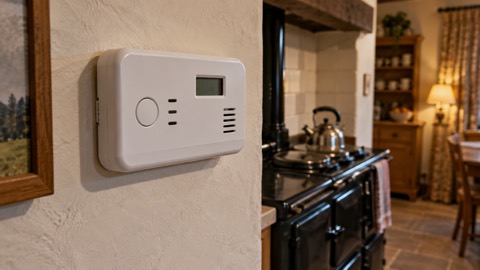
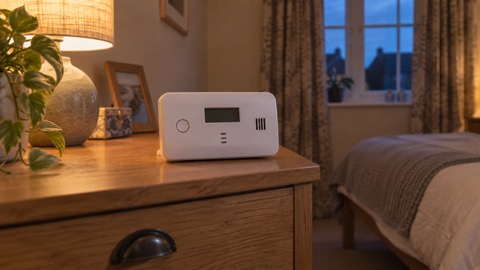
The BDCO10 is a battery-powered carbon monoxide alarm in an ABS plastic case, with an electro-chemical sensor and coloured LED indicators for power, fault and alarm1. It stands alone rather than linking to other alarms, and it can either stand free on a shelf or be fixed to a wall with the fixings supplied1. That combination, a sealed battery and a freestanding option, is what makes it a travel alarm as much as a home one: you can lift it from the kitchen shelf into a caravan and back again without wiring anything.
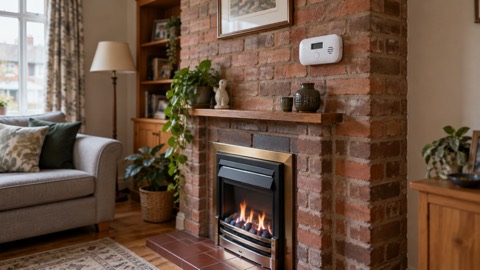
It suits three kinds of household. The first is a home with a gas boiler, gas fire or gas cooker that wants a maintenance-free alarm near the appliance. The second is a household that wants a spare unit to move between rooms, since the freestanding option means no drilling. The third is a caravan, motorhome or boat owner who needs an alarm rated for those environments, which the BS EN 50291-2 certification covers1.
It does not suit everyone. Because it is standalone, it will not wake someone in a distant bedroom the way an interlinked system would; if you want alarms that all sound together, that is a different kind of system. And because the battery is sealed, you cannot swap it out when it runs down: the whole alarm is replaced at end of life. If you would rather change a battery each year and keep the unit, a replaceable-battery alarm is the other route. For the wider question of what a carbon monoxide alarm does and how to choose between types, see Carbon Monoxide Alarms: What They Do and How to Choose.
Specifications: 85dB from 50ppm
The figures that decide whether the BDCO10 is right for a room are its alarm threshold, its sound level and its environmental limits. The distributor lists an alarm level of 50ppm and an 85dB sounder, which is loud enough to be heard through a closed door in most homes1. The sensor is electro-chemical, the standard type for domestic carbon monoxide detection1.
| Specification | BDCO10 single | BDCO10X2 twin pack |
|---|---|---|
| Equipment type | CO alarm | CO alarm |
| Sensor | Electro-chemical | Electro-chemical |
| Alarm level | From 50ppm | From 50ppm |
| Sound level | 85dB | 85dB |
| Power | Battery powered, sealed lithium | Battery powered, sealed lithium |
| Battery life | 10 years | 10 years |
| Product lifespan | 10 years | 10 years |
| Operating temperature | 0°C to +40°C | 0°C to +40°C |
| Relative humidity | 0% to 90% | 0% to 90% |
| Dimensions | 100mm wide, 60mm high, 38mm deep | 100mm wide, 60mm high, 38mm deep |
| Weight | 98g | 196g |
| Fixing | Freestanding or wall mounted | Freestanding or wall mounted |
| Certification | BS EN 50291-1 and BS EN 50291-2 | CE and UKCA marked |
| Warranty | 5 years | 5 years |
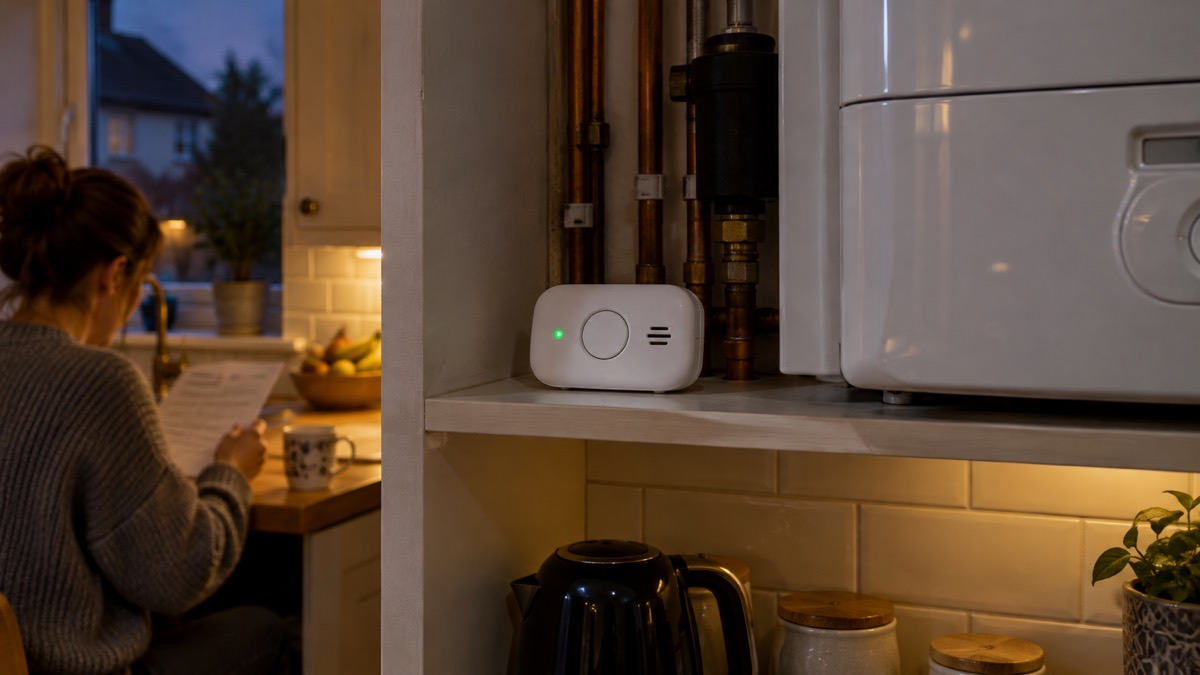
The single alarm is listed as certified to BS EN 50291-1 and BS EN 50291-21. Both are distributor listings for the same alarm, so treat the certification detail on the single listing as the fuller description and check the box when it arrives.
The 50ppm threshold is worth understanding. It is the level at which the alarm is designed to sound, not the level at which carbon monoxide becomes dangerous; lower concentrations over a long period can still harm health, which is why the alarm is a backstop rather than a substitute for servicing appliances. For the symptoms to watch for, see Carbon Monoxide Poisoning Symptoms.
The ten-year sealed battery and what it means for you
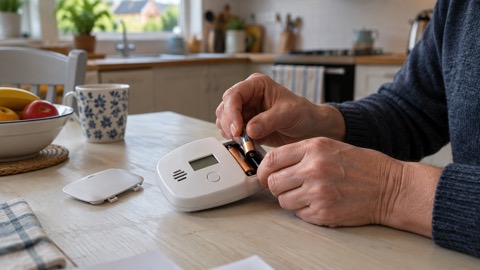
The BDCO10 uses a sealed lithium battery that the distributor says lasts ten years, matched to a ten-year product lifespan1. The Scottish Government's advice on alarms notes that long-life lithium batteries can last up to 10 years, which is the same principle: the battery is designed to outlast the period you would keep the alarm4. You do not change the battery, and you cannot.
That has two practical consequences. The first is convenience: no annual battery run to the shop, and no risk of an alarm sitting dead because someone borrowed its battery for a remote control. The second is that the alarm's life and the battery's life end together. When the unit reaches ten years, or when it chirps to tell you it is at end of life, you replace the whole alarm, not the battery1.
If you are weighing up sealed against replaceable batteries more broadly, the comparison page sets out the trade-offs: Sealed 10-Year or Replaceable Battery Alarms.
Lights and the test button: what each one tells you
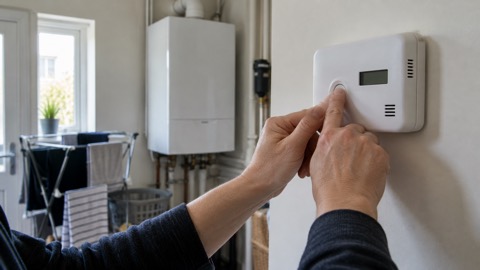
The BDCO10 has coloured LED indicators for power, fault and alarm, and a combined test and reset or silence button1. The distributor describes the button as being for easy maintenance, and the twin pack listing spells out that it is for weekly testing2. The routine is simple: check the power light is on, press the test button, and confirm the alarm sounds loudly.
The maker Aico gives the same method for its own alarms, and it is a useful benchmark for any alarm: check the green light is on, press the test button for 10 seconds, the alarm will sound loudly, and repeat on all other alarms in the property5. If your BDCO10 does not sound when tested, treat it as faulty rather than assuming the test failed for some harmless reason.
"Press the 'Test' button for 10 seconds."
Testing weekly is the habit that keeps any alarm honest. The distributor lists the BDCO10's button as a combined test and silence control, so the same press that tests it can quiet a false alarm1. For how often to test alarms of all kinds, see How Often to Test Smoke and CO Alarms.
Where it is certified to work: homes, caravans, camping and boats
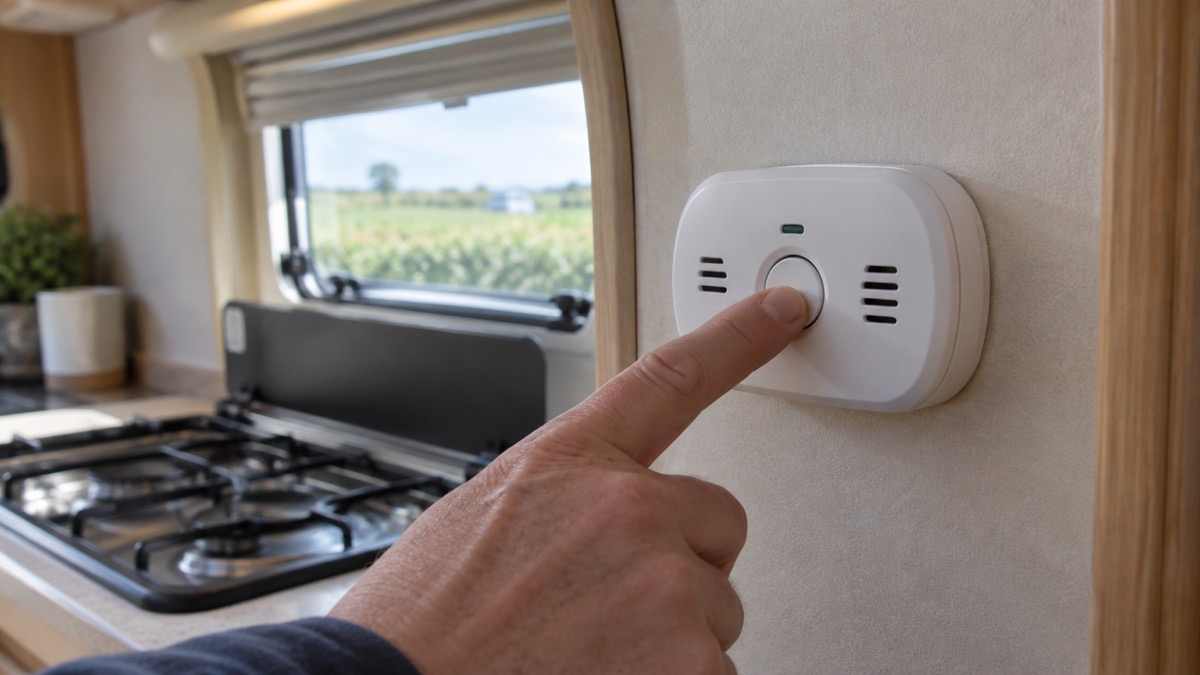
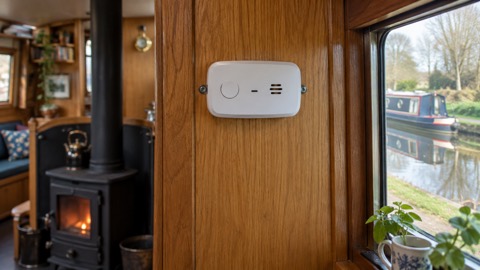
The BDCO10 carries two certifications, and the difference between them matters. BS EN 50291-1 covers domestic use, which is the standard for an alarm in a house or flat1. For boats, campers and caravans, use BS EN 50291-2:2010 compliant alarms6.
That makes the BDCO10 a reasonable single alarm to own if your year includes both a house and a caravan. You are not buying a domestic alarm and hoping it survives a damp boat cabin; the unit is certified for both. The distributor lists its environmental suitability as caravan, camping and boats, home, and travel1.
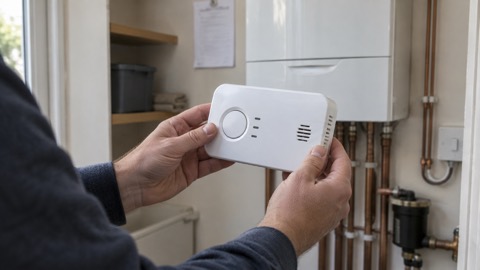
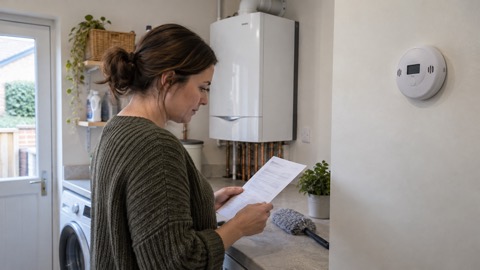
Where you put it still matters more than what it is certified for. Carbon monoxide comes from fuel-burning appliances, so the alarm belongs in the room with the boiler, fire, cooker or heater, and in a caravan or boat near the appliance or sleeping area. The general siting guidance is in Where to Put a Carbon Monoxide Alarm. If you are not sure whether your home needs one at all, Do I Need a Carbon Monoxide Alarm? walks through the appliances that make it worthwhile.
Landlord and Scottish rules it meets
The distributor states that the BDCO10 is compliant with Scottish 2022, Welsh landlord 2022 and Northern Ireland landlord 2024 legislation1. If you are a landlord or a tenant checking whether an alarm meets the rules, that is the claim to look for on the box, but the rules themselves are worth understanding.
In Scotland, fire and carbon monoxide detection has been written into housing standards. The Tolerable Standard had fire detection equipment added to it by the Housing (Scotland) Act 1987 (Tolerable Standard) (Extension of Criteria) Order 2019, and it also forms part of the Repairing Standard under section 13 of the Housing (Scotland) Act 2006, which landlords must comply with under section 147. Guidance for private rented properties in Scotland expected landlords to have carbon monoxide detection installed by 1 December 20158. The Scottish Housing Quality Standard offers further support to tenants and landlords9.
In England, the Electrical Safety First charity notes that similar requirements to England's appliance inspection rules are in place for rental properties in Scotland10. For tenants in England, Wales and Northern Ireland, the practical check is the same: ask your landlord what detection is fitted and when it was last tested. The nation-by-nation alarm rules are set out in Wales and Northern Ireland: Alarm Rules and Fire Services and in Alarm Standards: BS 5839-6, BS EN 50291 and System Grades.
End-of-life chirps and how to dispose of it
All carbon monoxide detectors have a set lifetime, which can be as long as ten years, and chirping every 30 seconds is the sign that the alarm is ready to be replaced3. The BDCO10's own listing says the same: a low battery or end of life warning chirps when the alarm needs replacing1. When you hear that chirp, do not silence it and carry on. Order a replacement and fit it.
The distinction between a low battery chirp and an end-of-life chirp is less important on a sealed-battery alarm than on a replaceable one, because either way the unit is finished. What matters is that you act. A chirping alarm is telling you it can no longer be relied on to warn you.
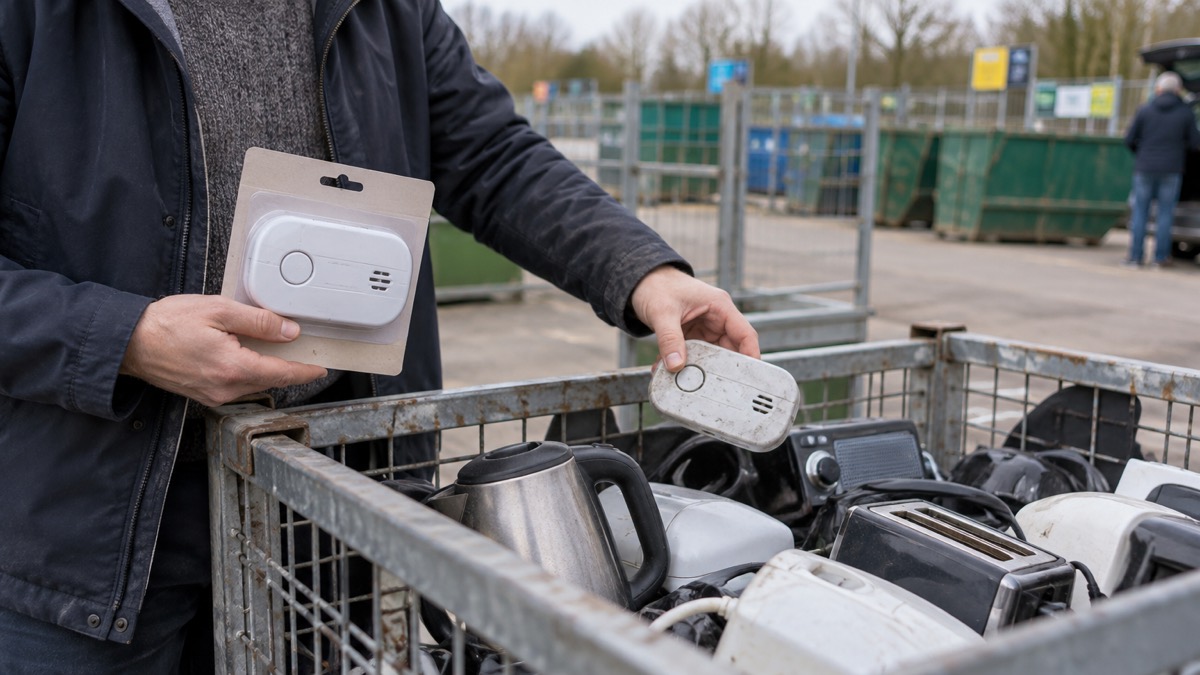
Disposal is straightforward but should not go in the household bin. The distributor lists the BDCO10 as covered by Valpak's WEEE Distributor Take-back Scheme, which means the retailer takes back waste electricals1. Take the old alarm to a retailer that offers take-back or to your local household waste recycling centre. Do not open it to remove the battery; the battery is sealed in for a reason.
If the alarm sounds
A sounding carbon monoxide alarm is not a false alarm until you have proved it. The independent guidance is clear that you should treat it as real: open windows and doors, turn off fuel-burning appliances, get everyone out of the property, and call the gas emergency number12. Do not go back in until you have been told it is safe.
If you suspect carbon monoxide, the step-by-step response is in What to Do If Your CO Alarm Sounds or You Suspect Carbon Monoxide. For preventing a build-up in the first place, see Five Ways to Avoid a Carbon Monoxide Build-up and the wider Home Emergencies section.
Sources (11)
- BLACK+DECKER Carbon Monoxide Alarm BDCO10, Safelincs, 2026-10-29
- BLACK+DECKER Carbon Monoxide Alarm Twin Pack (BDCO10X2), Safelincs, 2026-10-29
- How to install and test carbon monoxide detectors, Which?, 2026-07-14
- Fire and smoke alarms in Scottish homes: where and what to buy, Scottish Government, 2024-08-14
- Homeowner FAQs, Aico, 2026-10-28
- Tolerable Standard guidance: satisfactory fire and carbon monoxide detection, Scottish Government, 2023-06
- Carbon monoxide detectors: governmental guidance, Scottish Borders Council, 2015-12-01
- Rented accommodation, Scottish Fire and Rescue Service, 2024-02-06
- Tenants, Electrical Safety First, 2026-10-25
- How to choose a carbon monoxide detector, Which?, 2026-07-14
- What to do when a carbon monoxide detector goes off, Which?, 2026-07-14
 FireAngel FA3313 CO Alarm
 FireAngel FA3322 CO Alarm
 FireAngel FA3820 CO Alarm
 FireAngel FA6812 CO Alarm
 FireAngel FA6813 CO Alarm
 FireAngel FA6829S CO Alarm
 FireAngel CW1-PF CO Alarm
 FireAngel W2-CO-10X CO Alarm
 FireAngel FP1820W2-R CO Alarm
 Kidde K7DCO CO Alarm
 Kidde K5DCO CO Alarm
 Kidde K10LLDCO CO Alarm