

GP Batteries is a battery maker whose UK range covers the two kinds of battery an ordinary household actually uses: single-use alkaline and lithium cells for torches, radios, smoke alarms and sensors, and the rechargeable lithium-ion cells that sit inside phones, laptops, power banks and countless other devices. The average UK household now has many rechargeable items containing lithium-ion batteries, including laptops, mobile phones, e-scooters, e-cigarettes and mobility vehicles, according to North Wales Fire and Rescue Service1, so the way you buy, store, charge and dispose of batteries matters to preparedness as much as the batteries themselves.
For a household getting ready for power cuts and storms, GP's single-use cells are the practical core of the range. The maker states a 10 year shelf life for its lithium 9V battery2 and 3 years for its alkaline 186 cell3, which makes the lithium versions the ones to buy for a smoke alarm or a grab bag you hope never to open. Its lithium CR14250, a small cell for door and window sensors and water-leak sensors, also carries a 10 year shelf life4. This page sets out what GP makes, how each type fits an emergency kit, and the safety, storage and recycling rules that apply to batteries from any maker.
What GP Batteries makes for UK households
GP's UK catalogue divides into single-use batteries and rechargeable ones. On the single-use side it makes alkaline cells in the common household sizes and lithium cells in sizes including 9V and the small CR14250. The lithium 9V is aimed at what the maker calls critical devices: smoke detectors, smart home and security devices, walkie-talkies, infrared thermometers and multimeters2. The CR14250 powers door and window sensors, water-leak sensors and dive computers4. The alkaline 186 is a small button-style cell used in watches, calculators and similar devices, and is also sold under the equivalent codes LR43, V12GA, 386, AG12 and SR43W3.
On the rechargeable side, lithium-ion batteries are the rechargeable batteries found in household electrical items such as mobile phones, tablets, laptops, mobility scooters, e-bikes, e-scooters, vapes, hoverboards, electric toothbrushes and some children's toys and books, as Suffolk Fire and Rescue Service sets out8. Manchester Fire and Rescue Service gives a similar list: phones, e-bikes, e-scooters, mobility scooters, laptops, vapes and power tools5. GP's own branded products in this space are the cells and chargers that keep such devices running, and the same safety rules apply to them as to any lithium-ion battery.
For a preparedness-minded household, GP's single-use cells slot into two parts of your planning: backup power for keeping small devices alive through a power cut, and emergency lighting for torches and lanterns when the mains fails. The sections below take each in turn.
Disposable batteries: alkaline and lithium
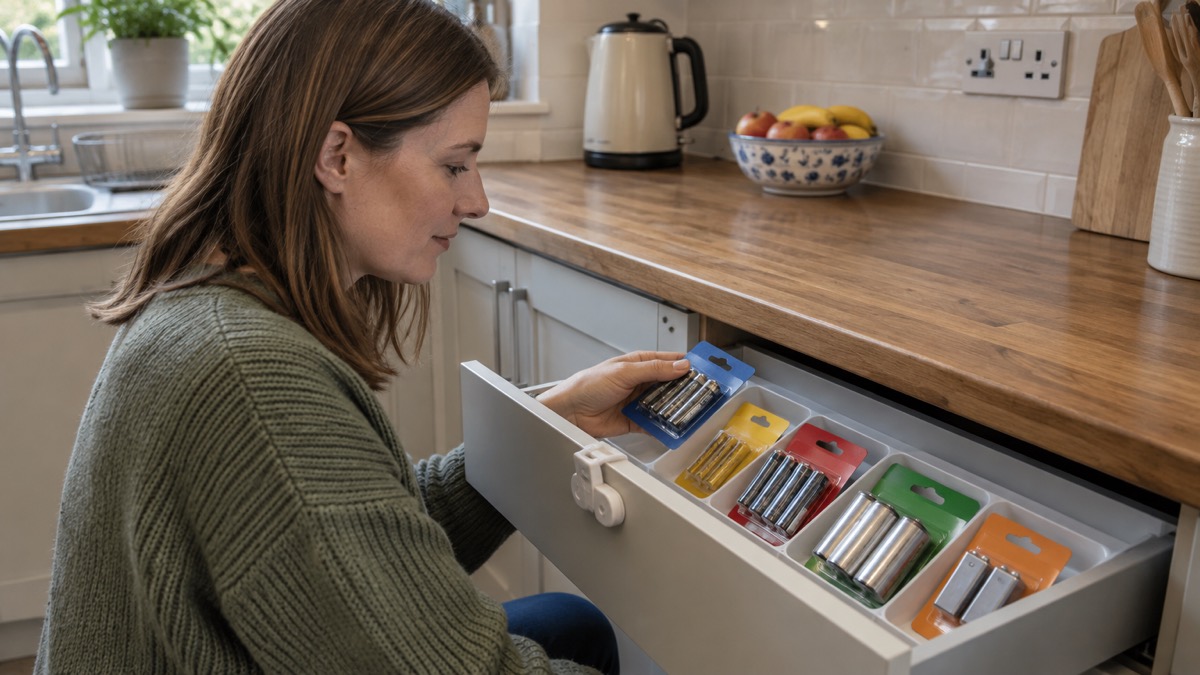
Single-use batteries come in two chemistries in GP's range: alkaline and lithium. The maker lists the 186 as an alkaline chemistry cell with a 3 year shelf life3, and both the 9V and the CR14250 as lithium chemistry cells2. The practical difference for a household is longevity and purpose. The alkaline 186 suits small, low-drain devices you use day to day. The lithium 9V is positioned for devices where you cannot afford a flat battery: the maker states its advanced power technology allows the GP Lithium batteries to last longer than any average alkaline batteries, and to supply devices with stable power throughout the battery life2.
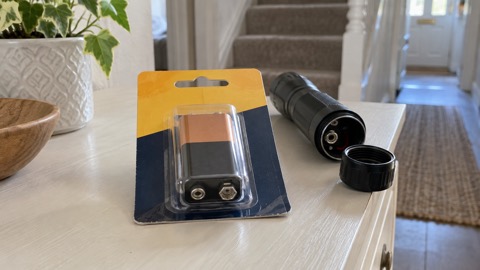
That claim matters most for smoke alarms. A smoke alarm is the one battery device that has to work years after you stop thinking about it, and a 10 year shelf life2 means a spare lithium 9V in a drawer is still fit to fit when the alarm starts chirping in the middle of the night. The same logic applies to a grab bag: batteries with a decade of shelf life do not need checking nearly as often as ones with three years.
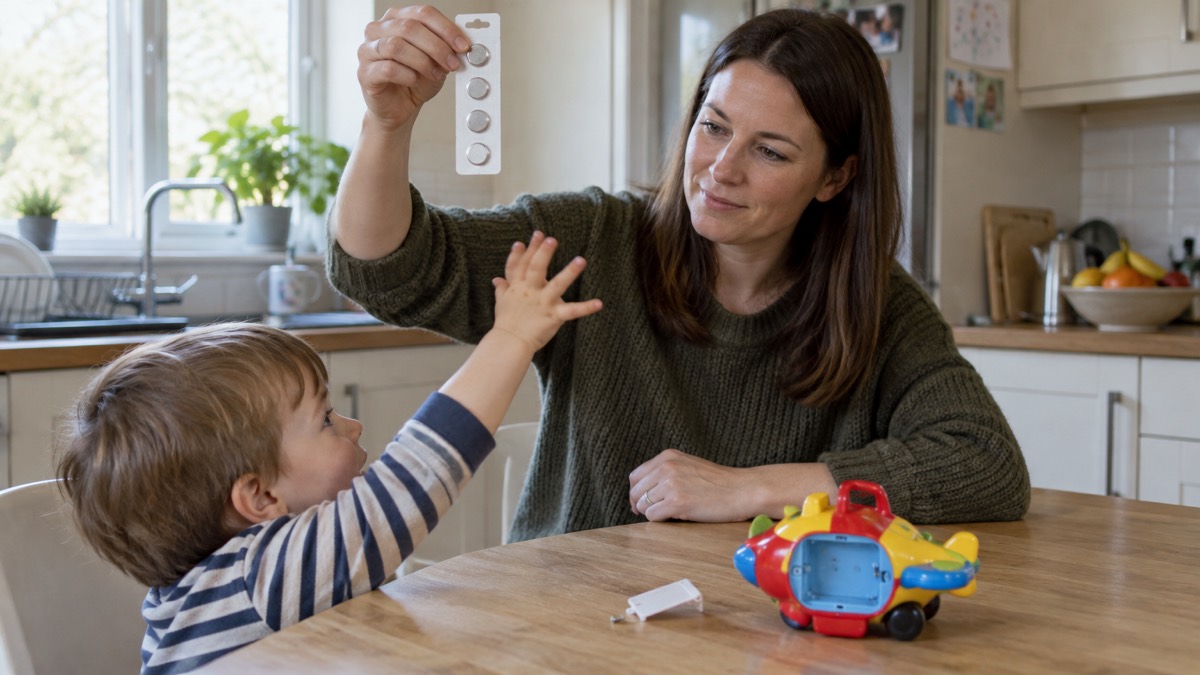
Two rules from fire and rescue services apply to all single-use batteries, whatever the brand. First, always store single-use batteries in their original packaging and away from metal objects, because contact with metal can cause overheating and a fire5. Loose batteries rattling in a drawer with keys and coins is a genuine fire risk, not a tidiness issue. Second, always store batteries out of reach of children and pets5, a point the NHS in Berkshire makes sharply for button cells, which are dangerous if swallowed: store all spare batteries in a sealed container out of reach, make sure battery compartments on toys and devices are securely closed, and recycle used batteries safely so they are out of reach of children9.
When fitting batteries, follow the device maker's instructions, and do not mix lithium batteries with other types such as alkaline or NiMH10. Replace the full set at once, with the same type and chemistry, and never put an alkaline in where a lithium is specified.
Rechargeable batteries and chargers
Rechargeable batteries are now the norm in the devices a household relies on most. Lithium-ion batteries are found in products such as phones, tablets and e-cigarettes, as the Scottish Fire and Rescue Service notes6, and in a host of appliances around the home8. GP's rechargeable range and chargers exist to keep these running, and the safety guidance below applies to them all.
The single most important instruction comes from Manchester Fire and Rescue Service: always follow the manufacturer's instructions for using, charging, storing and disposing of rechargeable batteries5. That means the charger that came with the device, or one the maker approves, and the charging routine the maker describes. Devon and Somerset Fire and Rescue Service adds a behavioural rule: charge batteries whilst you are awake and alert so that if a fire should occur you can respond quickly, and do not leave batteries charging while asleep or away from the home11.
Chargers themselves draw little power. Electrical Safety First lists chargers for battery-operated devices as using up to 75 watts12, so keeping a charger running is not a burden on a backup supply, but the fire-safety rules around it are strict regardless. The full charging checklist is in the safe charging section below.
For rechargeable batteries, follow the manufacturer's guidance on how to charge, store and maintain the specific batteries and charger you own. Rechargeable batteries such as GP's Recyko AA are NiMH cells13, and chargers such as the GP Recyko E821 are compatible with AA and AAA rechargeable batteries14, so check the guidance for your own model before storing spare cells for an emergency.
Power banks and portable charging
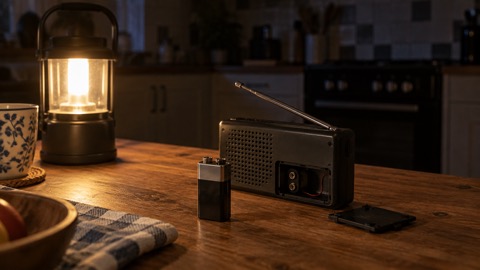
A power bank is the most useful battery product in a power cut, because it keeps your mobile phone, and with it your ability to call for help and receive alerts, alive when the mains is down. Hampshire Fire and Rescue Service includes a portable power bank for charging your mobile phone in its household emergency kit advice15, and Northern Powergrid's winter readiness advice goes further, listing charged power banks for mobile phones alongside torches and spare batteries and a wind-up or battery-powered radio in a grab bag16.
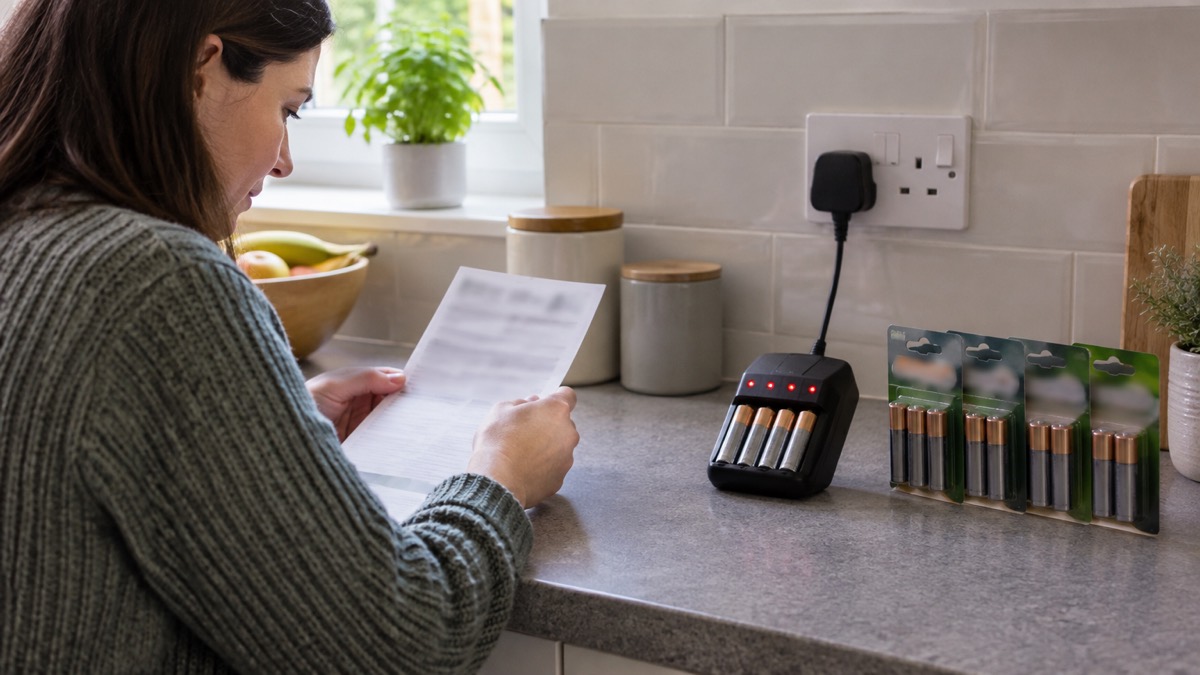
Power banks are lithium-ion devices, as a government product recall notice for two Belkin models describes them: "Portable power bank with lithium-ion battery cells."17 That means the full set of lithium-ion safety rules applies: charge on a hard, flat, heat-resistant surface away from flammable materials5, do not cover chargers or battery packs when charging as this could lead to overheating or even a fire11, and use the correct charger18.
One habit worth forming now: keep your power bank charged and check it every few months. A flat power bank in a grab bag is dead weight. If you are building or checking a grab bag, the emergency kit guide covers the whole list; for keeping your phone and radio working through an outage, see staying informed and power cuts.
Torches and emergency lighting
Official emergency kit advice across the UK includes a torch and spare batteries. One emergency kit list says to include a torch and extra batteries, or a wind-up type19. A car emergency kit list includes a torch and spare batteries20. The WeatherReady winter checklist says have a torch and spare batteries21. Parish-level guidance lists a wind-up torch, batteries, wind-up radio and supplies of tinned food as essential items22, and a household emergency pack list includes spare batteries23.
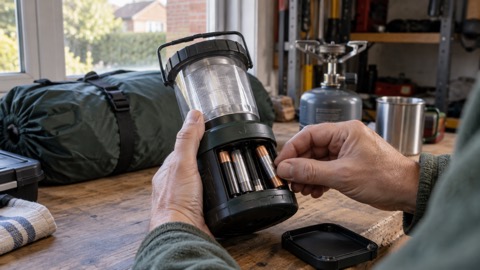
GP's single-use cells are what keep a battery torch running through a storm. GP states that its lithium AA batteries last longer than any average alkaline batteries2, and lithium cells such as the GP CR2 are available for torches that take them3. If your torch takes AA or AAA cells, buy spares at the same time as the torch, keep them in the original packaging in the same place as the torch, and date-check them when you check your kit.
A wind-up torch removes the battery question entirely, which is why several official lists offer it as an alternative19. Many households keep both: a wind-up torch for immediate use and a battery torch with lithium cells as the reliable backup. The lighting guide compares torches, lanterns and candles in full, including why candles come last.
Keeping batteries ready: storage and shelf life
Batteries you are storing for an emergency need three things: the right conditions, the right packaging and a date check routine.
The maker's own storage advice for its lithium cells is to store them in a cool and dry place away from direct sunlight to ensure optimal power is reserved in unused batteries2. Fire and rescue services extend this. Manchester Fire and Rescue Service says to store single-use batteries in their original packaging and away from metal objects, and out of reach of children and pets5. Warwickshire's fire safety advice for vaping devices says to store spare batteries safely to avoid contact with other metal objects that may cause a short circuit24. Surrey Fire and Rescue Service advises storing lithium batteries in a shed or garage where possible25, which keeps any failure away from where you sleep.
For cold conditions specifically, the London Fire Brigade, writing about e-bike and e-scooter batteries, explains that cold temperatures can reduce the performance of lithium-ion batteries, giving reduced range, slower charging and faster loss of charge, because the chemical reactions inside the battery slow down at lower temperatures26. Its advice is to store batteries in cool, dry places, and if a battery has been left in freezing conditions, allow it to warm up slowly indoors before using or charging it, because charging a battery when it is extremely cold can damage it26. Oxfordshire's fire and community safety advice agrees: store batteries in a cool place, avoiding extreme temperatures27, and Humberside Fire and Rescue Service says to avoid storing, using or charging batteries at very high or low temperatures28.
| Battery | Shelf life | Storage |
|---|---|---|
| GP Lithium 9V | 10 years2 | Cool, dry, away from direct sunlight2 |
| GP Lithium CR14250 | 10 years4 | Cool, dry, away from direct sunlight4 |
| GP Alkaline 186 | 3 years3 | Original packaging, away from metal objects5 |
| Lithium-ion (devices) | Follow maker's guidance | Cool place, avoid temperature extremes27 |
Build a date check into your routine: when you check your smoke alarm and your grab bag, look at the shelf life dates on stored batteries and replace any that are past them. A battery past its shelf life may still work, but it is not the thing you want to rely on in an emergency, and it is more likely to leak.
Safe charging and handling
The fire and rescue services' charging rules for lithium-ion batteries are consistent across the UK, and they apply to every rechargeable device and power bank in the house, whatever the brand on the cell.
Tanc Cymru, the Welsh fire and rescue service, advises: charge batteries in a safe, visible location, and avoid charging near flammable materials or in escape routes29. Mid and West Wales Fire and Rescue Service gives the same instruction30. Manchester Fire and Rescue Service adds the surface: charge on a hard, flat, heat-resistant surface, away from extreme heat, cold, direct sunlight and flammable materials5.
The rules in brief:
- Stay awake and nearby. Charge batteries whilst you are awake and alert, and do not charge while asleep or away from the home11.
- Never cover them. Do not cover chargers or battery packs when charging, as this could lead to overheating or even a fire11.
- Use the correct charger18, and follow the manufacturer's instructions for using, charging, storing and disposing of rechargeable batteries5.
- Keep escape routes clear. Do not charge in a hallway, doorway or stairwell29.
- Avoid temperature extremes when storing, using or charging28.
Damaged or leaking batteries
Damage is the trigger for most battery fires. The Scottish Fire and Rescue Service explains that batteries can be damaged by dropping them or if your electric bike or electric scooter has been involved in a crash, and advises checking your battery regularly for any signs of damage; if you suspect it is damaged it should be recycled and should not be used or charged31. Its e-bike guidance adds that where the battery is damaged, it can overheat and catch fire without warning6.
West Yorkshire Fire and Rescue Service states the general rule: never use damaged or faulty batteries, and avoid using batteries or devices that are swollen, punctured or show signs of damage, as they can fail without warning and pose a serious fire risk7. For a household, that means inspecting batteries when you fit them and when you check your kit: look for swelling, dents, punctures, leaking fluid or corrosion at the terminals. A leaking alkaline battery shows crusty residue; a failing lithium-ion battery often shows swelling of the device or a sweet chemical smell.
If you find a damaged battery, do not charge it, do not put it in a drawer "for now", and do not bin it. Set it somewhere non-flammable away from the house if you safely can, and recycle it as set out below. If a device with a built-in battery is damaged, treat the whole device as the hazard.
Recycling used batteries in the UK
Used batteries never go in household waste or the general recycling bin. Mid and West Wales Fire and Rescue Service warns that when damaged or end-of-life batteries are crushed or punctured they can cause fires in bin lorries and at recycling and waste centres, and advises asking the manufacturer about a recycling service or the local authority about battery recycling arrangements32.
The everyday routes are simple:
- Shop and supermarket collection points. North Yorkshire Fire and Rescue Service's recycling campaign advises using a recycling locator to find your nearest electrical recycling point, often found in supermarkets and shops, or checking your council website to see if it collects batteries33. In Wales, retail battery recycling bins accept AA, AAA, 9V and button cell batteries, and batteries from small electronics such as phones and cameras30.
- Council services. Tower Hamlets Council, for example, states its Reuse and Recycling Centre accepts all batteries18; check your own council's site.
- Separate the batteries. Remove batteries from electrical items to recycle them separately33. If the battery is built in, recycle the entire device7.
- Keep a battery bag. North Yorkshire's campaign suggests setting aside a bag just for batteries, and each time you remove a battery from a gadget, putting it in the bag ready to take to a recycling point or for council collection33.
One sorting rule from Tanc Cymru: do not mix lithium batteries with other types, such as alkaline or NiMH, when preparing them for recycling29. Damaged batteries need special handling, not the ordinary bin: dispose of them at designated recycling facilities, as Warwickshire's advice for vaping device batteries puts it24, and never in household waste32.
Support, warranty and safety notices
GP states that its lithium batteries are tested by global safety science authority UL, and the United Nations, proven to strictly comply with international safety standards2. That testing claim covers the lithium disposable range; as with any maker's claim, treat it as the maker's own statement of its product's certification.
For product support, use the maker's UK site, where each product page carries its specifications, equivalent model codes and storage advice. When you need to identify a replacement, match the code on the old battery: GP's alkaline 186 is equivalent to LR43, V12GA, 386, AG12 and SR43W3, and its lithium CR14250 is equivalent to CR1/2AA4. Warranty terms are stated by the maker per product, so check the product page or the packaging for the term that applies to what you bought.
Safety notices and recalls are worth checking whatever brand you own. The Office for Product Safety and Standards has issued a repeat warning to stop using UPP e-bike batteries, which have been linked to multiple serious fires7. If you own power banks or e-bike batteries, check the GOV.UK product safety alerts pages for your model, and stop using anything that has been recalled.
For the wider picture of keeping your household running through an outage, see getting started and backup power; for what to keep in one bag by the door, see emergency kit.
Sources (33)
- Lithium-ion batteries at home, North Wales Fire and Rescue Service
- GP Lithium 9V battery, GP Batteries UK
- GP Alkaline Cell Battery 186, GP Batteries UK
- GP Lithium Battery CR14250, GP Batteries UK
- Battery safety, Manchester Fire and Rescue Service
- E-bikes and e-scooters, Scottish Fire and Rescue Service
- Battery safety, West Yorkshire Fire and Rescue Service
- Stay safe with lithium batteries, Suffolk Fire and Rescue Service
- Child safety, Berkshire Healthcare NHS Foundation Trust
- Galileo Tempest 350 manual, NebuTools
- E-bikes and e-scooters fire safety, Devon and Somerset Fire and Rescue Service
- Ratings of electrical appliances, Electrical Safety First
- E-bikes safety advice, Cheshire Fire and Rescue Service
- E-bikes and e-scooters, South Wales Fire and Rescue Service
- Reduce the risk of wildfire damage to your property, Hampshire and Isle of Wight Fire and Rescue Service
- Are you ready for big coat weather?, Northern Powergrid, 2024-11-08
- Product recall: Belkin BoostCharge USB-C BPB002 and Playa USB-C PB0003 power banks, GOV.UK, 2025-11-26
- Battery safety, London Borough of Tower Hamlets
- Get help and advice in an emergency, Lincolnshire County Council
- Emergency kit, Scottish Government Ready Campaign
- WeatherReady winter checklist, Met Office
- Are You Ready booklet, Culham Parish Council, 2025-09
- Prepare for emergencies, Dumfries and Galloway Council
- Fire safety tips: smoking, vaping and e-cigarettes, Warwickshire County Council
- Lithium batteries fire safety, Surrey County Council
- Heat, cold and rain: how weather conditions affect e-bikes and e-scooters, London Fire Brigade
- Charging safety, Oxfordshire County Council
- Batteries: safety in the home, Humberside Fire and Rescue Service
- Lithium battery fire safety, Tanc Cymru
- Lithium battery fire safety, Mid and West Wales Fire and Rescue Service
- Lithium-ion batteries, Scottish Fire and Rescue Service, 2025-11-27
- E-feiciau ac e-sgwteri: diogelwch tân, Mid and West Wales Fire and Rescue Service
- Recycle your electricals campaign, North Yorkshire Fire and Rescue Service, 2024-05-01
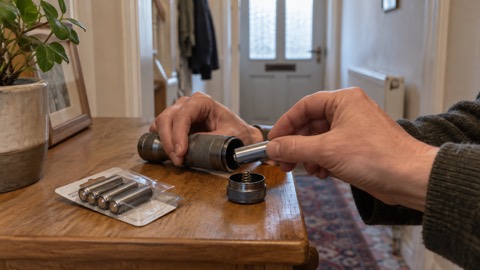 GP Lithium AA Batteries
 GP AA GN15A Alkaline Batteries
 GP1604S 9V Battery
 GP1604A 9V Battery