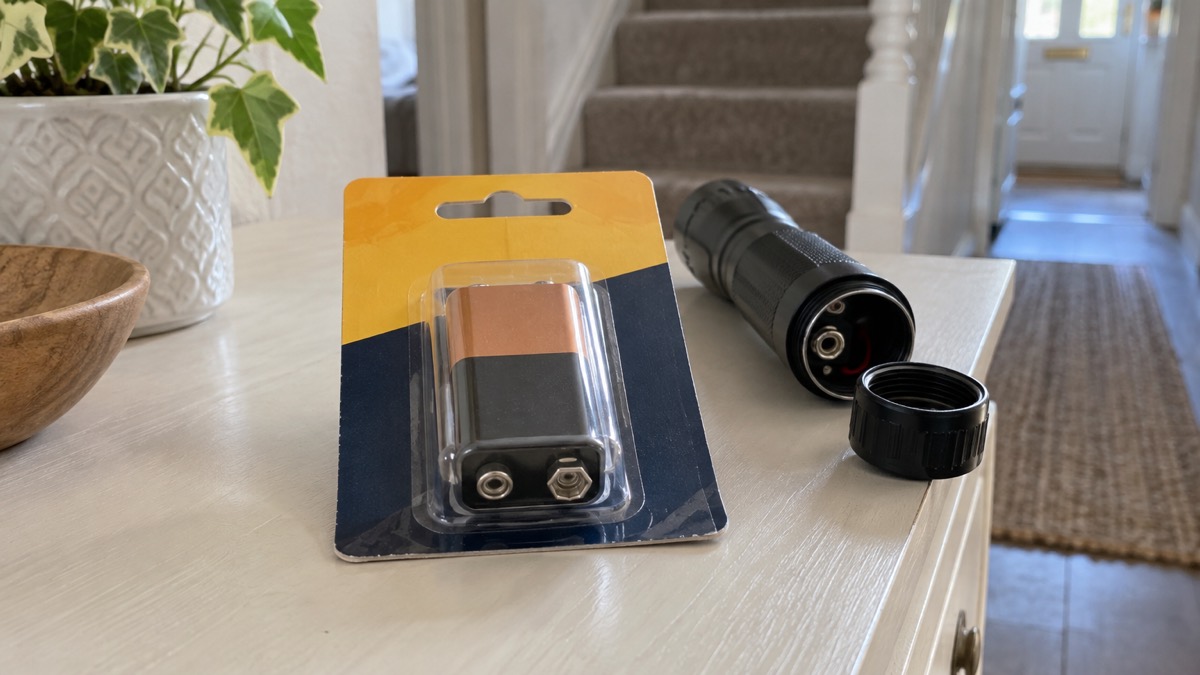
A GP1604A is a single 9V alkaline block battery, the rectangular battery with two terminals on one end that most people know from smoke alarms, multimeters and battery torches. GP lists the product as 1604A and gives 6LR22 as its cross-reference code, so a device or instruction sheet asking for a 6LR22 is asking for this size1. For a household getting ready for a power cut, storm or flood, it is a useful spare to keep: it sits in a torch, a radio or the back-up slot of a mains smoke alarm, and it keeps working long after the mains has gone.
What matters most is not the brand on the wrap but whether the battery is the right one for the device and whether it is stored so it cannot cause a fire. Fire and rescue services are clear that contact between a battery's terminals and metal can cause overheating and a fire, so spares belong in their original packaging, away from keys and coins2. Basic smoke alarms run off nine volt batteries and these should be replaced on a regular basis, with one fire service advising a new battery once a year3.
This page covers what the GP1604A is, how its two names relate, what the codes mean, what it does in an emergency kit, how to store, replace and recycle it, and where to get help. It does not give a price, and it does not rank it against other batteries: the right choice depends on what your device asks for.
GP1604A 9V battery: what it is
The GP1604A is a primary, meaning single-use, alkaline battery in the cylindrical 9V block format. GP's own product listing places it in its alkaline cylindrical range and gives the product code 1604A alongside the cross-reference 6LR221. That is the whole of what the maker's listing tells a household: the size, the chemistry family and the code. It is not a rechargeable cell, and it is not a button cell.
For an ordinary household the practical meaning is simple. It is the battery you drop into the devices that have to work when everything else has stopped: the torch you reach for in a power cut, the radio you use to hear what is happening, the meter you keep in a drawer, and the back-up slot inside a mains-powered smoke alarm. Carmarthenshire Council's household emergency kit list puts a battery torch with spare batteries, or a wind-up torch, near the top of its ten things to include9. A 9V block is one of the sizes that keeps those devices alive.
It is worth being clear about what a 9V battery is not. It is not a power bank, it will not charge a phone, and it will not run anything with a motor for long. Its job in a household plan is small, steady and specific: a handful of low-drain devices that need to work on the night the lights go out. That is why it belongs in the kit rather than in a drawer of odd batteries, and why it is worth knowing exactly which devices in your home take one before you need them.
If you are building a kit from scratch, the wider emergency kit guide sets out what a UK household should keep ready, and the GP Batteries brand page lists the other sizes in the range.
1604A and GP1604A: how the two names relate
The two names are the same battery. GP lists the product as 1604A, and the GP1604A form adds the maker's name to the front of that code. If you are searching for one, or checking a pack against a device's instructions, either form refers to the same 9V alkaline block.
The pattern is familiar across the range. GP's AA alkaline battery appears as GN15A, and the site's page for it is titled with the GP prefix in the same way, as is the GP1604S 9V battery, a different 9V product in the same family. The prefix is a maker's mark, not a different specification. What decides whether a battery suits your device is the size, the voltage and the chemistry, not the letters in front of the number.
A short table makes the naming clear:
| What you see | What it means |
|---|---|
| 1604A | GP's product code for this 9V alkaline block1 |
| GP1604A | The same battery, written with the maker's name in front1 |
| 6LR22 | The cross-reference code GP gives for the same product1 |
When you are checking a spare against a device, read the code on the battery's wrap and the code in the device's instructions together. If they match on size and voltage, you have the right shape of battery. If the wrap is worn and you cannot read it, do not guess: a smoke alarm is not the place to fit an unidentified cell.
IEC 6LR22: the cross-reference code to look for
GP gives 6LR22 as the cross-reference for the 1604A1. Cross-reference codes exist because the same battery is sold under several naming systems, and a device made in one country may ask for it by a code that means nothing to a shopper in another. Seeing 6LR22 on a pack, or in a device's instructions, tells you the battery is the standard 9V block shape.
What the code does not tell you is how much energy the battery holds or how long it will last in a given device. Those depend on the chemistry and on what you are powering. A 9V block in a smoke alarm is doing a very different job from the same block in a torch left on for an evening, and neither is the same as a meter that draws almost nothing for years. The code gets you the right fit; the device's own instructions tell you what it expects.
For a household, the practical rule is to keep the code written down. If your alarm, torch or meter asks for a 6LR22, note that on your kit list next to the device, so that anyone in the household can pick the right spare in the dark. The smoke alarm guide explains how alarm types differ and what each expects from its battery.
Specifications: 9V alkaline block
The maker's listing gives the product code and the cross-reference code, and nothing more about capacity or shelf life1. What follows is what the pack and the official guidance establish about this class of battery, set out so you can see what decides whether it suits a device.
| Specification | Detail |
|---|---|
| Format | 9V block, the rectangular battery with two terminals on one end1 |
| Chemistry | Alkaline, single-use (primary)1 |
| Maker's product code | 1604A1 |
| Cross-reference code | 6LR221 |
| Rechargeable | No: it is a primary battery1 |
| Typical devices | Basic smoke alarms, mains alarm back-up slots, torches, radios, meters3 |
Two things follow from that table. First, because it is single-use, it has no charging routine and no charger to keep: you buy it, store it, fit it, and recycle it when it is spent. Second, because the maker's listing does not state a capacity or a shelf life, this page does not give one. If you need to know how long a particular battery will last in a particular device, the device's own instructions are the place to look, and the honest answer for a spare in a kit is to check it regularly rather than to trust a number.
Where a retailer lists a different figure for a specification, the maker's figure is the one to rely on. The site's pages for the Duracell MN1604 9V alkaline battery and the Energizer 9V alkaline battery set out the same 9V format from other makers, so you can see what the size looks like across the range without any of them being ranked.
What a 9V battery does in an emergency kit
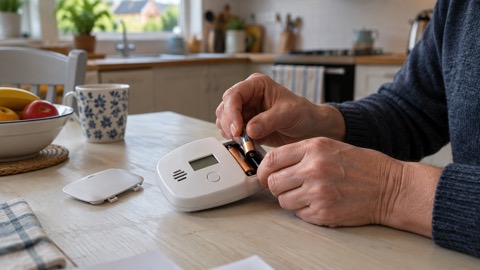
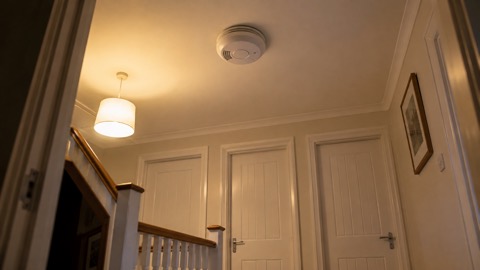
A 9V battery earns its place in a kit by keeping a small number of important things working. The clearest example is the smoke alarm. Basic smoke alarms run off nine volt batteries, and these should be replaced on a regular basis3. Mains-operated alarms normally have a 9V back-up battery in them in case you have a power cut, and that back-up needs changing according to the manufacturer's instructions5. In a power cut, that back-up is the difference between an alarm that still works and one that does not.
The second job is light and information. Council emergency kit lists across the UK put a battery torch with spare batteries, or a wind-up torch, and a battery radio with spare batteries, or a wind-up radio, among the basics9. West Yorkshire's community risk register lists a torch, a radio and a power bank among household kit, with the torch and radio either wind-up or battery powered12. A 9V block is one of the sizes that can keep a torch or a small radio going.
The third job is the car. Scotland's vehicle emergency travel kit guidance lists a phone backup battery among its year-round items, and battery jump leads appear in car emergency kit lists13. A 9V block is not a jump starter, but it is the kind of small spare that belongs in the same bag.
A short list of what to check takes one 9V battery:
- Smoke alarms: note which alarms take a 9V battery, including mains-linked ones with a back-up slot3
- Torch: keep a battery torch with a spare, or a wind-up torch, in the kit9
- Radio: a battery radio with spare batteries, or a wind-up radio11
- Meter: if you have one, keep a spare with it rather than in a general drawer
- Car: a phone backup battery and jump leads in the vehicle kit13
Storing spare 9V batteries safely
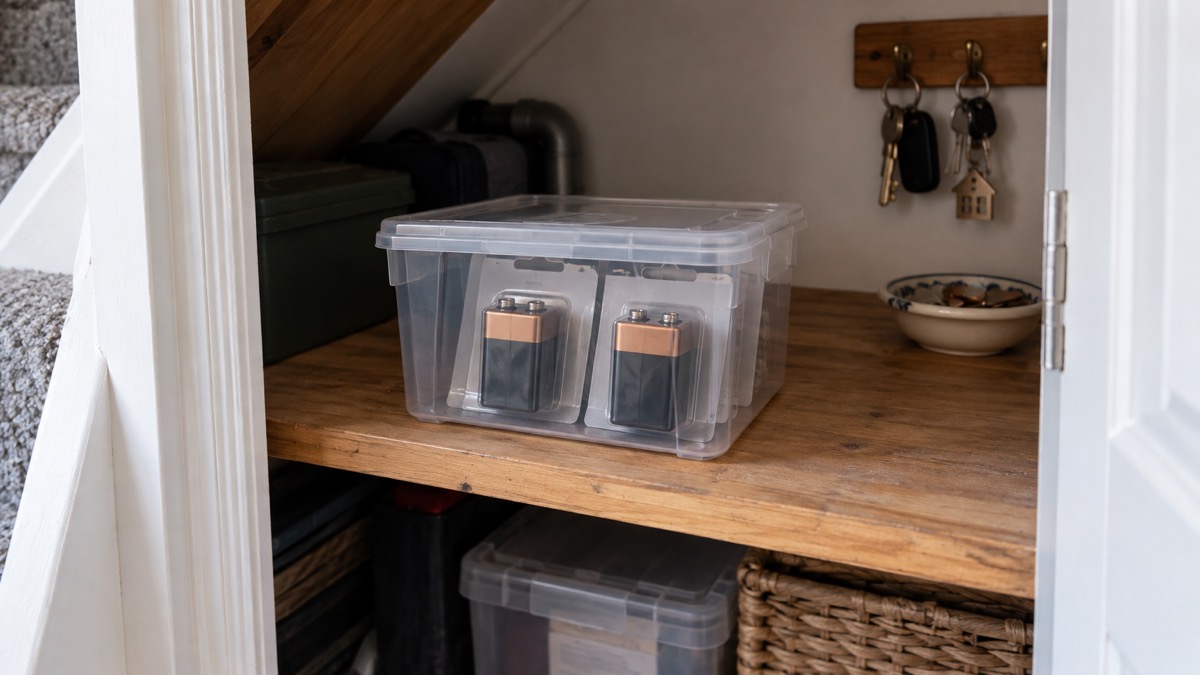
This is the part that matters most, and the fire and rescue services are unanimous about it. Keep batteries in a cool, dry place and away from metal objects like keys or coins2. Always store single-use batteries in their original packaging and away from metal objects, because contact with metal can cause overheating and a fire2. Store spare batteries safely to avoid contact with other metal objects that may cause a short circuit16.
The same care applies to children. The NHS advises storing all spare batteries in a sealed container out of reach, making sure battery compartments on toys and devices are securely closed, and recycling used batteries safely so they are out of reach of children17. Trading standards advice is the same in substance: make sure spare batteries are securely stored and battery compartments are secured before placing an item within a young child's reach18.
A few practical points follow:
- Keep the packaging. The card or blister pack is the safest container a spare can live in, and it keeps the terminals covered2.
- Pick one place. A sealed container in a cool, dry cupboard, out of reach of children, is easier to check than a drawer of loose batteries17.
- Keep it away from the kitchen drawer of odds and ends, where keys, coins and screws collect2.
- Check it regularly. Check your battery regularly for any signs of damage, and if you suspect it is damaged, recycle it and do not use or charge it19.
Replacing and disposing of a 9V battery
Replace a 9V battery when the device tells you to, when it fails a test, or when it shows signs of damage. For smoke alarms, test the alarm every week so a failing battery is caught early6, and one fire service factsheet advises replacing the battery once a year4. Mains-linked alarms contain a nine volt back-up battery that needs to be changed according to the manufacturer's instructions10. For a car, national winter advice is to make sure the battery is fully charged and replace it if it is no longer reliable20.
Never charge a single-use battery, and never use one that is damaged. Stop using a battery if it becomes damaged in any way16, and if you suspect damage, recycle it rather than using or charging it19.
Disposal is straightforward once you know where to go:
- Household batteries, including AA, AAA, button and rechargeable batteries, can be recycled at most leading supermarkets and household recycling centres8.
- Retail collection points in shops and supermarkets take batteries, and you can check with your local authority21.
- Removable batteries should be recycled separately from the device, at a battery recycling point or a household waste recycling centre22.
- When in doubt, take batteries to your local household waste recycling centre, the tip2.
- Hidden batteries in household items should go to the battery recycling point at your local recycling centre, or to local shops23.
If a device has a battery that cannot be removed, treat the whole item as electrical waste and take it to a household waste recycling centre, or return it to a retailer when buying a replacement25. The electrical fires guide explains what to do if a battery or charger does start to burn.
Support and where to get help
The GP Batteries brand page lists the range. If a battery or a device has been recalled, stop using it and follow the recall notice; the product recalls guide explains how to check.
For fire safety advice about alarms and batteries, your local fire and rescue service is the right first call. They publish home safety guidance and many offer home fire safety visits6. If you are unsure whether a battery is safe to keep, the safest course is to recycle it and fit a new one.
For households that need extra help, the extra help guide explains the Priority Services Register and other support. If you have a power cut, call 105, the free national power cut number, and if you smell gas call the National Gas Emergency Service on 0800 111 999. In an emergency, call 999.
The home emergencies section brings together the guides on fire, carbon monoxide, gas leaks and burst pipes, and the power cuts guide covers what to do when the lights go out.
Sources (25)
- Alkaline cylindrical batteries, GP Batteries
- Battery safety, Greater Manchester Fire and Rescue Service, 2026-10-29
- Smoke alarms, Devon and Somerset Fire and Rescue Service, 2026-02-17
- Smoke alarms factsheet, Suffolk Fire and Rescue Service, 2014-01-09
- Smoke alarms, South Wales Fire and Rescue Service, 2026-08-20
- Home fire safety visits, Staffordshire Fire and Rescue Service, 2026-10-29
- Home safety advice, Essex Prepared, 2026-10-29
- Causes of fires: batteries, Devon and Somerset Fire and Rescue Service, 2025-08-07
- Get prepared, Carmarthenshire County Council, 2026-10-25
- Fire safety and prevention, nidirect, 2025-06-09
- Gavinton, Fogo and Polwarth Resilient Community Plan, Scottish Borders Council, 2018
- Community Risk Register, West Yorkshire Prepared, 2025
- Vehicle emergency kit, Transport Scotland, 2026-10-29
- Winter preparedness, NHS Lanarkshire, 2023-11-23
- Be prepared for emergencies | North Devon Council, North Devon Council
- Fire safety tips: smoking, vaping and e-cigarettes, Warwickshire County Council, 2026-10-29
- Child safety, Berkshire Healthcare NHS Foundation Trust, 2026-10-29
- Product safety campaigns, Peterborough City Council, 2026-10-29
- Lithium-ion batteries, Scottish Fire and Rescue Service, 2025-11-27
- Ice weather warning: information and advice, nidirect, 2026-02-16
- Battery safety, West Yorkshire Fire and Rescue Service, 2026-10-29
- Electrical safety, Lincolnshire County Council, 2026-10-29
- Hidden batteries could spark Christmas chaos: how you can stay safe, Suffolk County Council, 2025-12-04
- Battery safety, Tower Hamlets Council, 2026-10-29
- Lithium battery fire safety, Mid and West Wales Fire and Rescue Service, 2026-10-29

 FireAngel FA3313 CO Alarm
 FireAngel FA3322 CO Alarm
 FireAngel FA3820 CO Alarm
 FireAngel FA6812 CO Alarm
 FireAngel FA6813 CO Alarm
 FireAngel FA6829S CO Alarm
 FireAngel CW1-PF CO Alarm
 FireAngel W2-CO-10X CO Alarm
 FireAngel FP1820W2-R CO Alarm
 FireAngel FP2620W2-R Alarm
 FireAngel ST-632 Smoke Alarm
 FireAngel ST-750 Smoke Alarm