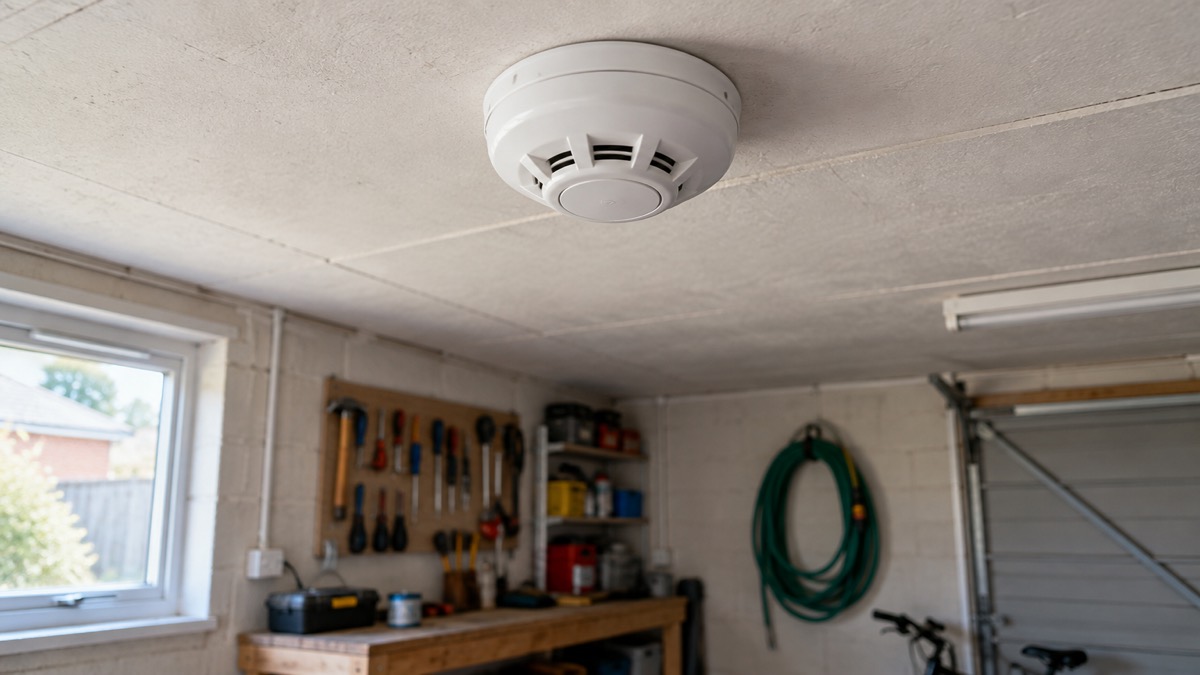
The Aico Ei603RF is a battery-powered heat alarm that links wirelessly to other alarms in the house. It is designed for the kitchen and the garage, the two rooms where a normal smoke alarm tends to go off every time you open the oven or start the car. Instead of reacting to smoke, it waits for the temperature around it to reach 58°C, then sounds its own alarm and triggers every other alarm it is linked to1.
The most important thing to know before you buy one is that Aico has discontinued it. The maker's own product page states that the Ei603RF has been discontinued and that the suitable replacement is the Ei630iRF RadioLINK+ Battery Heat Alarm1. If you already have an Ei603RF on the ceiling, it still does its job, and this page explains what that job is, where it belongs, how to keep it working when the power goes off, and what to do when it reaches the end of its life.
For a household preparing for emergencies, a heat alarm earns its place because it keeps working when the mains does not. It runs on a sealed lithium battery that Aico says lasts the full 10-year life of the alarm, so a power cut, a tripped circuit or a flooded consumer unit does not leave the kitchen unprotected1. That is the practical case for a battery heat alarm over a mains-only one in a home that wants to be ready for the lights going out.
What the Ei603RF does, and what it will not do
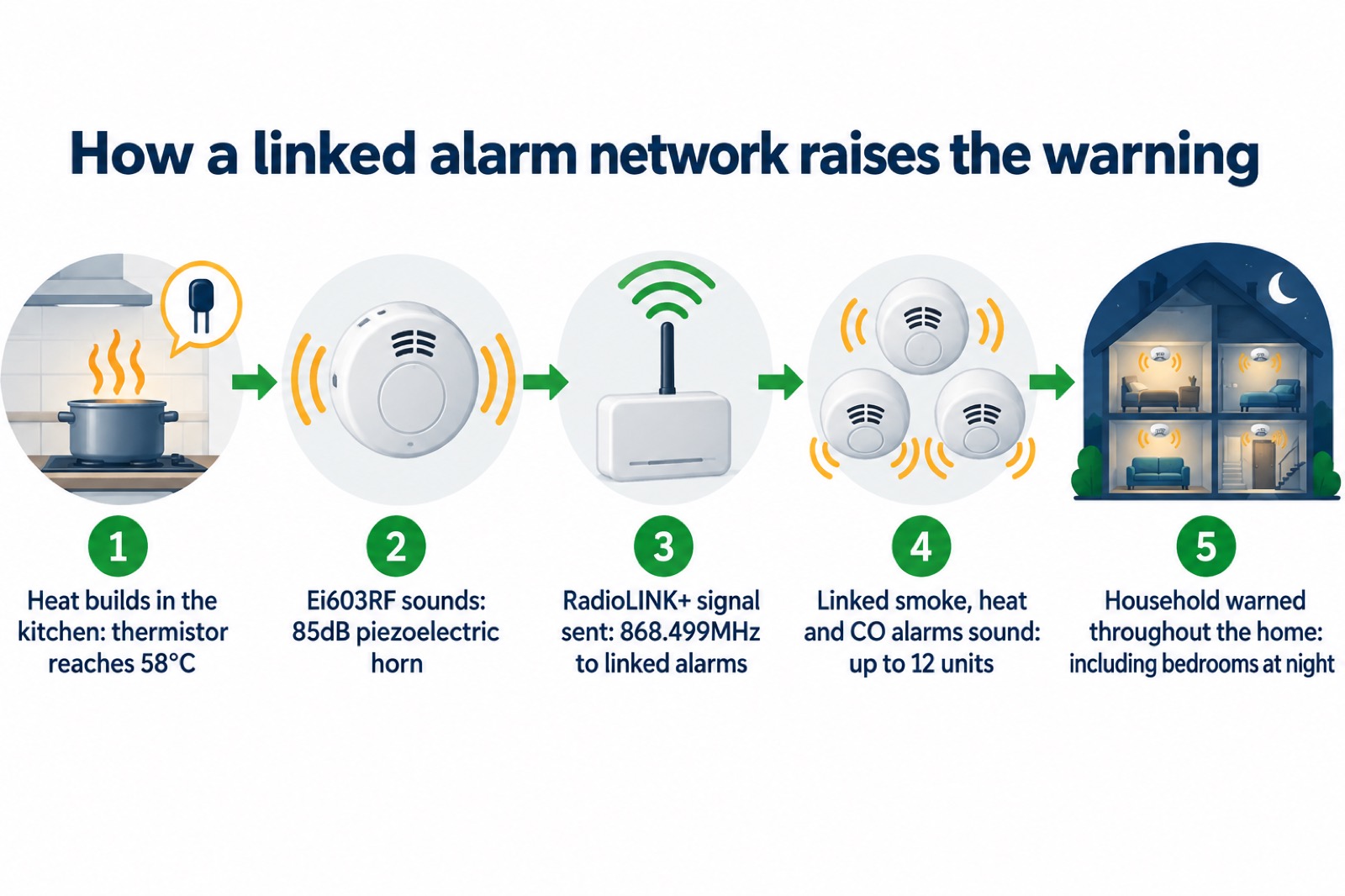
A heat alarm is not a smoke alarm with the sensitivity turned down. It uses a thermistor sensor, and Aico's heat alarms trigger when temperatures of 58°C are reached3. The Ei603RF's sensor is listed as a fast response thermistor, class A1, with the threshold set to 58°C1. That single design choice explains both its strength and its limit.
The strength is that it ignores the things that set smoke alarms off in a kitchen: steam from a pan, smoke from toast, dust disturbed by a cupboard door. Aico recommends siting heat alarms in rooms where smoke alarms may falsely activate, as set out in British Standard BS 5839-63. The limit is that it is slower. A smouldering fire that fills a room with smoke but never builds much heat will be caught by a smoke alarm long before a heat alarm notices anything. That is why heat alarms are fitted alongside smoke alarms, not instead of them.
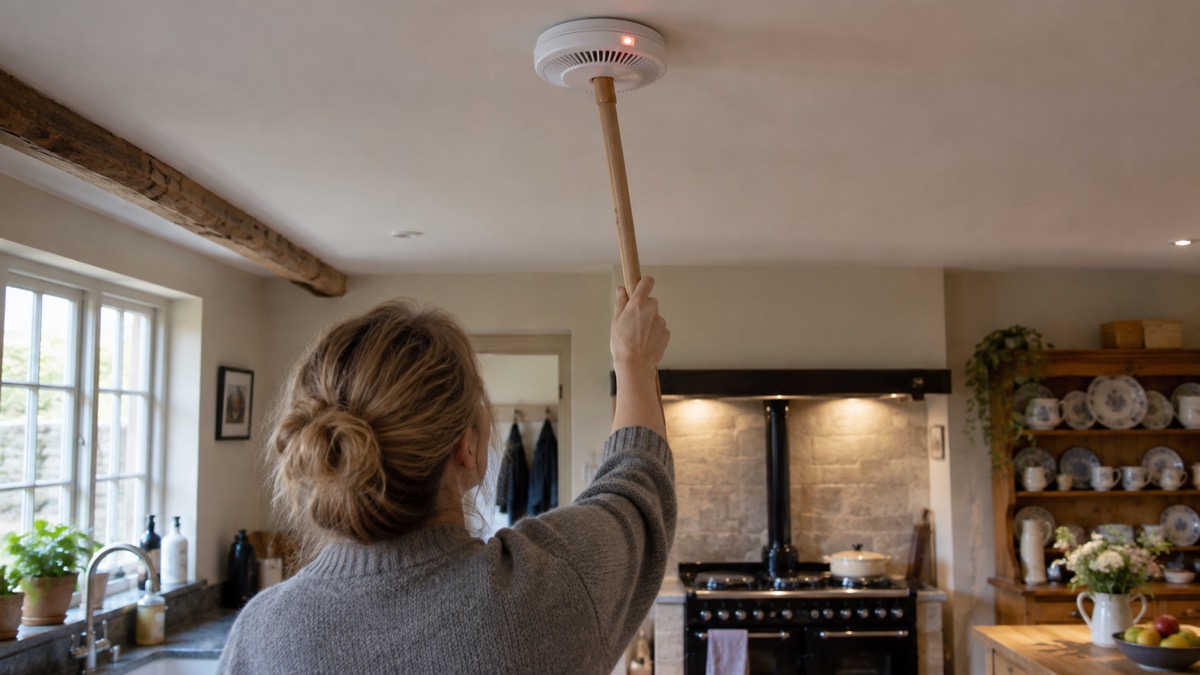
The RadioLINK+ part is what makes it useful across a whole house. Aico lists the Ei603RF as interconnecting with up to 12 RadioLINK enabled smoke, heat and CO alarms1. When the heat alarm senses fire, its red LED flashes rapidly and its sounder activates, and the sounders on all interconnected alarms are also activated1. So a chip pan catching in the kitchen raises the alarm in the bedroom, the hallway and the landing.
The Ei603RF is a battery heat alarm with RadioLINK+1.
That matters most at night, when closed doors and a sleeping household are the reason people do not get out. It also matters in an emergency where the power is off: because the Ei603RF is battery powered, the link between alarms does not depend on the mains supply.
Where to fit it: kitchen or garage
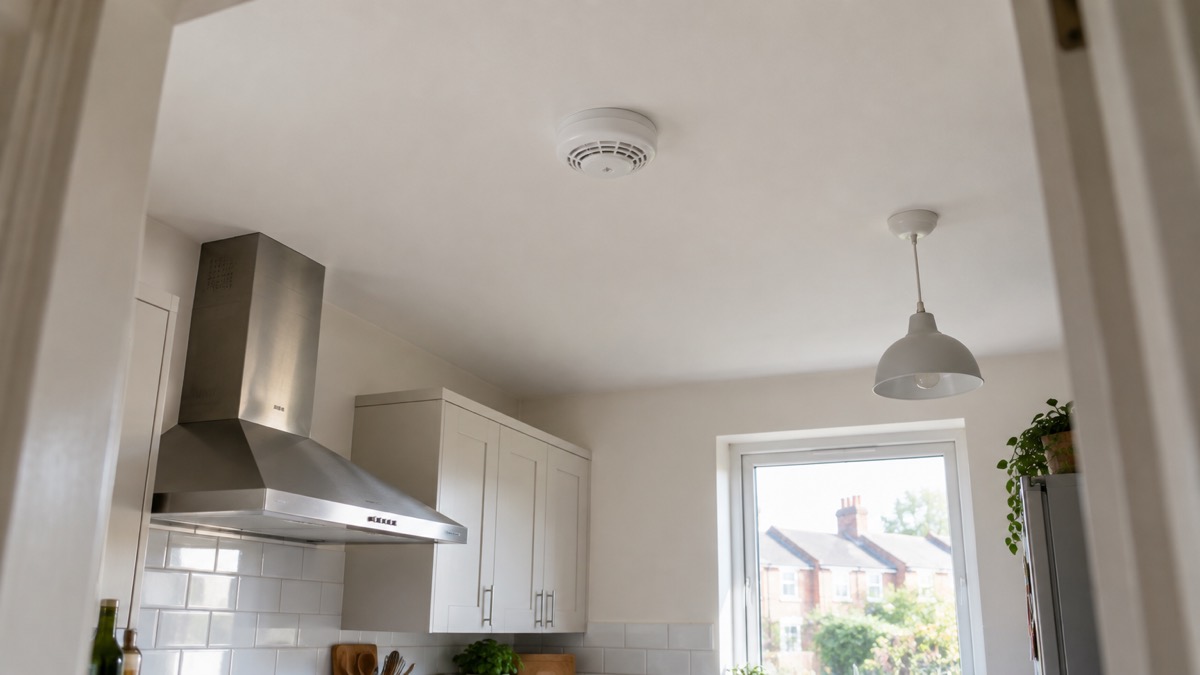
Aico lists the Ei603RF's suitable locations as garage and kitchen1. That matches the wider official picture. Warwickshire Fire and Rescue Service names kitchen and garage as the places for heat alarms4, and Manchester Fire and Rescue Service advises fitting a heat alarm in your kitchen area5. The National Fire Chiefs Council position statement adds that it is recommended a heat alarm should be fitted in the kitchen6.
Some guidance goes further. FireAngel's guidance lists kitchen, garage and loft as recommended rooms for a heat alarm7, and its homeowner guide describes heat detectors as best placed in kitchens, garages and lofts, avoiding nuisance alarms caused by smoke, steam or dust8. Aico's own guidance sticks to kitchen and garage3. If you are considering a loft, treat it as an option rather than a requirement, and check the maker's instructions for the model you fit.
How many do you need? One in the kitchen. Official guidance states plainly that one heat alarm should be installed in the kitchen2. The pattern for the rest of the house is a minimum of one smoke alarm per floor with a heat detector in the kitchen, which for a three-floor property means smoke alarms on each level plus the kitchen heat alarm9.
| Room | Alarm type | Why |
|---|---|---|
| Kitchen | Heat alarm | Cooking smoke and steam set smoke alarms off; heat is the reliable signal3 |
| Garage | Heat alarm | Car exhaust, dust and fumes cause false alarms3 |
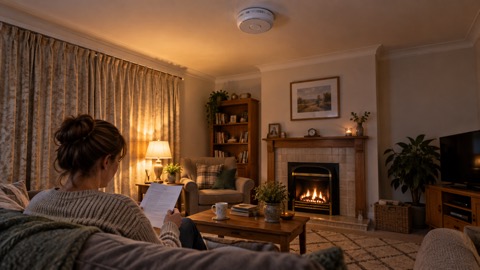
| Hallway and landing | Smoke alarm | Escape routes need the earliest possible warning9 |
| Living room and bedrooms | Smoke alarm | Smouldering fires give smoke before heat3 |
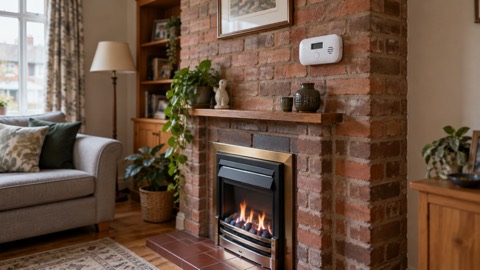
| Room with a fuel-burning appliance | Carbon monoxide alarm | Heat alarms do not detect CO1 |
Placement within the room matters as much as the choice of room. Aico's guidance is to site the alarm centrally in the room, and if it cannot be central, no less than 300mm away from walls, light fittings and other obstructions3. Aico also states that its heat alarms provide a 5.3m radius of coverage, which is why central siting is the default3. In a small galley kitchen, that radius comfortably covers the room; in a large open-plan kitchen and dining space, check the distance before deciding one alarm is enough.
Specifications
The table below sets out what Aico publishes for the Ei603RF. These are the figures that decide whether it suits your home and how you keep it ready.
| Specification | Aico figure |
|---|---|
| Product type | Battery interlinked RadioLINK+ heat alarm1 |
| Sensor | Fast response thermistor, class A1, threshold 58°C1 |
| Trigger temperature | 58°C1 |
| Interconnect capacity | Up to 12 RadioLINK enabled smoke, heat and CO alarms1 |
| Communication | 868.499MHz RadioLINK protocol1 |
| Power supply | 3V from a 10-year lithium battery, 2,000mAh1 |
| Battery type | Sealed in, tamper-proof lithium, lasting the full 10-year life1 |
| Sounder | 85dB piezoelectric horn1 |
| Dimensions | 115mm diameter x 55mm high1 |
| Operating temperature | 0 to 40°C1 |
| Humidity range | 15% to 95% relative humidity, non-condensing1 |
| Fixing | Fixtures supplied1 |
| Suitable locations | Garage, kitchen1 |
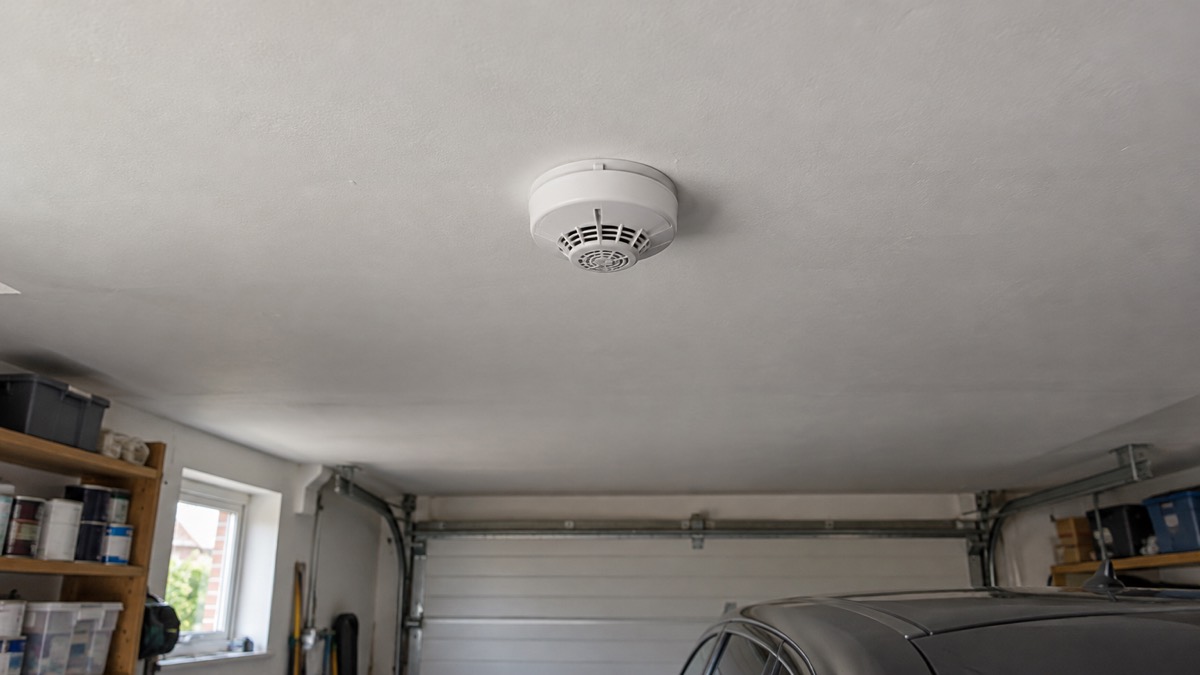
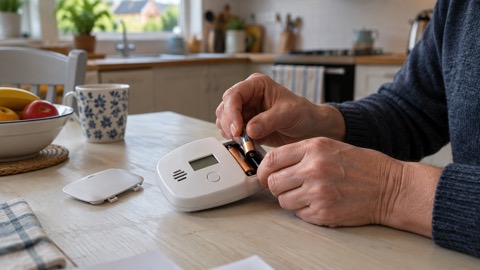
Two of these rows deserve a second look for anyone preparing a household. The first is the battery. A sealed, tamper-proof lithium cell that lasts the full 10-year life means there is nothing to change, nothing to forget, and nothing to buy in a hurry when the shops are shut or the power is out1. The trade-off is that when the alarm reaches the end of its life, the whole unit is replaced rather than re-batteried.
The second is the operating temperature range of 0 to 40°C1. A heat alarm in a garage is exposed to the coldest nights of the year. Aico's stated range is the figure to work from: if your garage regularly drops below freezing, that is worth knowing before you site an alarm there, and the maker's instructions are the place to check the detail10.
Keeping it ready through a power cut or a cold snap
The point of a battery heat alarm in a household plan is that it keeps working when other things stop. A power cut takes out mains-powered alarms, heating, cooking and lighting all at once. The Ei603RF is unaffected by any of that, because it draws nothing from the mains1. What it does depend on is being tested and being within its operating conditions.
Aico publishes guidance on how to test smoke alarms, and the same routine applies to a heat alarm: press the test button and confirm the alarm sounds11. Make it part of a regular household check, alongside the smoke alarms and the carbon monoxide alarm. A heat alarm that has never been tested is an assumption, not a safeguard.
The humidity range of 15% to 95% relative humidity, non-condensing, is generous for a UK kitchen, but it does rule out siting the alarm where steam condenses on it directly, such as immediately above a boiling pan or against a cold external wall in a steamy bathroom-adjacent space1. Central ceiling siting, as Aico advises, avoids both problems3.
If you are fitting one as part of a wider alarm plan, the heat alarms guide explains where heat alarms belong across a whole house, and the interlinked alarms guide explains how the wireless link works between units. For the choice between a heat alarm and a smoke alarm room by room, the heat alarm or smoke alarm comparison sets the two side by side.
Linking it to smoke and carbon monoxide alarms
The Ei603RF is one part of a network, not a standalone device. Aico lists it as interconnecting with up to 12 RadioLINK enabled smoke, heat and CO alarms1, and the link runs on the 868.499MHz RadioLINK protocol1. That is a radio link between alarms in your own home. It does not use your broadband, your phone line or the mobile network, so it keeps working in a power cut or a phone outage.
The value of linking is that every alarm sounds together. FireBlitz's guidance explains that some alarms can link with other CO and smoke alarms, enabling all linked alarms to sound at the same time12. FireAngel's guidance describes the same idea: many modern systems can integrate heat alarms for kitchens and carbon monoxide alarms, creating a fully networked home safety solution13. Which magazine's fire safety coverage notes that you can find models or bundles that are interlinked with smoke and carbon monoxide alarms14.
A carbon monoxide alarm belongs in the network too, but it is a separate device doing a separate job. The Ei603RF detects heat only. It will not warn you about carbon monoxide, and no heat alarm will. If you have a fuel-burning appliance, a CO alarm is the alarm that covers it, and the carbon monoxide alarms guide explains the choice. The combined or separate alarms comparison covers whether to buy combined units or keep the two functions apart.
For households where someone is deaf or hard of hearing, linking has an extra use. Official guidance suggests considering interlinked smoke alarms that connect to the telecare, carecall or lifeline system15. The alarms for deaf and hard of hearing people guide sets out the options, and the extra help guide covers wider planning for households that need more warning time.
The Ei3014 recall, and why it is not about this alarm
In May 2025 the Office for Product Safety and Standards issued a recall for the Aico Ei3014 Heat Detector. A small production batch carried plastic coverings wrongly stating that the units could also detect carbon monoxide, when the product detects heat only, and the product was recalled from end users16. Bromley Council's notice records the same recall, stating that some units were labelled as detecting carbon monoxide when they detect heat only17.
The Ei603RF is a different product and is not part of that recall. The relevance to an Ei603RF owner is the reminder it carries: a heat alarm is a fire alarm, and the CO warning in your home has to come from a CO alarm. If you are checking whether any electrical product in your home has been recalled, the product recalls guide explains how to check.
Replacing it, and where to get help
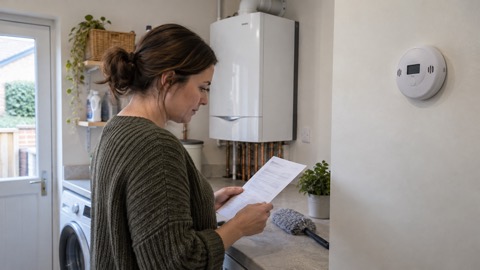
Because the Ei603RF is discontinued, the practical question for most households is what to do at the end of its life. Aico's stated replacement is the Ei630iRF RadioLINK+ Battery Heat Alarm1. Aico's guidance on how to replace a fire alarm sets out the general steps, and the replacing alarms guide covers when a unit has reached the point of replacement18. Aico alarms are available from a range of distributors across the UK, and the maker's online search tool finds your nearest stockist1.
If you are choosing between a battery unit and a mains one, the battery or mains alarms comparison sets out the trade-offs, and the sealed or replaceable battery comparison covers the battery question specifically. For the wireless link itself, the wireless or wired interlinked alarms comparison explains the difference. The Aico brand page lists the maker's other alarms covered on this site.
Rules on alarms differ across the UK. In Scotland, the tolerable standard requires all smoke and heat alarms to be interlinked19. In England, the general pattern of one smoke alarm per floor plus a kitchen heat detector is the baseline9. The Wales and Northern Ireland guide covers the arrangements there, and the alarm standards guide explains BS 5839-6 and the system grades behind them.
For the wider picture, the home emergencies section covers fire, carbon monoxide, gas leaks and burst pipes, and the fire safety checklist gives a room-by-room routine that includes testing every alarm in the house.
Sources (19)
- Ei603RF RadioLINK+ Battery Heat Alarm, Aico, 2026
- Sensory Support, South Lanarkshire Council, 2026
- Beyond Smoke: The Role of Heat Alarms in Comprehensive Home Fire Safety, Aico, 2026
- Alarms and Sprinklers, Warwickshire County Council, 2026
- Smoke and Heat Alarms, Greater Manchester Fire and Rescue Service, 2026
- NFCC Home Detection Position Statement, National Fire Chiefs Council, 2019
- The Different Types of Fire Alarms and Where to Install Them, FireAngel, 2024
- Home Safety Carbon Monoxide and Fire Detectors Guide, FireAngel, 2025
- Tenants, Electrical Safety First, 2026
- Ei603RF Instructions, Aico, 2026
- How to Test Smoke Alarms, Aico, 2026
- CO Awareness, FireBlitz, 2025
- Are Interconnected Smoke Alarms Necessary?, FireAngel, 2025
- Fire Safety Essentials, Which?, 2026
- Hearing and Sight Difficulties, Devon and Somerset Fire and Rescue Service, 2025
- Product Recall: Aico Ei3014 Heat Detector, Office for Product Safety and Standards, 2025
- Aico Ei3014 Heat Detector Recall, London Borough of Bromley, 2025
- How to Replace a Fire Alarm, Aico, 2026
- Tolerable Standard Guidance: Satisfactory Fire and Carbon Monoxide Detection, Scottish Government, 2023

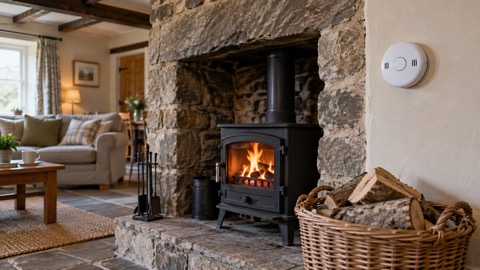 FireAngel FA3313 CO Alarm
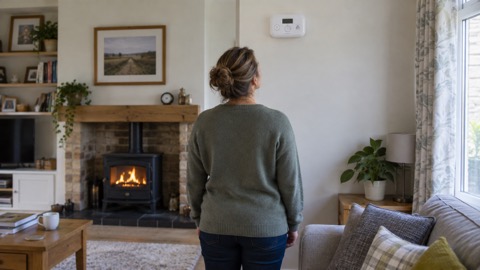 FireAngel FA3322 CO Alarm
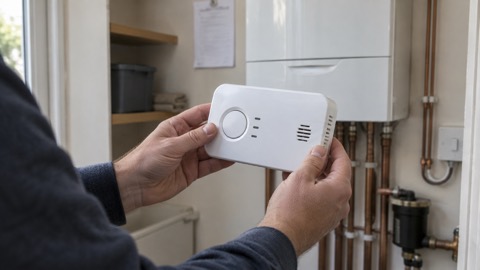 FireAngel FA3820 CO Alarm
 FireAngel FA6812 CO Alarm
 FireAngel FA6813 CO Alarm
 FireAngel FA6829S CO Alarm
 FireAngel CW1-PF CO Alarm
 FireAngel W2-CO-10X CO Alarm
 FireAngel FP1820W2-R CO Alarm
 FireAngel FP2620W2-R Alarm
 FireAngel ST-632 Smoke Alarm
 FireAngel ST-750 Smoke Alarm