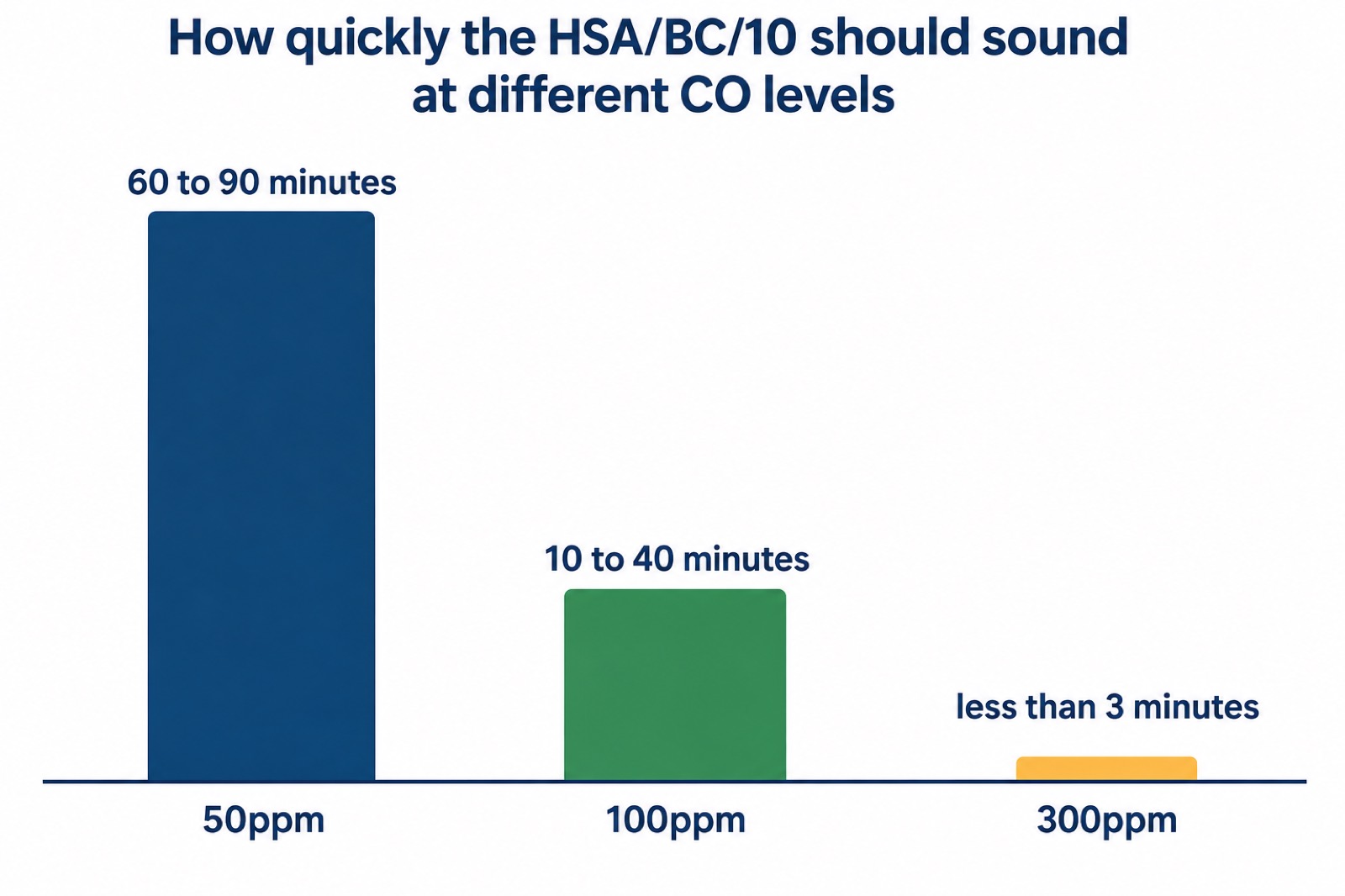
The Hispec HSA/BC/10 is a sealed-battery carbon monoxide alarm: an electrochemical sensor, a 10 year lithium battery you cannot replace, and an 85dB sounder, sold as a standalone unit that can be wall mounted or stood on a shelf1. It is designed to sound when carbon monoxide reaches dangerous levels, and the maker's manual sets out how it should respond: between 60 and 90 minutes at 50ppm, between 10 and 40 minutes at 100ppm, and in less than 3 minutes at 300ppm2.
If you already own one, the most important thing on this page is this: in independent testing the alarm failed to detect carbon monoxide in five tests, and three of the samples stayed silent in the presence of CO at least once each3. Which? made it a Don't Buy3. That does not mean the alarm is guaranteed to fail in your home, but it does mean you should not rely on it as your only warning. Fit a second, independently tested alarm, and treat any suspicion of carbon monoxide as an emergency in its own right.
If you are considering buying one, read the testing result first, then the specifications and the maker's instructions for siting, testing and replacing it. The rest of this page covers what the alarm does, where it should go, what its lights and beeps mean, and what to do when it reaches the end of its life.
Failed five independent CO detection tests: what owners should do
Which? tested the Hispec HSA/BC/10 and reported that it "failed to detect the killer gas in five CO detection tests"5. In the same testing, "three of the samples remained silent in the presence of CO at least once each"4. The verdict was blunt: "That's why we've made this dangerously unreliable detector a Don't Buy"3.
A carbon monoxide alarm that stays silent when CO is present gives a household false confidence. In independent testing, three of the samples remained silent in the presence of CO at least once each, and the tester made this "dangerously unreliable detector a Don't Buy"2. If your only CO alarm is one that has failed independent testing, you have removed the warning without replacing it.
What to do, in order:
- Do not rely on the HSA/BC/10 as your only carbon monoxide alarm. Fit at least one alarm from a maker whose units passed independent testing, in the room with the fuel-burning appliance6.
- Keep using the HSA/BC/10 only as a back-up if you wish, but understand that a silent alarm is not evidence that the air is safe.
- Test it monthly with the Test/Reset button, as the maker instructs2. A passing test only shows the sounder and electronics respond; it does not prove the sensor will detect CO.
- If anyone in the household has symptoms that could be carbon monoxide, act on the symptoms, not on the alarm. See our guide to carbon monoxide poisoning symptoms and what to do if your CO alarm sounds or you suspect carbon monoxide.
- If you are buying a replacement, choose an audible alarm marked BS EN 50291, as Gas Safe Register advises7.
Specifications: what the alarm is and what it contains
The HSA/BC/10 is a standalone, battery-powered carbon monoxide alarm with an electrochemical sensor and a sealed lithium battery the maker says will last a minimum of ten years under normal operating conditions2. The retailer lists a 10 year product lifespan and a 5 year warranty1. It has LED indicators for power, fault and alarm, and an audible sounder rated at 85dB at 3m2.
| Specification | Detail | Source |
|---|---|---|
| Sensor type | Electrochemical CO | 2 |
| Power | Sealed, non-replaceable lithium battery, minimum 10 years | 2 |
| Sound level | 85dB at 3m | 2 |
| Alarm thresholds | 50ppm: 60 to 90 minutes; 100ppm: 10 to 40 minutes; 300ppm: less than 3 minutes | 2 |
| Indicators | LED for power, fault and alarm | 1 |
| Fixing | Wall mounted with fixings included, or freestanding | 1 |
| Dimensions | 60 x 100 x 35mm (HxWxD); 150g | 1 |
| Operating temperature | -10°C to +40°C | 1 |
| Humidity | 10% to 90%, non-condensing | 2 |
| Installation standard | BS EN 50292:2023 | 2 |
| Certification | BS EN 50291-1:2018, according to the manufacturer | 6 |
| Warranty | 5 years | 1 |
The retailer gives the depth as 38mm4. The alarm is partially recyclable and standalone, so it does not link to other alarms in the house1.
Alarm response times: how quickly it should sound
The maker's manual sets out the response times the alarm is designed to meet: at 50ppm it should sound between 60 and 90 minutes, at 100ppm between 10 and 40 minutes, and at 300ppm in less than 3 minutes2. These are the same thresholds independent testers use when they check whether an alarm responds as it should4.
Those times matter because carbon monoxide builds up gradually in a home. A slow leak from a boiler or flue can raise levels over hours, and the alarm is designed to give warning before the concentration becomes immediately dangerous. A fast build-up, for example from a blocked flue, should trigger the alarm within minutes at 300ppm2.
The independent testing found that the HSA/BC/10 did not always respond at all, with three samples staying silent in the presence of CO at least once each4. That is the gap between the design specification and what happened in the test lab. The maker's stated response times describe what the alarm is meant to do; the independent result describes what some units did.
If your alarm sounds, do not wait to see whether it stops. Open windows and doors, turn off gas appliances, get everyone out and call the gas emergency service. Our guide to what to do if your CO alarm sounds sets out the steps.
Where to fit it: head height, 1m to 3m from the appliance
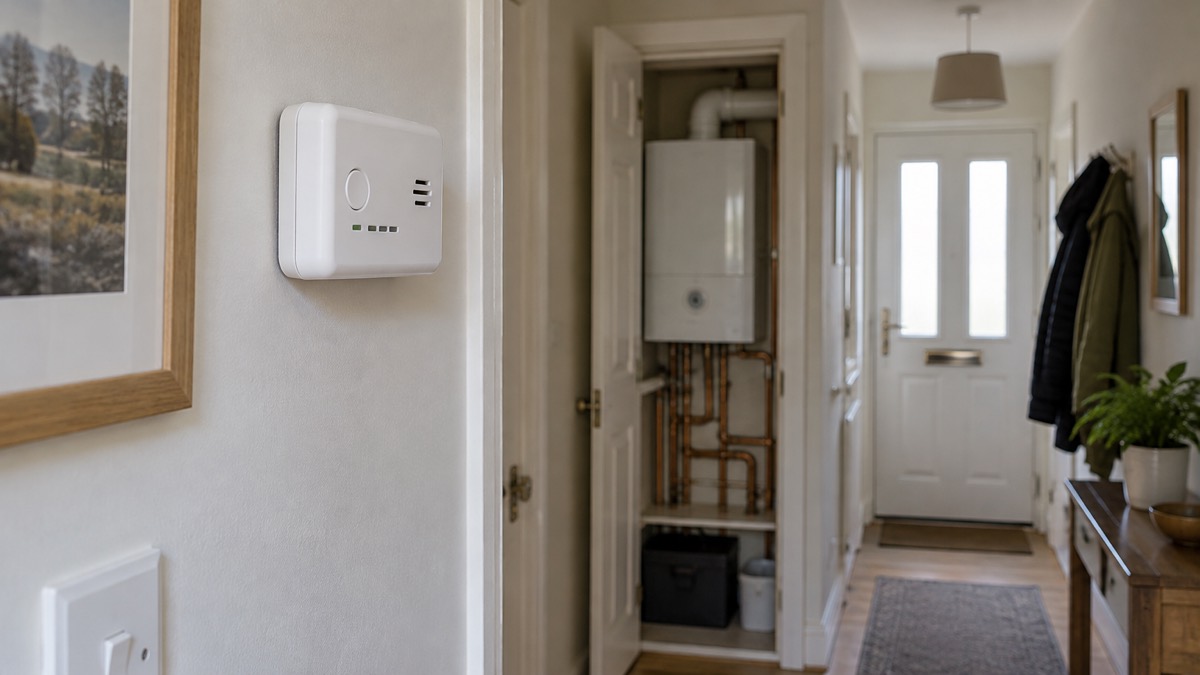
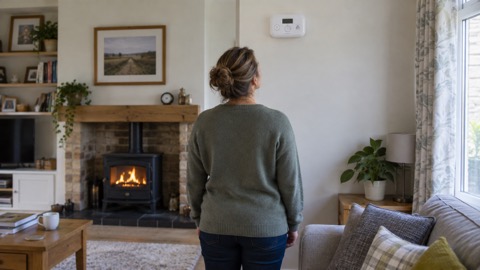
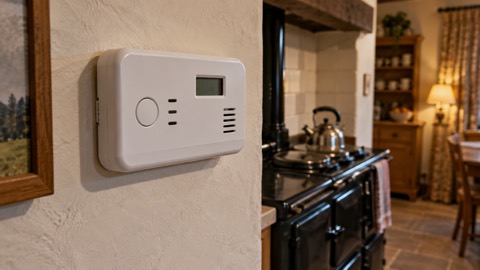
The maker's manual says the alarm should be at a horizontal distance of between 1m and 3m from the potential source2. If wall mounted, it should be at least 150mm from the ceiling and higher than any door or window; if ceiling mounted, at least 300mm from any wall2. The retailer describes the installation position as "mount at head height" or "stand at head height"1.
Independent guidance for CO detectors is similar: fit high up in the same room as the potential source, around 15cm from the ceiling and at least 1 metre away from boilers, cookers and fires, and not directly above a source of heat or steam4. A shelf is suitable4.
Practical siting for a typical home:
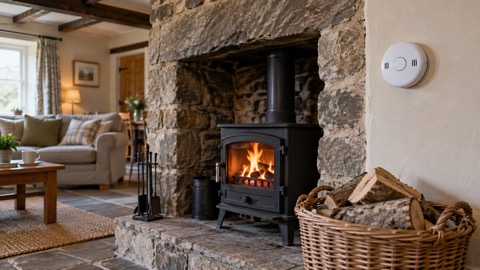
- Boiler or gas fire: in the same room, 1m to 3m horizontally from the appliance, at head height or above2.
- Wall mounting: at least 150mm below the ceiling, above door and window height2.
- Ceiling mounting: at least 300mm from any wall2.
- Avoid: directly above a cooker, fire or steamy bathroom, where heat and steam can affect the sensor4.
- Bedrooms and living rooms: the retailer lists these as suitable positions, but the alarm should still be within the distance rules of any appliance1.
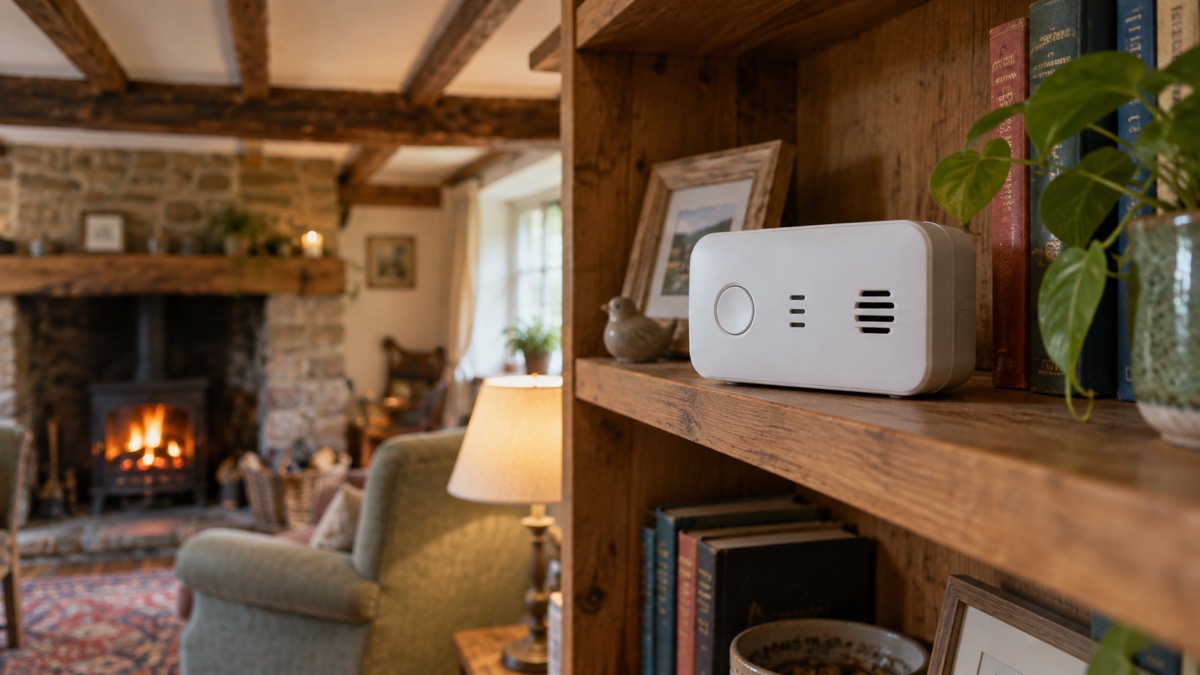
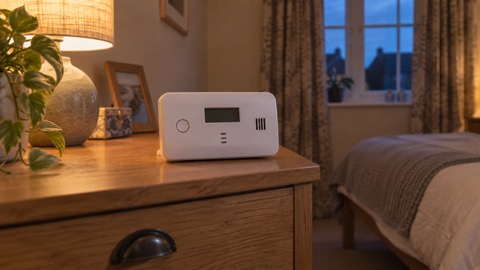
To fit it, the maker's manual says to use a 5mm drill bit for the hole locations, insert the provided wall plug, position the mounting plate and tighten the screws without over-tightening2. The unit can also simply stand on a shelf, mantelpiece or table1.
Monthly testing with the Test/Reset button
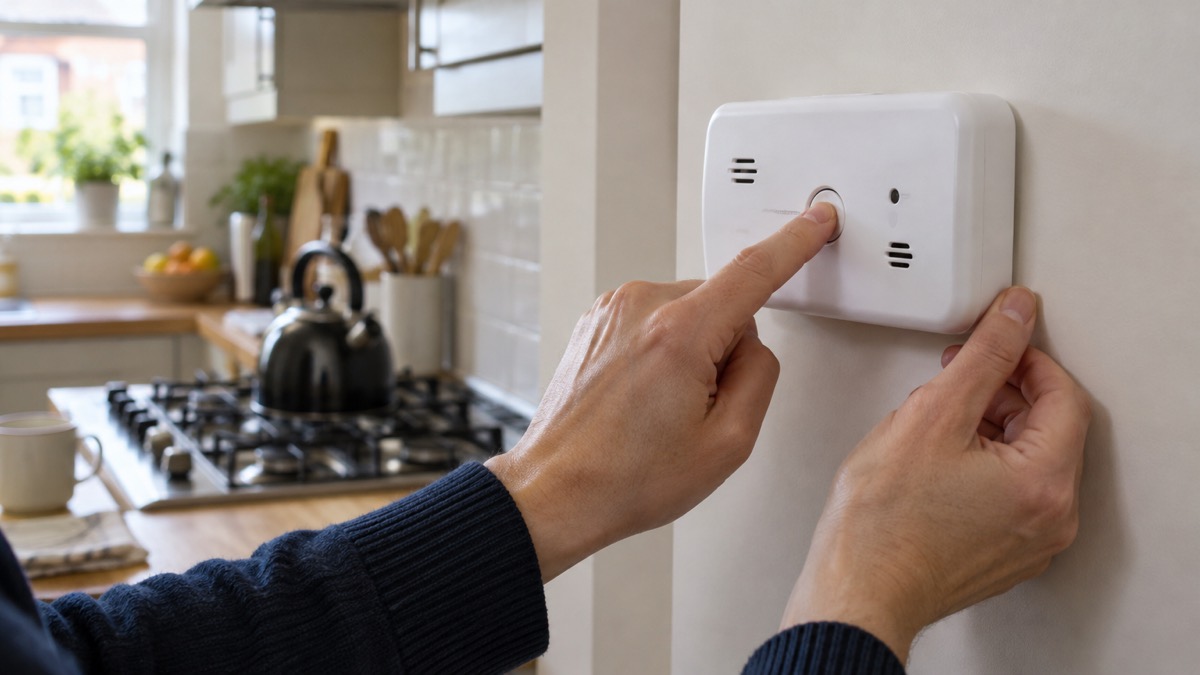
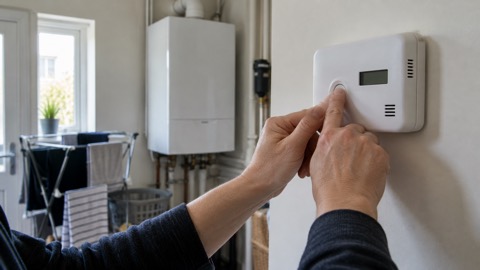
The maker recommends testing the CO alarm once a month2. The procedure is simple: hold the Test/Reset button for 3 seconds, and the red LED will flash while the sounder chirps four times simultaneously2. The alarm also performs a self-testing diagnostic every minute during normal operation2.
A monthly test checks that the sounder works and the electronics respond. It does not test the sensor's ability to detect carbon monoxide, and it is not a substitute for independent testing. The maker is explicit that you must not test with CO gas: "DO NOT TEST WITH CO GAS. Testing with CO gas will put you at unnecessary risk"2.
"DO NOT TEST WITH CO GAS."
Put a reminder in your phone or diary for the same day each month. If the alarm does not chirp or the LED does not flash when you press the button, treat it as faulty and follow the maker's fault procedure.
What the beeps and lights mean
The HSA/BC/10 uses coloured LEDs and a sounder to communicate its status1. The maker's manual sets out the signals:
| Signal | What it means | What to do |
|---|---|---|
| Green LED flashes 5 times and one beep on power-up | Alarm is starting up | Normal; wait for the green flash every 40 to 60 seconds2 |
| Green LED flashes every 40 to 60 seconds | Normal operation | No action2 |
| Red LED flashes and sounder chirps 4 times every 5 seconds | Dangerous levels of CO detected | Get out, ventilate, call the gas emergency service2 |
| Short chirp with red LED flash every minute | Low battery | The battery is sealed; the unit will need replacing2 |
| Double short chirp with yellow LED flash every minute | Unit malfunction | Replace the alarm2 |
| Yellow LED flashes 3 times and beeps 3 times every 48 seconds | End of life, after 10 years | The unit must be replaced2 |
The low battery warning is given for at least 30 days before the battery finally fails2. Because the battery is sealed and non-replaceable, a low battery warning on this model means the whole unit is nearing the end of its life2.
If your alarm is beeping and you are not sure why, our guide to why your carbon monoxide alarm is beeping walks through the possibilities.
Low battery, fault and end of life: when the alarm must be replaced
The HSA/BC/10 has a sealed battery that the maker says will last a minimum of ten years under normal operating conditions2. The retailer lists a 10 year product lifespan and a low battery and end of life warning that tells occupants when the alarm needs replacing1. When the end of life signal sounds, the yellow LED flashes three times and the unit beeps three times every 48 seconds, and the maker says it must be replaced2.
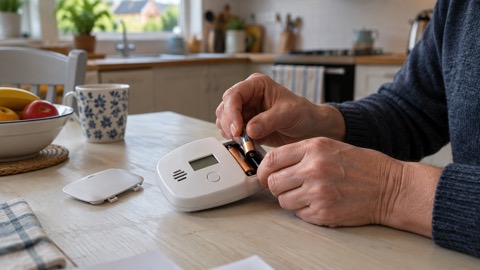
Fire and rescue services give the same advice for any alarm with a non-replaceable battery: replace the full alarm as per the manufacturer's guidelines8. For alarms with replaceable batteries, the advice is to change the battery once a year or when it beeps regularly, whichever is sooner9, and to replace it immediately and certainly within seven days once the low battery warning sounds, because the alarm may not have enough power to warn you after that10.
For the HSA/BC/10 specifically:
- Low battery chirp: the unit will chirp and flash red every minute for at least 30 days2. Because the battery cannot be changed, plan to replace the whole alarm.
- Fault signal: a double chirp with a yellow flash every minute means the unit has malfunctioned and must be replaced2.
- End of life: after 10 years, the yellow LED flashes three times and the unit beeps three times every 48 seconds; it must be replaced2.
- Deactivating a faulty unit: the maker's manual says to hold the Test/Mute button for 60 seconds; the green and red LEDs will turn on and the alarm is deactivated and can no longer be powered back on2.
- Returning a faulty unit: the maker says to return it to your original supplier with proof of purchase, or contact HiSPEC on 01257 262 197 or customerservices@hispec.co.uk2.
Our guide to when to replace a smoke, heat or CO alarm covers the general rules.
Certification, caravans and landlord rules
The manufacturer states that all of its CO alarms, including the HSA/BC/10, are "rigorously tested and certified to BS EN 50291-1:2018"6. That is the maker's claim. Gas Safe Register advises buying an audible CO alarm marked BS EN 502917, and Scottish statutory guidance says CO detectors must comply with BS EN 50291-1:2010+A1:201211. Certification to the standard is a baseline requirement, not a guarantee of performance in independent testing.
For caravans, boats and camping, the retailer lists "Caravan, Camping & Boats" under environmental suitability1. However, official guidance for boats, campers and caravans calls for alarms compliant with BS EN 50291-2:2010, a different part of the standard12. The maker's stated certification is to BS EN 50291-1:20186. If you need an alarm for a caravan or boat, check the marking on the unit against the standard required for that setting.
On landlord rules, the retailer states the HSA/BC/10 is compliant with Scottish 2022, Welsh Landlord 2022 and Northern Ireland Landlord 2024 legislation1. In Scotland, CO detection was added to the Tolerable Standard, which applies to all houses13, and forms part of the Repairing Standard that private landlords must meet14. Scottish statutory guidance on CO alarms in private rented housing dates from 201515. Landlords in Northern Ireland must ensure rented properties are safe, habitable and meet legal standards16. For the wider picture, see our guides to alarm standards and Wales and Northern Ireland alarm rules.
Support, warranty and where to get help
The HSA/BC/10 carries a 5 year warranty from the retailer1. If the unit is faulty, the maker says to return it to your original supplier with proof of purchase, or contact HiSPEC on 01257 262 197 or customerservices@hispec.co.uk2. The alarm is partially recyclable1.
If you are worried about carbon monoxide in your home, the first call is the gas emergency service. If you rent, your landlord has responsibilities for gas safety and CO detection, and you can ask them to check the alarm. In Scotland, the Tolerable Standard applies to all houses and local authorities can require owners to carry out work on substandard housing13. In Northern Ireland, landlords must ensure rented properties are safe and meet legal standards16.
For more on choosing an alarm that suits your home, see our guide to carbon monoxide alarms and where to put a carbon monoxide alarm. If you are deaf or hard of hearing, our guide to smoke and CO alarms for deaf and hard of hearing people explains the alternatives.
Sources (16)
- Hispec 10 Year Battery Carbon Monoxide Alarm, Safelincs, 2026-10-29
- HiSPEC HSA/BC/10 Instruction Manual V1.0, HiSPEC, 2025
- What to do when a carbon monoxide detector goes off, Which?, 2026-07-14
- How we test carbon monoxide detectors, Which?, 2026-07-14
- Hispec HSA/BC/10 carbon monoxide alarm review, Which?, 2026-07-14
- How to choose a carbon monoxide detector, Which?, 2026-07-14
- Home gas safety tips, Gas Safe Register, 2026-10-29
- Smoke alarms, Cheshire Fire and Rescue Service, 2026-07-27
- Smoke alarms, Cornwall Council, 2021-03-19
- Problems with smoke alarms, Dorset and Wiltshire Fire and Rescue Service, 2026
- Carbon monoxide detectors: governmental guidance, Scottish Borders Council, 2015-06-25
- CO Awareness, North Wales Fire and Rescue Service
- Tolerable Standard guidance: satisfactory fire and carbon monoxide detection, Scottish Government, 2023-06
- Tolerable Standard guidance, Scottish Government, 2023-06-20
- Carbon monoxide alarms in private rented properties: guidance, Scottish Government, 2021-02-16
- Your home energy checklist, National Energy Action, 2026-09-07
 FireAngel FA3313 CO Alarm
 FireAngel FA3322 CO Alarm
 FireAngel FA3820 CO Alarm
 FireAngel FA6812 CO Alarm
 FireAngel FA6813 CO Alarm
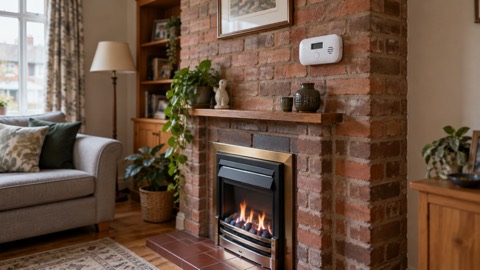 FireAngel FA6829S CO Alarm
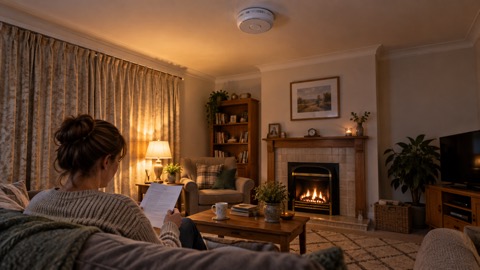 FireAngel CW1-PF CO Alarm
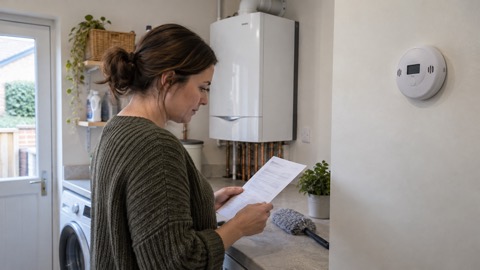 FireAngel W2-CO-10X CO Alarm
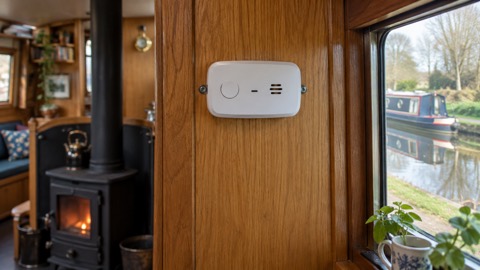 FireAngel FP1820W2-R CO Alarm
 Kidde K7DCO CO Alarm
 Kidde K5DCO CO Alarm
 Kidde K10LLDCO CO Alarm