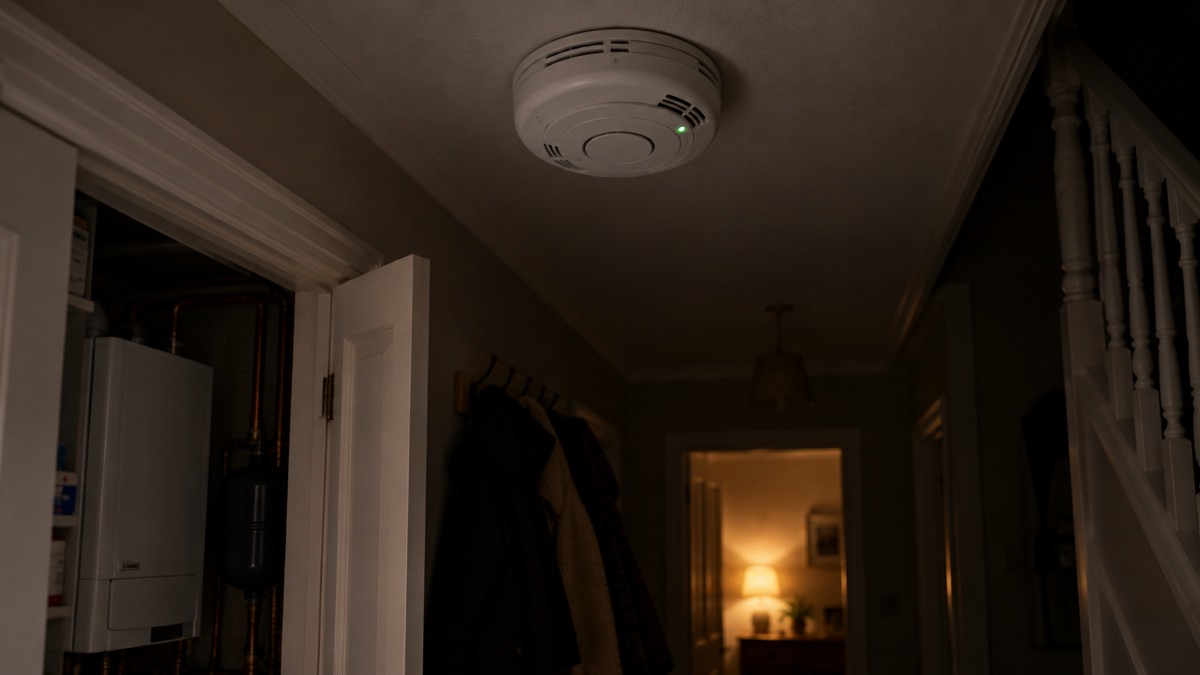
The Hispec RF10-PRO is a mains powered carbon monoxide alarm with a sealed rechargeable lithium back-up battery, so it keeps watching for CO during a power cut1. It sounds at 85dB and is set to alarm from 50ppm of carbon monoxide2. A combined heat and CO version is also sold, which adds a heat sensor for fire as well as a CO sensor in one unit3.
For an ordinary household, the practical points are these. It is a ceiling mounted alarm, wired to the mains, with a back-up battery that the distributor says never needs replacing4. It can be linked with up to 20 compatible alarms by wire or radio, so one alarm sounding sets off the rest2. It has a 10-year lifespan that starts when you install it, and a 5-year manufacturer's warranty2.
This page sets out what the alarm does, where to fit it, how the linking works, what the lights mean and how to look after it. It does not tell you it is better than any other alarm. Carbon monoxide is a colourless, odourless gas, and an alarm is one part of keeping a household safe alongside servicing appliances and knowing the warning signs.
What the Hispec RF10-PRO is and what it suits
The RF10-PRO is a mains powered carbon monoxide alarm with a sealed rechargeable lithium back-up battery1. The distributor describes it as providing effective protection and says the sealed tamper-proof battery ensures CO detection even in the event of a mains power failure1. It uses an electrochemical carbon monoxide sensor and is CE marked and Kitemarked to BS EN 50291-1: 20181.
A second version combines a heat sensor and a CO sensor in one unit. The distributor describes it as a multi-sensor alarm containing both heat and CO for detection of fire and carbon monoxide leaks3. Its heat sensor is listed to BS 5446-2: 2003 and its carbon monoxide sensor to BS EN 50291-1: 2018 for home use3. It is suitable for kitchens, garages and other rooms containing a fuel burning appliance3.
Both are ceiling mounted and plastic cased, and both are intended for the home3. The distributor lists the RF10-PRO range as suitable for installations complying to BS 5839-6 Grade D1, which it describes as mains powered with a 10 year longlife backup4. If you are weighing up a combined unit against separate alarms, our guide to combined or separate alarms sets out the trade-offs.
The RF10-PRO range is wider than the CO alarm alone. The same family includes mains smoke alarms, heat alarms and a kit of three smoke alarms, one heat alarm and one carbon monoxide alarm5. The smoke and heat alarms are covered on our Hispec RF10-PRO smoke and heat alarm page.
Specifications at a glance
The figures below come from the distributor's product listings. Where the distributor gives more than one figure for the same specification, both are shown and the disagreement is noted.
| Specification | CO alarm | Heat and CO alarm |
|---|---|---|
| Power | 230V mains with battery backup1 | 230V mains with back-up battery3 |
| Back-up battery | Rechargeable lithium1 | Rechargeable lithium3 |
| Alarm level | From 50ppm2 | Not stated in the listing |
| Sound level | 85dB1 | 85dB at 3 metres3 |
| Linking | Radio-Interlink; Wired1 | Radio-Interlink; Wired3 |
| Maximum linked devices | 20 devices1 | 20 compatible devices3 |
| Radio frequency | 868.499Mhz2 | Not stated in the listing |
| Radio range | 30m indoors, 80m in open areas2 | Not stated in the listing |
| Operating temperature | 0°C to +40°C1 | 0°C to +40°C3 |
| Relative humidity | 15% to 90%1 | 15% to 90%3 |
| Lifespan | 10 years2 | Not stated in the listing |
| Warranty | 5 year manufacturer's warranty1 | 5 year manufacturer's warranty3 |
| Dimensions | Height 43mm, diameter 110mm1 | Height 63mm, diameter 120mm3 |
| Weight | 160g1 | 160g3 |
| Casing | Plastic2 | Plastic3 |
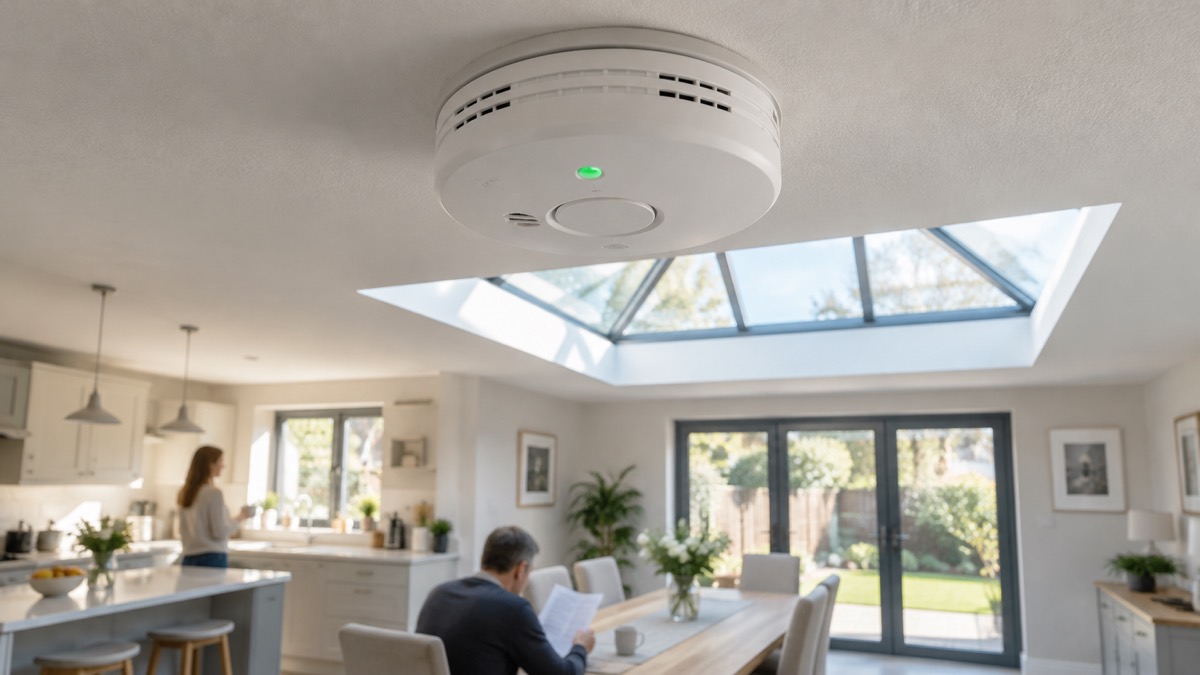
The distributor's listings disagree on some CO alarm figures. One gives a height of 43mm and a diameter of 110mm, while another gives a height of 75mm, a width of 40mm and a depth of 32mm1. One gives a weight of 160g and another 70g1. The documents do not resolve this, so check the unit you receive against its own label before you drill any fixing holes.
Where to fit it
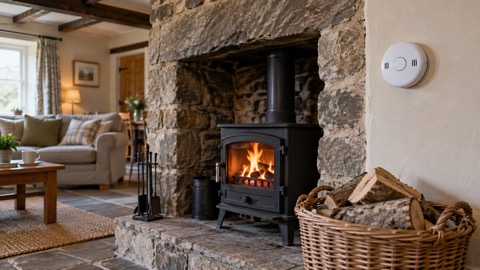
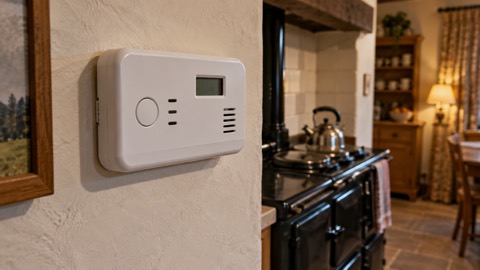
Fit a carbon monoxide alarm in every room where there are flame burning appliances or open fires, and have those appliances serviced regularly6. Fire and rescue services across the UK give the same core advice: alarms should go in all rooms containing solid fuel appliances, gas appliances or paraffin heaters7. That includes boilers, cookers, ovens, open fires and wood burners8.
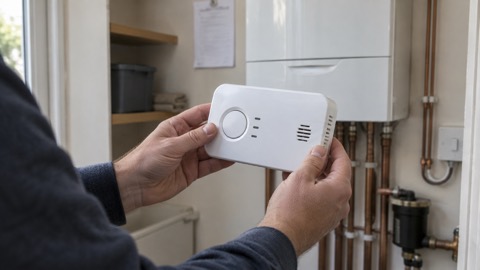
The distributor says the CO alarm is suitable for installation where a fuel burning appliance may be installed, such as a boiler, open fire and gas cooker, and lists the kitchen, boiler rooms and areas with open fires as suitable locations1. The combined heat and CO version is aimed at kitchens, garages and other rooms containing a fuel burning appliance3.
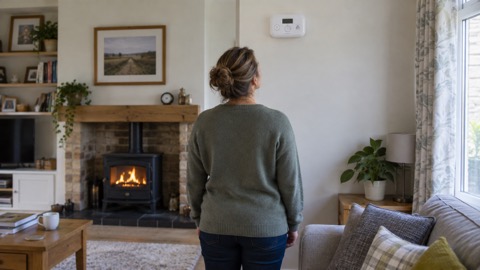
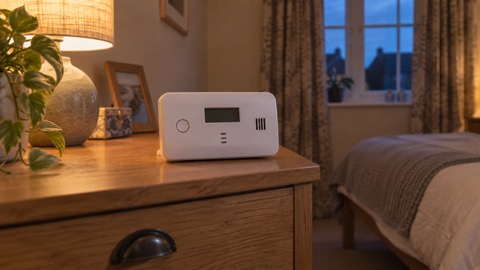
Placement matters as much as the number of alarms. Make sure the alarm can be heard throughout your home, and consider keeping one in the bedroom9. Northern Ireland Fire and Rescue Service repeats the same message in its public safety appeals: have a working carbon monoxide alarm installed in rooms with fuel burning appliances11. Our guide to where to put a carbon monoxide alarm goes into the detail of siting.
- Every room with a fuel burning appliance: boilers, gas fires, cookers, open fires, wood burners and stoves7
- Rooms with a flue: a detector should be fitted in any room where there is a carbon-fuelled appliance or a flue13
- Bedrooms: consider one so you can hear it at night9
- Ceiling mounting: the RF10-PRO is designed for the ceiling, supplied with a Fast Fix base plate and fixings1
Mains power with a battery for power cuts
The RF10-PRO runs on 230V mains power with a rechargeable lithium back-up battery1. The distributor says the sealed tamper-proof back-up battery ensures CO detection even in the event of a mains power failure1. That matters because a power cut is exactly when a household may turn to other sources of heat or light, and a CO alarm that dies with the mains leaves you unprotected.
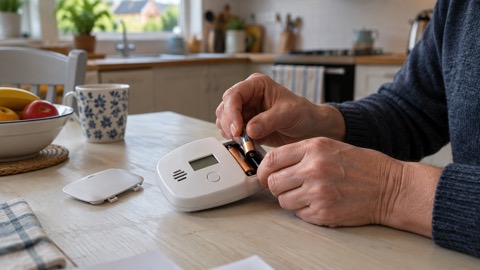
The back-up battery is sealed and rechargeable, and the distributor says these alarms never need replacement batteries4. That is different from older mains CO alarms, where independent guidance from Which? in 2020 said a mains powered CO alarm comes with a backup battery for power cuts and that battery needs to be replaced every year14. If you are moving from an older alarm, check which type you have before assuming the battery is maintenance free.
The alarm is not a substitute for servicing. The NHS advises fitting a carbon monoxide alarm in every room where there are flame burning appliances or open fires, and ensuring appliances are serviced regularly6. Northern Gas Networks gives the same advice for gas appliances: fit an audible CO alarm in rooms where there are fuel-burning appliances15.
Linking up to 20 alarms by wire or radio
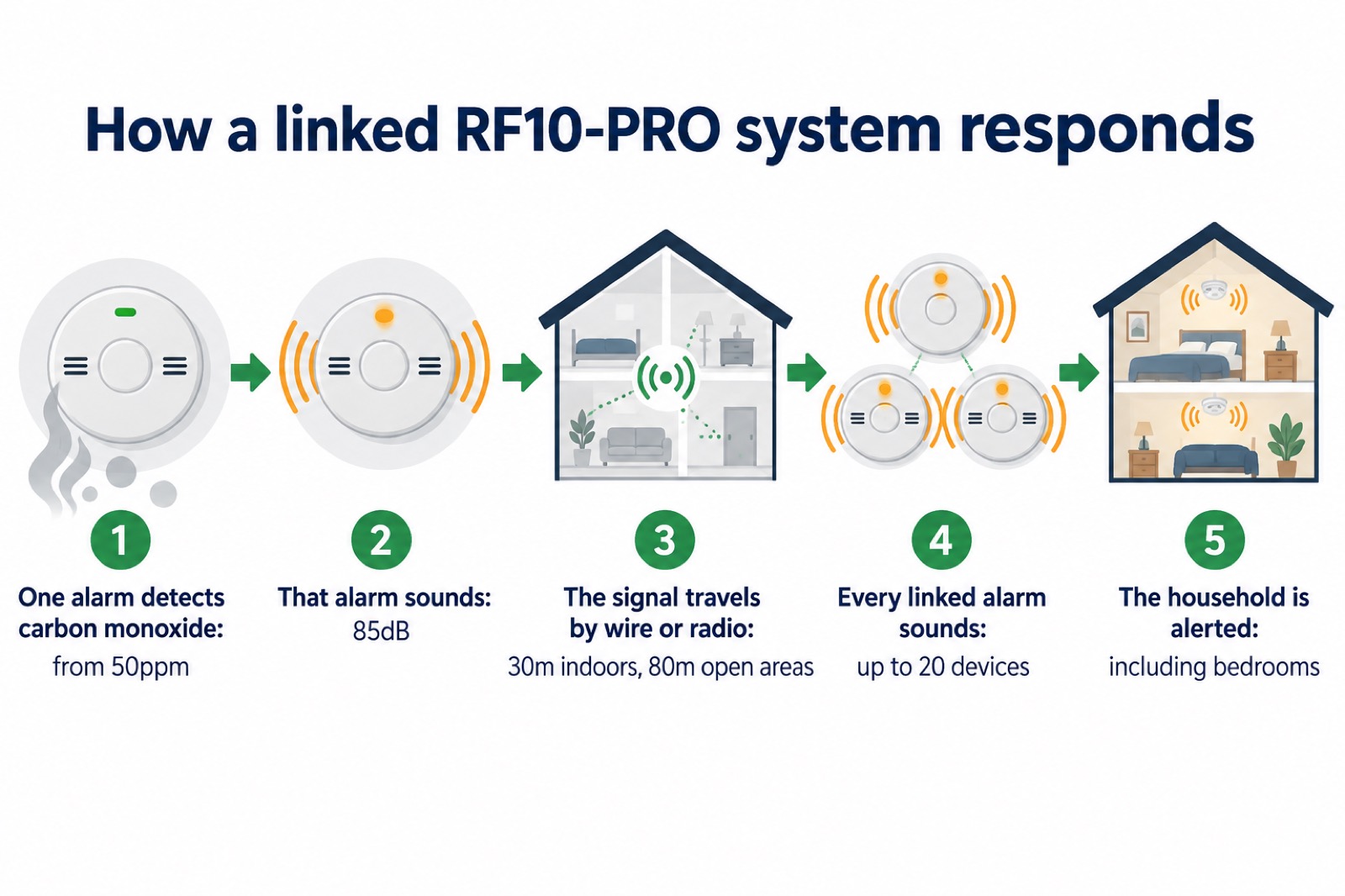
The RF10-PRO can be linked with up to 20 devices, including a wireless control unit2. It connects by radio interlink or by wire1. The radio linking frequency is 868.499Mhz, and the radio frequency range is 30m indoors and 80m in open areas2.
Linking changes how the system behaves. Activation of any one alarm within the system will trigger all the other alarms to sound2. In a linked house, a CO alarm in the boiler room wakes the whole household, not just the person nearest the boiler.
The range has rules about mixing. The distributor says RF10-PRO alarms can be interlinked in mixed systems of hardwired and RF, mains-powered and battery-powered, but the battery type must be the same: lithium with lithium, alkaline with alkaline, never mixed1. The heat and CO version repeats this: lithium alarms can interlink with other lithium alarms, alkaline alarms with alkaline alarms, but you cannot mix lithium and alkaline alarms in the same system, neither via hardwire nor RF3.
The distributor also sells an optional Test/Locate/Hush Control Unit, which can be included in the same system2. It lets you test or silence the alarms remotely4. Our guide to interlinked alarms explains how linking works across different systems, and wireless or wired interlinked alarms helps you choose between the two.
Lights, testing and the 10-year replacement date
The alarm has three clear LED status indicators: green for power, amber for fault and red for alarm1. Clear LED lights show operation, fault and alarm2. A green light is the everyday state. An amber light means a fault, so check the power and the unit. A red light means the alarm has been triggered, and you should treat it as a real warning.
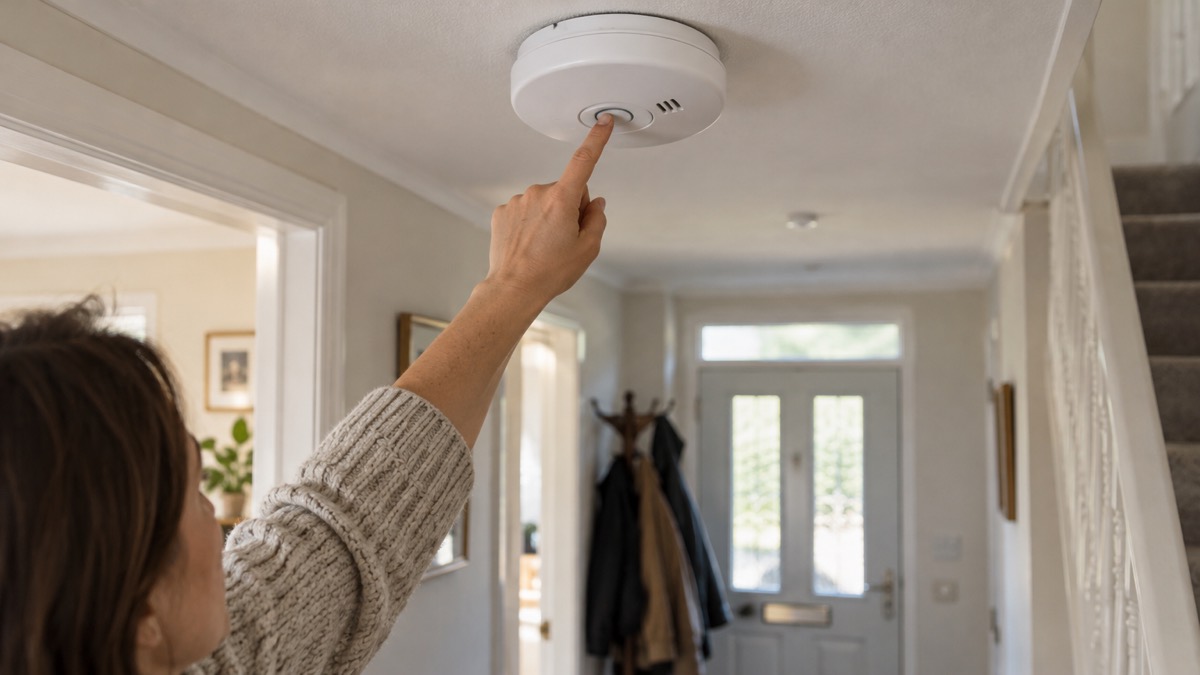
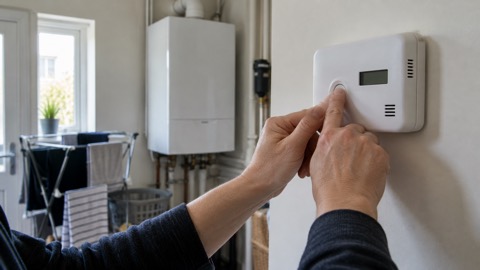
Testing is a weekly job. The alarm has a combined test and hush button for easy weekly testing2. Press it to check the sounder works, and press it to silence a false alarm once you are sure there is no danger. The range uses an insect proof sensor to prolong the life of the alarm and prevent false activation, and advanced sensor technology helps reduce contamination and minimise false alarms5. Our guide to how often to test alarms covers the routine.
The alarm has a 10-year lifespan2. The distributor says the 10-year lifespan commences upon installation, and the alarms can be stored prior to activation without the batteries degrading2. Each alarm is supplied with a blank installation sticker to fill in when installing and place on the alarm, so the replace by date is easy to identify2. Write the date you fit it, add 10 years, and put the sticker where you will see it.
The warranty is a 5 year manufacturer's warranty1. The distributor also operates a WEEE take-back scheme through Valpak for safe disposal at end of life1. Our guide to when to replace an alarm explains why the date matters.
Rules in Scotland, Wales and Northern Ireland
The distributor states the CO alarm is suitable for both the Welsh and Scottish updated 2022 legislation1. The heat and CO version lists Northern Ireland legislation 2024 as well as Scottish and Welsh legislation 20223. The wider RF10-PRO range is described as compliant with Scottish 2022, Welsh Landlord 2022 and Northern Ireland Landlord 2024 legislation4.
| Nation | What the distributor states |
|---|---|
| England | No specific legislation listed for this alarm |
| Scotland | Scottish Legislation (2022)2 |
| Wales | Welsh Legislation (2022)2 |
| Northern Ireland | Northern Ireland Legislation (2024)3 |
These are the distributor's claims about the alarm, not a statement of the law in each nation. Alarm rules differ and change, and they cover different things in different nations. Our guide to Wales and Northern Ireland alarm rules sets out the arrangements there, and alarm standards explains BS 5839-6 grades and BS EN 50291.
Storing it before installation and looking after it
The alarm can be stored before installation without the batteries degrading, because the 10-year lifespan starts when it is installed2. Keep it in its packaging, dry, and within its stated conditions until you are ready to fit it. The operating temperature is 0°C to +40°C and the relative humidity is 15% to 90%1. Do not store it in a cold shed or a damp garage outside those limits.
Installation is described as easy, with just one screw, and the unit is supplied with a Fast Fix base plate and fixings2. The heat and CO version comes with a Fast Fix baseplate for quick and easy installation3. Once fitted, keep the alarm clear of dust and grease, and do not paint over it.
The distributor lists a customer rating of 4.7 out of 5 stars from 18 reviews for the CO alarm2. That is a retailer's rating, not a safety assessment, and it should not stand in for checking the specification and the certification.
Sources (15)
- Hispec RF PRO Mains Radio Interlinked Carbon Monoxide with Lithium Back Up, Safelincs, 2026-10-29
- Hispec RF PRO Range Sealed Lithium Battery Wireless Carbon Monoxide Alarm, Safelincs, 2026-10-29
- Hispec RF10-PRO Mains Powered Heat and CO Detector with Lithium Backup, Safelincs, 2026-10-29
- Hispec RF PRO Mains Powered Smoke Heat Alarms with Lithium Battery Backup, Safelincs, 2026-10-29
- Hispec RF PRO Series Sealed Battery 3 Smoke 1 Heat 1 CO Alarm Kit, Safelincs, 2026-10-29
- Safety for Medicines and Poisons, NHS West Yorkshire Healthier Together, 2026-10-29
- Fire Safety for Carers, Devon and Somerset Fire and Rescue Service, 2026
- Stay Warm Safely This Winter, Devon and Somerset Fire and Rescue Service, 2026
- Fire Alarms and Carbon Monoxide Detectors, Lincolnshire County Council, 2026-10-29
- Carbon Monoxide: The Silent Killer, Wiltshire and Swindon Prepared, 2026-10-25
- NIFRS Home Fire Safety Appeal After Four Fatalities Across Weekend, Northern Ireland Fire and Rescue Service, 2025-12-15
- NIFRS Issues Safety Plea Following Two House Fire Fatalities in One Day, Northern Ireland Fire and Rescue Service, 2025-12-12
- Preparing for an Emergency: Be Ready, Stay Safe, Act Now, Sussex Resilience Forum, 2025-10
- FireAngel FA3820-EUX10-T, FireAngel, 2026-08-20
- Gas Appliance Safety, Northern Gas Networks, 2026-10-21
 FireAngel FA3313 CO Alarm
 FireAngel FA3322 CO Alarm
 FireAngel FA3820 CO Alarm
 FireAngel FA6812 CO Alarm
 FireAngel FA6813 CO Alarm
 FireAngel FA6829S CO Alarm
 FireAngel CW1-PF CO Alarm
 FireAngel W2-CO-10X CO Alarm
 FireAngel FP1820W2-R CO Alarm
 Kidde K7DCO CO Alarm
 Kidde K5DCO CO Alarm
 Kidde K10LLDCO CO Alarm