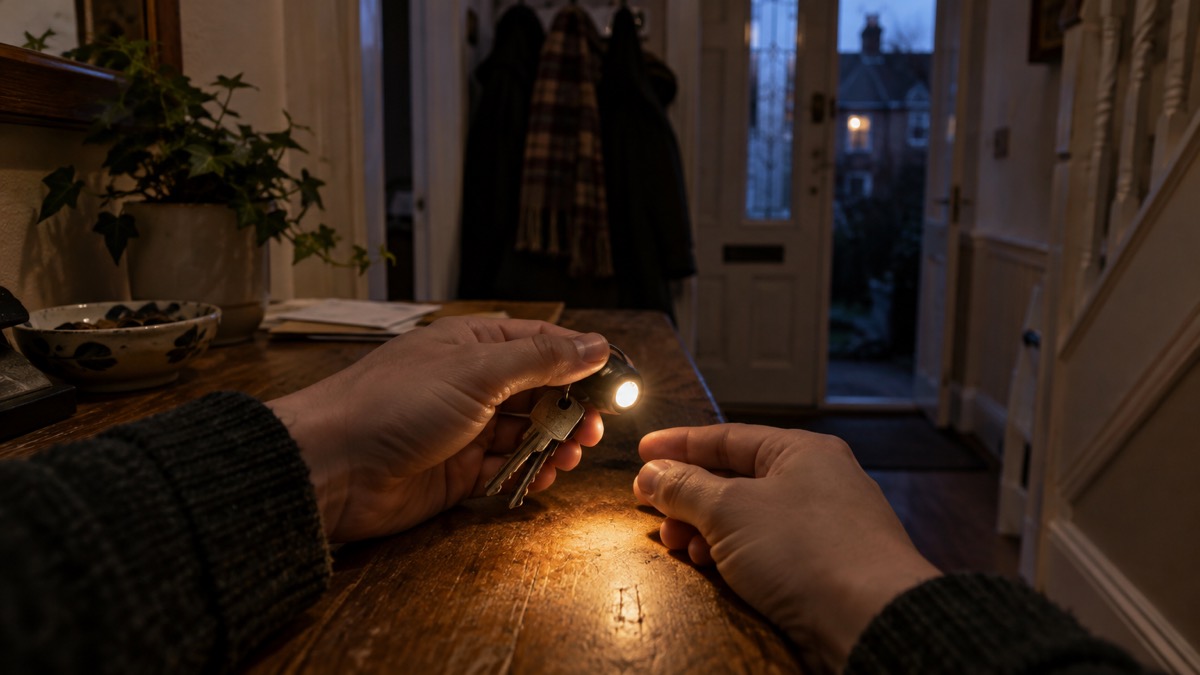
The Ledlenser Lite Wallet is a small keyring light from Ledlenser, the sort of torch that lives in a purse or on a set of keys and is there when the main lights fail. It is not a substitute for a proper household torch, but it fills the gap that catches most people out in a power cut: the light you need is in a drawer in another room, and you are standing in the dark.
For an ordinary household getting ready for a power cut, a storm or a flood, the sensible approach is layered. Keep a main torch or head torch with the rest of your emergency kit, and treat a keyring light as the backup that is always on you. The maker's own guidance on looking after small lights is simple: remove the batteries from non-rechargeable models when storing them for long periods, to prevent damage caused by leaking batteries1.
What the Ledlenser Lite Wallet is
The Lite Wallet is one of Ledlenser's small, battery-powered lights, in the same family as the maker's keyring torches. It is designed to be carried rather than set on a table: the name tells you the intended home, a wallet or a pocket, so that a light is with you when you are out, travelling or simply in a room where no torch is kept.
That role matters more than it sounds. Official emergency planning advice for UK households is to keep useful items in one easy-to-find place, ideally somewhere accessible if the lights are not working3. A keyring light is the exception to that rule, because its whole purpose is to be carried away from the kit. It covers the minutes after a power cut when you are feeling your way to the cupboard where the main torch lives, and it covers the times you are away from home when the lights go out.
It is not a room-lighting tool. If you want to understand how small lights compare with full-size torches, head torches and lanterns, the guide to torches and how to choose one for home sets out the differences, and the emergency lighting section covers the whole picture. For most households the Lite Wallet sits alongside, not instead of, a larger light.
Specifications that matter at home
The material available here does not list lumen output, beam distance or run time for the Lite Wallet, so this page does not quote figures it cannot stand behind. What can be said with confidence is what kind of light it is and how it is powered: it is a non-rechargeable, battery-powered keyring light, which is why the maker's storage advice for non-rechargeable models applies to it1.
| Feature | What it means for a household |
|---|---|
| Form | Small keyring light, carried in a wallet, pocket or on keys |
| Power | Battery-powered, non-rechargeable, so it needs a spare cell kept ready1 |
| Storage | Remove the battery during long storage to prevent leak damage1 |
| Warranty | Excluded from Ledlenser's standard warranty, which names the Lite Wallet2 |
| Water resistance | No rating given in the material available here, so treat it as not rated |
If you are weighing up a keyring light against a rechargeable pocket torch, the comparison of rechargeable and battery torches for emergencies explains the trade-offs. The short version is that a battery light is ready whenever you are, with no charging routine to remember, but it depends on you keeping a spare cell. The guide to torch batteries covers the cell types in more detail.
What it can do in a power cut
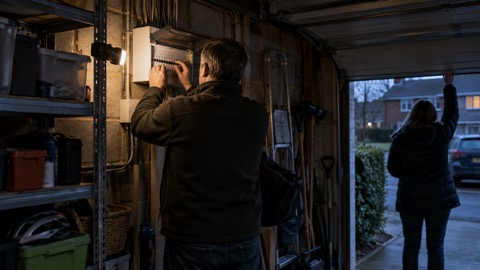
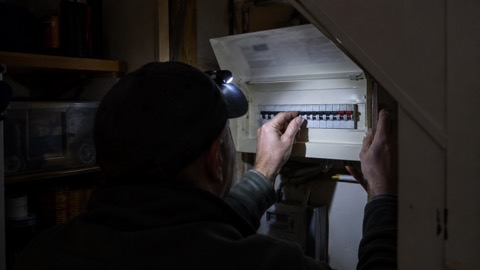
In a power cut, the Lite Wallet does three useful jobs. It lets you cross a dark hallway to reach the main kit, it gives you light to check a fuse box or a trip switch, and it means you are never completely without light when you are out of the house. Those are small tasks, but they are the ones that happen in the first minute, before anyone has found the big torch.
What it cannot do is light a room for a family for an evening, or run for hours at a time. For that you want a head torch, which leaves your hands free, or a lantern that lights a whole room. The guide to lighting your home safely when the power goes off walks through the order of jobs, and the power cut checklist is a quick list to work through. If you are deciding between a handheld light and one you wear, torch or head torch for a power cut sets out the choice.
A sensible household plan uses three layers:
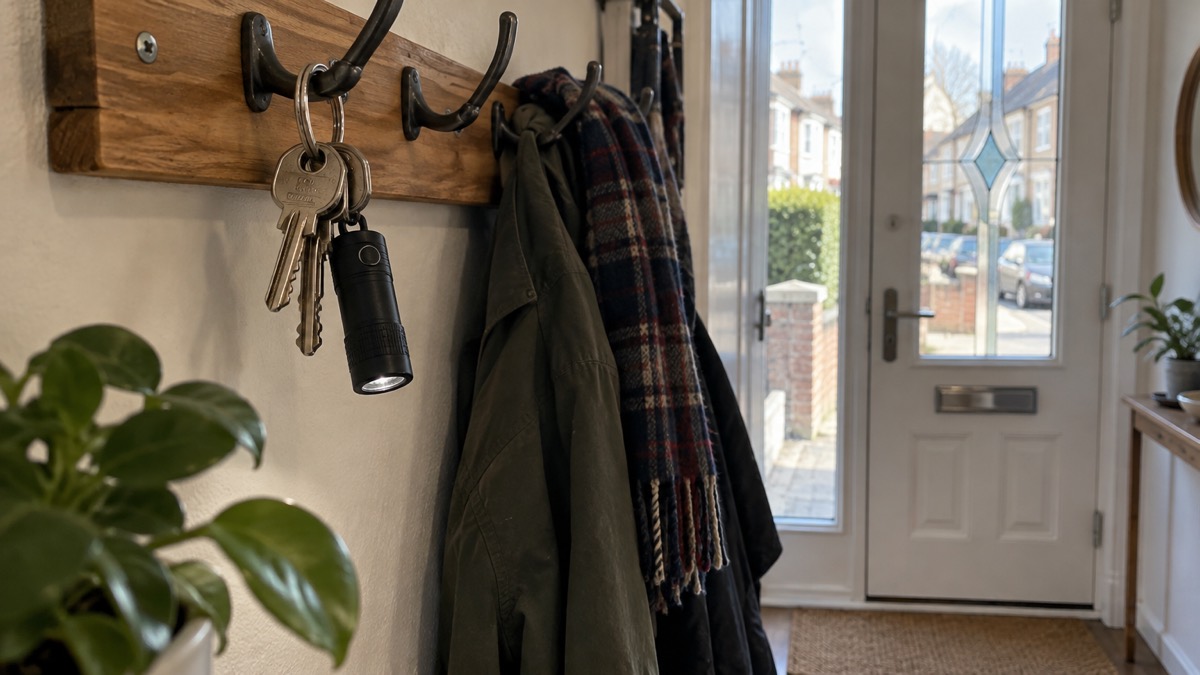
- Carried: a keyring light such as the Lite Wallet, always on you.
- Kit: a main torch or head torch kept with the rest of your emergency supplies.
- Room: a lantern or emergency bulb for lighting a space where people are sitting.
That layering is the same principle official guidance uses when it tells you to keep your emergency kit in one accessible place3. The keyring light is the layer that survives the moment when the kit is in the wrong room.
Run time and battery life
No run time figure for the Lite Wallet appears in the material available here, so treat any claim about hours of light with caution and test your own light rather than relying on a number. What the maker does say is how to look after a non-rechargeable light between uses: remove the batteries when storing for extended periods, to prevent damage caused by leaking batteries1. That is the single most important maintenance instruction for a light that may sit unused for months.
A leaking cell can corrode the contacts and ruin a small torch, which is exactly the failure you do not want to discover during a power cut. The practical routine for a keyring light is:
- Test it briefly at a fixed interval, for example when you change the clocks.
- Note when you last fitted a cell, so you know its age.
- Keep a spare cell sealed and stored with your other spares.
For a wider look at how long small lights last and how to plan around it, see how long a torch battery lasts on low and the spare batteries checklist. The winter lighting checks list is a good moment to go round every light in the house before the darker months.
Where to keep it so you can find it in the dark
The whole point of a keyring light is that it is with you, so the answer is partly "on your keys" and partly "in a known spot by the door". Official advice is to keep useful items in one easy-to-find place, ideally somewhere accessible if the lights are not working3, and to keep your emergency kit in a safe place at home where you can reach it easily, in a waterproof bag6. A grab bag should be kept in an easy to reach place, and everyone in the household should know where it is7.
For the Lite Wallet specifically, that translates into a short list of habits:
- Keep it on your keys or in your wallet, so it travels with you.
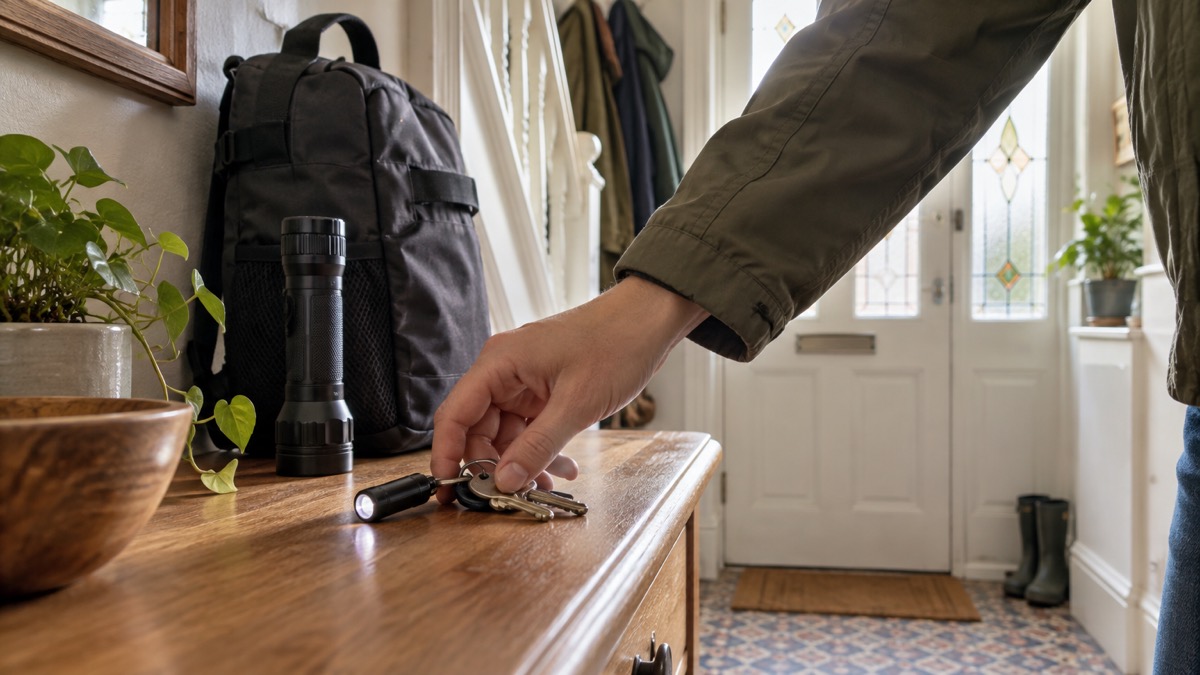
- Keep a second small light in a fixed spot by the front door or on the hall table.
- Tell everyone in the household where the main kit lives7.
- Store the kit somewhere cool, dry and easy to get to in the dark, such as under the stairs, in a utility cupboard or in the garage8.
- Store torches in the same spots every time, so you can find them in the dark9.
The guide to where to keep torches so you can find them in the dark goes further into the practicalities, including marking a bag so it can be found by touch. Keep useful items in one easy-to-find place, ideally somewhere accessible if the lights are not working, and store torches in the same spots every time so you can find them in the dark10.
Using it safely
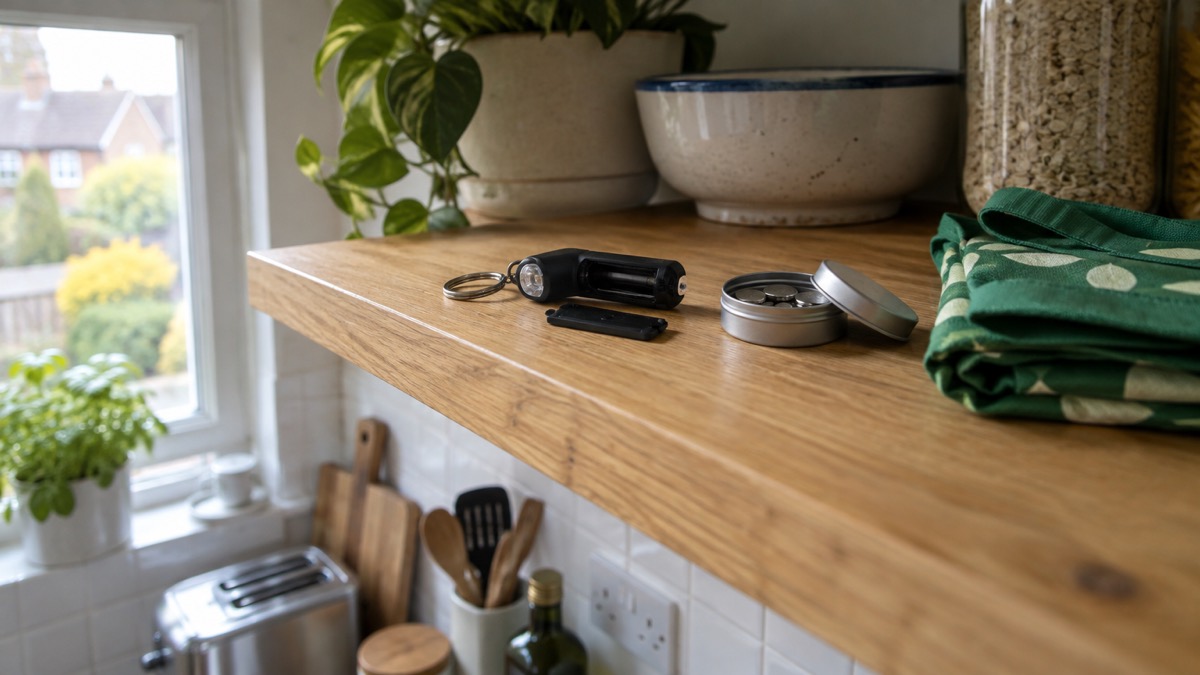
A keyring light is low-risk, but two hazards are worth naming plainly. The first is the battery. Small button and coin cells are dangerous if swallowed, particularly to young children, so keep the light and any spare cells where a child cannot reach them. The NHS advises disposing of old batteries safely, and notes that anywhere that sells batteries, such as a supermarket, should offer a collection of old batteries11. The fire and rescue service advises checking items for hidden batteries before recycling4.
The second is light itself. Do not shine a bright torch into anyone's eyes, and do not use a keyring light as a substitute for proper lighting on stairs or in a flood. If you are moving around a dark house, a head torch leaves your hands free for the handrail. The guide to lights for older and disabled people in a power cut covers steadier options, and torches, candles and children covers keeping young ones safe.
"Check items for hidden batteries before recycling"
Storing it and looking after it
The maker's storage advice for non-rechargeable lights is the core of looking after a Lite Wallet: remove the batteries when storing for extended periods, to prevent damage caused by leaking batteries1. Beyond that, the principles are the same as for any small piece of kit. Keep it dry, keep it where you can find it, and check it before the season when you are most likely to need it.
A simple routine, once or twice a year:
- Test the light and note the date.
- Remove the cell if the light is going into long storage1.
- Wipe the contacts if they look dull, and check for corrosion.
- Check the spare cell in your kit and replace it if it is past its date.
- Recycle any old cell at a supermarket collection point or a recycling centre11.
The independent charity CAP advises putting used batteries in a box kept up high, taking the box when you pick up shopping bags, and popping them in the battery recycling bin at the supermarket5. That habit keeps old cells out of the household bin and out of reach of children. For lights with a built-in rechargeable pack, the maker's advice is different: store them with at least 40 to 60 per cent charge and recharge at least once every three months1. The guide to charging and storing rechargeable torches safely covers that side.
Support and warranty
The Lite Wallet is named among the products excluded from Ledlenser's standard warranty. The maker states that its warranty does not apply to all products, including the K Series (keyring lights), Kid's Lights, Lite Wallet, Solidline, TFX range, all accessories including batteries, power banks, spare parts and replacement parts2. Most other Ledlenser lights carry a standard warranty period of 2 years, which can be extended by a further 5 years with online registration, up to 7 years, covering defects in manufacturing13. That longer cover does not extend to the Lite Wallet.
What that means in practice is that if your Lite Wallet fails, you should not expect a warranty repair. Treat it as a consumable item: keep it working with a fresh cell, and if it stops, replace it. The maker's returns policy is described as fast delivery and free UK returns14, so check the current terms on the maker's own page before you order.
For help choosing a light that does carry the longer cover, the Ledlenser brand page lists the maker's range, and the guide to torches explains what to look for. If you are building out a full household kit, the emergency kit section and the getting started guide set out what else to keep ready.
Sources (14)
- Ledlenser FAQ, Ledlenser, 2026-11-02
- Ledlenser P4 product page, Ledlenser, 2026-10-26
- Be prepared for emergencies, North Devon Council, 2026-10-29
- Be battery aware, Manchester Fire and Rescue Service, 2026-10-29
- Are your used batteries really flat?, CAP, 2026-04-15
- Get prepared, Carmarthenshire County Council, 2026-10-28
- Emergency planning, Basingstoke and Deane Borough Council, 2026-10-29
- Ultimate UK power cut emergency kit guide, Olight UK, 2025-10-11
- How to build a 72 hour household emergency power outage plan, Jackery, 2026-10-10
- Preventing falls, North Cheshire and Mersey NHS, 2024-12-12
- Swallowed something, Alder Hey Children's NHS Foundation Trust, 2025-09-25
- Waste transfer station fire sparks fresh warning over disposing of safe battery disposal, Suffolk County Council, 2023-07-07
- Ledlenser H8R 25th Anniversary Edition, Ledlenser, 2026-10-25
- Ledlenser HF Series, Ledlenser, 2026-10-25

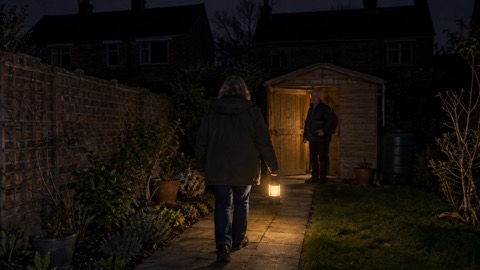 NEBO Galileo Tempest 350
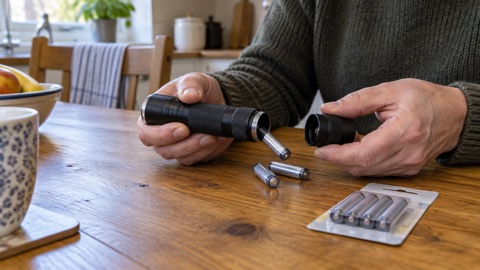 NEBO Newton 500 Torch
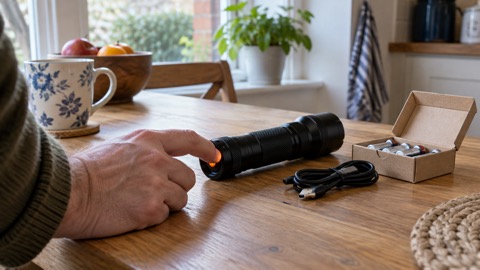 NEBO Davinci 800L
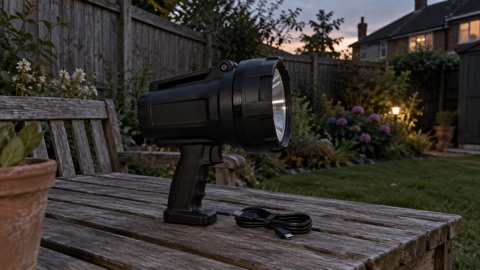 NEBO Luxtreme SL25R
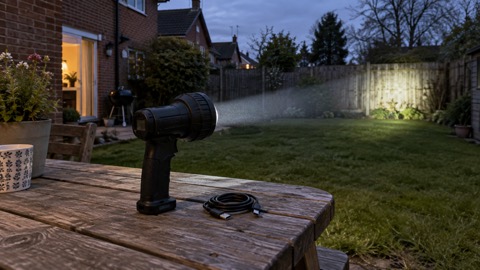 NEBO Master Series SL25
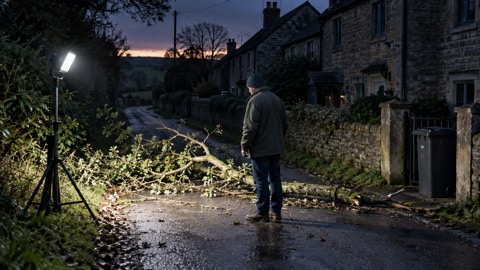 NEBO 8K Flood Light
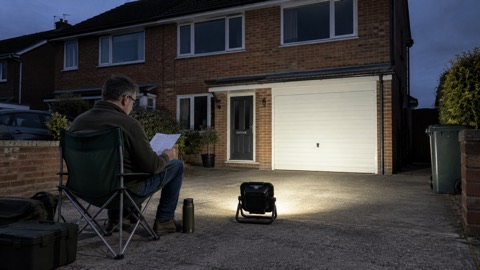 NEBO 5K Floodlight
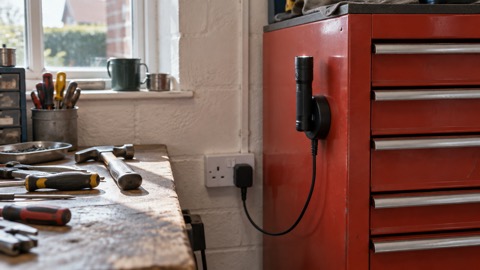 NEBO Torchy 2K Torch
 NEBO Torchy 600 Flex
 NEBO Tac Slyde Torch
 NEBO Slyde King 4K
 NEBO Mycro 900+ Headlamp