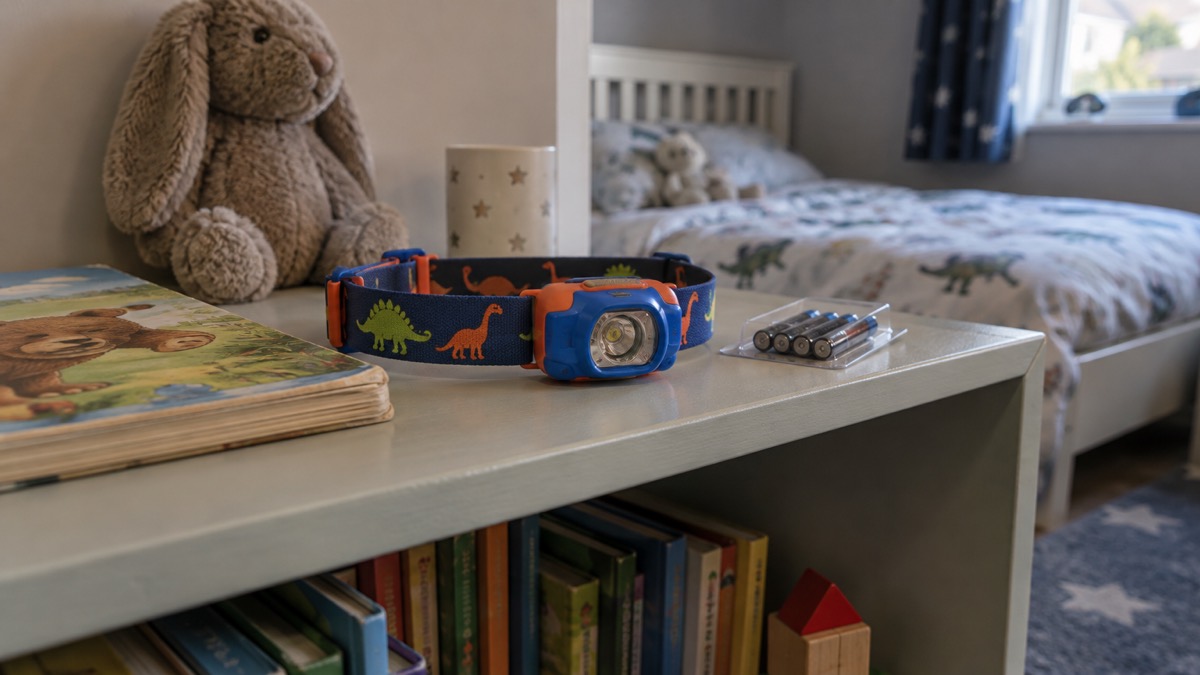
The Ledlenser KidLED2 is a battery-powered head torch built for children aged 3 and over, and for a household getting ready for emergencies it does one job well: it gives a child their own light, worn on the head so both hands stay free, that is ready to use without charging and hard for small fingers to take apart. It runs for 20 hours on its Low white setting at 5 lumens, or 1.5 hours on Power at 40 lumens, and it takes a single AAA battery that comes in the box1.
That combination matters in a power cut. A rechargeable torch is only as good as its last charge, and a power cut is exactly when you cannot top it up. A torch that runs on a standard AAA and switches itself off when a child leaves it on is the sort of kit that is still working when you need it. Ledlenser lists automatic switch-off and reduced-glare optics among the child-specific features shared across its children's lights2.
This page sets out what the KidLED2 is, what it can and cannot do in an emergency, how to keep it ready, and how to use it safely around small children. It is one light in a wider plan: for the full picture of lighting a home through an outage, start with Emergency Lighting at Home and the power cut checklist.
What the KidLED2 is and who it suits
The KidLED2 is a purpose-built head torch for young children, worn on a headband for hands-free light1. It weighs 35g and has a head diameter of 54mm, so it is sized for a child rather than an adult1. The body is ABS plastic and the torch is drop tested to 2 metres, which is the sort of treatment a torch gets in a school bag1.
It sits in a family of Ledlenser children's lights. The KidLED2 and the rechargeable KidLED4R are both head torches, and both share automatic switch-off, reduced-glare optics and colour light modes with the KidBEAM4 hand torch2. If you are choosing between a hand torch and a head torch for a child, the torch or head torch comparison sets out the trade-offs.
For emergency planning, the KidLED2 suits a household that wants a child to have a light of their own that does not depend on mains power or a charging routine. It is not a room light and it is not a searchlight: at 40 lumens on its brightest setting it lights the way to the bathroom or the stairs, not a whole room. For lighting a room during an outage you want a lantern or an emergency bulb, and the guide to lumens, beam distance and run time explains why.
Run time: 20 hours on Low, 1.5 hours on Power
The KidLED2 has two white brightness levels, and the difference between them is the difference between a torch that lasts a night and one that lasts an evening1.
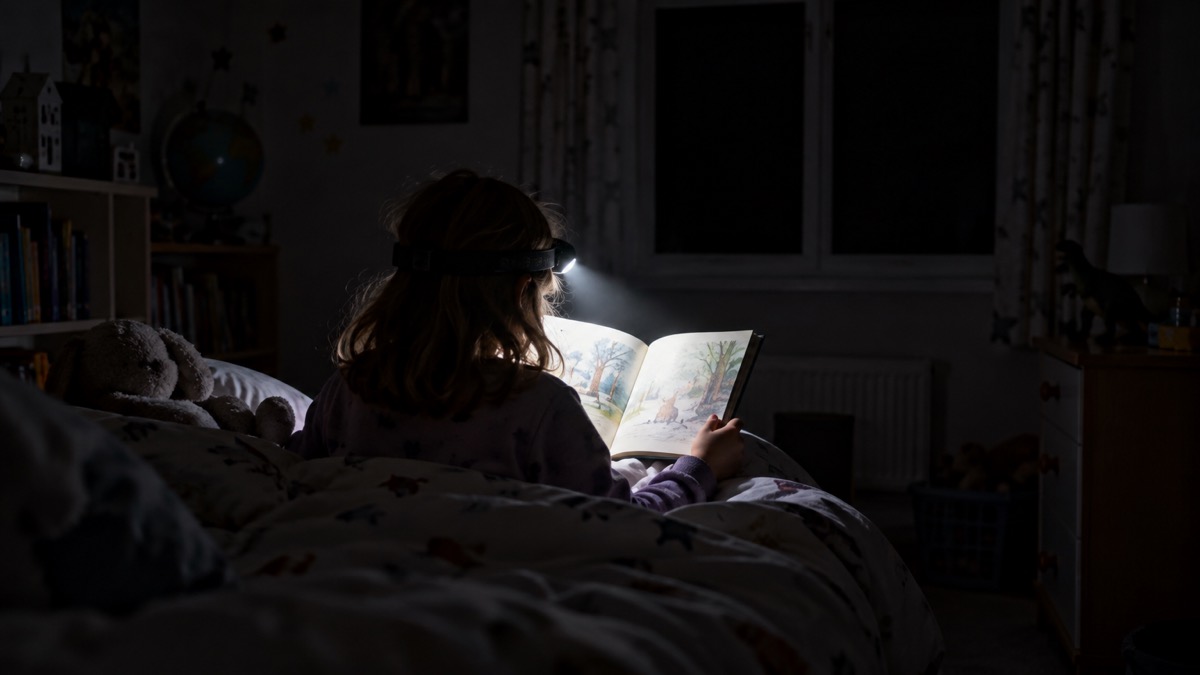
The practical lesson is to teach a child to use Low for moving around the house and save Power for the moments that need it, such as finding something under a bed or checking a path. Twenty hours on Low is roughly a series of evenings; an hour and a half on Power is one long evening and no more. Ledlenser also notes that the KidLED2's 20-hour low-power runtime is longer than the 18 hours of the KidLED4R3.
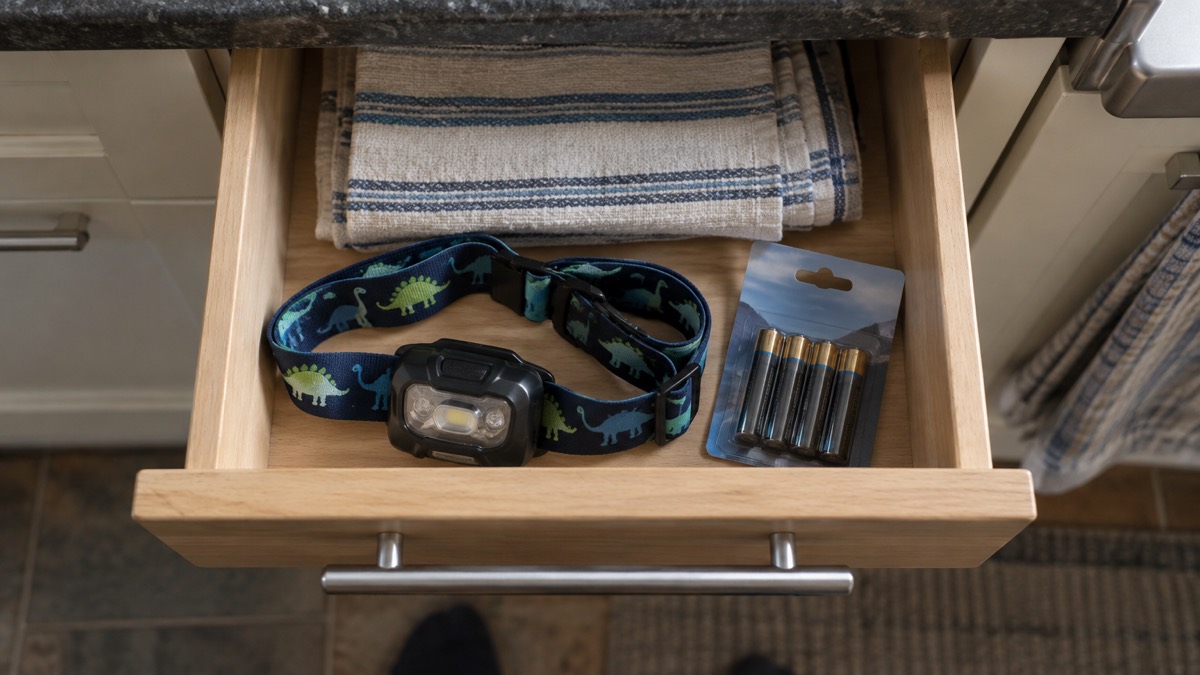
The torch runs on a single AAA battery, included in the box, and needs no charging1. That makes it the simplest kind of emergency light to keep ready: a spare pack of AAA cells in the kitchen drawer is the whole maintenance regime. Our guide to torch batteries covers what to keep, and the spare batteries checklist turns it into a shopping list. For how run times compare across lights generally, see how long a torch battery lasts on low.
White, red and blue light modes
Each of the three colours, white, red and blue, is available in two brightness levels plus blink for signalling1. The white modes do the practical work of seeing where you are going. The red and blue modes do something different: they make a child visible.
Ledlenser says the red and blue blink modes provide a colourful, visible signal for dark school mornings and evenings, and describes this as a practical safety feature1. The torch also has an integrated metal clip so it can be worn on a school bag, backpack or jacket without the headband, as a visibility signal light1. For a household in the UK, where school runs in December happen in the dark, that is a genuine use beyond emergencies.
Two cautions. First, a blink mode is a visibility signal, not a way to see by; a child walking a route needs the white Low mode for the pavement and the blink mode for being seen. Second, check with the school before a child wears a light to school, since schools set their own rules on bags and accessories. Our page on what red light mode is for explains the wider uses of coloured light, and SOS and strobe modes covers signalling.
The white beam has a colour temperature of 6,000K to 6,500K and a colour rendering index of 701. In plain terms it is a cool white light, which reads as bright and clear rather than warm.
The screw-secured battery compartment keeps small children out
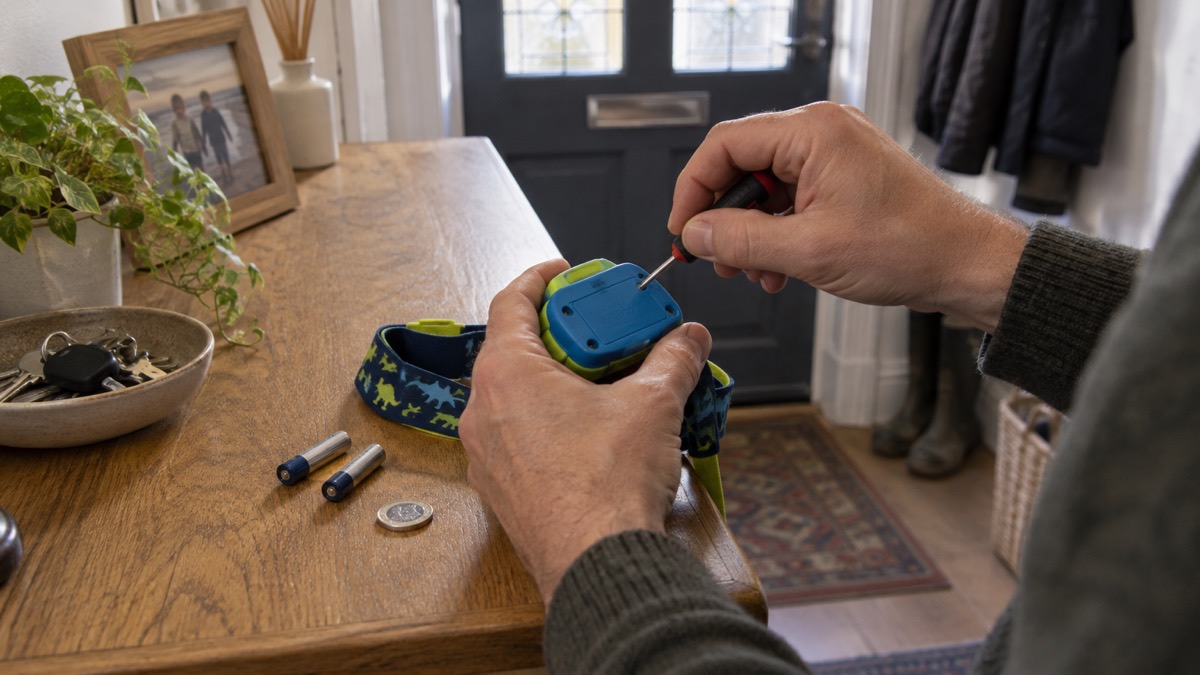
The KidLED2's battery compartment is lockable, with screw-secured access that Ledlenser says prevents small children from opening the compartment unsupervised1. This is the single most important safety feature on the torch, and it is worth understanding why.
Small batteries are a serious hazard to young children. The NHS advises that you keep products well out of your child's reach if the battery compartment is not secured7. Peterborough Council's trading standards guidance is to make sure spare batteries are securely stored and battery compartments are secured before placing an item within a young child's reach8. The Child Accident Prevention Trust notes that in the UK, batteries in children's toys are covered by toy safety regulations and should either be enclosed by a screw and a secure compartment, or need two independent or simultaneous movements to open9.
The screw also has a practical benefit for preparedness: a compartment that cannot fall open in a bag is a compartment whose battery is still there when you need it. Check the screw as part of your seasonal kit check, alongside the winter lighting checks. Our page on torches, candles and children covers the wider picture of keeping children safe around emergency lighting, and storing spare coin cell batteries safely with children covers the smaller cells used in other lights.
Keeping it ready for a power cut
A battery torch needs almost no maintenance, which is exactly why it earns a place in an emergency kit. The routine is short.
- Keep a stock of AAA cells. The torch takes one AAA, included in the box1. Store spares in their packaging, out of children's reach, and rotate them.
- Check the torch each season. Switch it on, confirm all three colours work, and tighten the battery compartment screw.
- Store it where it will be found. A torch in a drawer nobody can reach in the dark is no use. Our page on where to keep torches so you can find them in the dark covers this.
- Keep the headband clean and fitted. The headband is detachable and washable, and removes for washing as required1.
- Write down the model number. It is 5025371, and you will need it for a warranty claim or a spare part.
The torch's operating temperature is -20°C to +40°C1, so it is at home in a cold porch, a car glovebox or a shed as well as a kitchen drawer. It is rated IPX4, meaning splash resistant rather than waterproof1; our guide to IPX ratings explains what that means in practice. Do not submerge it, and dry it off if it gets wet.
Support, warranty and the model number
The KidLED2 carries a 2-year standard warranty1. Ledlenser's wider terms are worth knowing because they can mislead: the maker states that most of its lights have a standard warranty period of 2 years which can be extended by a further 5 years with online registration, up to 7 years10. But the same terms state that the extension does not apply to K Series, Kid's Lights, Lite Wallet, Solidline, TFX range, accessories including batteries, power banks, spare parts and replacement parts4. The KidLED2 is a Kid's Light, so the 2-year standard period is the figure that applies.
The model number is 5025371. Keep it with your proof of purchase. For a household, the point of a warranty is not the money; it is knowing that a faulty torch can be replaced rather than quietly becoming a torch that does not work. Check the torch when it arrives, and again before each winter.
Ledlenser is the maker, and its range is set out on the Ledlenser brand page. If you are building a lighting plan for the whole household, the head torches guide explains where a head torch fits alongside hand torches and lanterns, and torches: types and how to choose one covers the wider choice.
Colours, certifications and the specifications
The KidLED2 comes in two colours, green and purple3. Colour has no effect on performance, so pick whichever a child will wear.
On certification, Ledlenser lists CE and CPSIA for this model1. CE marking is the manufacturer's declaration that the product meets the requirements that apply to it; CPSIA is a United States consumer product safety law. Neither is a substitute for using the torch sensibly, and neither changes the battery safety advice above.
| Specification | KidLED2 |
|---|---|
| Type | Battery-powered head torch1 |
| Age | 3 and over1 |
| Maximum output | 40 lumens1 |
| Maximum beam distance | 9 metres1 |
| Run time | 20 hours Low (5 lumens); 1.5 hours Power (40 lumens)1 |
| Light modes | White, red and blue, each with two brightness levels plus blink1 |
| Battery | 1 x AAA, included1 |
| Charging | None required1 |
| Weight | 35g3 |
| Head diameter | 54mm1 |
| Materials | ABS1 |
| Drop tested | 2 metres1 |
| IP rating | IPX4, splash resistant1 |
| Operating temperature | -20°C to +40°C1 |
| CRI / colour temperature | 70 / 6,000K to 6,500K1 |
| Certifications | CE, CPSIA1 |
| Colours | Green, purple3 |
| Model number | 5025371 |
| Warranty | 2 years standard1 |
Where it fits in a household plan
The KidLED2 is not the light you reach for to light a room, and it is not the one you keep for yourself. It is the light a child owns, which is a different and useful thing in an emergency. A child with their own torch is calmer in a power cut, less likely to be underfoot, and able to get to the bathroom or the stairs without an adult holding a light for them.
Build it into the plan in three steps. First, give each child a torch and show them how to switch between Low and Power and how to turn on the blink mode. Second, keep AAA cells in the emergency kit alongside the other lighting, as set out in the emergency kit guide. Third, rehearse: a short practice in the evening, with the lights off, is worth more than any amount of explanation. Our guide to lighting your home safely when the power goes off covers the household routine, and power cuts: a household guide covers the wider response.
For children who need a light that recharges rather than one that takes batteries, the KidLED4R is the rechargeable alternative in the same family, and the rechargeable or battery torches comparison sets out the trade-off. For older or disabled household members, the guide to lights for older and disabled people covers what to look for.
Sources (13)
- KidLED2 Children's Head Torch, Ledlenser, 2026-10-25
- KidBEAM4 Purple Rainbows Children's Torch, Ledlenser, 2026-10-26
- KidLED4R Rechargeable Head Torch Green Dinos, Ledlenser, 2026-10-26
- T2 25th Anniversary Edition Battery Powered Torch, Ledlenser, 2026
- KidBEAM4 Blue Police Children's Torch, Ledlenser, 2026-10-26
- KidBEAM4 Green Dinos Children's Torch, Ledlenser, 2026-10-26
- Button batteries safety notice, NHS, 2026-10-25
- Product Safety Campaigns, Peterborough City Council, 2026-10-29
- Button batteries: where are they?, Child Accident Prevention Trust, 2024-11-11
- P4, Ledlenser, 2026-10-26
- TAC7R RGB Tactical Outdoor Set, Ledlenser, 2026-10-26
- MH10 Outdoor Series, Ledlenser, 2026-10-25
- KidLED4R Rechargeable Head Torch Red Fire Service, Ledlenser, 2026-10-26

 NEBO Galileo Tempest 350
 NEBO Newton 500 Torch
 NEBO Davinci 800L
 NEBO Luxtreme SL25R
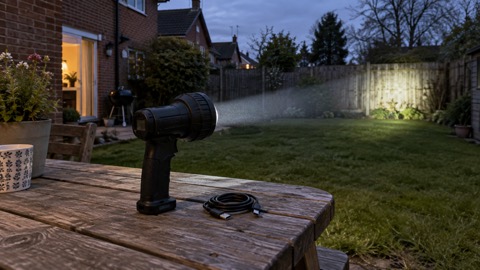 NEBO Master Series SL25
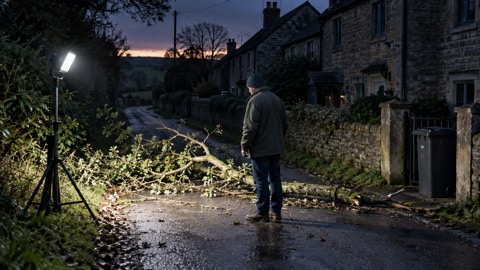 NEBO 8K Flood Light
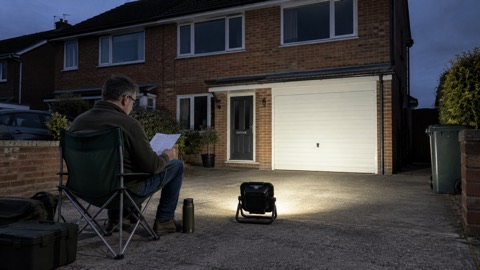 NEBO 5K Floodlight
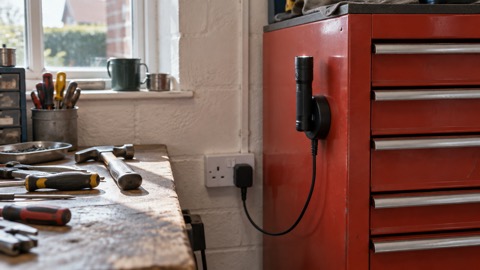 NEBO Torchy 2K Torch
 NEBO Torchy 600 Flex
 NEBO Tac Slyde Torch
 NEBO Slyde King 4K
 NEBO Mycro 900+ Headlamp