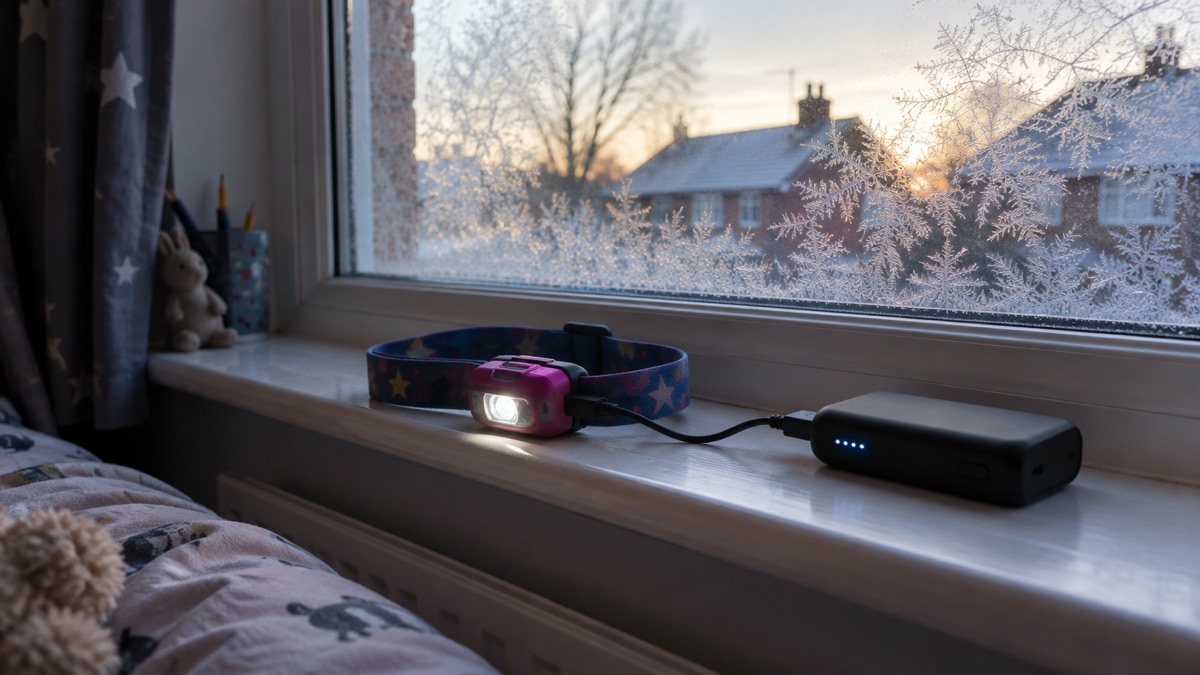
The Ledlenser KidLED4R is a rechargeable children's head torch, and for a household getting ready for power cuts it does one job well: it puts a small, light, hands-free lamp on a child's head so they can move around a dark house, find their way to a parent or read in bed without anyone carrying a candle. It weighs 25g with its battery, gives 40 lumens and a 9 metre beam at full power, and runs for 2 hours at that setting or 18 hours on low1.
It is not a room light and it is not a torch for an adult working outside in the rain. Ledlenser rates it IP44, splash resistant, and states that it is not rated for submersion or heavy rain exposure1. It is also, by the maker's own instruction, for children aged 36 months and over and should be used under direct adult supervision1. Read those two limits first, then decide whether it earns a place in your emergency lighting plan.
What it does bring to a household is a battery you can top up without mains power. Ledlenser states that it charges from any USB power source including wall adaptors, laptops and power banks, and that a full charge takes 60 minutes1. In a power cut, that means a charged power bank and the cable in the box are enough to keep a child's torch working.
What the KidLED4R is and what comes in the box
Ledlenser describes the KidLED4R as the rechargeable version of its KidLED children's head torch range, and lists it in four colourways: blue, red, green and purple1. The colourways are themed designs rather than different products, and the maker notes that the KidLED4R comes in four colours against two on the KidLED24. If you already own a Ledlenser KidLED2, the practical differences are the rechargeable battery, the lighter body and the extra colours.
In the box you get the torch with its built-in battery and a USB-A to Micro-USB charging cable1. There is no wall plug and no spare cell. That is the whole kit, and it is worth understanding before you put it away: the cable is not an accessory, it is the only way to recharge the torch, so it belongs with the torch rather than in a drawer of miscellaneous leads.
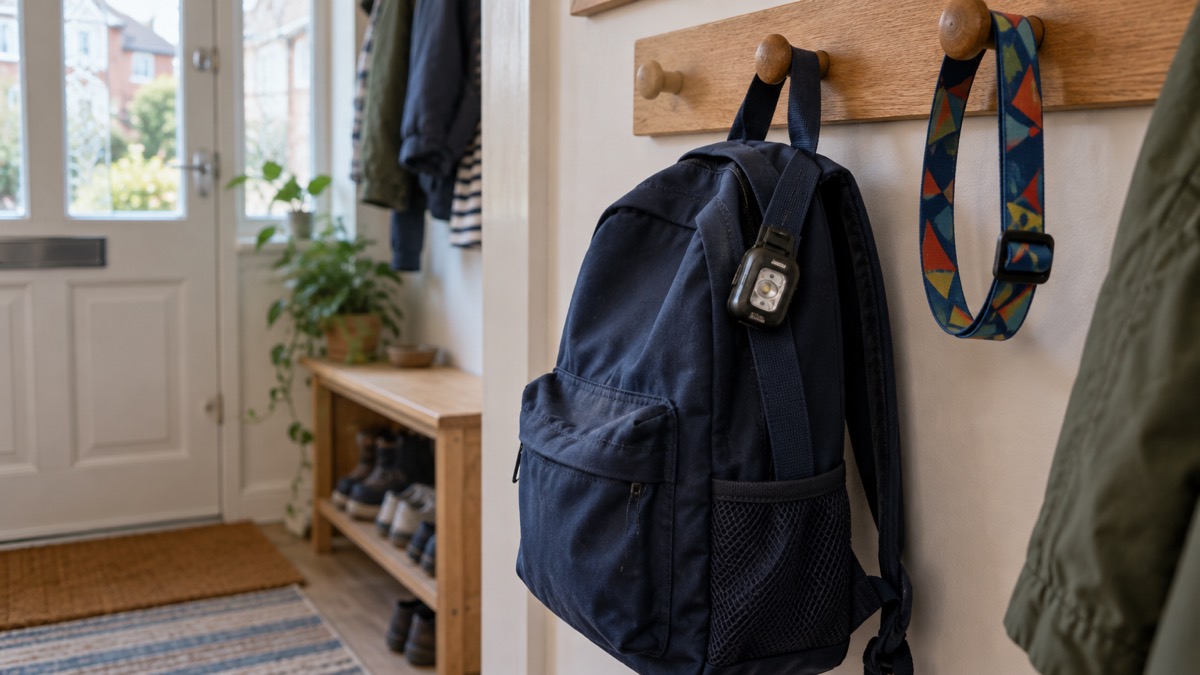
The headband is adjustable and colourful, and the light unit can be removed from it and clipped onto backpacks and jackets3. For a household plan that is more useful than it sounds. A child who is frightened of the dark may not want a strap around their head, but will often accept a small light clipped to a hoodie or a school bag. It also means the torch can live on a bag by the door, ready to be picked up on the way out in a flood or a late-night evacuation.
Specifications: brightness, beam, weight and build
The headline figures are modest by adult standards and that is the point. Ledlenser gives a maximum output of 40 lumens and a maximum beam distance of 9 metres1. The torch weighs 25g with its battery, which the maker describes as the lightest kids head torch in the Ledlenser range2. A 25g lamp on a small head is comfortable for a long time, which matters if a child ends up wearing it through an evening without power.
| Specification | Figure | Source |
|---|---|---|
| Maximum output | 40 lumens | 1 |
| Maximum beam distance | 9 metres | 1 |
| Weight with battery | 25g | 1 |
| Battery | Li-ion, 280mAh, 3.7V, built in, non-replaceable | 1 |
| Charge time | 60 minutes via Micro-USB | 1 |
| Water and dust rating | IP44, splash resistant | 1 |
| Drop tested | 2 metres | 1 |
| Operating temperature | -20°C to +40°C | 1 |
| Materials | ABS | 1 |
| Colour rendering index | 70 | 1 |
| Colour temperature | 6,000K to 6,500K | 1 |
| Warranty | 2 year standard | 1 |
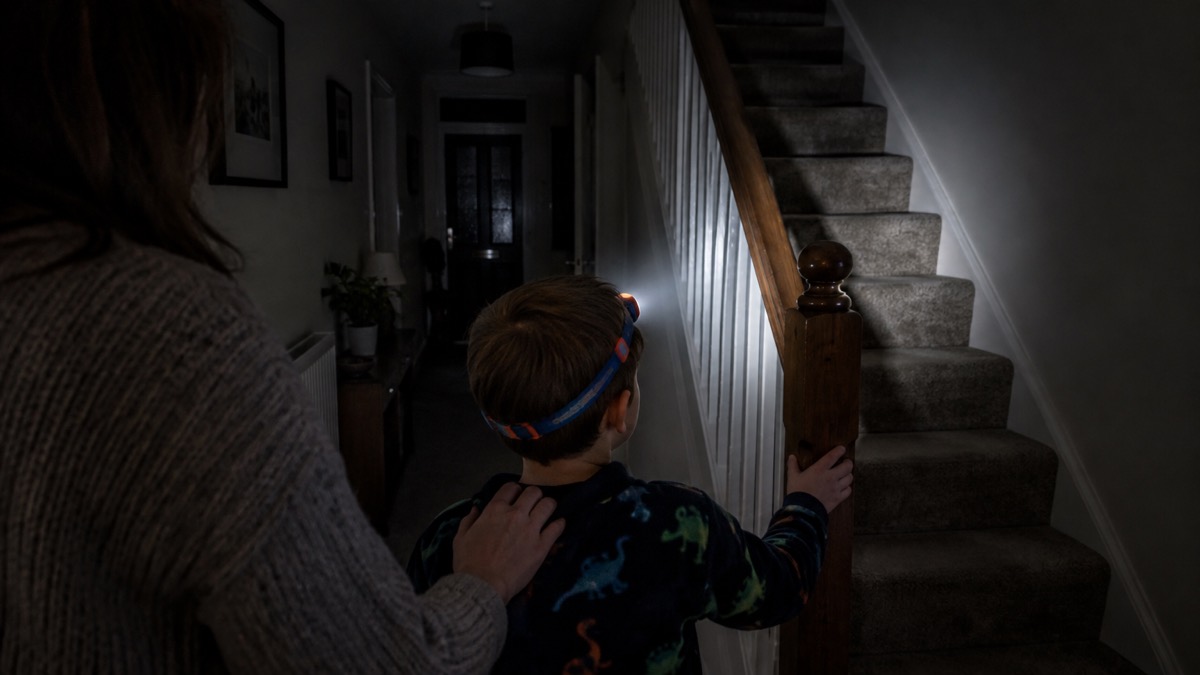
Two of those rows are worth dwelling on for emergency planning. The operating range of -20°C to +40°C means the torch is specified to work in a cold, unheated house in winter, which is exactly the situation a long power cut in January creates1. The 2 metre drop test is a maker's claim about the torch surviving a fall from a child's height onto a hard floor, and it is reassuring rather than a licence to treat it roughly1.
The ABS body is plastic, not metal, which keeps the weight down1. It will not survive being stood on or driven over, so give it a home: a hook by the child's bed, or a pocket in the bag that goes out with you. If you want to understand how lumens and beam distance translate into what a light is actually good for, our guide to lumens, beam distance and run time explains the terms.
Run time: 2 hours at full power, 18 hours on low
Ledlenser publishes two run times for the white light, and they describe two different jobs1. On White Power the torch gives 40 lumens and a 9 metre beam for 2 hours. On White Low Power it gives 5 lumens and a 2 metre beam for 18 hours. The documents give these as separate mode figures rather than a single range, so treat them as two settings with their own performance, not a claim that the torch dims gradually from one to the other.
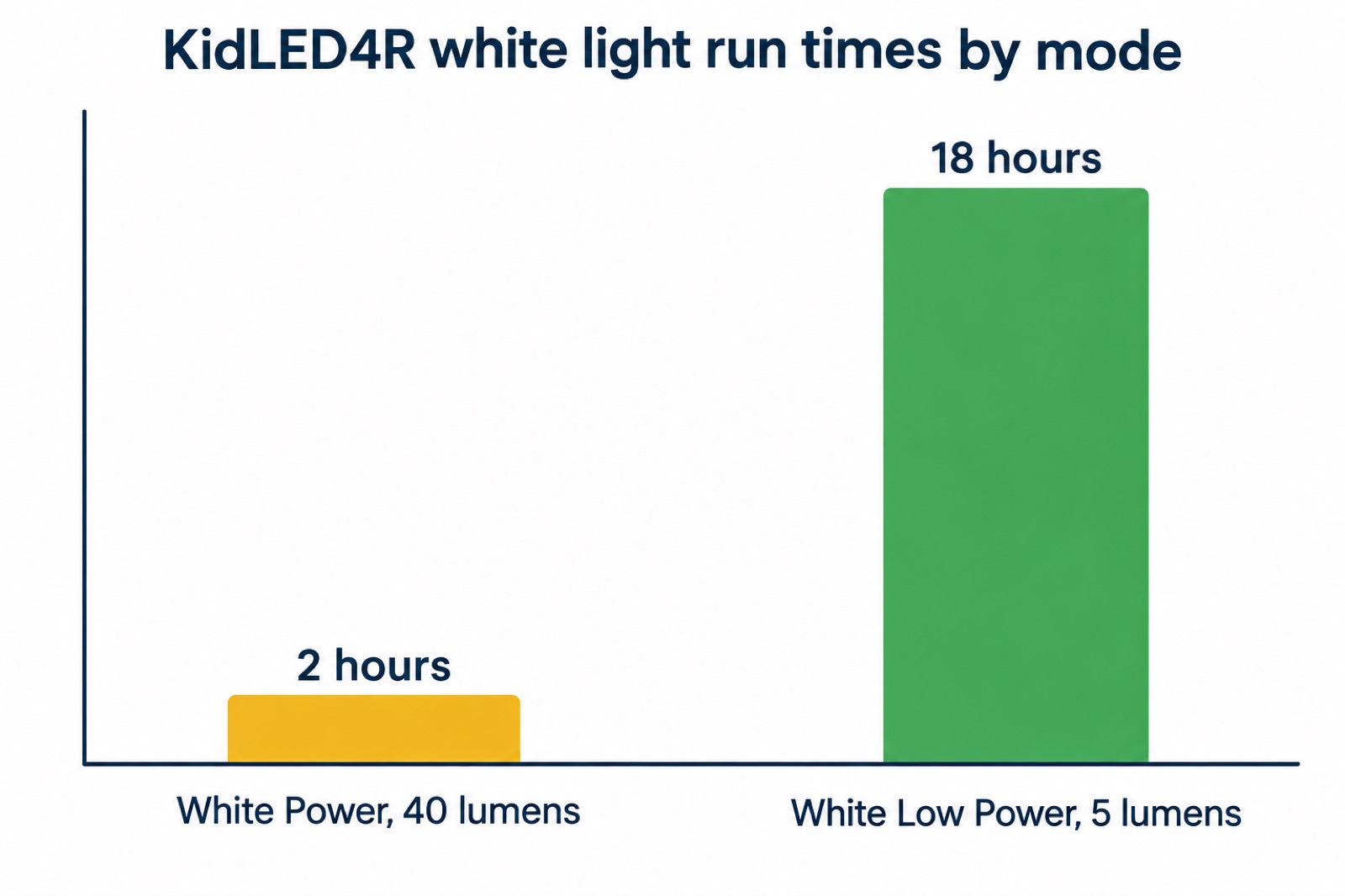
For a power cut, the low setting is the one that earns its keep. Eighteen hours is a full evening and a night, and 5 lumens at 2 metres is enough to see a corridor, find the bathroom or read a book under a duvet. The high setting is for short bursts: checking a garden after a storm, walking to a neighbour's door, or a child who needs to see further than the end of the landing. Teach the child the difference before the night you need it, because fumbling for a second press in the dark is harder than it sounds.
The maker also notes that the KidLED2 has a longer 20 hour low-power runtime against 18 hours on the KidLED4R4. That is a real difference if maximum run time is your priority, and it is the trade for the rechargeable battery and lighter body. Neither figure is a promise about a torch that has been in a drawer for two years: a rechargeable cell left flat for months will not deliver its rated run time until it has been charged and used again. Our page on how long a torch battery lasts on low sets these figures against other lights.
Light modes, beam and colour for a child's use
The KidLED4R has white, red and blue light, with power and blink settings on the coloured modes2. Ledlenser lists White Power, White Low Power, Red Power and Blink, and Blue Power and Blink2. The coloured modes are the ones children enjoy, and they have a practical side in an emergency: a red light is easier on night-adjusted eyes and less likely to dazzle someone else in a small room, and a blinking coloured light is a way for a child to signal where they are.
The white light is cool rather than warm. Ledlenser gives a colour temperature of 6,000K to 6,500K and a colour rendering index of 701. In use that means a bright, slightly blue-white beam that makes colours look reasonable but not vivid. It is fine for moving around, reading and being reassured. It is not a lamp for judging wire colours or reading a map by colour coding, and no child needs it to be.
The beam is deliberately narrow in reach: 9 metres at full power and 2 metres on low1. That is a pool of light in front of the child, not a flood of the room. For lighting a room during a power cut, a lantern or a rechargeable emergency bulb does the job far better, and the head torch complements them by going where the child goes. If you are weighing up the two forms, our comparison of a torch or head torch for a power cut sets out when each is the right pick.
Charging the built-in battery by Micro-USB
The battery is built in and not replaceable: Li-ion, 280mAh, 3.7V1. Charging is by Micro-USB, using the USB-A to Micro-USB cable supplied, and a full charge takes 60 minutes, indicated by the charge indicator on the torch1. Ledlenser states that it charges from any USB power source including wall adaptors, laptops and power banks2. That last point is the one that matters in an emergency, because it means the torch can be refilled from a backup power source when the mains is down.
A sensible household routine is to charge the torch on the same day each month, note that the indicator shows full, and put it back in its place with the cable. A 280mAh cell is small, so it will not take long and it will not flatten a power bank. Keep the cable with the torch, not in a box of odd leads, and check the Micro-USB plug for bent pins or fraying before each charge.
Charging a lithium torch safely is mostly about the charger and the surface. Use a charger you trust, charge on a hard surface rather than a bed or sofa, and unplug when the indicator shows full. Our page on charging and storing rechargeable torches safely covers this in detail, and can the wrong USB charger damage a torch battery answers the question people ask when they cannot find the original plug.
Safe use for children: age, supervision and the safety headband
Ledlenser states that the KidLED4R is suitable for children aged 36 months and over, and should be used under direct adult supervision1. That is the maker's instruction for its own product and it should be followed as written. In practice it means the torch is not a toy to be handed to a toddler, and that an adult should be aware when a younger child is wearing it, particularly around stairs and in the dark.
The headband has a pressure-sensitive safety feature: Ledlenser states that it releases automatically under load to prevent injury during active play2. That is the same principle as a breakaway lanyard, and it is the reason the headband should not be knotted, taped or altered to make it fit more tightly. If it releases during play, refit it as designed rather than improvising a fix.
The other safety point is the one that applies to every light in a child's room: keep it away from bedding and soft furnishings while charging, and do not let a child sleep with a torch switched on under a pillow. The 20 minute auto switch-off helps here, because a torch left on will not run hot or flat for hours, but it is not a substitute for an adult checking3. Our page on torches, candles and children covers the wider picture, including why a head torch is a safer choice than a candle for a child's bedside.
Keeping it ready for a power cut
The KidLED4R fits a household plan as a child's personal light, not as the household's main light. Give it a home where the child can find it in the dark, charge it monthly, and keep the cable with it. Then build the rest of the plan around it: a torch or head torch for each adult, a lantern for the room you will gather in, and a power cut checklist so nothing is forgotten when the lights go out.
For the wider picture of what to do when the power fails, our guide to lighting your home safely when the power goes off walks through it room by room. If there are older or disabled people in the household, lights for older and disabled people in a power cut covers the options that suit hands and eyes that need something easier. And if you are checking any torch or charger you already own, our page on recalled and unsafe torches and chargers explains how to check and report.
Ledlenser backs the torch with a 2 year standard warranty1. Keep the receipt or order confirmation somewhere you can find it, because a warranty claim without proof of purchase is harder to make. The maker's own pages for the green and other colourways carry the full specification if you need to check a figure later, and the Ledlenser brand page lists the rest of the range.
Sources (4)
- KidLED4R Rechargeable Head Torch, Green Dinos, Ledlenser, 2026-10-26
- KidLED4R Rechargeable Head Torch, Red Fire Service, Ledlenser, 2026-10-26
- Kids Torch Bundle, Green, Ledlenser, 2026-10-25
- KidLED4R Rechargeable Head Torch, Blue Police, Ledlenser, 2026-10-26

 NEBO Galileo Tempest 350
 NEBO Newton 500 Torch
 NEBO Davinci 800L
 NEBO Luxtreme SL25R
 NEBO Master Series SL25
 NEBO 8K Flood Light
 NEBO 5K Floodlight
 NEBO Torchy 2K Torch
 NEBO Torchy 600 Flex
 NEBO Tac Slyde Torch
 NEBO Slyde King 4K
 NEBO Mycro 900+ Headlamp