
The EcoFlow STREAM is a home battery system: a wall-mounted battery with solar inputs that stores power from panels or the grid and releases it when the house needs it. For a household preparing for emergencies, its value is simple. When the grid fails, EcoFlow states that the system automatically detects the anomaly and stops feeding current into the grid, and you can plug appliances into its AC outlets to run them from the internal battery or solar power1. It is not a plug-in generator and it is not a whole-house changeover switch, but it is a way to keep a fridge, lights, router and phone chargers alive through a long outage, and to have some electricity every day in the meantime.
The range is broad. Capacities run from 1.92kWh up to 11.52kWh for a single STREAM Ultra or STREAM AC Pro setup, and a system built from up to 6 STREAM 5000 and STREAM AC 5000 units can reach 90kWh2. AC output runs from 2,500W on the STREAM AC 5000 to 3,000W on the STREAM 5000, and up to 3,000W combined from compatible components3. Every model in the range carries a 10-year warranty, and EcoFlow puts expected life at up to 15 years of reliable use5.
The one thing to settle before anything else is installation. In the UK, EcoFlow states that local regulations require the STREAM DIY Cable to be wired into the distribution board by a certified installer or electrician, and that the STREAM 5000 comes with a power cable with stripped ends and no plug, requiring hardwiring by a certified, registered electrician in accordance with UK safety regulations7. This is electrical work, not a DIY job.
What the STREAM does for a household in an emergency
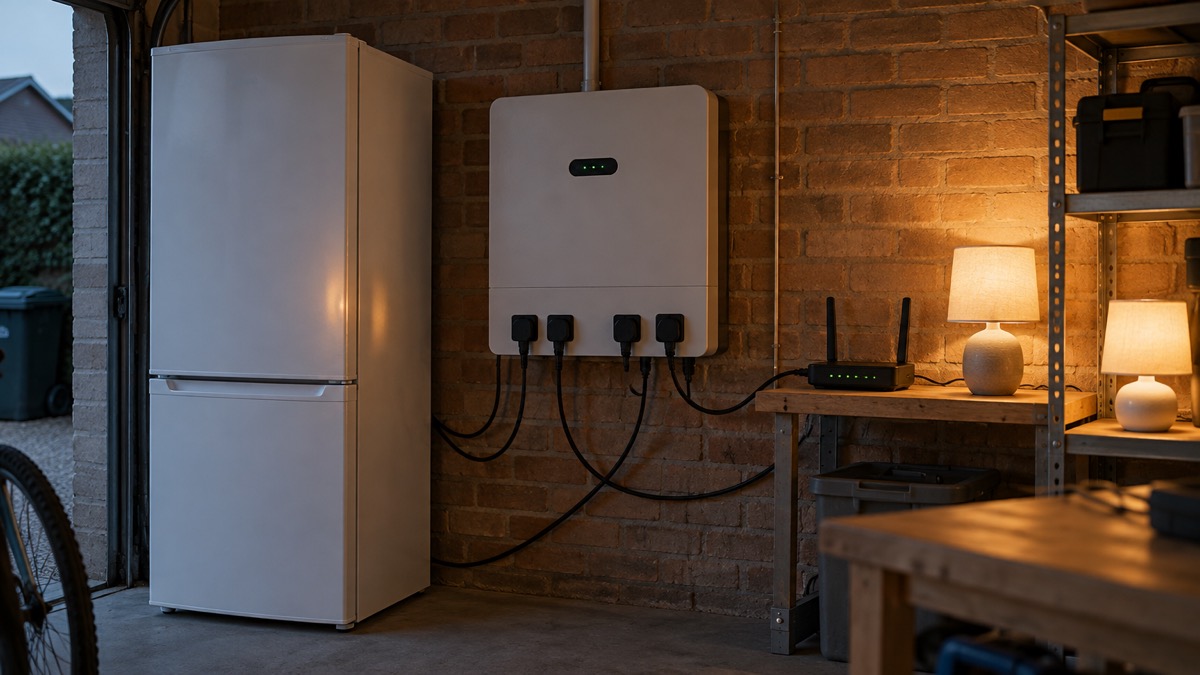
EcoFlow describes the STREAM system as a balcony energy storage all-in-one system made up of solar panels, a STREAM host unit containing the battery and grid-tied inverter, and the EcoFlow app1. In normal running it prioritises solar energy; when solar generation falls short of demand the battery steps in, then the grid, and any surplus is stored in the battery with additional surplus exportable to the grid depending on settings and local regulations9. That is the everyday case: it shifts your own solar into the evening and trims what you draw from the grid.
The emergency case is what matters here. During a power outage the system automatically detects a grid anomaly and stops feeding current into the grid, and appliances can be plugged into the AC outlets to use internal battery or solar power1. In plain terms, the house wiring goes dead as it always does in a cut, but the battery keeps its own sockets live. That is the same principle as a portable power station, at a much larger scale and with a permanent wall mounting.
What that means in practice for a household getting through a cut:
- A fridge and freezer can be cycled on and off the battery's outlets rather than left to warm.
- The router and phone chargers can stay on, so you keep information and contact.
- A few lights and a kettle or microwave can run, within the output limit of your model.
- Solar keeps topping the battery up during daylight, so a multi-day outage in decent weather is not simply a countdown.
It is worth being clear about what it is not. It is not a standby generator and it does not silently keep every circuit in the house energised. The output figures are the ceiling for everything plugged in at once, so a household should decide in advance which appliances matter and rotate them. Our guide to backup power at home sets out how to plan that load, and the power cuts guide covers what to do in the first hour.
STREAM versions and how they differ
EcoFlow sells the STREAM range as several distinct products rather than one box in different sizes. They differ in capacity, output, solar input and whether they can run off-grid at all, and that last point decides whether a model is any use to you in a cut.
| Model | Battery capacity | AC output | Solar input | Off-grid use | Cycle life |
|---|---|---|---|---|---|
| STREAM 5000 | 5024Wh, 100% usable1 | 3000W10 | 5000W, 4 MPPT1 | Yes4 | 10,000 cycles1 |
| STREAM AC 5000 | 5024Wh3 | 2500W AC output3 | up to 4 inputs, 1250W each, 5000W total3 | No8 | 10,000 cycles10 |
| STREAM Ultra | 1.92kWh9 | 2,300W on-grid11 | 2,000W plus 800W via third-party microinverters5 | No9 | 6,000 cycles2 |
| STREAM Ultra X | 3.84kWh to 23kWh9 | 2,300W in parallel mode9 | up to 2,000W plus 800W via microinverters7 | Yes9 | 6,000 cycles to 70%9 |
| STREAM AC Pro | 1.92kWh8 | 1,200W per battery, auto-boost to 2,300W on-grid8 | retrofits to existing solar via AC coupling12 | Yes8 | 6,000 cycles8 |
Two things stand out for preparedness. First, the off-grid column: the STREAM AC 5000 and the STREAM Ultra are listed as not for off-grid use, while the STREAM 5000, STREAM Ultra X and STREAM AC Pro are8. If keeping appliances running through a cut is the point of the purchase, that column matters more than capacity. Second, the STREAM Microinverter is exclusively compatible with products from the STREAM series, so it is not a route into a mixed-brand system13.
EcoFlow also notes that the STREAM 5000 does not support working with PowerStream in the same system, though PowerStream can be used as a third-party inverter connected to the AC outlet or home circuit3. If you already own EcoFlow kit, check compatibility before adding a STREAM unit to it.
Capacity: from 1.92kWh up to 90kWh
Capacity is the number that decides how long a battery carries you. EcoFlow's figures scale widely depending on which unit you start with and how many you stack.
- Single small units: the STREAM Ultra and STREAM AC Pro each start at 1.92kWh and expand from 1.92kWh up to 11.52kWh with up to 6 connected units5.
- Mid range: the STREAM Ultra X scales from 3.84kWh to 23kWh9.
- Large single units: the STREAM 5000 and STREAM AC 5000 each hold 5024Wh, described as 5kWh storage with 100% usable capacity1.
- Whole-system ceiling: a system can support up to 6 STREAM 5000 and STREAM AC 5000 units, with a maximum system expandable value of 90kWh3.
The 100% usable capacity point is worth pausing on. Many battery systems quote a total figure but hold some of it back to protect the cells; EcoFlow states the STREAM 5000's 5kWh is fully usable1. For emergency planning that means the number on the box is closer to the number you can actually draw on.
How much capacity a household actually needs depends on what it wants to keep running and for how long. A fridge, a router and some lights draw far less than a kettle or an electric shower, and the difference between a 1.92kWh unit and a 5kWh unit is measured in hours of that load, not days. Work out your own daily watt-hours first, using the method in our guide to sizing an off-grid solar system, then match it to a capacity in the table above.
AC output: 2,500W to 3,000W depending on the version
Output is the second number that decides what the battery can do for you, and it is the one households most often misread. A battery with a large capacity but a modest output will run a fridge all night but trip if you put the kettle on at the same time.
EcoFlow's figures across the range:
- STREAM 5000: up to 3000W output, described as ready for high-demand appliances like your stove, dryer or kettle, and upgradeable to a maximum AC outlet output of 3000W if you expand capacity with a power pack1.
- STREAM AC 5000: 2500W AC output, with a system maximum of 18000W output across up to 6 units3.
- STREAM Ultra and STREAM Ultra X: 1,200W from a single battery, auto-boosting up to 2,300W on-grid, and 2,300W total in parallel mode8.
- STREAM AC Pro: 1,200W output per battery with auto-boost up to 2,300W on-grid, and dual AC outlets so two appliances can run independently8.
- System level: by combining compatible components, the system can achieve an AC output power of up to 3,000W4.
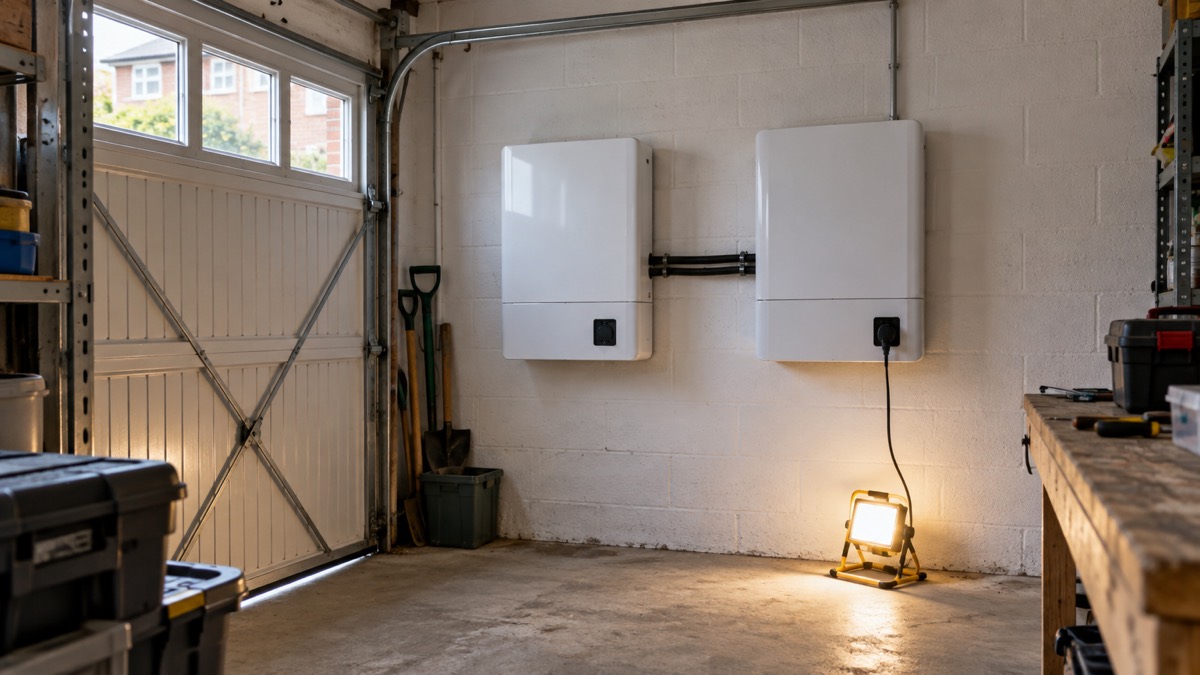
The parallel and distributed modes are how the smaller units reach the higher figures. In parallel mode, one STREAM Ultra plus a second STREAM Ultra or a STREAM AC Pro gives 1,200W from the main unit plus 1,100W from the secondary, a total of 2,300W5. In distributed mode the same total comes from 1,200W main, 800W secondary and 300W grid2. Those are combined figures across two boxes, not a single unit's rating, and a household planning a backup should read them that way.
For a power cut, the practical rule is to add up the appliances you would want on at the same time and keep the total under your model's output. A fridge cycling on its own is well within any of these; a fridge, a kettle and a microwave together are not, on the smaller units. Rotate instead of stacking.
Adding STREAM AC Pro to existing solar panels
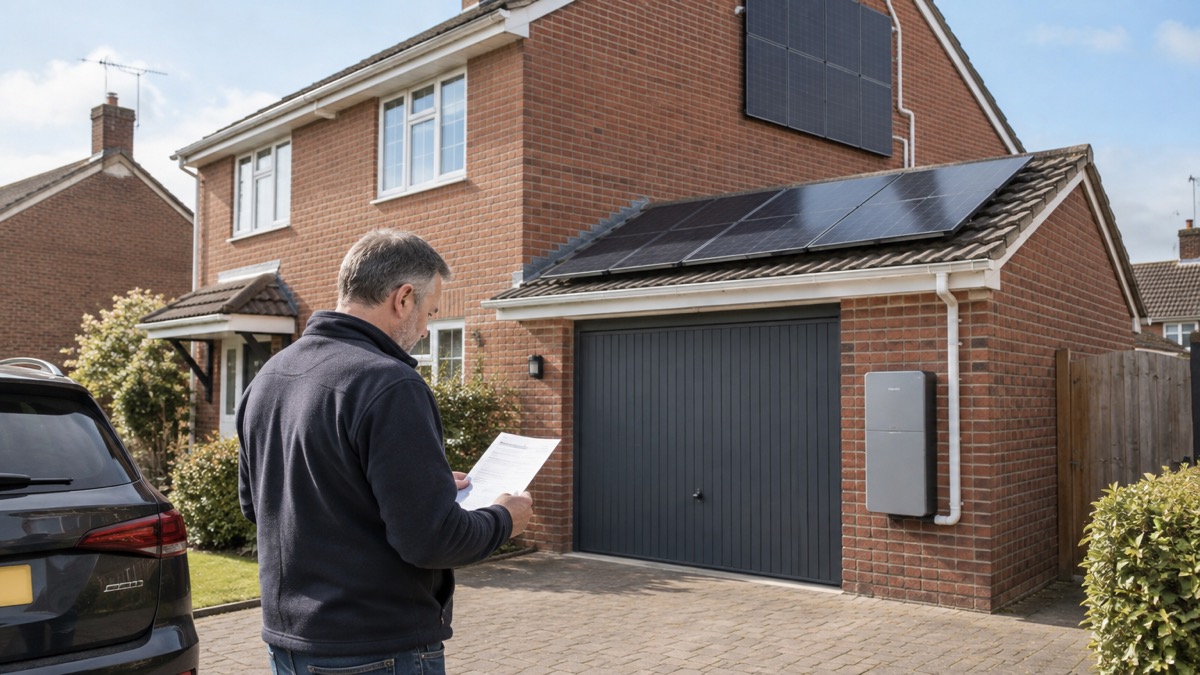
If you already have solar panels on the roof, the STREAM AC Pro is the model designed to join them rather than replace them. EcoFlow states that, due to its AC coupling design, the STREAM AC Pro can be easily retrofitted to existing solar systems to add energy storage, and that by simply adding a smart meter the system can determine when to charge and when to use the AC Pro for household electricity offset12.
The AC charging input is listed at 1050W, and EcoFlow gives annual solar collection of 1,041kWh for the AC Pro8. The STREAM Ultra, by contrast, is listed at 2,218kWh of solar energy annually8. Those are the maker's own figures for its own products and depend heavily on the array and the weather, so treat them as an indication of scale rather than a promise for your roof.
The smart meter is the part that makes the retrofit work, and EcoFlow lists a long set of compatible meters for the STREAM 5000 and STREAM AC 5000, including the EcoFlow Smart Meter, the EcoFlow P1 Meter, the EcoFlow Dual Channel Smart Meter, the EcoFlow and Shelly Smart Meter, Tibber pulse IR, Shelly Pro3EM, Shelly 3EM, Homewizard P1 and Everhome Ecotracker3. Check your meter against that list before assuming a retrofit will work with what you have.
A customer example on EcoFlow's own site describes a STREAM Ultra X and STREAM AC Pro with 4 x 450W wall-mounted solar panels, one above the garage door and three on the gable-end wall, all connected to the Ultra X with the AC Pro linked by a parallel cable, and reports a best day of 6.6kWh of solar generation10. That is one household's report, not a specification, but it shows the shape of a retrofit: existing panels, a battery, a parallel cable and a meter.
For the wider picture of how AC-coupled systems differ from DC-coupled ones, our guide to system types explains the difference, and connecting plug-in solar panels to a battery covers the smaller-scale version of the same question.
Battery life: 6,000 to 10,000 cycles
A battery is only useful in an emergency if it still holds a charge years after you bought it. EcoFlow's cycle figures are the best guide to that, and they vary by model.
| Model | Cycle life | What it means |
|---|---|---|
| STREAM 5000 | 10,000 cycles1 | LiFePO4 chemistry, rated at 10,000 lifecycles4 |
| STREAM AC 5000 | 10,000 cycles10 | Same long-life rating as the 5000 |
| STREAM Ultra | 6,000 cycles2 | Up to 6,000 deep cycles with 70% capacity retention8 |
| STREAM Ultra X | 6,000 cycles to 70% capacity9 | Capacity holds at 70% after the rated cycles |
| STREAM AC Pro | 6,000 cycles8 | Same retention figure across the STREAM range8 |
The retention figure is the one to hold on to. EcoFlow states that the STREAM Ultra X is rated for 6,000 cycles to 70% capacity2, so a unit that has been through its rated cycles should still hold roughly 70% of its original capacity. The STREAM 5000 and the STREAM AC 5000 are rated for 10,000 cycles1, while the STREAM Ultra and the STREAM AC Pro are rated for 6,0005. The STREAM 5000 is a 5kWh capacity unit, which EcoFlow says supports energy needs throughout the day, from day to night10.
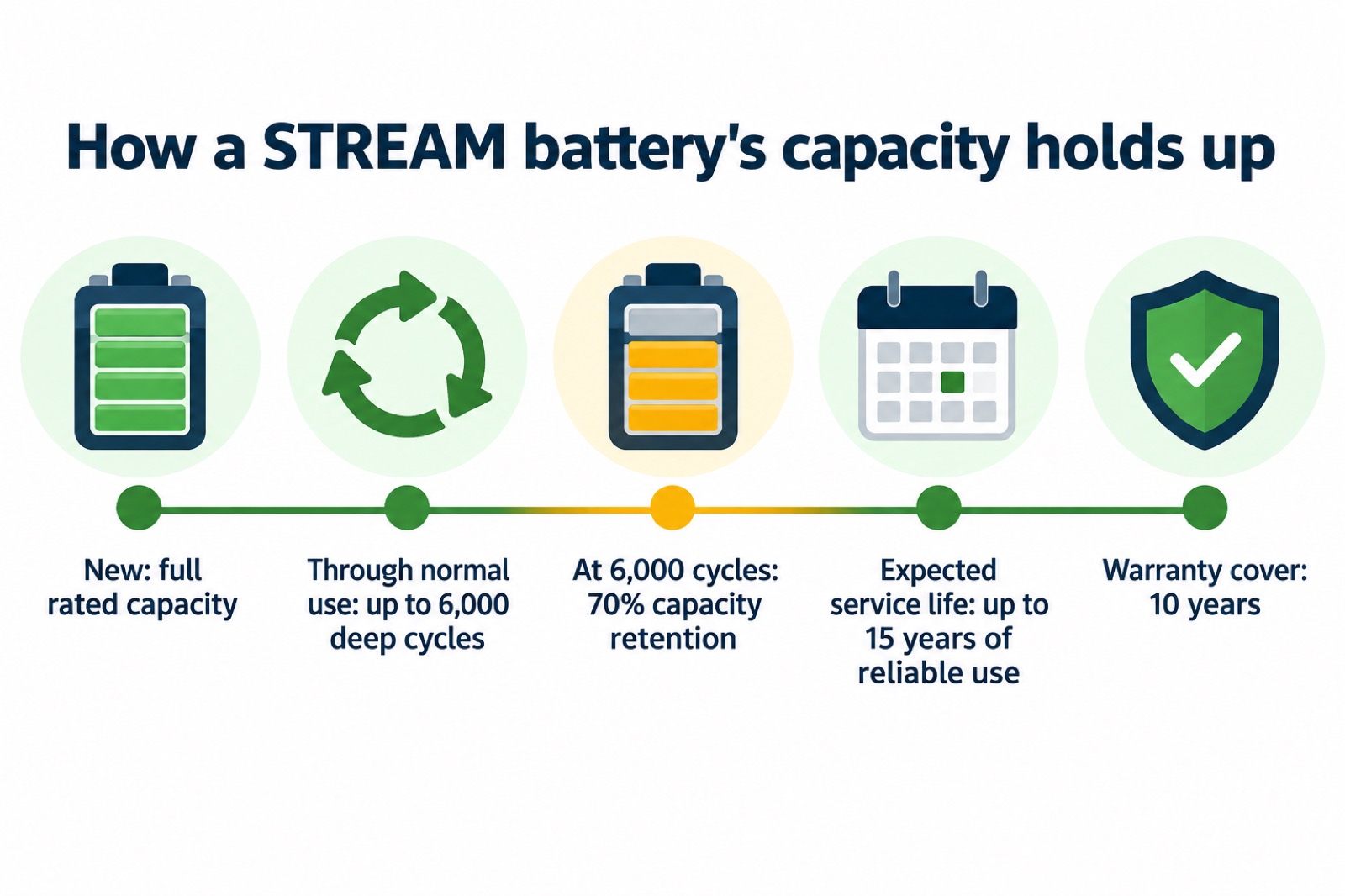
Two practical points follow. First, a battery that is cycled gently, kept within its temperature range and not run flat for long periods will last closer to the top of its rating than one hammered daily. Second, the warranty and the cycle life are different promises: the warranty is 10 years5, while the expected life is up to 15 years of reliable use6. Keep the installation receipt and the commissioning date, because a warranty claim a decade from now will depend on them.
Where it can be installed: IP65 protection and under 30 dB of noise
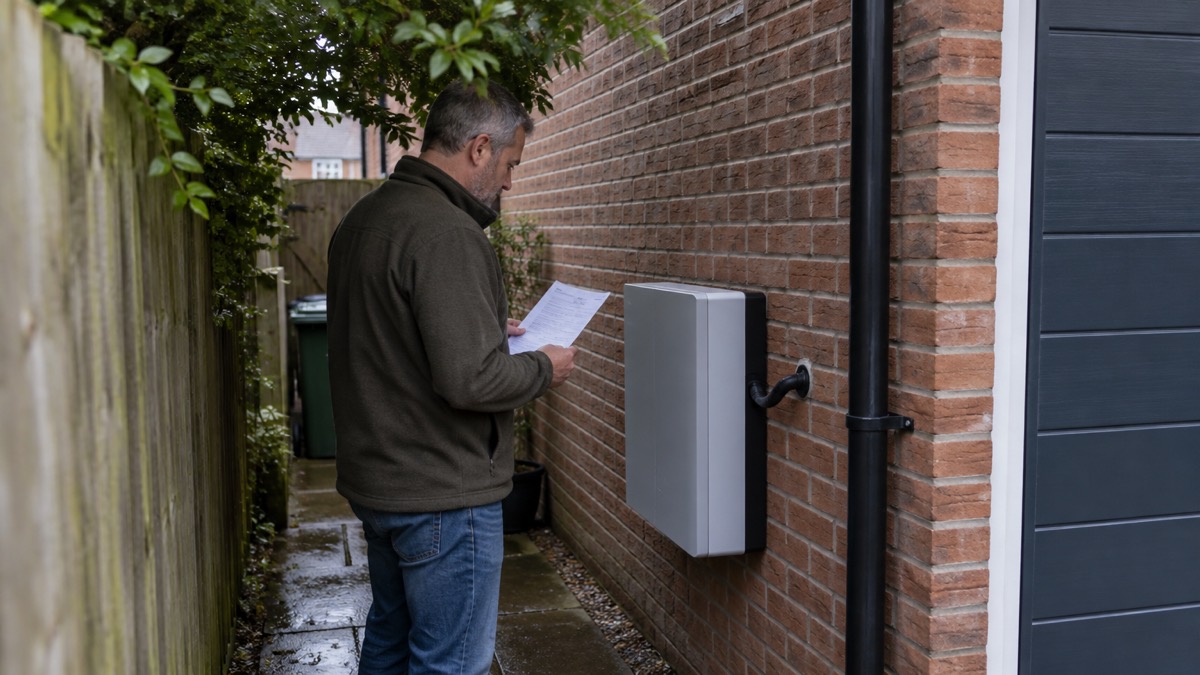
The STREAM units are designed to live on a wall rather than in a dedicated plant room, and the ratings reflect that. EcoFlow lists the STREAM 5000, STREAM AC 5000, STREAM Ultra, STREAM Ultra X and STREAM AC Pro at IP65, usable indoors and outdoors, and recommends installing them in a well-ventilated, cool and shaded place1. The STREAM Microinverter is rated IP67 and can also be used indoors or outdoors, with the same advice to site it in a well-ventilated, shaded and cool location14.
Noise is the other reason they suit a house rather than a shed. EcoFlow lists acoustic noise at under 30 dB for the STREAM 5000, STREAM AC 5000, STREAM Ultra, STREAM Ultra X and STREAM AC Pro1, and describes the range as offering whisper-quiet performance with noise levels as low as 30 dB6. For context a quiet room is around that level, so a unit on a garage wall is unlikely to be heard from a bedroom.
What the ratings do not mean is that any outdoor spot will do. IP65 protects against dust and water jets, not against being submerged, and a wall that takes standing water in a flood is the wrong wall. EcoFlow's own advice points to ventilation, cool air and shade, which rules out a sealed cupboard, a spot in full afternoon sun and anywhere that floods. In a UK context, that usually means a garage wall, a shaded external wall under a soffit, or an outbuilding that stays dry.
The installation itself is where UK rules bite. EcoFlow states that in the UK local regulations require the STREAM DIY Cable to be wired into the distribution board by a certified installer or electrician7, and that the STREAM 5000 is supplied with a power cable with stripped ends and no plug, requiring hardwiring by a certified, registered electrician in accordance with UK safety regulations1. Budget for a qualified electrician as part of the project, and ask about notification to your network operator if the system is grid-connected; our guide to G98 notification explains what that involves.
Keeping it ready: charging, the app and data security
A backup battery is only a backup if it is charged, connected and monitored. Three things keep a STREAM ready between emergencies.
Charging and solar input. The STREAM 5000 takes a 5000W solar input with 4 MPPT trackers, and its PV input voltage is a maximum of 60V, with a single port range of 20V to 60V1. The STREAM AC 5000 supports up to 4 solar inputs at a maximum of 1250W per channel and a total of up to 5000W3. The STREAM Ultra and Ultra X use a 4-MPPT design supporting up to 2,000W, plus 800W more through third-party microinverters5. EcoFlow also states that the STREAM 5000 is compatible with third-party solar panels and can connect up to 12 panels, generating around 5,600kWh annually1. If you want the battery topped up before winter rather than in it, the AC charging input of 1050W on the STREAM AC Pro is the grid-side route8.
The app and connectivity. The batteries connect by Wi-Fi and Bluetooth, and the STREAM 5000 and STREAM AC 5000 add CAN1. EcoFlow states that full functionality requires a connection to Wi-Fi and the EcoFlow app, and that Bluetooth or LAN-only connections will not support features like remote control or historical data tracking7. For emergency planning that has a direct consequence: if the router loses power in a cut, remote monitoring goes with it. Put the router on the battery's outlets, or accept that you will be reading the unit's own display.
Data security. EcoFlow states that it protects your data using top-level security measures certified by global standards including TRUSTe, NIST, ISO and more2. The system is a networked device in your home, so treat it like one: a strong unique password on the EcoFlow account, two-factor authentication where offered, and router firmware kept current. Our guide to cyber attacks and major IT failures covers the wider household picture.
Warranty and support: 10 years on the STREAM range
Every STREAM model carries a 10-year warranty: the STREAM 5000, STREAM Ultra, STREAM Ultra X, STREAM AC Pro and STREAM AC 5000 are all listed at 10-Year1, and the STREAM Microinverter's warranty lasts for 10 years14. EcoFlow pairs that with an expected life of up to 15 years of reliable use, backed by the 10-year warranty6.
Support is listed as lifetime support on EcoFlow's UK store, alongside warranty protection16. The STREAM Parallel Cable is also listed with lifetime support and as available to buy in the UK with fast and free shipping6. For a household, the practical steps are:
- Keep the commissioning paperwork. The installer's certificate, the date of installation and the model and serial numbers are what a warranty claim rests on.
- Register the product with EcoFlow after installation if the app or paperwork asks you to.
- Record who installed it. The UK hardwiring requirement means a certified installer or electrician did the connection7, and their details belong with the warranty documents.
- Check the app and firmware periodically so the unit is not left on outdated software.
The 10-year warranty is a long time in household terms, and it is worth setting a reminder to check the battery's reported capacity each year. If it has fallen noticeably below the retention figure for its cycle count, that is the point to raise it with EcoFlow while the warranty is still running.
Where the STREAM fits a household plan
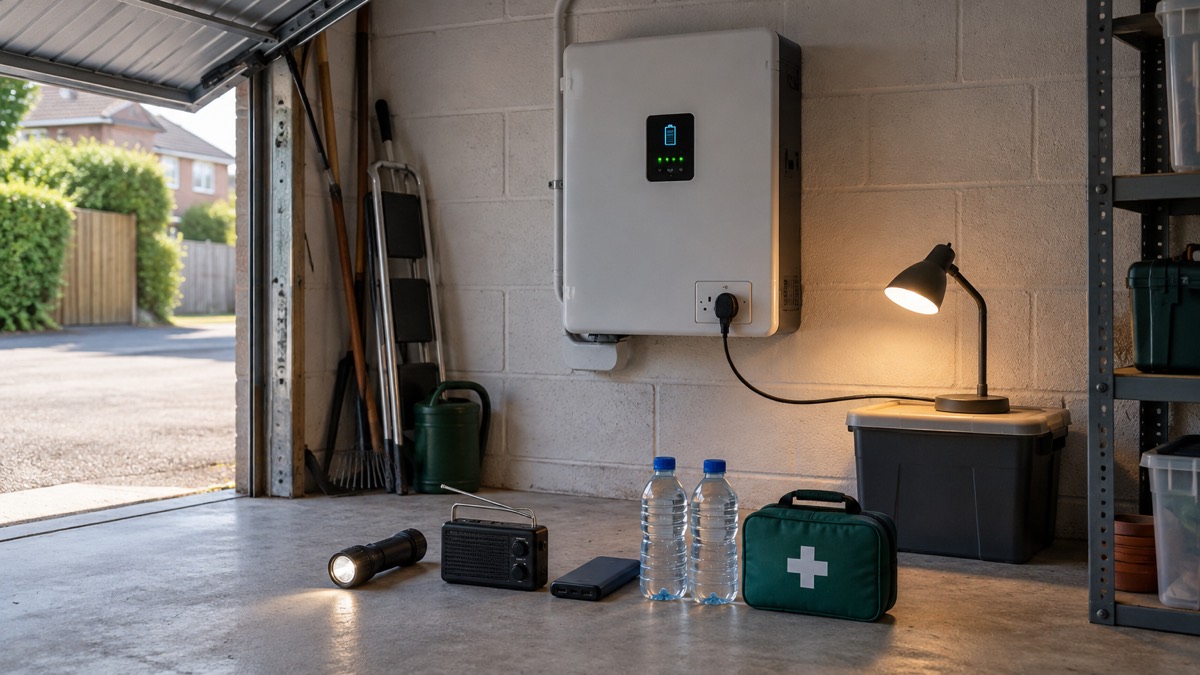
The STREAM is best understood as one layer of a household's electricity plan rather than the whole of it. It suits a home that already has, or intends to add, solar panels and wants to store that power and keep a few circuits alive in a cut. It does not suit a household that wants a plug-in solution for a flat with no outdoor space, and it does not replace a torch, a battery radio and a written plan.
For a household building up from nothing, the sensible order is a basic emergency kit and a power cut plan first, then a portable power station for small devices, then a fixed home battery if the budget and the building allow. Our off-grid solar kit checklist sets out what a solar and battery installation needs, and the self-reliance section covers the wider ground of living with less reliance on the mains.
EcoFlow's own range sits alongside the STREAM: the EcoFlow brand page lists the maker's other products, and the portable models such as the DELTA 3 and RIVER 3 cover the smaller, plug-in end of the same job. Which one suits depends on whether you need a fixed installation with solar input or a box you can carry to the shed.
Sources (17)
- STREAM Series Solar Battery Storage, EcoFlow, 2026-10-25
- STREAM Series Plug-In Solar Battery, EcoFlow, 2026-10-25
- STREAM AC Solar Battery, EcoFlow, 2026-10-25
- Solar Battery Storage, EcoFlow, 2026-10-25
- STREAM Ultra Pro, EcoFlow, 2026-10-25
- STREAM Parallel Cable, EcoFlow, 2026-10-25
- STREAM Ultra X Home Solar Battery, EcoFlow, 2026-10-25
- STREAM AC Pro AC, EcoFlow, 2026-10-25
- STREAM Ultra X, EcoFlow, 2026-10-25
- EcoFlow UK, EcoFlow, 2026-10-29
- STREAM Ultra Pro Home Solar Battery, EcoFlow, 2026-10-25
- EcoFlow Shelly Smart Meter, EcoFlow, 2026-10-25
- STREAM Microinverter, EcoFlow, 2026-10-25
- STREAM Garden Ground Kit, EcoFlow, 2026-10-25
- STREAM Adjustable Facade Kit, EcoFlow, 2026-10-25
- Alternator Charger Extended Fuse Cable, EcoFlow, 2026-10-25
- Glacier Plug-In Battery, EcoFlow, 2026-10-25

 Anker SOLIX PS200 Solar Panel
 Morningstar SunSaver Duo
 Sterling Power ETFE Solar Panel
 Victron SmartSolar MPPT RS