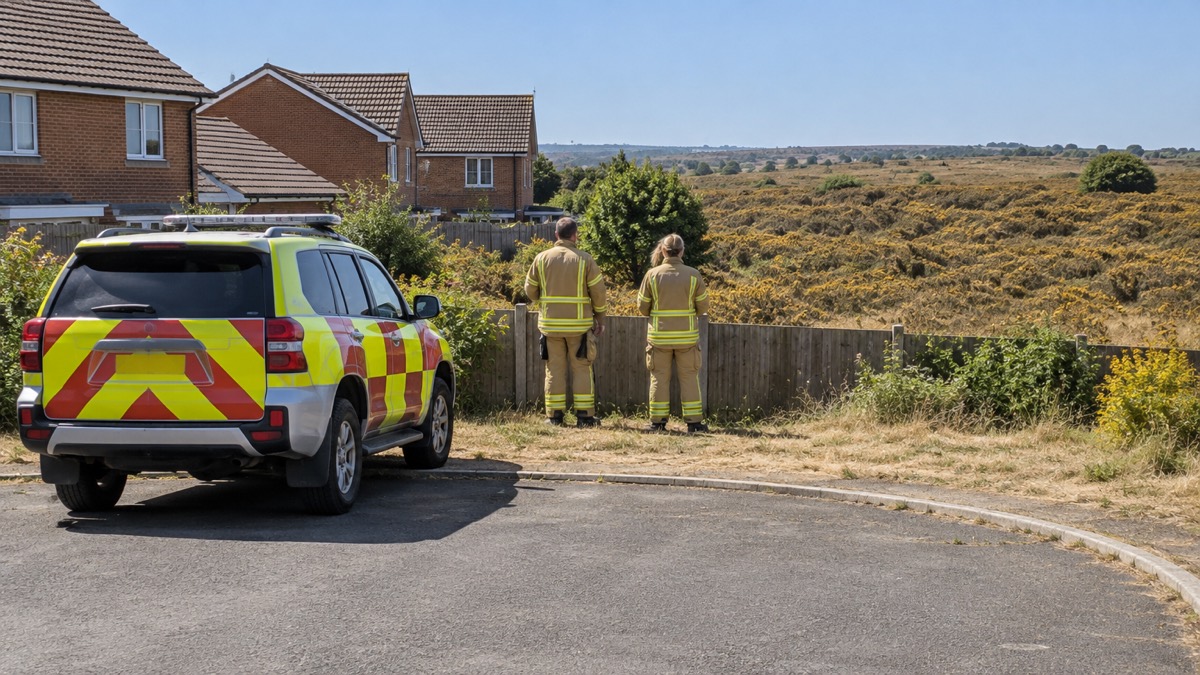
If your home stands near heathland, moor, grassland or forest, wildfire is a risk you can do something about, and Firewise is the organised way to do it. Firewise Communities is an international programme, based on research by the world's leading fire experts on how homes ignite in a wildfire, that encourages neighbours to take responsibility together and take practical steps in the areas around homes and gardens1. In the UK it runs as Firewise-UK, a community risk reduction programme currently centred on Dorset's heaths, supported by Dorset & Wiltshire Fire and Rescue Service, the Dorset Police and Crime Commissioner and the Dorset Heaths Partnership2.
The core of the approach is simple: wildfires burn in the UK every year, more people now live where wildfires are a risk, and most of those fires are started by human activity rather than by nature3. Only 10 to 15 per cent of wildfires happen on their own in nature, according to Devon and Somerset Fire and Rescue Service, which means the great majority are preventable4. A Firewise community works with its fire and rescue service to reduce the fuel around homes, agree a plan, and learn what to do if fire does come close.
This page covers what a Firewise community is and what it does, how to start a group with your neighbours, the practical work around your home, why dry weather drives the risk, and what to do if you see a fire or smoke in the countryside.
What a Firewise community is and what it does for your home
Firewise Communities is described by Dorset & Wiltshire Fire and Rescue Service as an international programme which empowers neighbours and communities, encouraging community spirit, resolve and willingness to take responsibility and work together to reduce their risk from wildfire3. It is based on research by the world's leading fire experts on the ignition of homes from wildfire, which matters because it means the actions it recommends are aimed at the specific ways houses actually catch fire: embers and flames reaching flammable material in and around the building, not a wall of fire sweeping through a whole street1.
The benefits the fire service lists for a participating community go beyond the physical work. Joining makes your own home and your neighbours' homes more resilient to wildfire, helps build community resilience and good citizenship, and gives the community a plan to work to. Communities become proactive in reducing their risk, learn more about wildfire, and get opportunities to connect with Firewise Communities in other areas and countries1. In practice that means a neighbourhood that knows what to clear, who is vulnerable, and who calls whom, rather than a street of households each improvising on a hot, dry afternoon.
Firewise-UK encourages communities to work together to reduce their risk by taking practical steps in the area around the home and garden2. Those steps, the cleared zone, gutter clearing and garden waste management, are set out in the sections below, and they are the same whether or not your neighbourhood formally joins the scheme. What the scheme adds is the group, the plan and the link to the fire service.
Starting a Firewise group with your neighbours
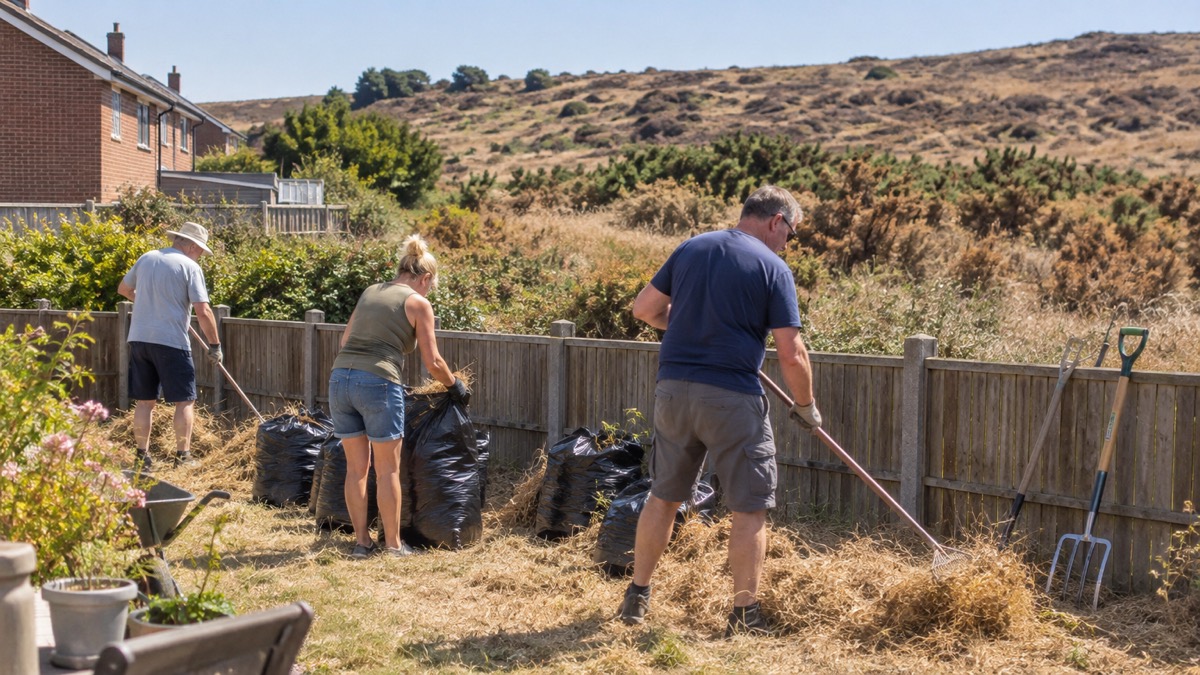
The first step is to raise it with the people who share the risk. Dorset & Wiltshire Fire and Rescue Service's own advice on recruiting neighbours is direct: "Just ask them! Explain what Firewise is and where they can find out more information. Explain the criteria and benefits and what will be expected."3 A conversation over the garden fence, a note through doors or an item at a residents' association or parish council meeting all work. The message to get across is that the work is practical, local and shared, and that the fire service stands behind the approach.
To take it further, Oxfordshire Fire and Rescue Service publishes a referral route: complete the referral form to contact the Firewise team8. In Dorset, communities interested in joining Firewise should contact the Dorset Heaths Partnership on 01202 6427872. The initiative there is supported by Dorset & Wiltshire Fire and Rescue Service, the Dorset Police and Crime Commissioner and the Dorset Heaths Partnership, so the partnership can bring both fire expertise and community policing links to a new group2.
A Firewise group is a form of community emergency group, and the same foundations apply: agreeing who does what, keeping a list of members, and thinking about vulnerable neighbours who may need help clearing their ground or leaving in a hurry. A neighbourhood phone tree is a natural companion, because the moments when wildfire risk peaks, hot dry weekends, are exactly when a warning needs to spread quickly. If your group wants a wider frame for its work, the community resilience guide sets out how these schemes fit together.
One thing to be clear about: Firewise in Oxfordshire's listing also covers a separate, individual programme for children who have shown an interest in fire or are experimenting with it, delivered by a trained Firewise adviser who works with carers and young people on the consequences of fire-setting8. That is a fire service intervention for a young person, not a neighbourhood scheme, but it is worth knowing about if your community's wildfire problem includes deliberate fire-setting, which the section on causes below addresses.
A cleared zone of 10 metres around your home
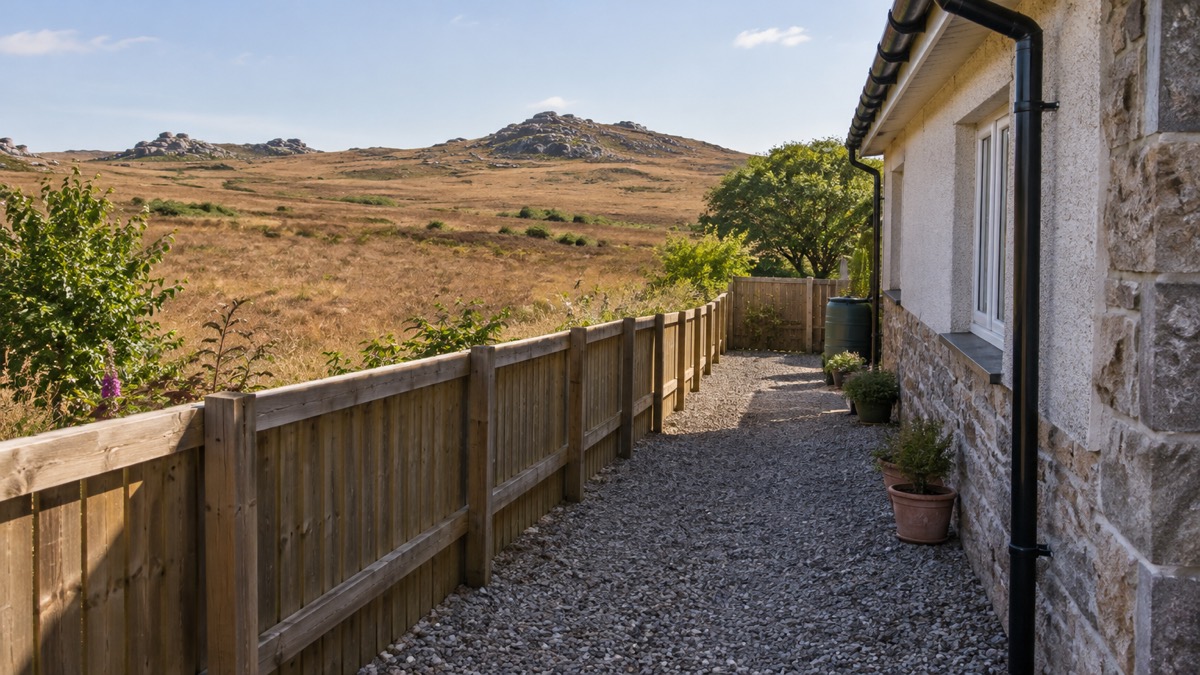
The single most important physical measure is a cleared zone around the house. The Scottish Fire and Rescue Service calls this the 10-metre rule: "Aim for a cleared zone of 10 meters around all sides of your home."5 The Scottish Government's Ready Scotland campaign gives the same figure, advising householders to clear a 10 metre area around all sides of the home9, and Devon and Somerset Fire and Rescue Service tells rural property owners to make a 10-metre safety zone, removing combustible materials, wood piles, felled trees and other debris10. North Yorkshire Fire and Rescue Service phrases it as a cleared zone of 5 to 10 foot around all sides of your home, removing combustible materials such as felled trees and long grass11, so the documents differ slightly in the distance they name, but the direction is identical: clear a buffer of several metres, on every side.
The zone is defined as a strip of land where trees, shrubs and flammable materials are cleared away, creating a barrier between your home and a potential fire5. Ready Scotland describes it as a cleared strip of land that acts as a barrier between your home and a potential fire9. The point is not to make your garden bare but to break the chain of fuel between the open land and your walls: a fire running through dry grass or heather slows and drops when it reaches cleared ground, and embers landing on cleared ground find less to ignite.
What to remove and what to do with it:
- Felled trees, long grass, wood piles and other debris within the zone10
- Trees and shrubs close to the building, thinned or cleared so they cannot carry flame to the walls5
- Fuel tanks given extra space: Devon and Somerset Fire and Rescue Service advises clearing at least a three-metre space around any fuel tank, and storing tanks on non-combustible material such as gravel or concrete10
Clearing gutters, cuttings and garden waste
The cleared zone only works if the small fuel is gone too. North Yorkshire Fire and Rescue Service advises clearing flammable debris such as dead leaves from guttering11: in a wildfire, wind-blown embers can travel well ahead of the fire front, and a gutter full of dry leaves is exactly the fine, dry fuel an ember ignites. The same logic applies to anything else that collects dry material around the building, so make gutter clearing part of the routine before and during dry spells, not a one-off.
Garden waste needs handling as well. North Yorkshire Fire and Rescue Service is blunt about cuttings: "don't throw cuttings onto adjacent land or let them dry out in your garden, it's fuel in the event of a fire."11 A pile of clippings left to bake through a dry spring becomes a ready-made fuel bed against your boundary. A Firewise group can turn this into a shared task, arranging a joint clearance day so that cuttings are removed or safely composted across several properties at once, including for neighbours who cannot manage the work themselves.
A simple seasonal checklist for each household:
- Clear dead leaves and debris from guttering11
- Remove or safely store cuttings rather than letting them dry out in the garden11
- Keep the 10-metre zone free of wood piles, felled trees and long grass10
- Check the boundary with open land after storms and after the spring growth flush, when new fuel appears
Why dry, hot weather raises wildfire and grass fire risk
Wildfires can spread quickly and threaten homes and infrastructure, particularly during warm, dry weather, according to the UK Government's Prepare campaign12. The mechanism is straightforward: strong winds, high temperatures or low rainfall can all leave trees, shrubs, fallen leaves and grass dry and primed to fuel a fire4. Prolonged periods of hot, dry weather create what the Scottish Fire and Rescue Service calls a tinderbox environment, where even a small spark can easily ignite a wildfire13.
Heat is not the only trigger, and this surprises many people. The Scottish Fire and Rescue Service warns that cold, dry days with strong sunshine are also risky, because the combination of low humidity and strong winds can quickly dry out vegetation and fuel wildfires13. A bright, breezy March day on the moors can be as dangerous as an August afternoon, which is why moorland fires often make the news in early spring.
| Condition | Effect on risk | Source |
|---|---|---|
| Warm, dry weather | Fires spread quickly and threaten homes and infrastructure12 | Prepare campaign |
| Prolonged hot, dry spells | A tinderbox environment where a small spark can ignite a wildfire13 | Scottish Fire and Rescue Service |
| Cold, dry, sunny, windy days | Low humidity and strong winds quickly dry out vegetation13 | Scottish Fire and Rescue Service |
| After prolonged heatwaves | Ground still extremely dry and can catch fire easily; wind helps fires spread14 | Surrey Fire and Rescue Service |
| More visitors in warm weather | Greater risk of fire in the countryside15 | Mid and West Wales Fire and Rescue Service |
Two points from that table deserve emphasis. First, the danger does not end when the heatwave does: Surrey Fire and Rescue Service warns that after prolonged heatwaves the ground is still extremely dry and can catch fire easily, and wind also helps fires spread14. Second, risk rises with people as well as weather: Mid and West Wales Fire and Rescue Service notes that warmer weather and increased numbers of people visiting the countryside create a greater risk of fire15, and asks everyone to be aware of the heightened risk of wildfires and grassland fires in the summer months15.
The trend is upward. The Welsh Government's resilience assessment states that the wildfire risk is increasing, the wildfire season is getting longer, and more wildfires are occurring simultaneously, especially during summer heatwave conditions16. If your neighbourhood is on the edge of open land, assume the risk is growing rather than shrinking, and plan accordingly. Our page on heatwaves and drought covers the wider household steps for hot, dry periods.
Most wildfires are started by people
Most wildfires in the UK are caused by human activity, according to the UK Government's Prepare campaign12. Devon and Somerset Fire and Rescue Service puts a number on it: only 10 to 15 per cent of wildfires happen on their own in nature4. The Welsh Government agrees that the majority of wildfires in Wales are caused by humans, either deliberately or accidentally16, and the Scottish Fire and Rescue Service says most are started by human activity, on purpose or by accident13.
The accidental causes are consistent across every fire service that lists them: discarded cigarettes, barbecues, campfires and glass. Essex Prepared notes that wildfires in the UK are commonly triggered by human activities such as discarded cigarettes, campfires or intentional burning17. The London Fire Brigade is succinct about grass fires: "Anything burning can start a grass fire. Cigarettes and barbecues are commonly to blame."18 Cumbria Fire and Rescue Service and Greater Manchester Fire and Rescue Service both note that some fires are started deliberately, but most are due to carelessness19.
What every fire service asks households and visitors to do:
- Never take a barbecue on the moors or to the countryside; Greater Manchester Fire and Rescue Service says it poses a huge risk of fire and a risk to the environment6
- Avoid using disposable barbecues in open countryside, parks and moorland areas20
- Do not discard cigarettes, matches or glass bottles, as they can ignite dry vegetation20
- Never throw a cigarette butt out of a car window; it could ruin whole fields of crops6
- Take bottles and glass home or put them in the waste or recycling bin, since glass in sunlight can ignite dry vegetation6
Some fires are deliberate. Greater Manchester Fire and Rescue Service says some wildfires in its area are believed to be started deliberately, either maliciously or by people having barbecues21. Deliberate fire-setting is a crime: Mid and West Wales Fire and Rescue Service states that starting a deliberate fire is a crime and could result in a criminal record22. In Northern Ireland, the fire and rescue service, police and land agencies have stated that where a fire is found to have been maliciously started it will be fully investigated by police, and when identified, those responsible can expect to be arrested and brought before court23.
That is where a Firewise group's community links earn their place. Report anyone acting irresponsibly or carelessly with fire in the countryside, as Devon and Somerset Fire and Rescue Service advises4. Surrey Fire and Rescue Service lists what is worth reporting: anti-social behaviour, campfires, large quantities of litter or fly tipping, use of disposable barbecues, broken gates, cropped locks, burning of waste material and arson14. Any suspicious behaviour should be reported to the police immediately, as nidirect advises in Northern Ireland24. In Greater Manchester and surrounding areas, the Be Moor Aware campaign lets you report deliberate fire-setting anonymously to FireStoppers25. Suffolk Fire and Rescue Service also asks residents to report suspicious activity as part of its work to stop arson26.
If you see a fire in the countryside: leave and call 999
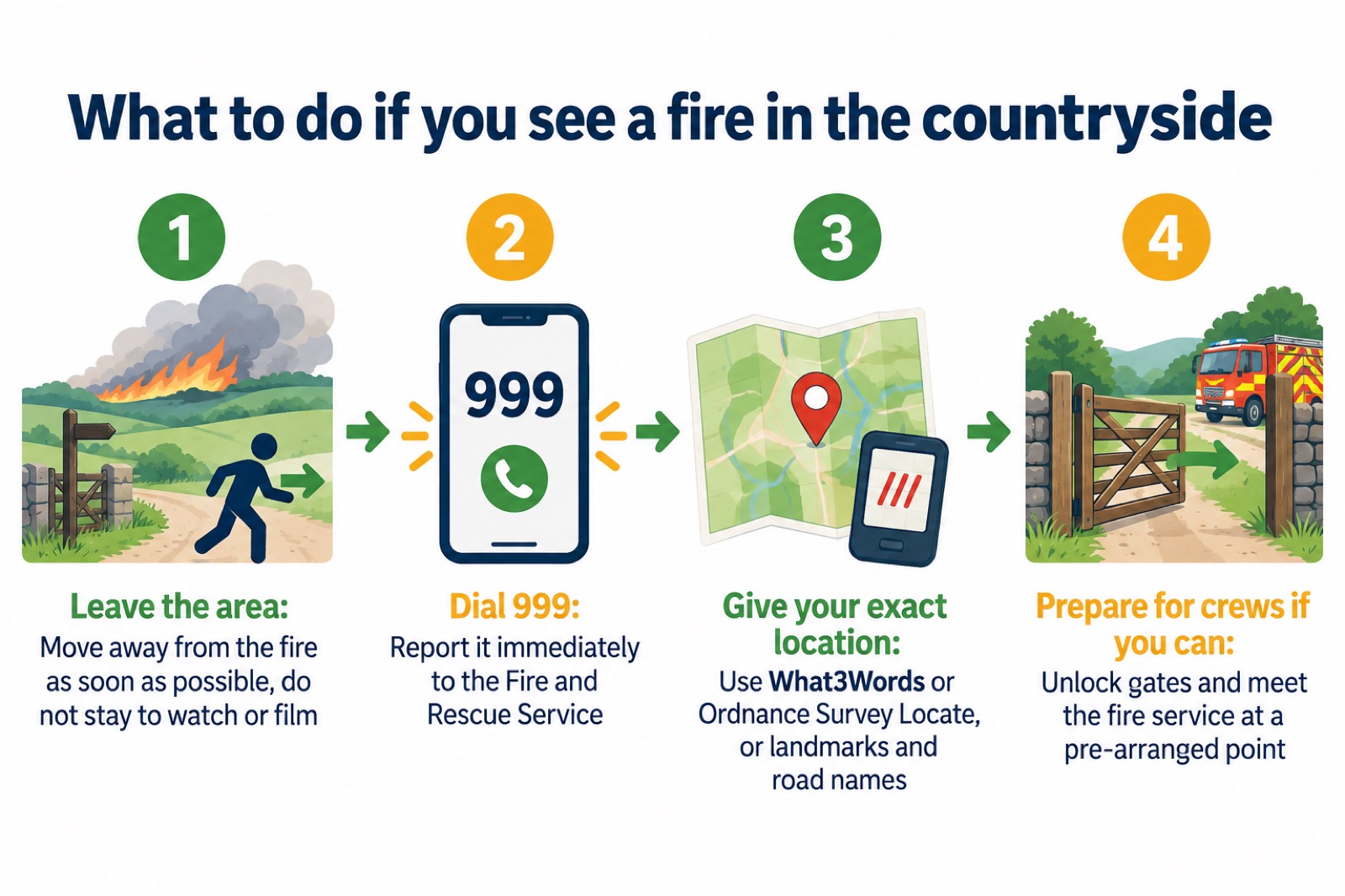
The instruction from every fire service in the UK is the same and it comes in two parts. Greater Manchester Fire and Rescue Service: "If you see a fire in the countryside, report it immediately. Leave the area as soon as possible and dial 999"6. Cheshire Fire and Rescue Service asks people to alert the service to fires as early as possible via 999 calls27. In Northern Ireland, the Northern Ireland Fire and Rescue Service asks everyone to remain vigilant to fire in the countryside and to call 999 immediately28, and nidirect gives the same instruction: if you see a fire in the countryside, phone the Fire and Rescue Service on 99924.
Do not tackle the fire yourself. Wildfires are uncontrolled and unpredictable and can spread very quickly, in the London Fire Brigade's words18, and they are classified as large, uncontrolled outdoor fires exceeding 1,000 square metres of burned area13. They pose a significant threat to the safety of firefighters and members of communities, the Scottish Fire and Rescue Service warns, and they place a huge drain on resources that might be required at another emergency13.
Getting crews to the right place is the practical problem in open country. North Yorkshire Fire and Rescue Service advises providing information to fire control from apps such as What3Words or Ordnance Survey Locate in rural areas, to help fire and rescue services find your exact location11. Suffolk Fire and Rescue Service says calls for fire service assistance should be as quick as possible and clear about location, and calls the what3words app an excellent tool for locating an open space incident, with landmarks, road names or topographical features also helping26. If you can, Cumbria Fire and Rescue Service adds, prepare for the arrival of the fire and rescue service at the pre-arranged meeting point, by unlocking gates and similar steps19.
Getting ready to leave your home if a wildfire comes close
Wildfires are a serious risk to life and may cause severe environmental and economic damage, Ready Scotland warns9, so households near open land should think through an evacuation before it is needed. North Yorkshire Fire and Rescue Service advises considering the essentials you would need if you have to leave your property, including medication, money, clothing, food, valuables and pets11. That list is the same grab bag that serves a flood or a power cut, so one bag covers several emergencies: our emergency kit page sets out the full household version.
A household wildfire plan needs only a few decisions made in advance:
- What goes in the grab bag: medication, money, clothing, food, valuables and pet essentials11
- Where you would go, and how you would get there, agreed with everyone in the household
- Who in the neighbourhood needs help leaving, matched to who will give it, through the group's checking on vulnerable neighbours arrangements
- How the warning spreads, using a phone tree or group message
If fire reaches a caravan or mobile home, the Northern Ireland Fire and Rescue Service's instruction is the standard one: if there's a fire, get out, stay out and call the Fire and Rescue Service immediately29. The same rule applies to a house: once you are out, stay out. Greater Manchester Fire and Rescue Service offers free Home Fire Safety Assessments to households in its area, which is a way to check the ordinary indoor fire risks at the same time as you plan for wildfire30.
Wildfire smoke and your health
Wildfire smoke is a genuine health hazard, not just a nuisance. Wildfires can produce smoke which contains a complex mixture of pollutants, including particles and gases that can harm human health, according to NHS inform in Scotland31. The UK Health Security Agency states that wildfires pose multiple health risks, including injuries, respiratory and cardiovascular effects from smoke exposure, and mental health issues, and that smoke from wildfires can degrade air quality significantly, leading to increased air pollution-related mortality32. In Northern Ireland, the fire and rescue service and partner agencies note that wildfires can affect people's respiratory and cardiovascular systems, cause injuries, and have harmful mental health effects23.
The symptoms most people notice are set out by Public Health Wales: smoke from wildfires can irritate the eyes, nose and throat, and may also cause coughing, wheezing, breathlessness and chest pain33. The reassuring part is also from Public Health Wales: for most people, these symptoms will disappear very quickly and will not lead to long-term health problems33. The smoke and ash can affect respiratory conditions, the Prepare campaign notes, which matters for households that include asthma or other lung conditions12.
Where wildfire risk is highest in the UK
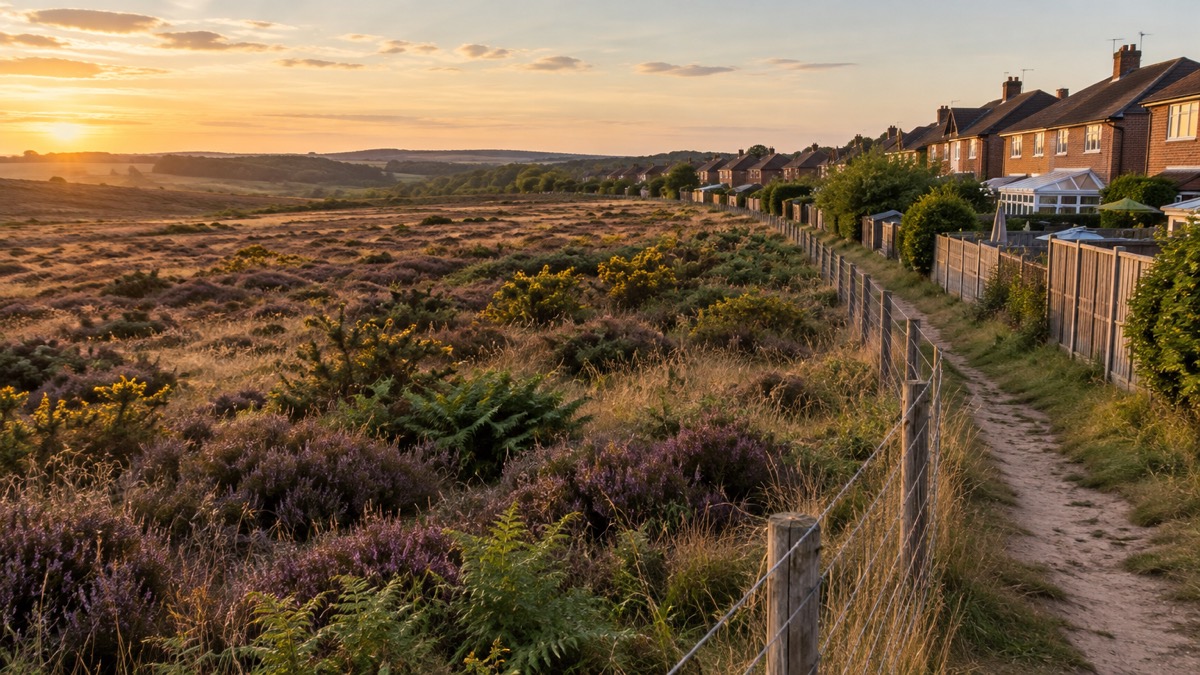
Wildfires in the UK are less frequent than in some other parts of the world, Essex Prepared notes, but they can cause significant damage to ecosystems, disrupt communities, and require a coordinated response from emergency services and land managers to control and extinguish them17. Forestry and Land Scotland adds that wildfires are generally more likely to start and spread on grassland or moorland in the UK, meaning they can be particularly damaging to open habitats and recreational sites34. Wildfires are more common in rural locations but can spread to urban areas, Ready Scotland warns, so the urban fringe where housing meets heath or grassland is where the Firewise approach bites9.
Every year fire destroys thousands of acres of countryside and wildlife habitats, Greater Manchester Fire and Rescue Service reports6. The environmental stakes go beyond habitat: Forestry and Land Scotland explains that wildfires can burn valuable carbon stores such as trees and peatland, releasing greenhouse gases back into the atmosphere, with peatland damage of particular concern given long recovery timeframes34.
On the national scale, wildfires carry a High national risk rating, reference NRR42, with a likelihood and impact rating of 2/3, according to the Wiltshire and Swindon Local Resilience Forum, which assesses wildfires as Medium risk locally7. How your own area is rated is published: each Local Resilience Forum in England publishes a Community Risk Register setting out the risks most likely to cause disruption in your region, and Community Risk Registers for Scotland can be found on the FireScotland site35. The Be Ready campaign explains how to check the risks where you are35.
The clearest picture of what moorland fire means for a UK community comes from Greater Manchester. Greater Manchester Fire and Rescue Service warns never to take a barbecue on the moors or to the countryside, because it poses a huge risk of fire, is a risk to the environment, and every year fire destroys thousands of acres of countryside and wildlife habitats6. The same service advises taking bottles and glass home or putting them in the waste or recycling bin, and never throwing a cigarette butt out of a car window, as it could ruin whole fields of crops6. It is exactly the joint approach Firewise asks of a neighbourhood: residents, landowners and emergency services each doing their part to keep fuel and ignition sources apart.
Where to get help
- Firewise in Dorset: contact the Dorset Heaths Partnership on 01202 642787, or by email, if you think your community would benefit from being part of Firewise2
- Elsewhere: complete the referral form published by Oxfordshire Fire and Rescue Service to contact the Firewise team8, or ask your own fire and rescue service whether it supports a similar scheme
- Before a bonfire or vegetation burning in Dorset and Wiltshire: advise Dorset & Wiltshire Fire Control by calling 0306 799 0019 first7, and check local guidance before lighting any fire, as North Yorkshire Fire and Rescue Service advises36
- In an emergency: dial 999 and ask for the Fire and Rescue Service6
- Deliberate fire-setting in Greater Manchester and surrounding areas: report anonymously to FireStoppers through the Be Moor Aware campaign25
- Suspicious behaviour: report to the police immediately24
- Home fire risk: Greater Manchester Fire and Rescue Service offers free Home Fire Safety Assessments30
A Firewise group is one of several neighbourhood schemes that share the same bones, and if wildfire is your local risk, the same group can hold a community flood plan or run severe weather tasks for storms and snow. The guide to working with councils and emergency services explains how these relationships work, and funding for local resilience groups may help pay for clearance equipment or a shared store of kit.
Sources (36)
- Firewise Communities, Dorset & Wiltshire Fire and Rescue Service, 2024-02-15
- Firewise, Dorset & Wiltshire Fire and Rescue Service, 2025-06-20
- Firewise FAQs, Dorset & Wiltshire Fire and Rescue Service, 2019-03-08
- Wildfires, Devon and Somerset Fire and Rescue Service, 2026
- Protecting your home from wildfire, Scottish Fire and Rescue Service, 2026-01-15
- Countryside safety, Greater Manchester Fire and Rescue Service, 2026-10-29
- Wildfires risk page, Wiltshire and Swindon Local Resilience Forum, 2026-10-25
- Fire and community safety, Oxfordshire Fire and Rescue Service, 2026
- Wildfires, Ready Scotland, 2026-05-12
- Protecting your home from wildfires, Devon and Somerset Fire and Rescue Service, 2026
- Protecting your home from wildfires, North Yorkshire Fire and Rescue Service, 2026-06-15
- Wildfires hazard page, Prepare campaign, 2026-10-21
- Understanding wildfires in Scotland, Scottish Fire and Rescue Service, 2026-10-25
- Wildfire, Surrey Fire and Rescue Service, 2026-08-18
- Summer safety, Mid and West Wales Fire and Rescue Service, 2026-10-29
- Resilience and risks in Wales, Welsh Government, 2026-09-07
- Wildfire, Essex Prepared, 2026-10-29
- Grass and wildfires, London Fire Brigade, 2026-10-25
- Safety outdoors, Cumbria Fire and Rescue Service, 2026-10-29
- Warm weather safety, Suffolk Fire and Rescue Service, 2026-10-29
- Deliberate fires, Greater Manchester Fire and Rescue Service, 2026-10-29
- Walking in the countryside, Mid and West Wales Fire and Rescue Service, 2026-10-29
- Protect people, property and nature from wildfires, Northern Ireland Fire and Rescue Service, 2026-03-16
- Fire and summer safety advice, nidirect, 2026-07-03
- Be Moor Aware, Greater Manchester Fire and Rescue Service, 2026-10-29
- Putting a stop to arson, Suffolk Fire and Rescue Service, 2026-10-29
- Countryside safety, Cheshire Fire and Rescue Service, 2026-07-14
- NIFRS statement on ongoing wildfire operational update, Northern Ireland Fire and Rescue Service, 2026-04-29
- NIFRS simple steps to stay safe this summer, Northern Ireland Fire and Rescue Service, 2025-06-23
- Home fire safety, Greater Manchester Fire and Rescue Service, 2026-10-29
- Outdoor air pollution, NHS inform Scotland, 2026-10-14
- Heat summary chapter 10: wildfires and health, UK Health Security Agency, 2024-12-19
- Wildfires, Public Health Wales, 2025-03-11
- Wildfire prevention, Forestry and Land Scotland, 2026-10-29
- Check the risks where you are, Be Ready campaign, 2026-10-20
- Summer safety advice as temperatures rise, North Yorkshire Fire and Rescue Service, 2026-06-26
 Snow Warden Schemes
 Good Neighbour Schemes
 Community First Responders