
Kilner is the English glass jar brand that most UK households picture when they think of preserving. The original Kilner Jar was invented by John Kilner and Co. in England, and the maker says it is as much loved and successful now as it was over 180 years ago1. The jars are still made in England, using 30% recycled glass from kerbside collection services1.
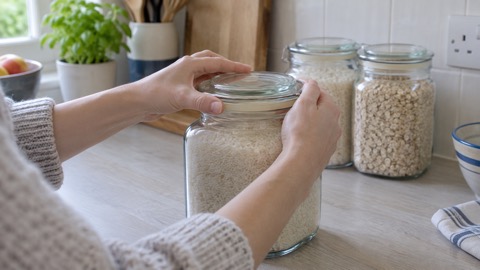
For a household building a food store, the jars do two jobs. They hold dry stores such as flour, rice, pasta, herbs and spices in an airtight container, and they hold home-made preserves such as jams, chutneys and pickles. The maker sells them in several shapes and sizes, from a 110ml hexagonal jar for herbs and spices up to a 1 litre preserve jar for whole fruits and chunky chutneys2. Every jar contains a detailed instruction leaflet, and the maker's first instruction is simple: wash before first use4.
What the jars cannot do is make unsafe food safe. Official guidance is clear that preserved food which has not been prepared correctly may not look, smell or taste unusual, so you should not rely on appearance, smell or taste to decide whether it is safe to eat5. The sections below cover what Kilner makes, how to fill and seal a jar, what goes wrong, and where to get help.
Kilner: the jar invented in England over 180 years ago
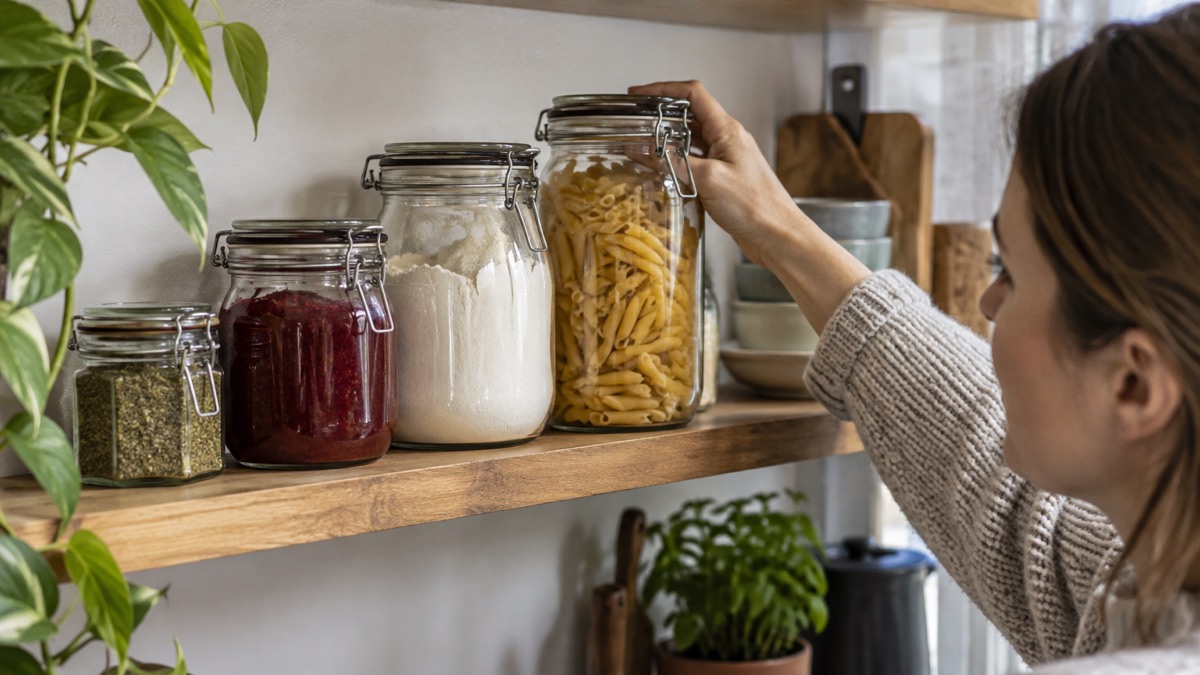
The brand's history is short and specific. The original Kilner Jar was invented by John Kilner and Co. in England, and the maker describes it as as much loved and successful now as it was over 180 years ago6. That is the whole of the origin story the maker gives on its product pages: an English invention, still in production, still sold on the same design.
The jars on sale today are made in England using 30% recycled glass from kerbside collection services1. The maker calls them sustainable glass jars, reusable time and time again1. That recycled content is worth knowing for a household building a store: the jars are a mainstream retail product made from household glass collections, not a specialist import.
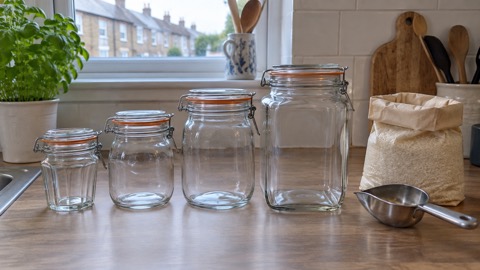
The range is built around two lid systems and a handful of shapes. Twist top jars have a gingham printed one-piece lid that the maker says assures an airtight seal to keep the contents fresher for longer6. Clip top jars use a high grade stainless steel clip system and a durable rubber seal, engineered to create the perfect tension for an airtight and secure seal every time7. The 1 litre preserve jar uses a two-piece lid system comprising a tin disc and screw band, which the maker says ensures a secure vacuum seal is achieved3.
Preserving jars for a home food store
Kilner's jars fall into a few clear types, and the right one depends on what you are storing. The maker's own descriptions set out what each is for.
| Jar | Capacity | Lid system | What the maker says it suits |
|---|---|---|---|
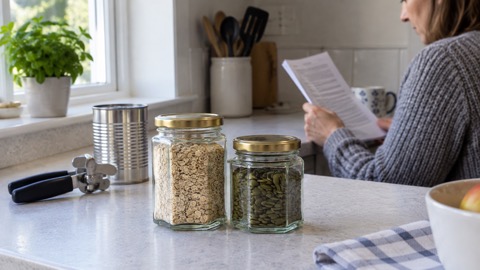
| Hexagonal Twist Top Jar | 110ml | Gingham printed one-piece lid, airtight seal2 | Dried foods such as herbs, spices and strong flavoured dips and sauces; home-made preserves as gifts2 |
| Round Twist Top Jar | 228ml | Gingham printed one-piece lid, airtight seal6 | Batches of home-made jams, jellies, marmalades and chutneys6 |
| Round Twist Top Jar | 370ml | Gingham printed one-piece lid, airtight seal1 | Batches of home-made jams, jellies, marmalades, chutneys and dried foods such as herbs and spices1 |
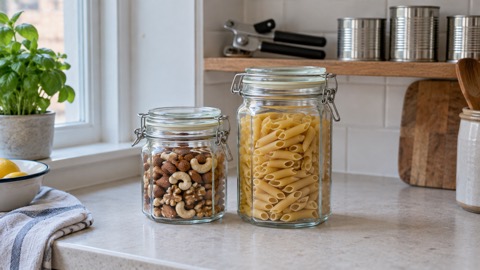
| Facetted Clip Top Jar | 0.95 litre / 950ml | Stainless steel clip and rubber seal8 | Chunky chutneys, whole fruits, and dry foods like flour, biscuits and cereals8 |
| Clip Top Square Jar | 1 litre / 1000ml | Clip and durable rubber seal7 | Pickling vegetables, preserving chunky chutneys7 |
| Preserve Jar | 1 litre / 1000ml | Two-piece tin disc and screw band3 | Pickling vegetables, preserving whole fruits and chunky chutneys3 |
The pattern is straightforward. Small twist top jars suit herbs, spices and gift preserves. Larger clip top and preserve jars suit bulk preserving and pantry storage. The square clip top jar has a contemporary square shape that the maker says is space saving and ideal for pantry storage7, which matters if you are keeping a shelf of dry stores rather than a few jars.
For the wider question of what to keep and how much, see Emergency Food: A Household Guide to Stores, Safety and Meals Without Power. For the clip top jar specifically, there is a product page at Kilner Clip Top Jar.
Getting jars ready before you fill them
Every Kilner product page carries the same first instruction: wash before first use1. Do that before the jar goes anywhere near food, and dry it thoroughly.
The maker's jars are dishwasher safe1, which makes cleaning a batch straightforward. The 370ml round twist top jar has a wide neck allowing for easy filling and decanting1, a small design point that matters when you are spooning chutney into a jar without messing the rim.
Each jar contains a detailed instruction leaflet inside3. Read it before you fill: it sets out the filling and sealing method for that jar type, and the lid systems differ enough that the method for a twist top jar is not the method for a two-piece preserve jar.
Sealing and checking stored jars
The seal is the whole point of a preserving jar, and Kilner's three lid systems work in different ways.
- Twist top jars: a gingham printed one-piece lid that the maker says assures an airtight seal to keep the contents fresher for longer1. These suit dry stores and everyday preserves.
- Clip top jars: a high grade stainless steel clip system and a durable rubber seal, engineered to create the perfect tension for an airtight and secure seal every time7. The rubber seal is the part that does the work.
- Preserve jars: a two-piece lid system of tin disc and screw band, which the maker says ensures a secure vacuum seal is achieved3. This is the system most associated with home canning and vacuum sealing.
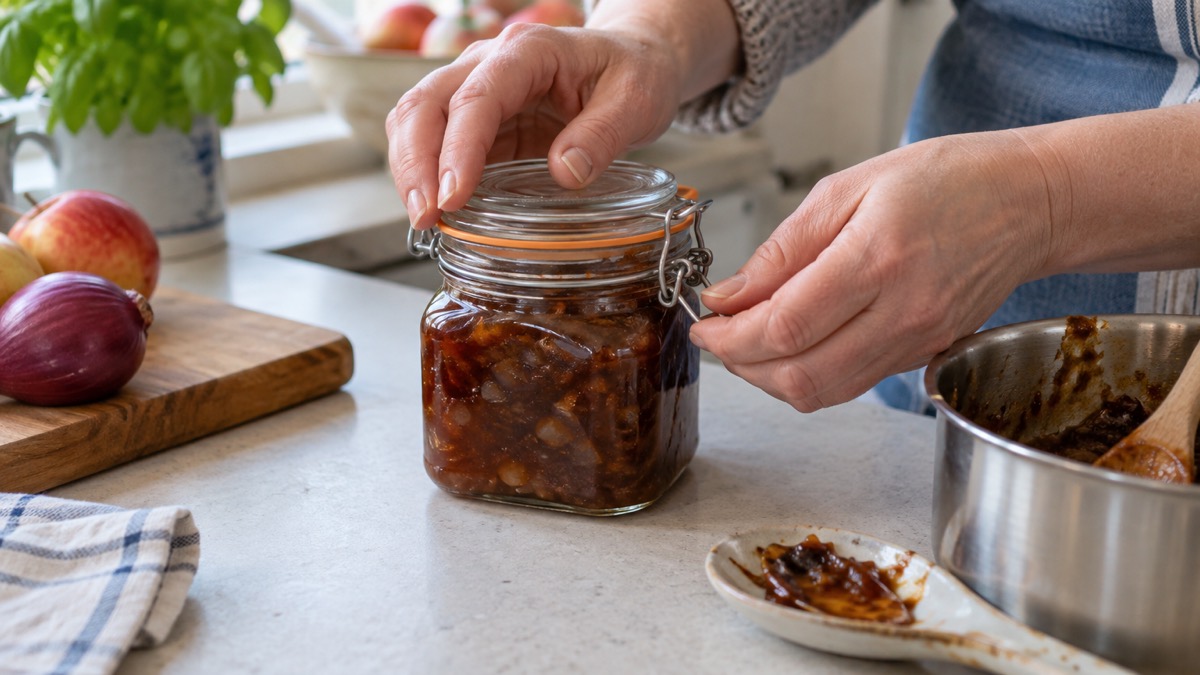
Check every jar before it goes into store. Look at the lid, the band and, on clip top jars, the rubber seal. If a lid no longer sits flat or a seal looks worn, treat the jar as storage only until it is sorted.
Label each jar with what is inside and the date you filled it. That lets you use the oldest first and know what you are opening, and it is the difference between a store you can trust and a shelf of anonymous glass.
What can go wrong with preserved food
The risks with home-preserved food are real and official guidance is blunt about them. Do not eat preserved food if containers are bulging, if they are leaking, damaged or heavily rusted, if the food shows signs of mould or spoilage, or if you are unsure it was preserved safely5. Preserved foods that have not been prepared correctly may not look, smell or taste unusual, so do not rely on appearance, smell or taste to decide whether food is safe to eat5.
Food poisoning more generally comes from food that has not been cooked or reheated thoroughly, has not been stored correctly, has been left out for too long, has been handled by someone ill or who has not washed their hands, or has been eaten after its use by date9. You cannot tell contaminated food by looking at it: even food which looks and tastes good can cause food poisoning10. When food is kept warm, bacteria can grow rapidly and reach dangerous levels within hours11.
Food can also be recalled. Recalls happen for contamination with pathogens like listeria or salmonella that could give you food poisoning, or because of manufacturing faults such as plastic or metal being found in the product12. Check the government's recalls and alerts page if you are unsure about something you have bought12.
Storing jars safely at home
A jar store is only as good as the cupboard it sits in. Official guidance on kitchen food storage is to keep cupboard and pantry food in sealed bags or containers, which helps to keep food fresh and stops anything falling into the food by accident13. Kilner jars do exactly that job.
The maker's own safety notice on the 1 litre preserve jar is worth repeating: do not pour boiling water directly into your jars or bottles3. Let hot liquids cool, or warm the jar first, rather than risking a cracked jar and scalding.
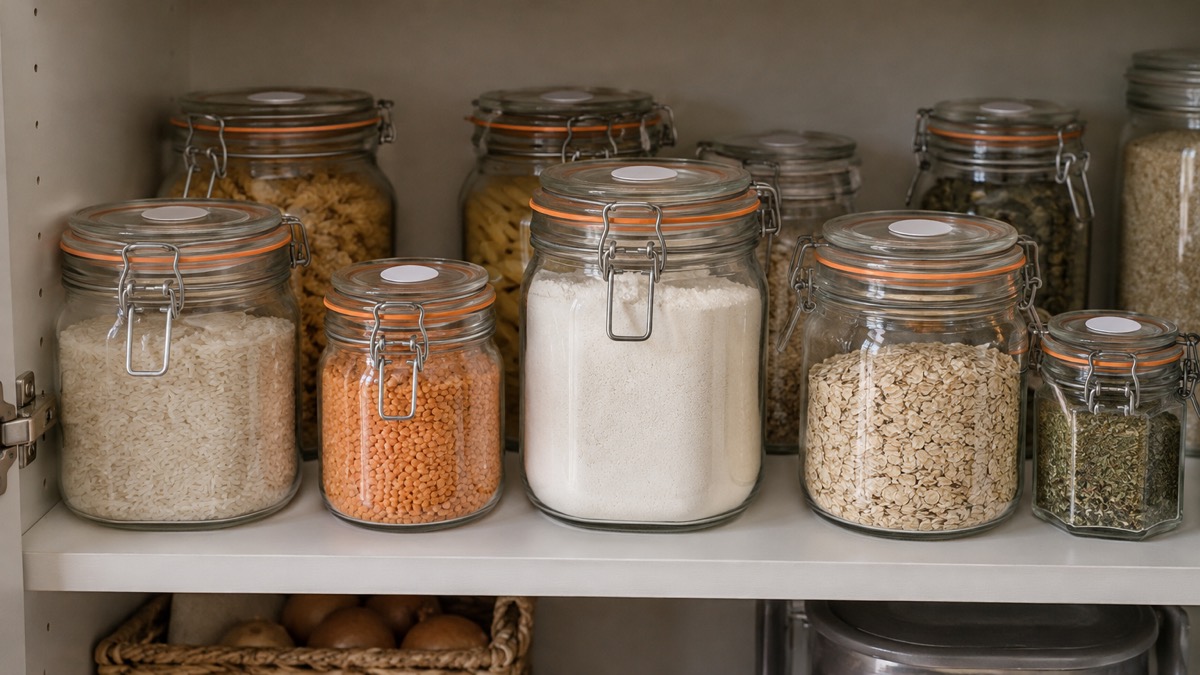
For an emergency store, official advice is to avoid fresh or perishable food and keep some longer lasting products such as tinned food for emergencies14. Jars of dry staples fit that plan well: flour, rice, pasta, cereals, herbs and spices all keep in a sealed jar, and the maker specifically lists flour, biscuits and cereals for the 0.95 litre facetted clip top jar8.
What jars cannot do is rescue food from a power cut. If your freezer has lost power, throw away any meat, fish or dairy, or foods containing these, if they have started to get soft, and throw away any food you would eat frozen, such as ice cream15. A jar of rice is unaffected by a power cut; a jar of home-made meat preserve is not something to gamble on.
Kilner support and warranty
The maker's product pages do not set out a warranty period or a support phone line. What they do give you is the instruction leaflet inside each jar, which is the maker's own guidance for filling and sealing that product3, and the product page for each jar, which lists its capacity, lid system and suggested uses1.
If a jar arrives damaged, or a lid or seal fails, the retailer you bought it from is the usual route. Keep the jar and its packaging until the problem is sorted, and keep the leaflet, which tells you what the jar was designed to do.
For the household side of storing food, the section guide at Emergency Food: A Household Guide to Stores, Safety and Meals Without Power covers quantities, rotation and meals without power. If a power cut is what prompted you to sort out your store, Power Cuts: A Household Guide sets out what to do while the power is off.
Safety notices and recalls
Kilner jars are glass and metal, not electrical goods, and no Kilner recall appears in the official notices available here. The recall habit is still worth building, because the same principle applies to everything in a kitchen.
Official advice is to register your electrical items with the manufacturer to be informed of any safety recalls16. Manufacturers issue product recall notices if an electrical appliance could develop a fault, including a risk of electric shock or fire18. The Office for Product Safety and Standards issues recalls and alert notices on its website19, and you can check for product recalls at Electrical Safety First20.
Recalls are not rare. Recent notices include 15 different types of climbing harnesses recalled due to serious safety concerns21, and a batch of bicycle lights recalled from end users due to fire risk from defective battery cells22. Food is recalled too: A.Vogel Ltd recalled a batch of seeds for sprouts and seedlings because of contamination with E. coli STEC, with point of sale notices displayed in retail stores selling the product23. Manufacturers issue product recall notices if an electrical appliance could develop a fault, including a risk of electric shock or fire24.
If an appliance is not listed as recalled it should be safe to use, and if you have concerns about its safety, contact the retailer or manufacturer18. For a Kilner jar, that means the retailer first, then the maker.
Sources (24)
- Kilner Round Twist Top Jar 370ml, Kilner, 2026-10-28
- Kilner Hexagonal Twist Top Jar 110ml, Kilner, 2026-10-28
- Kilner Preserve Jar 1 Litre, Kilner, 2026-10-29
- Kilner Square Glass Clip Top Jar, 1.5 Litre | Kilner®, Kilner (kilnerjar.co.uk)
- Consumer advice for food preservation at home, GOV.UK, 2026-10-26
- Kilner Round Twist Top Jar 228ml, Kilner, 2026-10-28
- Kilner Clip Top Square Jar 1 Litre, Kilner, 2026-10-28
- Kilner Facetted Clip Top Jar 0.95 Litre, Kilner, 2026-10-28
- Food poisoning, NHS Inform Scotland, 2026-08-17
- Food poisoning and waterborne infections, Shropshire Council, 2026-10-29
- Food poisoning, Belfast City Council, 2026-10-29
- Recalls and alerts, GOV.UK, 2026-07-07
- Food storage, Food Standards Scotland, 2026-10-25
- What is a National Power Outage (NPO), Wiltshire and Swindon Prepared, 2026-10-25
- Flooding, Runnymede Borough Council, 2026-10-26
- Electrical fire safety, Greater Manchester Fire and Rescue Service, 2026-10-29
- Electrical fire safety, Warwickshire County Council, 2026-10-29
- Electrical safety, Scottish Fire and Rescue Service, 2025-02-27
- Electrical items, London Fire Brigade, 2026-10-25
- Your guide to fire safety, Scottish Fire and Rescue Service, 2023-11-03
- Product safety campaigns, Peterborough City Council, 2026-10-29
- Product recall: KNOG Blinder 900 and Blinder 1300 bicycle lights, GOV.UK, 2025-09-18
- A.Vogel Ltd recalls Rapunzel Biosnacky Das Original Red Clover seeds, Food Standards Scotland, 2026-08-07
- Halloween safety tips, North Yorkshire Fire and Rescue Service, 2025-10-24
 Kilner Clip Top Jar
 Kilner Facetted Clip Top Jar
 Kilner Round Twist Top Jar
 Kilner Hexagonal Twist Top Jar
 Kilner Universal Push Top Jar
 Kilner Fermentation Set: Airlock Jar for Home Ferments