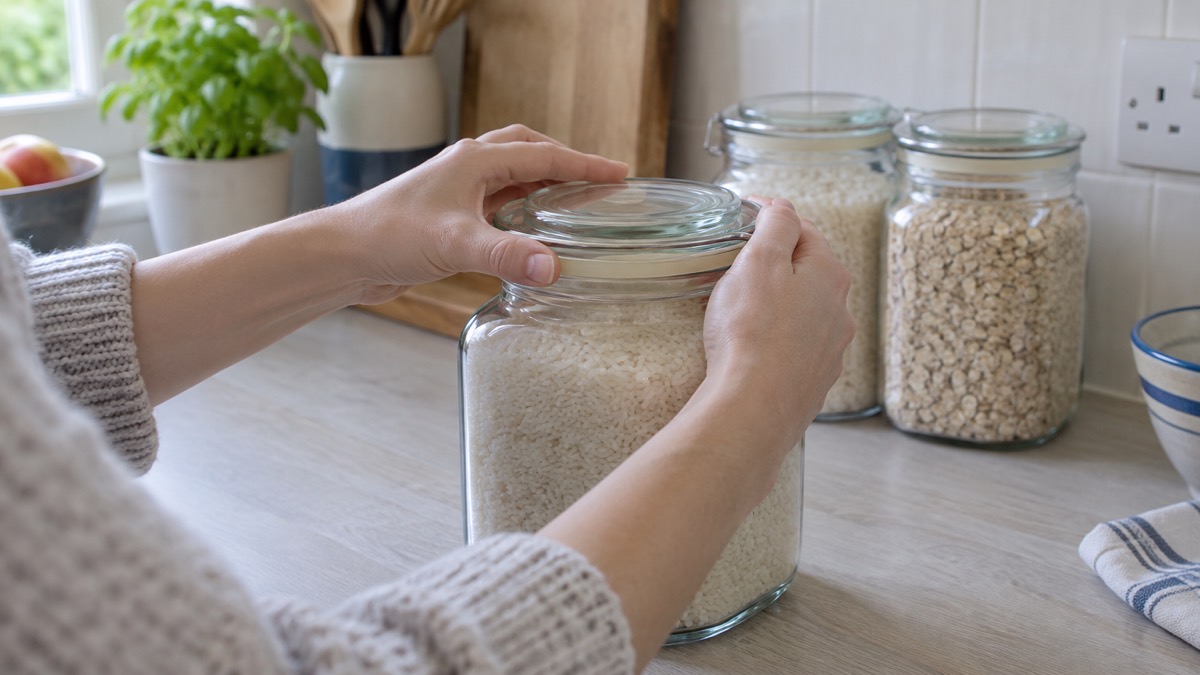
A Kilner Universal push top jar is a glass storage jar with a glass lid that pushes down over a silicone gasket to give an airtight seal. Kilner makes it in three sizes: 0.85 litres, 2 litres and 4 litres1. For a household building a food store, that makes it a container for the dry staples you would reach for when the power goes off or the shops are disrupted: rice, pasta, oats, flour, pulses, biscuits and tea.
The practical questions are which size fits your cupboard and how much it holds. The 4 litre jar measures 195 mm by 195 mm across and 242 mm high, the 2 litre jar 156 mm by 156 mm by 190 mm, and the 0.85 litre jar 125 mm by 125 mm by 148 mm1. Measure the clear height of your shelf before you choose, because the tallest of the three needs 242 mm of headroom.
Before anything goes in, wash the jar. Kilner's instruction on its product pages is to wash before first use, and the maker also warns against pouring boiling water directly into the jars1. Beyond that, the jar asks very little of you: fill it, push the lid down, and keep the store cool and dry.
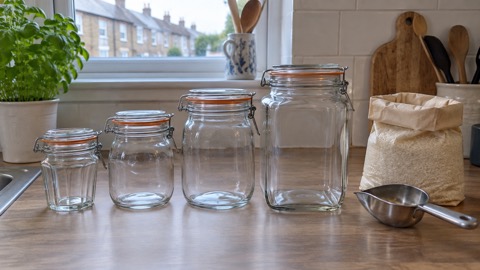
Kilner Universal push top storage jars: 0.85, 2 and 4 litre glass jars
The Universal range is one family of jars in three capacities, and the differences between them are size and what that size suits, not the way they work. Each is a glass storage jar with a push top lid, and each is described by Kilner as suitable for a variety of storage solutions in the kitchen1. The 0.85 litre jar is the countertop size, the one the maker's size guide recommends for sweets, tea bags and anything you would show off in your kitchen4. The 2 litre and 4 litre jars are the ones that make sense for a working food store.
All three are made from high quality sodalime glass, which Kilner describes as having pristine clarity and consistent wall thickness1. That matters less for looks than for what it means in use: a jar you can see through lets you check at a glance how much rice or pasta is left without opening it, and a consistent wall is what you would expect from a container meant to be filled and refilled for years.
The glass is BPA free and does not absorb odours, flavours or stains, and Kilner states that because it is made from natural ingredients no harmful chemicals or toxins can leak into the food1. In a store cupboard that is a real advantage over plastic: a jar that held curry powder or coffee can be washed and used for oats without carrying the smell or the colour across.
The Universal jars are glass storage jars with a push top lid, made from sodalime glass that is BPA free and does not absorb odours, flavours or stains1. If you are weighing up how to keep a dry store, the choice between a push top jar and other closures is covered in Mylar bags or glass jars for dry food, and the clip top version is described on the Kilner Clip Top Jar page. The maker's own range is set out at Kilner.
Universal push top jar sizes and specifications
The table below sets out what the maker publishes for each size. Where a dimension is given, it is the external measurement of the jar, so it is the space the jar occupies rather than the volume inside.
| 0.85 litre | 2 litre | 4 litre | |
|---|---|---|---|
| Capacity | 0.85 litres1 | 2 litres2 | 4 litres3 |
| Length | 125 mm1 | 156 mm2 | 195 mm3 |
| Width | 125 mm1 | 156 mm2 | 195 mm3 |
| Height | 148 mm1 | 190 mm2 | 242 mm3 |
| Material | Sodalime glass1 | Sodalime glass2 | Sodalime glass3 |
| Lid | Push top glass lid with silicone gasket1 | Push top glass lid with silicone gasket2 | Push top glass lid with silicone gasket3 |
| Care | Wash before first use; handwash only; no boiling water directly into the jar1 | Wash before first use; no boiling water directly into the jar2 | Wash before first use; handwash only; no boiling water directly into the jar3 |
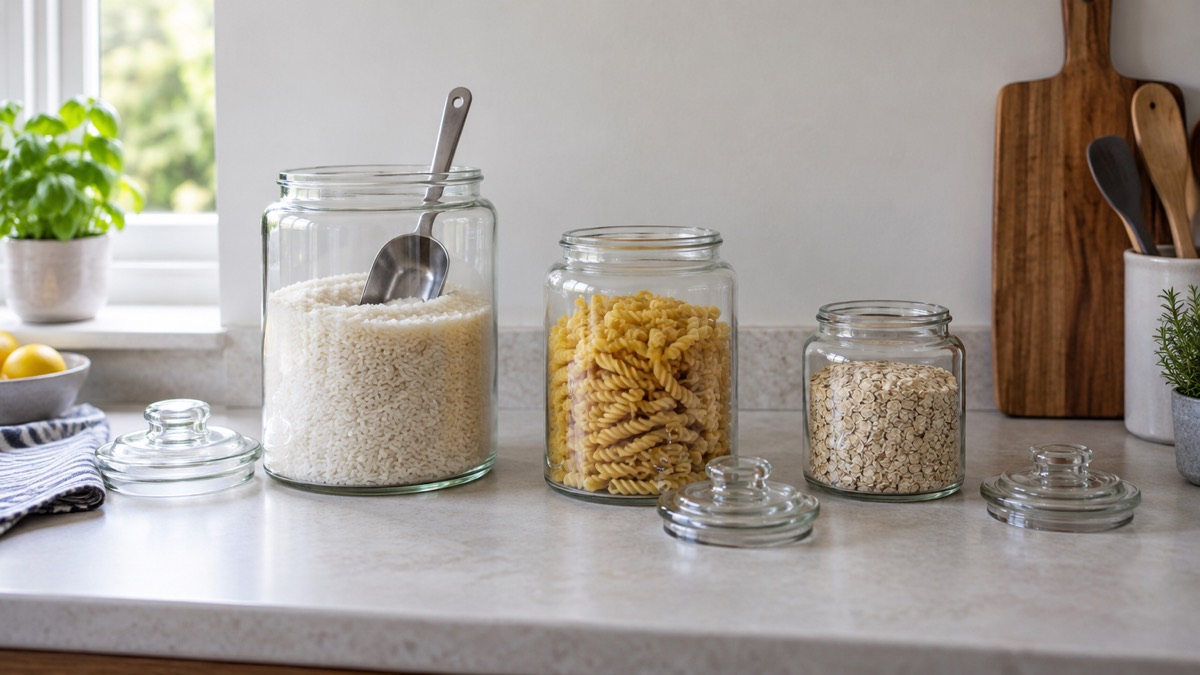
Two points in that table are worth pausing on. The first is the care instruction. Kilner lists the 4 litre jar as handwash only, and the same wash-before-first-use instruction appears across the range1. The second is the boiling water warning, which appears on all three product pages: do not pour boiling water directly into your jars or bottles1. That rules the Universal jar out as a vessel for making up hot drinks or for any job that involves pouring boiling liquid straight in. If you want to know why glass and boiling water are a poor pairing, and what to do instead, see Can you pour boiling water into a glass jar.
The dimensions also decide how the jar behaves in a cupboard. The 4 litre jar is a cube in plan, 195 mm on each side, so it needs a square of worktop or shelf at least that size, plus clearance to lift the lid. The 2 litre and 0.85 litre jars scale down in step. None of them stack on top of one another, so plan for a single layer per shelf.
Which size to choose: 0.85 litre, 2 litre or 4 litre
Choose by what you are storing and where it will live, not by which is biggest. The 0.85 litre jar is a countertop jar: Kilner's size guide puts it at the small end, for sweets, tea bags and decorative storage4. It is the right size for the things a household uses daily and wants within reach, and a sensible first jar if you are trying the range.
The 2 litre jar is the middle of the range and the most flexible for a store cupboard. It measures 156 mm long, 156 mm wide and 190 mm high3. For a household keeping a modest reserve of rice, pasta and oats, several 2 litre jars will usually serve better than one 4 litre jar, because you can open one while the others stay sealed.
The 4 litre jar is the bulk container. Kilner describes it as suitable for dried food ingredients in cupboards and pantries, and at 4 litres it holds a meaningful amount of a single staple3. Its limit is physical: 242 mm tall and 195 mm square, it needs a shelf with the headroom to take it and a worktop with the space to stand it while you fill it3. Measure before you commit.
A simple way to decide:
- Daily use on the worktop: 0.85 litre, for tea, sweets and small quantities4.
- A working store cupboard: 2 litre, for staples you open and refill regularly2.
- Bulk dry goods kept sealed: 4 litre, for a single ingredient you buy in quantity3.
- A mix: several smaller jars rather than one large one, so opening one does not expose the whole store to air.
Whichever you pick, the jar is only part of the job. How much to keep per person is a separate question, answered in How much emergency food to store per person, and the wider list of what belongs in a store is in What to keep in an emergency store cupboard.
Push top lid on a glass storage jar: what each size has
Every size in the range has the same lid arrangement. Kilner states that the push top glass lid incorporates a high quality silicone gasket to provide a secure and airtight seal, keeping dry food fresh1. The gasket is built into the lid rather than being a separate ring you fit, and the lid is glass, so you can see what is inside without lifting it.
An airtight seal is the whole point for a household store. Dry staples fail for two reasons: moisture and pests. A sealed jar keeps damp air away from rice, flour and oats, and it keeps the insects that get into opened packets out. That is why the jar earns its place in a store that may sit untouched for months between one emergency and the next. The general principles of keeping a store in good condition are set out in Keeping a long-term store cool, dry and free of pests.
The gasket is also the part to look after. The maker states that the push top glass lid incorporates a high quality silicone gasket to provide a secure and airtight seal keeping dry food fresh1. A lid that has been pushed on with the gasket rucked up will not seal, and you may not notice until the contents have gone soft.
Storing dry food in Universal push top jars
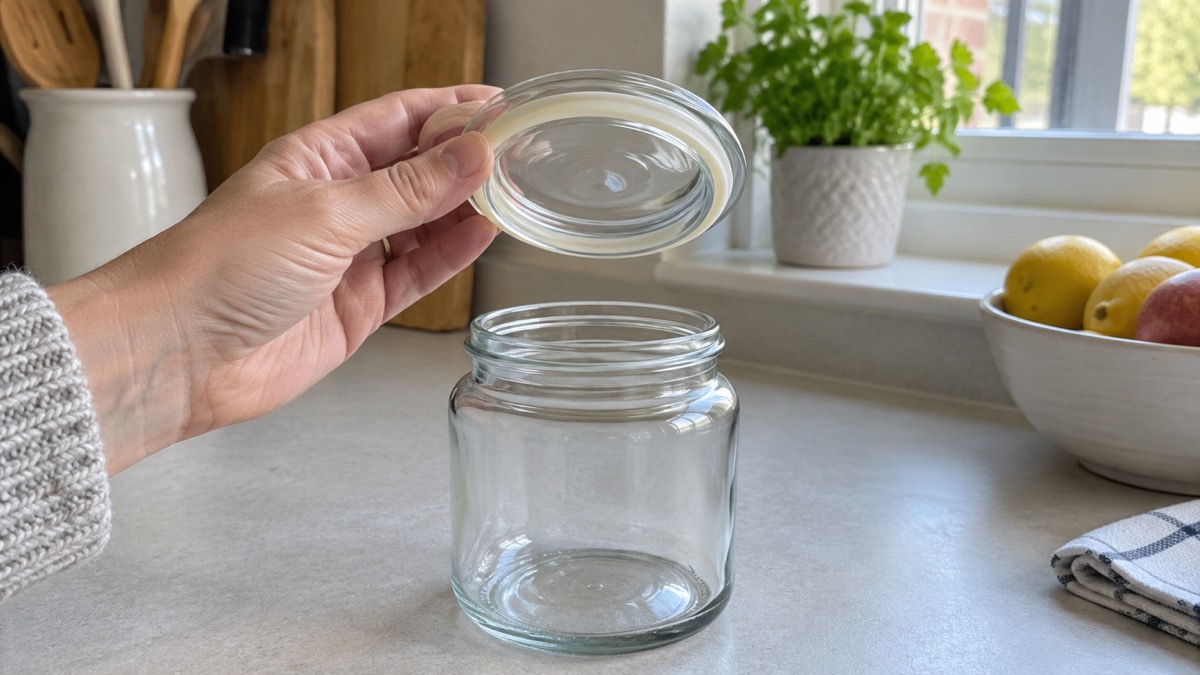
These jars are built for dry food, and that is how they earn their place in an emergency plan. Kilner lists countertop biscuits, sweets and treats alongside dried food ingredients in cupboards and pantries as the intended uses3. For a household preparing for disruption, the second of those is the one that matters: a sealed jar of rice, pasta, oats or pulses is food you can cook without opening a tin, and it will still be good after a power cut that has emptied the fridge.
There are a few practical rules that make a dry store last:
- Fill dry and fill full. Moisture is the enemy of a dry store, so make sure jars, scoops and hands are dry before filling.
- Keep the store cool and dry. A cupboard away from the oven, the radiator and direct sun is better than a shelf above the hob.
- Rotate as you use. Empty a jar, wash and dry it, then refill from the back of the store so older stock is used first. The method is set out in Rotating your store: first in, first out.
- Label the jar. Glass shows you the contents but not the date, so write the date you filled it on the jar or the lid.
- Keep the jar out of flood water. Glass jars standing on a low floor are vulnerable in a flood. Where to site a store is covered in Where to keep an emergency store if your area floods.
The jars are not a substitute for proper long-term packaging. If you are storing staples for years rather than months, mylar bags with oxygen absorbers are the usual approach, and the trade-offs between the two are set out in Mylar bags or glass jars for dry food. The Universal jar is at its best as the working container you open, use and refill, with the deeper reserve kept separately.
Before first use: wash every Universal push top jar
Kilner's instruction is short and appears on each product page: wash before first use1. Do that before the first scoop of rice goes in, and dry the jar thoroughly afterwards, because a dry store wants a dry container.
The maker's other instruction is the one to take most seriously: do not pour boiling water directly into your jars or bottles1. That is a warning about thermal shock in glass, and it applies to every size in the range. If you want to sterilise a jar for preserving rather than for dry storage, that is a different job with different rules, covered in How to sterilise jars for preserving.
If a jar has been through a flood, or has sat in a kitchen that has been contaminated, washing it once is not enough. Official flood clean-up advice is to wash all crockery, cutlery and cooking utensils with hot soapy water and disinfect with a food-safe disinfectant, ideally in a dishwasher, before using them5. Another set of official guidance describes the same job as cleaning with clean water and detergent, then a normal kitchen disinfectant, before preparing food6. Either way, the jar needs to be cleaned and disinfected, not just rinsed, before it goes back into service. More on what to keep and what to throw after a flood is in Food after a flood.
General kitchen hygiene applies to the jars as much as to anything else. NHS inform advises washing worktops, utensils and chopping boards with warm, soapy water before and after food preparation to stop bacteria spreading7, and the same habit of clean hands and clean tools applies when you are decanting a sack of rice into jars. If your water supply has been interrupted, ensure that all appliances are thoroughly flushed through before use, following the manufacturer's instruction manual8.
Where the jar fits in a household emergency plan
A glass jar is a small piece of kit, but it does a specific job in a plan: it turns a bag of rice or a sack of oats into a store you can rely on months later. That is worth having whether the disruption you are preparing for is a power cut, a flood, a storm or an outbreak that keeps you at home.
It is not the whole answer. A jar holds dry food; it does not cook it, and it does not supply water. The wider picture is in Emergency food: a household guide to stores, safety and meals without power, and if you are starting from nothing, Starting a store cupboard supply step by step sets out an order to work in. The Emergency store cupboard checklist is a printable list to work from, and the Long-term food storage kit checklist covers the containers and packaging.
Two limits are worth stating plainly. The first is that glass breaks. In a flood, an earthquake or a fall from a high shelf, a glass jar is less forgiving than a plastic one, so keep the store low enough that a jar cannot drop far, and away from the floor if your area floods. The second is that the jar is not airtight forever: the gasket is the working part, and a lid that no longer seals needs attention. Check the seal by pushing the lid on and listening for the resistance; if it feels loose, reseat the gasket.
For households that need help getting food in an emergency, the routes are set out in Getting emergency food help: food banks, councils and local support. Older or disabled households may also be able to register for priority support, described in Extra help in an emergency.
Sources (8)
- Universal Push Top Storage Jar 0.85 Litre, Kilner, 2026-10-28
- Universal Push Top Storage Jar 2 Litre, Kilner, 2026-10-28
- Universal Push Top Storage Jar 4 Litre, Kilner, 2026-10-28
- Jar Size Guide, Kilner, 2026-10-28
- Flooding and health: safely cleaning your home, Wiltshire and Swindon Prepared, 2026-10-25
- Cleaning up after a flood: health advice, Rhondda Cynon Taf County Borough Council, 2021
- Preparing and cooking food safely, NHS inform, 2025-02-21
- Turning the taps on safely after lockdown, NI Water, 2021-04-29

 Expedition Foods 1 Week Rations
 NRG-5 Emergency Ration
 NRG-5 ZERO Ration
 Kilner Clip Top Jar
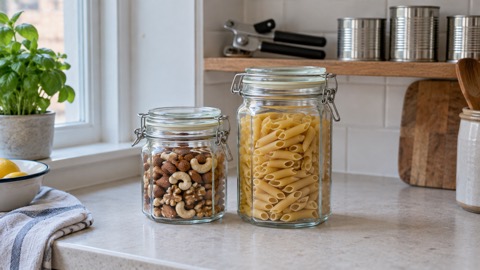 Kilner Facetted Clip Top Jar
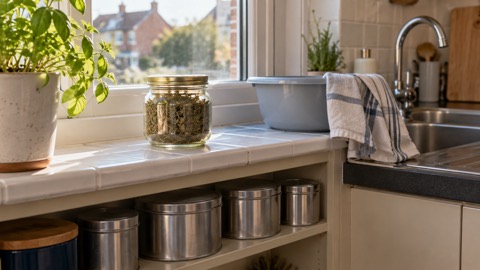 Kilner Round Twist Top Jar
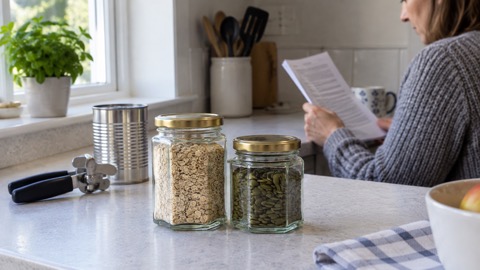 Kilner Hexagonal Twist Top Jar
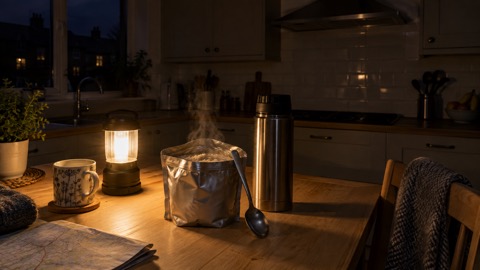 Expedition Foods Rolled Oats
 OxyFree Oxygen Absorbers