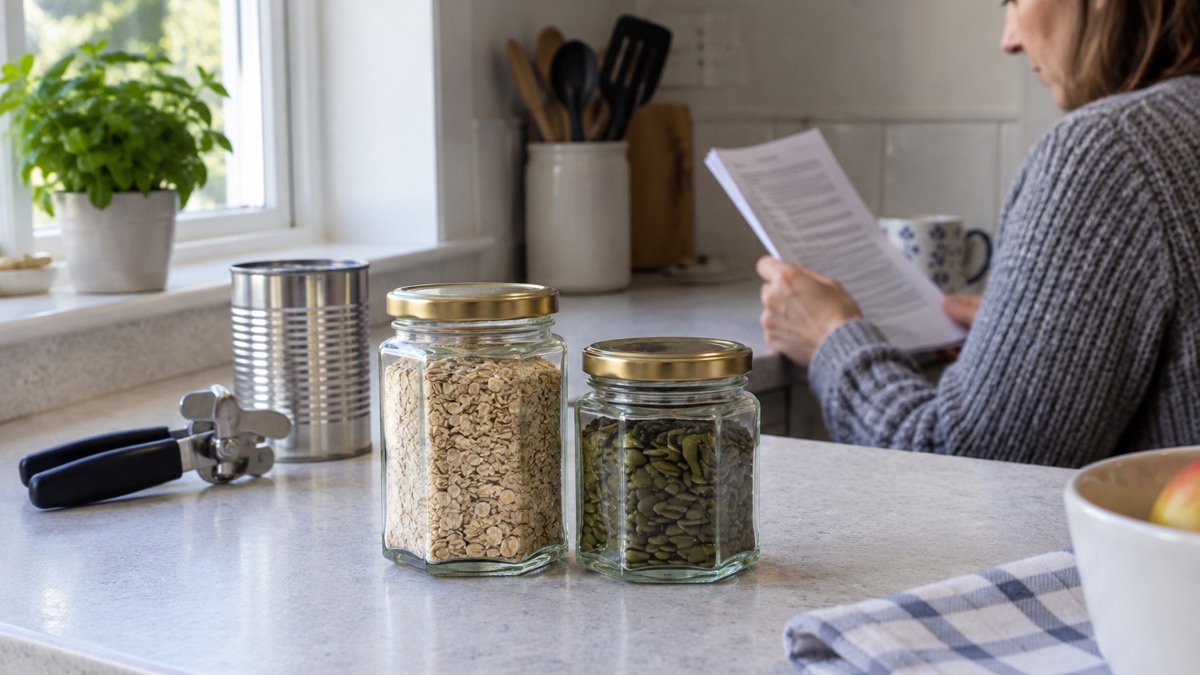
A Kilner hexagonal twist top jar is a small glass storage jar with a single-piece, gingham-printed screw lid that the maker says gives an airtight seal. It comes in two sizes, 110ml and 280ml, and both are made in England from sodalime glass using 30% recycled glass from kerbside collection services1. For a household building an emergency food store, that makes it a container for the small, fiddly, easily spoiled things: herbs, spices, stock cubes, dried yeast, seeds, and the little odds that turn plain rice or pasta into a proper meal when the shops are shut or the power is off.
What it is not is a preserving jar for boiling water. The maker's instruction on both sizes is to wash before first use, and never to pour boiling water directly into the jar1. Treat it as a dry-goods container and a gift jar, not a bottling jar, and it will do its job for years.
What the two sizes hold, and which to keep
The 110ml jar is the smaller of the pair, and the maker describes it as perfect for storing dried foods such as herbs, spices and strong flavoured dips and sauces2. The 280ml jar is described as suitable for storing dried foods such as herbs and spices, along with preserving jams, jellies and similar1. In a store cupboard the difference is simply how much of a thing you keep open at once: a 110ml jar suits a spice you use in small amounts, while a 280ml jar suits something you decant from a larger bag and use steadily.
| 110ml jar | 280ml jar | |
|---|---|---|
| Capacity | 110ml2 | 280ml1 |
| Length | 58mm2 | 78mm1 |
| Width | 52mm2 | 70mm1 |
| Height | 80mm2 | 101mm1 |
| Lid | Gingham printed one-piece, airtight2 | Gingham printed one-piece, airtight1 |
| Dishwasher safe | Yes2 | Yes1 |
The dimensions matter more than they look on paper. At 80mm tall and 58mm long, the 110ml jar fits a shelf gap or a drawer divider; the 280ml jar at 101mm tall and 78mm long takes noticeably more room. If you are working out how much emergency food to store per person and where it will physically go, measure the shelf before you commit to a set of jars. A row of small jars along the back of a cupboard keeps the flavour side of a store in use, so that the plain staples get eaten rather than sitting untouched.
Airtight lid, sodalime glass and what that means in a store
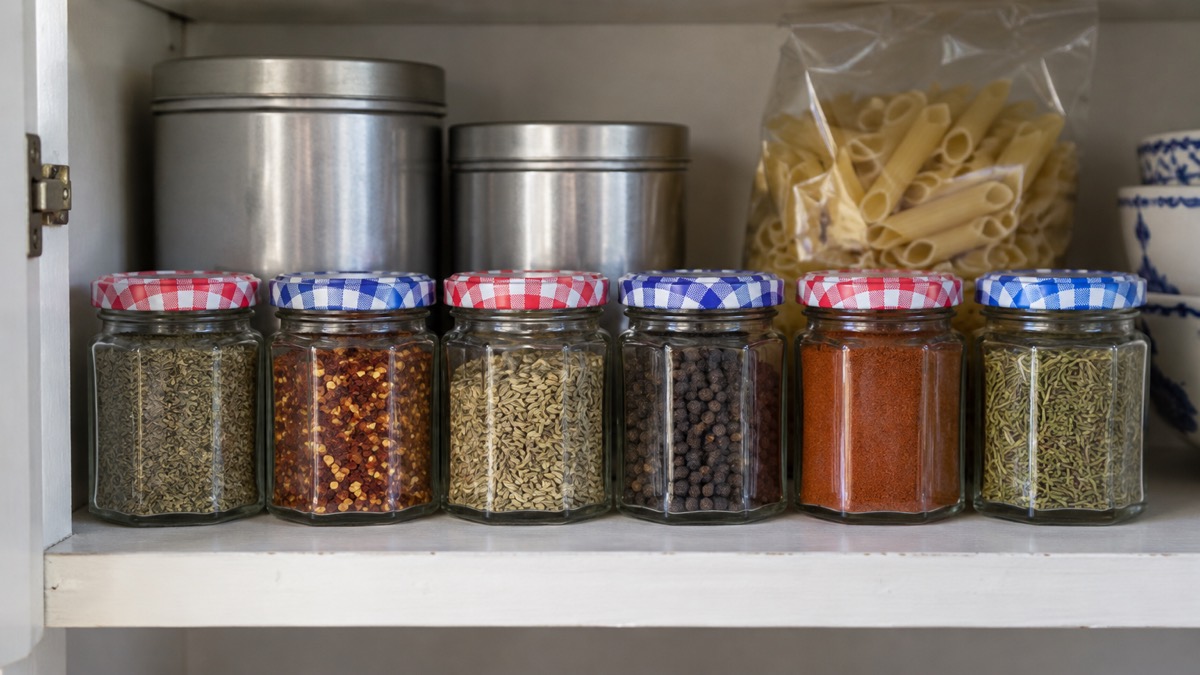
The maker says the gingham printed one-piece lid assures an airtight seal to keep the contents fresher for longer1. For an emergency store, an airtight lid does two jobs. It keeps moisture out, which is what spoils dried herbs and spices and what makes rice and pulses go musty, and it keeps the smell of a strong ingredient in the jar rather than in the cupboard. The one-piece design also means there is no separate rubber ring to lose, split or forget to check, which is a real advantage in a jar you may open and close often.
The glass itself is sodalime, which the maker describes as high quality, with pristine clarity and consistent wall thickness1. Clear glass lets you see at a glance what is in a jar and how much is left, so a store stays visible and gets rotated rather than forgotten. The maker states the glass is BPA free and does not absorb odours, flavours or stains1. That is the practical case for glass over plastic for a long-lived store: a jar that held a strong flavoured dip or a spice can be washed and refilled with something plain without carrying the taste across.
Both sizes are described by the maker as reusable time and time again1. If you are setting up a store you intend to keep for years, that reusability is the point: you buy the container once and refill it from larger bags of dry staples.
Wash before first use, and never pour in boiling water
The maker gives two instructions on both sizes, and both are worth following exactly. Wash the jar before first use1. And do not pour boiling water directly into your jars or bottles1.
"Do not pour boiling water directly into your jars/bottles"
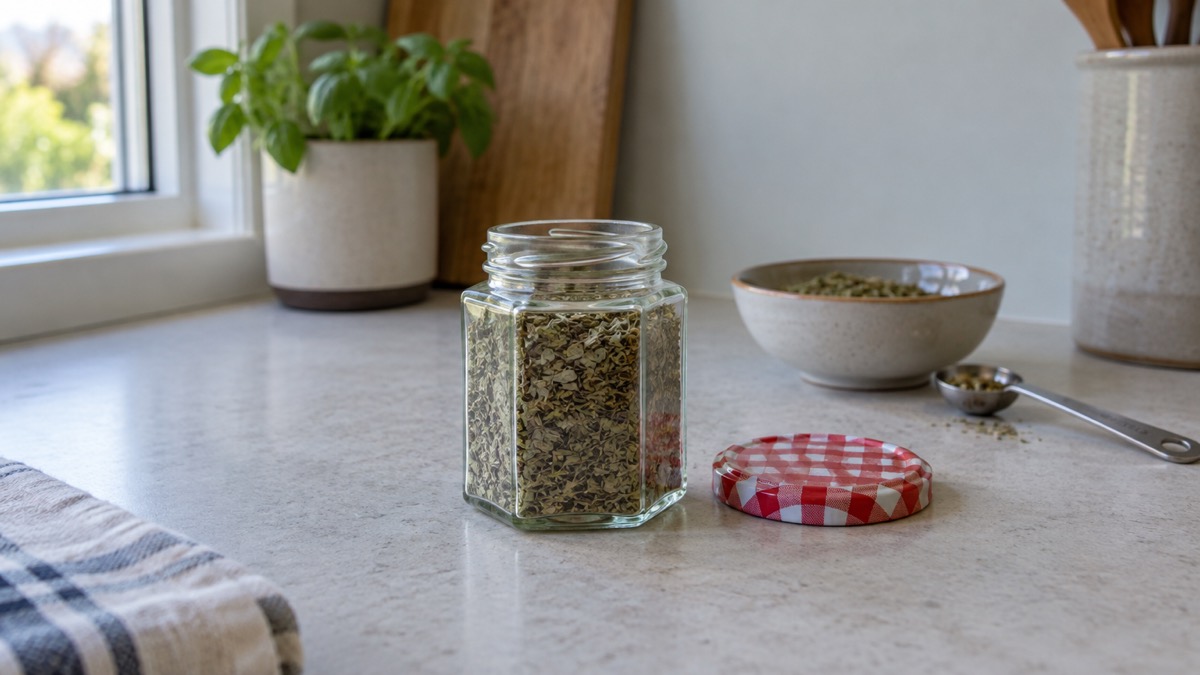
That second instruction is the one that catches people out, because a glass jar looks like the obvious thing to fill with hot liquid. The maker's warning is plain, and it applies to both sizes. If you are making jams, chutneys or other preserves, follow a proper preserving method and use the right kind of jar for it; our guide to sterilising jars for preserving sets out the safe approach, and can you pour boiling water into a glass jar explains why the answer is not simply yes. For the twist top jar, keep it to dry goods and to preserves that have already cooled.
For day to day cleaning, both sizes are dishwasher safe1. Dry the jar and lid fully before refilling with dry goods, so that no residual moisture sits against herbs or spices.
Keeping a store ready: filling, labelling and rotating
A jar only helps an emergency store if it is full, labelled and in date. Fill jars from larger bags of dry staples, write the contents and the date on the lid or a label, and put the newest at the back. Our guide to rotating your store explains first in, first out in detail, and keeping a long-term store cool, dry and free of pests covers where jars should sit. Glass is heavy and breakable, so keep jars low and back from shelf edges, and away from the floor in a room that could flood; where to keep an emergency store if your area floods sets out the reasoning.
- Stock cubes and dried yeast, kept dry and airtight
- Seeds and small quantities of rice or pulses for the first days of a disruption
If you are deciding between container types for a bigger dry store, mylar bags or glass jars for dry food compares the two, and the long-term food storage kit checklist lists what a full set-up includes. The twist top jar sits at the small end of that kit: it is not the container for a bulk sack of rice, but it is the right one for the flavourings that make the rice worth eating.
Where it fits a household emergency plan
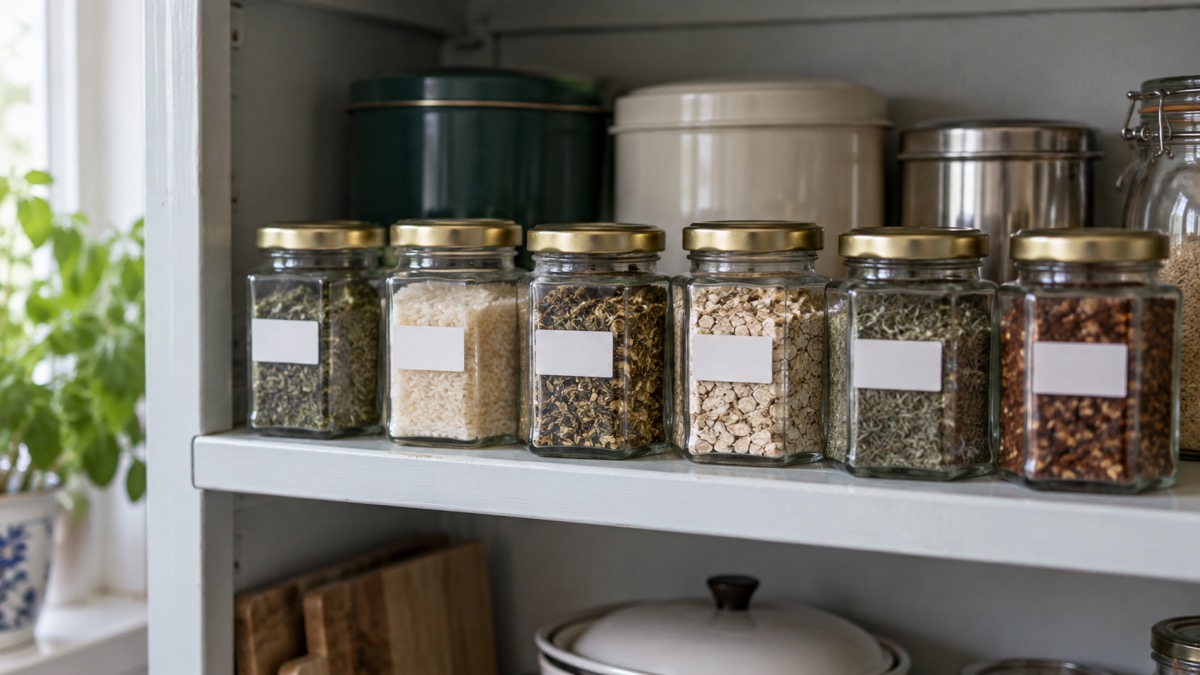
The twist top jar earns its place in a store for three reasons. It is airtight, so dry goods keep1. It is clear, so you can see what you have. And it is reusable, so the same jar serves year after year1. In a power cut or a spell of bad weather that keeps you at home, the difference between a dull meal and a decent one is usually a stock cube, a pinch of spice or a spoon of something sharp, and those are exactly the things that go stale first in a paper packet.
It is not the right jar for everything. It holds 110ml or 280ml, so it is not a bulk container. It is glass, so it is not the thing to pack in a grab bag that will be thrown into a car. And it is not a boiling-water preserving jar, as the maker's warning makes clear1. Used within those limits, it is a small, durable, made-in-England piece of kit that keeps the useful parts of a store usable.
For the wider picture, start with emergency food: a household guide and what to keep in an emergency store cupboard. If you are beginning from nothing, starting a store cupboard supply step by step sets the order of work, and how much emergency food to store per person helps you size it. The rest of the Kilner range includes other jar types if you need a larger container or a clip-top preserving jar.
Support, spare parts and the maker's details
The maker's product pages for the 110ml and 280ml jars carry the specifications, the care instructions and the safety warning quoted above1. If a lid is damaged or lost, the maker's own product information is the place to check what is available for that size, since the one-piece lid is specific to the jar. Keep the lid with its jar rather than mixing lids between sizes, and check the seal is clean and undamaged before each refill.
There is no recall affecting this product in the information available here. If you already own these jars, the practical steps are simple: wash them, check the lids, fill them with dry goods you will actually use, label and date them, and keep them where you will see them. That is the whole of the maintenance this jar asks for.
Sources (2)
- Kilner Hexagonal Twist Top Jar 280ml, Kilner, 2026-10-28
- Kilner Hexagonal Twist Top Jar 110ml, Kilner, 2026-10-28
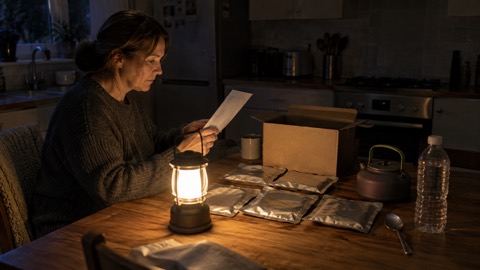 Expedition Foods 1 Week Rations
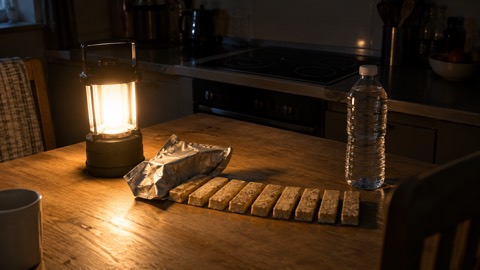 NRG-5 Emergency Ration
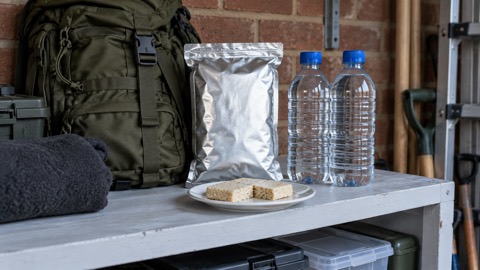 NRG-5 ZERO Ration
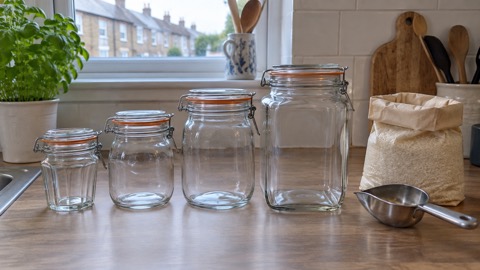 Kilner Clip Top Jar
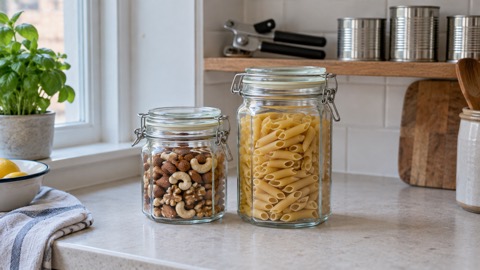 Kilner Facetted Clip Top Jar
 Kilner Round Twist Top Jar
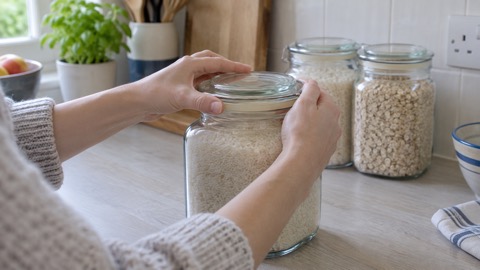 Kilner Universal Push Top Jar
 Expedition Foods Rolled Oats
 OxyFree Oxygen Absorbers