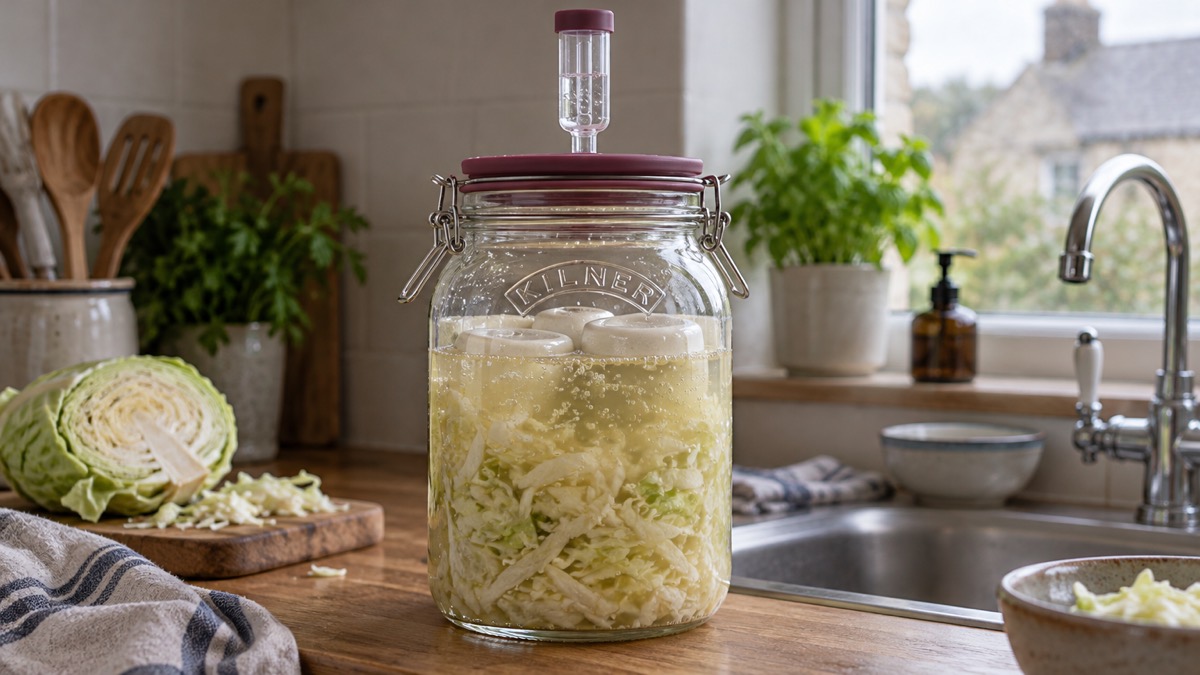
A Kilner fermentation jar is a glass jar with a lid built to let gas out of a ferment while keeping air from getting in. The Kilner Fermentation Set does that in one 3 litre jar, or 3000ml, which the maker describes as perfect for fermenting a large quantity and then decanting it1. The set arrives with two ceramic weights, a silicone lid, an air lock and a recipe and instruction booklet, so you can start a batch of sauerkraut, kimchi or pickles without buying the parts separately1.
The job it does is simple. You pack vegetables, filtered water and salt into the jar, the silicone lid lets the gases escape, and the air lock keeps outside air away from the food1. The maker's own guidance is to wash everything before first use and to make sure the set is clean and free of any food remnants before you begin2. If mould appears in the ferment, the maker says to discard the batch and start again3.
This page covers what the set contains, how the airlock works, how to fill and look after it, and how to use the jar safely. It is written for a household trying fermented vegetables for the first time, and for anyone deciding between the large jar and the smaller two jar set.
What the Kilner Fermentation Set is for
The set is a fermentation kit rather than a storage jar. The maker describes it as providing the easy way to create large batches of your own fermented foods, and lists sauerkraut, kimchi, pickles and much more as what it suits1. The method the maker gives is deliberately short: just add your favourite vegetables, filtered water and salt1.
What separates it from an ordinary Kilner jar is the lid. The silicone lid with air lock allows gases to be released but does not allow air to enter the jar during the fermentation process1. That matters because the gas given off by a working ferment has to escape, while air getting in is what usually causes foods to go mouldy2. A jar with a plain sealed lid does neither job on its own.
The set sits within a wider Kilner range that includes preserve jars for jams and chutneys, clip top jars for dry and pickled stores, and storage jars4. If you want to compare the fermentation jar with the rest of the range, the Kilner brand page sets out the types side by side. For the method itself, from preparing vegetables to brining, the guide to fermenting vegetables at home covers sauerkraut, kimchi and brines in more detail than a product booklet can.
The maker also sells a fermentation packer, described as an essential tool for preparing and packing vegetables to create fermented foods5. It is suitable for the Kilner 3 and 5 litre specialist fermentation sets but can also be used with a variety of wide mouth jars from the collection5. It is an optional extra, not part of the set.
What comes in the 3 litre set
The 3 litre set contains five items, and it is worth checking them against the box before you start1:
- 1 x Kilner 3 litre fermenting jar
- 2 x ceramic weights
- 1 x air lock
- 1 x silicone lid
- 1 x recipe and instruction booklet
The maker packs it in a full colour gift box with the recipe and instruction booklet, and describes it as ideal for gifting1. The booklet is the place to start, because it carries the maker's instructions for the batch you are making.
The smaller option is a set of two 1 litre fermentation jars. Each jar holds 1 litre, and the set includes two glass weights, two stainless steel lids with silicone valves and one recipe booklet2. The maker describes that set as perfect for creating live cultures of sauerkraut, kimchi, pickles and much more2. The glass in those jars is made from high quality sodalime glass with consistent wall thickness ensuring no weak points2.
| Feature | 3 litre Fermentation Set | Set of 2 x 1 litre Fermentation Jars |
|---|---|---|
| Capacity | 3 litres / 3000ml in one jar1 | 1 litre per jar, two jars2 |
| Weights | 2 x ceramic weights1 | 2 x glass weights2 |
| Lid | Silicone lid with air lock1 | Stainless steel lids with silicone valves2 |
| Booklet | Recipe and instruction booklet1 | Recipe booklet2 |
| Dimensions | 170mm long, 170mm wide, 320mm high1 | 240mm long, 102mm wide, 204mm high2 |
| Dishwasher | Dishwasher safe, hand wash the airlock1 | Jars dishwasher safe, lids hand washed and dried immediately2 |
Capacity: one 3 litre jar or two 1 litre jars
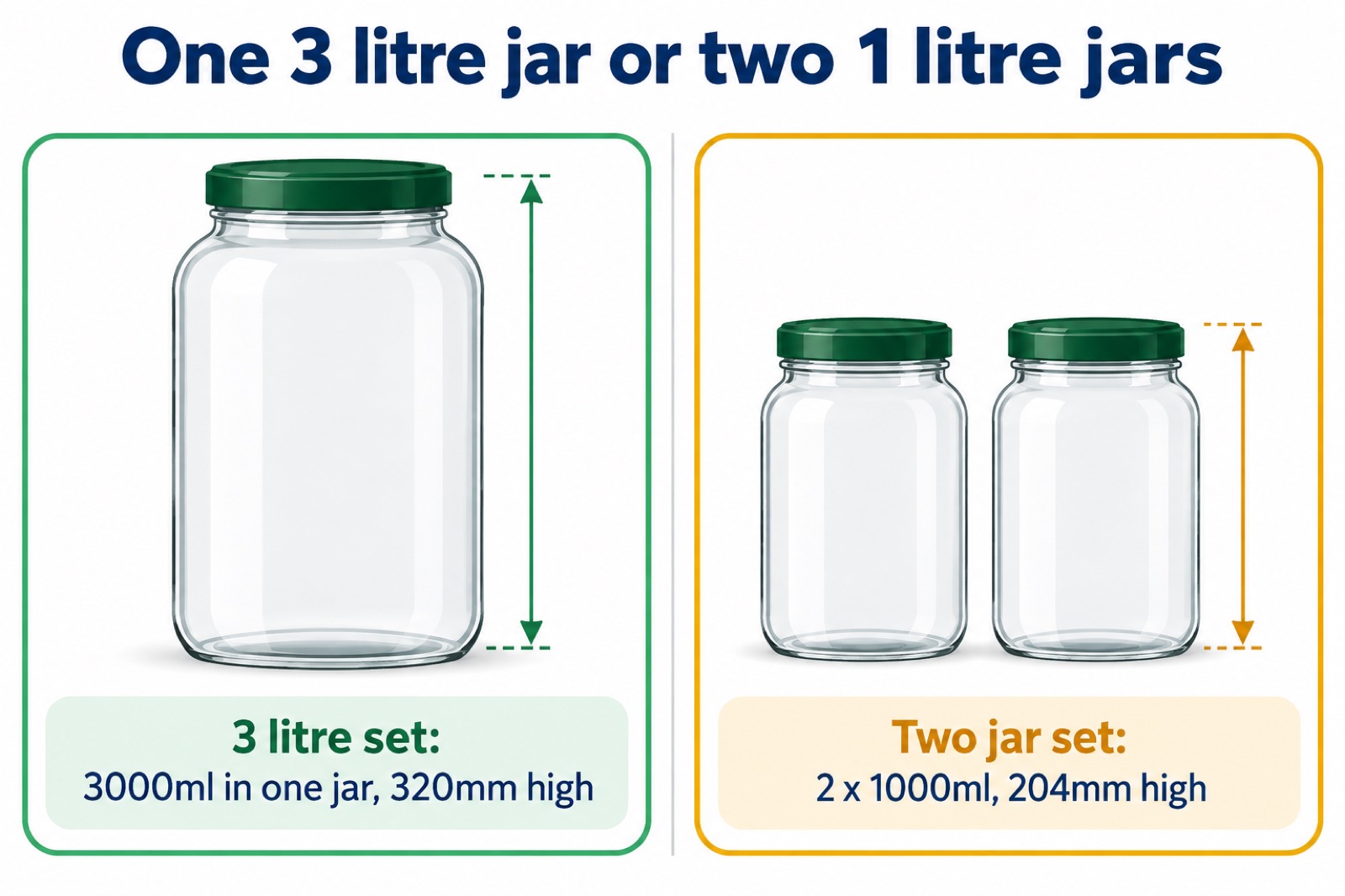
The choice between the two sets is mostly about batch size and bench space. The 3 litre jar holds 3 litres, or 3000ml, in a single vessel, which the maker frames as fermenting a large quantity and then decanting it1. The two jar set gives you 1 litre in each jar, so you can run two different ferments at once rather than one large one2.
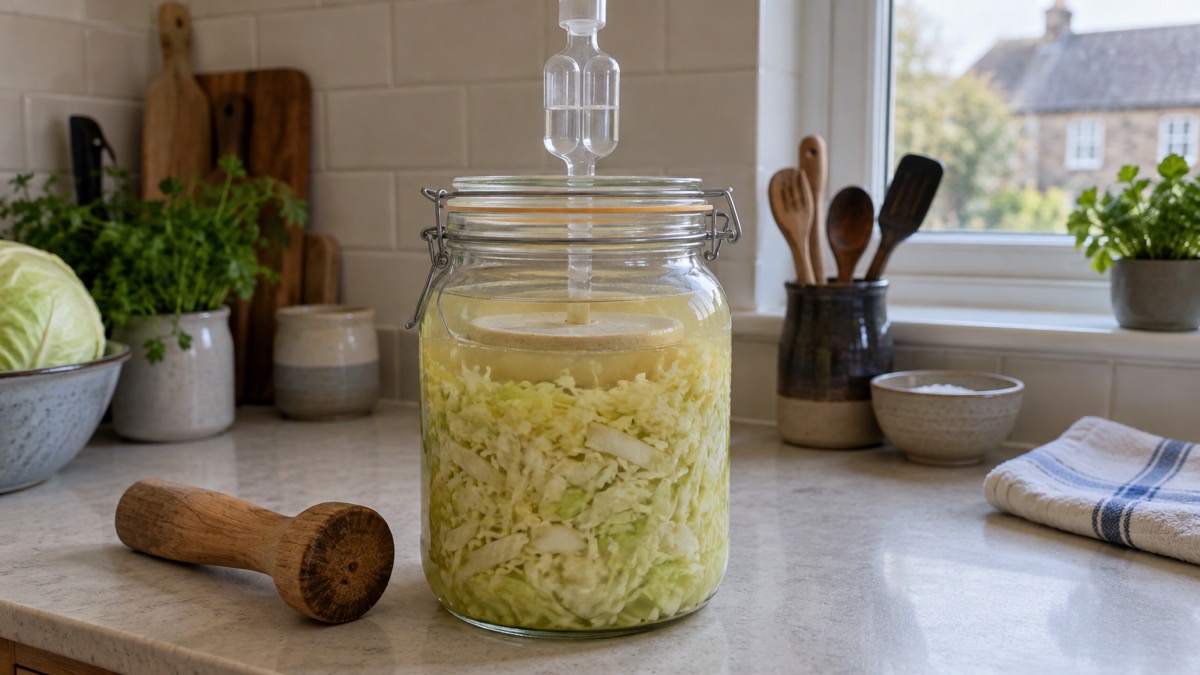
The dimensions decide where it will live. The 3 litre set measures 170mm long, 170mm wide and 320mm high, so it is tall and narrow1. The 1 litre jars measure 240mm long, 102mm wide and 204mm high as a pair, so they are shorter and take up more length on a shelf2. Measure the cupboard or worktop before you commit, particularly if you plan to keep the jar out of direct light while it works.
A larger jar suits a household that gets through a lot of one ferment, or that wants to decant into smaller jars once it is ready. Two smaller jars suit someone who wants to try sauerkraut and kimchi side by side, or who would rather not have a single large batch go wrong. Neither is better in itself; the maker sells both as fermentation sets with the same purpose1.
Wash everything before first use
The maker's instruction is the same across the range: wash before first use2. For the fermentation set specifically, the guidance is to ensure the set is clean and free of any food remnants before use3. That applies to the jar, the weights, the lid and the air lock.
For glass jars generally, the maker's sterilising guidance is to wash your jars in warm soapy water and leave to dry to remove any initial dirt or grime6. When handling hot jars and lids during sterilising, the maker says to always take care and use the appropriate equipment such as jam jar tongs or oven gloves6. A ferment jar does not need to be sterilised in the way a jam jar does, but it does need to be genuinely clean.
Once everything is washed and dry, fit the lid securely. The maker's fermentation guidance is explicit: always ensure the lid is securely fitted onto the top of the jar to create an air tight seal3. A lid that is not seated properly defeats the point of the airlock.
Filling the air lock and keeping the seal
The air lock is the part that does the work during fermentation. The silicone lid with air lock allows gases to be released but does not allow air to enter the jar during the fermentation process1. On the two jar set, the maker explains the same mechanism: the silicone valve in the lid releases the gas that builds up inside the jar during the fermentation process, whilst also blocking any air from entering the jar, which usually causes foods to go mouldy2.
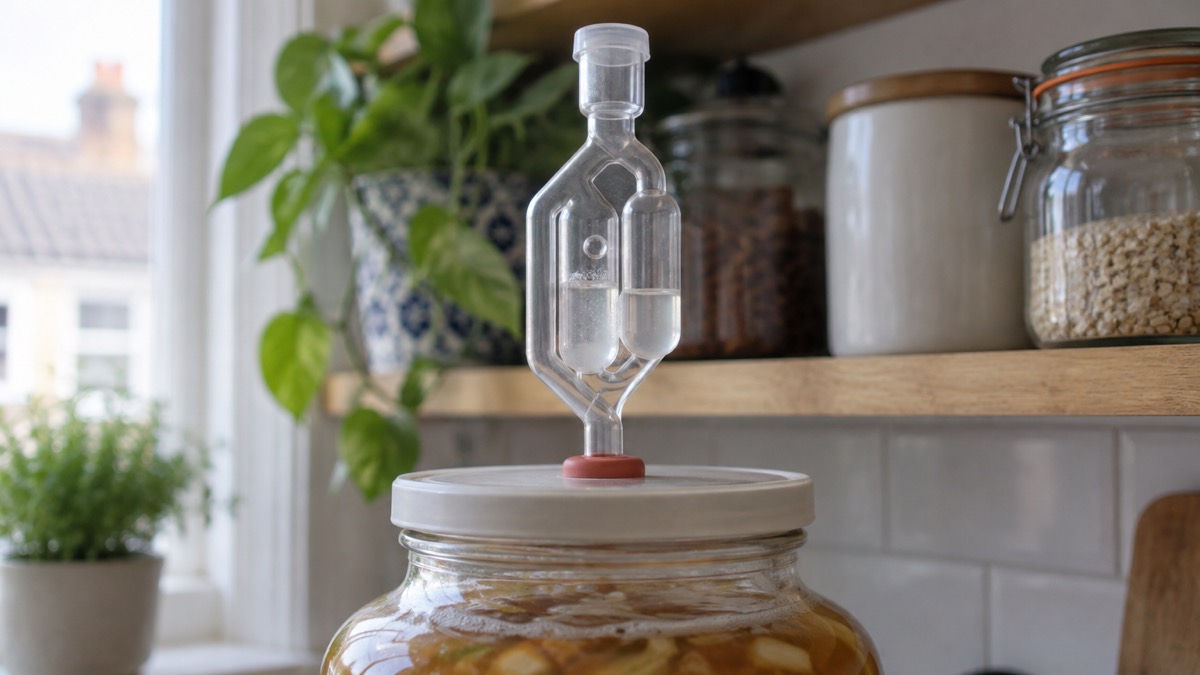
The air lock holds water, and that water is what seals the vent. Fill it halfway and top it up as the water drops, checking it each time you look at the jar. Keep the water level topped up for as long as the ferment is working2.
The maker's safety instruction if something goes wrong is clear: if mould appears in the ferment, discard the batch and start again3. Do not skim it and carry on. The same guidance stresses the secure lid, because an air tight seal is what keeps the batch working as it should3.
For comparison, a vacuum seal works differently. In canning, air is driven from the jar during heating and as it cools a vacuum seal is formed which prevents recontamination7. A ferment is not heat processed in that way; it relies on the airlock and the brine instead. The two methods are not interchangeable, and the fermentation set is built for the first.
Caring for the air lock and the glass
The cleaning rules differ by part. The 3 litre set is listed as dishwasher safe, with the airlock to be hand washed1. On the two jar set, the jars are suitable for the dishwasher, but the lids need to be hand washed and dried immediately2. Hand washing the airlock and lid protects the silicone parts that make the seal.
The same split appears across the Kilner range: glass jars go in the dishwasher, while lids, discs and screw bands are hand washed only and dried immediately8. It is a consistent maker instruction rather than a quirk of this set.
- Jar: dishwasher safe on both sets1
- Airlock: hand wash only1
- Lids and valves: hand wash and dry immediately2
- Weights: wash before first use2
Store the set clean and dry between batches, with the lid off so the jar can air. Glass that is put away damp will hold moisture and smell, which is exactly what the material is supposed to avoid.
Glass that does not hold odours, flavours or stains
The maker's claim for the glass is consistent across the range: glass is BPA free and does not absorb odours, flavours or stains2. The fermentation set page adds that it is made from natural ingredients so no harmful chemicals or toxins can leak into the food1. The same wording appears on preserve jars, clip top jars and storage jars alike8.
That matters for a ferment jar more than for most kit. A ferment is strongly flavoured and strongly scented, and a material that absorbed either would carry it into the next batch. Glass that does not absorb odours, flavours or stains can be cleaned and reused for a different ferment without the previous one coming through2.
The maker also frames the material as a sustainability point, describing an ethos of reuse, refill and recycle and saying glass is never for single use11. In practice that means the jar has a life beyond the batch: once cleaned, it can be used for storage. If you want an airtight seal for dry stores rather than a ferment, the maker's clip top and push top jars are the types described for that job, with a push top glass lid and silicone gasket providing a secure and airtight seal10.
Using the jar beyond fermentation
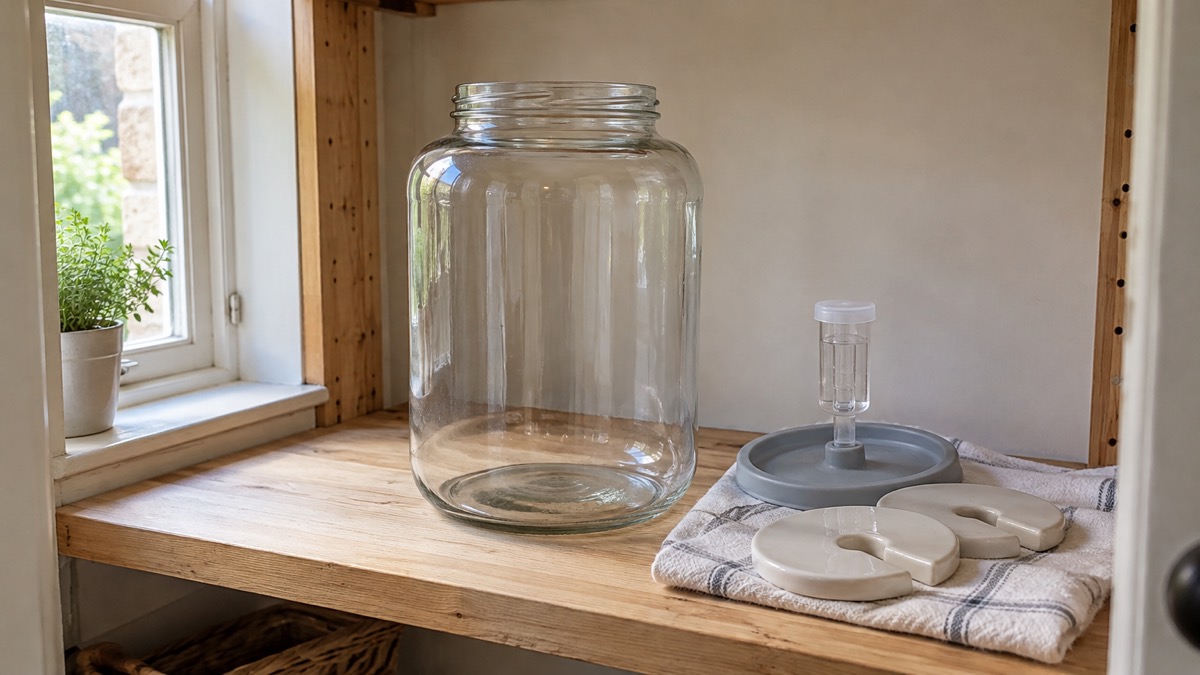
The fermentation set is a fermenting kit, but the jar underneath it is a Kilner glass jar. The maker describes its glass as made to last and never for single use2. Once a batch is finished and the jar is washed, it can go back into service for storage.
If storage is the main job, the range has purpose-built options. Clip top jars use the maker's airtight clip system, designed to keep foods fresher for longer12. Preserve jars use a two-piece lid system comprising a tin disc and screw band to achieve a secure vacuum seal8. Twist top jars suit dried foods such as herbs and spices13. The fermentation jar's airlock lid is not the right lid for those jobs, so keep the ferment lid for ferments and use the appropriate jar for dry stores.
The maker's wider range is organised by size, with categories for 0 to 499ml jars, 0.5 to 0.99 litre jars, 1 litre jars and 1.5 to 4 litre jars4. That makes it straightforward to add a storage jar in the size you need without buying another fermentation set.
Where to get help and more guidance
The recipe and instruction booklet in the box is the first place to look for the maker's method, and it comes with both the 3 litre set and the two jar set1. The maker's own fermentation guide carries the safety points reproduced here, including the instruction to discard a mouldy batch and to fit the lid securely3.
For the wider method, from choosing vegetables to brining ratios, the guide to fermenting vegetables at home covers sauerkraut, kimchi and brines. If you are building up a preserving shelf, the home preserving equipment checklist sets out what a household needs alongside a ferment jar. For storing a finished harvest rather than fermenting it, storing the harvest covers roots, onions, squashes and apples.
The Kilner brand page lists the range, and the Kilner Clip Top Jar page covers the clip top type if you want an airtight storage jar rather than a ferment. For the wider picture on keeping food at home through a disruption, the emergency food guide covers stores, safety and meals without power.
Sources (13)
- Kilner Fermentation Set 3 Litre, Kilner, 2026-11-04
- Set of 2 Fermentation Jars 1 Litre, Kilner, 2026-11-04
- Guide to Fermentation, Kilner, 2026-11-04
- Kilner Jars, Kilner, 2026-11-02
- Fermentation Packer, Kilner, 2026-11-04
- Sterilising Jam Jars and Hygiene, Kilner, 2026-10-29
- How to Can, National Center for Home Food Preservation, 2026
- Preserve Jar 1 Litre, Kilner, 2026-10-29
- Clip Top Round Jar 3 Litre, Kilner, 2026-11-04
- Universal Push Top Storage Jar 0.85 Litre, Kilner, 2026-10-28
- Cheese Store, Kilner, 2026-11-04
- Clip Top Square Jar 1.5 Litre, Kilner, 2026-10-28
- Round Twist Top Jar 370ml, Kilner, 2026-10-28