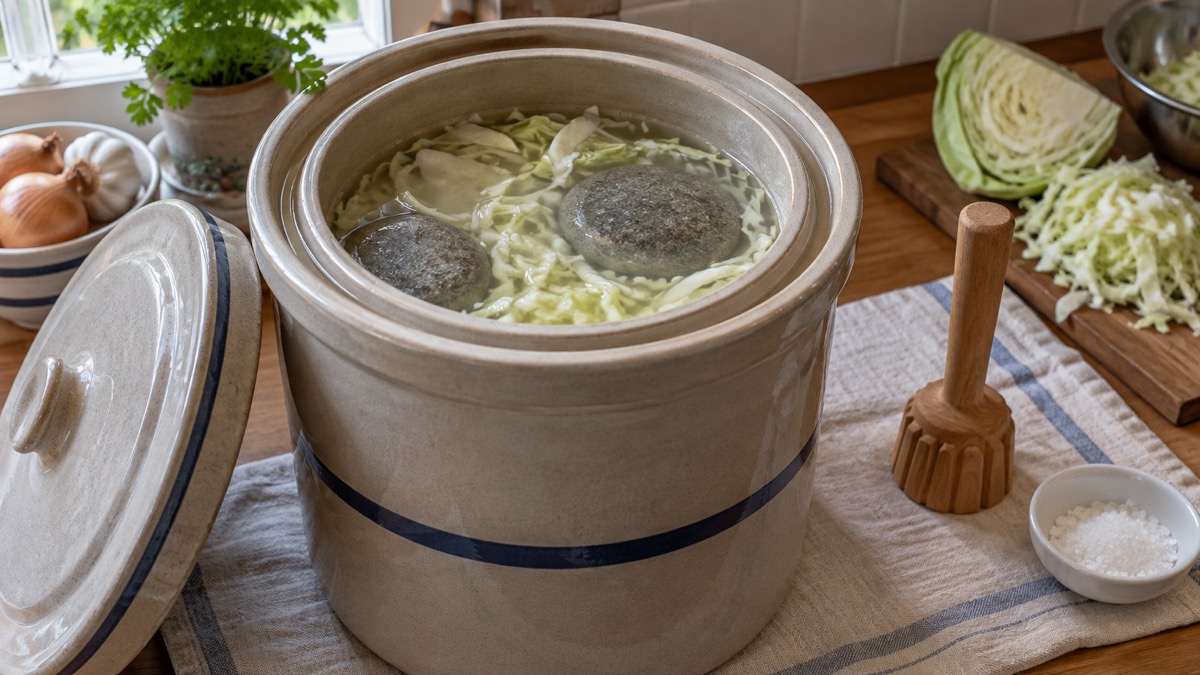
Fermenting vegetables is one of the oldest ways of keeping a harvest, and one of the few that needs no freezer, no power and no special skills to start. When you pack vegetables in salt and keep them under their own brine, good bacteria already present on the food break down its sugars and turn them into acids, gases or alcohols, and those acids act as a natural preservative1. That is the whole principle behind sauerkraut, kimchi and salted pickles: you are not preserving the food yourself, you are setting up conditions in which bacteria do it for you.
The government's home food preservation guidance is clear about what matters most: wash your hands thoroughly before, during and after preparing food, clean and sanitise your work surfaces and equipment, use fresh ingredients, use suitable containers, and use reputable instructions and follow them exactly, including any temperatures and processing times the recipe specifies1. Fermentation is forgiving of small variations but not of poor hygiene or an untested recipe.
This page covers what fermentation is, what to do step by step, what equipment helps, how to keep a batch safe, and how the official advice differs between the nations of the UK. It sits alongside other ways of keeping a glut: freezing home-grown produce, storing roots and squashes, and the wider self-reliance pages on growing and preserving your own food.
What fermentation actually is
Fermentation is a process that transforms raw ingredients into a wide array of flavourful, preserved and often nutritionally enhanced products3. It is driven by microorganisms, such as bacteria, yeast and moulds, that break down carbohydrates and other organic compounds in the absence of oxygen3. In vegetable fermentation, the microorganisms doing the work are the lactic acid bacteria naturally present on the surface of the vegetables, which is why the method is often called lacto-fermentation.
The government's guidance on home food preservation describes the same process from the household's point of view: "When good bacteria break down sugars in the food and turn them into acids, gases or alcohols", the result is a natural preservative1. Those acids lower the environment in the jar to a point where spoilage organisms cannot take hold, which is why a properly made ferment keeps for weeks or months where raw cabbage would not.
"When good bacteria break down sugars in the food and turn them into acids, gases or alcohols."
Two practical points follow from the science. First, the bacteria need to be able to work without oxygen, which is why vegetables are kept submerged under brine and why a sealed or airlock lid helps. Second, the salt in the brine is not there mainly for flavour: it favours the good bacteria and holds back the organisms that would otherwise spoil the food. This is why the government's instruction to follow a tested recipe exactly matters so much here: the recipe sets the salt level, the temperature and the time, and departing from it changes the conditions the bacteria depend on1.
Fermentation is not only a way of keeping food. It is also a way of eating well through winter on what your garden or allotment produced. NHS guidance on staying warm and nourished advises including plenty of fruit and vegetables, whether fresh, frozen, tinned or dried4, and fermented vegetables are one more way of keeping vegetables in the household's diet when fresh supplies run short.
What to do: fermenting a batch, step by step
The steps below follow the government's home food preservation guidance1. The recipe itself, including the quantity of salt and how long to ferment, should come from a reputable, tested source, and you should follow it exactly.
- Start with fresh, sound vegetables. Use fresh ingredients, as the guidance advises1. Sort out any bruised, damaged or mouldy pieces before you begin, and compost anything not worth keeping.
- Wash your hands and everything else. Wash your hands thoroughly before, during and after preparing food, and clean and sanitise your work surfaces and equipment1.
- Wash the vegetables properly. Rub them in a bowl of fresh water rather than under a running tap: NHS guidance in Scotland explains this reduces splashing and so reduces cross-contamination2.
- Check your containers. Check jars, lids and containers for damage and discard damaged ones, and sterilise containers when the recipe instructs you to1.
- Prepare the vegetables and brine exactly as the recipe says. Use reputable instructions and follow them exactly, including any temperatures and processing times1. Do not reduce the salt or shorten the time to suit yourself.
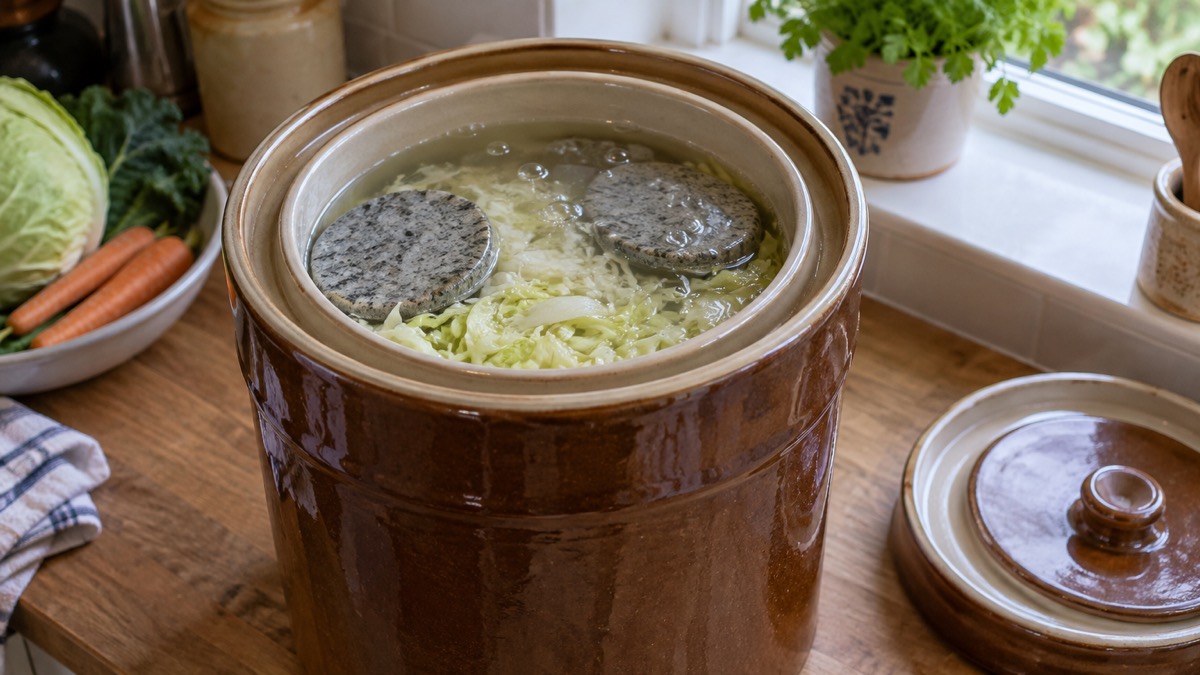
- Keep the vegetables under the brine. The bacteria that preserve the food work without oxygen, so the vegetables need to stay submerged3. Use a weight or the follower that comes with your fermentation set.
- Label and date the jar. The guidance tells you to label and date preserved foods1, so you always know how old a batch is.
- Check the ferment regularly. Look, and smell, every few days. Check stored foods regularly for spoilage1, and discard anything that has clearly gone wrong.
- Store and use within the recommended shelf life. Follow the recipe's storage instructions and use the ferment within its recommended shelf life1.
A small ferment you may already do
If you save your own seed, you have probably fermented vegetables already, in miniature. For fleshy seeds such as tomatoes and cucumbers, the Royal Horticultural Society advises fermenting the seed for three days to remove the jelly-like coating, then rinsing in water and drying in a warm place5. Three days is the only fermentation duration this page can state with a source behind it, and it belongs to seed saving rather than food. For sauerkraut and kimchi, take the timing from your tested recipe rather than from general advice.
Growing vegetables to ferment
Fermenting is at its most useful when the garden produces more than you can eat. When deciding what to grow, the RHS suggests making a list of the vegetables your household actually likes to eat and pointing out the less obvious vegetables needed for recipes, such as onions and garlic6, both of which appear in ferments. Thinking about the recipes you plan to ferment before you order seed means the harvest matches the preserving you will actually do, rather than leaving you with gluts you have no use for.
For general growing advice, see growing your own vegetables and what to sow and harvest each month. If you are saving seed from the same crops, that is covered in detail in keeping vegetable varieties pure.
What you need
The equipment list for fermenting is short, and the government's guidance sets the standard for all of it: containers must be suitable, undamaged, clean, and sterilised whenever the recipe says so1.
| Item | What it does | What the guidance requires |
|---|---|---|
| Jar, crock or fermentation set | Holds the vegetables and brine | Suitable container; check for damage and discard damaged ones1 |
| Lids or airlock | Keeps air out while letting gas escape | Clean and undamaged; sterilise when instructed1 |
| Weight or follower | Keeps vegetables under the brine | Not specified in guidance, but needed for the oxygen-free conditions fermentation requires3 |
| Knife and board | Prepares the vegetables | Clean and sanitise equipment and surfaces before use1 |
| Labels and pencil | Records what and when | Label and date preserved foods1 |
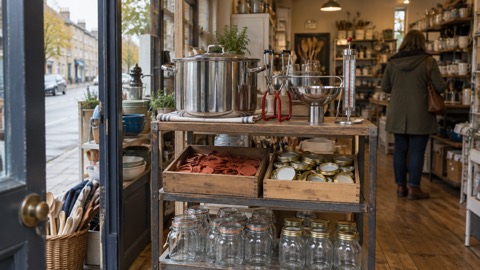
A purpose-made fermentation set with an airlock lid, such as the Kilner fermentation set, is designed to let the gases of fermentation escape while keeping air out, which suits the oxygen-free conditions the process needs3. It is a convenience rather than a necessity: the government's guidance asks for clean, suitable, undamaged containers, not any particular brand or design1. A full list of jars, funnels, thermometers and other kit is in the home preserving equipment checklist.
Whatever you use, inspect it before every batch. A chipped jar rim or a corroded lid can introduce contamination or fail to seal, and the guidance is explicit: discard damaged containers1. Make sure equipment and containers are clean before use, every time1.
Staying safe: hygiene, spoilage and what to do about mould
Fermentation is safe when it is done properly, and the risks come from the same places as any home food preparation: poor hygiene, damaged equipment, untested recipes and neglect.
Hygiene before and during
The government's home preservation guidance covers the essentials: wash your hands thoroughly before, during and after preparing food, clean and sanitise work surfaces and equipment, and make sure equipment and containers are clean before use1. NHS guidance on preparing and cooking food safely adds the cross-contamination rules that apply in any kitchen: keep raw meat and unwashed vegetables separate from ready-to-eat foods, use different chopping boards, plates and utensils for raw and cooked food or wash them thoroughly between uses, and wash hands, worktops and utensils thoroughly after touching raw meat, poultry, fish and eggs2. If you ferment in a kitchen where raw meat is handled, these rules matter as much as they do for any other food.
When washing the vegetables themselves, rub them in a bowl of fresh water rather than under a running tap. NHS guidance explains that this reduces splashing, and splashing is one of the ways contamination spreads around a kitchen2.
Recognising a batch that has gone wrong
The government's guidance gives you the ongoing duty: regularly check stored foods for spoilage, and use preserved foods within their recommended shelf life1. Apply that from the first day of the ferment, not only after it is finished.
The reason for this firmness is the nature of the process itself. Fermentation is driven by microorganisms, including bacteria, yeast and moulds3. A batch that has been left too warm, under-salted against the recipe, or exposed to air at the surface can let the wrong organisms take hold, and you cannot reliably tell by looking which ones they were. This is also why the guidance insists on fresh ingredients and undamaged containers: both reduce the load of unwanted organisms at the start1.
Fermenting compared with freezing
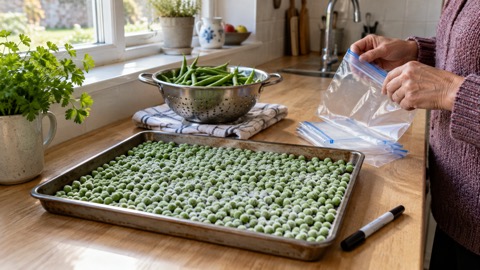
Freezing is the other main way of keeping home-grown vegetables, and the two methods suit different households. Chilling, freezing and defrosting food properly helps stop harmful bacteria from growing7, and blanching vegetables before freezing is recommended because it slows or stops the action of enzymes which cause loss of flavour, colour and texture, cleanses the surface of dirt and organisms, brightens the colour, helps retard loss of vitamins and makes vegetables easier to pack8. The full method is in why blanch vegetables before freezing and freezing home-grown produce.
The practical difference in an emergency is power. A freezer stops working in a long power cut; a jar of sauerkraut does not care. That is why fermenting earns its place in a prepared household alongside frozen and fresh stores, as part of the wider approach in emergency food.
Where Scotland, Wales and Northern Ireland differ
The process of fermenting is identical across the UK, but the official guidance is organised by nation, and it is worth knowing whose advice applies to you.
The government's home food preservation guidance applies to England, Northern Ireland and Wales1. Advice on food in England, Wales and Northern Ireland is issued by the Food Standards Agency, and in Scotland by Food Standards Scotland9. So a Scottish household should treat the UK-wide guidance as a starting point and also check Food Standards Scotland's own food safety advice.
The food safety advice that applies in England, Wales and Northern Ireland is issued by the Food Standards Agency, and in Scotland by Food Standards Scotland. The devolved governments in Scotland, Wales and Northern Ireland also provide advice for their residents10.
There is nothing in the fermenting process itself that changes at a border: the same hygiene, the same tested recipes, the same checks for spoilage. What differs is which body's guidance you should read alongside this page, and whose food safety alerts apply to you.
Where to go next
Fermenting is one piece of keeping a household fed from its own garden or allotment through the year. Garden Organic's general vegetable growing guidance covers the crops that fill the fermenting jar11, and its harvesting and storage advice covers what to do with the rest of the crop: for example, pick green tomatoes before the first frost and ripen them by hanging the whole vine in a cool dry place, or by wrapping individual fruit in paper and storing them in trays12. Related pages on this site cover storing the harvest, composting what you do not use, and the full range of self-reliance at home topics.
Sources (12)
- Consumer advice for food preservation at home, GOV.UK, 2026-10-26
- Preparing and cooking food safely, NHS inform, 2025-02-21
- How to Ferment, National Center for Home Food Preservation, 2026
- Stay warm and nourished, NHS Norfolk and Suffolk, 2026-10-16
- Tips on saving your own seeds, Royal Horticultural Society, 2026
- What shall we grow?, Royal Horticultural Society, 2026
- How to chill, freeze and defrost food safely, GOV.UK, 2017-12-18
- How to Dry, National Center for Home Food Preservation, 2026
- What to do in a chemical emergency, GOV.UK, 2024-10-10
- How would you prepare for an emergency?, NHS Cheshire and Merseyside, 2024-07-10
- How to grow vegetables and herbs, Garden Organic, 2026-10-29
- Harvesting and storing vegetables, Garden Organic, 2026-10-29
 Hydroponic System Parts List
 Year-Round Sowing Calendar
 Preserving Equipment Checklist
 Getting an Allotment
 Composting at Home
 Vegetable Pests and Diseases
 Freezing Home-Grown Produce
 Growing Fruit at Home
 Indoor Hydroponics
 Growing Under Cover All Year
 Sowing Seeds
 Storing the Harvest