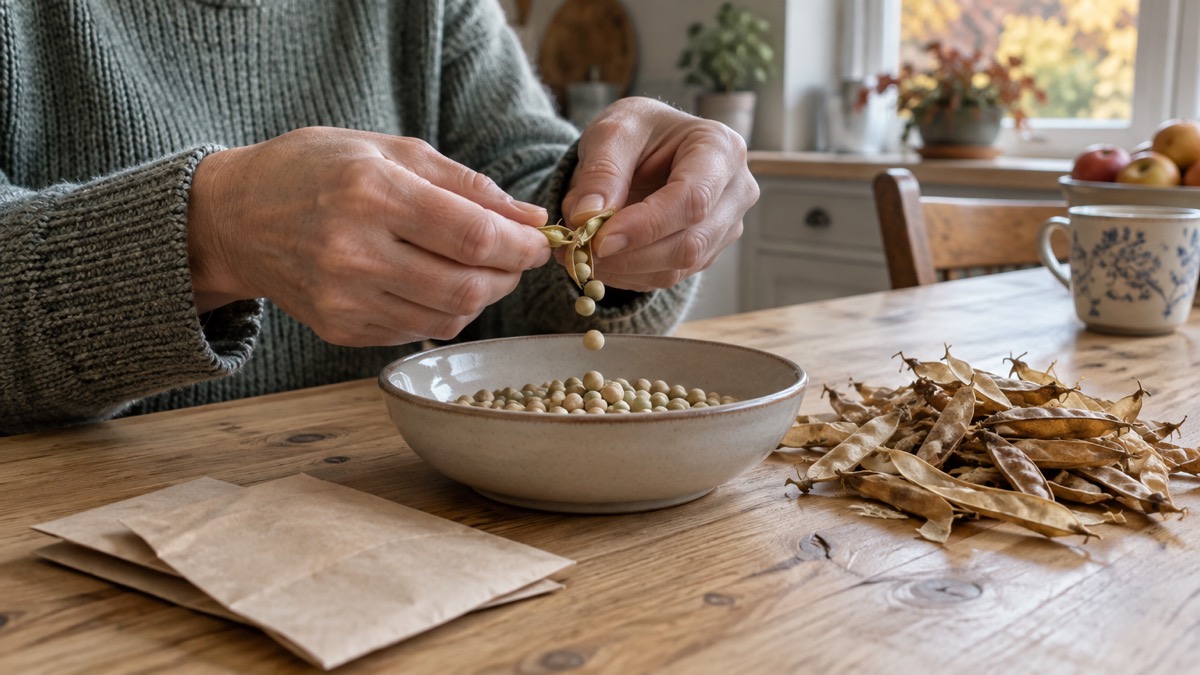
Saving your own vegetable seed is something amateurs have done for thousands of years, well before large seed companies and modern agriculture existed1. The principle is simple: let a healthy plant flower and set seed, collect that seed, dry it, and sow it next year. What decides whether it works is the plant you choose and what is growing near it.
The first rule is to save seed only from open-pollinated varieties, not F1 hybrids2. An F1 hybrid is a first cross between two parent lines, and its seed will not come back true. The second is to keep the variety pure: remove plants you do not want to breed from, and stop pollen from a different variety reaching the ones you keep2. Get those two right and most garden vegetables will give you seed you can sow year after year.
The reward is a variety that suits your own soil and climate. Saving seed each year allows your varieties to adapt to your own specific conditions, and you can note useful traits such as pest or disease resistance as you go1. It also means you are not buying fresh seed for everything every season.
Save seed from open-pollinated varieties, not F1 hybrids
An open-pollinated variety is a stable one: its seed comes back much like the parent. An F1 hybrid is the first generation of a deliberate cross, and saving its seed gives you a mixed and unpredictable next generation. Garden Organic's guidance is direct: you will need to save seed from open-pollinated varieties, not F1 hybrids2.
How do you know which you have? The seed packet or catalogue entry usually says. If a packet does not say, and the seller cannot confirm it, treat it as unsuitable for saving until you know. One supplier, the Real Seed Catalogue, states that none of its seeds are hybrids, so you can save your own for future use rather than buying new each year3.
Some suppliers make the choice easy by selling only non-hybrid seed. The Real Seed Catalogue states that none of its seeds are hybrids, so you can save your own for future use with no need to buy new each year, and it includes saving instructions with its packets5. That is a convenience, not a requirement: any open-pollinated variety from any seller can be saved.
There is a trade-off worth knowing before you commit a bed to seed saving. Courgette guidance from First Tunnels sets it out plainly: hybrid varieties often have better disease and pest resistance, while heritage varieties allow seed collection for next year and are more sustainable6. Neither is wrong. If you want to save seed, choose open-pollinated or heritage types and accept that some may be less resistant than the newest hybrids.
Two simple rules: remove poor plants and prevent cross-pollination
Garden Organic reduces seed saving to two simple rules: remove undesirable individuals and prevent cross-pollination2. Everything else is detail.
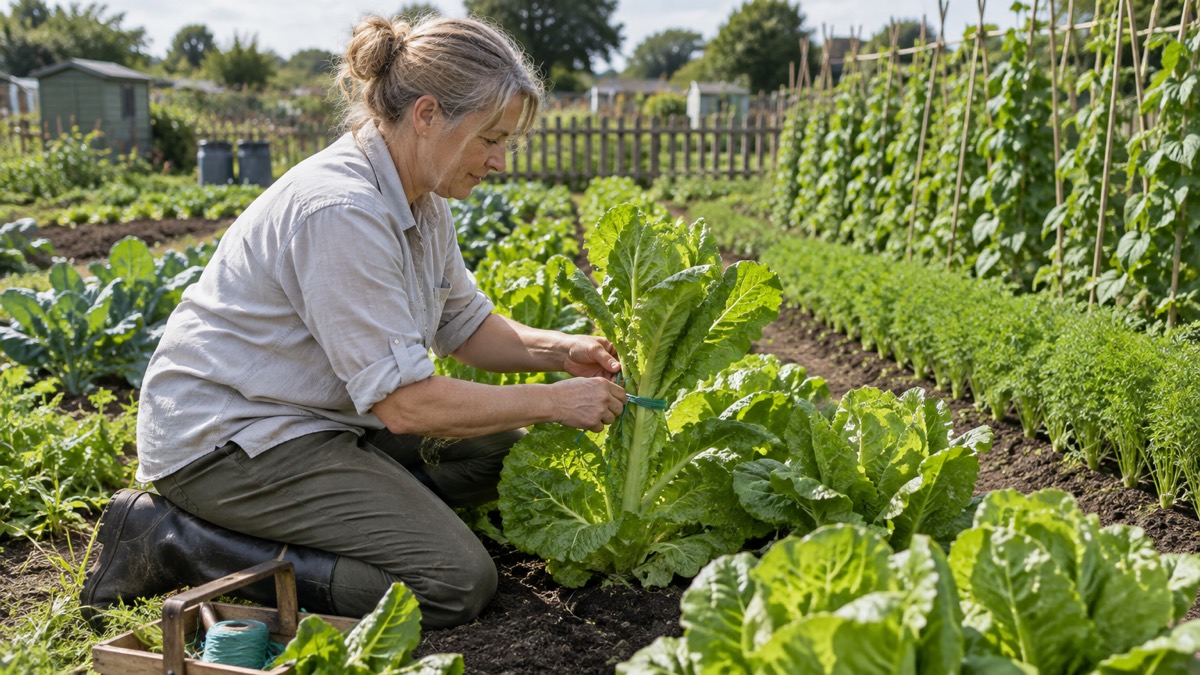
Removing poor plants. Only save seed from healthy looking plants7. Beyond health, you are selecting for what you want more of. With lettuce, select two or three good lettuces from your row and mark them for seed, and it is very important not to save seed from any plants that bolt early, because you want to select for lettuces that stand well4. The same logic applies to any crop: seed from the best, not from what is left.
Preventing cross-pollination. This is where crops differ sharply. Garden Organic separates inbreeding vegetables, such as peas and French beans, which will not cross with each other or cross rarely, from outbreeding vegetables such as brassicas, runner beans, alliums and beetroots, where keeping pollen from different varieties apart matters more than roguing out, and where correcting a mistake takes patience and several seasons2. For outbreeding crops, sow more than you need to allow for roguing out, and check any recommended minimum numbers of plants2.
The practical consequence is a choice of what to grow for seed in any one year. If you want to save from a crop that crosses easily, grow one variety of it, or isolate it. If you want several, pick crops that self-pollinate or cross rarely.
Which crops are easy to save and which need care
Crops fall into rough groups by how readily they cross. Knowing which group you are in tells you how much space, netting or hand pollinating you will need.
| Crop | Cross-pollination risk | What to do |
|---|---|---|
| Peas | Very low: peas do not in general cross very easily3 | Save from several varieties side by side without worry3 |
| French beans | Low: an inbreeding vegetable that will not cross or crosses rarely2 | Precautions still need to be taken when saving seed2 |
| Lettuce | Very low: self-pollinating and very rarely crosses4 | Separate varieties by around 12 foot, or plant a tall crop between the rows4 |
| Sweet peppers | High: peppers cross very easily8 | Grow only one variety, or keep insects out with a net cage or by bagging individual flowers8 |
| Squash, pumpkins, courgettes, marrows | High: they all cross readily with each other4 | Hand pollinate one or more fruits, usually the only way to get pure seed at home4 |
| Carrots | Outbreeding, needs numbers2 | Save from at least 40 good roots to maintain genetic diversity4 |
Squash guidance from Vital Seeds says the same thing in its own words: squash varieties easily cross pollinate, and if you are growing them to save seed it is important that you hand pollinate9. If you grow courgettes for eating and want seed too, plan for hand pollination rather than hoping for the best.
Some crops need a second year. If you have space, leave one leek plant, an onion plant and maybe even a carrot and parsnip plant to over-winter; the next year they will flower and you can save their seeds7. That is a slow route, but it costs nothing but a little bed space.
Herbs are often overlooked. Coriander, dill, parsley, basil and chives can all be grown from saved seed, though basil is easily cross-pollinated, so if growing two varieties together only let one variety flower and seed7. Parsley is generous: if you allow it to set seed you can either collect those seeds to sow or allow the plant to self-seed naturally, and its flowers benefit garden wildlife10.
Peas rarely cross, so several varieties can grow side by side
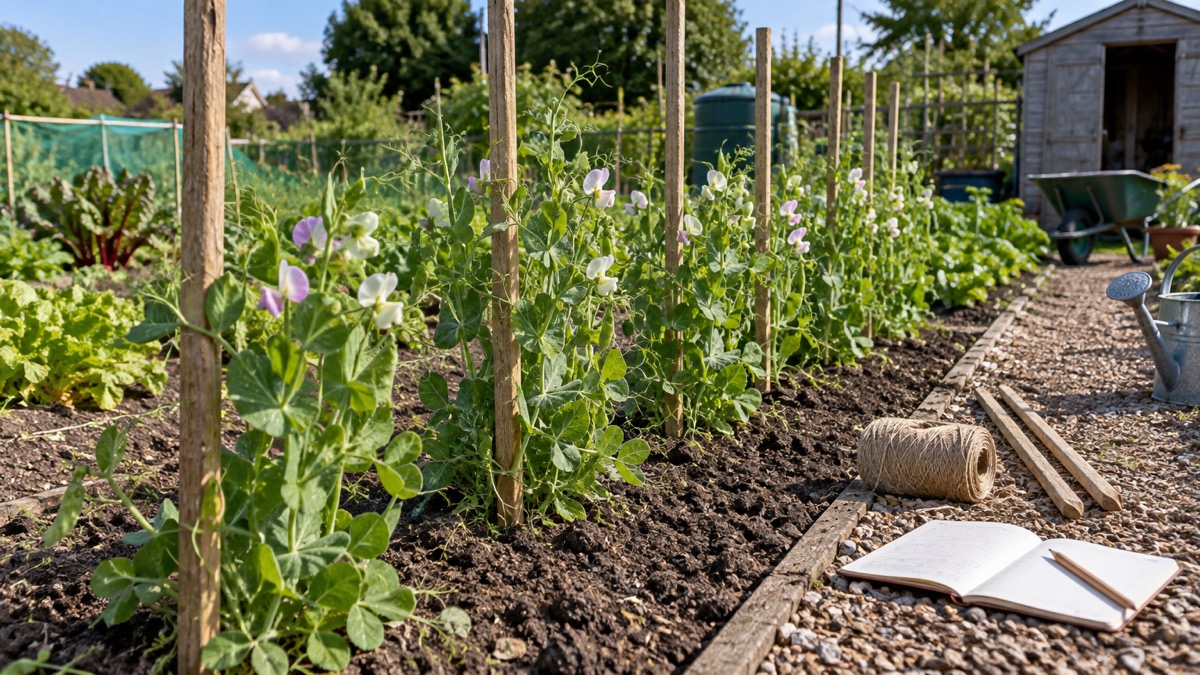
If you want to start with the least fussy crop, start with peas. The Real Seed Catalogue puts it simply: peas do not in general cross very easily, so you can save seed from several varieties without worry3. Garden Organic classes them with French beans as inbreeding vegetables that will not cross with each other or cross rarely, while still advising that precautions be taken when saving seed2.
That combination is worth reading carefully. "Rarely" is not "never", so keep your rows labelled and save from plants that look right for the variety. But you do not need cages, bags or isolation distances to grow three pea varieties in one plot and save from all three.
Peas also dry down well, which makes them a good first project. Let the pods mature on the plant, pick them when the peas inside are hard, and shell them out. The same approach works for French beans, which are in the same low-risk group2.
For a household building up a store of seed, peas and beans are the crops that let you multiply what you have without giving up variety. A row of each of several varieties, saved separately and labelled, gives you a seed cupboard that widens rather than narrows each year.
Keeping seed true to type
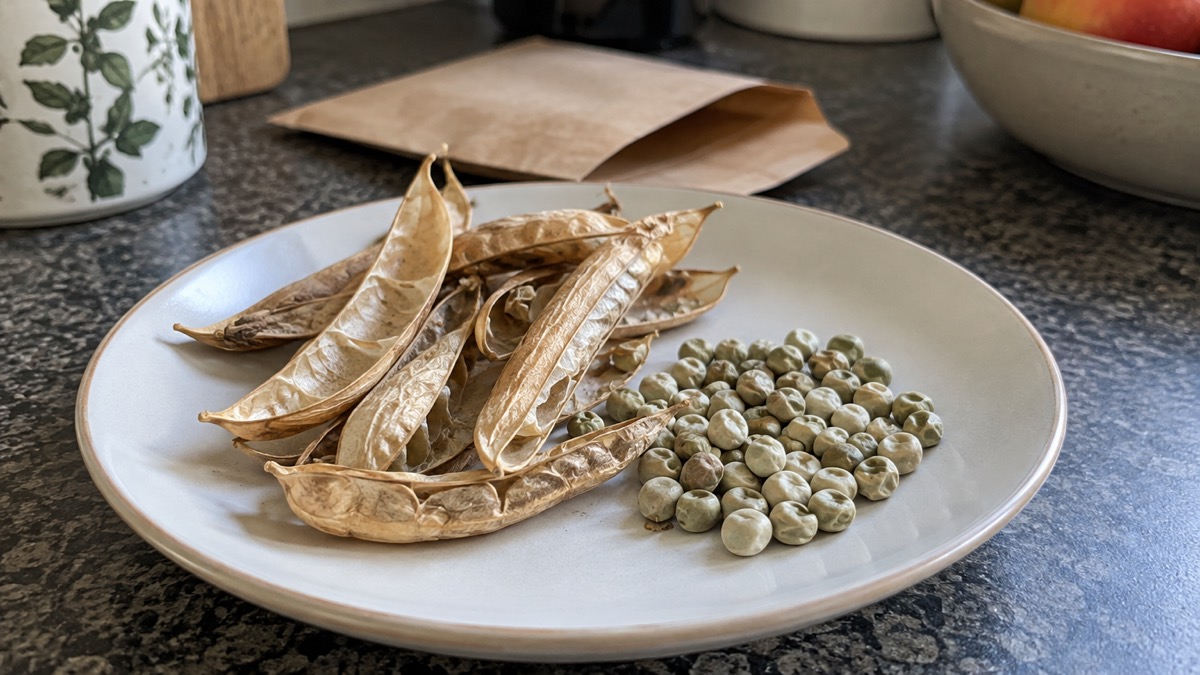
Purity is the whole game. Seed that has crossed with a neighbour may still grow well, but it will not be the variety you thought you saved.
Start with the plant. Only save seed from healthy looking plants7, and mark your best ones early. Vegetables that self-pollinate will most likely produce seed that is the same as its parent7, which is why lettuce, tomatoes and beans are the beginner's crops.
Watch the numbers. For outbreeding crops, the size of the pool matters as much as isolation. Carrots are the clearest case: to maintain a carrot variety effectively you really need to save seed from at least 40 good roots, because with too small a genetic pool you will end up with small, poor quality roots in a very few generations4. Most gardens cannot do that, which is a reason to save from self-pollinators and leave carrots to the seed companies.
Clean and dry the seed properly. Methods vary by crop. For sweet peppers, let the pepper get to its final ripe colour, which may not be what you expect, cut it open, flick out the seeds, air dry, then dry properly for storage8. For tomatoes, water is added and poured off several times to clean them, the seed is rinsed in a sieve and put on a plate to dry11.
Then store it well. Dry seed keeps far better than damp seed, and the drying step is the one people rush. Once dry, keep it cool and labelled, and test a few seeds before committing a whole row to them. Our guide to storing saved seed covers containers and conditions, and how to test whether old seeds will still grow covers the kitchen-paper test.
Saving seed from several varieties in one garden
You can save from more than one variety, but you have to plan the plot rather than the packet. The crop table above is the starting point: group your seed crops by how readily they cross, and put the easy ones together.
A workable arrangement for a small garden:
- Grow several pea varieties and save from each, since they rarely cross3.
- Grow one lettuce variety for seed, or two separated by around 12 foot or a tall crop between the rows4.
- Grow one pepper or squash variety for seed in the year you plan to save, or hand pollinate8.
- Leave the outbreeders such as brassicas, beetroot and carrots for years when you can give them space and numbers2.
- Use herbs as a bonus: let parsley, coriander and dill flower and collect the seed7.
Timing helps too. Choose several varieties of the same vegetable that mature at different times, planting early, midseason and late season varieties to stagger the harvest13. That spreads the work and reduces the chance that two varieties you want to keep apart are flowering at once.
If you are growing under cover, remember that a polytunnel or greenhouse can bring two varieties into flower together that would never have overlapped outdoors. Our guide to polytunnels and greenhouses covers managing the season under cover.
Choosing which plants to keep
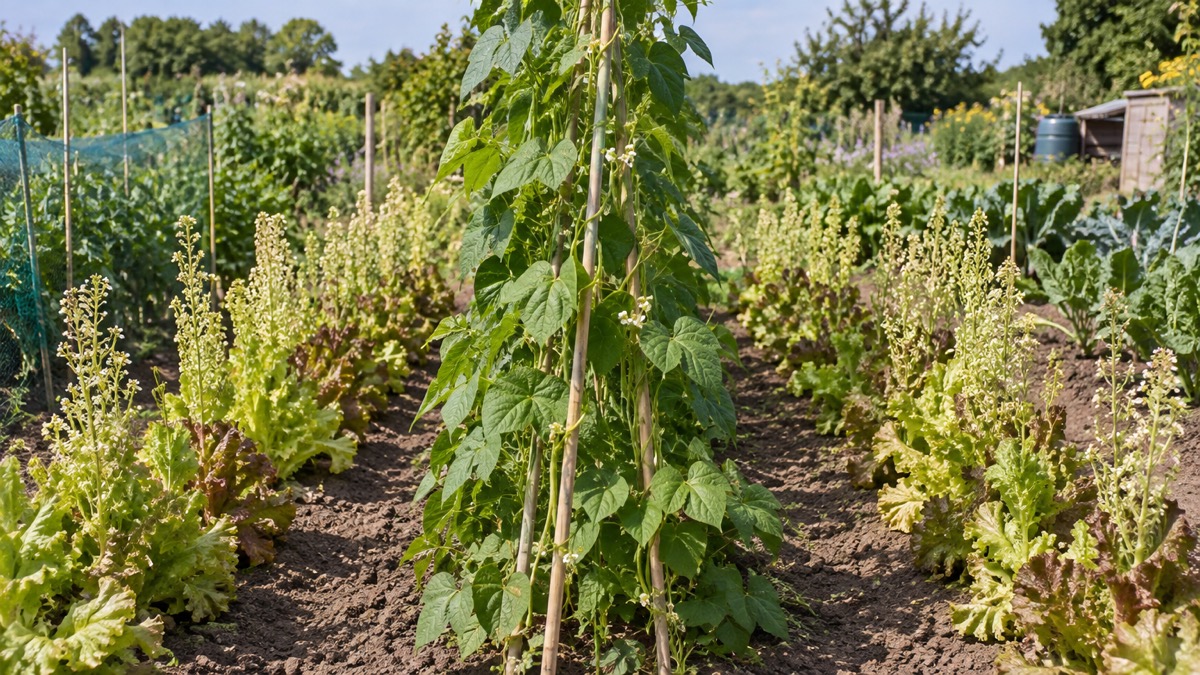
Selection is where saved seed gets better or worse than what you bought. You are the breeder now, and the plants you allow to set seed are your breeding stock.
Keep the best, not the rest. Only save seed from healthy looking plants7. With lettuce, select two or three good lettuces from your row and mark them for seed, and do not save from any plants that bolt early, because you want to select for lettuces that stand well4. The same principle applies to radish: allow no more than two radishes to go to seed, eat some pods and allow others to dry completely to collect seeds for next year14.
Keep records. Saving your own seed each year allows your varieties to adapt to your own specific conditions, and you will also be able to note any interesting or useful characteristics, such as pest or disease resistance1. A notebook entry per variety, with what it did and when, is worth more than memory.
Expect it to take time. Adaptation is a multi-season process, not a single one. Garden Organic notes that with outbreeding vegetables, rectifying a cross takes patience and several seasons2. The same patience applies to building up a variety that suits your plot.
Let some things self-seed. Borage is a sturdy annual that will readily self-seed and return year after year if you allow it to do so15. Parsley can be allowed to self-seed naturally rather than collected10. That is the lowest-effort form of seed saving there is, though it gives you less control over where the plants appear.
Why saving your own seed each year pays off
The case for saving seed is not mainly about the cost of a packet. It is about what happens over several years.
Your varieties adapt to your garden. Saving your own seed each year allows your varieties to adapt to your own specific conditions1. A tomato that ripens in your particular summer, a bean that shrugs off your particular slugs: those traits accumulate if you keep selecting from the plants that show them.
You notice what works. Because you are watching the plants closely, you will also be able to note any interesting or useful characteristics, such as pest or disease resistance1. That knowledge is useful whatever you do with the seed.
You are part of a long tradition. Amateurs can save their own seed, as has been done for thousands of years, well before the advent of large seed companies and modern agriculture1. It is not a specialist skill.
You get more seed than you need, eventually. A single lettuce left to flower produces far more seed than one household sows. Lettuces, spinach and Swiss chard may have gone to seed, meaning the usually leafy vegetables have formed flowers on the end of a long stalk and then seeds, which can be collected, dried, sorted and saved to sow next year7. The same is true of many herbs and flowers: celosia, for instance, can be kept in your garden by saving and sowing seeds from your plants each year16.
The one thing to accept is that saved seed is not free of effort. It takes a bed, a label, a little drying space and some record keeping. In return you get seed that is increasingly yours.
Where to go next
If you are new to growing, start with growing your own vegetables and sowing seeds indoors and outdoors before you plan a seed crop. Our guide to keeping vegetable varieties pure when saving seed goes deeper on isolation, and storing saved seed covers what to do with it once it is dry. For the wider picture, see self-reliance at home.
Sources (16)
- Why save seed, Garden Organic, 2026
- Preserving varietal purity, Garden Organic, 2026
- Soup peas, Real Seed Catalogue, 2026
- Seed saving instructions, Real Seed Catalogue, 2026
- Beginners, Real Seed Catalogue, 2026
- Top of the crops: courgette, First Tunnels, 2026
- Tips on saving your own seeds, RHS, 2026
- Sweet peppers, Real Seed Catalogue, 2026
- How to grow squash, Vital Seeds, 2025
- Top of the crops: parsley, First Tunnels, 2026
- Tomatoes from vines, Real Seed Catalogue, 2026
- How to prick out seedlings into modules, RHS, 2026
- Harvesting and storage, Harrod Horticultural, 2026
- Top of the crops: radish, First Tunnels, 2026
- Top of the crops: borage, First Tunnels, 2026
- Top of the crops: celosia, First Tunnels, 2026
 Hydroponic System Parts List
 Year-Round Sowing Calendar
 Preserving Equipment Checklist
 Blanching Vegetables
 Carrot Fly Protection
 Knowing When Chutney Is Ready
 Clubroot in Your Soil
 Drought-Resistant Vegetables
 Edible Flowers Safety
 Extending the Growing Season
 Freezing Fruit Without Sugar
 Garden Fleece Frost Protection
 Avoiding the Hungry Gap
 Keeping Varieties Pure for Seed
 Making Leafmould