
OxyFree makes oxygen absorber sachets: small packets of material that remove oxygen from a sealed container so that dry food keeps far longer than it would in an ordinary cupboard1. For a household building a store of rice, pasta, flour, oats or pulses against a power cut, a flood or a stretch when shops are disrupted, that is the part of food storage that decides whether the store is still edible in a year's time. The company states that it was founded in 1992, is based in China, holds ISO 9001 and BRC certification, and has a production capacity of 600 million sachets a year2.
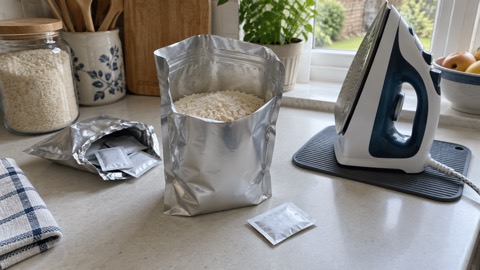
The absorbers are used with airtight Mylar bags, which OxyFree also sells, and the 2000cc size is the one most relevant to a household packing its own food. It is sold in packs of 5, 10, 50, 100 and 240, is described by the distributor as food grade and safe for food storage, and packs of 10 and above include an OxyEye oxygen indicator so you can see whether the seal has held3.
This page covers what OxyFree makes, how each part of its range fits a household emergency plan, what its certifications do and do not tell you, and where to go for support. It does not cover prices, and it does not compare OxyFree with other makers.
What OxyFree makes, and why a household would want it
An oxygen absorber, in OxyFree's own description, is "a small packet of material used to prolong the shelf life of food"1. The principle is simple: insects, moulds and the slow chemical changes that make flour taste stale all need oxygen. Take the oxygen out of a sealed bag and the food inside keeps far longer, which is exactly what a household storing food for an emergency needs.
That matters most in the situations where a food store earns its place. A long power cut empties a fridge and freezer, and the dry store is what feeds the household until power returns. A flood can cut off roads and shops for days. None of these are reasons to be frightened; they are reasons to keep a modest, well packed store that will still be good when you need it.
OxyFree's part in that is narrow and useful. It makes the absorbers, and it makes the Mylar bags that go with them, so a household can pack its own dry goods rather than buying ready-packed long-life food. The company describes itself as a leading manufacturer of oxygen absorbers in China in terms of quality and quantity, and states that it sells into Europe, the USA, Southeast Asia, Latin America and the Asia Pacific region2. That last point is the one that matters for a UK buyer: the absorbers reach Britain through distributors rather than a UK shop of the company's own.
For the wider picture of what to store and how much, the site's emergency food guide sets out the household basics, and the OxyFree Oxygen Absorbers product page covers the 2000cc sachets in detail.
The absorber range: eight types, and the 2000cc size for households
OxyFree states that it makes eight oxygen absorbers for different applications4. The differences between them are about capacity: how much oxygen a sachet can absorb, and therefore how large a container it will protect. A small sachet suits a jar of coffee or a bag of nuts; a larger one suits a 20-litre bucket of rice.
For UK households the size that appears in the product information is the 2000cc absorber, and it is worth understanding what that means in practice. The distributor lists it as the right size for heavy duty Mylar bags of 35cm x 50cm, 48cm x 74cm and heavy duty 48cm x 74cm3. In other words, it is sized for the kind of bag a household uses to pack a bulk quantity of one staple, not for a small jar.
The pack sizes are built around that use:
| Pack size | How it is made up | Indicator included |
|---|---|---|
| 5 absorbers | Single small pack | No |
| 10 absorbers | Full pack | Yes, OxyEye indicator3 |
| 50 absorbers | 5 x 10 packs3 | Yes |
| 100 absorbers | 10 x 10 packs3 | Yes |
| 240 absorbers | 24 x 10 packs (full box)3 | Yes |
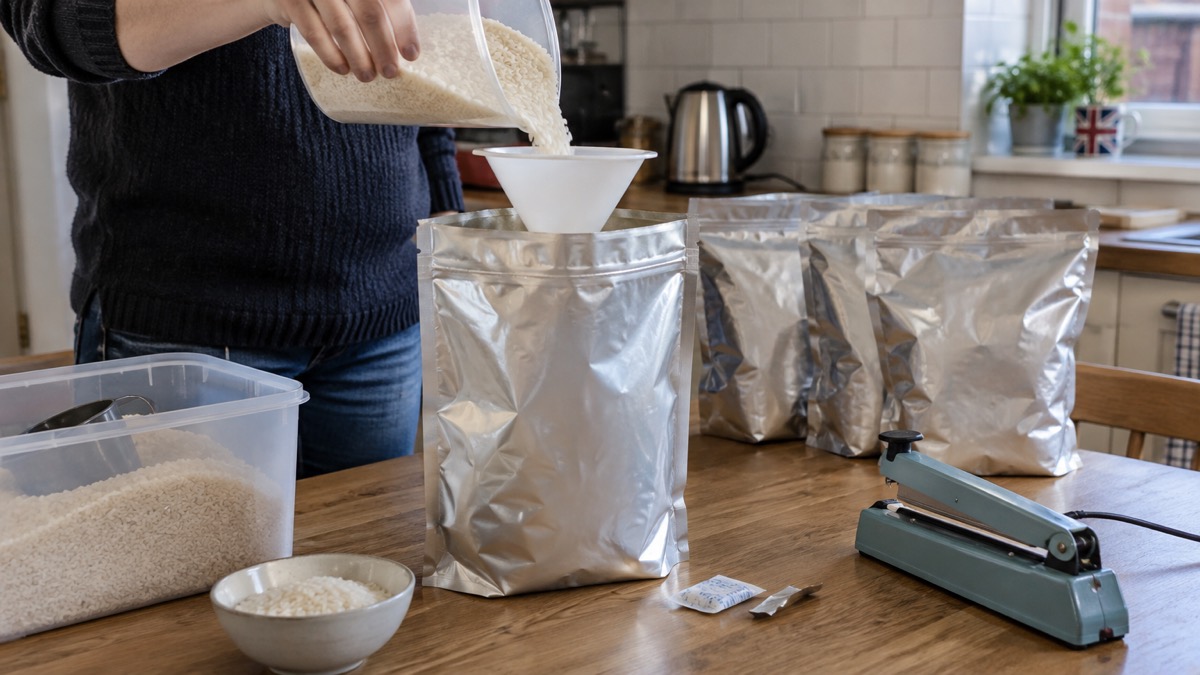
Two practical points follow. First, the absorbers are vacuum packed to keep them fresh, but the distributor notes that they are not packaged in individually vacuum sealed packets; they come in the pack sizes shown3. That means once you open a pack, the clock is running on the rest, so plan to pack a batch of food in one session rather than opening a pack for a single bag. Second, the OxyEye indicator in packs of 10 and above is there so you can check that a sealed bag has actually held its seal, which is the failure that quietly ruins a food store.
Mylar bags: the other half of the system
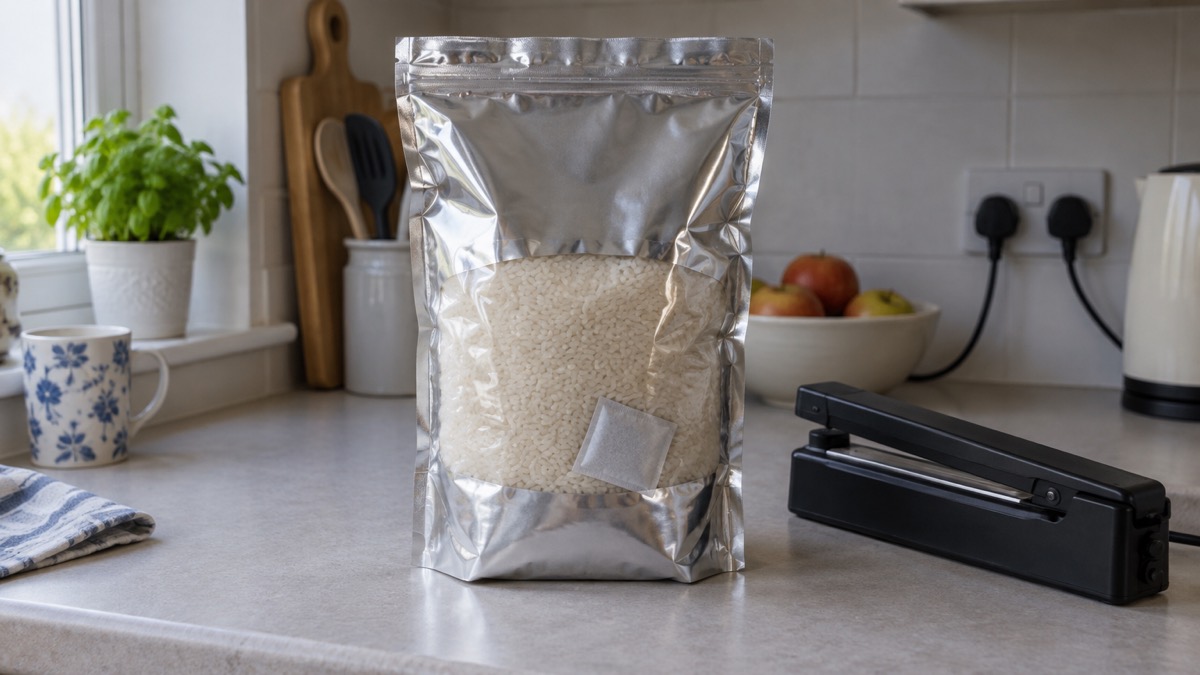
An oxygen absorber only works inside a container that keeps oxygen out. That is why OxyFree also sells Mylar bags, and why the two products are best understood together. The maker's bag range is described by size and pack quantity, and the maker states that its pouches are "to be used with or without vacuum sealing"5, so you do not need a vacuum sealer to use them; a heat seal or a careful fold and clip will do, provided the bag is genuinely airtight.
The maker's bag range is sold in trade quantities as well as to households through distributors, and the sizes run from small pouches up to large bags. For a household, the useful facts are simpler than the carton counts. What matters is that the bag is airtight, that it is large enough for the quantity you are packing, and that it is matched to an absorber of the right capacity. The 2000cc absorber is listed by the distributor as the right size for heavy duty Mylar bags of 35cm x 50cm, 48cm x 74cm and heavy duty 48cm x 74cm3, which gives you a starting point for matching bag to sachet.
The company behind the absorbers
OxyFree states that it was founded in 1992 by Mr Guanxiong Ying, who holds six invention patents in oxygen absorber related technology2. That is a long history for a specialist manufacturer, and it is the kind of detail that matters when you are relying on a consumable to protect a year's worth of food.
The company describes itself as a leading manufacturer of oxygen absorber in terms of quality and quantity in China, with about 150 workers and a production capacity of 600 million sachets per year2. Those are the maker's own figures, and they are worth reading as a description of scale rather than an independently audited number. What they tell a household is that this is a volume manufacturer serving trade customers, not a small kitchen operation, which is consistent with the way its products reach the UK through distributors.
OxyFree is based in China, and its markets are given as Europe, USA, Southeast Asia, Latin America and the Asian Pacific countries2. For a UK buyer, the practical consequence is that the product arrives through a distributor, so the pack you receive carries the distributor's labelling and the maker's own quality systems sit behind it rather than in front of you.
It is worth being clear about what a Chinese manufacturing origin does and does not mean. Plenty of products sold in the UK are made in China, including well known outdoor and electrical brands: Alpkit's Juice Storm power bank is stated as made in China6, and its Juice Boost gives its origin as China7. Origin alone tells you nothing about quality. What tells you something is the certification and the specification, which is where the next section comes in.
Certifications: what ISO 9001 and BRC actually tell you
OxyFree states that it is ISO 9001 certified and holds BRC certification2. Both are worth understanding, because they are often quoted without explanation and they do not mean the same thing.
ISO 9001 is the international standard for quality management systems. It certifies the way a company plans, controls and checks its processes, not the performance of any individual product. You will see the same standard quoted across British industry: the National Energy Action training courses state that all courses and processes are assessed in line with BSI ISO 9001 quality management standards8, Vaillant states that its products meet ISO 9001, 18001 and 140009, and even a government radiation emergencies report records its assessments department as approved to ISO 9001:201510. In each case the standard is about the system, not the sachet.
BRC is different in kind. It is a food safety standard used across the food industry, covering the systems a supplier uses to keep food contact materials safe. For a household putting an absorber into a bag of rice, that is the more directly relevant of the two, because it addresses the question of whether the material touching your food is controlled to a food safety standard.
The distributor adds a plain statement that the 2000cc absorbers are food grade and safe for food storage3. Taken together, the certification and the food grade description are the assurance a household needs. What none of it does is guarantee a particular sachet will absorb a particular volume of oxygen in your kitchen; that depends on the seal, the bag and how long the absorber sat open before you used it.
Where to buy OxyFree absorbers in the UK and Europe
OxyFree sells worldwide, with Europe named among its markets2. That is the route a UK household is most likely to use.
Buying through a distributor has a few consequences worth knowing. The pack sizes and the indicator inclusion are the distributor's description, so check the listing at the time you order rather than assuming a size is in stock. And because the absorbers are a consumable, it is worth buying enough for a full packing session rather than a pack of five that leaves you short halfway through a bag of rice.
Availability in Europe more broadly follows the same pattern: the maker supplies distributors and trade customers rather than running a consumer shop. If you are buying outside the UK, check that the listing states food grade and gives the absorber capacity in cc, because that is the figure that decides whether a sachet suits your container.
For the household side of this, the food guide explains how much dry food to keep and how to rotate it, and the emergency kit guide covers where food storage sits among the other things a household should have ready.
Support, warranty and safety notices
Beyond the maker's own pages, the support route for a UK buyer runs through the distributor that supplied the pack, since that is who holds the sale.
On warranty, the material available does not state a warranty period for the absorbers or the Mylar bags. Absorbers are a consumable, so a warranty is less relevant than the pack date and the seal: what protects you is buying from a supplier who moves stock and storing the unopened pack properly until you use it.
Safety notices and recalls are a different matter, and worth a moment. Recalls do happen to household goods sold in the UK, and they are published by the Office for Product Safety and Standards: recent examples include folding gas stoves11, ionic hairdryers sold by Aldi12, a corded vacuum cleaner13, a jump starter sold via eBay14 and water beads15. The lesson for a prepping household is to check the official recall list for anything you buy for your kit, and to register or keep the packaging so you can be contacted.
Where OxyFree fits in a household plan
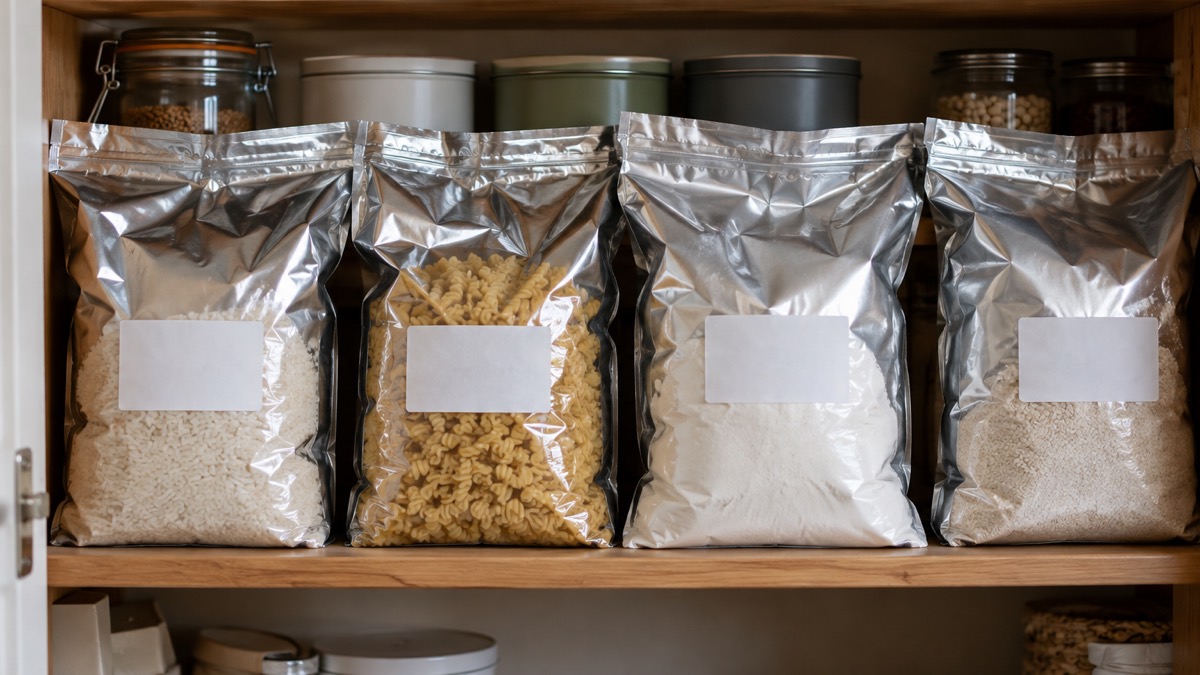
Oxygen absorbers are one small part of getting a household through a disruption, and it helps to see where they sit. The emergencies that make a food store matter are the ones that cut you off from shops or power: a flood, a storm, a long power cut, or a winter cold spell that makes getting out difficult8. In each case the household that has a packed, dated store of dry staples eats well; the household that has a cupboard of open bags eats what it can before it spoils.
The absorbers and bags are the tools that turn an ordinary cupboard into that store. They do not replace the other parts of a plan: water, light, warmth, cooking, and a way to stay informed. The site's guides cover each of those, from water and backup power to heating and cooking without mains power and staying informed. If you are starting from nothing, getting started sets out the order to do things in.
A sensible sequence for the food part is: decide what dry staples your household actually eats, buy the bags and absorbers in a quantity that matches a single packing session, pack and label in one go, and then rotate the oldest bags into everyday cooking. That last step is the one most households skip, and it is the one that keeps a store worth having.
Sources (15)
- OxyFree FAQ, OxyFree
- OxyFree, OxyFree
- 2000cc Oxygen Absorbers, My Lar Shop
- Mylar Shop - OxyFree Oxygen Absorbers -, Mylar Shop
- Mylar Bags, OxyFree
- Juice Storm waterproof power bank, Alpkit
- Juice Boost portable power bank, Alpkit
- Tackling the Cold, National Energy Action
- Unistor Pure Direct technical sheet, Vaillant
- Advice for Radiation Emergencies 2019, GOV.UK
- Product recall: OEX folding gas stoves, GOV.UK
- Product recall: Ambiano ionic hairdryers sold by Aldi, GOV.UK
- Product safety report: Sokany 4 in 1 corded bagless vacuum cleaner, GOV.UK
- Product recall: multi-function jump starter JX27 sold via eBay, GOV.UK
- Product safety report: 20000pcs Runfeng water beads, GOV.UK
 OxyFree Oxygen Absorbers