The AutoPot Tray2Grow is a watering tray that takes the job of feeding plants off your hands without using any power. You stand it on a flat, level surface, connect it by pipe to a tank raised above it, and the AQUAvalve5 lets water and nutrients into the tray only as your plants use them. There are no pumps, timers or electricity involved1. The maker, AutoPot, describes its systems as 100% power-free, gravity-fed and regulated by what the plants drink rather than by a clock2.
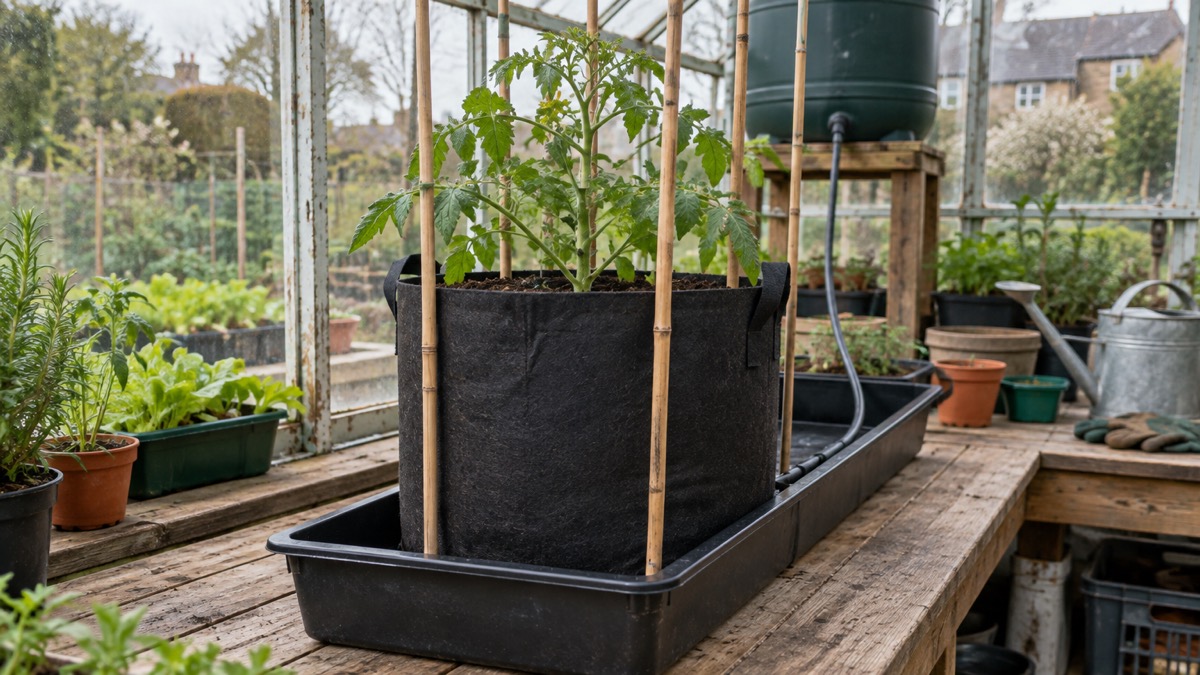
The tray measures 111.5cm long, 41cm wide and 9.5cm deep, and it holds up to four standard seed trays at once1. It can also carry small pots, grow bags or a single large fabric planter of up to 107.5 litres, all fed from one watering point3. That range is what makes it useful to an ordinary household: the same tray can raise a batch of seedlings in spring and then water a tomato plant in a grow bag through the summer.
This page sets out what the system is, what arrives in the box, how to set it up level and connected to a tank, which feeding method suits which container, and how the valve prevents overwatering. It also covers the larger planter, the parts sold separately, and what UK buyers should know about ordering, because most Tray2Grow items are bought to order and lead times can be long1.
What the Tray2Grow is and what it suits
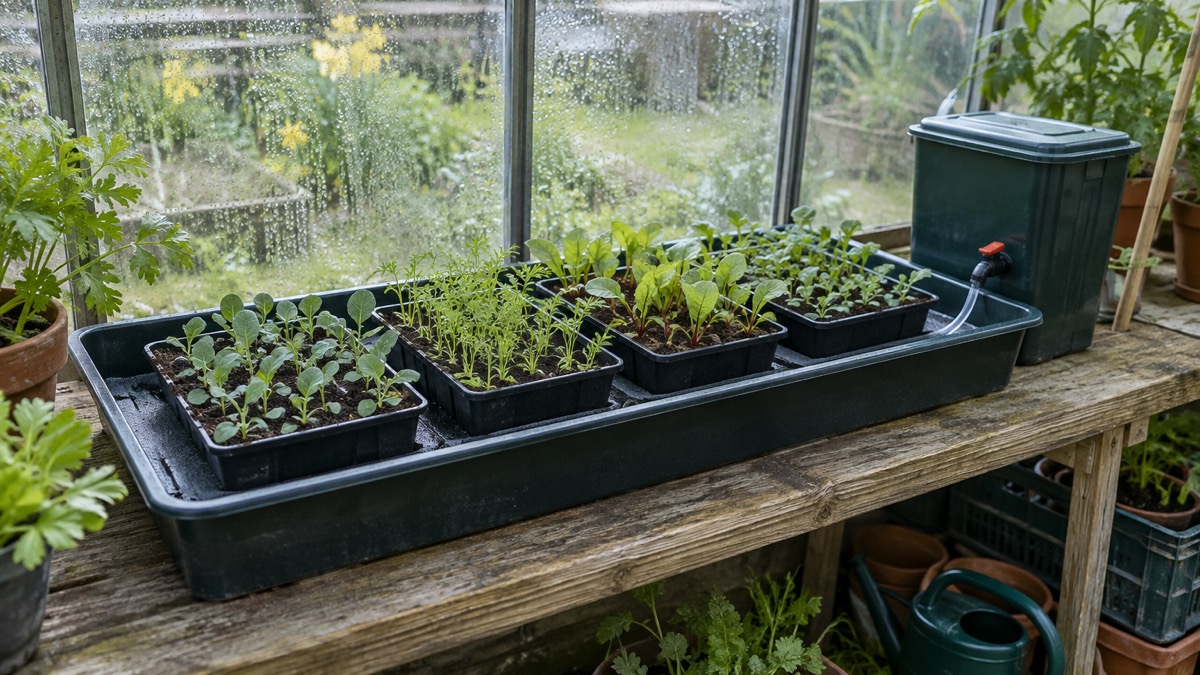
The Tray2Grow is a modular tray and lid that acts as a shallow reservoir. The lid holds your growing setup above the water line, and an AQUAvalve keeps the reservoir topped up automatically, so plants draw moisture upwards only when they need it3. The maker's tray systems are built to irrigate several pots in a single tray and lid assembly, all fed by one AQUAvalve4.
Because nothing is pumped, the system does not depend on mains electricity or on pressurised water5. That matters in a greenhouse or shed with no power supply, and it matters in a power cut, when a pump-fed irrigation system would stop. The maker says AutoPot systems can reduce water and nutrient usage by up to 50%2, and describes tray systems as growing power-free "with not a drop of water wasted"4.
What it suits, in practice:
- Propagation and nursery work: seed trays, small pots and microgreen trays, watered from below3.
- Grow bags and fabric planters: fed through capillary spikes pushed into the base3.
- One large plant or several in one container: the Tray2Grow Planter holds 107.5 litres and fits onto the tray7.
- Taller plants: guide holes on each side take garden canes or trellising1.
It is not a complete kit for every situation. The capillary matting and root control sheet are listed as sold separately on the seed tray page8, and the matting page confirms the tray, lid, seed trays and root control sheets are sold separately from the mat6. Check what your chosen bundle includes before you order.
Size, capacity and specifications
The tray's dimensions decide where it will go: it needs a bench or floor run at least 111.5cm long and 41cm wide, with 9.5cm of depth for the tray itself1. The Slim Kit lists the same footprint in millimetres, 1115mm by 410mm by 95mm9.
| Specification | Figure | Source |
|---|---|---|
| Tray dimensions | 111.5cm (L) x 41cm (W) x 9.5cm (D) | 1 |
| Slim Kit dimensions | 1115mm x 410mm x 95mm | 9 |
| Seed tray capacity | up to four standard seed trays | 1 |
| Microgreen tray capacity | two microgreen trays comfortably | 1 |
| Planter capacity supported | AutoPot framed fabric planters up to 107.5L | 1 |
| Tray2Grow Planter size | 93cm x 33cm x 35cm | 7 |
| Tray2Grow Planter capacity | 107.5L | 7 |
| Reservoir supplied with full system | 47 litre solid plastic tank with lid and grommet | 10 |
| Power requirement | none | 1 |
The full system also includes four 20 litre fabric FlexiPots10, so a household buying it can start with four individual plants rather than one large planter. The seed trays are described as durable enough for repeated use in grow rooms and nurseries8, and the planter is described as reusable and suitable for long-term indoor or greenhouse use7.
What comes in the box
The full Tray2Grow System is the most complete option, and the retailer's contents list is long. It includes the tray and lid, one AQUAvalve5, grommets, pipe, filters, an in-line tap, an overflow grommet, three circular spirit levels, ten capillary spikes, capillary matting, a root control sheet, four seed trays and a roll of slug-repellent copper tape1. The same listing also names four 20 litre fabric FlexiPots, four PotSock rounds, two 6mm inline taps, four 6mm tee pieces, two 6mm cross connectors and a 6mm golf filter10.
The smaller Slim Kit strips this back. It contains one Tray2Grow Slim Tray and Lid, one AQUAvalve5, two 9mm grommets, 1m of 9mm pipe, a 16 to 9mm click-fit filter, a 9mm golf filter, a 9mm in-line tap, a 9mm tee connector, a 6mm overflow grommet, three circular spirit levels, capillary matting and a root control sheet5. If you already own a tray and lid, they can be bought on their own as a pair3.
Setting it up level and connected to a gravity-fed tank
Level is the first instruction in every set of setup steps, and it is the one that decides whether the valve works. Place the tray on a flat, level surface and check it with the built-in spirit levels1. Three inset spirit levels are built into the tray to help you get it perfectly level1. The Slim Kit repeats the step: position the tray on a level surface using the built-in spirit levels9.
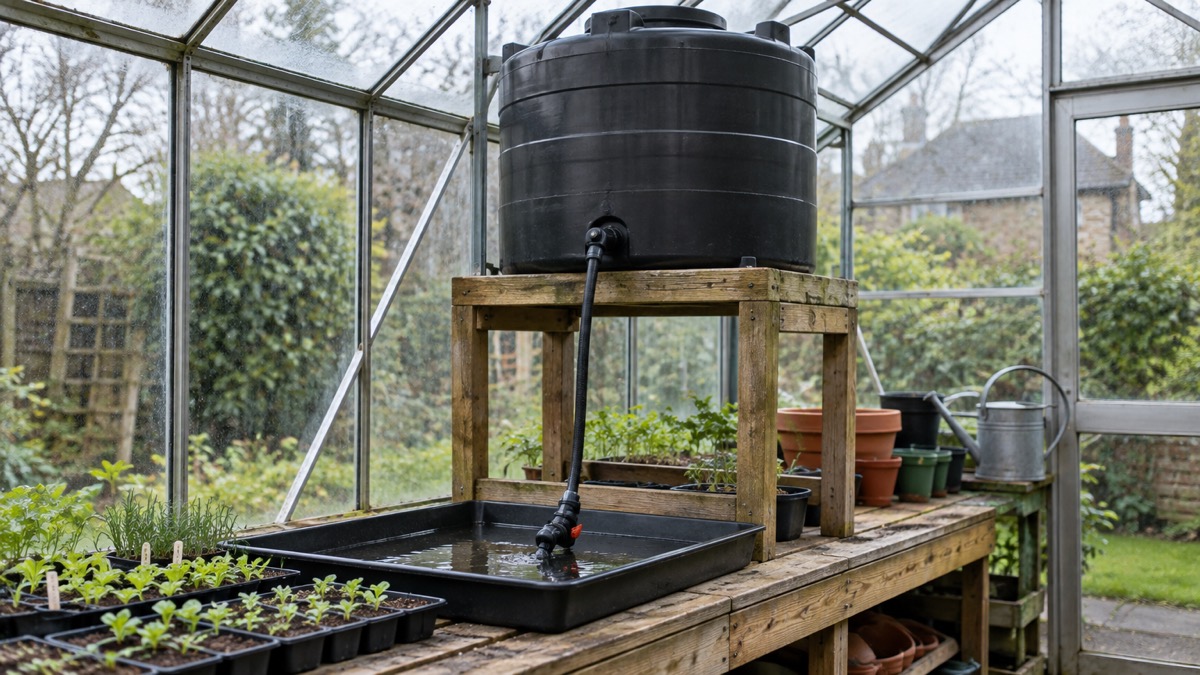
Then connect the water supply. The retailer's sequence is to install the AQUAvalve and connect it using the supplied pipework and filters, choose your feeding method, link the tray to a gravity-fed water or nutrient tank, and load the plants, letting the system regulate watering automatically1. The tank must sit above the tray: the maker says to elevate your reservoir or water butt 150cm above the lowest AQUAvalve in the system to have ample gravity feed2. A retailer's greenhouse irrigation listing puts it more simply, advising that the reservoir sits slightly higher than the trays to allow proper gravity-fed flow11.
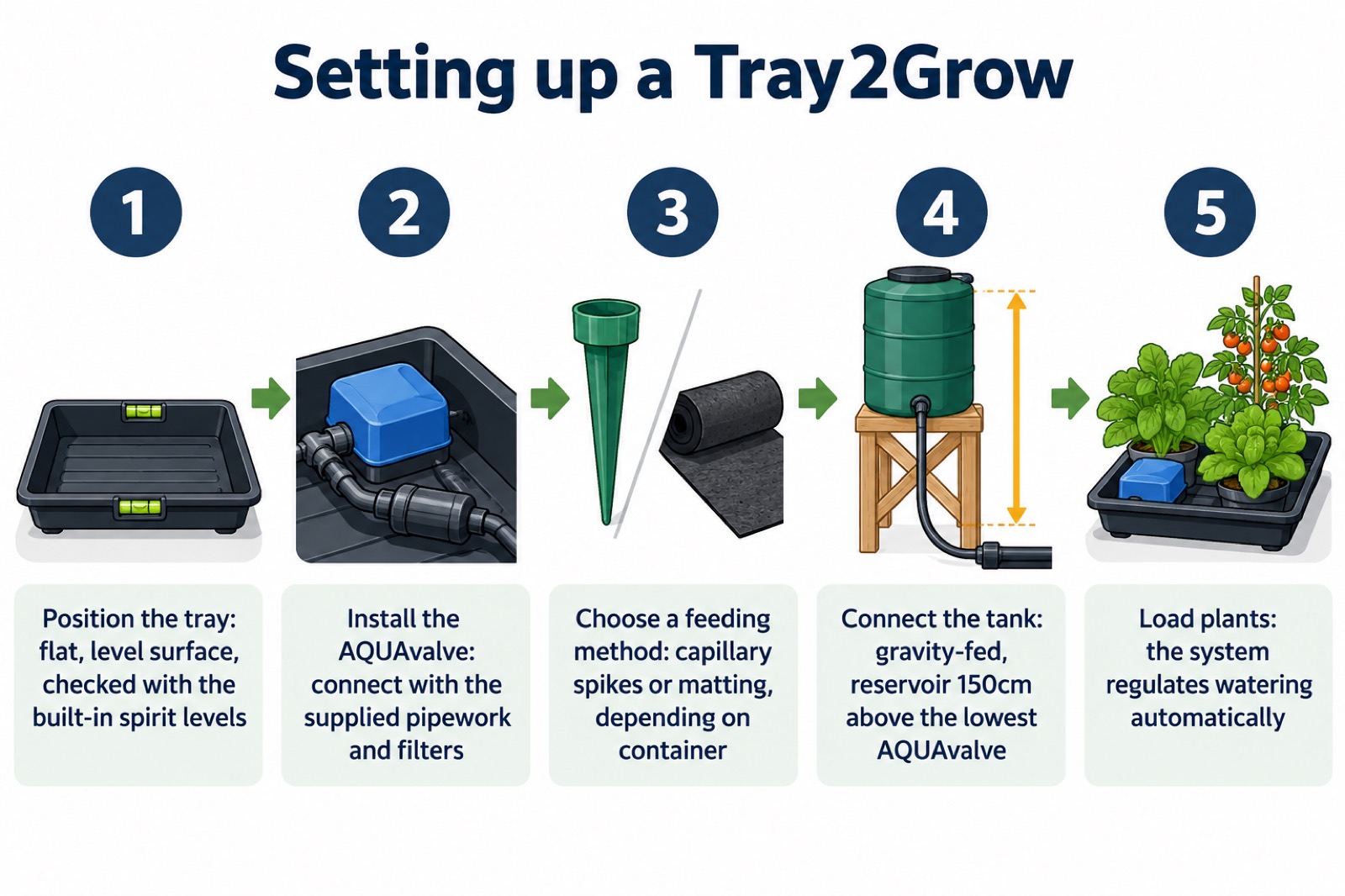
If you are adding the tray to an existing AutoPot system, the 150cm figure applies to the lowest AQUAvalve in the whole system, not just the new tray2. Keep that in mind before you site a second tray lower than the first.
Feeding methods: matting, spikes or bottom-fed containers
The Tray2Grow can feed plants in more than one way, and the right choice depends on what you are growing. The retailer lists capillary matting, spikes or bottom-fed containers as the options1, and the tray and lid page splits it into capillary matting with root control for seed trays and small pots, or capillary spikes for grow bags and fabric planters3.
| Method | Suits | How it works |
|---|---|---|
| Capillary matting | Seed trays, small pots, microgreen trays, several containers at once | Mat laid flat in the tray and tucked into the side channels; water drawn up from below6 |
| Capillary spikes | Grow bags and fabric planters | Spikes pierce the underside of the bag and deliver water into the substrate1 |
| Bottom-fed containers | Pots and planters with base access | Water and nutrients supplied from beneath the container8 |
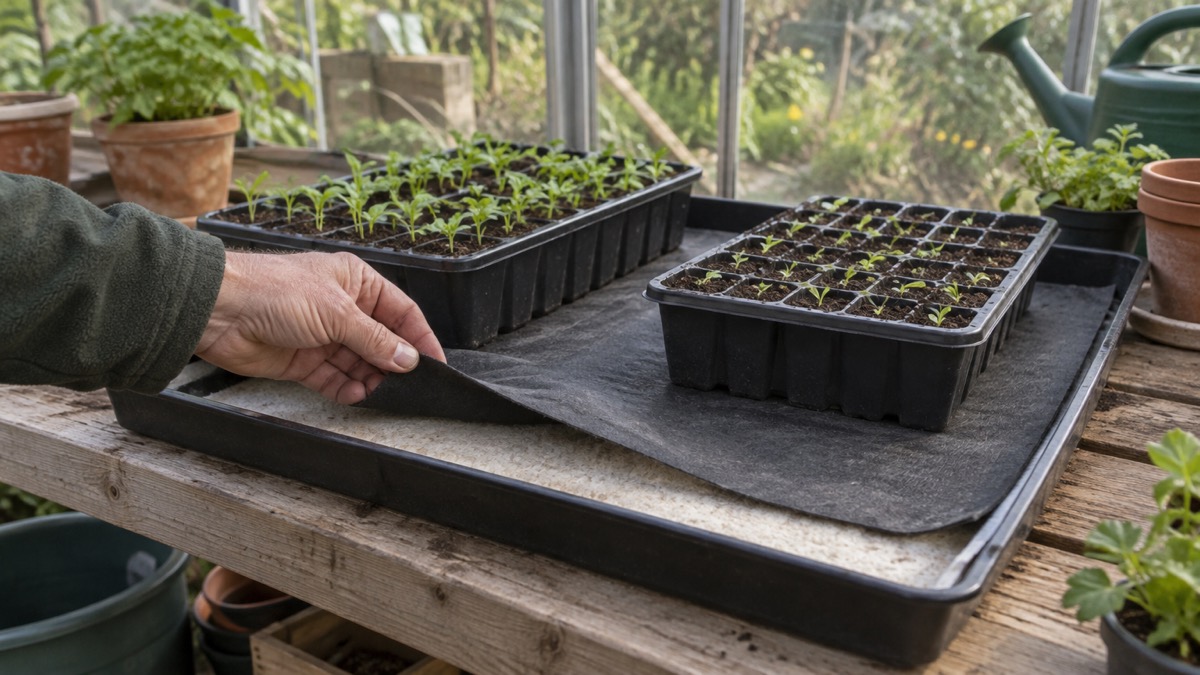
The matting method is the one to use for propagation. Lay the mat flat inside the tray and tuck it neatly into the side channels, place a root control sheet on top to stop roots growing into the mat, then stand seed trays, micro herb trays or bottom-perforated pots above it6. The retailer says the matting allows multiple trays or containers to be fed at once, making it ideal for propagation, microgreens and high-density early-stage growing6. The seed tray itself has a perforated base so water and nutrient solution are drawn up from below, giving steady, even moisture without overhead watering8.
For grow bags, remove the spikes and use the matting if you are feeding seed trays or smaller pots, or fit the spikes to irrigate directly through the base of the bag1. The spike with capillary lace is designed to deliver water and nutrients directly into grow bags, and is listed as compatible with Tray2Grow systems, fabric or plastic grow bags, planters and large containers with base access, and propagation and vegetative feeding setups12.
How the AQUAvalve5 stops overwatering
The AQUAvalve5 is the part that makes the system automatic without a timer. The retailer says it delivers water only when plants need it, preventing overwatering1. The tray acts as a shallow reservoir that the valve fills and maintains, and the lid holds the growing setup above the water level so plants draw moisture upwards only when required3. The Slim Kit listing adds that the valve maintains consistent moisture levels while preserving a vital air gap in the root zone5.
That air gap is the point. The retailer describes the root zone design as maintaining an air gap to improve oxygen availability1, and the tray and lid page says moisture delivered from below encourages strong root development while maintaining excellent oxygen availability in the root zone3. Roots are not left sitting in saturated compost; they take what they need and the valve tops up the tray as the level falls.
The maker's guidance adds a practical note for anyone feeding by hand as well: root activity is generally more noticeable in the early stage of plant growth and slows during the flowering and fruiting stages13. That is a reason to check young plants more often and to expect the tray to draw less later in the season, not a reason to change the setup.
Growing larger plants: planters, grow bags and canes
For a single large plant, or several in one container, the Tray2Grow Planter is the matching option. It is a fabric planter designed to integrate with the Tray2Grow tray, and it fits onto the tray14. It measures 93cm by 33cm by 35cm and holds 107.5 litres, which the retailer describes as ideal for large plants or multiple plants in one container7. Place it centrally on the tray7.
The planter uses breathable fabric construction with bottom-fed irrigation, working with AQUAvalve-controlled watering14. It takes soil, coco or blended substrates14, and the retailer describes it as reusable and durable, suitable for long-term indoor or greenhouse use7. The tray itself supports AutoPot framed fabric planters up to 107.5 litres1, so check the footprint of any other planter before standing it on the tray.
For grow bags, the capillary spikes are the route. They pierce the underside of the bag and deliver water directly into the substrate1. The spike with capillary lace is listed as compatible with fabric or plastic grow bags and with planters and large containers that have base access12.
Taller plants need support, and the tray provides for it: guide holes on each side allow the use of garden canes or trellising, making the system suitable for taller plants1. If you are growing cordon tomatoes or climbing beans in a planter on the tray, cane them at the same time as you plant, so the roots are not disturbed later.
Ordering and lead times in the UK
Most Tray2Grow items are not held on the shelf. The retailer states that the system is purchased to order, so extended lead times will apply1. The same note appears on the tray and lid, which also showed only three left at the time of checking3, the seed tray, which showed four left8, the planter14, the spike with capillary lace12, the Slim Kit5 and the capillary matting, which was out of stock6. The full system listing showed only four left10.
What that means for planning: order before you need the tray, not the week you want to sow. The retailer does not give a delivery date on these listings, only the warning that lead times are extended1. If timing matters, ask the retailer for a delivery estimate before ordering, and check whether the item is in stock or being made to order.
For comparison, some other garden suppliers publish firm delivery windows. Harrod Horticultural says that, stock permitting, it aims to despatch orders within 1 to 2 working days, with delivery within 3 days on UK mainland15. Rainwater Harvesting Ltd says it normally operates on a 7 to 10 day delivery from receipt of order for its systems17. Those are different suppliers and different products, but they show what a stated lead time looks like; the Tray2Grow listings give none beyond the warning.
Where the Tray2Grow fits in a household growing setup
The Tray2Grow earns its place where watering is the job that gets missed. A windowsill of seedlings, a greenhouse bench of pots or a single large planter can all be fed from one tank, with no power and no timer1. The maker's claim of up to 50% less water and nutrient use2 and the retailer's note that it saves a lot of time compared with hand-watering10 are the practical case for it.
It is one tool among several. If you are starting from scratch, our guide to growing your own vegetables sets out where to begin, and sowing seeds indoors and outdoors covers timing and depth. For a greenhouse or polytunnel bench, see polytunnels and greenhouses. If you want to grow microgreens on a windowsill, our page on how to grow microgreens indoors covers the basics, and the seed sowing equipment checklist lists what to have ready. For a powered indoor setup, indoor hydroponics explains grow tents, lights and nutrient systems, and the simple hydroponic system parts list sets out the components.
If your reason for growing is to keep food coming in uncertain times, the self-reliance section covers rainwater, off-grid power and food storage alongside growing. A gravity-fed tray that keeps working in a power cut is a small but genuine part of that picture.
Sources (17)
- AutoPot Tray2Grow System, Onestopgrowshop, 2026-11-04
- AutoPot Watering Systems, AutoPot, 2026-10-23
- AutoPot Tray2Grow Tray and Lid, Growell, 2026-11-04
- Tray Systems Resources, AutoPot, 2024-11-19
- AutoPot Tray2Grow Slim Kit, Onestopgrowshop, 2026-11-04
- AutoPot Tray2Grow Capillary Matting, Growell, 2026-11-04
- AutoPot Tray2Grow Planter, Onestopgrowshop, 2026-11-04
- AutoPot Tray2Grow Seed Tray, Growell, 2026-11-04
- AutoPot Tray2Grow Slim Kit, Growell, 2026-11-04
- AutoPot Tray2Grow System, Growell, 2026-11-04
- AutoPot Greenhouse and Grow Room Irrigation System, Onestopgrowshop, 2026-11-04
- AutoPot Tray2Grow Spike with Capillary Lace, Onestopgrowshop, 2026-11-04
- Short Term Flowering Plants Feed Chart for Soil, AutoPot, 2025-09-18
- AutoPot Tray2Grow Planter, Growell, 2026-11-04
- Popadome Crop Protection System, Harrod Horticultural, 2026-11-04
- Rootrainers, Harrod Horticultural, 2026-11-04
- 3800 Litre Rainwater Tank, Rainwater Harvesting Ltd, 2026-03-24