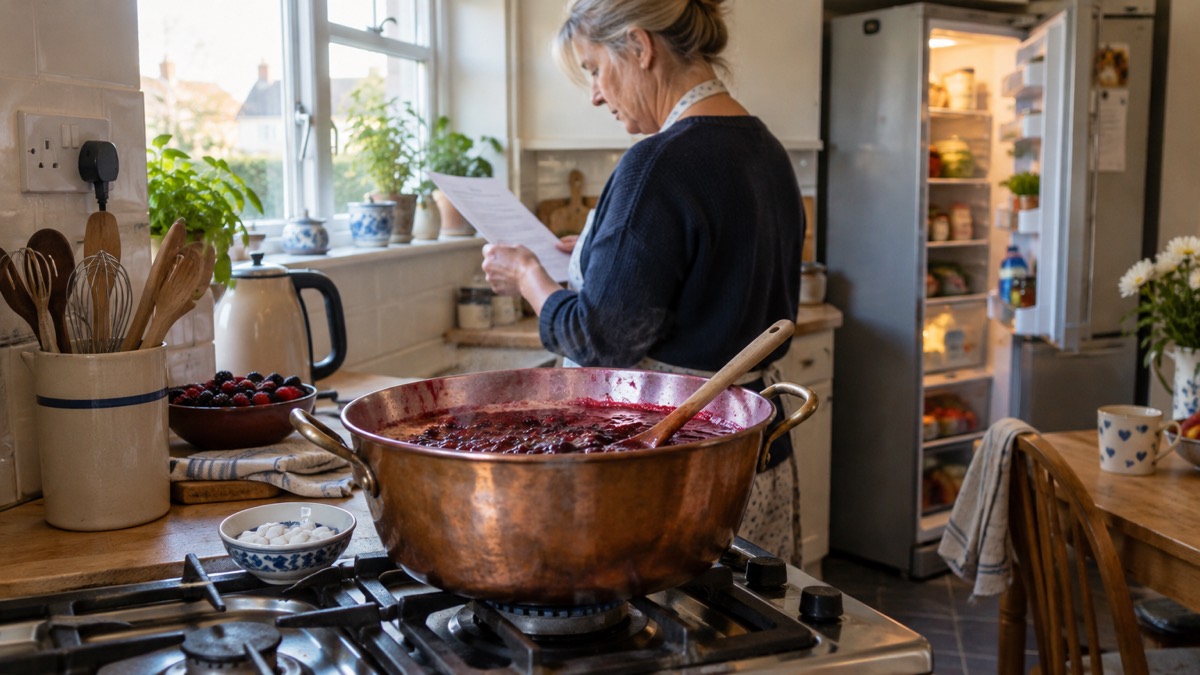
Sugar in jam is not just there for sweetness. It sets the jam, holds the colour and texture of the fruit, and acts as the preservative that lets a jar sit in a cupboard for months. A sweetener such as Splenda can replace some of that sweetness, but it cannot do the other jobs. That single point decides almost everything about whether you can use it.
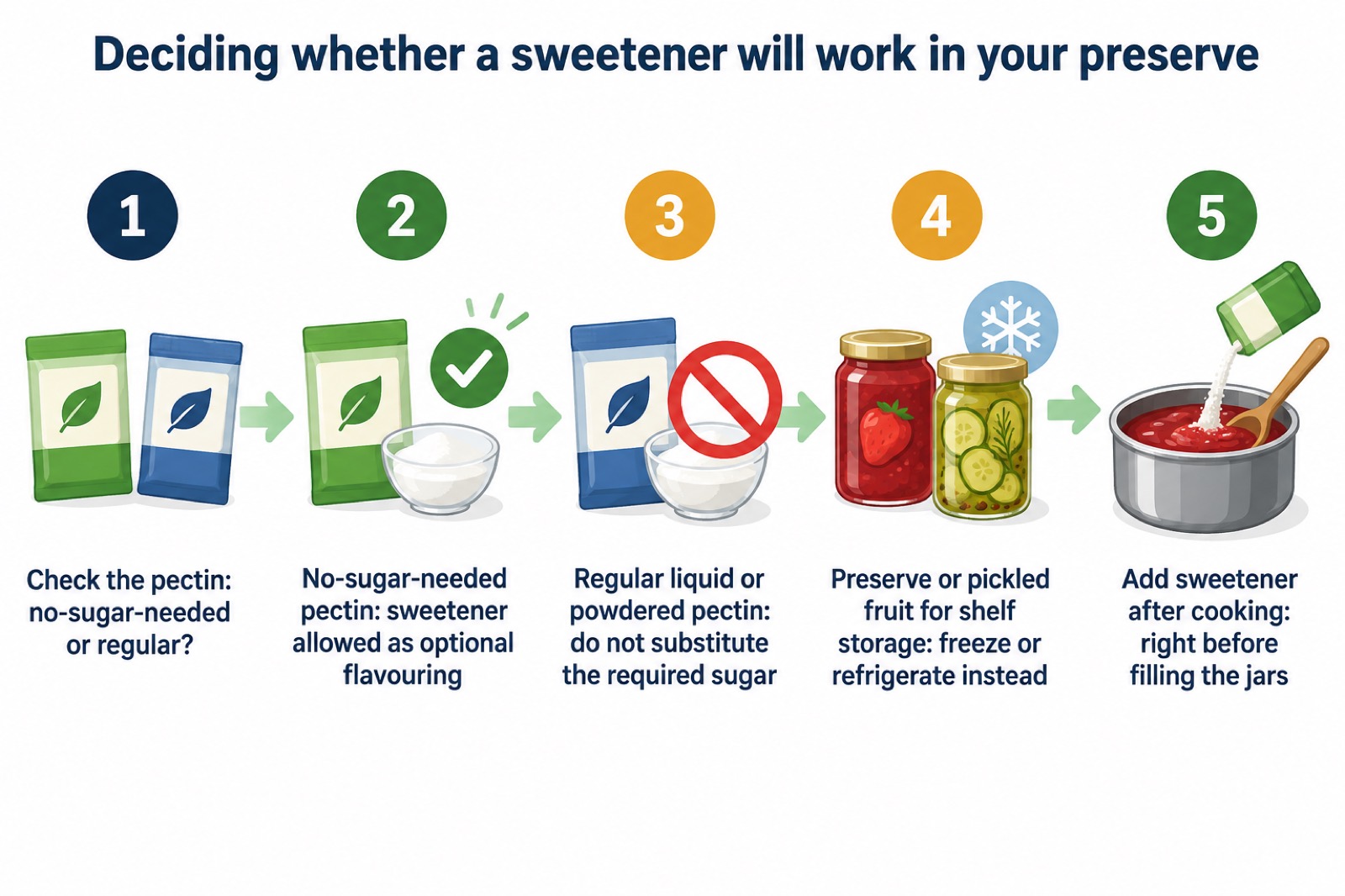
The short answer is that you can use Splenda as the optional sweetener in a jam or jelly made with a no-sugar-needed pectin, added after all the cooking and just before you fill the jars1. You should not try to substitute it for the required sugar in recipes calling for regular liquid or powdered pectin1. And you should not use it in preserves or pickled fruits that are to be canned for shelf stability: freeze or refrigerate those instead2.
If you want a tested starting point, the USDA Complete Guide to Home Canning includes a Peach-Pineapple Reduced Sugar Fruit Spread that needs no added sugar, with Splenda added as desired, and a process time longer than regular jams and jellies, more like that for a fruit puree3.
When a sweetener works and when it does not
The dividing line is the pectin. Pectin is what makes jam set, and different types behave in different ways. Ordinary recipes rely on sugar, acid and a "regular" pectin working together. Low-methoxyl pectins, sold as no-sugar-needed pectin, set without sugar at all, which is why a sweetener can go in without breaking the set.
The guidance names three products of this kind: Mrs. Wages Lite Home Jell Fruit Pectin, Ball No-Sugar Needed Pectin and Sure-Jell for Less or No-Sugar-Needed Recipes1. With these, Splenda can be used as the optional sweetener, and no sugar is required at all5. The package inserts with these pectins give the instructions on how much to add and when6.
| Preserve | Can you use Splenda? | What the guidance says |
|---|---|---|
| Jam or jelly with no-sugar-needed pectin | Yes, as optional sweetener | Add after all the cooking, right before filling the jars1 |
| Jam or jelly with regular liquid or powdered pectin | No | Do not substitute it for the required sugar1 |
| Preserves or pickled fruits to be canned for shelf stability | No | Freeze or refrigerate for storage instead2 |
| Water covering fruit when canning | Yes, for sweetness only | Will not give the texture and colour preserving of a sugar syrup7 |
| Canning syrup | Yes, start low | Try 1 to 1-1/4 cups for a medium syrup the first time2 |
The reason for the caution is straightforward. Granular Splenda does not provide preservative properties like sugar4. In a jam made with regular pectin, the sugar is part of what keeps the product safe at room temperature. Take it out and you have changed the product, not just its flavour.
What to do if you want to cut the sugar
Start by choosing the right recipe rather than adapting the one you already use. A jam built around no-sugar-needed pectin is designed to set without sugar, so the sweetener is a flavouring rather than a structural ingredient. Add it after all the cooking, right before filling the jars, as the pectin instructions direct1.
If you are working with canning syrup rather than jam, begin with less than a full substitution. For a medium sugar syrup made with 5-1/4 cups water to 2-1/4 cups sugar, the guidance suggests trying 1 to 1-1/4 cups Splenda the first time2. This is a starting point for flavour, not a like-for-like swap, and the sweetener will not provide the texture and colour preserving that a sugar syrup does7.
For pickles, do not adapt a shelf-stable recipe. Three recipes using Splenda have been developed and tested: quick pickled sweet cucumber slices, pickled beets and pickled cantaloupe3. Following a tested recipe matters here because the sugar in a pickling brine affects keeping quality as well as taste.
If you simply want a softer set and less sugar, there is another route. You can omit the sugar and cook the fruit with only fruit juices to make a fruit spread instead of a jam7. That is a different product with a shorter life, and it belongs in the fridge.
What changes without sugar
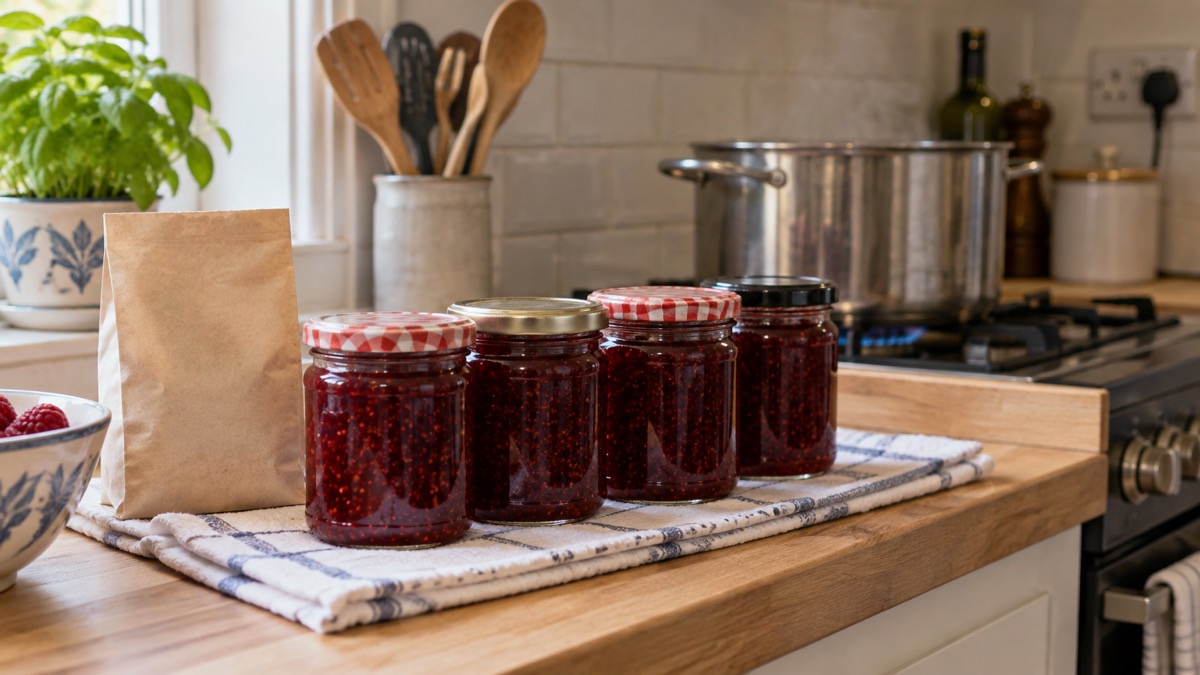
Sugar does several jobs at once, and losing it changes the jam in ways you will notice before you taste it. The set is the first: a jam made with regular pectin and no sugar will not firm up as the recipe expects.
Keeping quality is the third and the most important. Because Splenda does not preserve in the way sugar does, a spread made with it is a fresh product. The guidance is to freeze or refrigerate these fruit spreads for storage rather than canning them for the shelf2. Plan for the space before you start, and label the jars with the date you made them.
The fourth change is process time. The USDA reduced-sugar fruit spread has a processing time longer than regular jams and jellies, similar to that for a fruit puree3. If you follow a tested reduced-sugar recipe, use its timings rather than the ones in a standard jam recipe, because the two are not interchangeable.
For ordinary jam making, the maker's method still applies: add the sugar and lemon juice and stir over a low heat until all of the sugar is dissolved8. That step is about dissolving sugar fully before the boil, and it is one reason a granulated sweetener behaves differently in the pan.
Staying safe: storage, spoilage and the limits of sweetener
The safety rule is simple and it does not bend. Do not substitute Splenda in long-boil or no-pectin-added jams and jellies intended for room temperature storage as a canned product; freeze or refrigerate them for storage instead2. The same caution applies to preserves and pickled fruits that are to be canned for shelf stability5.
"it is not recommended that substitution of Splenda® be used for sugar if the product is to be canned for shelf stability"
Treat any spread made with a sweetener as you would a fresh dairy product: keep it cold, eat it within a sensible time, and discard anything that smells wrong, looks mouldy or has a damaged lid. Because the sweetener is not preserving the fruit, the usual signs of spoilage are your main guide, and there is no shelf life to rely on.
If you are building up a store of preserves for emergencies, keep the two kinds separate and label them clearly. Sugar-preserved jars can go on the shelf; sweetener-made spreads go in the cold. Our guide to emergency food sets out how to plan household stores, and the home preserving equipment checklist lists what you need before you start a batch.
For the pectin side of the question in more detail, see which pectins make no-sugar jam set. If you are freezing fruit rather than jamming it, is it safe to freeze fruit without sugar covers that route, and fermenting vegetables at home is another way to preserve a glut without relying on sugar.
Sources (8)
- Making Jam and Jelly, National Center for Home Food Preservation, 2026
- Storing Home Canned Foods, National Center for Home Food Preservation, 2026
- Canning, National Center for Home Food Preservation, 2026
- Fermenting, National Center for Home Food Preservation, 2026
- Pickling, National Center for Home Food Preservation, 2026
- Drying - National Center for Home Food Preservation, National Center for Home Food Preservation
- A Guide to Jams, Kilner, 2026
- Strawberry Jam Recipe, Kilner, 2026
 Hydroponic System Parts List
 Year-Round Sowing Calendar
 Preserving Equipment Checklist
 Blanching Vegetables
 Carrot Fly Protection
 Knowing When Chutney Is Ready
 Clubroot in Your Soil
 Drought-Resistant Vegetables
 Edible Flowers Safety
 Extending the Growing Season
 Freezing Fruit Without Sugar
 Garden Fleece Frost Protection
 Avoiding the Hungry Gap
 Keeping Varieties Pure for Seed
 Making Leafmould