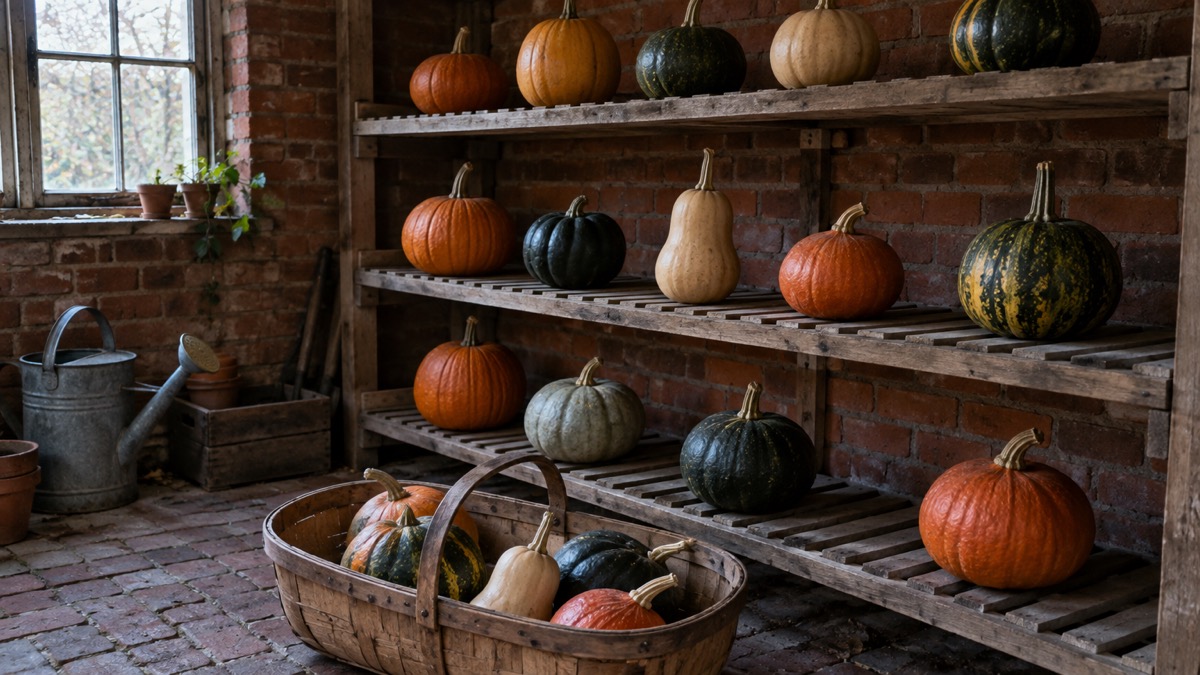
A whole winter squash or pumpkin, kept cool and dry with plenty of air circulation, can last 6 to 9 months1. That is the headline answer, and it is the reason these fruits matter to a household that wants food in the house that does not depend on the fridge or the freezer. Cut in late autumn, they will store throughout winter2, and the best of them store well into the following year2.
The figure applies to whole, uncut fruit with the stalk still on. How long yours actually last depends on three things: how the fruit was harvested, where you keep it, and whether you catch a going-over fruit before it spoils its neighbours. Get those right and a single autumn crop can carry you from October to spring and beyond.
This page sets out how long squashes keep, how to store them so they reach that figure, how they fit into a household emergency food store, why some keep longer than others, and how to check them through the winter.
Storage life: 6 to 9 months for whole, uncut fruit
The 6 to 9 month figure comes from Garden Organic, the growing charity, in its advice on harvesting and storing vegetables. Its wording is that stored cool and dry with plenty of air circulation, pumpkins and winter squashes "can last 6, 9 months"1. Its separate advice on growing vegetables all year round adds that squash and pumpkins are cut late autumn and will store throughout winter2, and that squash store well into the following year2.
Read those two statements together and you get a realistic picture. Six months takes an October harvest to April. Nine months takes it to midsummer. The difference between the two ends of the range is not luck: it is the condition of the fruit when it goes into store and the conditions it meets there.
| What you are storing | How long it keeps | Where it should be | Source |
|---|---|---|---|
| Whole winter squash or pumpkin, stalk on | 6 to 9 months | Cool, dry, plenty of air circulation | 1 |
| Whole squash, best fruit | Well into the following year | Cool, dry, airy store | 2 |
| Cut or cooked squash | Treat as fresh food; eat within 2 days of cooking | Chilled | 11 |
The last row matters because it is where most people go wrong. The long storage life belongs to intact fruit. Once a squash is cut, the hard skin that kept air and mould out is breached, and what is left is a fresh vegetable. The Food Standards Scotland rule for leftovers is to eat them within 2 days11, and a cut squash falls into the same category.
How to store squashes so they reach six months
Storage starts at harvest, not in the shed. Garden Organic's instruction is to harvest before the first frost and to cut with a long stalk, with part of the vine attached, because this protects the stem from rotting1. A short stalk or a torn stem is an open door for rot, and rot in the stem spreads into the fruit.
The conditions that follow are simple and easy to get wrong:
- Cool. A frost-free shed, garage or spare room is the usual choice. The fruit must not freeze.
- Dry. Damp air and damp surfaces encourage mould. Keep fruit off a concrete floor.
- Airy. Space the fruit so air moves around each one. Do not stack them in a heap.
- Checked. Look over the store regularly and remove anything going soft.
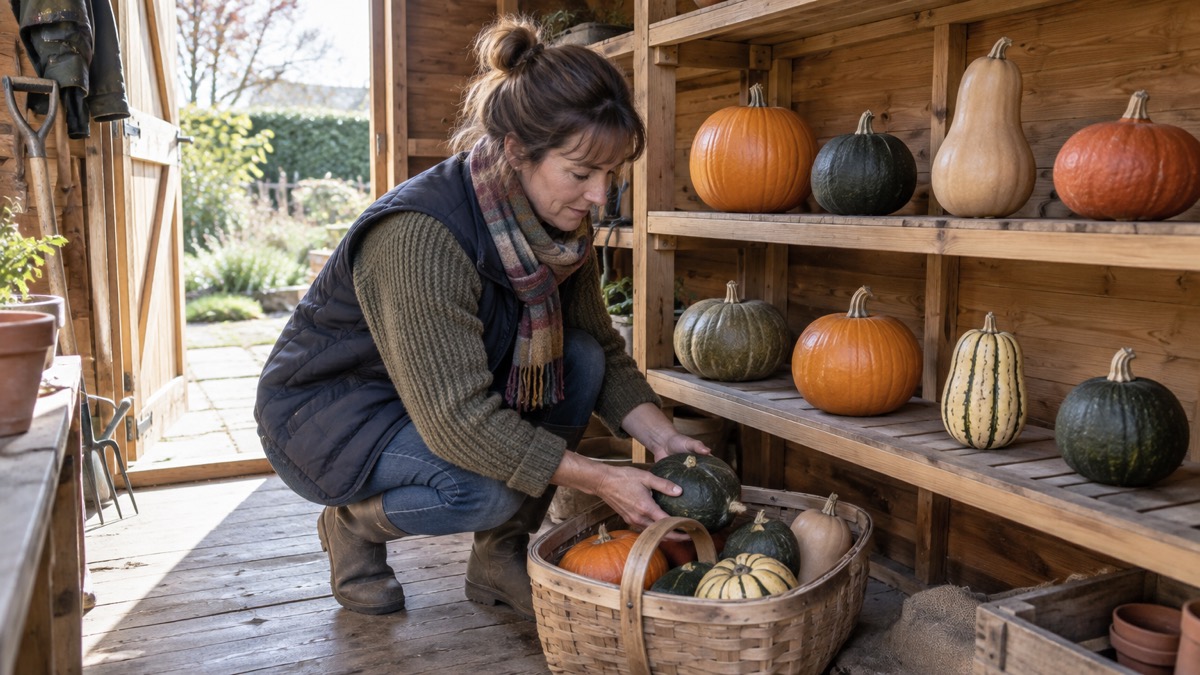
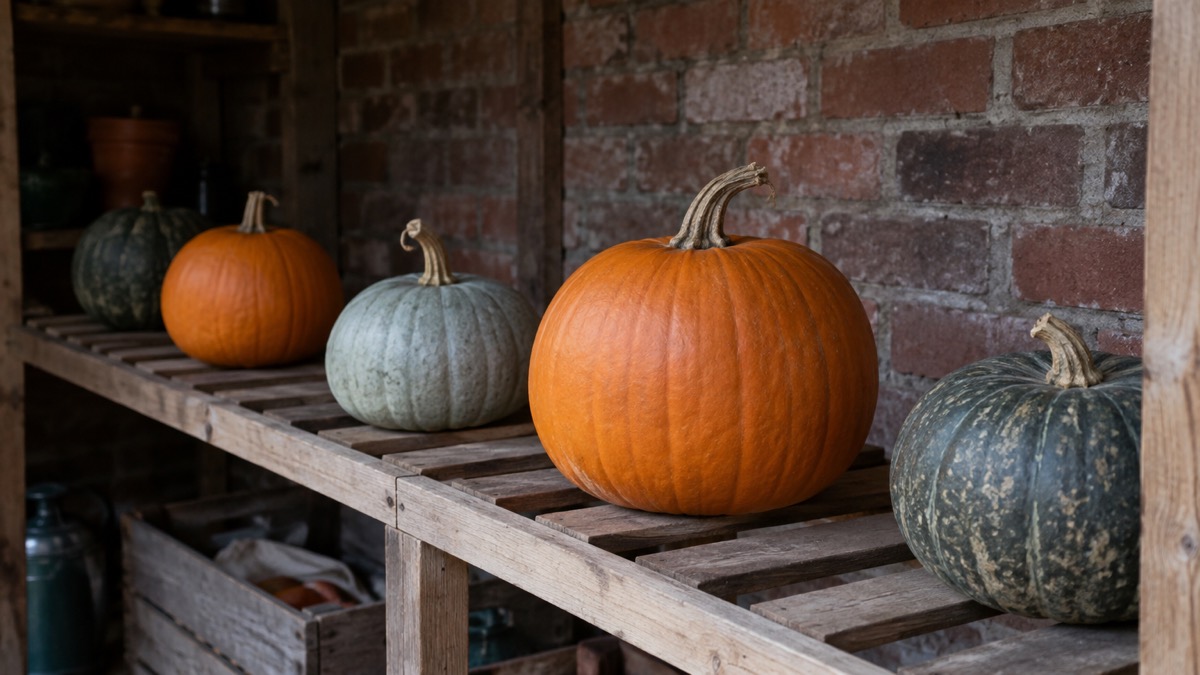
The first frost is the deadline that decides your harvest date. In most of England that falls in late autumn, which is why the crop and the storage season line up. In Scotland, Wales and Northern Ireland the first frost can come earlier and harder, so the window between ripening and frost is shorter and the case for lifting fruit promptly is stronger. The storage principle is the same in all four nations; only the timing moves.
Pumpkins and squashes in a household emergency food store
A stored squash is useful in an emergency for a specific reason: it does not need the fridge, the freezer or the mains. Official UK emergency guidance is built around food that keeps and does not need cooking or chilling. The Be Ready checklist says non-perishable food for 3 days3, and the Be Ready household emergency plan specifies non-perishable food to last at least 3 days that does not require cooking or refrigerating, such as tinned meat, fruit or vegetables, plus a tin opener4.
That 3 day baseline is repeated across local authority guidance. Birmingham City Council says keep enough supplies to meet your household's needs for at least 72 hours5. Renfrewshire Council says aim to keep supplies that can meet essential household needs for at least 3 days6. Lincolnshire County Council lists at least three days' supply of non-perishable food7. Lancashire Prepared says enough food and bottled drinking water to last three days9, and Ready Scotland says a 3 days' supply of bottled water and food that does not need cooking and will not go off10.
Some guidance goes further. The Culham parish emergency booklet suggests enough emergency reserves in your house for up to ten days, including essential medications, food and water8. Wiltshire and Swindon Prepared advises avoiding fresh or perishable food and keeping longer lasting products such as tinned food for emergencies12.
| Guidance | Food to keep | Source |
|---|---|---|
| Be Ready checklist | Non-perishable food for 3 days | 3 |
| Be Ready household emergency plan | At least 3 days, no cooking or refrigeration needed | 4 |
| Birmingham City Council | Supplies for at least 72 hours | 5 |
| Renfrewshire Council | Essential household supplies for at least 3 days | 6 |
| Lincolnshire County Council | At least three days' non-perishable food | 7 |
| Culham parish booklet | Reserves for up to ten days | 8 |
| Lancashire Prepared | Food and water for three days | 9 |
| Ready Scotland | 3 days' supply, food that will not go off | 10 |
Where does a squash fit? It is a useful supplement, not a substitute for the tinned and dry food the guidance names. A squash needs cooking, so it does not meet the "no cooking" test on its own. But in a power cut it is one of the few fresh foods that will still be edible weeks later, and it can add bulk and variety to meals built from tins and dry stores. Treat it as a bridge between the fresh food that spoils and the tinned food that keeps. For more on building a store around these official figures, see Emergency Food: A Household Guide to Stores, Safety and Meals Without Power.
Why some squashes keep longer than others
Two squashes of the same variety can last very different lengths of time, and the reasons are mostly about handling rather than the fruit itself.
The stalk. Garden Organic is explicit that the long stalk with part of the vine attached protects the stem from rotting1. A fruit cut short, or one whose stalk has snapped off, is more likely to rot at the stem and go over early.
Frost and chilling. Harvest before the first frost1. A fruit that has been frosted, even lightly, will break down in store. The same applies to fruit left in a cold shed that dips below freezing.
Damage. Bruises, cuts and splits are entry points for mould. Handle fruit carefully at harvest and when you check it, and eat damaged fruit first rather than storing it.
Air and moisture. Cool, dry and airy is the whole recipe1. A sealed box traps moisture; a heap traps moisture and spreads rot from one fruit to the next.
Variety and ripeness. Garden Organic notes that squash store well into the following year2, which reflects that well-ripened fruit of a good storing kind will outlast an underripe one. The same charity notes that parsnips taste better harvested after the first frost and will store2, a reminder that harvest timing and storage life are linked across the whole winter store.
If you are storing other crops alongside your squashes, the principles carry over. See Storing the Harvest: Roots, Onions, Squashes and Apples for the wider picture, and Growing Your Own Vegetables: Where to Start if you are planning a crop for next year.
Checking stored squashes through the winter
A store is not a set-and-forget. Check the fruit every few weeks, and straight away after a cold snap. Pick each one up, feel it, look at the stalk and the skin, and act on what you find.
A sound squash is firm and heavy for its size, with a hard, dry skin and an intact stalk. Warning signs are:
- soft or sunken patches
- a weeping or damp area
- mould, especially around the stem
- a sour or musty smell
- a fruit that feels light or hollow
Remove anything showing those signs before it affects its neighbours, and eat the sound fruit that is starting to show wear first. The principle is the same one that governs any food store: use what is going over, keep what is sound.
The same caution applies to cut and cooked squash. Food Standards Scotland warns that you cannot smell or taste harmful bugs like listeria, which can grow in many perishable foods13, and its rule is to eat leftovers within 2 days11. A cooked squash left in a warm kitchen is exactly the kind of food that warning is about.
Squashes when the power goes
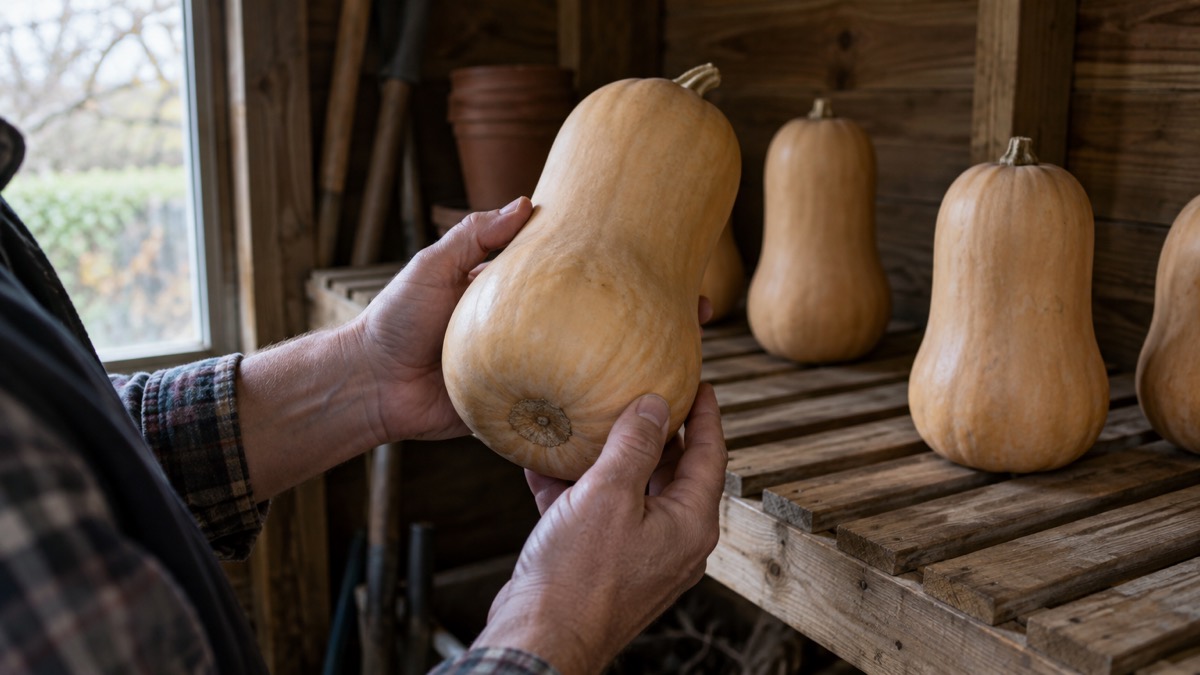
One reason to store squashes is that they keep working when the fridge and freezer do not. It helps to know how long the appliances themselves hold their cold, so you know what to eat first.
Northern Powergrid says most fridges keep food fresh for up to 12 hrs and chest freezers up to 24 hrs14. NIE Networks gives the same figures15. On freezers, the Food Standards Agency figure quoted in local guidance is that a full freezer will hold a safe temperature for approximately 48 hours, or 24 hours if it is half full, if the door remains closed16. NIE Networks puts it at about 48 hours for a full freezer and 24 hours if half-full15.
| Appliance | How long it holds its cold | Source |
|---|---|---|
| Fridge | Up to 12 hrs | 14 |
| Chest freezer | Up to 24 hrs | 14 |
| Full freezer, door closed | About 48 hours | 16 |
| Half-full freezer, door closed | 24 hours | 16 |
The practical order in a power cut is: eat from the fridge first, then the freezer, and lean on the store cupboard and your squashes while the power is out. A whole squash sitting in a cool shed is unaffected by the outage. For the full sequence, see Power Cuts: A Household Guide and Freezing Home-Grown Fruit and Vegetables.
Where to get help and further reading
If you are building a food store for the first time, start with the official baseline of 3 days of non-perishable food that needs no cooking or refrigeration3, and build from there. Your local council's emergency planning pages carry the same advice in local form, and the devolved equivalents are Ready Scotland10 for Scotland and the equivalent pages from Northern Ireland departments for Northern Ireland.
For the wider picture on growing and storing your own, the Self-Reliance at Home section covers the whole cycle, from sowing and growing food to storing the harvest. If you are planning next year's crop, What to Sow and Harvest Each Month will help you time it so the harvest lands before the first frost.
Sources (16)
- Harvesting and storing vegetables, Garden Organic, 2026-10-29
- Vegetables all year round, Garden Organic, 2026-10-29
- Be Ready Checklist, Be Ready campaign, 2026
- Be Ready Household Emergency Plan, Be Ready campaign, 2026
- Are you ready, Birmingham City Council, 2026-05-06
- Prepare your home for emergencies, Renfrewshire Council, 2025-10-09
- Get help and advice in an emergency, Lincolnshire County Council, 2026-10-29
- Are You Ready booklet, Culham Parish Council, 2025-09
- Emergency pack, Lancashire Prepared, 2026-10-29
- Emergency kit, Ready Scotland, 2026-10-22
- Chilling, Food Standards Scotland, 2026-10-25
- What is a national power outage, Wiltshire and Swindon Prepared, 2026-10-25
- Kitchen crimes, Food Standards Scotland, 2026-11-04
- What to do in a power cut, Northern Powergrid, 2026-10-26
- How do I keep food safe, NIE Networks, 2026
- 12 tips to prepare for a power cut, Horsted Keynes Parish Council, 2026
 Hydroponic System Parts List
 Year-Round Sowing Calendar
 Preserving Equipment Checklist
 Blanching Vegetables
 Carrot Fly Protection
 Knowing When Chutney Is Ready
 Clubroot in Your Soil
 Drought-Resistant Vegetables
 Edible Flowers Safety
 Extending the Growing Season
 Freezing Fruit Without Sugar
 Garden Fleece Frost Protection
 Avoiding the Hungry Gap
 Keeping Varieties Pure for Seed
 Making Leafmould