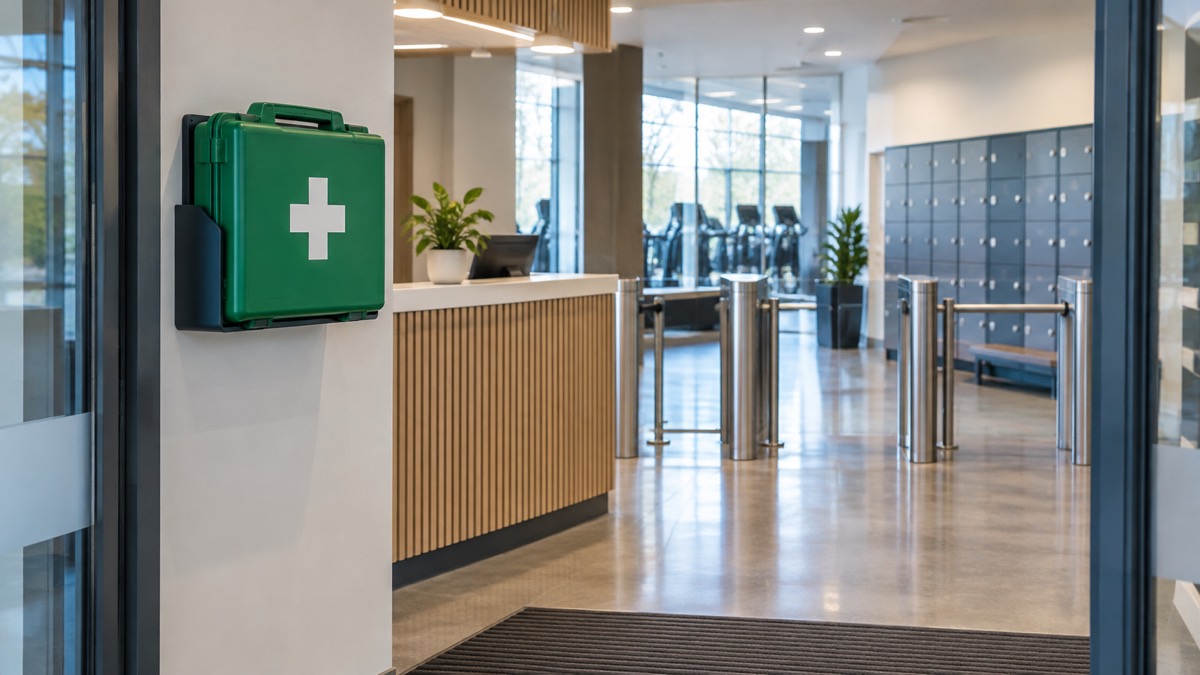
A large workplace first aid kit is a box of dressings, bandages and other supplies sized for a workplace with more people in it than a small kit covers. For a household getting ready for a power cut, a flood, a storm or an outbreak, it does one job: it means that when someone cuts a hand on broken glass in the dark, or a child falls on an icy path, you have the right dressing to hand without going out to find one.
The kit itself is only half the job. The Health and Safety Executive advises checking your kit regularly, noting that many items, particularly sterile ones, are marked with expiry dates, and that expired items should be replaced and disposed of safely1. A large kit that has never been opened since it was bought is not ready. The sections below cover what the large size is for, how to store it, how to keep it stocked, and when an injury needs more than a dressing.
What the Wallace Cameron Large Workplace First Aid Kit is for
The large size exists because a workplace first aid kit is matched to the number of people it has to serve. A large kit holds more of the supplies that get used up fastest, so it stays complete through a run of minor injuries rather than running out after the first few. For a household, that translates into a kit that does not need restocking after every incident, which matters most in exactly the situations where you cannot easily get to a shop: the days after a flood, a storm that has closed roads, or a period when illness is keeping everyone at home.
It is not a substitute for training or for emergency help. A kit gives you the means to clean and cover a wound, support a sprain or protect a burn while you decide what to do next. The decisions themselves, whether to call an ambulance, whether someone can be moved, whether a wound needs closing, come from first aid knowledge and from the emergency services. The First Aid at Home: A Household Guide sets out the wider picture, and First Aid Kits for the Home: Contents and How to Choose explains how a household kit differs from a workplace one.
Where the large kit earns its place in a household plan is as part of the wider emergency kit. Official emergency kit checklists for households list a first aid kit among the items to have ready3, and winter guidance from NHS Scotland advises keeping a first aid kit stocked at home, in your vehicle or at work6. The Scottish Government's prepare campaign includes a first aid kit in its emergency kit for the home7. In other words, the kit is not an optional extra for the cupboard: it is one of the things a household is expected to have ready before anything happens.
What's in the kit
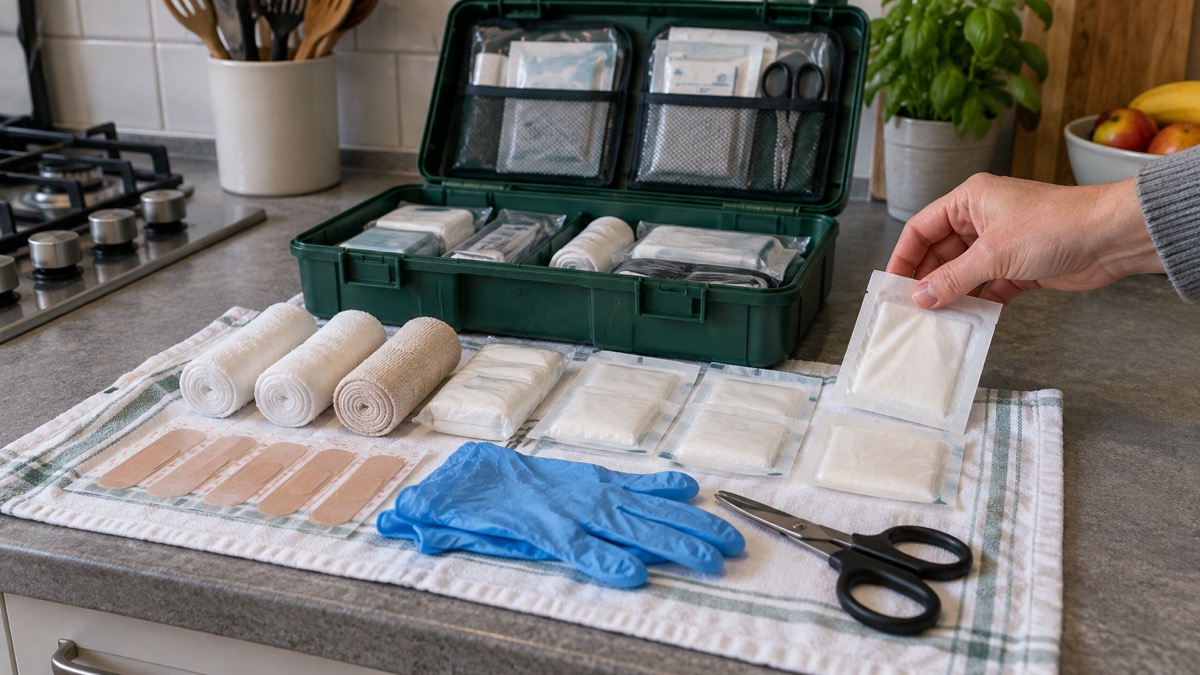
A workplace first aid kit is built around the injuries that happen at work: cuts, grazes, minor burns, splinters and the occasional sprain. The Health and Safety Executive's guidance on what to put in a first aid kit is the reference point for what such a kit should contain1, and the voluntary aid societies publish their own lists of essential contents for workplaces and homes8. The large size simply carries more of each item than the small and medium versions.
The practical way to think about the contents is by what each group does for you in an emergency:
- Cleaning and covering cuts: dressings, plasters and sterile pads let you clean a wound and keep it covered, which is the everyday job a household kit does most often. The Cuts, Grazes and Wounds: Cleaning and Dressing at Home page covers the technique.
- Supporting sprains and strains: bandages and supports let you wrap a twisted ankle or wrist while you decide whether it needs more. See Sprains, Strains and Ice Packs: Treating Them at Home.
- Protecting the person helping: gloves and similar items keep blood and other fluids off your hands. The Protecting Yourself When Helping: Gloves, Masks and Needle Injuries page explains why this matters.
- Small tools: scissors and similar items let you cut dressings and tape to size rather than tearing them.
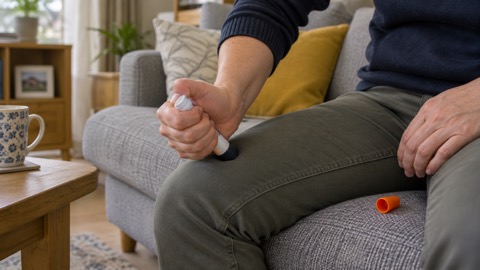
What a workplace kit does not contain is prescribed medicines. Guidance for childcare settings is explicit that items such as an asthma inhaler should not routinely be stored in a first aid kit, but must be kept somewhere easy to reach in an emergency and out of reach of other children9. The same logic applies at home: each person's own medicines belong somewhere known to the household, not loose in the kit. The Allergy and Asthma Action Plans: What They Are and Who Gets One page explains why having a plan matters as much as having the medicine.
Who the large size suits
The large kit suits a household that expects to treat more than one person, or to treat the same people repeatedly over a stretch of days when help is hard to reach. That covers a few clear circumstances:
| Household situation | Why the large size helps |
|---|---|
| A big family or a house with several adults | More supplies before anything runs out, so the kit stays complete through a run of minor injuries |
| A household that hosts or cares for others | Enough dressings to treat a visitor or a neighbour without emptying the box |
| A home in an area prone to flooding, storms or long power cuts | Fewer reasons to go out for supplies when roads are closed or shops are shut |
| A household with someone who is often on their feet outdoors | Plenty of plasters and dressings for the everyday cuts and grazes that come with gardening, DIY and walking |
A single person living alone, or a couple who rarely need a dressing, will find a smaller kit easier to keep in date, because there is less of it to check and replace. The Wallace Cameron Small Workplace First Aid Kit and the Wallace Cameron Medium Workplace First Aid Kit are the same family of kit at smaller sizes, and the Wallace Cameron Family First Aid Kit is the version aimed at households rather than workplaces. If you are weighing up whether to buy a ready-made kit or build your own, Ready-Made Kit or Building Your Own: Which Suits a Household? sets out the trade-offs.
The large size is also the sensible choice for a shared building: a village hall, a sports club, a community group or a block of flats with a communal space. The same logic applies as in a workplace, more people means more supplies.
Where to keep a first aid kit
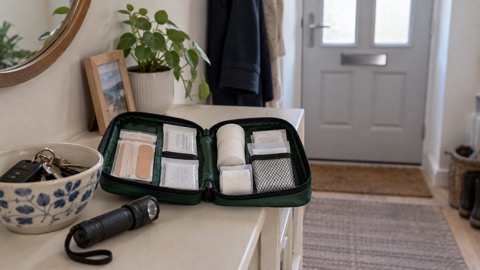
The kit needs to be in two places at once: somewhere it will not be damaged, and somewhere you can find it in the dark. Guidance from one supplier puts it plainly: keep your first aid kit in a cool, dry place out of the way so it will not be damaged or compromised, but ensure it is easy to find and use quickly2. The same supplier suggests a safe, dry and easily accessible place such as a kitchen cupboard out of reach of small children, under the stairs, in a family bathroom or the living room10.
First aid kits are also typically stored in a green box with a white cross, and should be easy to locate8. That convention is worth keeping: in an emergency, a household member who has never opened the kit should still be able to spot it at a glance.
A few practical rules follow from that:
- Keep it out of reach of small children, but not so high that an adult cannot reach it in a hurry.
- Keep it dry. A bathroom cabinet next to a shower, or a cupboard under a leaking pipe, will spoil sterile packaging.
- Keep it cool. A kit left on a sunny windowsill or in a hot car will not stay in good condition.
- Tell everyone where it is. A kit nobody can find is no kit at all.
- Keep a second one in the car. Official emergency kit checklists include a first aid kit3, and one supplier recommends a British Standard Motor Vehicle First Aid Kit for the car11. The Car Kit Checklist for Injuries on the Road lists what else is worth carrying.
Checking and restocking the contents
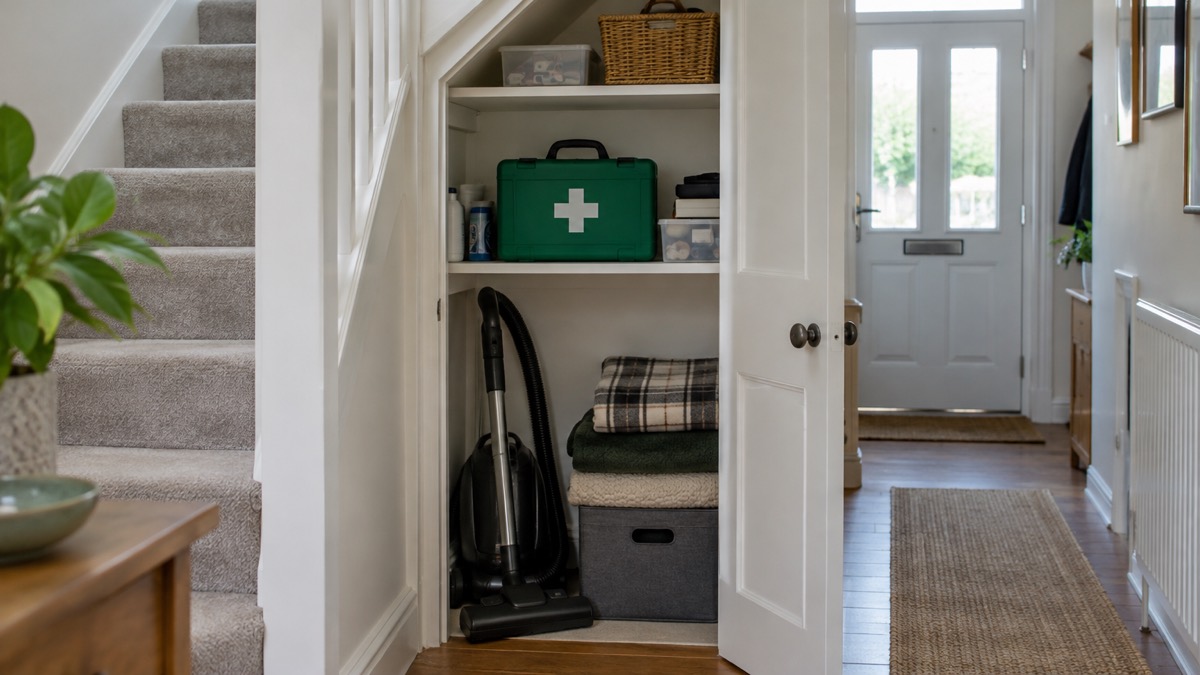
A kit is only ready if its contents are in date and complete. The Health and Safety Executive's advice is to check your kit regularly, noting that many items, particularly sterile ones, are marked with expiry dates, and that expired items should be replaced and disposed of safely1. That is the whole of the official instruction, and it is enough: check, replace, dispose safely.
A simple routine keeps a large kit ready without much effort:
- Pick a date once a year and check the kit on the same day each time, so it does not get forgotten.
- Open the box and take everything out, so you can see what is there rather than guessing from the top layer.
- Read every expiry date and note the earliest one. Write it somewhere you will see it, such as a note on the cupboard door.
- Replace anything expired or used, and dispose of the old item safely rather than leaving it in the kit.
- Check the packaging for tears or damp, which spoil sterile items even before their date.
- Put everything back in the same order, so the next person can find what they need.
Restocking is where the large size pays off. Because the kit holds more of each item, a single missing dressing does not leave the kit unusable, and you have time to replace it before the next incident. Replacement items are available from the maker and from first aid suppliers; the Wallace Cameron page covers the range.
Using the kit safely in an emergency
The kit is a tool, and like any tool it works best when the person using it knows what they are doing. Before you reach for a dressing, the order of priorities is the same whatever the injury: make sure the scene is safe, check whether the person responds, and check whether they are breathing. The What to Do First: Danger, Response, Airway and Breathing page sets out that sequence.
A few points matter specifically when you are using a kit:
- Protect yourself first. Wear gloves from the kit when there is blood or other fluid, and wash your hands afterwards. The Protecting Yourself When Helping: Gloves, Masks and Needle Injuries page explains the risks.
- Use sterile items once. A dressing taken out of its wrapper should not go back in the kit. Replace it as soon as you can.
- Do not remove an object stuck in a wound. The Should You Remove an Object Stuck in a Wound? page explains why.
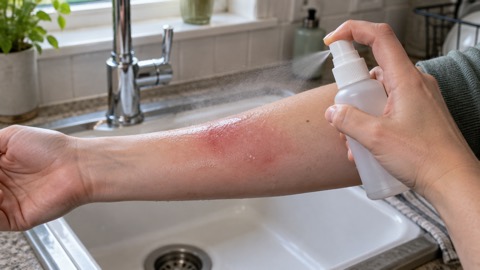
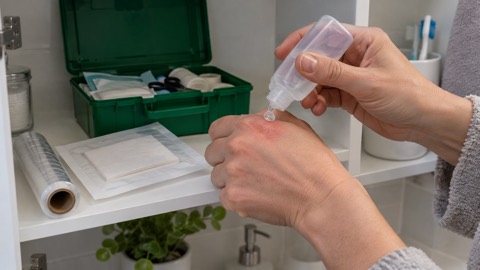
- For a burn, cool it first. Burns first aid guidance from the Children's Burns Trust is to call for help for any burn bigger than a 50p coin5. The Burns and Scalds: How to Cool, Cover and Get Help page covers the technique, and Burn Gel or Cling Film: Covering a Burn at Home compares the covering options.
- For severe bleeding, act quickly. The How to Stop Severe Bleeding page sets out what to do while help is coming.
When to call 999 or 111
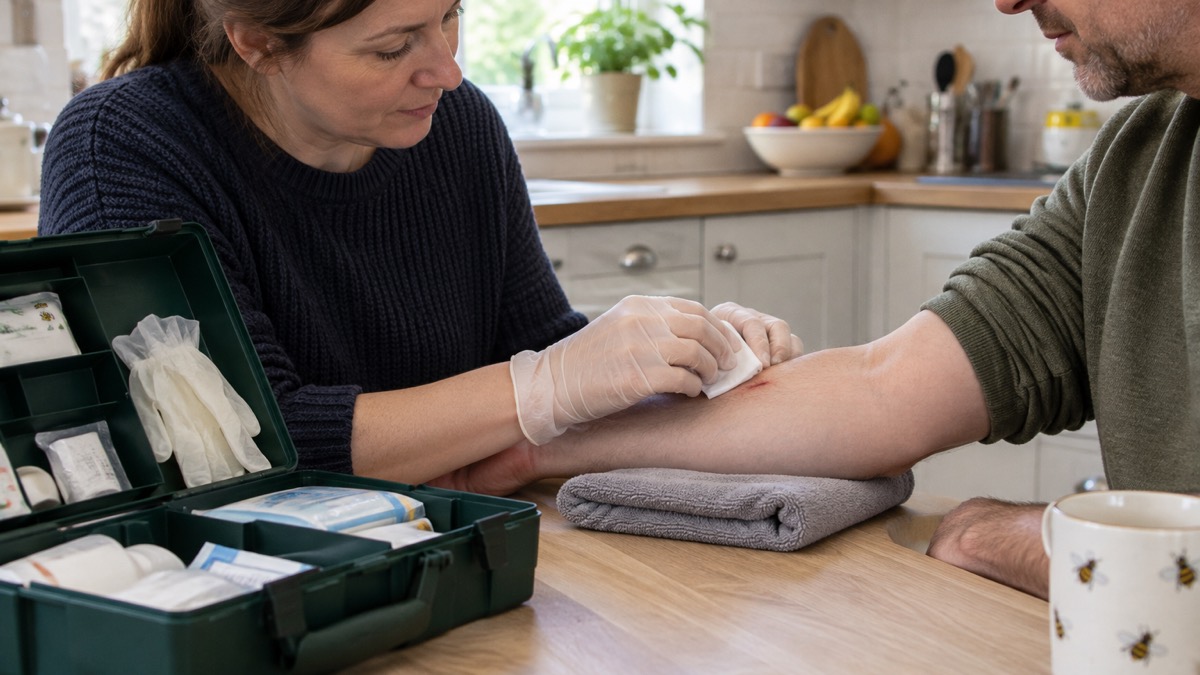
The kit is for injuries you can manage. The moment an injury is beyond that, the phone matters more than the box. The voluntary aid societies advise calling 999 or 112 for emergency help if you think it is serious4, and to call 999 or 112 for emergency help straight away if you are worried12. The fire and rescue service gives the same message for any situation where you feel unsafe or unsure: call 999 for further information and advice13.
For burns, the Children's Burns Trust advises calling for help for any burn bigger than a 50p coin, by ringing 999, NHS 111 (or NHS Direct in Wales) or your GP5. For wounds, one supplier's guidance is to call 999 or go to A&E if the wound is very large or deep11. The British Red Cross first aid guidance for the home likewise says to call 99914.
For medical advice that is not an emergency, NHS 111 is the route. NHS SCAS encouraged everyone to use 111 online for medical advice as winter approaches15. The How Ambulance Services Prioritise 999 Calls and Response Times page explains what happens after you ring, and the Information to Have Ready for the Ambulance Crew checklist helps you give the right details quickly.
| Situation | What to do |
|---|---|
| Someone is not breathing, or you think an injury is serious | Call 999 or 1124 |
| You feel unsafe or unsure at any point | Call 999 for further information and advice13 |
| A burn bigger than a 50p coin | Call for help: 999, NHS 111 (NHS Direct in Wales) or your GP5 |
| A wound that is very large or deep | Call 999 or go to A&E11 |
| Medical advice that is not an emergency | Use NHS 111 online15 |
Support and replacement items
A kit is a long-term piece of household equipment, so it is worth knowing how to keep it going. Replacement supplies are available from the maker and from first aid suppliers, and the Wallace Cameron page covers the range of kits and refills. When you replace an item, match it to the one you are taking out: a sterile dressing of the same size and type keeps the kit working as designed.
The other form of support is knowledge. The Resuscitation Council guidelines cover CPR and defibrillator use. The First Aid Courses: Types, Length and Where to Find One page explains the options, and Learning CPR Free Online: RevivR and Other Options covers free ways to learn. The Teaching Children Basic Life-Saving Skills and How to Ring 999 page is worth reading with younger household members, so that everyone knows where the kit is and how to call for help.
Finally, the kit belongs in the wider household plan. The Emergency Kit: What a UK Household Should Keep Ready page sets out what else to have ready, and Getting Started: Preparing Your Household for an Emergency explains how to build the plan around it. A large first aid kit, checked once a year and stored where everyone can find it, is one of the simplest parts of that plan to get right.
Sources (15)
- What to put in your first aid kit, Health and Safety Executive, 2026
- First aid FAQs answered by the experts, Steroplast, 2023
- Emergency kit checklist, Neath Port Talbot Council, 2026
- Duties and responsibilities of first aiders, St John Ambulance, 2026
- First aid for burns and scalds, Children's Burns Trust, 2023
- Avoiding slips, trips and falls in winter, NHS Scotland, 2026
- Emergency kit, Scottish Government, 2026
- What to put in a first aid kit, St John Ambulance, 2026
- First aid kit contents: Essential items for your workplace | Red Cross Training, British Red Cross Training
- Keeping a first aid kit at home, Steroplast, 2022
- Personal first aid guide, Steroplast, 2026
- Emergency situations, St John Ambulance, 2026
- In the event of a fire, South Wales Fire and Rescue Service, 2026
- First aid at home, British Red Cross, 2019
- SCAS urges people to use NHS 111 online this winter, South Central Ambulance Service, 2025

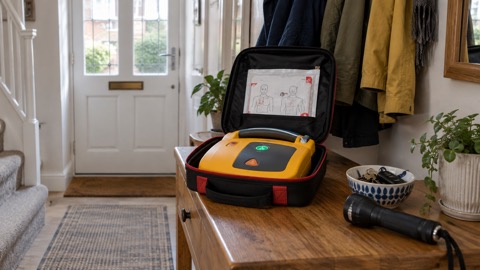 HeartSine samaritan PAD 350P
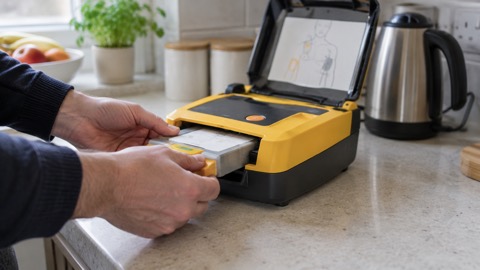 HeartSine Pad-Pak
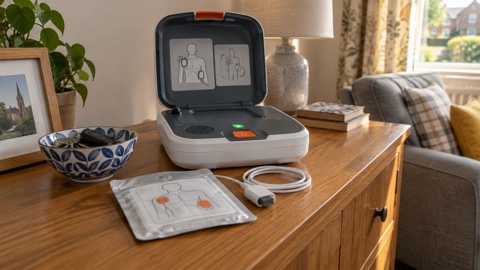 Stryker LIFEPAK CR2
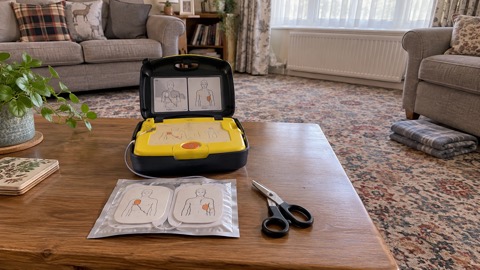 ZOLL AED 3 Defibrillator
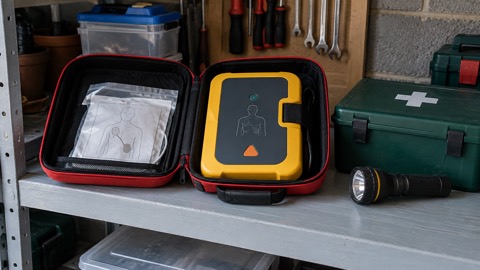 ZOLL AED Plus Defibrillator
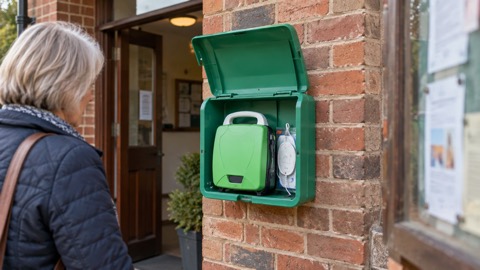 Cardiac Science Powerheart G5
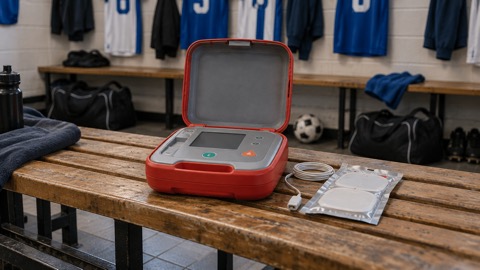 Philips HeartStart FRx AED
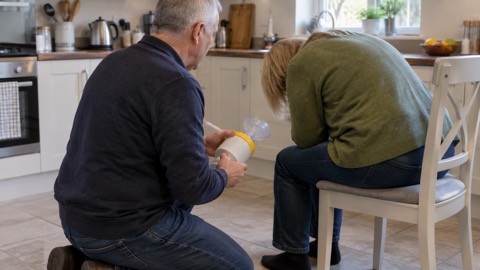 LifeVac Anti-Choking Travel Kit
 Wallace Cameron Family Kit
 Burnshield Hydrogel Spray 125ml
 Burnshield Hydrogel Gel 50ml
 EpiPen Adrenaline Auto-Injector