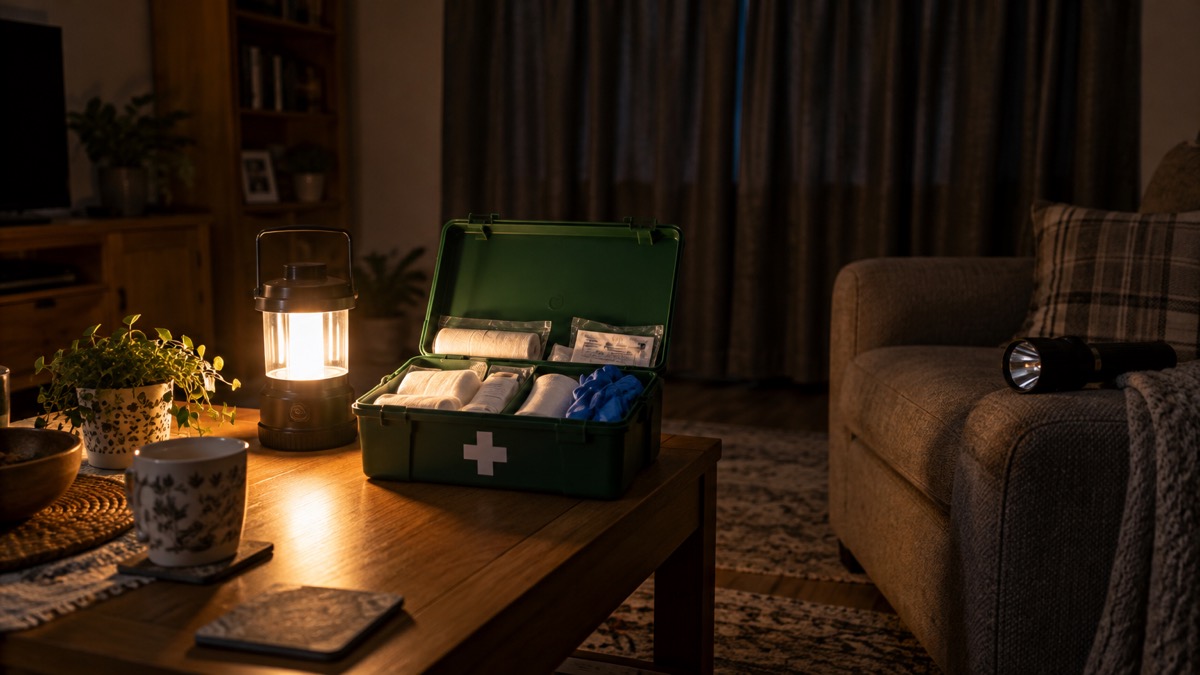
A first aid kit is one of the few pieces of emergency kit that earns its place in an ordinary household every week, not just during a power cut or a flood. The Wallace Cameron Medium Workplace First Aid Kit is a pre-packed box of dressings and supplies assembled for workplaces, and it works at home for the same reason it works in an office: it holds a stocked set of the things you reach for when someone is cut, burned or bleeding, in one place you can find in the dark.
For a household getting ready for an emergency, the kit matters most when normal help is slower to arrive. Official emergency kit lists for Scotland and for Northamptonshire both tell households to include a first aid kit among their stores1, and NHS Scotland advises keeping a first aid kit stocked at home, in your vehicle, or at work3.
This page covers what the kit is for, what is inside it, how to store and check it, and how to replace what you use. It does not give a price, and it does not rank the kit against others.
What the Medium Workplace First Aid Kit is for
The kit is a stocked first aid box, and its job in a household is to put the right dressing in your hand without a search. That matters most in the situations this site is built around: a power cut that leaves the house dark, a storm that brings down a fence or a tile, a flood where someone is clearing up in water, or an outbreak that keeps people at home and makes a trip to a shop or a pharmacy harder than usual.
A pre-packed kit saves you assembling a list item by item. St John Ambulance gives guidance for households working out what to put in a kit9.
The "workplace" in the name describes how the kit was put together and stocked, not a limit on where it can be kept. Nothing in the guidance says a workplace kit cannot be used at home. What the guidance does say is that a kit is only useful if it is complete, in date and easy to reach, and those are the things to manage wherever you keep it.
Where the kit fits a household plan is alongside the rest of your stores. It belongs with the emergency kit you keep ready for a power cut or a flood, and it is the first thing to reach for before you work through the steps in What to Do First: Danger, Response, Airway and Breathing. If you are still deciding whether a ready-made kit or a box you build yourself suits you better, Ready-Made Kit or Building Your Own sets the two side by side.
What's inside the kit
That list is the one to check your own box against, because it is the official statement of what a stocked kit should hold, and it is the same list a household can use to judge whether a kit is complete.
Between the official list and St John Ambulance's guidance, you have a checklist to hold against the box: if an item on the official list is missing, the kit is not complete for the job9.
The maker's refill range shows how the contents are organised in practice. Wallace Cameron's First Aid Kit Refills are sold for routine restocking or for replacing used contents after an incident, and the range covers workplace and catering environments, including versions with blue detectable plasters for food handling areas8. The Sustainable First Aid Kit Refills are described by the maker as suitable for a range of workplace settings, from offices and schools to construction and industrial sites10. That tells you the contents are put together in versions for different settings, so check which version your box is before you assume what is in it.
Size, case and specifications
The sources here do not give the dimensions, weight or item count of the medium kit, so this page does not state them. What the sources do give is how a kit of this kind is presented and stored, and that is what decides whether it suits your household.
| What you need to know | What the guidance says |
|---|---|
| How a kit is usually presented | Typically stored in a green box with a white cross, and easy to locate9 |
| Where to keep it at home | A safe, dry, easily accessible place such as a kitchen cupboard out of reach of small children, under the stairs, in a family bathroom or the living room5 |
| Conditions to avoid | A cool, dry place out of the way so it will not be damaged or compromised, but easy to find and use quickly6 |
| What the date on the box means | A date on the outside of a pre-packed kit reflects the item inside that expires first7 |
| Refill type | The maker lists its refills as a refill kit type8 |
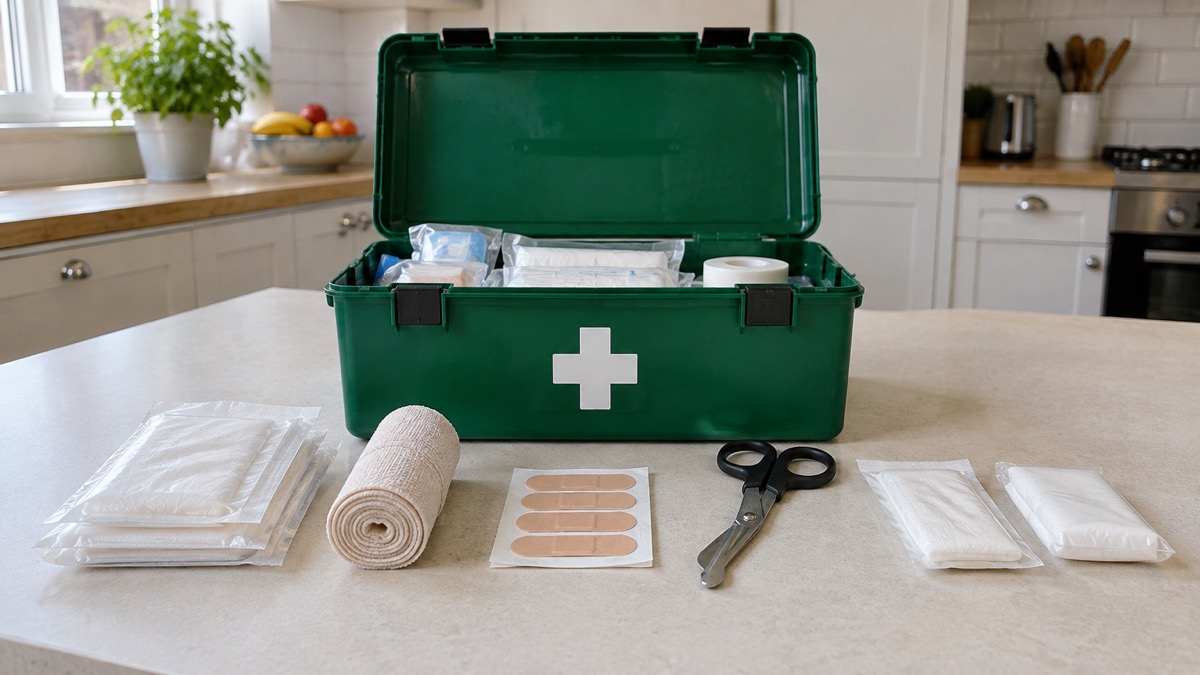
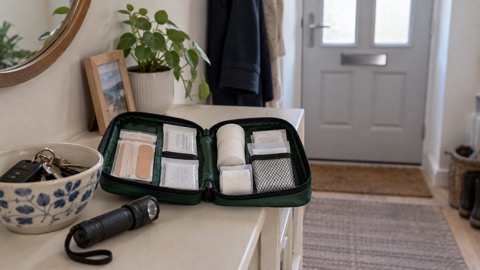
The green box with a white cross is the convention most people recognise, and it is worth keeping to, because in a dim hallway or a power cut the colour and the cross do more than a label would9. If your kit comes in a different case, a clear label on the lid does the same job.
The medium size sits between the small and large kits in the same range. If you are weighing up which size suits a household, the Small Workplace First Aid Kit and the Large Workplace First Aid Kit pages set out the alternatives, and First Aid Kits for the Home: Contents and How to Choose covers the choice more broadly. For the standard that workplace kits are built to, see BS 8599 Kits Explained.
Using the kit in an emergency
A kit does not treat anyone. It gives you the right item at the right moment, and the order you use it in is set by first aid guidance, not by the box. Work through the steps below, and follow the linked pages for the detail on each.
- Make the scene safe before you open the kit. Check for danger to yourself and the casualty first, as set out in What to Do First.
- Protect yourself before you touch a wound. Gloves and the other precautions are covered in Protecting Yourself When Helping.
- Deal with severe bleeding first. How to Stop Severe Bleeding sets out what to do while help comes.
- Clean and cover cuts and grazes. Cuts, Grazes and Wounds explains cleaning and dressing at home, and Dressings, Bandages and Plasters explains what each item in the kit is for.
- Cool a burn before you cover it. Burns and Scalds gives the steps.
- Call 999 for anything serious. How Ambulance Services Prioritise 999 Calls explains what happens next, and Information to Have Ready for the Ambulance Crew lists what to have to hand.
The kit's limits are worth knowing before an emergency rather than during one. It holds dressings and supplies, not medicines beyond what the official list covers, and it does not replace training. A short course gives you the confidence to use what is in the box; First Aid Courses: Types, Length and Where to Find One covers the options, and Learning CPR Free Online covers free training you can do at home.
Where to keep the kit
Keep the kit where you will reach it without thinking, and where it will not be damaged between uses. The guidance is consistent on both points: a safe, dry, easily accessible place such as a kitchen cupboard out of reach of small children, under the stairs, in a family bathroom or the living room5, and a cool, dry place out of the way so it will not be damaged or compromised, but easy to find and use quickly6.
- Kitchen cupboard, out of reach of small children: close to where most household cuts and burns happen5.
- Under the stairs or in a hallway cupboard: on the route in and out, so it is easy to grab in a hurry5.
- Family bathroom or living room: a second sensible spot if the kitchen is far from where people gather5.
- Away from heat and damp: a cool, dry place keeps the contents in good condition6.
- Marked and recognisable: the green box with a white cross is the convention people look for9.
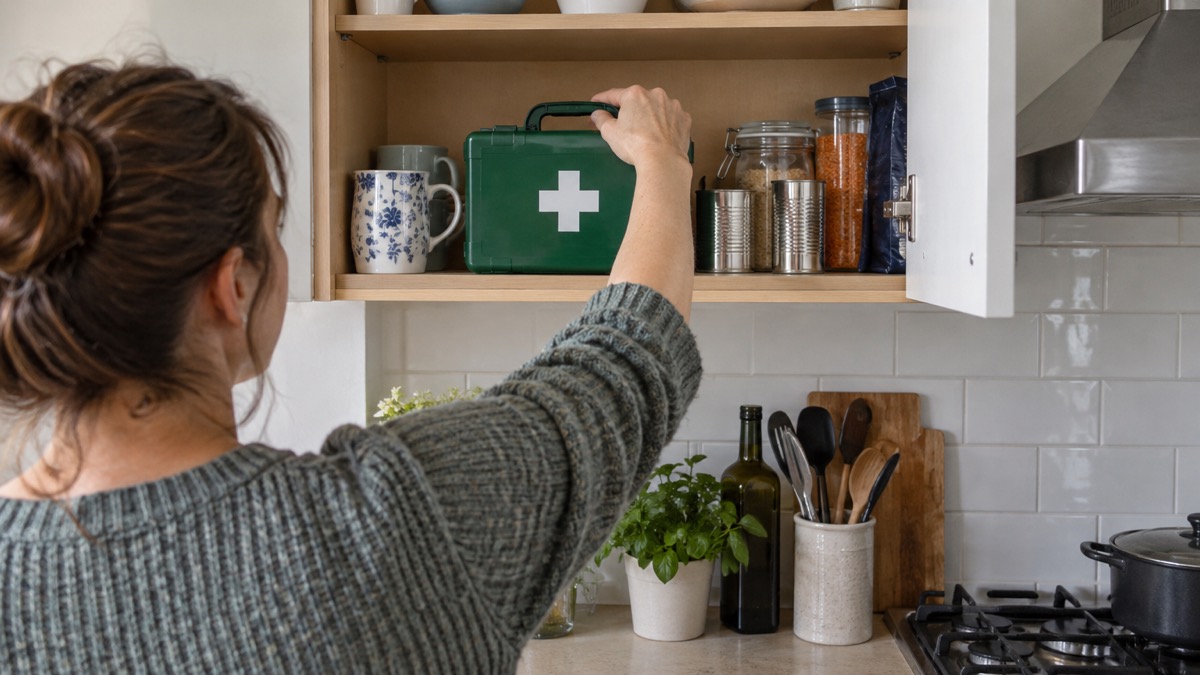
Two places deserve a second kit rather than a move. The first is the car: official emergency kit lists for Scotland and for Northamptonshire both include a first aid kit among the things to keep in a vehicle1. The Car Kit Checklist for Injuries on the Road sets out what to keep there. The second is upstairs in a house with more than one floor, so that a fall on the landing does not mean running downstairs. Wherever you keep it, store it in a safe, dry and easily accessible place such as a kitchen cupboard out of reach of small children, under the stairs, in a family bathroom or the living room2.
Checking the contents and expiry dates
Check your kit regularly. Many items, particularly sterile ones, are marked with expiry dates, and expired items should be replaced and disposed of safely4. That is the whole routine: open the box, read the dates, and deal with anything that has passed.
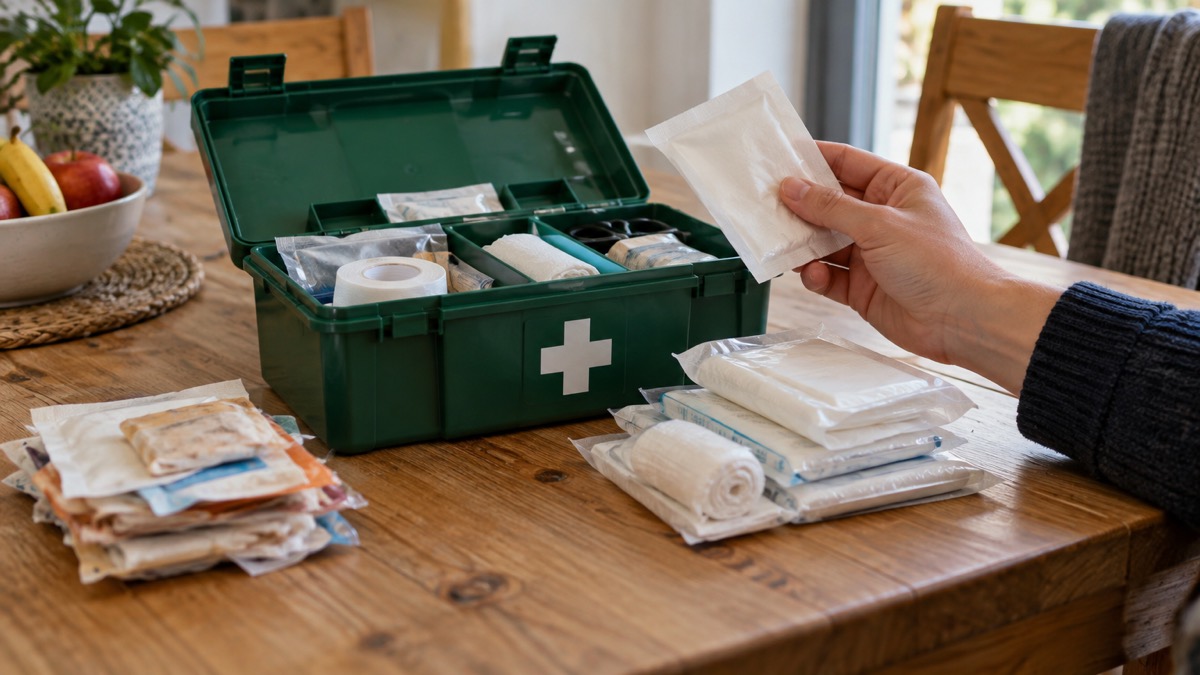
The date on the outside of a pre-packed kit is the one to work from. Where a kit carries a date on its outside, that date reflects the item inside that expires first7. So the box date is not a rough guide to the kit as a whole; it is the earliest date in the box, and it is the date by which something inside needs attention.
A simple routine keeps the kit ready without much effort:
- Check the sterile items first, since these are the ones most often dated4.
- Check the car kit more often than the house kit, because a vehicle gets hot in summer and cold in winter.
- Check it when the seasons turn, alongside the other household checks you do before winter.
- Replace expired items, disposing of them safely4.
- Read the date on the outside of a pre-packed kit as the date of the item inside that expires first5.
Replacing used or out-of-date items
Out-of-date first aid equipment should not be used to treat first aid incidents. Supplies should be disposed of and replaced with new, as required7. That is the rule to follow: do not keep a dated dressing "just in case", because in an emergency you will not stop to read the date.
Replacement is straightforward because the maker sells refills. Wallace Cameron's First Aid Kit Refills are described as ideal for routine restocking or for replacing used contents after an incident, and the maker lists them as a refill kit type8. The Sustainable First Aid Kit Refills are described by the maker as suitable for a range of workplace settings, from offices and schools to construction and industrial sites10.
The maker lists 19 stockists for its refills, including Screwfix, CLH Healthcare, Banner UK, Bowak, Commercial Body Fittings, Defibs., Direct365, Elliott Hygiene, GTS-MedOH, HealthCare Direct Limited, Pf Cusack, Jacksons (Clear Glass) Ltd., Nu-Care Products Ltd., Premier Vanguard, Smart Image Workwear, Staples, Vow Wholesale and Warrior Protects8. That spread means a refill is usually a short trip or an online order away, which matters if you are restocking after a storm or a flood when normal shopping is disrupted.
If your household includes a baby or a young child, keep the child-specific supplies separate and check them on the same schedule; the Baby and Child Kit Checklist sets out what to add. For a kit built around bleeding control, see the Bleeding Control Kit Checklist.
Support and safety notices
The sources here do not give a phone number, email address or warranty terms for the medium kit, so use the contact details printed on the packaging or shown on the maker's site, and quote the kit name and size when you ask about contents or refills. The Wallace Cameron page covers the maker's range.
Three safety points bear on how you keep and use the kit:
- Do not use out-of-date items on a casualty. Dispose of them and replace them7.
- Keep the kit out of reach of small children, both so the contents stay intact and so a child does not open sterile packets or swallow anything5.
- Keep it dry. A cool, dry place protects the contents from damage and compromise6.
For the wider household picture, the First Aid at Home: A Household Guide is the place to start, and Preventing Accidents at Home covers the falls, burns and poisonings that fill a kit in the first place. If someone in your household has a medical condition, Message in a Bottle explains how to keep their details where responders look.
Sources (10)
- Emergency kit, Scottish Government, 2026
- Emergency kit checklist, Neath Port Talbot Council, 2026
- Avoiding slips, trips and falls in winter, NHS Scotland, 2026
- What to put in your first aid kit, Health and Safety Executive, 2026
- Keeping a first aid kit at home, Steroplast, 2022
- First aid FAQs answered by the experts, Steroplast, 2023
- How often should first aid kits be checked and maintained?, British Red Cross, 2025
- Wallace Cameron First Aid Kit Refills, Wallace Cameron, 2026
- What to put in a first aid kit, St John Ambulance, 2026
- Wallace Cameron Sustainable First Aid Kit Refill, Wallace Cameron, 2026

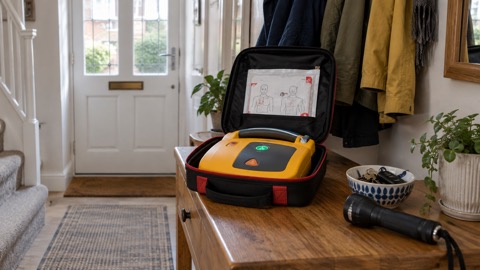 HeartSine samaritan PAD 350P
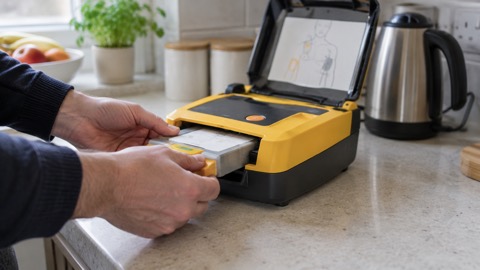 HeartSine Pad-Pak
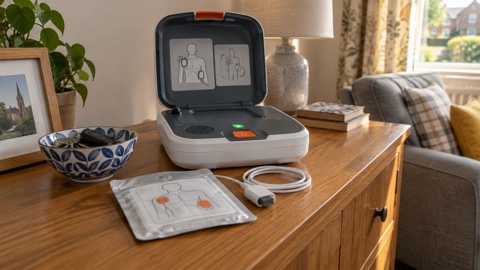 Stryker LIFEPAK CR2
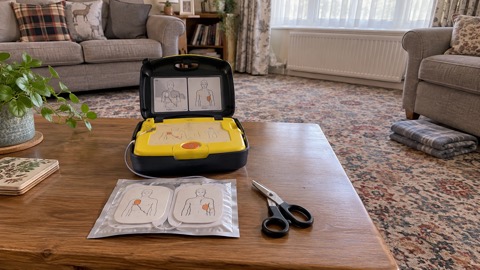 ZOLL AED 3 Defibrillator
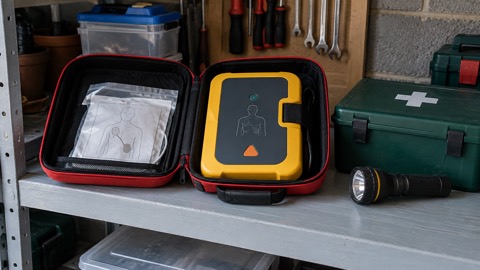 ZOLL AED Plus Defibrillator
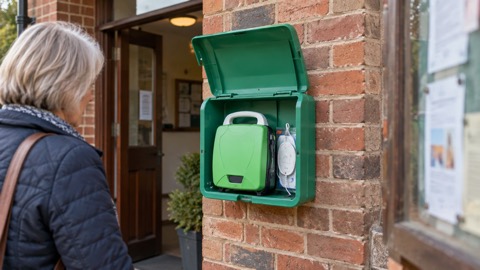 Cardiac Science Powerheart G5
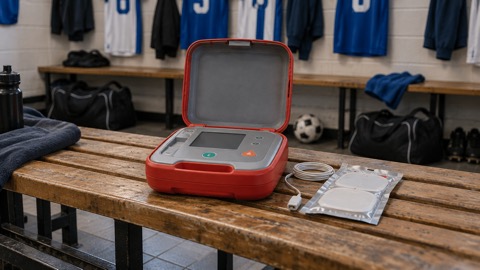 Philips HeartStart FRx AED
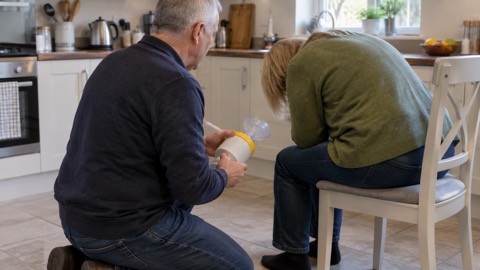 LifeVac Anti-Choking Travel Kit
 Wallace Cameron Family Kit
 Burnshield Hydrogel Spray 125ml
 Burnshield Hydrogel Gel 50ml
 EpiPen Adrenaline Auto-Injector