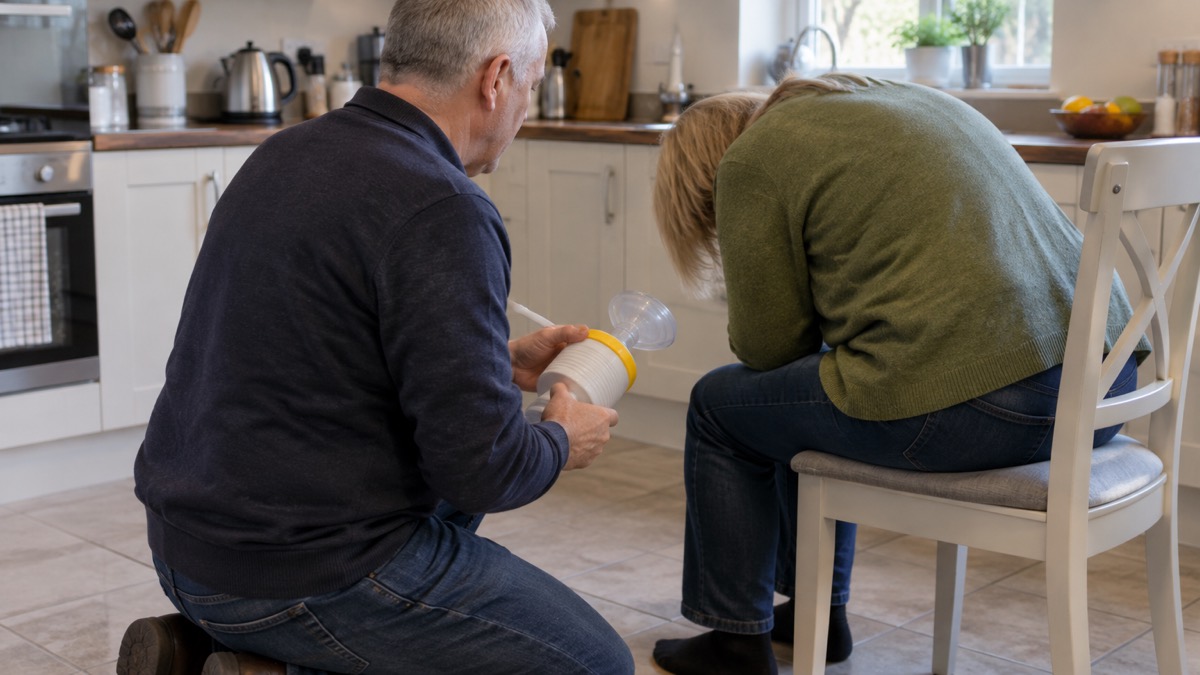
The LifeVac Anti-Choking Travel Kit is a portable anti-choking suction device for use when someone is choking and the usual methods for clearing a blocked airway have been tried without success1. It is a Class I medical device under MDR, CE and UKCA marked, made in the UK, and supplied with four colour-coded masks covering infant to large adult1. The whole kit weighs 670g and comes in a soft yellow travel case1.
The most important thing to understand is the order of events. The device is not a first response. If someone is choking, the standard choking first aid steps come first, and you should call 999 if the obstruction does not clear. The LifeVac is described by its distributor as suitable for use after the usual methods for clearing a blocked airway have been tried without success1. Treat it as a back-up tool that sits alongside your first aid kit, not a replacement for knowing what to do.
This page sets out what the kit contains, what each mask is for, how to keep it ready, and how to carry it when you travel. It does not replace training. Free video training is available through a QR code supplied with the kit1, and a basic life support session with your local ambulance service covers the skills that matter in a choking emergency2.
What the LifeVac Travel Kit is and when to use it
The LifeVac is a medical device that clears the airway if choking occurs, according to the distributor's product information1. The travel kit is the portable version: the same suction device, packed into a soft yellow case with a set of masks and a short instruction booklet, so it can live in a bag, a car or a cupboard and be carried when you are away from home1.
The device is described as suitable for adults and children, with a stated patient suitability of adult and paediatric1. That range is what the four masks are for. The kit is not a substitute for the choking first aid you would give anyway. The distributor is explicit that it is for use after the usual methods for clearing a blocked airway have been tried without success1. In practice that means the standard sequence: encourage the person to cough, give back blows and abdominal thrusts as taught, and call 999 if the object does not come out.
If you want to be confident about that sequence before you ever need it, read our guide to what to do if someone is choking, which covers adults, and the narrower pages on what to do if a child is choking and what to do if a baby is choking. The LifeVac sits after those steps, not before them.
Masks for every age: four colour-coded sizes
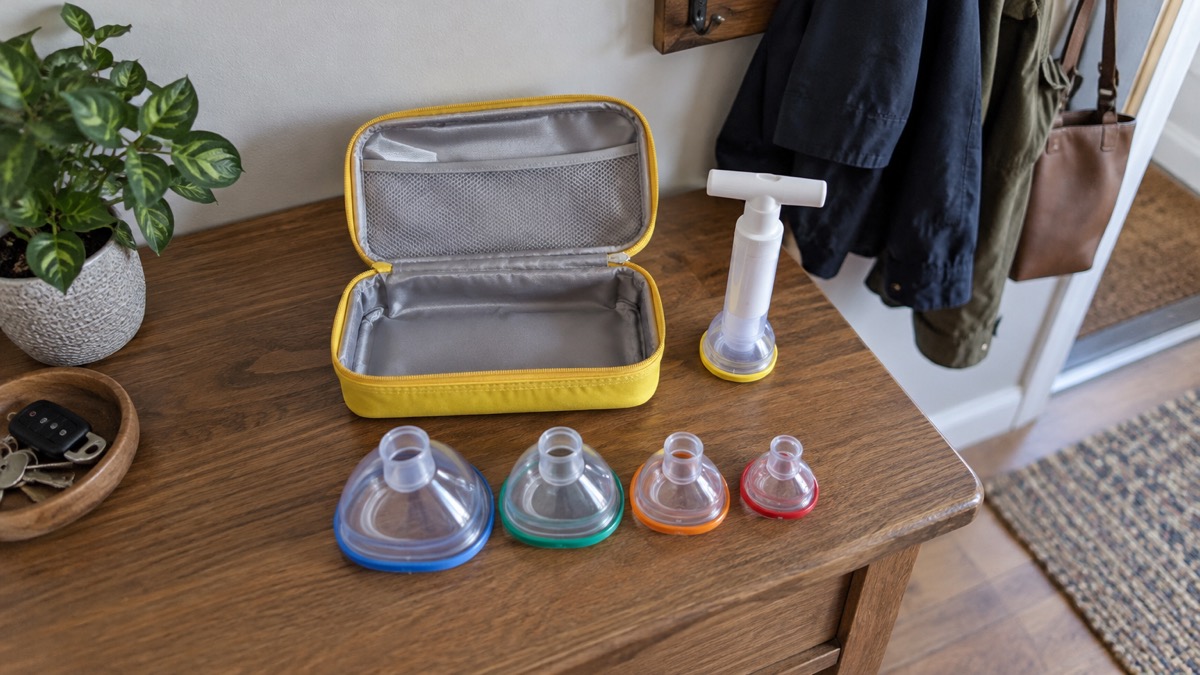
The travel kit is supplied with four different sized colour-coded masks, covering infant to large adult1. The colour coding is there so that you can pick the right size quickly, in the moment, without reading labels. The masks are labelled Orange for Large Adult, Green for Medium Adult (labelled test mask), Yellow for Small Adult or Child, and White for Infant1:
| Mask colour | Size | Who it suits |
|---|---|---|
| Orange | Large adult | Larger adults |
| Green | Medium adult (labelled as a test mask) | Average adults, and practice |
| Yellow | Small adult or child | Smaller adults and children |
| White | Infant | Babies |
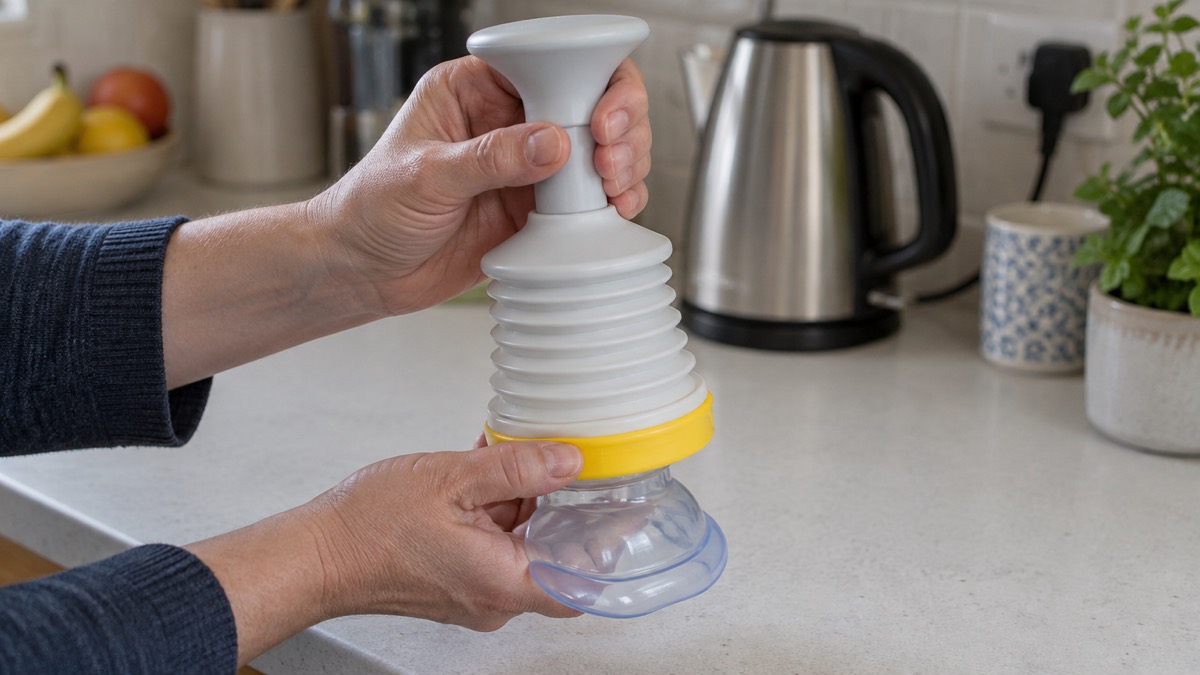
The green medium adult mask is labelled as a test mask1. That gives you a mask you can use to practise fitting and pulling the plunger without using up one of the masks you might need in a real emergency. Practise with it until the movement is familiar, then repack the kit.
Choosing the right mask matters more than it might seem. A mask that is too large will not seal, and a mask that is too small will not cover the mouth and nose properly. Match the mask to the person in front of you, and if you are unsure between two sizes, go with the one that covers the face without gaps.
What is in the kit, and its size and weight
The travel kit is listed as nine pieces1. The distributor's contents list is:
- LifeVac suction device1
- Instruction booklet1
- Yellow travel case1
- Paediatric mask1
- Small child or adult mask1
- Medium adult or test mask1
- Large adult mask1
- Window or door sticker1
- Feedback form1
The window or door sticker is there so that emergency responders can see at a glance that a choking device is kept in the house. That is a small thing that can save time in a crisis, and it is worth putting up somewhere visible near the front door.
The kit measures 300mm high, 150mm wide and 90mm deep, and weighs 670g1. Packaged, it measures 320mm by 161mm by 110mm1. In everyday terms, that is a small, light case that will fit in a rucksack, a glovebox or a kitchen drawer, and it is light enough to carry without noticing.
Certification and where it is made
The LifeVac is a Class I medical device under MDR, and it is CE and UKCA marked1. It is made in the UK1. Those marks are the ones to look for on any medical or safety product you buy. Official guidance across a range of products, from life vests to generators, is consistent: check for a CE or UKCA mark to show the product meets the relevant safety requirements3. The LifeVac carries both1.
The Class I classification is worth understanding in plain terms. It is the lowest risk class under the medical device rules, which fits a device that is used for a short, specific purpose rather than implanted or used continuously. It does not mean the device is trivial. It means it is regulated, marked and traceable, and that the maker has made a declaration about what it does.
The kit is made of plastic and is described as partially recyclable1. That is a useful thing to know when a mask or the device reaches the end of its life, but it is not a reason to put used masks into household recycling. Anything that has been in contact with a person's airway should be disposed of as waste.
Training, mask lifespan and replacement after a rescue
The kit comes with free access to LifeVac video training through a QR code1. Use it. Watching the technique once, with the device in your hand and the practice mask fitted, is worth more than reading the instructions in the moment.
Beyond the video, a basic life support awareness session with your local ambulance service covers finding a patient and alerting the emergency services, assessing the patient for consciousness, giving CPR and using a defibrillator2. Sessions typically last 90 to 120 minutes2. That is the broader skill set that surrounds a choking emergency, and it is worth having. Our page on first aid courses sets out the types and lengths available.
The masks supplied with the kit come with a minimum of 18 months of lifespan1. Note the date when the kit arrives and diarise a check. Masks are single use, and the manufacturer will replace them free of charge if they are used in a rescue process1. After a rescue, contact the supplier or manufacturer, arrange the replacement, and restock the kit so it is complete again.
Keeping the kit ready to use
A choking device that is buried at the back of a cupboard, with expired masks, is not much use. The same principle that applies to any first aid kit applies here: keeping it up to date ensures you can respond quickly and confidently11. Check the kit at the same time you check your household first aid kit, and replace anything that has passed its date.
A few practical habits keep it ready:
- Store it where choking is likely to happen. The kitchen is the most common place for a choking incident, so a kitchen drawer or cupboard is a sensible home for it.
- Keep the instruction booklet with the device. Do not separate them.
- Put the window sticker up. The kit includes a window or door sticker1.
- Check the masks. Note the 18 month minimum lifespan and replace before it runs out1.
- Repack after practice. If you use the test mask, put everything back in the case.
If you are building out a household first aid kit alongside it, our guide to first aid kits for the home covers contents and how to choose, and the comparison of a ready-made kit or building your own helps you decide which suits your household. The LifeVac is an addition to that kit, not a replacement for it.
Carrying it when travelling
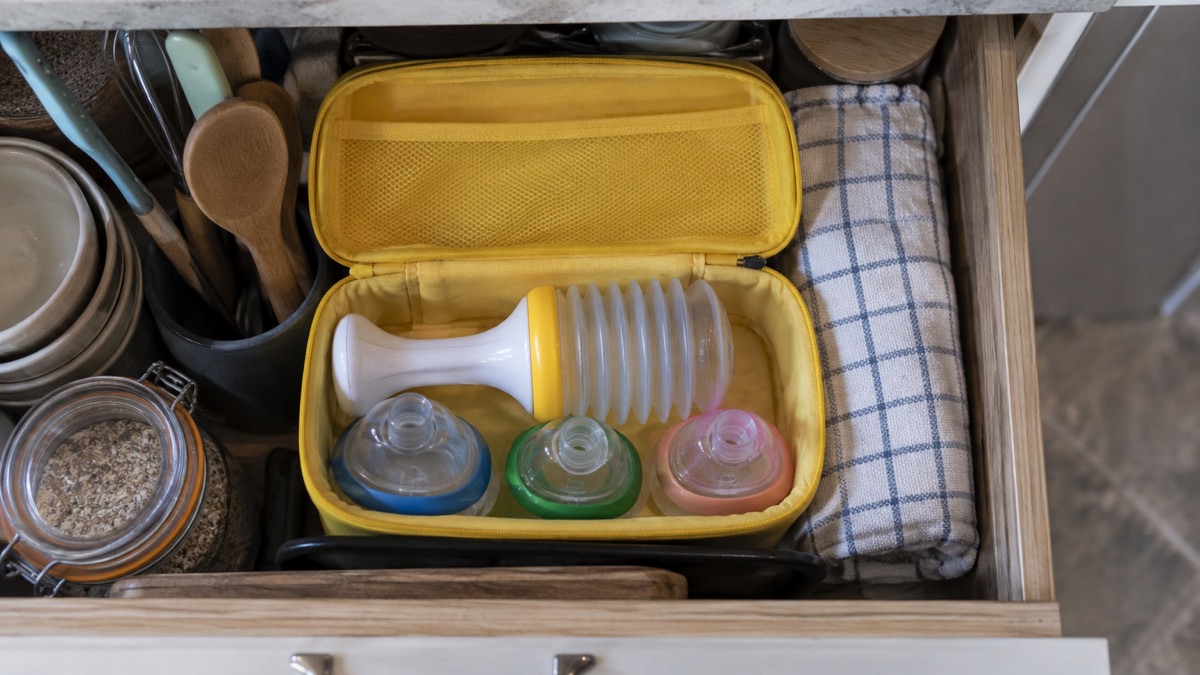
The travel kit is built for exactly this. It comes in a soft yellow travel case1. If you are travelling with medical equipment, NHS guidance for ventilator users is to tell your airline in advance and carry it as hand luggage12. The same approach makes sense for any device you might need: keep it with you rather than in checked baggage.
For a long journey, official guidance is to have any medication you need, a charged mobile phone, and food and water with you before you set off12. In hot weather, the advice is to take plenty of drinks, food, a hand held fan and any medication you might need14. A vehicle emergency kit for year round use includes a first aid kit, jump start cables, an empty fuel can, water and food, a shovel and a phone backup battery15. The LifeVac fits naturally into that kit, alongside the first aid kit.
If you are travelling with children, the same mask range covers them, and the infant mask is there for babies1. Pack the kit where you can reach it without unpacking the car, and check the mask dates before you go.
Sources (15)
- LifeVac Anti-Choking Travel Kit, Safelincs, 2026-10-29
- PAD Information Pack, South Central Ambulance Service, 2026-08
- Adult Basic Life Support and Automated External Defibrillation, East London NHS Foundation Trust, 2015
- Product Safety Campaigns, Peterborough City Council, 2026-10-29
- Battery Fires, Devon and Somerset Fire and Rescue Service, 2026
- Battery Safety Flyer, Portsmouth City Council, 2026-01
- Safe Use of Heaters and Generators, Armagh City, Banbridge and Craigavon Borough Council, 2026-10-29
- Dehumidifiers, Electrical Safety First, 2026-10-25
- Public Access Defibrillators, South Central Ambulance Service, 2026-10-29
- AED, South Central Ambulance Service, 2026-10-29
- What Should I Keep in My First Aid Kit?, NHS, 2026-10-25
- Home Ventilator Manual, Leeds Teaching Hospitals NHS Trust, 2024-10
- Driving on Motorways, National Highways, 2026-10-29
- Driving on Our Roads: Driving on Motorways, National Highways, 2026-10-29
- How to prepare a car emergency kit for the winter | Traffic Scotland, Traffic Scotland