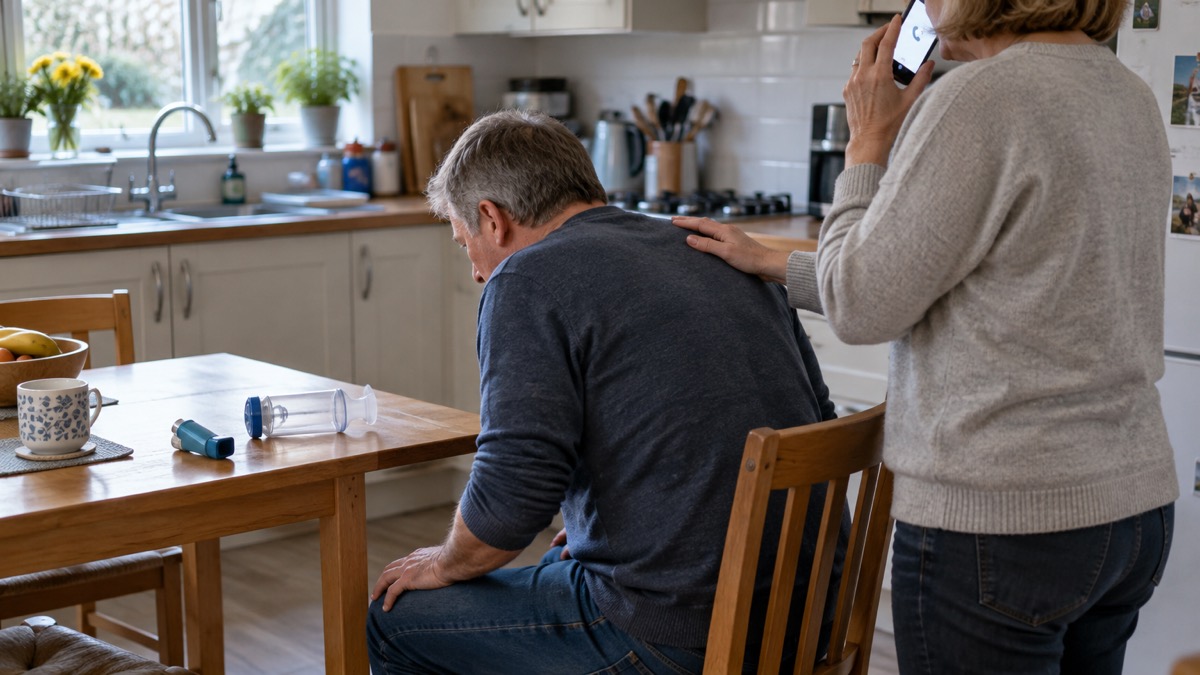
If someone is having an asthma attack and there is no reliever inhaler to hand, call 999 straight away. Do not wait to see whether they get better on their own. While you wait, help them to sit upright in a comfortable position and try to stay calm, and tell the 999 call handler that there is no reliever inhaler with you1.
The same call applies if they have an inhaler but it is not working. St John Ambulance and the British Red Cross both say to call 999 if the person does not have their inhaler, the inhaler has no effect, they are becoming worse, or they become unable to talk1. Asthma and Lung UK puts it just as plainly: if you do not have your reliever inhaler and you are struggling to breathe, call 999 straight away3.
An asthma attack can be frightening for the person having it and for anyone helping. The steps below are the same whether you are the one struggling to breathe or you are looking after someone else, and they work for adults and for children. The one thing that changes with a child is how you repeat the reliever inhaler while the ambulance is on its way.
No inhaler in an asthma attack: call 999 straight away
The absence of an inhaler is the trigger for an emergency call, not a reason to wait and watch. St John Ambulance's guidance is direct: if the casualty has no inhaler, call 999 or 112 for emergency help1. Asthma and Lung UK says the same for the person having the attack: if you do not have your reliever inhaler, and you are struggling to breathe, call 999 straight away3. The British Red Cross adds the instruction to tell the call handler that you do not have a reliever inhaler with you, and not to wait to see if you get better on your own2.
The inhaler in question is the reliever, the one used when symptoms come on. Asthma and Lung UK names it by colour and by type: if you do not have your blue reliever inhaler, call 999 straight away3. The same advice applies to an AIR inhaler and to a MART inhaler3.
Call 999 in these situations too, even when an inhaler is to hand:
- the inhaler has no effect2
- the person is becoming worse2
- they become unable to talk2
- the attack is severe, they are getting worse, becoming exhausted, or it is their first attack1
- they have continued breathlessness that makes it difficult to take the inhaler4
Ambulance services treat an asthma attack that is not responding to medication as a reason to call 9996. If you are not sure whether it is an emergency, call 999 and let the call handler decide. For non-emergency medical help, call 1112.
Sit up and stay calm while you wait
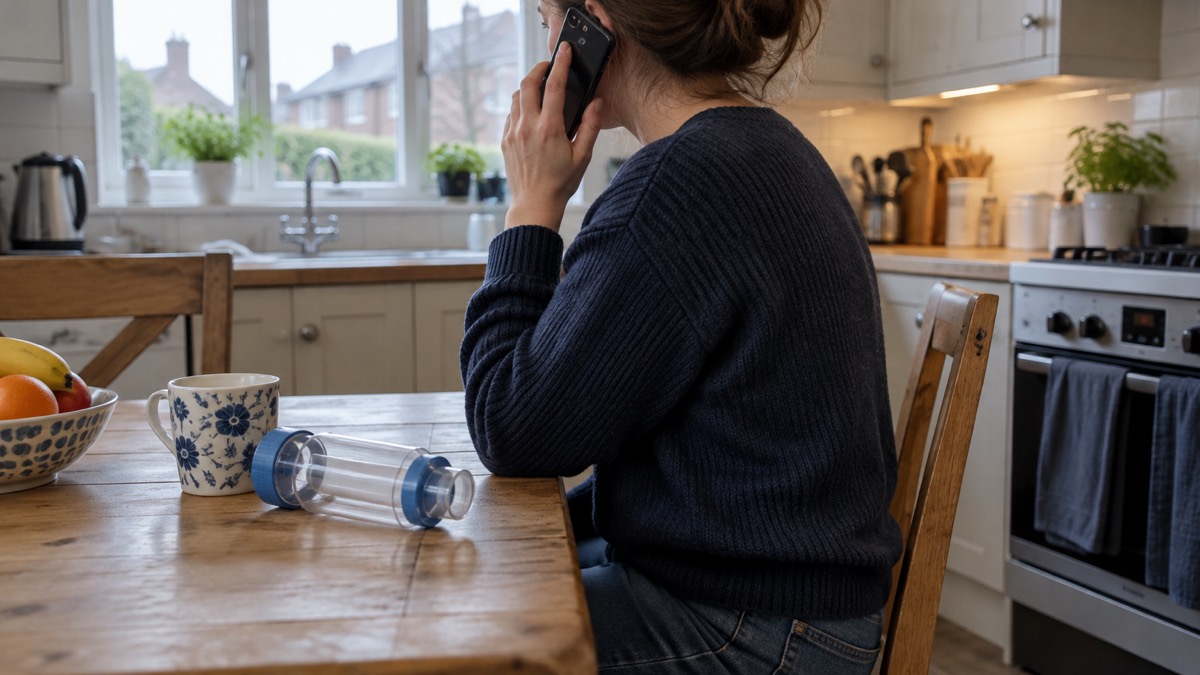
Position matters. St John Ambulance's guidance is to keep the casualty calm and sitting upright4. Asthma and Lung UK tells the person having the attack to sit up and try to stay calm3. Sitting upright helps the chest and airways stay as open as they can be, and staying calm keeps breathing as steady as possible while help is on its way.
Staying calm is also the advice ambulance services give to anyone waiting for an emergency response. The Northern Ireland Ambulance Service says the most important thing you can do before help arrives is to stay calm, because you may need to help with treatment until the response gets to you7. If you are the one having the attack, that means slow, steady breathing and not trying to do anything strenuous. If you are helping, it means reassuring the person and keeping your own voice level.
While you wait, help the person to use their own reliever inhaler. The Resuscitation Council UK's 2025 first aid guidelines say that if a person with asthma is experiencing breathing difficulties, a first aid provider should help them to use their own reliever inhaler, using a spacer device if one is available5. A spacer is a hollow cylinder that attaches to an inhaler, and it can help a person having an asthma attack take their medication more effectively2.
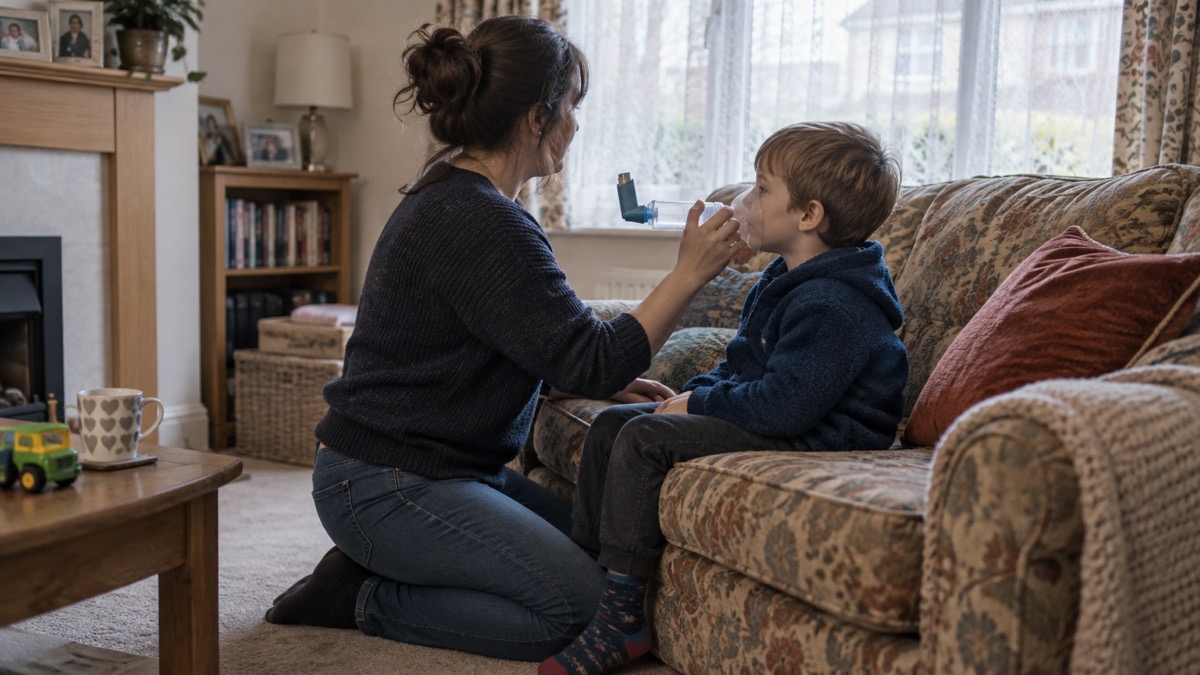
For an adult, the guidance is to provide their usual dose of reliever inhaler, then an additional 1 to 2 puffs every 30 to 60 seconds, up to a maximum of 10 puffs, or to follow their personal asthma plan4. For a child, the guidance is to keep calm and reassure the child, have them sit upright in a comfortable position, and provide their usual dose of reliever inhaler using a spacer if available8. While you wait for the ambulance, you can help a child use their reliever inhaler again: one puff every 30 to 60 seconds, up to 10 puffs if they use a blue reliever, or one puff every 1 to 3 minutes up to a total of 6 puffs if they use a MART inhaler9.
If the person has a personal asthma action plan, follow it. If you want to know more about what these plans are and who gets one, see Allergy and Asthma Action Plans: What They Are and Who Gets One.
What to tell the 999 call handler
The call handler is trained to get the information they need in the order they need it, and to give you instructions while the ambulance is on its way. If the patient's condition is immediately life threatening, breathing is absent or severely compromised, or their life could be in danger, the call handler will give you simple, effective instructions on how to assist until the ambulance crew arrives10.
Say clearly that the person is having an asthma attack and whether they have a reliever inhaler with them. Asthma and Lung UK's instruction is to tell the call handler that you do not have a reliever inhaler with you3. If you are calling about anaphylaxis, the guidance is to tell the call handler that you think someone has anaphylaxis11. The principle is the same: name the emergency.
Other information worth having ready:
- the person's age and whether they are breathing10
- any allergies they have, if you know12
- their medication, and their GP details if you have them13
- whether the doors are open and the lights are on so the crew can find you13
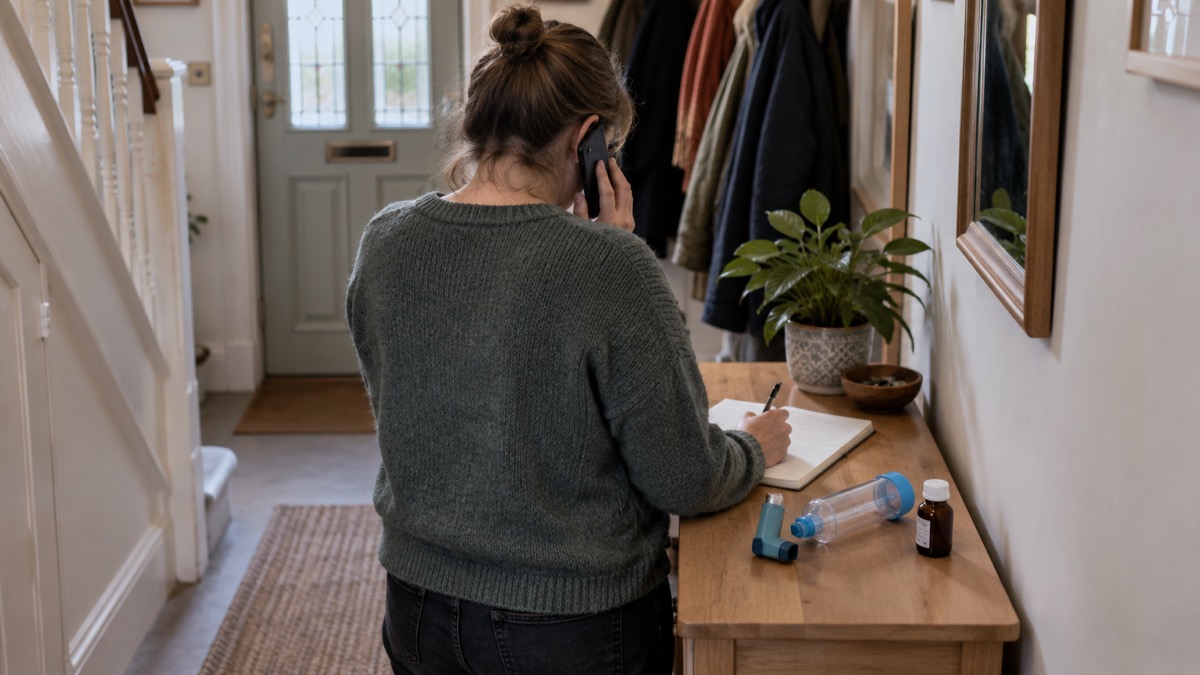
While you are on the call, ask someone else to help the ambulance crew find you. Ask someone to open the doors and signal where the ambulance staff are needed, turn on lights if it is dark, shut pets in another room, write down the patient's GP details, gather their medication, and tell the ambulance service about any allergies13. If you are on your own, do what you can in the order that matters: doors, lights, medication.
If you do not need an ambulance, the call handler will tell you what to do14. Do not call back to ask how long the ambulance will be, because this can prevent call handlers dealing with other emergencies. Only call back if the person's condition worsens, your location changes, or you no longer need an ambulance15.
Helping someone else through an asthma attack
If you are helping someone else, your job is to keep them calm, get them upright, help them with their own inhaler, and call 999 when the signs above apply. Asthma and Lung UK's sequence is: reassure them and help them stay as calm as possible; call 999 straight away if they do not have a reliever inhaler with them; help them to sit up in a comfortable position; help them to use their reliever inhaler following the asthma attack guidance; and call 999 if they do not feel better or if you are worried at any point3.
The Resuscitation Council UK's 2025 guidelines back this up: a first aid provider should help a person with asthma who is having breathing difficulties to use their own reliever inhaler, with a spacer if one is available5. Note the word "own". Someone with asthma will normally have an inhaler that their doctor has prescribed for them2. Do not offer someone else's inhaler, and do not take one that is not yours.
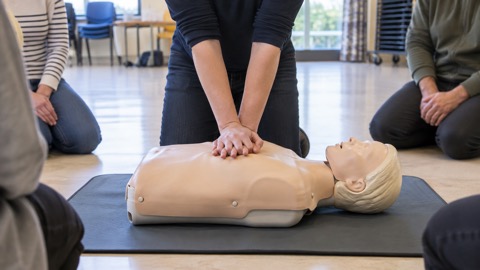
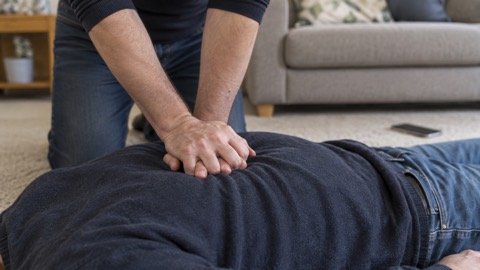
If the person becomes unresponsive and is not breathing normally, this is no longer an asthma attack you can manage with an inhaler. Call 999 or 112 and start CPR straight away16. Chest compressions are given by pushing firmly in the middle of the chest up and down17. If you have not done CPR before, the call handler can talk you through it, and our guide to hands-only CPR for adults sets out the steps.
Asthma and Lung UK also warns that people with asthma should take extra care when exercising in cold weather, warming up for 10 to 15 minutes and taking one or two puffs of their reliever inhaler before starting18. That is prevention rather than first aid, but it is the kind of thing that stops an attack happening in the first place.
Asthma attacks in children
The steps for a child are the same as for an adult, with two differences: the way you repeat the reliever inhaler while waiting, and the follow-up afterwards. Keep calm and reassure the child, have them sit upright in a comfortable position, and provide their usual dose of reliever inhaler using a spacer if available8.
Call 999 for a child if they do not have their reliever inhaler, it is not helping after 10 puffs, or you are worried at any time9. The Baby and Child First Aid booklet adds further triggers: if this is the child's first asthma attack or medication is unavailable, if the inhaler has no effect, if the child is getting worse, has difficulty talking or becomes unresponsive, or if croup is severe or persistent8.
While you wait for the ambulance, help the child use their reliever inhaler again: one puff every 30 to 60 seconds, up to 10 puffs if they use a blue reliever, or one puff every 1 to 3 minutes up to a total of 6 puffs if they use a MART inhaler9. If their symptoms are not better after repeating this and the ambulance has still not arrived, contact 999 again immediately9.
After the attack, the follow-up depends on where the child was treated:
| Where the attack was dealt with | What to do next |
|---|---|
| At home | Make an urgent same-day appointment with the GP or asthma nurse9 |
| In hospital | Make an appointment to see the GP or asthma nurse within two working days9 |
Once the child is better and managing their asthma well, they can do sports and activities again. Exercise and keeping fit will help them stay well and lower their risk of another asthma attack9. Make sure they always have their reliever inhaler with them and know to stop and tell an adult if they get symptoms9.
For a child with a cough or cold, give them lots to drink and try liquid paracetamol or liquid ibuprofen suitable for children. Children with asthma may not be able to take ibuprofen, so check with a pharmacist19.
Keeping a reliever inhaler with you, and keeping it working
The best protection against an attack with no inhaler is to carry one. Asthma and Lung UK's advice is to always carry your reliever inhaler with you so you can use it quickly if you get symptoms or have an attack3. For children, the same source says to make sure they always have their reliever inhaler with them and know to stop and tell an adult if they get symptoms9.
An inhaler that has been left somewhere hot may not work when you need it. The NHS advises that if you use an asthma inhaler, you should not leave it in direct sunlight or somewhere it could get hot, such as a car glove box, as this could prevent it working properly20. That is worth checking before a summer journey or a day out.
If you have an asthma attack and manage it yourself with your reliever inhaler, ask for an urgent, same-day appointment with your GP or nurse3. If your child's attack was dealt with at home, make an urgent same-day appointment with their GP or asthma nurse9. If the attack was treated in hospital, make an appointment within two working days9.
When the ambulance arrives
The crew will assess the person and start treatment. If the patient does not need emergency hospital treatment, paramedics can often provide the necessary treatment at the scene and advise on further action, such as contacting the GP surgery21. That means an ambulance response does not always end in a hospital trip, but it does mean the person has been assessed by a clinician.
Tell the crew about any allergies the person has, if you know12. If you have been helping with the inhaler, say how many puffs have been given and when.
If the person is not improving and the ambulance has not arrived, call 999 again. Asthma and Lung UK's guidance for children is to contact 999 again immediately if symptoms are not better after repeating the reliever inhaler and the ambulance has still not arrived9. Do not call back simply to ask how long the ambulance will be15.
For more on how calls are prioritised and what response to expect, see How Ambulance Services Prioritise 999 Calls and Response Times. For a printable record of the details a crew will ask for, see Information to Have Ready for the Ambulance Crew.
Sources (21)
- Asthma attack, St John Ambulance, 2026-10-28
- Asthma attack, British Red Cross, 2026-10-29
- Asthma attacks, Asthma and Lung UK, 2024-06-05
- Adult First Aid Booklet, First Aid Awards, 2025-08
- 2025 First Aid Guidelines, Resuscitation Council UK, 2025-10-27
- Accident and emergency, South Western Ambulance Service NHS Foundation Trust, 2026-10-29
- What to do before help arrives, Northern Ireland Ambulance Service, 2026-10-29
- Baby and Child First Aid Booklet, First Aid Awards, 2025-08
- Asthma attacks in children, Asthma and Lung UK, 2025-07-29
- Calling 999, NHS 111 Wales, 2021
- Anaphylaxis first aid, NHS inform, 2026-07-24
- What happens when you call 999, London Ambulance Service NHS Trust, 2026-09-30
- What to do when the ambulance is coming, South Western Ambulance Service NHS Foundation Trust, 2026-10-29
- What happens when you call 999, Welsh Ambulance Services NHS Trust, 2022
- Calling an ambulance for an asthma attack, Asthma and Lung UK, 2023-12-30
- CPR, NHS, 2026-10-29
- Unresponsive and not breathing when an AED is available, British Red Cross, 2026-10-29
- Air pollution and asthma, Met Office, 2026-10-28
- What to do if your child is unwell, NHS North East London Integrated Care Board, 2024-10
- Stay well this summer: advice for vulnerable people, NHS Norfolk and Suffolk Integrated Care Board, 2026-05-29
- 999, North East Ambulance Service NHS Foundation Trust, 2026-10-29
 Baby and Child Kit Checklist
 Bleeding Control Kit Checklist
 Car Kit Checklist
 CPR on a Baby
 CPR on a Child
 Chest Compression Rate and Depth
 Rescue Breaths or Hands-Only CPR
 Checking Breathing
 Agonal Breathing and CPR
 Breathing During CPR
 Recovery Position and Spine
 Cardiac Arrest vs Heart Attack
 Heart Attack First Aid
 Defibrillator Pad Placement
 Defibrillator on a Child