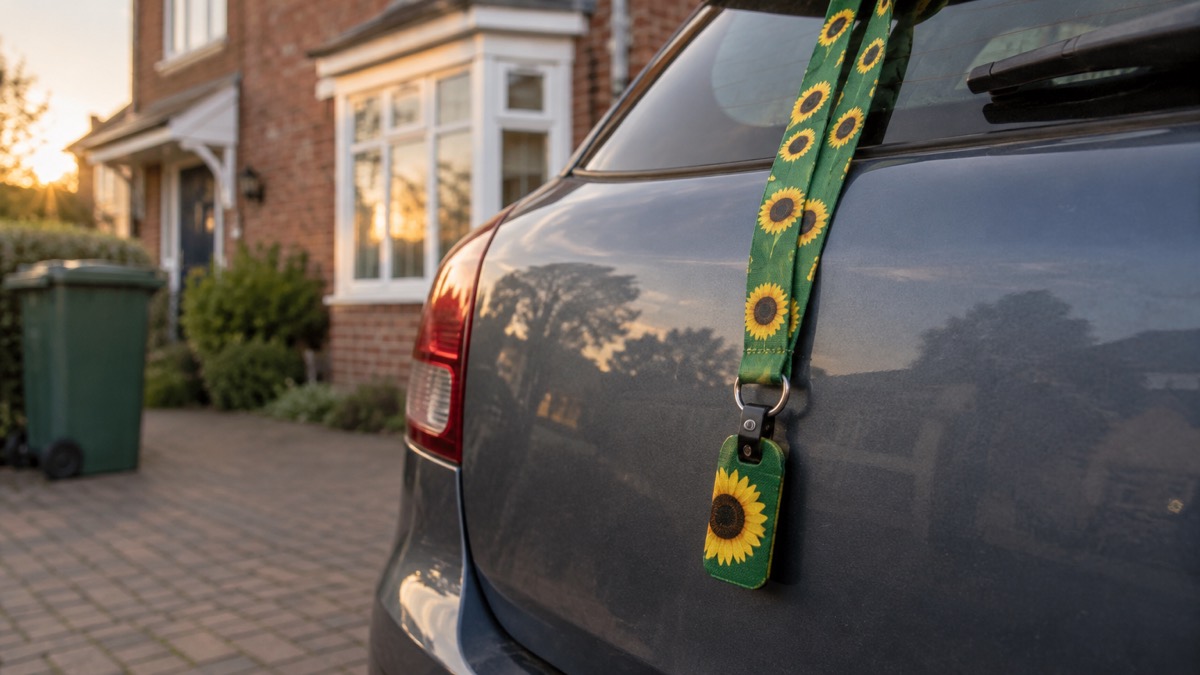
If you break down on a motorway or major A-road in England and you or someone in the car has a hidden disability, a Hidden Disabilities Sunflower on the vehicle tells roadside and emergency services that you may need additional support1. It is not a badge you have to qualify for. National Highways says anyone with an impairment, hidden or visible, who may need extra help if they break down or need assistance can display one1.
The first thing to do in a breakdown is the same for every driver. Get as far left as you can, switch on your hazard lights, and get yourself and your passengers to a place of safety if it is safe to do so2. The Sunflower does not change that sequence. What it does is signal, before anyone has to ask, that the person in the car may need clearer instructions, more time, help communicating, or help getting to safety1.
This page sets out who can use the vehicle Sunflower, where to put it, what help it can prompt from traffic officers, and how to stay safe while you wait. It also covers the limits: the scheme as described covers England's motorways and major A-roads1, and no equivalent arrangement for Scotland, Wales or Northern Ireland is described here.
Breaking down on a motorway or major A-road in England
The vehicle Sunflower is designed for one situation: a breakdown or a need for assistance on a motorway or major A-road in England1. That is the extent of the scheme as National Highways describes it. It is not a general motoring badge and it does not replace the standard breakdown steps.
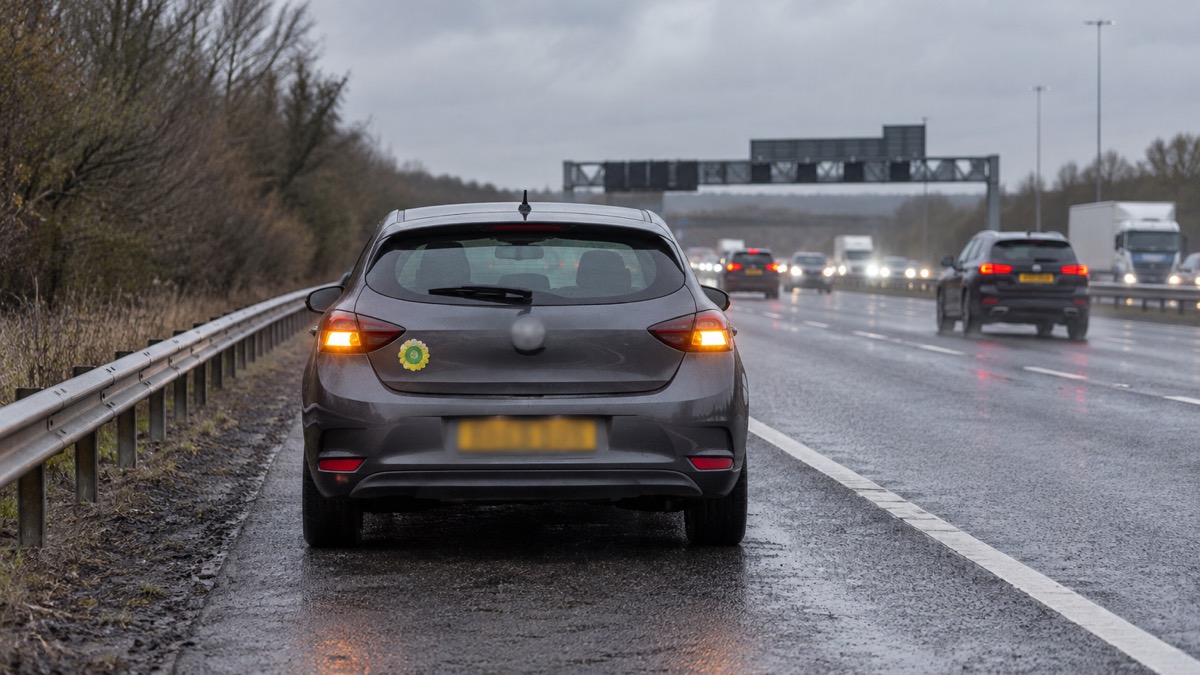
Those steps come first, every time. On a motorway, try to steer onto the hard shoulder and turn your hazard lights on6. If it is dark or visibility is poor, use sidelights4. The Highway Code is firm about what happens next: if you see emergency or incident support vehicles displaying flashing lights in the distance, slow down and be prepared to move safely into another lane or stop, and you must follow any directions given by police or traffic officers about passing an incident or obstruction2.
Once you have called for help, tell the operator about your circumstances. National Highways advises informing them if you are a vulnerable motorist such as disabled, older or travelling alone4. That is the moment to mention the Sunflower and what you need.
There is a specific exception for drivers whose disability prevents them following the usual advice to get out and wait behind the barrier. National Highways says you should switch on your hazard warning lights, stay in your vehicle and keep your seat belt on4. Traffic England gives the same instruction7. If that applies to you, say so when you call, so the operator knows where to find you and how to approach.
Who can use the Sunflower on a vehicle
The eligibility is deliberately broad. National Highways says the vehicle Sunflower is for anyone with an impairment, hidden or visible, who may need additional support if they break down or need assistance on a motorway or major A-road1. You do not need to prove a diagnosis, and the scheme does not ask you to choose between a hidden and a visible condition.
That breadth matters because hidden disabilities are exactly that: not obvious to a stranger at the roadside. The Sunflower indicates to roadside and emergency services that you or someone in your vehicle has an impairment which may not be visible3. It is a signal, not a certificate.
| Situation | Does the vehicle Sunflower apply? |
|---|---|
| Hidden disability, breakdown on an English motorway | Yes, it is designed for this1 |
| Visible impairment, breakdown on an English motorway or major A-road | Yes, the scheme covers hidden or visible impairments1 |
| Breakdown on a minor local road | The scheme is described for motorways and major A-roads in England1 |
| Breakdown in Scotland, Wales or Northern Ireland | No equivalent scheme is given in the pack; follow standard breakdown advice and tell the operator your needs |
If you are unsure whether you qualify, the test in the official wording is simple: do you feel you may need additional support if you break down or need assistance8? If the answer is yes, the scheme is meant for you.
What help traffic officers give when they see the Sunflower
The Sunflower does not summon a different service. It tells the people already coming that you may need help with particular things. National Highways lists what that can include: understanding instructions and communicating your needs, staying calm at a time of stress, getting to a place of safety, and moving and recovering an adapted vehicle1.
That list is worth reading before you travel, because it tells you what to ask for. If instructions are coming at you too fast, say so. If you need to write something down, ask. If your vehicle is adapted and needs particular handling to recover, say that when you call, not when the recovery truck arrives.
Traffic officers and control room teams monitor the roads to help keep people moving safely, including during extended periods of hot weather9. They routinely monitor the weather and respond to changing road conditions10. In practice, that means the officer who reaches you is used to dealing with stressed drivers in poor conditions, and the Sunflower gives them a reason to slow the conversation down.
"The Sunflower will indicate to roadside and emergency services that you or someone in your vehicle has an impairment which may not be visible"
Where to put the Sunflower on your car
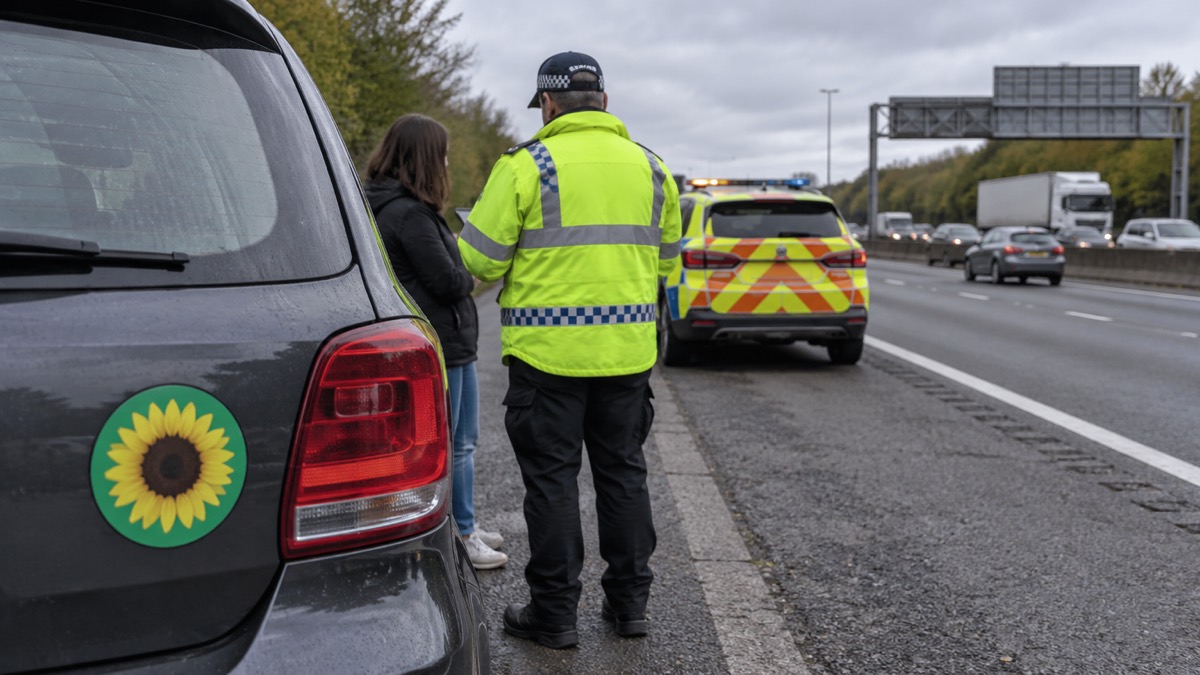
National Highways advises displaying the Sunflower on the rear of your vehicle where it can easily be seen, in a position where it will not obscure your view1. Rear placement makes sense: that is the face of the car that traffic approaching from behind sees first, and it is where an officer walking up the hard shoulder will look.
Two things to keep clear. First, your view: nothing on the windscreen or in your line of sight. Second, the parts of the car that other drivers and cameras rely on. Keep the marker clear of the number plate, the rear lights and the indicators. A marker that hides a plate or a light creates a new problem while trying to solve an old one.
The same principle runs through official guidance on making safety equipment visible: a public access defibrillator should be placed in a prominent, easily visible location11, and first aid provisions should be mounted on a wall or in a cabinet so they are visible and easy to access by any person12. Visibility is the point. A Sunflower tucked in a corner where nobody looks does nothing.
The Sunflower magnet: on for the journey, off when you park
The magnet is the practical version for most households. National Highways describes it as a magnet that attaches to your vehicle bodywork and can be placed and removed before and after your journey if required5. Traffic England gives the same description8. You put it on when you set out and take it off when you arrive.
That routine has two benefits. It keeps the marker off the car when it is parked, where it is not doing its job and could attract unwanted attention. And it protects the paintwork, given the warning about discolouration from stickers1.
The magnet needs a metal surface to grip. That is a general property of magnets rather than a Sunflower-specific fact, but it is worth checking your chosen spot before you rely on it. A maker of magnetic lights describes the same principle: a strong magnet at the base lets you stick it to metal surfaces13. If your rear panel is plastic or composite, test the magnet before you travel.
A simple routine:
- The Sunflower magnet attaches to your vehicle bodywork and can be placed and removed before and after your journey if required1.
- Check it is sitting flat and has not slipped.
- Remove it when you arrive if you no longer need it, and keep it with you for the next journey.
- Check the position again after any bump or long drive.
Roads outside England, and smaller local roads
The scheme as described covers motorways and major A-roads in England1. No equivalent vehicle Sunflower arrangement for Scotland, Wales or Northern Ireland is described here, so do not assume the same response. The standard breakdown advice still applies wherever you are, and the principle of telling the operator about your needs holds everywhere.
On smaller local roads, the scheme is not described at all. What you do have is the general breakdown advice: stop the car to the far left of the road, away from any moving traffic if you can, and put your hazard lights on6. Then call for help and say clearly if you or a passenger has a disability or may need additional support.
Local road conditions vary by nation and by council, and that affects how quickly help can reach you. In Scotland, minor rural, residential and local access roads are treated as resources allow14. In Northern Ireland, on more lightly trafficked roads, salt boxes or grit piles may be placed at hills, bends or junctions for use by the public15. In Devon, grit bins are provided on roads that are not normally treated at known troublespots such as steep hills and frost hollows16. In the Scottish Borders, resilient communities take on clearing snow from pathways and community facilities17.
None of that changes the Sunflower rules, but it does change the wait. If you break down on an untreated lane in winter, expect to wait longer, and tell the operator exactly where you are.
Staying calm and communicating what you need
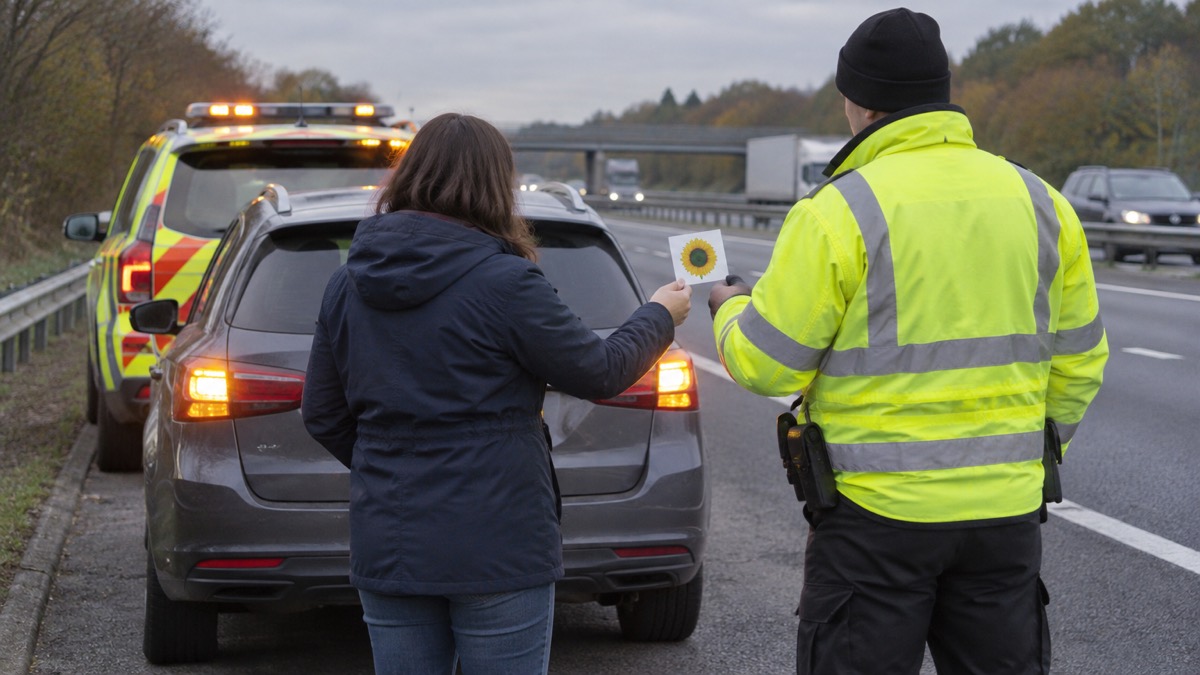
Official advice on staying calm is consistent across services. The NHS says stay calm20. NHS Inform, on supporting someone during a seizure, says stay calm and stay with them until they regain consciousness21. The same instruction appears because it works: a calm voice slows everyone down and makes instructions easier to follow.
The Sunflower is designed to help with exactly that. National Highways lists staying calm at a time of stress and communicating your needs among the things the marker can prompt help with1. If you know you struggle to explain things under pressure, prepare a short script before you travel: who you are, what you need, and what help looks like for you.
Communication is not only about speech. Fire services recognise that people with hearing impairments who are likely to be alone in a building may need a flashing beacon or similar device, and where one is not available a suitable buddy system will be required22. The same logic applies at the roadside: if speech is difficult, ask for written instructions or use your phone to type.
If you need ongoing support at home as well as on the road, it is worth registering for the services that exist for exactly this. The Priority Services Register is run by energy and water companies, and communications providers are expected to give you information in a way you can understand23. Our guide to signing up to Priority Services Registers explains how. If you use a personal alarm or telecare, our page on whether a telecare alarm works in a power cut covers what happens when the power goes.
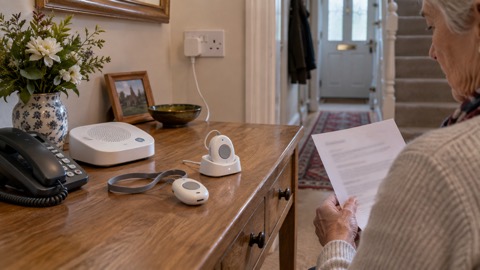
For households supporting someone with reduced mobility, fire services suggest assistive technology such as a monitoring or telecare system connected to smoke and heat detection that sends an automatic alert to a call centre, or a telecare pendant worn around the neck or a bracelet device to press to alert a contact centre24. Sight loss charities such as Sense support people who are deafblind25, and local fire and rescue services can advise on equipment such as fire retardant curtains where someone smokes near a window or has limited mobility26. Automatic water systems such as sprinklers may be needed for people who may not be able to escape easily27.
Sources (27)
- Hidden Disabilities Sunflower for your vehicle, National Highways, 2026-10-29
- The Highway Code: breakdowns and incidents (274 to 287), GOV.UK, 2026-10-29
- Accessible services, National Highways, 2026-10-29
- Driving on motorways, National Highways, 2026-10-29
- Hidden Disabilities Sunflower for your vehicle, Traffic England, 2026-10-29
- Vehicle breakdown advice, Milton Keynes Council, 2026
- Driving on motorways, Traffic England, 2026-10-29
- Accessible services, Traffic England, 2026-10-29
- Travelling in extreme heat, National Highways, 2026-10-29
- Travelling when it's raining, National Highways, 2026-10-29
- Public access defibrillators: AED placement and registration, Scottish Ambulance Service, 2026-10-29
- First aid provisions, ProtectUK, 2026-06-01
- Sphere 360 degree multi-colour light, Olight, 2026-10-26
- Winter service, The Highland Council, 2026-02-11
- Winter news, Trafficwatch NI, 2026-10-28
- Grit bins, Devon County Council, 2026-09-28
- Resilient communities, Scottish Borders Council, 2026-10-29
- Light nights campaign, North Yorkshire Fire and Rescue Service, 2026-06-10
- Driving in adverse weather, Cheshire Fire and Rescue Service, 2026-03-11
- What to do when the ambulance is coming, South Western Ambulance Service NHS Foundation Trust, 2026-10-29
- Epilepsy, NHS Inform, 2026-10-28
- Hearing and sight impairments, North Wales Fire and Rescue Service, 2026-10-29
- Priority Services Register, Surrey County Council, 2026-10-29
- Additional advice for people with reduced mobility, Greater Manchester Fire and Rescue Service, 2026-10-29
- Fire safety for people with sight difficulties, Devon and Somerset Fire and Rescue Service, 2026
- Equipment, Devon and Somerset Fire and Rescue Service, 2026
- Alarms, London Fire Brigade, 2026-10-25
 Carer's Emergency Plan
 Herbert Protocol Form
 In Case of Emergency Card
 PSR After Moving House
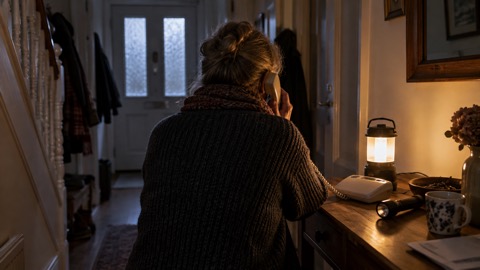 Telecare Alarm in a Power Cut
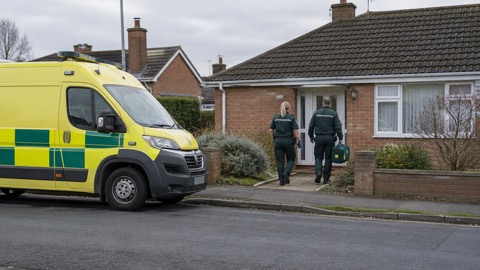 Pressing Alarm but Cannot Speak
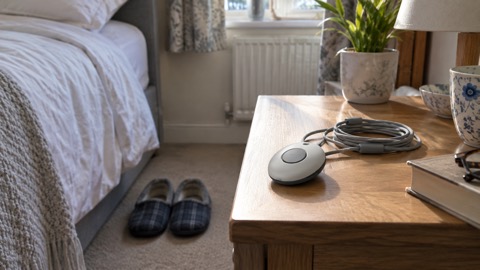 Falls a Fall Detector May Miss
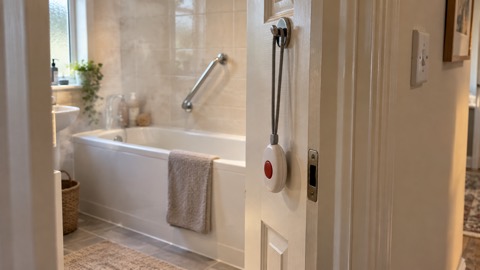 Alarm Pendant in Bath or Shower
 Pendant Battery Life
 Free Locking Cooker Valves
 Herbert Protocol
 Cared-For Person Missing
 Refer for a Fire Safety Check
 Testing Alarms With Mobility
 Electric Blankets and Dementia