
Bull Products is a UK manufacturer whose name most households will meet through its fire safety equipment, and in 2026 it is in the news for a reason that matters directly to preparedness: a product recall. The Bull and Cygnus Fire Alarm Detection System, sold under the "Bull" and "Cygnus" brands, has been recalled because a manufacturing defect in the network control unit may cause a loss of communication between the devices in a fire alarm system and the control and indicating equipment1. In a fire, an alarm system that cannot talk to its own control panel is a system that may not warn you in time, so this is a recall to take seriously.
The recall is narrow and well defined. The defect is confined to a single batch of network control units, batch reference 2410, and not all units in that batch are affected1. Bull Products and Cygnus Group have begun a phased replacement programme covering all affected units, including units that have not shown any failure, and all remaining stock from the affected batch has been quarantined1. If you have a Cygnus system, the practical steps are to find the serial number on your network control unit, check it against the affected range, and contact the company. This page explains how to do that, how recalls work more generally, and how the rest of your household safety kit fits around alarm equipment like this.
What Bull makes for UK households
Bull Products is a United Kingdom manufacturer of fire safety equipment1. Its best known product line for buildings is the Bull and Cygnus Fire Alarm Detection System, a public fire alarm product sold under both the "Bull" and "Cygnus" brands1. These are detection and alarm systems of the kind used to warn people inside a building when a fire starts, linking detectors and sounders through a network control unit to control and indicating equipment1.
For a household thinking about preparedness, alarm equipment sits at the heart of the home emergencies plan. The point of any fire alarm system is the earliest possible warning, at night as much as by day, and the Bull and Cygnus recall is a reminder that the equipment you rely on has to be checked, registered and kept in working order, not just fitted and forgotten. If your home or a building you manage uses a Cygnus system, read the recall section below before anything else. The product page for the Cygnus Fire Alarm Detection System sets out the system in detail.
Beyond fire alarm systems, the preparedness case for this kind of equipment is straightforward. Fire and rescue services across the UK treat working alarms as the baseline of home fire safety, and recall notices like this one exist precisely so that a fault in that baseline gets fixed before it matters. The rest of this page covers the recall itself, then the wider habits that keep safety equipment trustworthy: registration, checking for recalls, safe storage and disposal.
The Bull and Cygnus fire alarm recall
On 12 August 2026 a product recall was issued for the Bull and Cygnus Fire Alarm Detection System, notified by Local Authority Trading Standards under PSD notification number 2607-01201. The recall covers network control units, the components that tie the alarm system's devices together, in batch 2410. The affected serial numbers run from XAB.2410.01.0001/17518/06.00 to XAB.2410.01.0528/17518/06.001.
The fault itself is a manufacturing defect in the network control unit that may cause a loss of communication between the devices within the fire alarm system and the control and indicating equipment1. In plain terms, the parts of the system can stop talking to each other. The recall notice states the legal basis plainly: the affected products do not meet the requirements of Regulation 305/2011 as it applies in GB1.
"A manufacturing defect in the network control unit (NCU) may cause a loss of communication between devices within the fire alarm system and the control and indicating equipment (CIE)."
Three things are being done about it. Affected products have been withdrawn from the market. All remaining stock from the affected batch has been quarantined. And Bull Products and Cygnus Group have commenced a phased replacement programme to replace all affected NCUs, including units that have not exhibited failures1. On the manufacturing side, enhanced end-of-line testing has been introduced and all future production uses a redesigned NCU board to prevent recurrence1.
| Recall detail | What it means for you |
|---|---|
| Product | Bull and Cygnus Fire Alarm Detection System (FADS)1 |
| Affected part | Network control unit (NCU), batch 24101 |
| Serial numbers | XAB.2410.01.0001/17518/06.00 to XAB.2410.01.0528/17518/06.001 |
| The risk | Loss of communication within the fire alarm system1 |
| The remedy | Phased replacement of all affected units, including fault-free ones1 |
| Notified by | Local Authority Trading Standards, 12 August 20261 |
| Legal basis | Does not meet Regulation 305/2011 as it applies in GB1 |
The detail that matters most to a household is the batch scope. The defect is confined to a single batch of NCUs, batch reference 2410, and not all units in the batch are affected1. That means the check is a serial number check, not a blanket assumption that every Cygnus system is faulty. Find the serial, compare it with the range above, and act only if it falls inside it. If it does, contact Bull Products or Cygnus Group, who have already contacted affected customers with further information1.
Checking whether your unit is affected
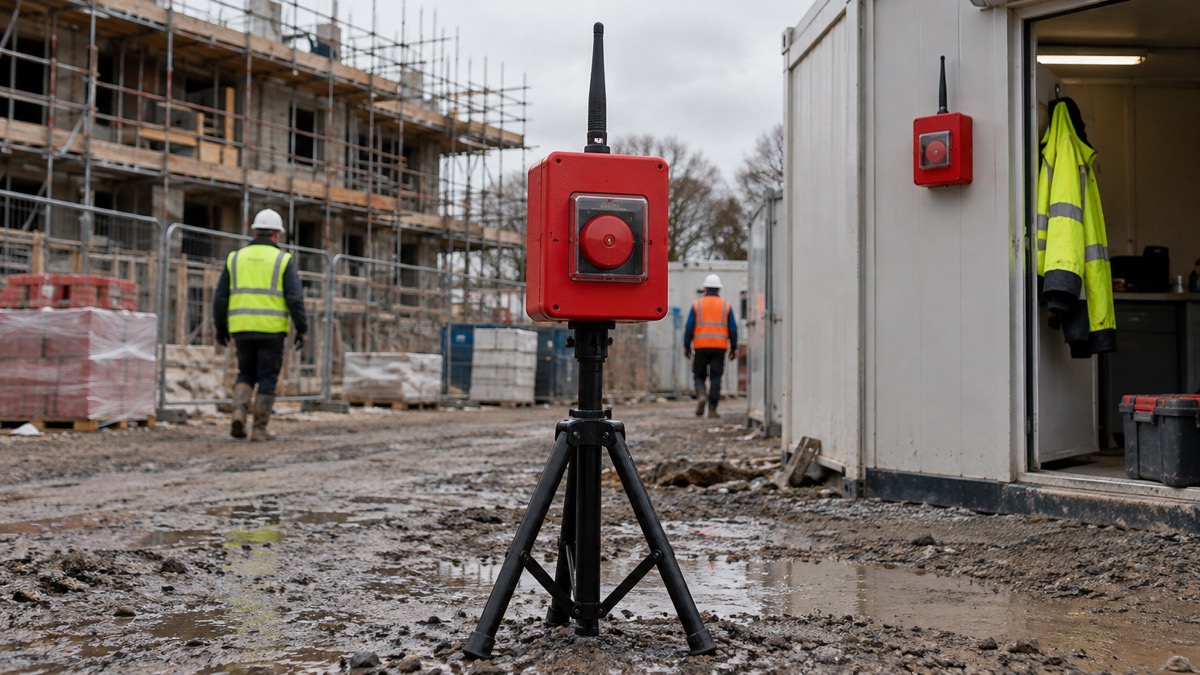
Start with the network control unit itself. The serial number is printed on the unit, and the recall works on that number, so copy it down exactly as it appears, including the dots and slashes. The affected format is XAB.2410.01.0001/17518/06.00 through to XAB.2410.01.0528/17518/06.001. If your serial falls inside that range, your unit is in the affected batch, though not every unit in the batch is faulty1.
The same habit of checking model and serial numbers applies to safety kit of every kind. London Fire Brigade's guidance on tumble dryer safety shows the pattern: find the model and serial number, in that case on the back of the dryer door or in the recess of the dryer door, and enter the details on the manufacturer's website to check whether the machine is affected2. A green "dot" sticker in the door area or on the back meant the machine already had the necessary safety modification and no further action was required2. The lesson for any recall is the same: the maker tells you where the number is, and the number settles the question.
If you cannot find the number, or the unit is mounted somewhere you cannot safely reach, do not dismantle alarm equipment yourself. Contact Bull Products or Cygnus Group with whatever details you have, including where and when the system was installed. Affected customers who have purchased the product have been contacted by the company with further information, so if you bought the system directly and have heard nothing, that is itself worth reporting1.
Registering products so you hear about faults
Registration is the mechanism that makes recalls reach you. Cheshire Fire and Rescue Service advises households to register appliances so manufacturers can contact you about faults or recalls3. The Scottish Fire and Rescue Service gives the same advice for lithium-ion battery products: after buying the product, register it with the manufacturer, because if there is an issue, manufacturers use this information to contact you with relevant safety advice or for product recalls4.
The mechanics are simple. London Fire Brigade describes the process for e-bikes and e-scooters, and it is the same for most products: visit the manufacturer's website, find the product registration page, and enter details such as the model number, serial number and purchase date5. Keep a note of what you registered and when, alongside your emergency kit inventory, so a recall notice years later can be matched against what you actually own.
For a household building preparedness, registration belongs on the same list as fitting and testing alarms. A recall you never hear about is a fault you never fix, and the Bull and Cygnus case shows why that matters: the company could run its replacement programme only for customers it could identify. If you move house, update your registration details, because a notice sent to an old address protects nobody.
Safe use and storage at home
Alarm equipment, batteries and any heating or lighting kit you keep for emergencies all share one rule: store and use them as the official guidance says, and the guidance is specific.
Batteries and rechargeable devices. Lithium-ion batteries are the rechargeable batteries in mobile phones, vaping devices, e-bikes and scooters, vacuum cleaners, tablets, iPads and ear pods, as South Wales Fire and Rescue Service sets out6. The Scottish Fire and Rescue Service warns that if you see flames or smoke coming from the battery or device, a fire has already started4. Treat any swelling, heat or strange smell from a rechargeable device as a warning and act on it, and register battery products with the manufacturer so you hear about recalls4.
Fuel for cooking and heating kit. If you store petrol or diesel at home for a camping stove or a heater, follow the safety guidance around storing it on the government website7. Make sure the container is tightly sealed7. Store fuel away from the house where you can, never near cooking or heating equipment in use, and keep only what your heating and cooking plan actually calls for.
Electric blankets. If you keep an electric blanket for power cuts and cold nights, Mid and West Wales Fire and Rescue Service requires that a 3 amp BS 1362 fuse must be fitted in the 13 amp plug, not a standard 13 amp fuse8. Check the plug before each winter and have the blanket tested if it is old or shows any wear.
General storage. Keep your emergency kit somewhere you can reach in the dark, and check it on a schedule. The Scottish READY campaign's home emergency plan lists light, torch and batteries among the basics to have ready9, and North Devon Council adds a charged portable power bank and charging cables10. Batteries in stored kit slowly lose charge, so top up power banks and test torches as part of the same check.
Safety notices and recalls: how the system works
A product recall is when an item or items must be returned to the manufacturer because there is a safety problem, as Bath and North East Somerset Council defines it11. When a recall is issued, the manufacturer's responsibilities are to contact anyone who has purchased the faulty product where possible, to publish details of the recall and the risk the faulty product poses, and to detail what steps they are taking alongside the recall to resolve the issue11. The Bull and Cygnus recall follows that pattern exactly: customers contacted, risk published, replacement programme under way1.
Recalls and safety notices cover a wide range of household kit, and recent examples show the spread:
| Notice | Product | The risk | The remedy |
|---|---|---|---|
| Bull and Cygnus FADS, 2026 | Fire alarm network control units, batch 2410 | Loss of communication within the alarm system1 | Phased replacement of all affected units1 |
| Bauer Electric Hot Water Bottle, 2025 | Electric hot water bottle, item number 38930 | Electrical safety fault | Replace the fuse, or return the item to the retailer for a refund12 |
| Hunter Price licensed hot water bottles, 2023 | Licensed hot water bottles | Burns risk from a weak joint at the top seam | Return under recall13 |
| Deltronic Security AB Environmental Alarm, 2025 | Smart smoke, heat and carbon monoxide alarms | Safety problem with the alarms | Return under recall14 |
Notice how many of these touch exactly the kit a prepared household keeps: alarms, heating, hot water bottles for warmth in a power cut. That is not a coincidence. Safety kit is only safe while it works, and the recall system is how faults in it get found and fixed.
To check whether anything you own has been recalled, London Fire Brigade advises checking the Government website to see if the product has been recalled by the maker15. For electrical items, Cheshire Fire and Rescue Service advises checking for recalls or safety notices on the Electrical Safety First website3. London Fire Brigade also describes checking product recall notices issued by the Office for Product Safety and Standards and contacting the retailer where you purchased the product5. Make checking for recalls part of your annual kit review, the same day you test alarms and rotate stored food and water.
Support and warranty
For the Bull and Cygnus recall, support runs through the companies themselves. Affected customers who have purchased the product have been contacted by Bull Products and Cygnus Group with further information1. The replacement programme covers all affected NCUs, including units that have not exhibited failures, so you do not need to demonstrate a fault to have a unit replaced1. If you believe you have an affected unit and have not been contacted, reach out to Bull Products or Cygnus Group with your serial number and purchase details.
More broadly, what you can expect from any manufacturer after a recall is set by the standard duties: contact purchasers where possible, publish the recall details and the risk, and set out the steps being taken to resolve the issue11. Keep your proof of purchase for safety kit, because a receipt or order confirmation is what makes a refund or replacement straightforward. The Bauer electric hot water bottle notice shows the typical shape of a remedy: instructions to replace the fuse, or return the item to the retailer for a refund12.
For spare parts on other kit, makers' own product pages are the place to look. Vango, for example, lists a replacement centre pole and a replacement rear pole as spare parts for its Galaxy 300 tent16, which illustrates how makers of preparedness kit commonly publish spares alongside the main product. If a part of your Bull or Cygnus system outside the recalled batch needs attention, contact the company directly rather than substituting third-party components in a fire alarm system.
Where to get help in an emergency
Equipment is one layer of preparedness; knowing who to call is another. If a fire starts, London Fire Brigade's advice is plain: as soon as you are safely outside, use your mobile phone to dial 999, ask for the fire brigade, give the address, and do not go back inside15. That applies whatever started the fire, including a battery or alarm system fault.
"As soon as you are safely outside, use your mobile phone to dial 999."
The booklet's full advice is to dial 999 once you are safely outside, ask for the fire brigade, give the address and not go back inside15.
The same number covers other emergencies involving fire risk. If a bonfire gets out of hand, call 999 and ask for the fire service immediately, North Yorkshire Fire and Rescue Service advises17. If someone is in difficulty in the water, call for help, preferably a lifeguard if nearby, or ring 999, as the Northern Ireland Fire and Rescue Service advises18.
For a medical emergency, the Scottish Ambulance Service notes that public access defibrillators are designed to be used by people without training: the device provides clear spoken instructions to guide you through each step, making it simple and intuitive to operate19. If someone collapses and a defibrillator is nearby, do not hesitate on the grounds that you are untrained.
Households that need extra support should plan for it in advance. Ask your energy supplier about priority services, which can give priority help in an emergency20. Our guide to extra help in an emergency sets out what to arrange before anything goes wrong, and the getting started page shows how alarms, kit and a household plan fit together.
Disposing of old kit
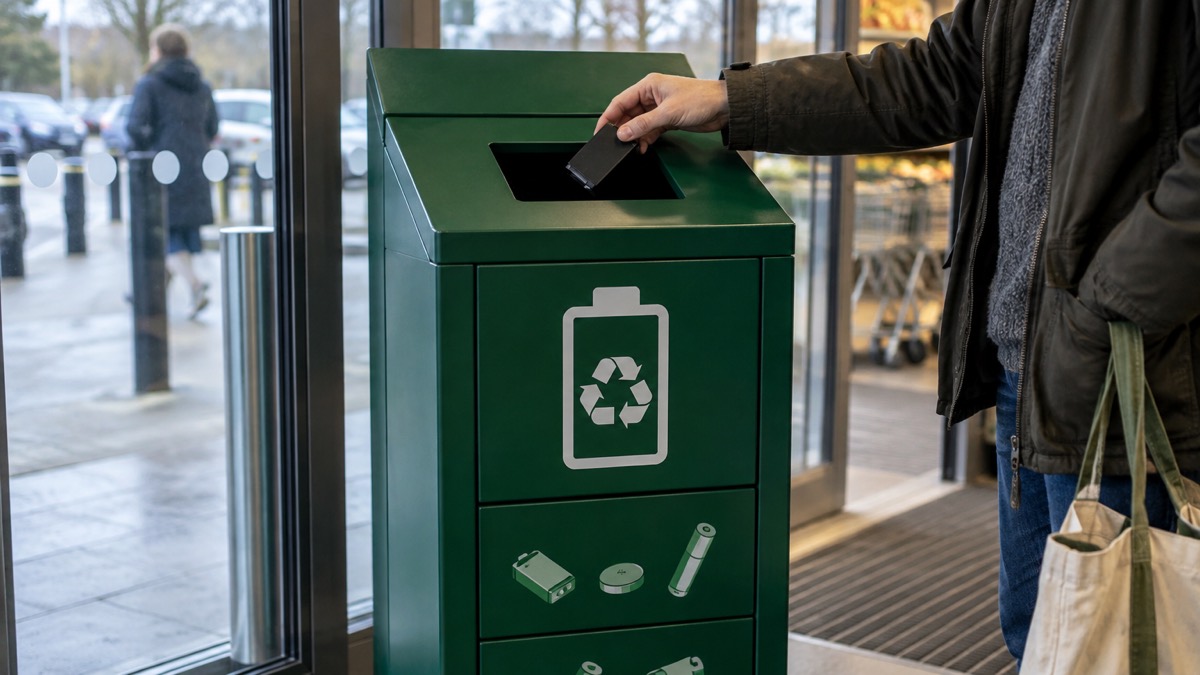
When safety kit reaches the end of its life, or a recall replaces it, dispose of it properly. The same care applies to everyday items: dispose of cigarette butts properly21, and take care when disposing of barbecues and coals, making sure they have cooled down before putting them in the bin. Never bin lithium-ion batteries with household waste; take them to a battery recycling point, because damaged batteries can catch fire4. For a unit replaced under the Bull and Cygnus programme, follow the instructions the company gives you about the old unit rather than disposing of it yourself.
Sources (21)
- Product recall: Bull and Cygnus Fire Alarm Detection System (FADS), GOV.UK, 2026-08-12
- How to check if your tumble dryer is a fire risk, London Fire Brigade, 2026-10-25
- White goods electrical fire safety, Cheshire Fire and Rescue Service, 2026-05-20
- Lithium-ion batteries, Scottish Fire and Rescue Service, 2025-11-27
- Registering your e-bike or e-scooter for safety alerts and product recalls, London Fire Brigade, 2026-10-25
- Lithium-ion batteries: general guidance and advice, South Wales Fire and Rescue Service, 2026-01-13
- Storing fuel safely, Devon and Somerset Fire and Rescue Service, 2026
- Electric blanket safety, Mid and West Wales Fire and Rescue Service, 2019-09
- Home emergency plan, Scottish READY campaign, 2026
- Be prepared for emergencies, North Devon Council, 2026-10-29
- Product recalls, Bath and North East Somerset Council, 2026
- Product safety report: Bauer Electric Hot Water Bottle, GOV.UK, 2025-03-06
- Product recall: Hunter Price licensed hot water bottles, GOV.UK, 2023-11-24
- Product recall: Deltronic Security AB Environmental Alarm, GOV.UK, 2025-11-18
- Digital easy read fire safety booklet, London Fire Brigade, 2026
- Galaxy 300, Vango, 2026-10-25
- Fireworks and bonfire night, North Yorkshire Fire and Rescue Service, 2026-10-02
- NIFRS simple steps to stay safe this summer, Northern Ireland Fire and Rescue Service, 2025-06-23
- Public access defibrillators, Scottish Ambulance Service, 2026-10-29
- Stay warm at winter, Belfast City Council, 2026-10-29
- Don't Spark Disaster, North Yorkshire Fire and Rescue Service, 2026-06-25
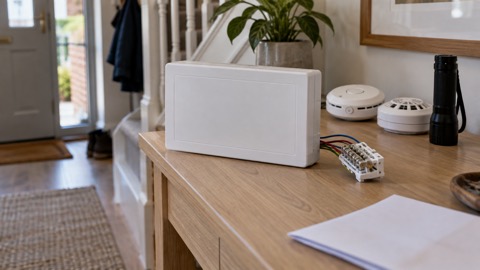 Cygnus Fire Alarm Detection SystemSome units recalled