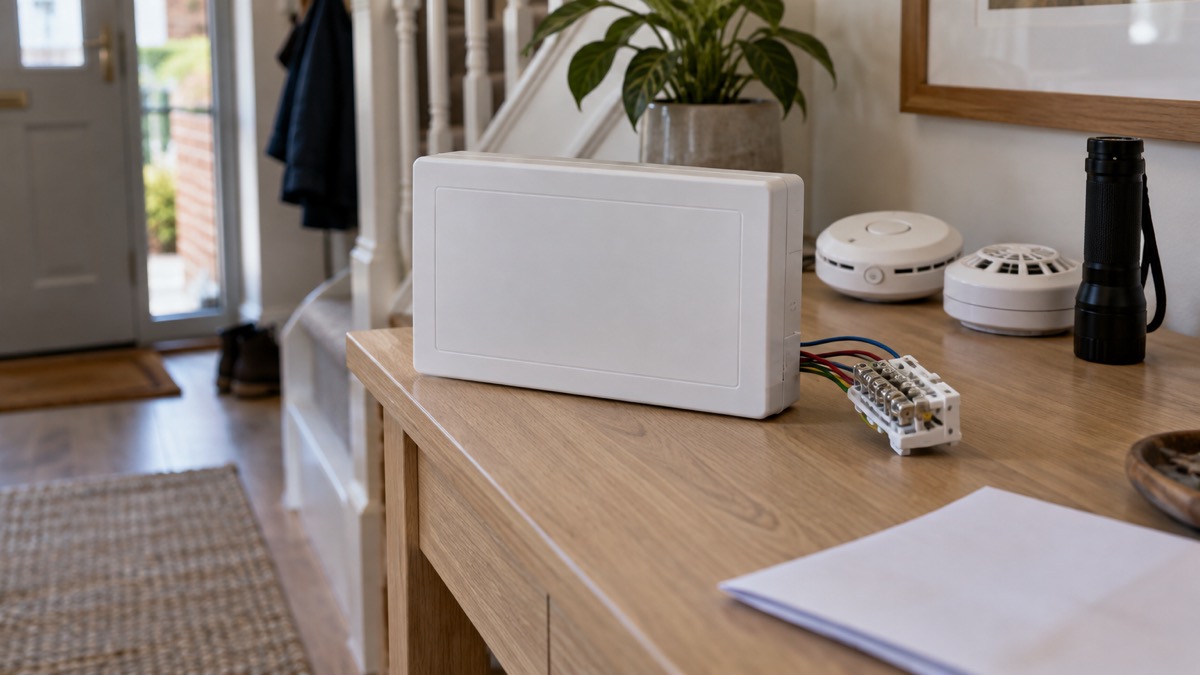
A recall affects a single batch of network control units (NCUs) used in Bull and Cygnus fire alarm detection systems. The units may lose communication, which can delay fire detection1. If your system uses an affected NCU, the first thing to do is check the recall notice against the model and batch on your unit, then register with Bull or your supplier so you are included in the replacement programme.
Until the fault is fixed, treat the system as one layer of protection rather than the whole of it. Fire and rescue services advise fitting a working smoke alarm on every floor of your home and a heat alarm in your kitchen, so you are alerted quickly if there is a fire2. That advice holds whether or not you own a Cygnus system, and it is the practical answer for a household waiting on a repair.
This page explains what the Cygnus system is, what the NCU communication defect means in practice, how to keep your household protected in the meantime, and where to get help. It covers the recall, the safety advice that applies while you wait, and the support routes open to owners, tenants and people who inherited a system with a property.
Recall: Bull and Cygnus systems with an NCU communication defect
On 12 August 2026, GOV.UK published a product recall notice for Bull and Cygnus fire alarm detection systems. The notice concerns a single batch of network control units that may cause loss of communication and delayed fire detection, and it states that a phased replacement programme is under way1. The recall is about the equipment, not about who bought it, so it applies to a system that came with a house or was bought second-hand as much as to one bought new.
The defect matters because of what a fire alarm system is for. Warwickshire Fire and Rescue Service sets out that the primary purpose of an automatic fire alarm system is to ensure that persons within a building are notified quickly of a fire so they can escape safely; such systems are not systems for requesting Fire and Rescue Service attendance4. A communication fault sits right at the point where that notification is meant to happen. If the NCU cannot pass a signal on, the warning that people depend on may not arrive when it should.
It is worth being clear about what the recall does and does not say. It identifies a single batch of NCUs, not every Cygnus system ever installed. If your unit is outside that batch, the notice does not apply to it. If it is inside the batch, the replacement programme is the route to a permanent fix. Either way, the household safety advice below applies, because no single device is a substitute for layered protection.
What to do now if you own a Cygnus system
Work through these steps in order. They are drawn from the recall notice and from fire and rescue service advice on maintaining detection systems.
- Identify your unit. Note the model and batch details from the label on the network control unit. The recall notice identifies the affected equipment by product name and batch1.
- Check the notice. Compare what you have written down against the GOV.UK recall notice to see whether your NCU falls in the affected batch1.
- Register with Bull or your supplier. The replacement programme is how affected units get fixed, and registering is how you are included1.
- Check the panel for faults. If there is a fire alarm panel present, check it is working and no faults are showing, and confirm the alarm system is tested regularly5.
- Keep testing and maintaining. Businesses are advised to ensure they have a suitable fire detection system, which is tested and maintained6. The same discipline protects a household.
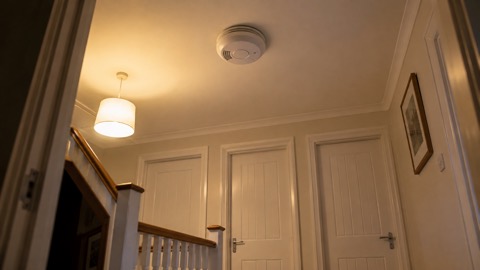
- Add independent protection. Fit a working smoke alarm on every floor and a heat alarm in the kitchen2.
The reason for step six is that a linked detection system is only as good as its weakest link. Fire and rescue services describe smoke alarms as sensitive lifesaving devices that provide early warning in the event of a fire, which is why regular testing is vital to ensure correct operation7. A system under a recall notice is, by definition, one whose correct operation cannot be assumed until the affected part is replaced.
If you are a business or the responsible person for a building, the advice is firmer still. Suffolk Fire and Rescue Service advises businesses to ensure they have a suitable fire detection system, which is tested and maintained6. Automatic fire detection systems should communicate with a central control room, if you have one4. Where a recall affects part of that chain, the responsible person needs to record what they have done about it.
What the NCU communication defect means for your alarm
The NCU is the part of the system that handles communication. The recall notice says a single batch may cause loss of communication and delayed fire detection1. In plain terms, the risk is not that the alarm sounds falsely, but that a real fire signal does not travel as it should, so the warning arrives later than it needs to.
That is a different failure from the ones fire services most often describe. When the National Fire Chiefs Council and fire and rescue services looked at why smoke alarms failed to operate in dwelling fires, the most common reasons were that the smoke failed to reach the detector and that batteries were either missing or defective8. Those are failures of siting and of power. The NCU defect is a failure of communication, which is harder for a householder to spot, because nothing about the unit may look wrong.
Contamination is another quiet failure worth knowing about. The Devon and Somerset Fire and Rescue Service notes that with contaminants such as dust, insects, grease and nicotine, over time the smoke detector chamber is susceptible to becoming excessively sensitive or insensitive, causing false alarms or failure to detect smoke9. Regular testing and cleaning are what catch that. A system that appears to work is not the same as a system that has been tested.
Cygnus Fire Alarm Detection System: what it is and what it does
A fire alarm detection system is the equipment that notices a fire and warns the people inside. Fire and rescue services describe smoke alarms as self-contained devices that incorporate a means of detecting a fire (a smoke detector) and giving a warning (an alarm)10. Conventional smoke alarms work by emitting a loud noise when smoke is detected, providing the vital early warning of fire and aiding escape11. A Cygnus system does the same job at the scale of a building rather than a single room, linking detection devices so that a warning raised in one place is passed on.
The detection technology inside matters when you are choosing or replacing devices. Manchester Fire and Rescue Service explains that some alarms use optical sensor technology, which is typically more effective at detecting slow burning fires, while others use ionisation sensor technology, which is typically more effective at detecting fast, flaming fires12. Optical alarms are more expensive, but are also more effective at detecting slow-burning fires such as smouldering foam-filled furniture or overheated wiring13. Oxfordshire Fire and Rescue Service makes the same point, adding that ionisation alarms will detect flaming fires before the smoke gets too thick14.
The Bull product range illustrates how the parts fit together. The SITEPROTECT Wireless Alarm System uses Cygnus wireless mesh technology to power the devices, and its compatible devices include fire alarm call points, first aid alert points, smoke detectors, heat detectors, a combined fire call point and first aid alert alarm, and interface units15. That list is a useful map of what a building system contains: detection, manual call points, and interfaces that connect the system to other equipment.
| Part of the system | What it does | Why it matters in an emergency |
|---|---|---|
| Smoke detectors | Detect smoke at the earliest stages of a fire11 | Give the warning that buys escape time |
| Heat detectors | Respond to heat rather than smoke | Suited to kitchens and other steamy spaces |
| Fire alarm call points | Let a person raise the alarm manually | Cover a fire spotted before smoke reaches a detector |
| Interface units | Connect the system to other equipment15 | Carry the signal onward, which is where the NCU defect bites |
| Network control unit (NCU) | Handles communication across the system1 | The recalled batch may lose communication1 |
How the named versions differ: Cygnus and Fire Alarm Detection Systems
The recall notice names "Bull and Cygnus fire alarm detection systems", and the two names belong together rather than describing rival products. Cygnus is the wireless technology that links the devices. When the notice refers to Bull and Cygnus systems, it is describing the same family of equipment1.
That matters when you are checking whether your system is covered. You are not choosing between a "Bull system" and a "Cygnus system". You are checking whether the network control unit in your installation is one of the affected batch1. The label on the unit, not the brand name on the manual, is what settles it.
It also helps to know what a Cygnus system is not. It is not a carbon monoxide alarm. Warwickshire Fire and Rescue Service is explicit that CO alarms are specifically designed to detect carbon monoxide, while smoke alarms are designed to detect smoke and fire, and that they are not a substitute for one another and both types of alarm should be installed in your house16. A fire detection system, however sophisticated, does nothing about carbon monoxide.
Nor is it a sprinkler system. Manchester Fire and Rescue Service notes that sprinklers, unlike some fire alarms, do not give a false alarm as they need heat from a fire to activate them18. In Wales, guidance for householders notes that fire sprinkler alarms can be linked to smoke alarms where required19. These are complementary layers, not alternatives, and a recall on one layer is a reason to check the others are in place.
Keeping your household safe until the fault is fixed
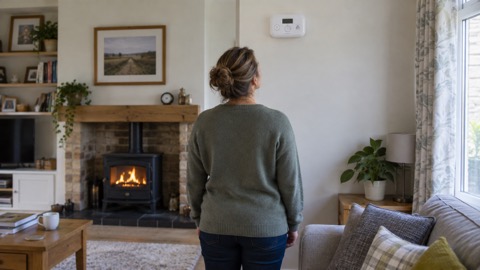
The period between reporting a fault and having it fixed is when a household most needs a plan that does not depend on a single system. Fire and rescue services are consistent about the baseline: fit a working smoke alarm on every floor of your home and a heat alarm in your kitchen, so you are alerted quickly if there is a fire2. Mid and West Wales Fire and Rescue Service gives the same instruction in Welsh: make sure smoke alarms are fitted and working in every part of your home and test them regularly20.
A few hours and modest cost is all it takes. London Fire Brigade states that a couple of hours and not much money is all you need to get an appropriate fire detection system in place21. That is the practical answer for a household waiting on a replacement NCU: put independent, working alarms in place now rather than relying on the affected system alone.
- Smoke alarms on every floor, tested regularly10.
- A heat alarm in the kitchen, where smoke alarms would nuisance-trip11.
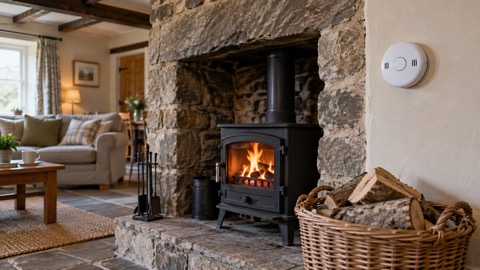
- A carbon monoxide alarm wherever there is a fuel-burning appliance, since CO alarms and smoke alarms are not substitutes for one another17.
- A tested and maintained system, with the panel checked for faults5.
Some household situations raise the stakes. After a flood, Cornwall Fire and Rescue Service warns that there is an increased risk of fire from wet electrics, so ensure you have a working smoke alarm22. If you heat with a solid fuel appliance, Warwickshire Fire and Rescue Service advises regularly testing and maintaining smoke alarms and carbon monoxide detectors to ensure they function properly23. If you live in a high-rise block, you should still get smoke alarms for your own home, even if there is a warning system in the block24.
Support and where to get help
Help is available, and much of it is free. London Fire Brigade offers home fire safety visits and states that it can help you work out the right fire detection system for the circumstances, and help you get it installed21. Lincolnshire County Council makes the same offer for vulnerable people: if you or anyone you live with is a vulnerable person, a free home fire safety visit can be organised to work out the right fire detection system and help get it installed25.
For the recall itself, the route is Bull or your supplier. The replacement programme is being run in phases, and registering your system is how you are included1. If your alarms were installed by a council scheme, the council's supplier may be the right first contact; Lincolnshire County Council, for example, directs people to its suppliers Fire Angel on 0800 141 2561 or www.fireangel.co.uk for advice about smoke alarms it installed25.
| Situation | Who to contact |
|---|---|
| Your NCU may be in the affected batch | Bull or your supplier, to register for the replacement programme1 |
| You need help choosing or fitting alarms | Your local fire and rescue service home fire safety visit21 |
| You or someone you live with is vulnerable | A free home fire safety visit25 |
| A faulty alarm or detection system | Building management or the local fire service, immediately3 |
| A fire safety concern in a high-rise block | Building management, promptly3 |
| You rent and the system belongs to the landlord | Your landlord or letting agent, in writing5 |
In rented homes, responsibility sits with the landlord. Guidance for landlords recommends that all rented homes are equipped with smoke alarms and heat detectors which are mains-powered with integral battery back-up, wirelessly interlinked and installed by a competent electrician to British Standard BS 5839-6:2019 Grade D LD226. Landlords of houses in multiple occupation have additional fire safety responsibilities and should select and maintain their alarm systems in accordance with their fire risk assessment26. In Wales, you can check your landlord is listed on Rent Smart Wales, as they should be complying with the law on fire safety5.
If you spot damage to fire fighting equipment, report it to your housing provider as soon as you can; they will arrange for repairs27. And if you are worried about a system that seems to be failing, report any faulty alarms or detection systems immediately to building management or the local fire service3.
For the wider picture on alarms, see our guides to smoke alarms, heat alarms and interlinked alarms, and to alarm standards. If you are planning what to do when a warning sounds, our fire escape plan and what to do if a fire starts in your house pages set out the steps. The Bull page covers the maker's range.
Sources (27)
- Product recall: Bull and Cygnus fire alarm detection system (FADS) 2607-0120, GOV.UK, 12 August 2026
- Stay fire safe campaign, Greater Manchester Fire and Rescue Service, 2026
- Fire safety advice for residents in high rise buildings, Warwickshire County Council, 2026
- Fire alarm systems, Warwickshire County Council, 2026
- Student fire safety, South Wales Fire and Rescue Service, 2026
- Putting a stop to arson, Suffolk County Council, 2026
- Smoke alarm maintenance and problems, Mid and West Wales Fire and Rescue Service, 2026
- Home Safety Week 2019, North Yorkshire Fire and Rescue Service, 25 September 2019
- Mains wired smoke detectors, Devon and Somerset Fire and Rescue Service, 2021
- Smoke alarms, Staffordshire Fire and Rescue Service, 2026
- Smoke and heat alarms, Greater Manchester Fire and Rescue Service, 2026
- Smoke and heat alarms, Greater Manchester Fire and Rescue Service, 2026
- Smoke alarms, Devon and Somerset Fire and Rescue Service, 2026
- Smoke alarms, Oxfordshire County Council, 2026
- SITEPROTECT Wireless Alarm System with PIR capability smoke detector, Bull Products, 2026
- Smoke alarms and CO detectors, Warwickshire County Council, 2026
- Safe home heating, Warwickshire County Council, 2026
- Information for high-rise residents, Greater Manchester Fire and Rescue Service, 2026
- Householder guide to fire sprinklers, Welsh Government, 2022
- Diogelwch Canhwyllau, Mid and West Wales Fire and Rescue Service, 2026
- Smoke alarms and heat alarms, London Fire Brigade, 2026
- Flooding, Cornwall Council, 2026
- Safe home heating, Warwickshire County Council, 2026
- fire_safety_in_the_home_-_2025.pdf, Essex County Fire and Rescue Service
- Fire alarms and carbon monoxide detectors, Lincolnshire County Council, 2026
- Housing standards, Cherwell District Council, 2026
- Dealing with the aftermath of a fire, Warwickshire County Council, 2026
 FireAngel FA3313 CO Alarm
 FireAngel FA3322 CO Alarm
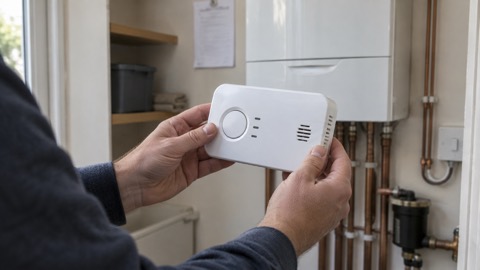 FireAngel FA3820 CO Alarm
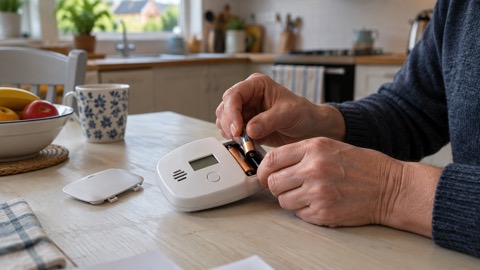 FireAngel FA6812 CO Alarm
 FireAngel FA6813 CO Alarm
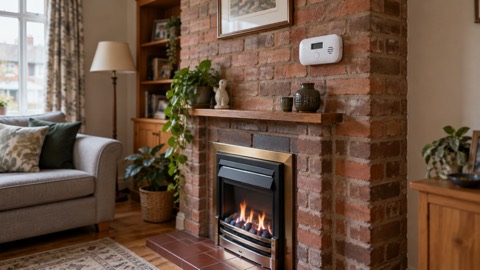 FireAngel FA6829S CO Alarm
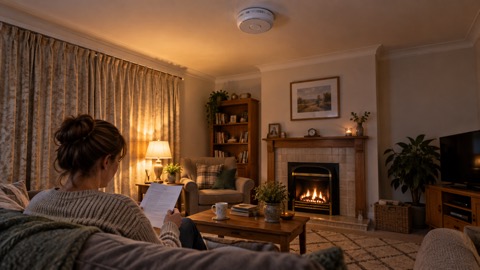 FireAngel CW1-PF CO Alarm
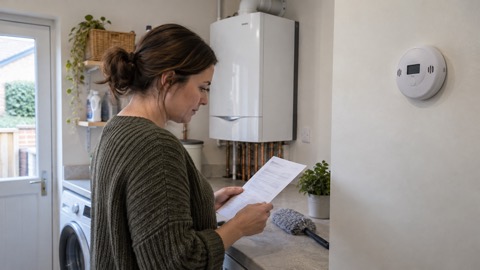 FireAngel W2-CO-10X CO Alarm
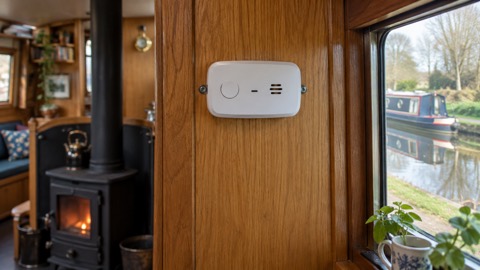 FireAngel FP1820W2-R CO Alarm
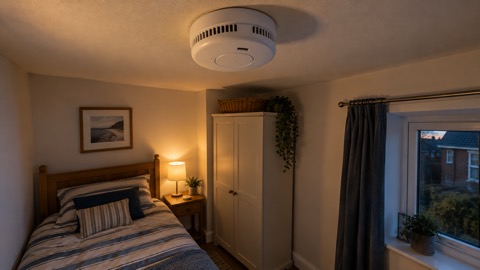 FireAngel FP2620W2-R Alarm
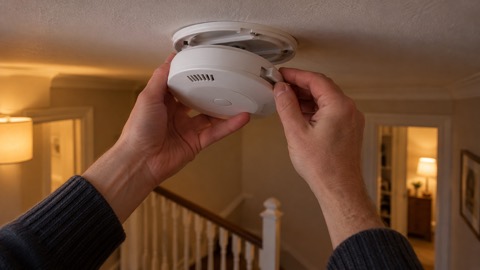 FireAngel ST-632 Smoke Alarm
 FireAngel ST-750 Smoke Alarm