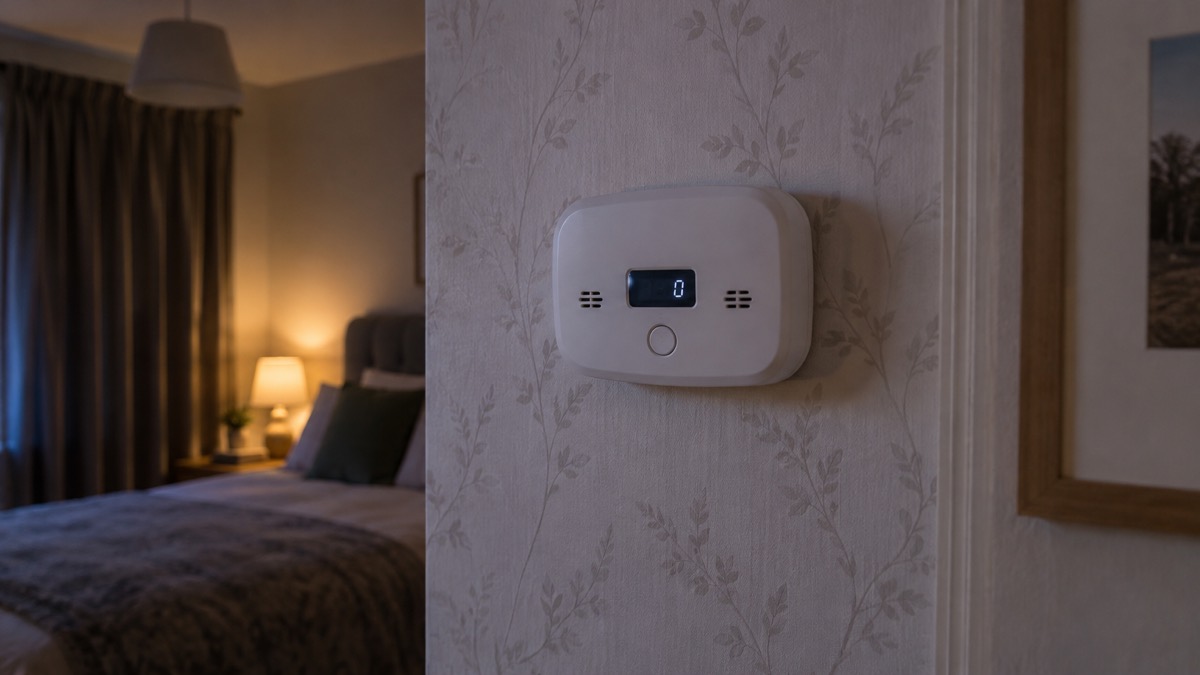
The UltraFire UBCO1D is a battery powered carbon monoxide alarm for the home. It runs on two AA disposable batteries, shows the carbon monoxide level on a digital display, and sounds an 85dB alarm when the gas reaches 30 parts per million (ppm)1. It is a standalone unit: it cannot be linked to other detectors, so it works on its own rather than as part of a connected system2.
Carbon monoxide is the reason a device like this matters. The UBCO1D is a battery powered alarm that uses two AA disposable batteries1.
This page sets out what the alarm does, where to fit it, how to look after the batteries, what to do when it sounds, and how to tell when it has reached the end of its life. It is a description of one product, not a recommendation over any other.
What the UBCO1D is and what it will not do
The UBCO1D is a single-purpose alarm. It detects carbon monoxide and nothing else. FireAngel, a maker of alarms, puts the point plainly for carbon monoxide alarms of this kind: "No, this carbon monoxide (CO) alarm detects carbon monoxide only. It will not alert you to smoke or fire."4 A household that fits one of these still needs smoke alarms, and the fire and rescue service advises fitting them on every level of the home5.
It is a standalone alarm that cannot be linked to other related detectors2. That has two consequences. It will not trigger your smoke alarms, and your smoke alarms will not trigger it. If someone in the house is D/deaf or hard of hearing, or the property is large, interlinked alarms are the arrangement the fire service recommends, because when one alarm senses a problem they all sound together5. The interlinked alarms guide explains how linking works, and the carbon monoxide alarms guide sets out the wider choice.
The alarm is battery powered and freestanding or wall mounted, with a fixing plate and fixings supplied1. It has a digital display, a combined test and hush button, and LED status indicators for power, fault and alarm1. Which? describes the same unit as having a digital display and a hush/test button2.
One caution applies to any carbon monoxide alarm bought cheaply online. Which? reports that "Every unbranded carbon monoxide alarm we've tested has failed to detect the killer gas, and every one is a Don't Buy."6 The UBCO1D is a named, certified model rather than an unbranded one, but the lesson holds: buy an alarm that states its standard.
Alarm thresholds: display from 20ppm, sounds from 30ppm
The UBCO1D has two thresholds, and knowing the difference helps you read the display calmly.
The digital display shows the carbon monoxide level once it rises above 20ppm, and the alarm sounds from 30ppm1. The distributor also lists the sensitivity as 20ppm1. In practice, a reading in the twenties means the sensor has picked something up and is showing you the number; a reading at 30ppm or above means the alarm will sound.
| What you see or hear | What it means |
|---|---|
| Display blank or showing nothing | Carbon monoxide below the display threshold of 20ppm1 |
| A number above 20ppm, no alarm | The alarm is detecting carbon monoxide and showing the level; it sounds from 30ppm1 |
| Full alarm at 30ppm or above | Dangerous levels detected; the alarm continues until levels return to safe levels or the reset button is pressed1 |
The full alarm does not stop on its own at the first chirp. The distributor states that it "continues until CO levels return to safe levels or the reset button is pressed"1. That is deliberate: it keeps sounding while the danger is present.
If the alarm sounds, do not wait to see whether it stops. The Gas Safe Register's advice on carbon monoxide alarms is the place to start, and our guide to what to do if your CO alarm sounds walks through it step by step. Symptoms to watch for in anyone in the house are covered in the carbon monoxide symptoms guide.
Sensor, display and the 85dB alarm
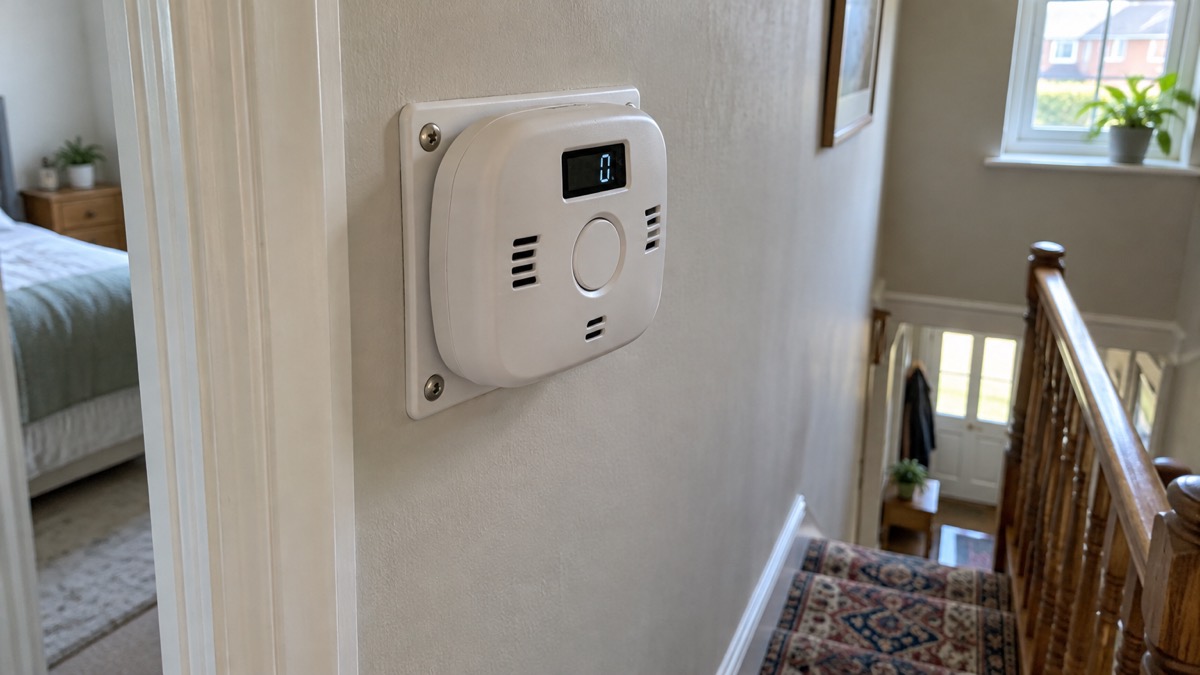
The UBCO1D uses an electro-chemical sensor, the standard sensing method for domestic carbon monoxide alarms, paired with a digital display1. The display is the feature that separates it from a basic alarm: instead of only sounding, it shows the level it has detected, which helps you and, if needed, an engineer understand what happened.
The sound level is 85dB1. That is a loud, insistent alarm, in the range that wakes most people, though not everyone. The fire service advises that people who would not hear a standard alarm, because of deafness or a high level of hearing loss, need a different arrangement such as a vibrating pad or strobe7. Our guide to alarms for deaf and hard of hearing people covers the options.
The unit has a combined test and hush button. The distributor states that the test alarm sounds continuously while the button is held, that there is a reduced volume test mode, and that low battery and end of life warnings can be silenced for 9 hours overnight1. The reduced volume test is useful if you are testing it while someone is asleep or a child is in the room.
Testing matters as much as fitting. The UBCO1D has a combined test and hush button: the test alarm sounds continuously while the button is held, and there is a reduced volume test mode8. The guide to testing alarms sets out how often and how.
Where to fit it: head height, wall or freestanding
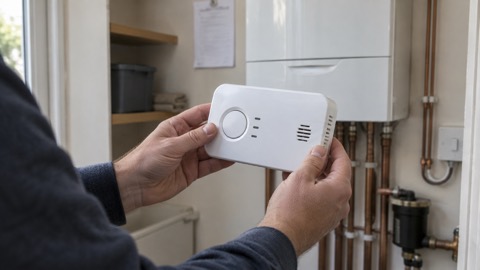
The distributor gives the installation position as head height, and the alarm can be used freestanding or wall mounted with the plate and fixings supplied1. Head height means roughly where you would breathe, which is where carbon monoxide accumulates in the air people are breathing.
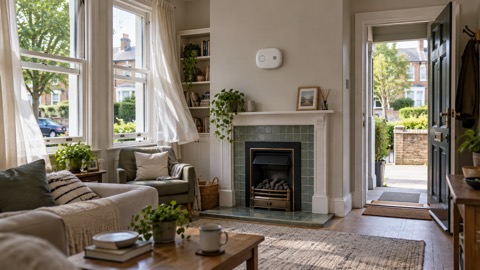
FireBlitz, a maker of carbon monoxide alarms, gives more detail on placement: fit it high in the room, above the tops of windows and doors, but no closer than 150mm from the ceiling9. That guidance is for carbon monoxide alarms generally rather than this model specifically, but it is consistent with the head height instruction and is the safest way to interpret it.
Practical placement for a household:
- Near the sleeping area. Fit it where it will wake people, in a hallway or landing outside bedrooms.
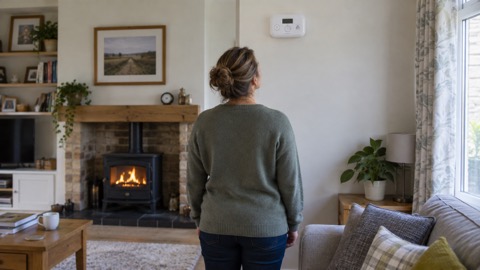
- Near but not on top of a fuel-burning appliance. A boiler, gas fire, wood burner or open fire is the likely source, so the alarm should be in the same room or close to it.
- Not in a dead corner. Avoid the corner where two walls and the ceiling meet, and keep it clear of curtains and furniture.
- Away from steam and cooking fumes. A kitchen or bathroom is a poor home for a carbon monoxide alarm.
The guide to where to put a carbon monoxide alarm goes through room-by-room placement. If you are deciding whether you need one at all, the guide to whether you need a CO alarm covers the appliances that make one worthwhile.
When it sounds, and what the alarm memory tells you
The UBCO1D has an alarm memory function. The distributor states that it "alerts you if dangerous CO levels were detected while you were away, even if readings have since fallen below the threshold"1. That is a genuinely useful feature for a household that is out at work all day: if the boiler leaked carbon monoxide at midday and the level dropped by the evening, the alarm still tells you it happened.
FireAngel describes the same idea for its own alarms: a red LED flashes to show there has been a previous carbon monoxide alarm activation within the last 30 days4. The UBCO1D's LED status indicators show power, fault and alarm1, so a flashing indicator after you return home is worth taking seriously rather than dismissing.
If the alarm has sounded or the memory shows a past reading, the response is the same:
- Open doors and windows and get everyone out into fresh air.
- Do not switch anything back on or use flames.
- Call the gas emergency number for a gas appliance, or the relevant engineer for solid fuel or oil.
- Do not re-enter until the alarm has been checked and the source found.
The Gas Safe Register's guidance on carbon monoxide alarms and our suspected carbon monoxide guide set out the full sequence. If anyone has symptoms, the symptoms guide explains what to look for and when to seek help.
Batteries, low battery warnings and the 10-year lifespan
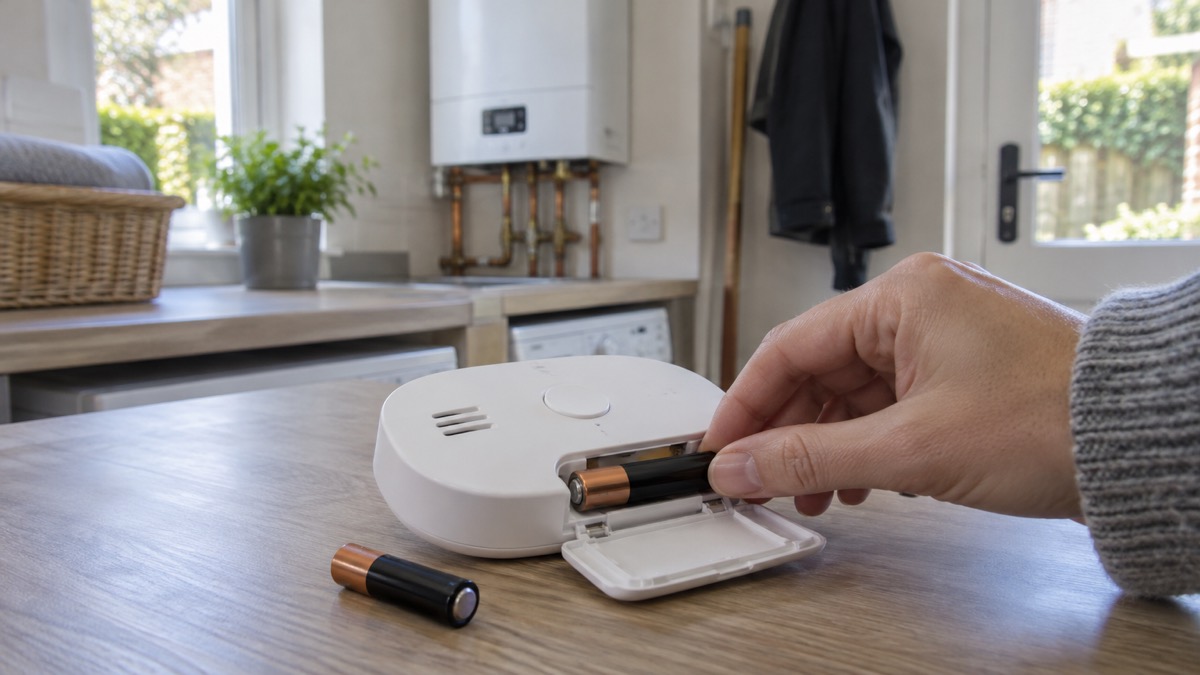
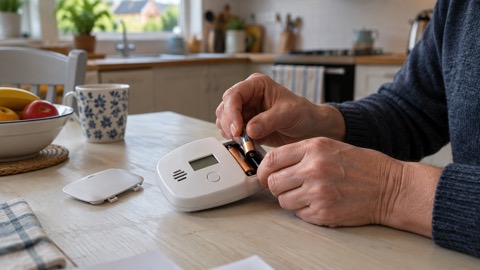
The UBCO1D runs on two AA disposable batteries2. That is a replaceable-battery design rather than a sealed unit, which means you can change the batteries yourself when the low battery warning sounds. The distributor states that the low battery and end of life warnings can be silenced for 9 hours overnight1, which is long enough to get through the night without the alarm chirping and short enough that you deal with it in the morning.
The alarm has a 10-year lifespan. Which? lists a 10-year warranty and alarm lifespan11, and the distributor gives the product life as 10 years1. Write the fitting date on the back of the alarm so you know when the decade is up.
| Feature | What the distributor states |
|---|---|
| Battery type | Two AA disposable batteries2 |
| Low battery warning | Can be silenced for 9 hours overnight1 |
| End of life warning | Can be silenced for 9 hours overnight1 |
| Product life | 10 years1 |
| Warranty | 10 years2 |
When the low battery warning sounds, replace both AA batteries at once rather than one, and test the alarm afterwards. When the end of life warning sounds, the sensor has reached the end of its working life and the alarm should be replaced, not repaired. The guide to replacing alarms covers the timing, and the comparison of sealed and replaceable battery alarms explains the trade-off between the two designs.
Certification, Welsh rental rules and where it fits legally
The UBCO1D is certified to BS EN 50291-1: 2018 for domestic use and carries CE and UKCA marks1. That is the British and European standard for domestic carbon monoxide alarms, and it is the standard the NHS in Scotland names when it tells households to "make sure you have a carbon monoxide alarm (BS EN 50291 compliant) fitted"11. Northern Gas Networks gives the same standard for portable alarms used away from home10.
The distributor states that the alarm is "also suitable for the updated 2022 Welsh legislation"1. Wales has its own rented housing rules, and the Gas Safe Register notes that housing law in Wales changed from 1 December under the Renting Homes Wales guidance8. If you rent in Wales, the Wales and Northern Ireland guide sets out the alarm rules that apply to your home.
For tenants more widely, the fire service advises checking that your landlord is listed on Rent Smart Wales, as they should be complying with the law on fire safety3. Those are landlord duties, but knowing them helps a tenant ask the right question.
If you are fitting alarms in a rented flat or a house you let, check the rules for the nation you are in before choosing a model.
Fault light, disposal and support
If the fault light comes on, the sensible approach is the one British Gas gives for flashing lights on gas appliances: "note down everything you can about what you can see: like the sequence the lights flash in or the error message showing up. Then try resetting it by following the manufacturer's guide."4 If the fault persists, treat the alarm as out of service and replace it rather than relying on it.
Keeping the alarm working is mostly about dust. Warwickshire Fire and Rescue Service advises householders to "Remove any dust or debris that may hinder their functionality, in accordance with manufacturer guidelines."5
When the alarm reaches the end of its life, dispose of it responsibly. The distributor lists the UBCO1D as covered by Valpak's WEEE Distributor Take-back Scheme1, so ask the retailer where you bought it about taking it back. The Scottish Government advises that "Some but not all types of alarms can be recycled at recycling centres. Look on the alarm for information or check with the manufacturer."6 Aico, a maker, says old alarms should be disposed of responsibly, following your local waste and recycling guidance7.
The warranty runs for 10 years2. Keep the receipt or order confirmation with the fitting date, because a warranty claim will need proof of when you bought it. If the alarm fails within that period, contact the retailer or the maker rather than replacing it at your own cost without asking.
Sources (11)
- UltraFire UBCO1D twin pack product page, Safelincs, 2026-10-29
- Carbon monoxide symptoms, Which?, 2026-07-14
- Unbranded carbon monoxide alarm review, Which?, 2026-07-14
- Product FAQs, FireAngel, 2026-10-29
- Smoke alarms, Devon and Somerset Fire and Rescue Service, 2026-02-17
- How to install and test carbon monoxide detectors, Which?, 2026-07-14
- Alarms for carers and support workers, London Fire Brigade, 2026-10-25
- Carbon monoxide alarms, Gas Safe Register, 2026-10-29
- Where to install CO alarms, FireBlitz, 2025-03-19
- Away from home safety, Northern Gas Networks
- How to stay safe in cold weather, NHS Inform Scotland
 FireAngel FA3313 CO Alarm
 FireAngel FA3322 CO Alarm
 FireAngel FA3820 CO Alarm
 FireAngel FA6812 CO Alarm
 FireAngel FA6813 CO Alarm
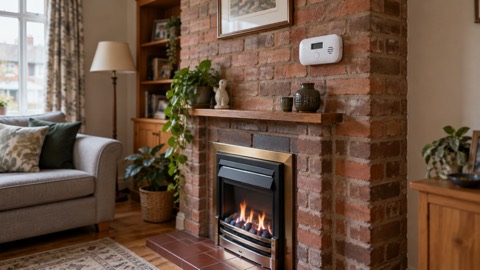 FireAngel FA6829S CO Alarm
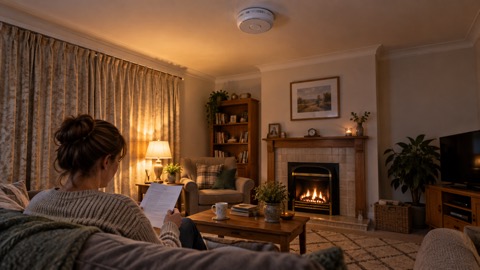 FireAngel CW1-PF CO Alarm
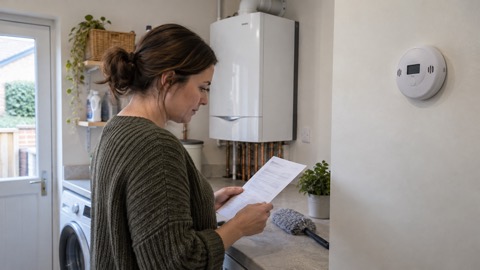 FireAngel W2-CO-10X CO Alarm
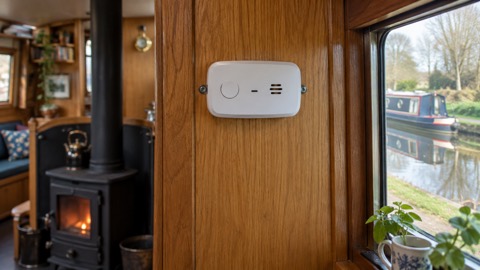 FireAngel FP1820W2-R CO Alarm
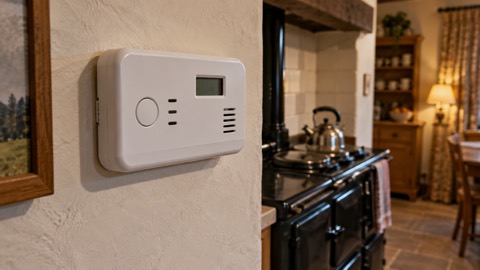 Kidde K7DCO CO Alarm
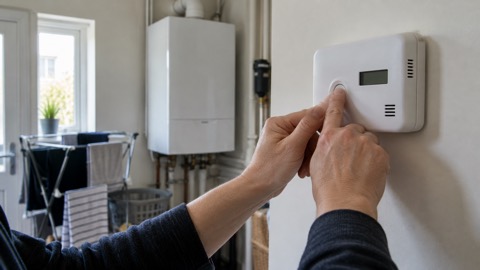 Kidde K5DCO CO Alarm
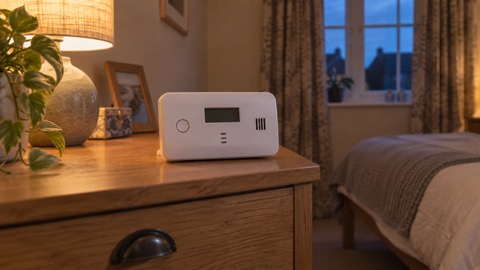 Kidde K10LLDCO CO Alarm