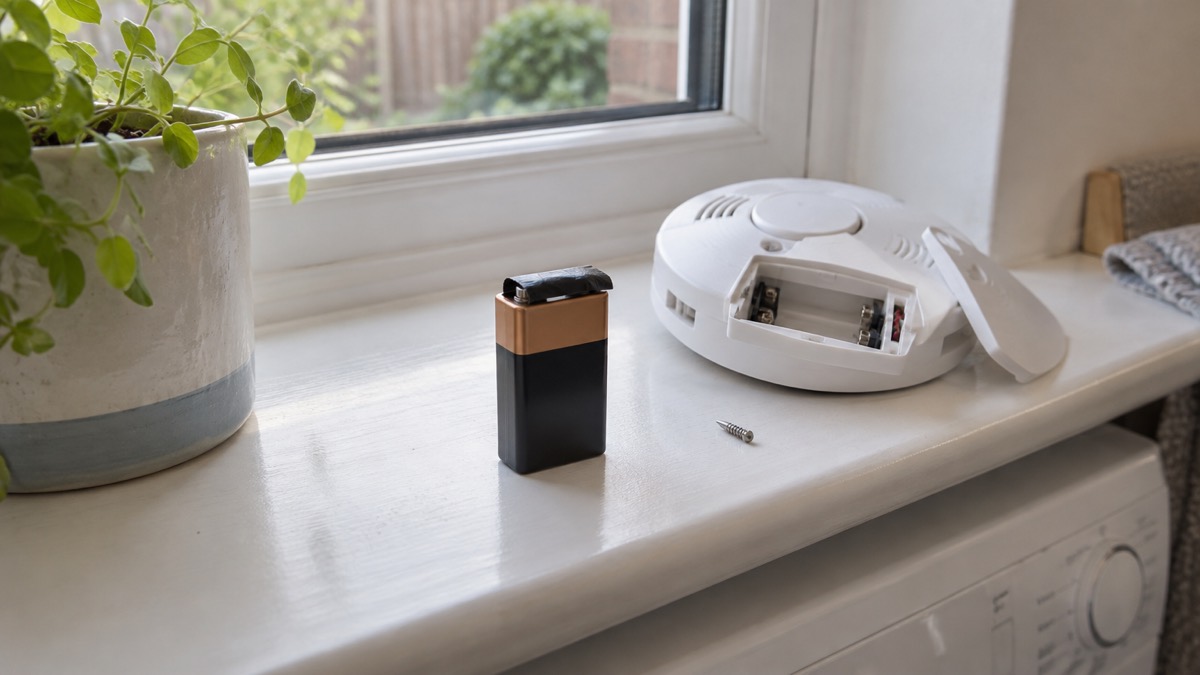
A 9V battery is the rectangular block with two terminals on top, sold under the codes 6F22 and 6LR61. In a household it does a small number of jobs that matter in an emergency: it runs basic smoke alarms, it sits inside mains-powered alarms as the back-up that keeps them working in a power cut, and it powers torches, radios and test meters. Spares kept in a drawer are part of a sensible emergency kit, and they cost little to hold.
The rules for keeping them are simple. Buy the battery your device is made for, and check it meets the manufacturer's specifications1. Store spares in a sealed container out of reach, with the terminals kept apart so they cannot short2. Never put any battery in the household bin: take it to a shop or supermarket collection point or a household waste recycling centre4. And test the alarm you have fitted with one every week6.
This page covers what a 9V battery does for a household getting ready for a power cut, storm or other disruption, how to choose the right version, how to store and use it safely, and how to dispose of it. It does not cover lithium-ion battery packs in e-bikes and power tools, which carry different risks and are dealt with on the e-bikes and e-scooters page.
What a 9V battery does in a household emergency
The 9V format survives because it packs a useful voltage into a shape that fits small devices. In an emergency it earns its place in three ways.
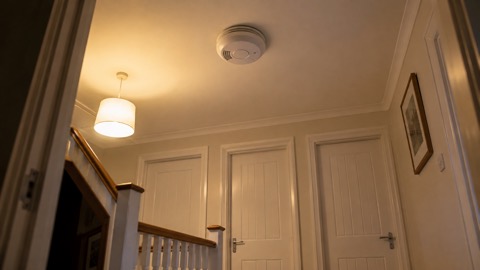
The first is alarms. Basic smoke alarms run off nine volt batteries, and these should be replaced on a regular basis8. Ionisation alarms commonly run on 9-volt batteries9. Mains-operated alarms normally have a 9V back-up battery in them in case you have a power cut10. In Scotland, sealed battery alarms must be sealed tamper-proof units with long-life lithium batteries11. In Northern Ireland, smoke alarms linked to the home's mains electrics contain a nine volt back-up battery that needs to be changed according to the manufacturer's instructions12. Whichever you have, the 9V cell is what keeps the alarm alive when the mains fails, which is exactly when a fire is more likely and the alarm matters most.
The second is light and information. A torch, a battery or wind-up radio and spare batteries are listed among the useful items for an emergency kit13. A 9V radio or torch that still works on day three of a power cut is worth more than a phone at 4 per cent charge.
The third is small test gear: multimeters and similar instruments that take a 9V block. These are not essential, but if you own one, a spare keeps it usable.
What a 9V battery cannot do is run anything large. It is not a substitute for a power bank or a generator, and it will not charge a phone. Treat it as the cell that keeps small, critical devices alive, and plan your bigger power needs on the backup power page.
Choosing the right version for your device
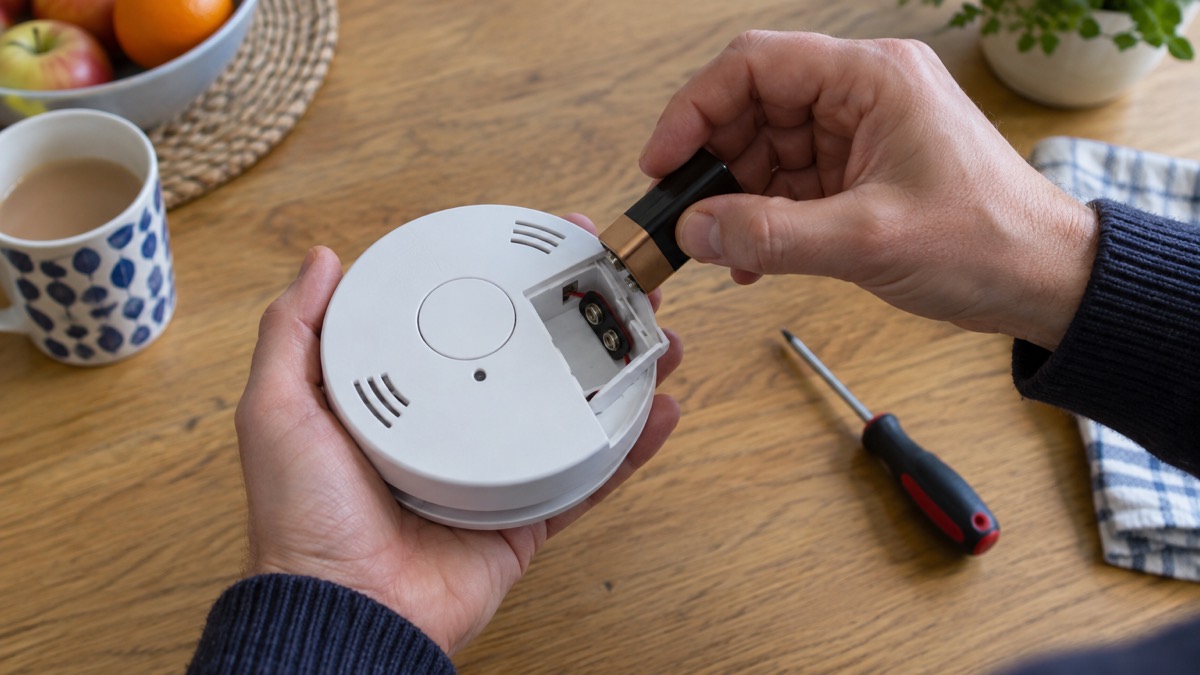
The codes 6F22 and 6LR61 describe the same physical size and terminal layout, but the chemistry inside varies, and that changes how long the battery lasts and what it suits. The first rule is the one every fire service gives: make sure batteries are suitable for the device they are intended for and meet the manufacturer's specifications1. If you are buying additional batteries or chargers, make sure they are compatible with your device and are intended to work with it, and buy from the reputable retailer you used for the original purchase5.
For a household keeping spares, the practical question is shelf life. One maker publishes figures for its own ranges, which give a fair picture of how the chemistries compare:
| Battery type (maker's own range) | Shelf life, 9V | Shelf life, AA and AAA |
|---|---|---|
| Alkaline (Energizer MAX) | up to 5 years | up to 10 years7 |
| Lithium (Energizer Ultimate Lithium) | up to 10 years | up to 25 years7 |
| Rechargeable (Energizer Recharge Power Plus) | up to 3 years | up to 12 years7 |
Read that table as a guide to chemistry, not a promise about any one brand. The pattern is consistent: lithium lasts longest in storage, alkaline is the everyday choice, and rechargeable cells lose their charge sitting in a drawer. For an alarm back-up or a torch that must work after two years untouched, a longer-life cell is the safer bet. For a device you use often, an ordinary alkaline is fine.
A note on fit: 9V batteries clip onto two terminals, and the clip only goes on one way round on most devices. If it will not seat, do not force it. Check the device's instructions, and check the battery is the size the device expects.
Safe storage: keeping the terminals apart
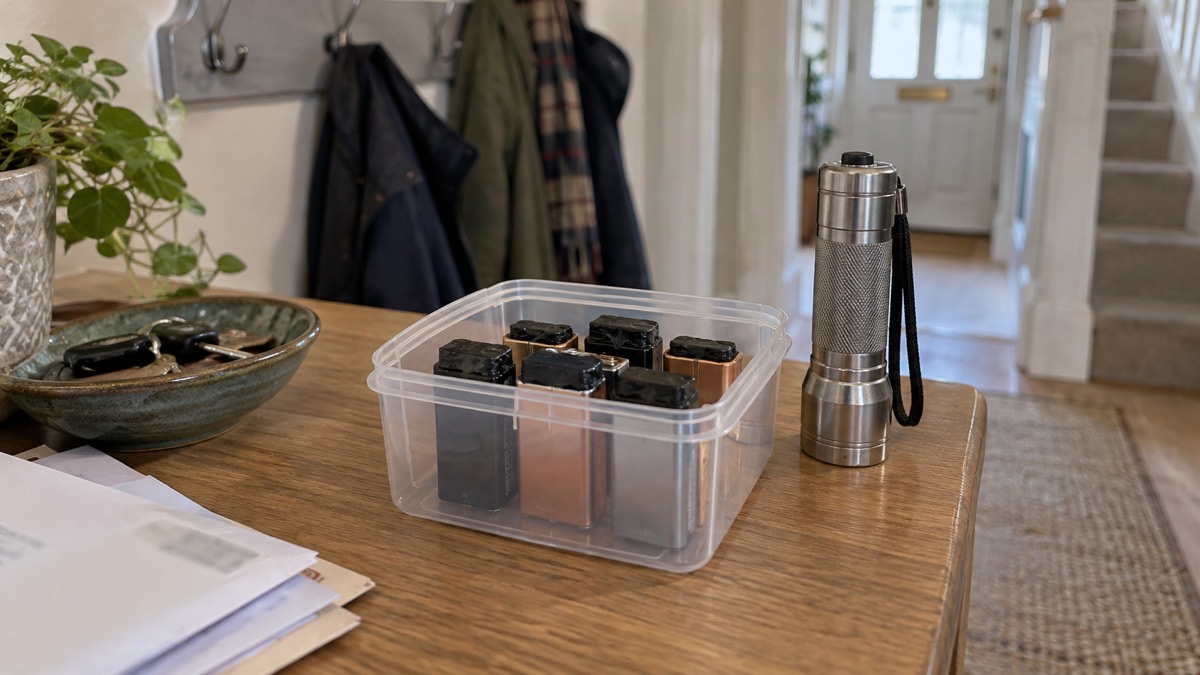
A loose 9V battery in a drawer is a small fire risk. The two terminals sit close together on top, and a paperclip, a bunch of keys or a coin across them will short the cell, heat it and, in the worst case, start a fire. Fire services are consistent on this: tape over terminals with electrical tape to prevent short circuits and fire risk, and store in a cool, dry place until disposal3.
For a household, that translates into a short routine:
- Keep spare batteries in a sealed container out of reach, and make sure battery compartments on toys and devices are securely closed2.
- Tape the terminals of loose spares, or keep each battery in its original pack or a small bag so metal cannot bridge the terminals3.
- Store in a cool, dry place away from flammable materials and direct sunlight14.
- Avoid storing, using or charging batteries in extremes of high or low temperatures15.
- Keep the battery terminals clean and secure in the devices you rely on, to prevent poor electrical connections and potential breakdowns16.
- Do not mix and match different battery brands in the same device, and remove batteries from devices that are being stored17.
That last point matters for a kit that sits unused for months. A battery left in a torch that is not being used can leak and corrode the contacts, and a mixed pair can discharge unevenly. If a torch is part of your emergency lighting plan, either use it regularly or take the battery out and store it beside the torch, terminals taped.
Where a 9V battery must never go
The single most important rule is the bin. Never put batteries in household bins; recycle them safely at your local tip18. Do not place lithium batteries in your regular bin or recycling bin, as they could become damaged and cause a fire5. The reason is not fussiness: batteries crushed in a refuse lorry or a waste plant can short and ignite, and fire services attend these fires regularly14.
The second rule is heat. Never store electronic devices in hot vehicles or areas prone to high temperatures19. A 9V battery left on a car dashboard or in a shed in direct summer sun is being stored outside its safe range.
The third concerns charging, and applies to rechargeable 9V cells. Always follow the manufacturer's instructions for using, charging, storing and disposing of rechargeable batteries20. Charge on a hard, flat, heat-resistant surface, away from extreme heat, cold, direct sunlight and flammable materials20. Never charge batteries near exits, hallways or sleeping areas, which must remain clear for evacuation20. If a battery swells, stop charging immediately21.
A 9V battery is not a toy, and it is not food. Keep spares out of reach of children, in a sealed container, and recycle used cells promptly so they are out of reach2. Button cells are the greater swallowing hazard, and the NHS advice on button batteries sets out what to do, but the same first aid applies to any battery a child has swallowed.
Smoke alarms: fitting, testing and replacing a 9V
If your alarm takes a 9V battery, the routine is short and worth doing properly.
- Check the alarm's instructions for the battery type before you buy. Basic alarms take a nine volt battery, replaced on a regular basis8.
- Fit the battery the right way round and close the compartment securely.
- Test the alarm every week22.
- Replace the battery on the schedule the manufacturer gives, and replace the alarm itself when its instructions say so.
- For mains-linked alarms, change the nine volt back-up battery according to the manufacturer's instructions12.
If your alarm is chirping, the fault may be the battery or something else; the smoke alarm chirping page walks through the causes. If you are choosing an alarm in the first place, the smoke alarms section covers types, and the sealed or replaceable battery comparison sets out the trade-off between a sealed long-life unit and one you change yourself. In Scotland, the rules on sealed units are stricter, and the Wales and Northern Ireland page covers how the other nations differ.
If a battery leaks, or a child swallows one
A leaking alkaline battery leaves a white crust on the contacts. One maker's support guidance for cleaning leakage from alkaline, NiCAD and NiMH batteries is to use either one tablespoon of boric acid in one gallon of water, or a mixture of equal amounts of diluted vinegar or lemon juice with water, in a 50/50 ratio17. Wear gloves, keep the area ventilated, wash your hands afterwards, and dispose of the leaking battery at a recycling point rather than in the bin. If the leakage has corroded a device's contacts, clean them gently and let the device dry fully before fitting a new battery.
A swallowed battery is different. The NHS advice is blunt: do not let them eat or drink and do not make them sick23. There may be few symptoms, so trust your instincts23. If you have the battery packaging or the product the battery came out of, take it with you23. If possible, try to find out what sort of battery your child swallowed, but do not delay taking them to hospital if you cannot immediately see what they have swallowed24. Do not give them anything to eat or drink or try to make them sick, as this could cause damage as the battery is vomited back up as well as the damage it caused when swallowed24. If your child has swallowed something like a battery, coin or magnet, get to the right page for help without delay25.
Disposal, recycling and support
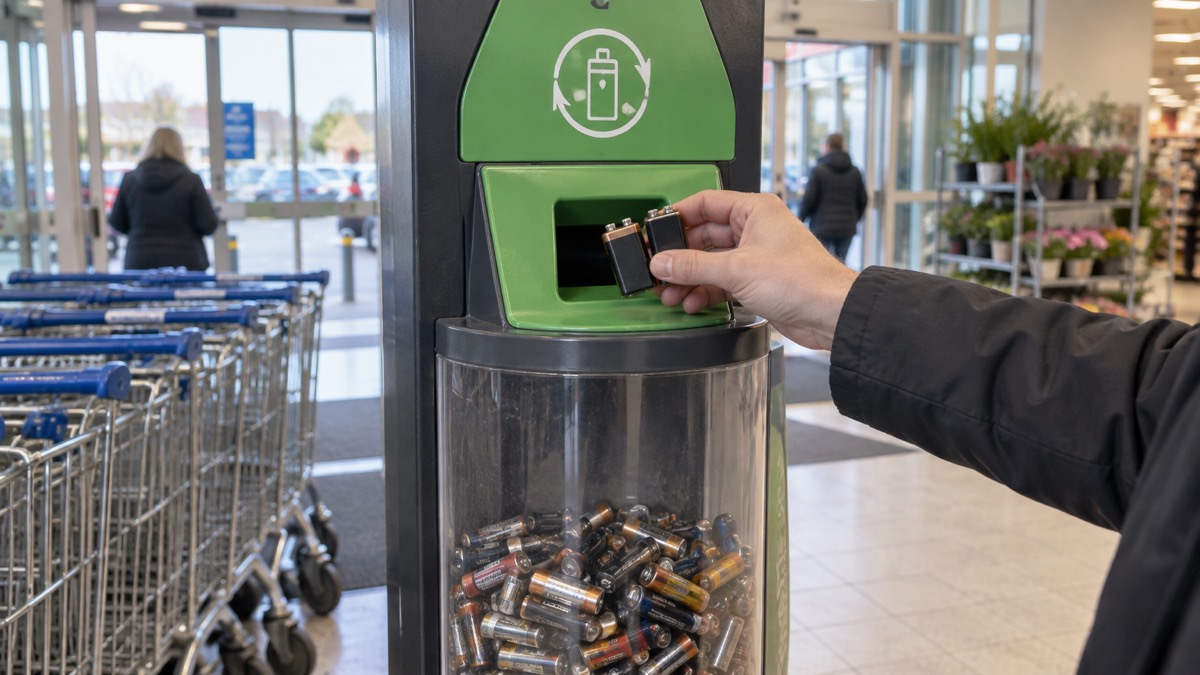
Retailer battery recycling bins commonly accept AA, AAA, 9V and button cells, rechargeable batteries, and battery packs from devices if removable3. You can also use a household waste recycling centre: removable batteries should be recycled separately from the device and can be disposed of at a battery recycling point or household waste recycling centre26. If you cannot remove a battery from an electronic product that no longer works, the product and the battery should be recycled together using a waste electricals recycling service27.
Before you recycle anything, check items for hidden batteries18. Anything with a plug, battery or cable can be reused or recycled28. Follow the manufacturer's disposal instructions where they give them; some offer recycling services20.
On support and warranty, the maker's own paperwork that comes with the battery is the place to look, and the retailer you bought from is the first point of contact for a faulty pack. Keep the receipt with your spares box. For the wider range, see the Raymax brand page, and for the AA version of the same range, the Raymax AA batteries page.
Sources (28)
- Battery safety, West Yorkshire Fire and Rescue Service, 2026
- Child safety, Berkshire Healthcare NHS Foundation Trust, 2026
- Lithium battery fire safety, Tandridge District Council, 2026
- Lithium battery fire safety, Mid and West Wales Fire and Rescue Service, 2026
- Lithium batteries, Surrey County Council, 2026
- Home safety advice, Essex County Fire and Rescue Service, 2026
- Compare batteries, Energizer, 2026
- Smoke alarms, Dorset and Wiltshire Fire and Rescue Service, 2026
- Smoke alarms, Oxfordshire County Council, 2026
- Smoke alarms, South Wales Fire and Rescue Service, 2026
- Fire and smoke alarms in Scottish homes: where and what to buy, Scottish Government, 2024
- Fire safety and prevention, nidirect, 2025
- Safe and well booklet, Cheshire Fire and Rescue Service, 2026
- Recycle your batteries to prevent fires, Devon and Somerset Fire and Rescue Service, 2024
- Fire safety in the home, Westminster City Council, 2017
- Winter safety checks, Warwickshire County Council, 2026
- What is inside a battery?, Duracell, 2026
- Be battery aware, Greater Manchester Fire and Rescue Service, 2026
- Lithium-ion batteries, Staffordshire Fire and Rescue Service, 2026
- Battery safety, Greater Manchester Fire and Rescue Service, 2026
- Batteries and chargers, London Fire Brigade, 2026
- Home fire safety visits, Staffordshire Fire and Rescue Service, 2026
- Button batteries: using them safely, Great Ormond Street Hospital, 2018
- Button batteries: using them safely, Wrightington, Wigan and Leigh Teaching Hospitals NHS Foundation Trust, 2026
- Poisoning, Frimley Healthier Together, 2026
- Electrical safety, Lincolnshire County Council, 2026
- Lithium-ion batteries, Scottish Fire and Rescue Service, 2025
- Charge safe campaign, North Yorkshire Fire and Rescue Service, 2026

 FireAngel FA3313 CO Alarm
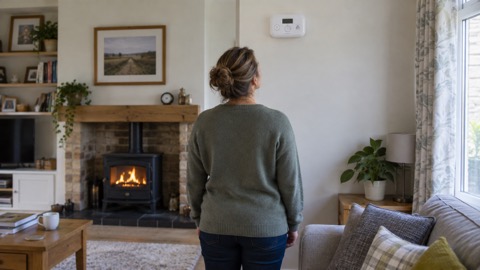 FireAngel FA3322 CO Alarm
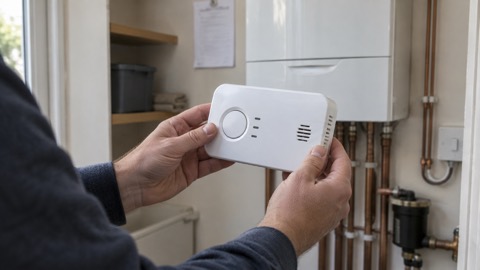 FireAngel FA3820 CO Alarm
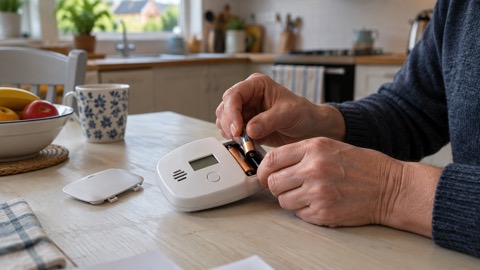 FireAngel FA6812 CO Alarm
 FireAngel FA6813 CO Alarm
 FireAngel FA6829S CO Alarm
 FireAngel CW1-PF CO Alarm
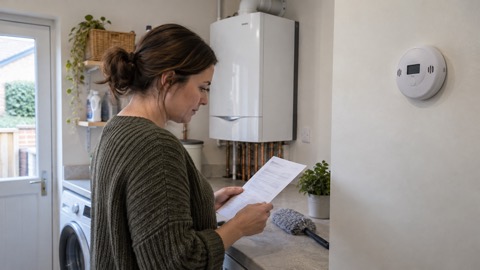 FireAngel W2-CO-10X CO Alarm
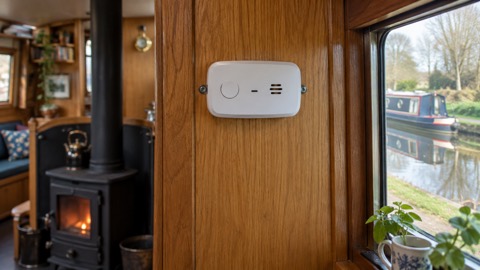 FireAngel FP1820W2-R CO Alarm
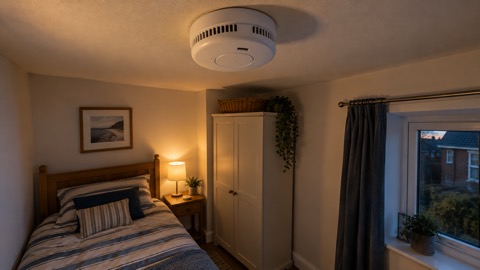 FireAngel FP2620W2-R Alarm
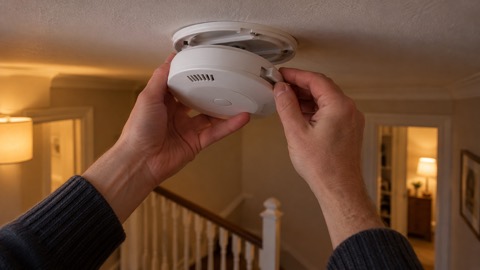 FireAngel ST-632 Smoke Alarm
 FireAngel ST-750 Smoke Alarm