Raymax is a battery maker whose products turn up in the places a household needs power most: torches, radios, smoke alarms, remote controls and the car on the drive. For anyone getting ready for a power cut, a storm or a longer outage, the useful question is not what the brand is called but what each item does when the mains goes off, how long it holds its charge, and how to keep it safe in a cupboard or a hallway.
This page sets out the Raymax kit that matters for emergency preparation, the specifications worth checking before you buy, and the safety rules that apply to any battery you keep at home. It also explains how to check whether your model is subject to a recall, what to do if something goes wrong, and where to find support.
The short version: keep a stock of the battery sizes your emergency kit actually uses, store them somewhere cool and dry, charge anything rechargeable on a hard, flat surface away from escape routes, and register what you can so the maker can reach you if a fault is found.
What Raymax makes for UK households
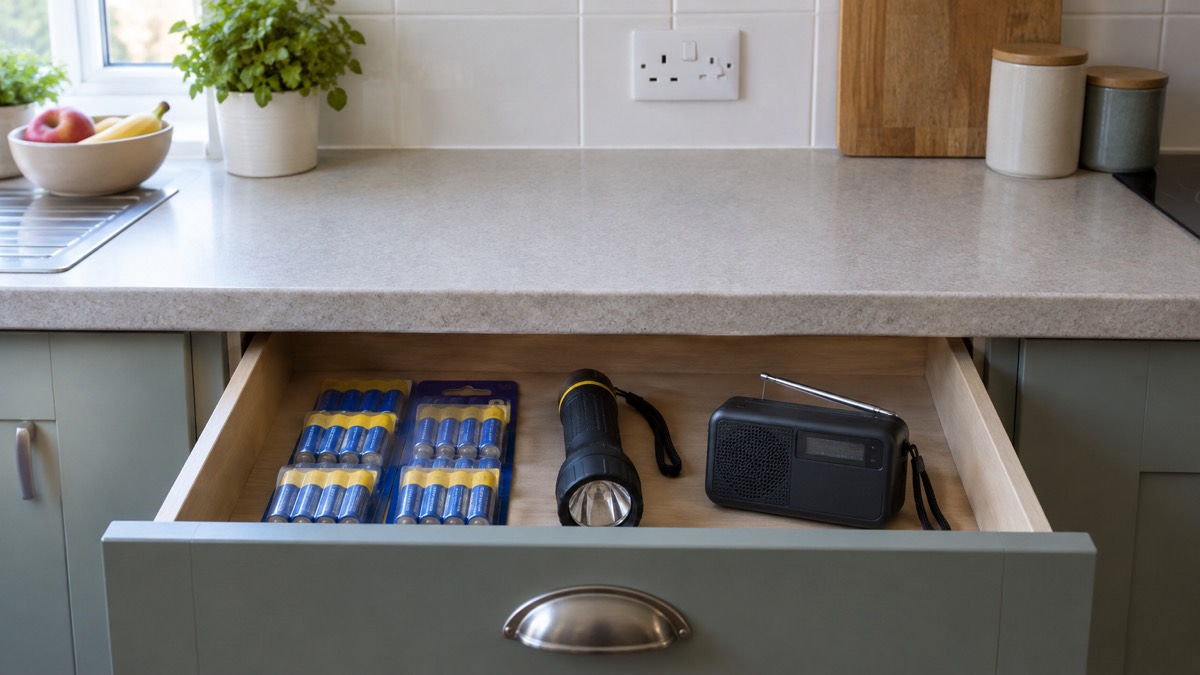
Raymax's range, as described by the maker, centres on batteries for two very different jobs. The first is the small household cell: the Raymax AA batteries (LR6) that power torches, radios, clocks, smoke alarms and toys. The second is the larger automotive battery, and the maker's own product pages set out the AGM-H5, AGM-H6 and AGM-H7 models, each certified to ISO, CE, RoHS and UL standards1.
That split matters for preparedness because the two are used in completely different ways during an emergency. Small cells are consumables: you buy them in packs, keep a stock, and swap them into a torch when the lights go out. A car battery is fixed equipment: it starts the vehicle you might need to leave in, and it keeps the electrics running while you do.
The case for holding spare batteries is made plainly by official guidance. Emergency planning advice for the home lists spare batteries among the things to keep in the event of an emergency5, and a council emergency kit checklist says the same6. A power cut kit, as set out by several councils, includes torches and batteries alongside battery candles and a mobile phone power pack7.
If you are building a kit from scratch, the emergency kit guide sets out the full list, and the lighting guide explains which torches and lanterns suit which rooms. Batteries are the part of that kit that quietly expires in a drawer, so the practical job is to know which sizes your devices take and to keep enough of them.
Raymax kit for power cuts and emergencies
When the power goes, the devices that still work are the ones with their own power. Official guidance for households is consistent on what that means in practice: a torch and spare batteries, a wind-up or battery-powered radio tuned to local news (or a car radio), a power bank or solar charger, an analogue phone, warm clothes and blankets, and non-perishable food2. A separate council list adds a wrench or pliers to turn off utilities, and spare keys for your windows, car and house8.
Batteries sit underneath almost every item on that list. A torch is only useful if it has cells in it; a radio is only useful if it will run. The table below sets out where each kind of Raymax battery fits.
| Kit item | What it does in an emergency | Battery type that suits it |
|---|---|---|
| Torch or lantern | Light for stairs, fuse boxes and rooms without windows | A torch with spare working batteries10 |
| Battery radio | Local news and official updates when broadband and mobile data fail | A wind up or battery-powered radio2 |
| Smoke alarm | Keeps working when mains power fails, if it has a battery backup | A battery backup cell in many models1 |
| Car | Getting out, charging a phone, listening to the radio | A car radio for local news2 |
| Small devices | Phone top-ups from a power bank | Power bank charged in advance2 |
Two habits make this kit reliable. The first is to store batteries next to the device they belong to, so nobody is hunting through a cupboard by torchlight. The second is to check the stock twice a year, at the same time as you test your smoke alarms, and to move older cells into low-stakes devices rather than the torch you would rely on in a blackout.
The power cuts guide walks through what to do minute by minute when the lights go out, and the staying informed guide covers radios and phones. For households thinking about larger backup, the backup power guide explains what a power station can and cannot run.
Specifications to check on a Raymax product
The specification that matters depends on the job. For a small cell, it is the size and the voltage, because a battery that does not fit is no use in a blackout. For a vehicle battery, the figures decide whether the car will start on a cold morning and whether it can carry the electrical load of a modern vehicle.
The maker's own figures for the Raymax AGM-H6 are the place to start:
| Specification | Maker's figure |
|---|---|
| Chemistry | Absorbent Glass Mat (AGM), sealed lead acid1 |
| Cold cranking amps | 760 CCA1 |
| Capacity | over 70Ah1 |
| Self-discharge | ultra-low1 |
| Load support | regenerative braking and high-accessory loads1 |
| Certifications | ISO, CE, RoHS and UL standards1 |
| Vehicle fit | sedans, hatchbacks, light-duty trucks and SUVs1 |
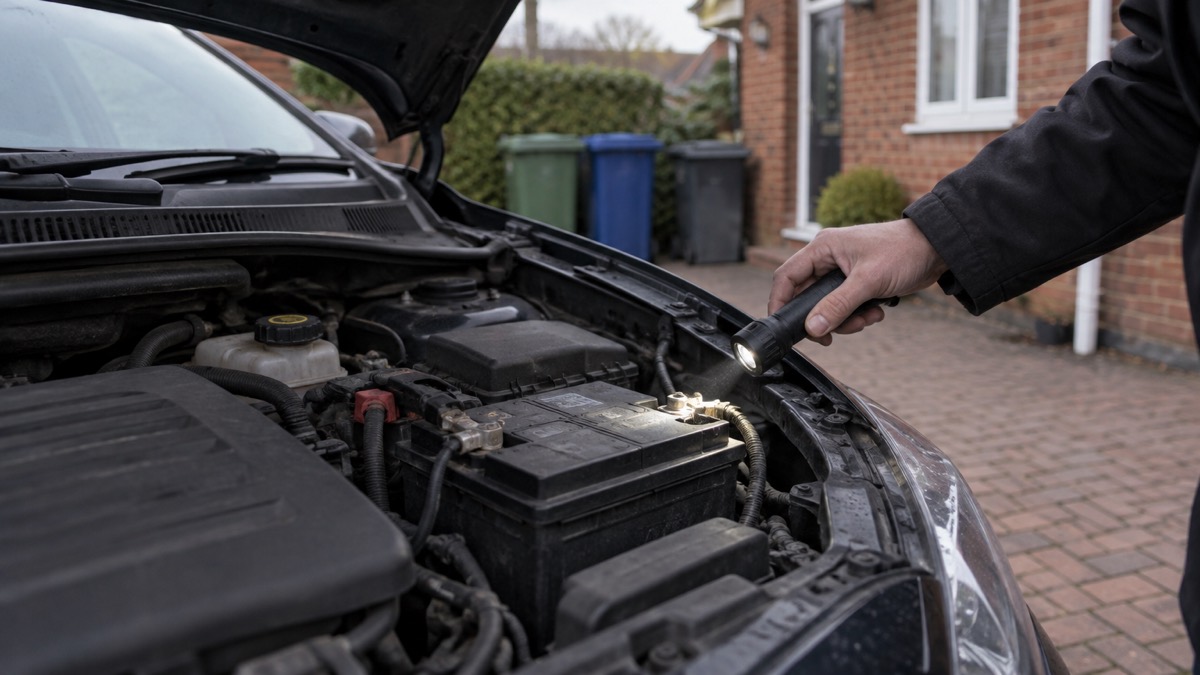
The maker states that the AGM construction reduces internal resistance and boosts durability, and that the battery is certified to ISO, CE, RoHS and UL standards1. Those certifications are the kind of mark a household should look for on any electrical product: fire and rescue services advise checking for British or European safety marks, such as the CE kitemark, on appliances11. For a charger or power adaptor, official guidance goes further and lists what the marking should include: the CE mark, the name or trademark of the manufacturer or responsible supplier, a unique identifier such as a model, type or batch number, and the rated voltage, power or current and frequency12.
For small cells, check the size printed on the device and match it. Batteries of different sizes are not interchangeable, and a device that takes four AA cells will not run on two. If you are buying in bulk for a kit, buy the sizes your devices actually use rather than a mixed assortment you will never open.
Safe charging, use and storage
Every battery you keep for an emergency is a small store of energy, and fire and rescue services across the UK are consistent about how to treat it. The advice applies to Raymax cells exactly as it applies to any other brand.
Charge batteries in a safe, visible location, away from flammable materials or escape routes3. Charge on a hard, flat, heat-resistant surface, away from extreme heat, cold, direct sunlight and flammable materials13. Never charge batteries near exits, hallways or sleeping areas, which must remain clear for a safe and quick evacuation14. Use the correct charger15, and charge the device on a flat, solid and stable surface such as a kitchen worktop16.
The maker's instructions come first. Fire and rescue services advise always following the manufacturer's instructions for using, charging, storing and disposing of rechargeable batteries13, and always following the battery usage, storage and charging guidelines in the user guide17. Northern Ireland Fire and Rescue Service gives the same advice for phones, tablets and laptops: use approved chargers and charge on hard surfaces18.
Storage is the quieter half of the job. Keep spare cells in their packaging, somewhere cool and dry, away from direct sunlight, and out of reach of small children. Do not store loose batteries in a drawer with metal items such as keys or coins, where the terminals can touch. Check the stock periodically and remove anything that is leaking, swollen or corroded.
"Always follow the manufacturer's instructions for using, charging, storing , and disposing of rechargeable batteries."
The home emergencies guide covers fire, carbon monoxide and other household dangers in more depth, and the backup power guide explains how to charge a power station safely.
Safety notices and recalls: how to check your model
Product recalls are rare, but they happen, and the household that registered its kit is the one that gets told. Official guidance is to check your appliances are not subject to a product recall by looking at the Office for Product Safety and Standards4, and to check for recalls or safety notices on the Electrical Safety First website19. The same advice applies to e-bikes and e-scooters, where households are told to check whether products are subject to a recall on the Electrical Safety First website or the government website20.
To check a Raymax product:
- Find the model name or number, the serial number and the purchase date. Official guidance says these are typically the details you need to register an appliance21.
- Search the Office for Product Safety and Standards for the model4.
- Search the Electrical Safety First recalls list, which explains what to do with a recalled appliance21.
- If the model appears, stop using it and follow the instructions in the notice.
A recall notice shows how the system is meant to work. When the HAMAX Buddy Baby Seat was recalled, the notice recorded that it had been notified by Local Authority Trading Standards and gave the model code as 859160222. Manufacturers are expected to contact anyone who has purchased the faulty product where possible, publish details of the recall and the risk, and set out the steps they are taking to resolve it23.
Missing paperwork is its own warning. A product safety report for an electric rechargeable hand warmer sold via Amazon and eBay recorded that some of the required documentation and markings were not present24. If a battery or charger arrives without instructions or safety marks, treat that as a reason to stop and check before use.
Warranty and your rights if something goes wrong
The first step when something goes wrong is to stop using it. A battery that is swollen, leaking, overheating or smelling strange should be disconnected if that is safe, moved away from anything flammable, and left somewhere visible until you know what to do with it.
Then check whether the product is subject to a recall, using the Office for Product Safety and Standards and the Electrical Safety First list4. If it is, the notice will say what to do. If it is not, contact the retailer or the maker with the model number, serial number and purchase date to hand21.
Registration is what makes that contact possible in the other direction. Official guidance says to register your appliance so manufacturers can contact you about faults or recalls19, and that it can be done directly with the manufacturer or through the Association of Manufacturers of Domestic Appliances' Register my Appliance service23. Registration also helps with safety updates, recalls and warranties for e-bikes and e-scooters20.
Keep the receipt and the packaging for anything you buy for your emergency kit, at least until you have registered it. A warranty claim is much easier with the purchase date and the model number written down, and the same details are what a recall notice will ask for.
Support and where to get help
If a Raymax product fails, start with the retailer you bought it from and the maker's own product information, which sets out the specification any replacement has to meet1. For the AGM-H6, that means matching the Absorbent Glass Mat construction, the 760 CCA rating and the over 70Ah capacity rather than fitting a lookalike1.
For help beyond the product itself, official sources are the place to go. A power cut should be reported on 1052. For help with second hand furniture and household appliances, the RE:SOURCE service listed by Cornwall Council can be reached on 01208 269 29625.
If you are replacing old kit, dispose of it properly. Fire and rescue services advise always following the manufacturer's instructions for using, charging, storing and disposing of rechargeable batteries13. The NHS advises that old or damaged medicines should be sealed in a clear plastic bag and taken back to a local pharmacy, where staff can safely dispose of them26; the same principle of returning items to somewhere that can handle them safely applies to batteries, so ask your council or retailer about battery take-back points rather than putting cells in the bin.
For households that need extra support during an outage, the extra help guide explains the Priority Services Register and other routes to assistance. The getting started guide sets out how to build a household plan around the kit you keep.
Sources (26)
- AGM-H6, Raymax, 2026-06-17
- Power cuts, West Yorkshire Prepared, 2026-10-29
- Lithium battery fire safety, Tandridge District Council, 2026-10-29
- Maintain appliances and recalls, Manchester Fire and Rescue Service, 2026-10-29
- Emergency kit, Ready Scotland, 2026-10-22
- Emergency kit checklist, Neath Port Talbot Council, 2026-10-29
- 3 tips for staying safe in lightning - Met Office, Met Office
- Get help and advice in an emergency, Lincolnshire County Council, 2026-10-29
- Planning for an emergency: kit, Wiltshire Council, 2026-10-29
- Lithium-ion batteries, South Wales Fire and Rescue Service, 2026
- Student Fire Safety - South Wales Fire and Rescue Service, South Wales Fire and Rescue Service
- E-cigarette power adaptors, North Wales Fire and Rescue Service, 2026-10-28
- Battery safety, Manchester Fire and Rescue Service, 2026-10-29
- Battery safety, Manchester Fire and Rescue Service, 2026-10-29
- Battery safety, Tower Hamlets Council, 2026-10-29
- Batteries, Humberside Fire and Rescue Service, 2026-10-29
- Electrical safety, North Yorkshire Fire and Rescue Service, 2026-09-14
- Student safety, Northern Ireland Fire and Rescue Service, 2026-09-15
- White goods, Cheshire Fire and Rescue Service, 2026-05-20
- E-bikes, Cheshire Fire and Rescue Service, 2026-09-30
- Electrical safety, Scottish Fire and Rescue Service, 2025-02-27
- Product recall: HAMAX Buddy Baby Seat, Office for Product Safety and Standards, 2026-10-26
- Product recalls, Bath and North East Somerset Council, 2026
- Product safety report: electric rechargeable hand warmer, Office for Product Safety and Standards, 2025-02-11
- Flooding: useful links and numbers, Cornwall Council, 2026-10-29
- Storing medicines at home, United Lincolnshire Hospitals NHS Trust, 2026
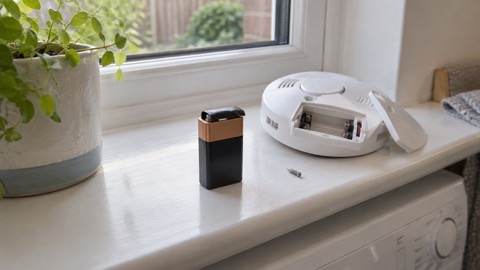 Raymax 9V Batteries
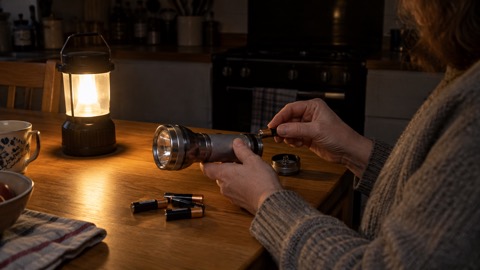 Raymax AA Batteries