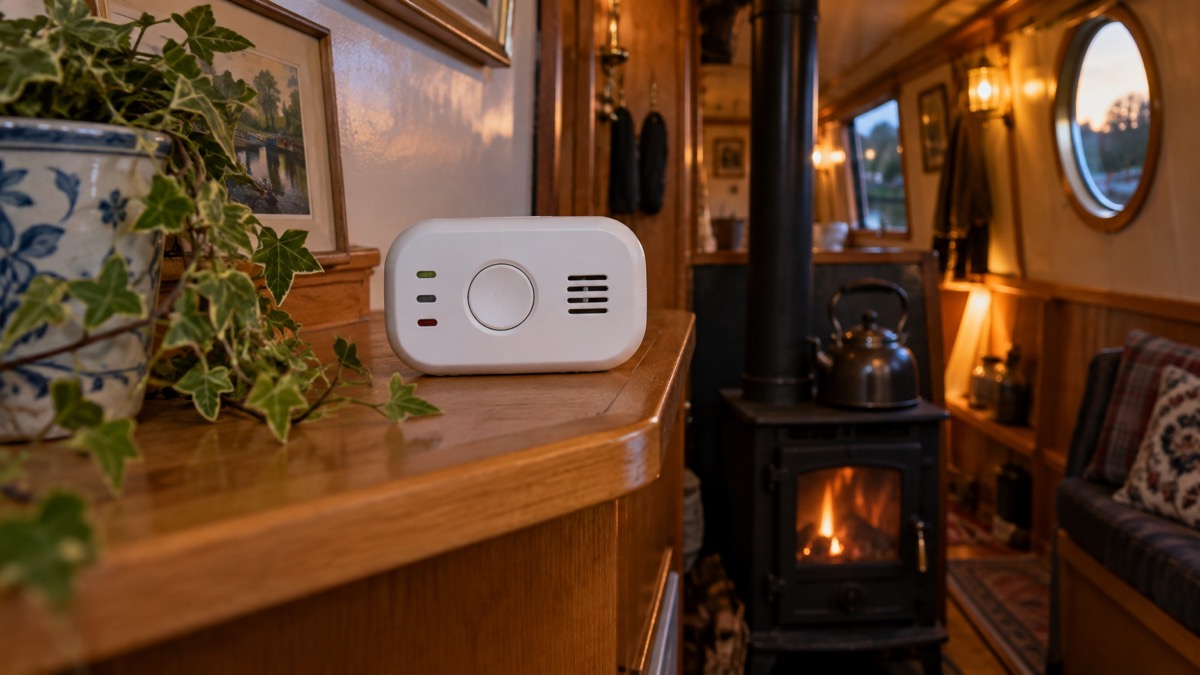
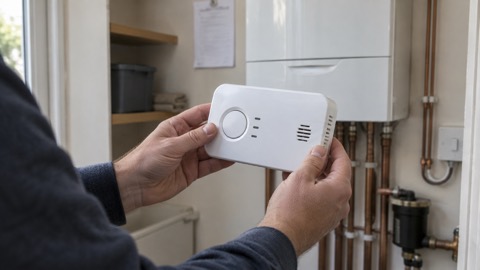
The UltraFire UBCO1 is a battery-powered carbon monoxide alarm sold as a twin pack, with an electro-chemical sensor that the distributor says alarms from 30ppm and a sounder rated at 85dB1. It runs on two replaceable AA alkaline batteries, is certified to BS EN 50291-1: 2018 for domestic use and BS EN 50291-2 for caravans, camping and boats, and carries CE and UKCA marks1. The distributor lists a 10 year product life and a 10 year warranty1.
Carbon monoxide is the reason the alarm matters. Northern Gas Networks advises households to buy an audible carbon monoxide alarm3, and the fire and rescue services say to install one and test it weekly4. An alarm does not stop carbon monoxide being produced. Its job, as North Wales Fire and Rescue Service puts it, is to alert you and give you time to get out safely5.
This page sets out what the UBCO1 does, where to fit it, how to test it, what its warnings mean, and how to use it in a caravan, boat or rented home. It also explains what to do if it ever sounds, because the alarm is only half of the plan.
What the UltraFire UBCO1 is and who it suits
The UBCO1 is a standalone carbon monoxide alarm, meaning it works on its own and does not need wiring into the house or linking to other alarms1. It is sold as a twin pack, so one purchase covers two rooms or one room and a caravan1. The distributor lists it as suitable for homes, rental properties, holiday lets and compliance with UK carbon monoxide alarm regulations1.
It is a carbon monoxide alarm only. Warwickshire County Council makes the distinction plainly: carbon monoxide alarms are specifically designed to detect carbon monoxide, while smoke alarms are designed to detect smoke and fire8. A UBCO1 will not warn you of a fire, and a smoke alarm will not warn you of carbon monoxide. If you are weighing up which alarms your home needs, the guide to carbon monoxide alarms sets out the choices, and combined or separate alarms covers the trade-offs of a single unit that does both.
The distributor lists the alarm as suitable for caravans, camping and boats as well as the home and travel1, and it is certified to BS EN 50291-2, the standard for caravan, camping and boat use1. That makes it a reasonable choice for a household that wants the same alarm at home and away.
One caution applies to any alarm you buy. Which? reports that every unbranded carbon monoxide alarm it has tested failed to detect the gas, and that cheap unbranded alarms found online for under £10 cannot always be relied on9. The UBCO1 is a branded product with published certification, which is the kind of information to look for.
Specifications
The table below sets out the figures the distributor publishes for the UBCO1. Where a figure decides whether the alarm suits your home, it is worth checking against the room you have in mind.
| Specification | UltraFire UBCO1 |
|---|---|
| Sensor type | Electro-chemical1 |
| Alarm level | From 30ppm1 |
| Sound level | 85dB1 |
| Warning type | Audible alarm sounder2 |
| Power | Battery powered1 |
| Batteries | 2 x replaceable AA alkaline, included1 |
| Product life | 10 years1 |
| Warranty | 10 year warranty1 |
| Dimensions | 80mm high, 120mm wide, 37mm deep1 |
| Weight | 140g1 |
| Operating temperature | -10°C to +40°C1 |
| Relative humidity | 10% to 95%1 |
| Fixing | Freestanding or wall mounted, fixings included1 |
| Connection | Standalone1 |
| Housing | Plastic1 |
| Certification | BS EN 50291-1: 2018 and BS EN 50291-2; CE and UKCA marked1 |
The distributor's two product pages do not list the certification identically: one gives both parts of BS EN 50291, the other gives the domestic part only1. The fuller listing is the one to rely on if you need the caravan and boat standard.
The 30ppm alarm level is the figure to understand. The alarm is designed to sound once carbon monoxide reaches that concentration, and it will not respond to lower levels1. That is normal for a domestic alarm, but it is also why an alarm is a backstop rather than a substitute for keeping appliances serviced and rooms ventilated.
Where to fit it
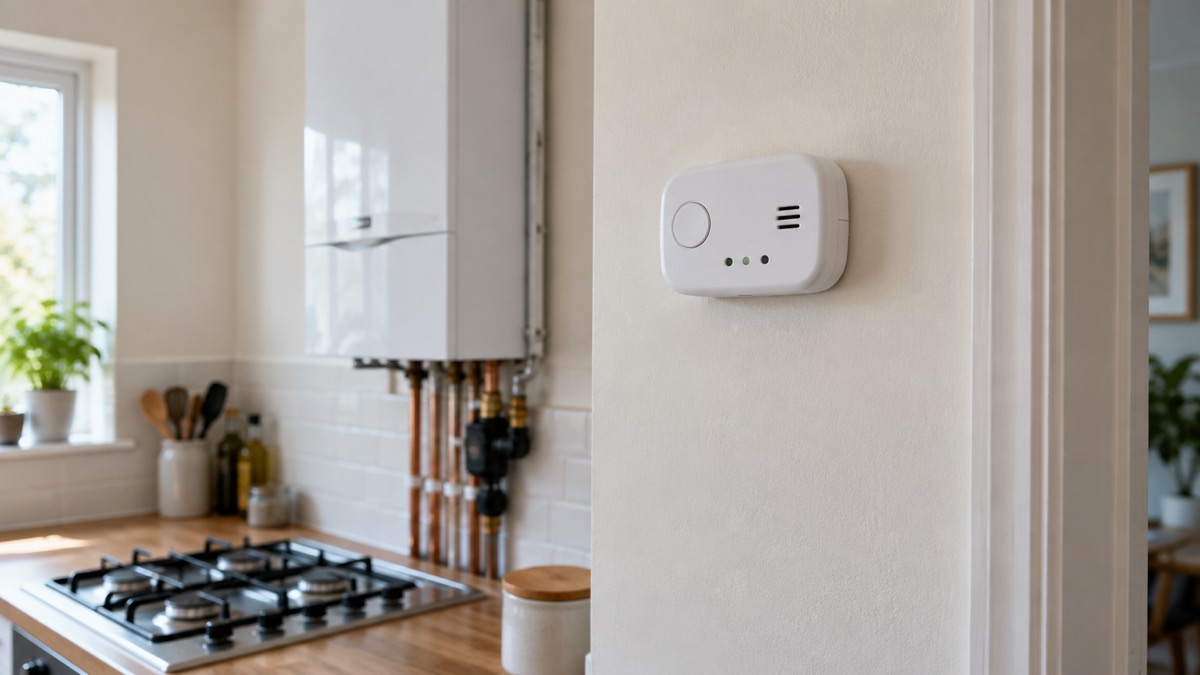
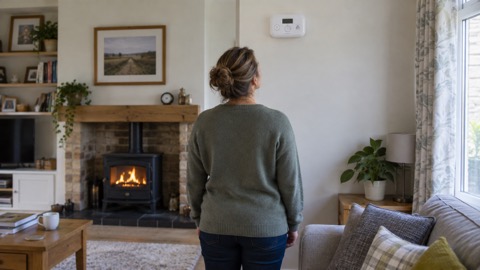
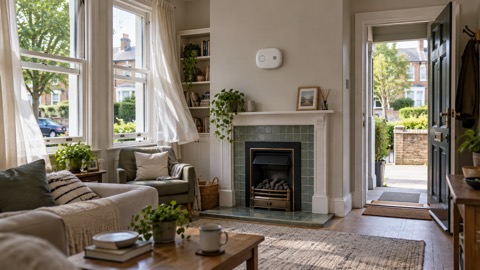
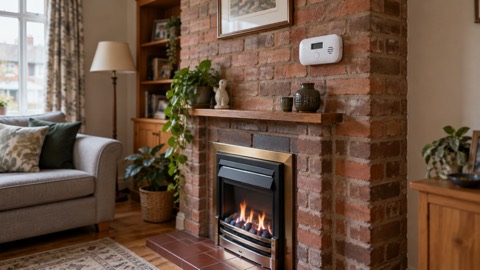
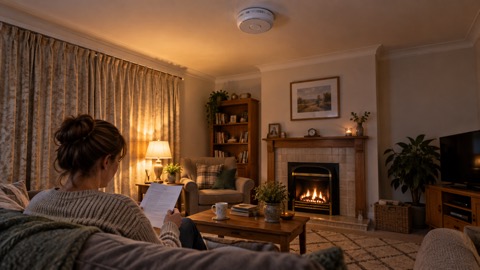
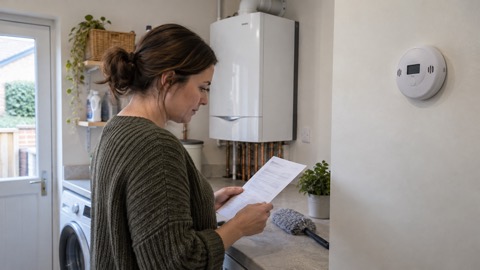
The distributor says to mount the alarm at head height, and lists bedrooms, living rooms, kitchens and any place where a fuel-burning appliance may be located, such as a fireplace, gas cooker or boiler, as suitable locations1. That is a broader instruction than some alarm makers give, so it is worth pairing it with independent placement advice.
Which? recommends fitting a carbon monoxide detector high up in the same room as the potential source, around 15cm from the ceiling and at least 1 metre away from boilers, cookers and fires. It should not sit directly above a source of heat or steam, and a shelf is a suitable position10. If you follow the distributor's head-height instruction, keep the 1 metre clearance and the distance from steam in mind, particularly in a kitchen.
A practical approach for a typical home is:
- One alarm in the room with the boiler or gas fire, positioned as Which? describes10.
- Keep it away from direct heat, steam and the immediate area above a cooker10.
- Do not fit it where curtains or furniture could block the vents.
If you are unsure how many alarms your home needs, the guide to where to put a carbon monoxide alarm goes through room-by-room placement, and do I need a carbon monoxide alarm covers which homes and appliances call for one.
Ventilation matters as much as placement. Northern Ireland's government advises that where fuel-burning equipment is used indoors there must be good ventilation11. An alarm in a sealed room will still warn you, but the room should never be sealed in the first place.
What the alarm does when it detects carbon monoxide
When carbon monoxide reaches the alarm level, the UBCO1 sounds its 85dB alarm and shows an alarm condition on its LED indicators1. The distributor says the first two cycles are at a lower volume to avoid startling occupants, and that the full alarm continues until the carbon monoxide danger passes or the reset button is pressed1.
That behaviour is worth knowing before it happens, because the first thing you hear may be quieter than you expect. Do not assume a quieter first cycle means a fault.
What you should do is set by the fire and rescue services, and it does not depend on the make of alarm:
- Open all doors and windows to ventilate the property6.
- Stop using and turn off all fuel-burning appliances6.
- Leave the building, keeping doors and windows open, and do not re-enter until the alarm has stopped6.
- Call your gas or fuel supplier on their emergency number6.
- If anyone feels unwell, call the emergency services7.
North Wales Fire and Rescue Service is direct about the priority: leave the building immediately, call the emergency services if anyone feels unwell, and do not re-enter until it has been declared safe7. Which? adds that if you feel ill or have any symptoms of carbon monoxide poisoning after the alarm goes off, you should contact your doctor immediately or call 999 for an ambulance13.
The symptoms to watch for are covered in full in the guide to carbon monoxide poisoning symptoms, and the step-by-step response is in what to do if your CO alarm sounds.
Weekly testing and the reduced volume test
The fire and rescue services advise testing carbon monoxide alarms weekly4. The UBCO1 has a test and reset button for simple weekly testing and quick silencing1, and the distributor lists a reduced volume test function so the test itself is less startling2. The test alarm continues until the button is released1.
A weekly test takes seconds:
- Press and hold the test and reset button1.
- Listen for the alarm and check the LED indicators respond1.
- Release the button to stop the test1.
- If nothing happens, check the batteries and the fitting before relying on the alarm.
The reduced volume test is a useful feature in a household with children, or for anyone who finds a sudden 85dB sound distressing. It does not change what the alarm does in a real event.
Testing is only half of alarm care. The UltraFire UBCO1 has a reduced volume test function, and its maker states that the first two cycles are at a lower volume to avoid startling occupants15. The principle carries across: dust and grease can affect any alarm, so keep the vents clear.
If your alarm starts beeping and you are not sure why, the guide to why is my carbon monoxide alarm beeping separates a low battery from a fault from a real detection. For the wider routine, how often to test smoke and CO alarms sets out a schedule for the whole house.
Batteries, low-battery warnings and the 10-year end of life signal
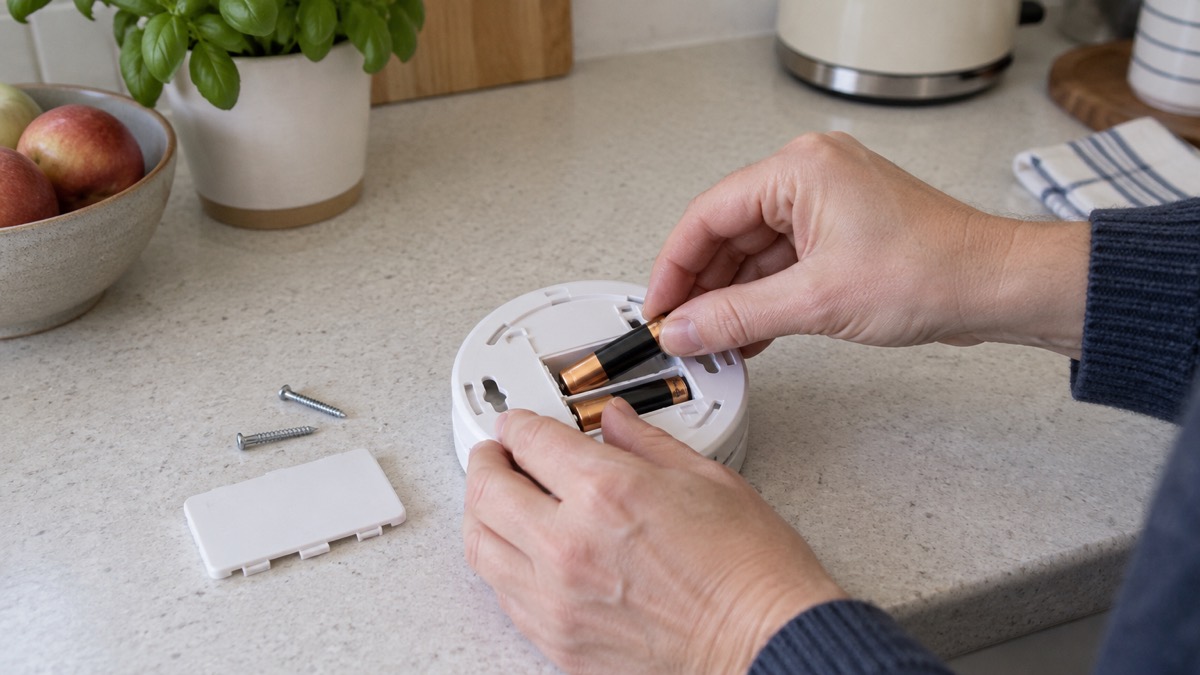
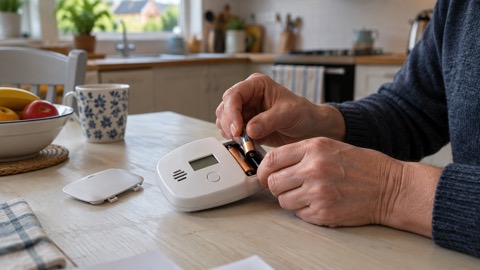
The UBCO1 runs on two replaceable AA alkaline batteries, which are included1. The distributor lists audible and visual low-battery and fault warnings, so the alarm tells you when it needs attention rather than simply going quiet1. It also has an end of life warning signal as a reminder of when to replace the alarm2, and a listed product life of 10 years1.
The end of life signal is the one to take seriously. HETAS advises that carbon monoxide alarms should be replaced before their expiry date16. When the UBCO1 signals end of life, the sensor has reached the end of its working life and the alarm should be replaced, not repaired or kept going with fresh batteries.
| Signal | What it means | What to do |
|---|---|---|
| Low battery warning | Batteries are running down1 | Replace both AA alkaline batteries1 |
| Fault warning | The alarm has detected a problem with itself1 | Check the leaflet, and replace the alarm if the fault persists |
| End of life warning | The 10 year product life is over2 | Replace the alarm16 |
| Full alarm | Carbon monoxide detected1 | Get out, ventilate, call for help6 |
Replaceable batteries are a choice with trade-offs. The guide to sealed or replaceable battery alarms sets out the differences, including the risk that a replaceable battery is taken out and not put back.
Caravans, boats, rental homes and Welsh properties
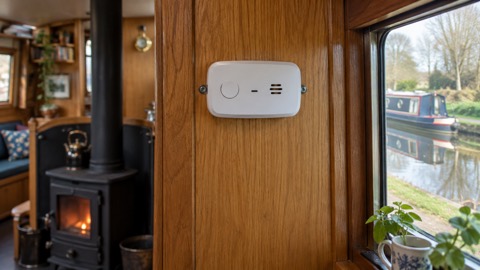
The UBCO1 is certified to BS EN 50291-2 for caravan, camping and boat use as well as BS EN 50291-1 for the home1, and the distributor lists caravans, camping and boats among its environmental suitability1. That certification is the reason it can be used in a caravan or boat where a domestic-only alarm would not be appropriate.
For travel, Northern Gas Networks advises investing in a portable, audible carbon monoxide alarm that meets British Standard BS EN 50291 and packing it in your case17. The UBCO1 meets that standard and is small enough at 140g to pack1. The CO-Gas Safety charity's message to travellers is simpler still: pack an alarm18. Its summer warning is a reminder that carbon monoxide risk is not confined to winter heating18.
In a caravan, the same fire safety habits apply as at home. The Caravan Club advises keeping a fire extinguisher in a dedicated bracket near the door but not too close to cooking appliances, where flames could make it unreachable19. On a boat, the Northern Ireland Fire and Rescue Service advises fitting a fire extinguisher in the engine compartment and the cockpit locker20.
For rental homes and holiday lets, the distributor lists the UBCO1 as suitable for rental properties, holiday lets and compliance with UK carbon monoxide alarm regulations1. Landlords and letting agents should check the rules that apply to their property, and tenants who are unsure whether their home has a working alarm can ask.
Wales has its own arrangements. The distributor states that the UBCO1 is suitable for the updated 2022 Welsh legislation1. The guide to Wales and Northern Ireland: alarm rules and fire services explains how the requirements differ across the nations, and alarm standards covers what BS EN 50291 means in practice.
Support, warranty and disposal
The distributor lists a 10 year warranty on the UBCO11. Keep the proof of purchase with the alarm's leaflet, because a claim will normally need it. If the alarm develops a fault inside the warranty period, contact the retailer you bought it from in the first instance.
At the end of its life, dispose of the alarm responsibly. The distributor says the UBCO1 is covered by Valpak's WEEE Distributor Take-back Scheme1, so ask the retailer about taking it back. The Scottish Government advises that some but not all types of alarm can be recycled at recycling centres, and that you should look on the alarm for information or check with the manufacturer21. Aico's replacement guidance for its own alarms says old alarms should be disposed of responsibly, following your local waste and recycling guidance22. Do not put an old alarm in the general waste without checking first.
If you are replacing an alarm that has reached end of life, the guide to when to replace a smoke, heat or CO alarm covers the timing, and why is my carbon monoxide alarm beeping helps you tell an end of life signal from a low battery.
Sources (22)
- UltraFire UBCO1 10 Year Life LED Carbon Monoxide Alarm Twin Pack, Safelincs, 2026-10-29
- UltraFire UBCO1 LED Carbon Monoxide Alarm, Safelincs, 2026-10-29
- Gas Safety Advice, Northern Gas Networks, 2026-10-24
- Fire Safety at Home, Surrey County Council, 2026-10-15
- Alarm Advice Sheet, North Wales Fire and Rescue Service, 2024
- Smoke Alarms and Carbon Monoxide Detectors, Surrey County Council, 2026-08-24
- Carbon Monoxide, North Wales Fire and Rescue Service, 2026
- Smoke Alarms and CO Detectors, Warwickshire County Council, 2026-10-29
- How to Install and Test Carbon Monoxide Detectors, Which?, 2026-07-14
- How We Test Carbon Monoxide Detectors, Which?, 2026-07-14
- Strong Winds Weather Warning: Information and Advice, nidirect, 2026-10-24
- Carbon Monoxide Symptoms, Which?, 2026-07-14
- Five Ways to Avoid a Carbon Monoxide Build Up, Which?, 2026-07-14
- Insurers Urge Travellers to Pack Carbon Monoxide Alarms, CO-Gas Safety, 2025-09-22
- Aico Ei3024 Multi-Sensor Fire Alarm, Aico, 2026-10-28
- Carbon Monoxide Leaflet, HETAS, 2025
- Away From Home Safety, Northern Gas Networks, 2026-10-21
- Pack An Alarm, CO-Gas Safety, 2021-08-16
- Fires, The Caravan Club, 2026-10-25
- Stay Safe This Summer: Essential Tips from NIFRS, Northern Ireland Fire and Rescue Service, 2026-06-22
- Installation of Alarms, Scottish Government, 2024-08-14
- How Do I Replace My Alarm, Aico, 2026-10-28
 FireAngel FA3313 CO Alarm
 FireAngel FA3322 CO Alarm
 FireAngel FA3820 CO Alarm
 FireAngel FA6812 CO Alarm
 FireAngel FA6813 CO Alarm
 FireAngel FA6829S CO Alarm
 FireAngel CW1-PF CO Alarm
 FireAngel W2-CO-10X CO Alarm
 FireAngel FP1820W2-R CO Alarm
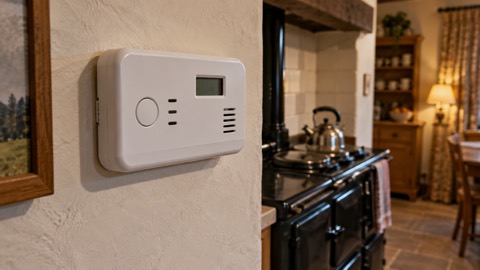 Kidde K7DCO CO Alarm
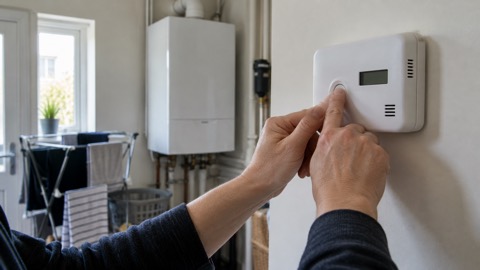 Kidde K5DCO CO Alarm
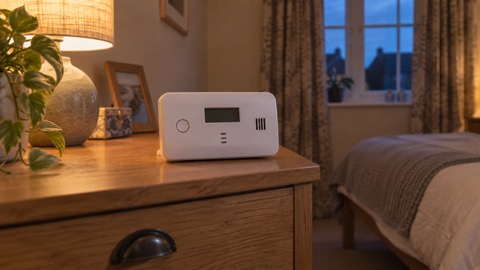 Kidde K10LLDCO CO Alarm