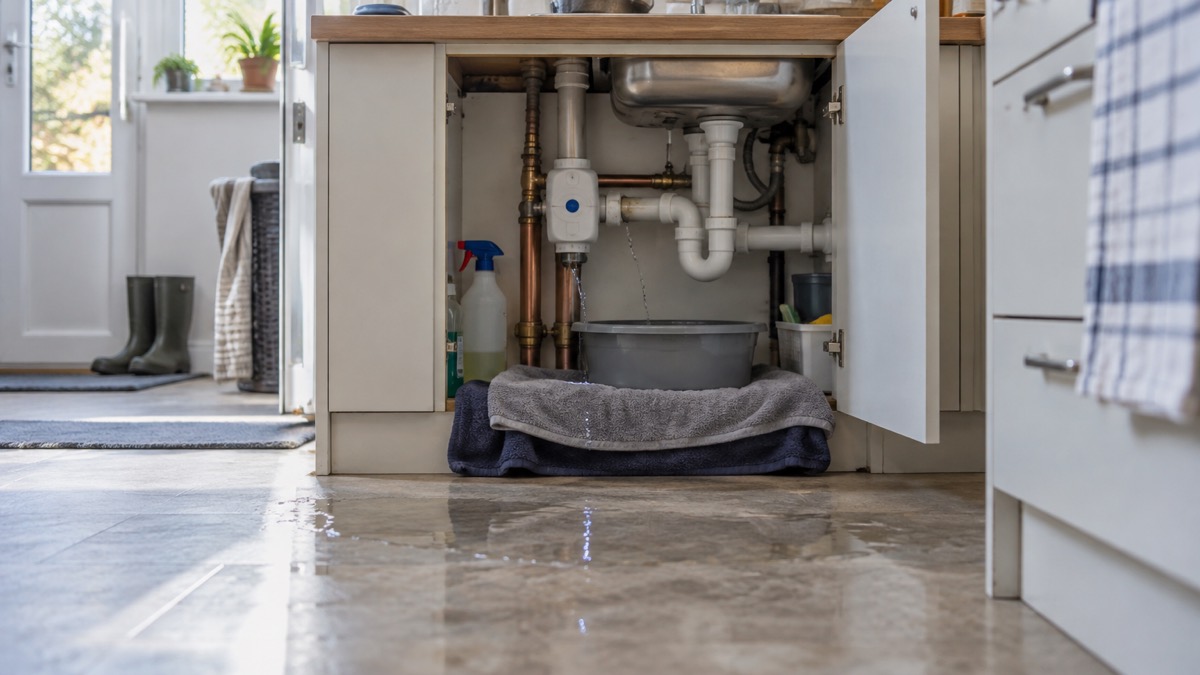
A Surestop is a stopcock that you work with a switch rather than a stiff tap. The maker says it stops mains water at the flick of a switch, needs no electrical supply or batteries because it is powered by water pressure, and can be installed in under an hour1. It is fitted on the cold mains supply into your home, in place of or alongside the ordinary stop tap, and it is available in 15mm and 22mm pipe sizes with a maximum operating pressure of 10bar at 23℃2.
The point of it is speed and reach. Knowing where your internal stop tap is and how to use it can save you from major water damage in an emergency, and the difference between a small repair and a flooded floor is often how quickly you can shut the water off3. A conventional stop tap can be stiff, hidden under a sink, or seized altogether. A Surestop gives you a lever, and on the remote switch version a second control on 2 metres of tubing that can be sited somewhere easier to reach2.
This page sets out what the Surestop does, the sizes and pressure it is rated for, where it goes, how it is fitted, how to use it when a pipe bursts, and what to do if your existing stop tap is seized, missing or leaking. It is a description of one product and its safe use, not a recommendation over any other way of isolating your water.
What the Surestop does, and what it does not
A stopcock is simply a valve used to switch off the flow of water to your property4. The Surestop is the same job done differently: the maker describes it as an innovative stopcock solution designed for faster, easier to access isolation of the mains water supply2. Isolation can be operated either by the switching valve on the stopcock itself or by a remote switch1.
Three things follow from that. First, it is a water valve only. It does not touch gas, electricity or heating, and it does not drain the system for you. Second, it is powered by the water pressure in the pipe, so it keeps working in a power cut, when a pump or an electrically operated valve might not1. Third, it is designed for cold mains supplies: the maker states it is fully approved for use on cold mains water supplies and WRAS approved1.
The maker also states that the Surestop requires no maintenance and will not seize or scale like traditional stopcocks1. That is the maker's own description of its product, and it addresses the most common failure of an ordinary stop tap, which is that it stiffens through lack of use and will not turn when you need it. It does not mean you can forget about it. The Met Office advises knowing where your stop tap is and checking it regularly so you can turn the water off quickly in a problem5, and the same discipline applies to a switch: know where it is, show everyone in the household, and try it occasionally.
Specifications: sizes, fittings and pressure
The range is built around two pipe sizes and two ways of connecting to the pipe. The stand-alone models are the basic unit; the remote switch models add 2 metres of tubing so the control can be mounted away from the valve.
| Model code | Type | Fitting | Pipe size | Notes |
|---|---|---|---|---|
| SS/15/SPL | Stand-alone | Push-fit | 15mm | 2 |
| SS/15/SCL | Stand-alone | Compression | 15mm | 2 |
| SS/22/SPL | Stand-alone | Push-fit | 22mm | 2 |
| SS/22/SCL | Stand-alone | Compression | 22mm | 2 |
| SS/15/RPL | Remote switch | Push-fit | 15mm | 2 metres tubing2 |
| SS/15/RCL | Remote switch | Compression | 15mm | 2 metres tubing2 |
| SS/22/RPL | Remote switch | Push-fit | 22mm | 2 metres tubing2 |
| SS/22/RCL | Remote switch | Compression | 22mm | 2 metres tubing2 |
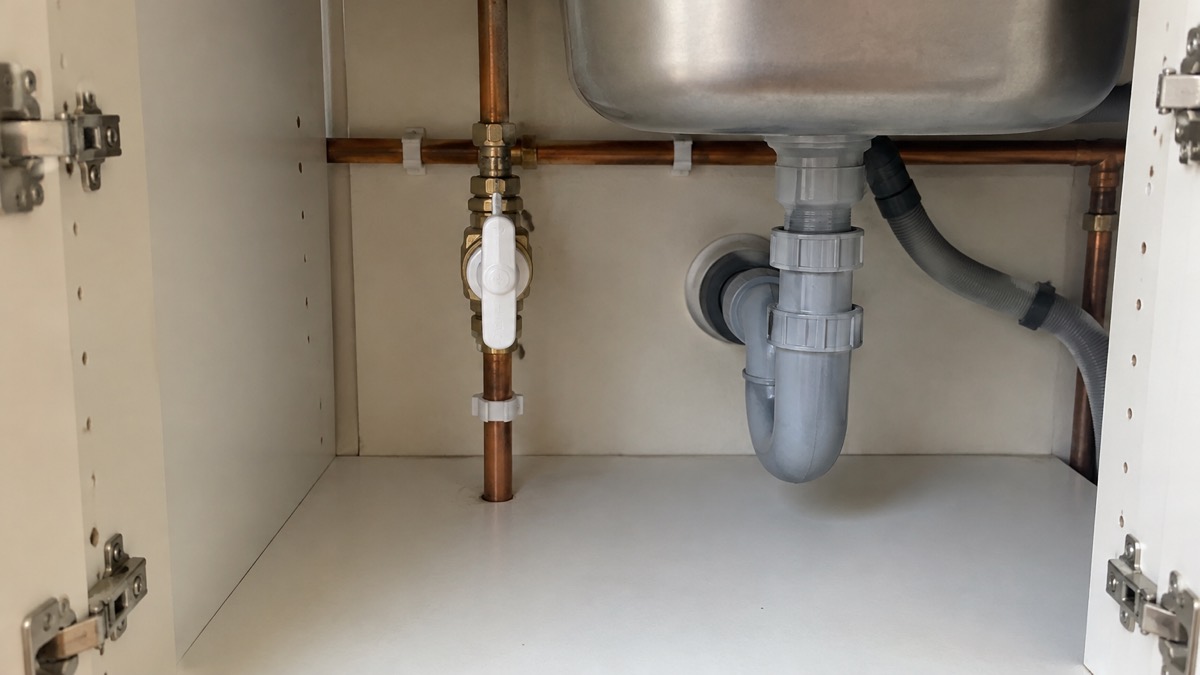
The pressure figures decide whether it suits your supply. The stand-alone and remote switch models are both rated to a maximum operating pressure of 10bar at 23℃, and the remote switch model has a minimum operating pressure of 0.5bar at 23℃2. For context, Bristol Water says that in most cases it aims for 10 metres head, around 1.0 bar or 14 psi, at the point where its pipe joins yours6. That is well inside the Surestop's range, but pressure varies between properties and areas, and low pressure is a recognised issue that water companies publish advice on7. If your supply is weak, the minimum figure is the one to discuss with your plumber.
The remote switch model is suitable for use on 15mm and 22mm copper or plastic pipe2. The maker lists a 2-year warranty on the remote switch model2. There is also an extension connector, coded SA127, and a range of accessories and upgrade kits that extend the connection from the stopcock to the remote switch, or upgrade an existing stopcock to include a remote switch2.
Where your stop tap is, and where a Surestop goes
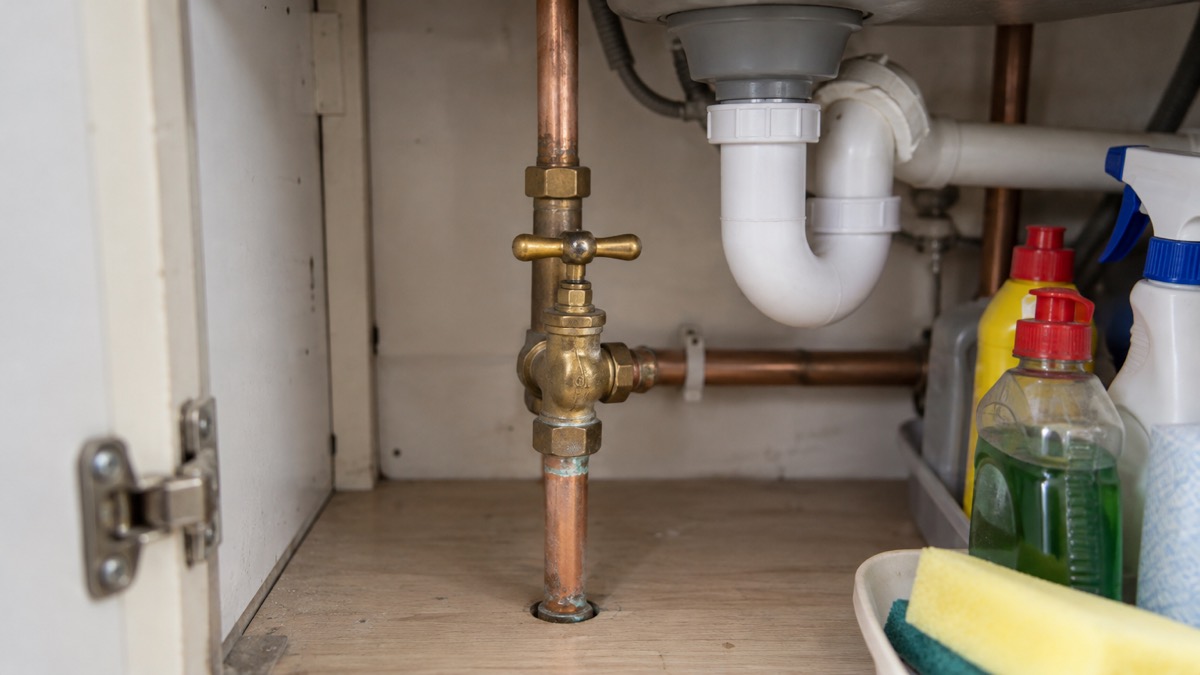
Before anything is fitted, find the existing stop tap. The advice is consistent across the water companies and the fire and rescue services: it is usually under the kitchen sink, but it can also be in a downstairs bathroom or toilet, a kitchen cupboard, a garage or utility room, a cellar, a cloakroom, or under the stairs8. In Northern Ireland the same guidance applies, with the internal stop valve usually under the kitchen sink11. Natural Resources Wales describes the stopcock as usually under a kitchen sink or where the water pipe enters your home12.
There is also an outside stop tap. Most properties have an external stopcock, usually housed in a small metal or plastic cover, sometimes called a valve box, set into the ground near the property boundary or in the pavement outside3. The division of responsibility is straightforward: the external stop tap is usually the water company's, while the internal stop tap is yours to maintain10.
A Surestop is fitted on the internal side, on the cold mains supply as it comes into the home, in the position the existing stop tap occupies or close to it. That is why the remote switch version matters: the valve can stay where the pipe is, and the switch can be brought out to a cupboard door, a wall or another spot that is easy to reach. The maker states that the remote switch model allows the switch to be installed in a convenient location2.
Whatever is fitted, the household needs to know about it. Wiltshire and Swindon Prepared advises getting everyone in the household to understand where the stop tap is for the water13, and Carmarthenshire County Council tells council tenants to locate the stop tap so they can quickly turn off the water if a pipe bursts, and to contact their housing officer if they cannot find it14.
Fitting a Surestop: under an hour on cold mains supplies
The maker states that a Surestop can be installed in under an hour, and that it is available in a range of connection types and sizes1. That is the maker's figure for the fitting itself, and it assumes the pipework is accessible and in good condition. For comparison, Anglian Water's winter leaflet suggests that finding and checking your stop tap takes about 5 minutes15, which is the routine check rather than an installation.
Fitting is a plumbing job on the incoming mains, so use a qualified plumber. WaterSafe's guidance on broken or leaking stop taps is clear about what not to attempt: avoid forcing seized parts, working on fragile or corroded pipework, or tackling communal supplies you cannot isolate16. A valve fitted to a corroded pipe, or to a supply shared with neighbours that cannot be shut down, is a job for someone who can assess it.
Before the plumber arrives, do three things:
- Find the internal stop tap and the outside stop tap, and note where each is8.
- Clear the cupboard or space around the pipe so the work can be reached.
- Decide where you want the switch, if you are having the remote version, and check that 2 metres of tubing will reach it2.
After fitting, ask for a demonstration and try the switch yourself while the plumber is there. Then show everyone else in the house. The value of the product is that it can be operated quickly by anyone, including someone with limited mobility or reduced vision, which the maker names as a group the Surestop suits1.
Using the switch in a burst pipe
When a pipe bursts, the order of actions is well established. Turn off the stop tap and open all taps to drain the system quickly17. Yorkshire Water's advice is the same: find your stopcock and turn it off, usually downstairs and often under the kitchen sink, then turn on a cold tap and leave it running until the water stops3. Turning the valve clockwise will close it, reducing or stopping altogether the amount of water passing through your pipes18.
A Surestop makes the first step a switch rather than a wheel. The maker states that with a flick of a switch the stopcock can stop mains water instantly1. Expect some water to keep coming from the taps while the system drains: WaterSafe advises that it may take a few minutes for the water to stop altogether8. That is normal, and leaving a cold tap open helps it along.
If the burst is on a pipe from the storage tank, the advice differs: turn off the stop valve in the storage tank, turn on all hot taps to drain the system, and allow the fire to burn out or turn the heating off until the burst pipe has been attended to by a plumber11. Then soak up escaping water with thick towels and call a qualified plumber17.
When the stop tap is seized, missing or leaking
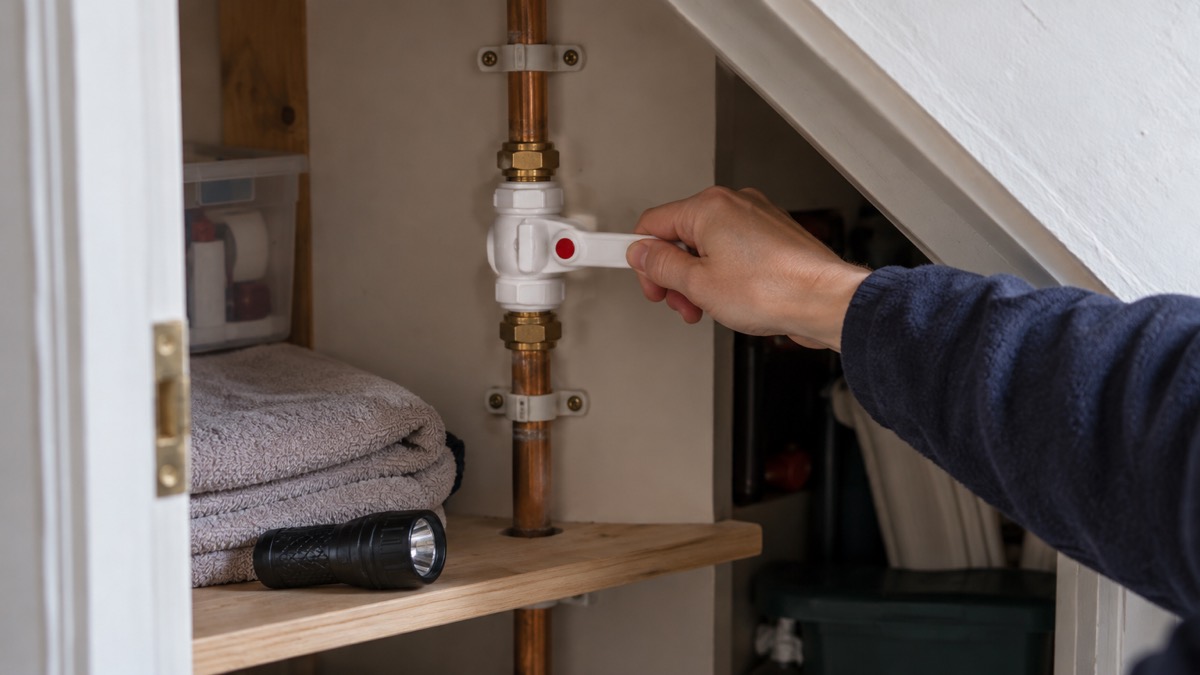
An ordinary stop tap can fail in three ways, and each has a route forward.
Seized. If the stop tap has seized, contact a plumber for assistance19. Do not force it. WaterSafe warns that you should turn it on and off slowly and never force it, because over tightening or excessive force may damage the stop tap8. The same guidance says to avoid forcing seized parts16. A Surestop, which the maker says will not seize or scale like traditional stopcocks, is one answer to a tap that has already stiffened1.
Missing or unknown. If you cannot find the internal stop tap, look in the other common places first: the kitchen cupboard, a downstairs bathroom or toilet, a garage or utility room, a cellar, or under the stairs8. If it still cannot be found, tenants should ask their landlord7, and council tenants should contact their housing officer14. If the inside stop tap is broken, turn off the outside stop tap instead9.
Leaking. Water around the joints is usually caused by loose or worn nuts and seals16. If your internal stopcock is not turning or shutting off, you will need to contact a plumber to fix it8. A leaking stop tap is a job for a plumber rather than something to keep tightening.
There is also routine care. Southern Water suggests turning the internal stop tap off and back on 4 to 5 times while running the cold kitchen tap, to clear blockages17. The Met Office advises checking regularly that you can turn it off easily in an emergency20, and the fire and rescue service in North Wales says the same20. Anglian Water's leaflet puts the check at about 5 minutes15.
"Turn it on and off slowly, never force it. If you over tighten or use excessive force you may damage the stop tap."
Who it suits, and where to get help
The Surestop is described by its maker as ideal for tenants and homeowners with limited mobility or reduced vision, because the water supply can be turned off quickly and easily in an emergency1. The remote switch version extends that further, putting the control on 2 metres of tubing so it can be sited at a reachable height or away from a cramped cupboard2. For a household where the stop tap is under a sink behind a stack of pans, or where turning a stiff wheel is difficult, that is the practical case for it.
It is not the only answer. Knowing where the stop tap is, keeping the cupboard clear, and checking the tap regularly costs nothing and is the advice every water company gives5. A Surestop is a change to the plumbing that makes that routine easier and faster.
For help finding or using your stop tap:
- Ask your water company. They publish guidance on finding the stop tap and on leaks3.
- Ask your landlord if you rent, or your housing officer if you are a council tenant14.
- Use a qualified plumber for fitting, for a seized tap, or for a leaking valve8.
- In Northern Ireland, the same internal stop valve guidance applies, and drainage faults on the road are reported to NI Direct11.
If a pipe has already burst, the priority is to shut the water off and protect the electrics, then call a plumber17. For the wider sequence, see what to do if a pipe bursts and stop taps: finding the inside and outside valve. For frozen pipes, see frozen pipes: thawing them safely, and for leaks on your property, see water leaks: finding them and who repairs them.
Sources (20)
- Surestop for social housing, Surestop, 2026-04-29
- Surestop products, Surestop, 2025-07-29
- I've got a leak: emergency, what do I do?, Yorkshire Water, 2026-10-28
- Report a road or drainage fault, NI Direct, 2026-05-11
- 10 things you should do now to prepare for winter, Met Office, 2026-10-25
- Water pressure management, Bristol Water, 2026
- Water pressure, Northumbrian Water, 2026-10-28
- Locate your internal stop tap, WaterSafe, 2026-10-25
- Finding your stop tap, Wessex Water, 2026-10-28
- Stop tap, South West Water, 2026-10-29
- Steps to reduce risk of burst pipes, NI Direct, 2025-10-23
- Preparing for a flood, Natural Resources Wales, 2026-10-29
- At home, Wiltshire and Swindon Prepared, 2026-01-28
- Keeping your home safe, Carmarthenshire County Council, 2026-06-26
- Wrap up for winter leaflet, Anglian Water, 2018-11
- What should I do if my internal stop tap is leaking or broken?, WaterSafe, 2026-10-29
- How to find and fix leaks in your house, Southern Water, 2026-10-15
- How can I locate my internal stop tap to turn off my water?, WaterSafe
- Winter leaflet, Humber Local Resilience Forum, 2024-08
- Ice and burst pipes, North Wales Fire and Rescue Service, 2026-10-29