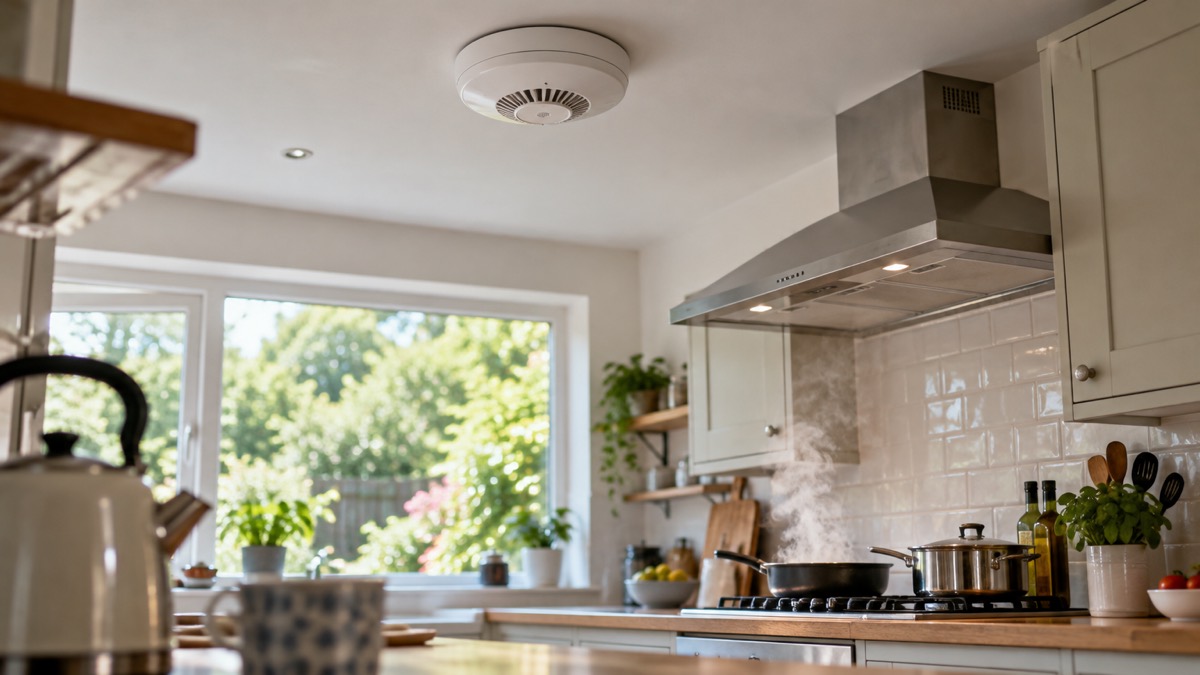
A heat alarm is the alarm you fit where a smoke alarm would keep going off. The FireAngel SP510 is a battery-powered heat alarm for ceilings and walls, built for kitchens, garages and other spaces where cooking fumes, steam or dust would trigger a smoke alarm. It responds to heat rather than smoke, so it does not punish you for burning the toast, and it keeps watch over the room in your home where most fires actually start.
For a household getting ready for emergencies, that matters more than it sounds. A kitchen fire is the kind of incident that turns a normal evening into a call to the fire service, and an alarm that works in the kitchen without crying wolf is one you will leave switched on rather than silence or remove. The SP510 is a standalone unit: it is not interlinked with the rest of your alarms, so treat it as one layer of protection in the room where heat risk is highest, alongside smoke alarms elsewhere in the home.
This page covers what the SP510 is, where it should and should not go, how to fit and test it, what its beeps mean, and how to dispose of it responsibly at the end of its life. It does not cover price, and it does not set the SP510 against other alarms: the aim is to help you use the one you have, or are considering, properly.
What the FireAngel SP510 is
The SP510 is a heat alarm, not a smoke alarm. FireAngel's own datasheet lists it in a family of alarms alongside smoke, heat and carbon monoxide models, and identifies the SP510 specifically as a heat alarm1. Its detection is described as Class A1 heat detection with a hidden heat cap, and the model code attached to it is FA4250BW3. That code is the one to quote if you ever need to contact the maker about the unit.
The practical consequence of "heat detection" is simple: the alarm is looking for a rapid rise in temperature, not for smoke particles or steam. That is why it belongs in the kitchen. FireAngel's general advice is to fit smoke alarms away from kitchens and bathrooms and to use a heat alarm in the kitchen instead6. Fire Scotland makes the same point from the fire service side, noting that heat alarms can help you avoid false alarms caused by cooking fumes, for example frying food or burning toast2.
For a household building up its emergency readiness, the SP510 fills a specific gap. Most home fire risk is concentrated in the kitchen, and most people who disable an alarm do so because it keeps going off while they cook. A heat alarm removes that excuse. It will not warn you of a smouldering fire in a living room or a smoke-filled hallway, so it is not a replacement for smoke alarms elsewhere: it is the alarm for the room where smoke alarms do not work well.
What a heat alarm does for your household
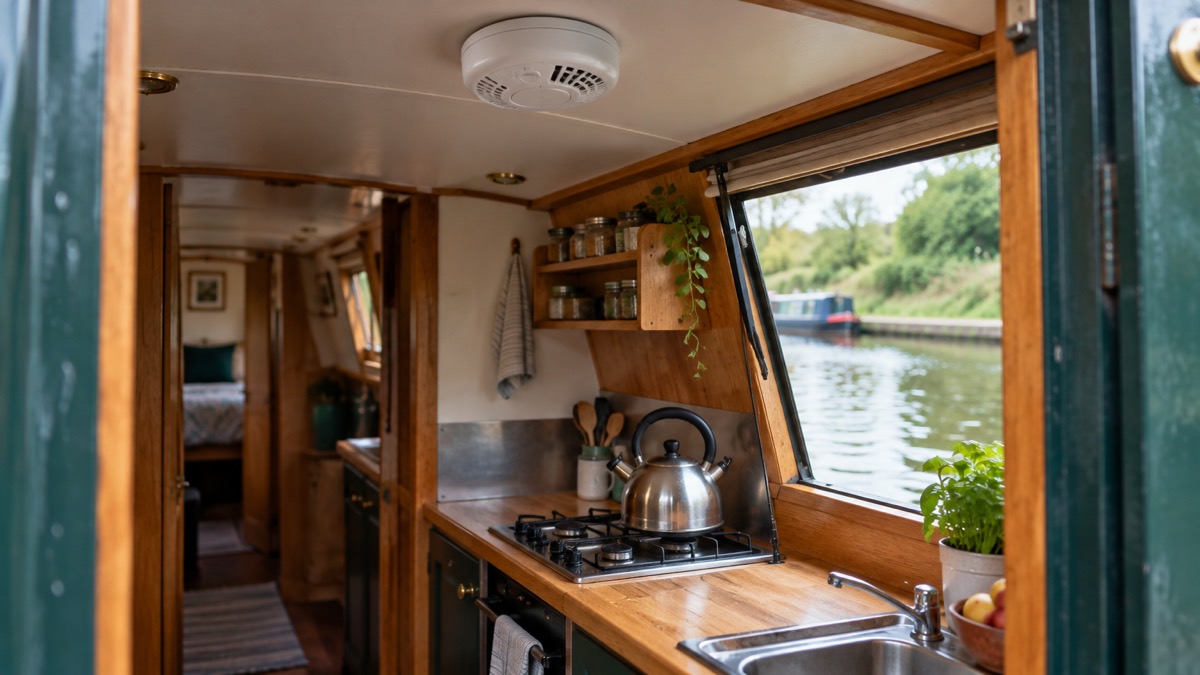
A heat alarm gives you early warning of a fire that is generating serious heat, in a room where a smoke alarm would be unreliable. In an emergency, those minutes are what let you get everyone out and call the fire service rather than discovering the fire when it has taken hold. The value is not only in detection but in the fact that the alarm stays fitted and working, because it is not being triggered by every meal.
There is a second, quieter benefit. False alarms train households to ignore alarms. FireAngel notes that false alarms are usually caused by steam, cooking fumes, dust or insects entering the sensor chamber5. A heat alarm sidesteps the cooking-fume problem by design, which means when it does sound, the household is more likely to treat it as real. That habit is worth building before an emergency, not during one.
Where the SP510 fits in a wider plan:
- Kitchen: the heat alarm covers the room where cooking fires start, without the steam and fumes problem.
- Elsewhere: smoke alarms remain the right choice for hallways, landings and living rooms, fitted away from kitchens and bathrooms6.
- Escape: an alarm is only useful if everyone knows what to do when it sounds, so pair it with a practised escape route.
- Night-time: check the alarm as part of your bedtime routine, alongside other fire safety checks.
If you are still deciding which alarm belongs in which room, the guide to heat alarms and where they go sets out the general principles, and the comparison of heat alarm or smoke alarm walks through the choice room by room. For the wider picture of preparing a home for fire, gas and water emergencies, start with Home Emergencies.
Where to fit a heat alarm
FireAngel's installation guidance for its battery-powered heat alarm is that it should be placed on the ceiling, ideally in the centre of the room3. The SP510 datasheet lists its installation positions as ceiling or wall1, so a high wall position is possible where a ceiling fixing is impractical, but the ceiling, centrally placed, is the maker's stated preference.
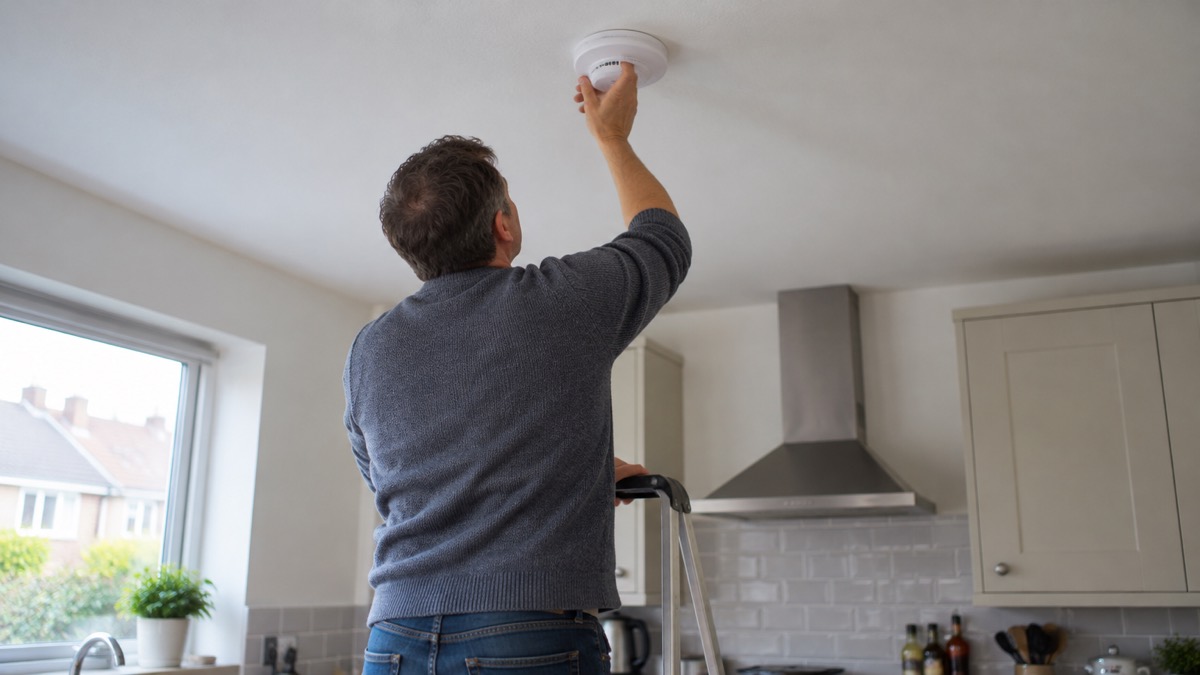
Placement is where most heat alarm problems begin. FireAngel's false alarm advice is to check that the alarm is not positioned directly above a hob, oven or toaster where concentrated heat rises, and to reposition it further from the heat source while keeping it on the ceiling5. If your alarm sits directly over the cooker, it will do its job too eagerly. Moving it a little further across the ceiling, still in the kitchen, usually solves it.
A few practical rules to hold alongside the maker's guidance:
- Ceiling first: fit on the ceiling, ideally centrally, as FireAngel advises3.
- Clear of the hob: avoid a spot directly above a hob, oven or toaster5.
- Keep it in the room it protects: moving a kitchen heat alarm into a hallway to stop it sounding defeats its purpose.
- Do not swap it for a smoke alarm in the kitchen: FireAngel advises against fitting smoke alarms in kitchens and bathrooms6.
For the general rules on siting alarms around a home, including distances from walls and light fittings, see Where to Fit Smoke Alarms. If you are working out how many alarms your home needs in total, How Many Smoke Alarms Does a House or Flat Need? covers the count.
Where a heat alarm is not enough
A heat alarm is a specialist device, and it is important to be clear about what it will not do. It will not detect smoke in a hallway, a living room or a bedroom. It will not warn you of a slow, smouldering fire that produces smoke long before it produces heat. It will not detect carbon monoxide. Relying on a heat alarm alone would leave most of a home unwatched.
FireAngel's placement advice for smoke alarms makes the division of labour clear: smoke alarms should be mounted on the ceiling at least 300mm from any wall or light fitting, and should not be fitted in the kitchen, bathroom or garage5. The heat alarm covers the kitchen; the smoke alarms cover the rest. Neither substitutes for the other.
If you want alarms that all sound together, the SP510 on its own will not do that. FireAngel's Pro Connected range is described as interconnected smoke and heat alarms with mobile alerts, and the maker explains that with interconnected alarms, if one device detects smoke or heat, every alarm in the home sounds7. That is a different product family from the standalone SP510. The guide to Interlinked Alarms explains how linking works, and Wireless or Wired Interlinked Alarms compares the two approaches.
Specifications to check on your SP510
The facts a household actually needs about the SP510 are few, and they are worth knowing before you fit it or ring support.
| Specification | Detail |
|---|---|
| Product type | Heat alarm1 |
| Model code | FA4250BW3 |
| Detection | Class A1 heat detection with hidden heat cap3 |
| Installation positions | Ceiling or wall1 |
| Preferred position | Ceiling, ideally centre of the room3 |
| Power | Battery, activated when the alarm is twisted fully onto its plate3 |
| Disposal | WEEE recycling scheme; do not open or burn5 |
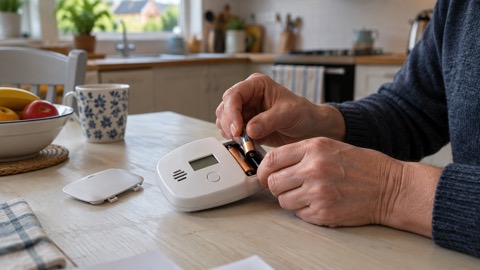
Two of these deserve a note. First, the model code: FA4250BW is the code attached to the SP510, and it is the reference to have to hand when you contact support or check a replacement3. Second, the power arrangement: FireAngel's installation guidance says that after positioning the alarm on the plate and turning it clockwise until it locks, making sure it is twisted fully, the battery installation is activated3. In other words, the alarm is powered once it is properly seated. An alarm that is not fully twisted on may not be powered at all, which is why seating matters so much when you are diagnosing a beep.
Fitting, testing and looking after the alarm
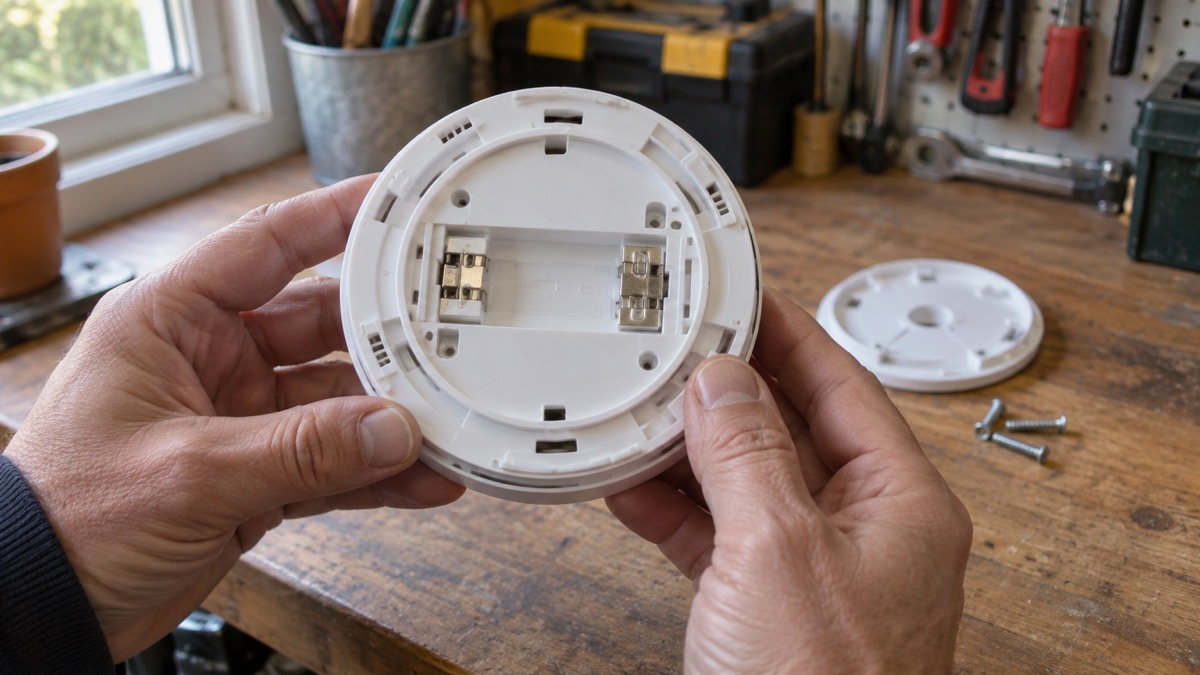
Fitting the SP510 is a two-step job: fix the base plate, then seat the alarm. FireAngel's instruction is to position the alarm on the plate and turn it clockwise until it is locked into position, making sure it is twisted fully, which activates the battery installation3. Once it is on, test it. FireAngel's guidance for its alarms is to remove the alarm from the base plate, reattach it, then test it twice: if you hear three beeps it is now fitted correctly, and the amber light should stop4. If it does not sound, or keeps flashing amber or chirping, replace it, or contact Customer Support if it is under warranty4.
That test sequence is the single most useful maintenance habit for this alarm. It tells you, in a few seconds, whether the unit is seated, powered and working. Build it into a regular check, and repeat it any time you have had the alarm off the ceiling, for example after decorating.
Looking after the alarm between tests comes down to a few habits:
- Keep it clean: dust in the sensor chamber is a known cause of false alarms5, so dusting around the unit is worthwhile.
- Keep it seated: after any disturbance, twist it fully clockwise and test it twice4.
- Watch the beeps: persistent chirping after a refit is a signal to replace, not to ignore4.
- Check the replacement date: note the date on your own unit and plan to replace it before it lapses.
For the general rhythm of testing, see How Often to Test Smoke and CO Alarms, and for the end-of-life decision, When to Replace a Smoke, Heat or CO Alarm.
What to do when the alarm sounds
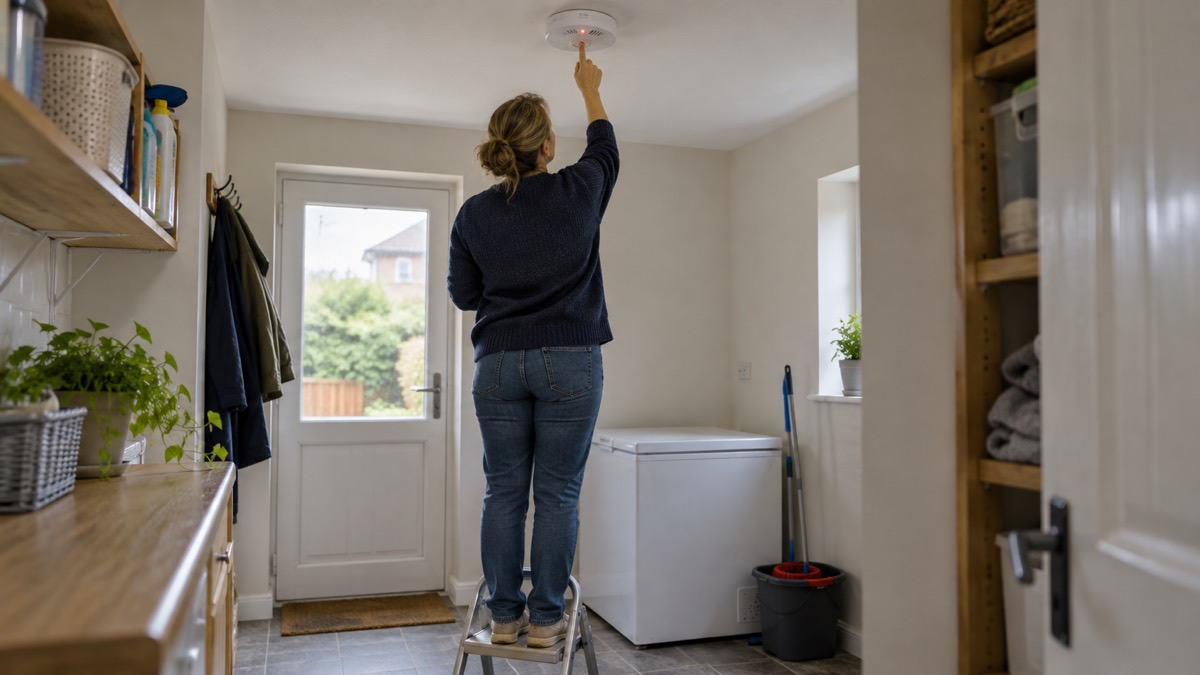
When a heat alarm sounds, treat it as real until you have established otherwise. Check for signs of fire in the room it protects: heat, flames, smoke or a burning smell. If there is any doubt, get everyone out, close doors behind you and call 999. The guide to What to Do If a Fire Starts in Your House sets out the sequence, and How to Make a Fire Escape Plan helps you rehearse it before you need it.
If you have checked and there is no sign of fire, FireAngel's advice for its alarms that continue to sound is to ensure there are no signs of fire and then press the test button briefly to mute each alarm8. That is a silencing step, not a fix: if the alarm keeps sounding afterwards, investigate further rather than simply muting it again.
If the alarm is sounding because of cooking rather than fire, the cause is usually placement. FireAngel's advice is to check the alarm is not directly above a hob, oven or toaster, and to reposition it further from the heat source while keeping it on the ceiling5. If it triggers without an obvious heat source, the maker says it may be faulty and should be replaced5. The guide to How to Stop Smoke Alarm False Alarms covers the wider causes, and Kitchen Fires: Cooking Safety and Prevention deals with the cooking itself.
Support from FireAngel
FireAngel publishes support articles and FAQs for its alarms, covering installation, beeping, false alarms and disposal5. If your SP510 will not test correctly after a refit, or keeps flashing amber or chirping, the maker's guidance is to replace it, or to contact Customer Support if it is still under warranty4. Have the model code, FA4250BW, ready when you make contact3.
At the end of its life, dispose of the alarm properly. FireAngel's warning is explicit: do not attempt to open the alarm and do not burn it5. The alarm is ideally suited for disposal within the waste electronic and electrical equipment (WEEE) recycling scheme, and should be recycled where facilities exist5. Do not put an old alarm in the general rubbish or attempt to take it apart.
For the wider FireAngel range, including carbon monoxide and smoke alarms, see the FireAngel brand page. If you are building a full household fire plan, the Fire Safety Checklist for Your Home and the Bedtime Fire Safety Checks put alarms, escape routes and kitchen habits into one routine.
Sources (8)
- SP510 FA4250BW Spec Datasheet, FireAngel, 2026-06
- Kitchen safety, Fire Scotland, 2024-11-11
- Installing your battery powered heat alarm, FireAngel, 2024-10-17
- How to stop a FireAngel alarm beeping, FireAngel, 2024-08-27
- FAQs: General, FireAngel, 2026-11-02
- How do I stop my smoke alarm from beeping?, FireAngel, 2026-10-26
- The hidden fire risks of smoking and emollients in the home, FireAngel, 2026-04-14
- FAQs: Homeowner, FireAngel, 2026-11-02

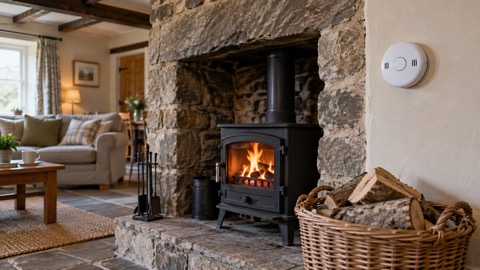 FireAngel FA3313 CO Alarm
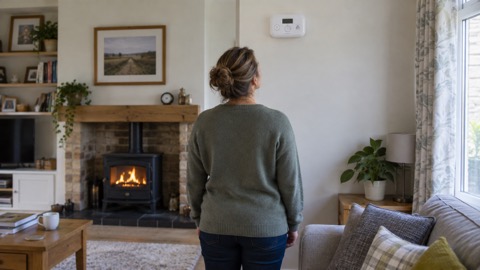 FireAngel FA3322 CO Alarm
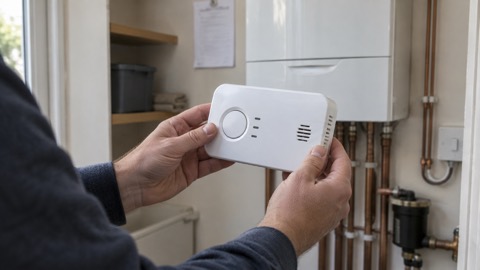 FireAngel FA3820 CO Alarm
 FireAngel FA6812 CO Alarm
 FireAngel FA6813 CO Alarm
 FireAngel FA6829S CO Alarm
 FireAngel CW1-PF CO Alarm
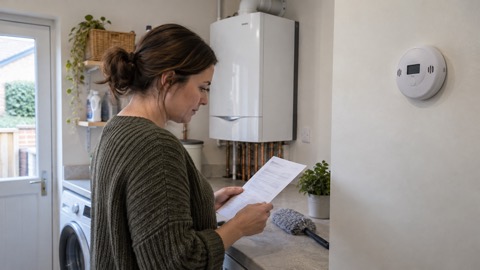 FireAngel W2-CO-10X CO Alarm
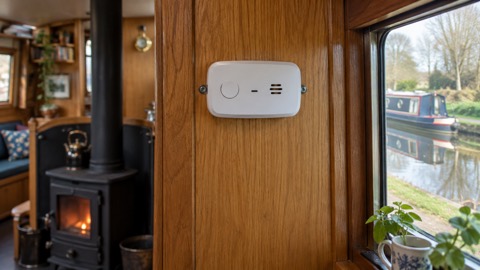 FireAngel FP1820W2-R CO Alarm
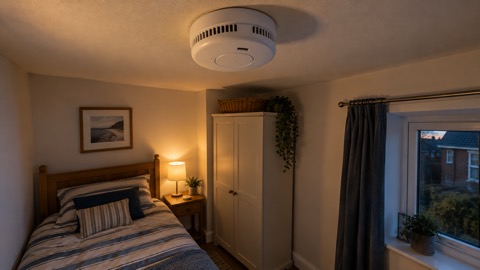 FireAngel FP2620W2-R Alarm
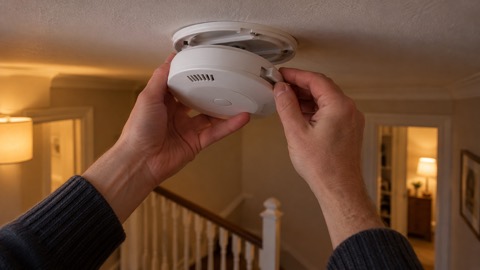 FireAngel ST-632 Smoke Alarm
 FireAngel ST-750 Smoke Alarm