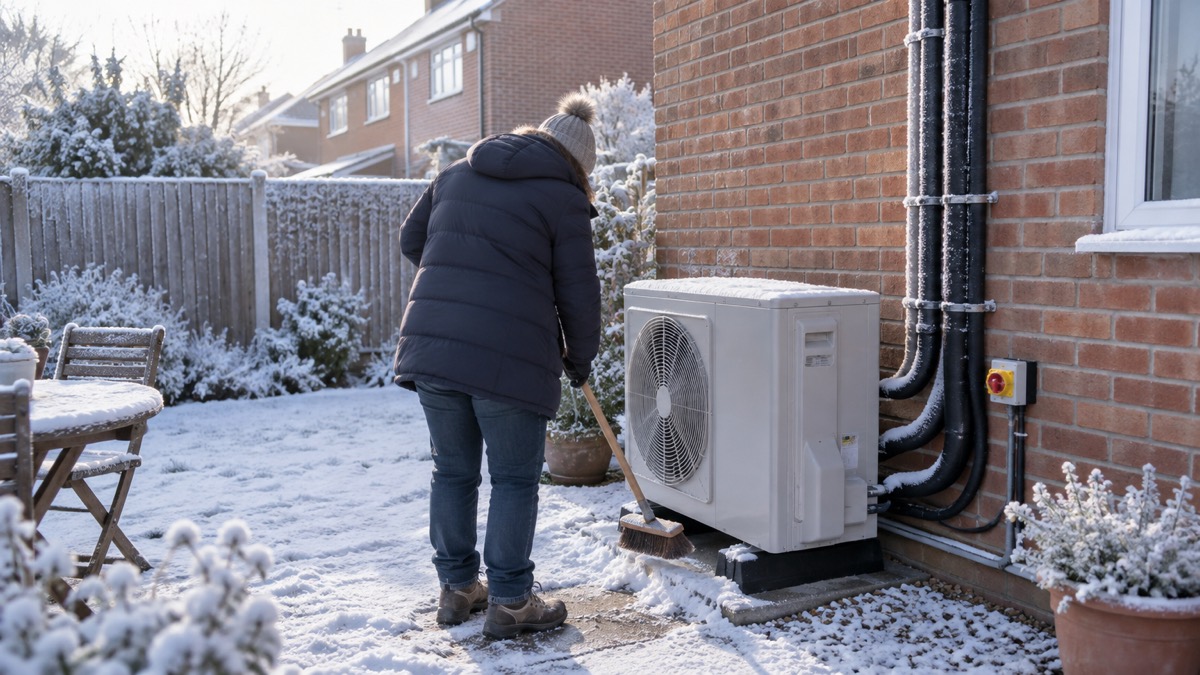
When a heat pump stops working in cold weather, the first job is to keep the household warm while you arrange a repair, and the second is to make sure the system and the pipes around it do not freeze in the meantime. Keep blankets, warm jumpers and warm clothes easy to hand, because your heating may go off during winter storms1, and always have extra layers to hand that you can put on to keep your core body warm2. If your heat pump has an emergency or backup heater mode, switch it on: it is designed to keep some heat flowing while the pump itself waits for an engineer. Our page on how to put a heat pump into emergency mode takes you through it step by step.
While you wait, official winter guidance is clear about the setting to use: thermostatically controlled heating systems should be left on permanently and set at a minimum temperature3. In very cold weather, keep your heating on low throughout the day, or set it to come on a couple of times a day4. Do not turn the thermostat up to force a cold house to warm faster; set the heating to come on earlier instead, so you are not cold while you wait for your home to heat up5.
Keep the household warm while you wait for a repair
A heat pump breakdown in a cold snap is first a problem of staying warm, and only second a problem of the machine itself. Before you do anything with the unit, sort out the household. Keep blankets, warm jumpers and warm clothes easy to hand, and remember that heating can go off during winter storms, so these should be stored where you can reach them without hunting1. Extra layers that keep your core body warm matter more than heating one room to a high temperature2.
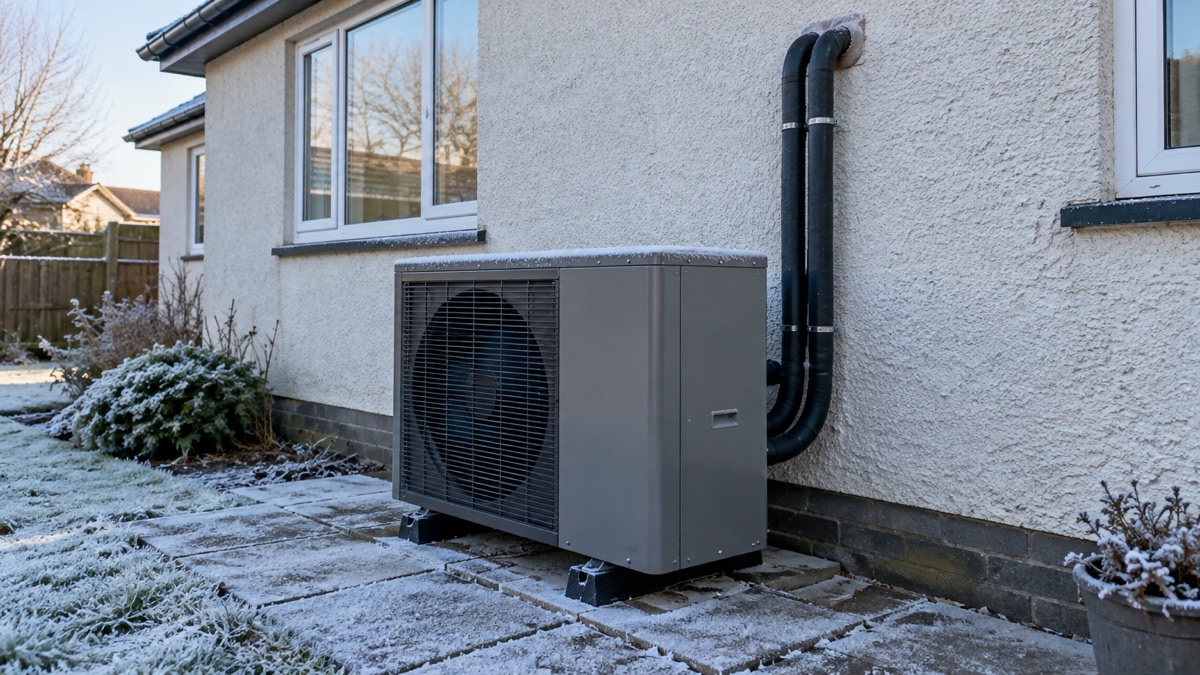
If the heat pump has a backup or emergency heater, use it. Emergency mode exists precisely for this situation: it keeps some heat going through the system while the heat pump itself is faulty or awaiting repair. It will not heat the house as the pump normally does, but it protects the house and the pipes from freezing. The detailed steps are on our emergency mode page.
The setting matters as much as the mode. Thermostatically controlled heating systems should be left on permanently and set at a minimum temperature rather than switched on and off3. North Wales Fire and Rescue Service advises that in very cold weather you keep your heating on low throughout the day, or set it to come on a couple of times a day, especially if you are going away4. The reasoning is simple: a house that never drops very far below a minimum temperature is a house whose pipes do not freeze and whose rooms recover quickly once the repair is done.
If the breakdown stretches into days, the wider arrangements for a heating failure apply. Our gas and heating failures guide covers what to do when the supply to your home goes off, and our page on heating and cooking without mains power or gas covers the alternatives. If you are struggling with costs during the cold spell, see the help section lower down this page.
Ice on the outdoor unit and frozen pipes
Cold, snow and ice are the conditions that cause frozen or burst pipes8, and a heat pump's outdoor unit and its connecting pipework sit right in them. A thin coating of frost on the outdoor unit during cold weather is normal for a heat pump: the unit defrosts itself as part of its ordinary operation, and a brief pause in output while a defrost cycle runs is not a fault. What is not normal is a unit sheathed in thick ice, or pipes around it that have frozen solid. That is when the system is at risk, and when the household checks matter.
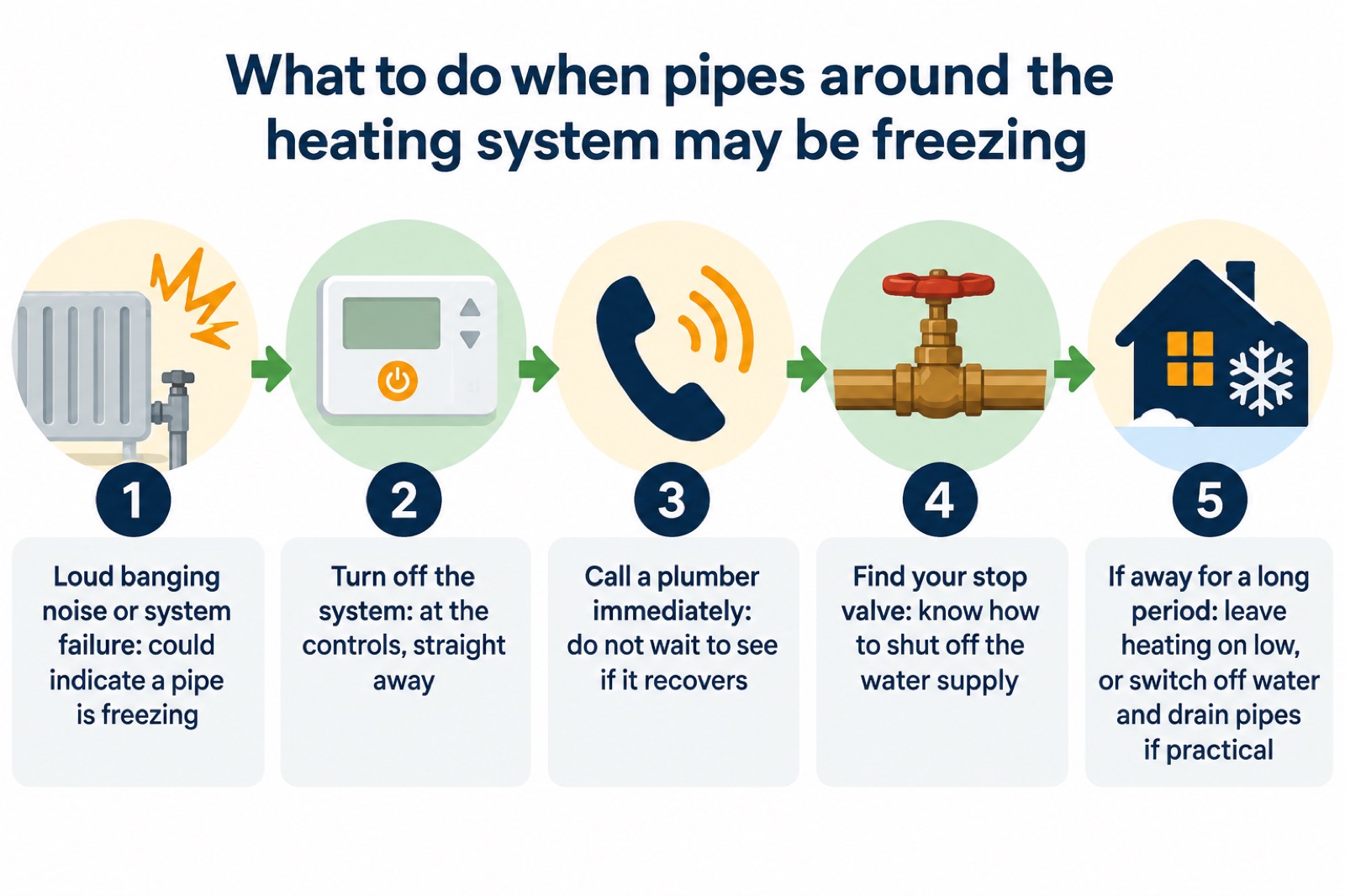
The protective work is done before the cold arrives. Derbyshire's keep warm in winter guidance tells households to check that pipes are adequately lagged6. Argyll and Bute Council's winter preparedness advice is to protect water pipes from freezing and to know how to find the stop valve for your water supply7. The stop valve is the single most useful thing to know in a freeze: if a pipe bursts, you can shut the water off in seconds while you wait for a plumber.
A banging noise in the pipes is not something to wait out. Turn the system off at the controls and call a plumber immediately. If the system uses a glycol antifreeze mix, remember that it requires periodic checks of glycol concentration and inhibitor levels, so ask the engineer to test it while they are there.
If you are away from your house overnight or for any long period, Cornwall Fire and Rescue Service advises leaving the heating system on a low setting to prevent pipes freezing, and, if practical, switching off the water and draining the pipes9. Our page on whether to leave the boiler on when away in winter goes through the same question for the rest of the system.
Bringing the heating back after a power cut
Heat pumps depend on electricity, so a winter power cut takes the heating off with it, and the restart afterwards is where households go wrong. The instinct is to turn the thermostat up to make up for lost warmth. Give the system more time rather than more demand: set the heating to come on earlier rather than turning the thermostat up, so you will not be cold while you wait for your home to heat up. Warming the system up gradually is the safe way back.
The Met Office adds the everyday pattern: set your heating to come on just before you get up and switch off after you have gone to bed; if it is very cold, set the heating to come on earlier and turn off later rather than turning the thermostat up10. A heat pump that has been off for hours in freezing conditions needs that longer run-up, not a sudden call for maximum output.
Two situations call for an engineer before you switch anything back on. If the house has been flooded, Nottinghamshire Council's easy read guidance is that after your central heating has been checked by an engineer, you turn it back on to help your house dry out11. nidirect's after-a-flood guidance adds that you can use your central heating to help dry out the house once the system has been checked by a qualified engineer, and that for best results the temperature should be set at 20 to 22 degrees centigrade12. If your heat pump stopped because of a power cut rather than a fault, see our page on why your programmer reset after a power cut, and for the wider steps, getting your supply back on after an outage.
| Situation after the power cut | What to do | Who says it |
|---|---|---|
| House has been flooded | Have the system checked by an engineer before turning it back on11 | Nottinghamshire Council |
| Drying out after a flood | Set the temperature at 20 to 22 degrees centigrade12 | nidirect |
Servicing: the check that prevents the winter breakdown
Most cold-weather breakdowns are preventable, and the prevention is the annual service. Public Health Wales tells households to have heating and cooking appliances serviced at least once a year by a professional engineer13. Lincolnshire's home fire safety guidance says to have your boiler serviced annually14, and the Met Office's winter preparation advice is to get a heating boiler serviced before the cold weather arrives15. Nottinghamshire's top tips are the bluntest about why: get heating, radiators and boilers serviced to reduce the risk of breakdown in cold weather16.
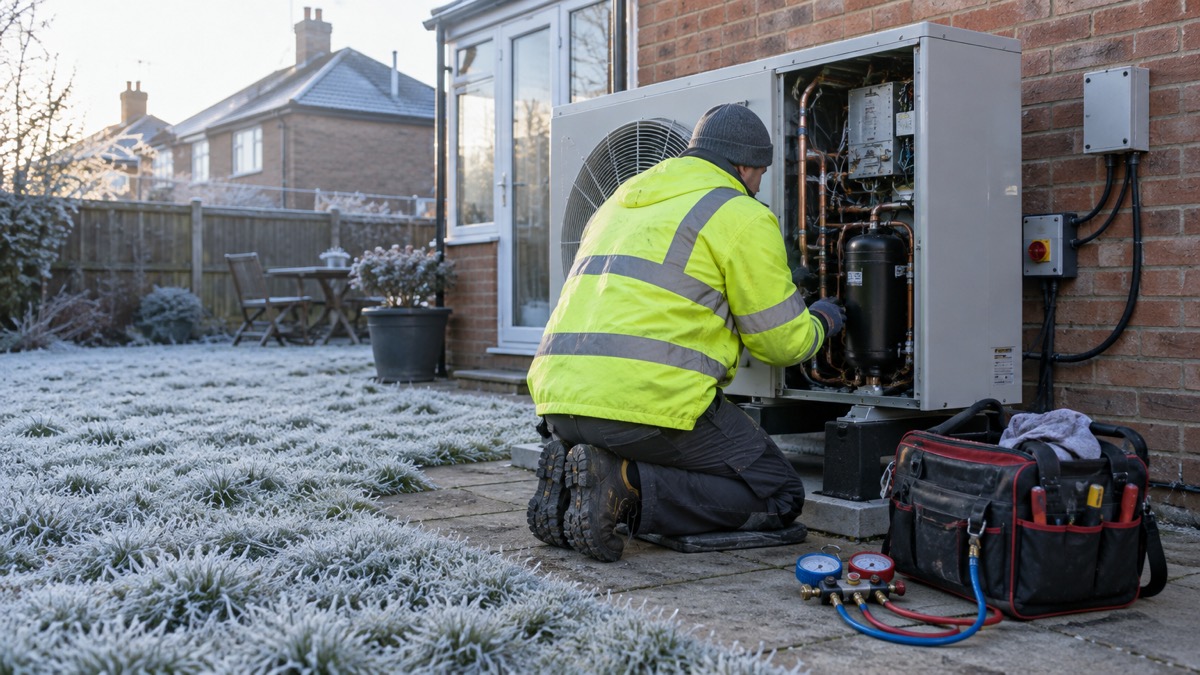
For a heat pump, the annual service is also when the engineer checks the things a householder cannot: the refrigerant circuit, the electrical connections and the antifreeze protection in the pipework. Use an installer or engineer qualified for heat pumps, and check their credentials the way you would check a network engineer's ID. Public Health Wales includes chimneys and flues in the annual check17.
If you want to know whether your heat pump is likely to last, the quality of installation and maintenance are among the factors that influence its lifespan. Our page on boiler servicing: how often and what an engineer checks covers what the visit should include.
Backup hot water: the immersion heater
Many heat pump installations include an immersion heater in the hot water cylinder, and it is the natural fallback when the pump cannot heat water. Used correctly it is safe. Electrical Safety First, through the Electrical Safety Council's advice, states that modern types of immersion heaters and thermostats have a safety cut-out to stop continuous reheating of the water in the event of the thermostat failing18.
The check before you rely on one is whether yours has that cut-out, and whether it is working. If a fault is suspected, or the unit does not incorporate a safety cut-out device, call a registered electrician to check it18. An immersion heater with a failed thermostat and no cut-out can heat water continuously, which is both a waste of electricity and a hazard. If the immersion heater is your only source of hot water for more than a day or two, treat it as a temporary measure and get the heat pump repaired.
For the wider picture of hot water failures, see no hot water: checks for combi and cylinder systems.
Help with costs during a cold spell
Backup heating costs more to run than the heat pump alone, and a long cold spell shows up on the bill whatever system you have. Two pieces of official advice keep the bills accurate and the support coming.
First, give your supplier a monthly meter reading to ensure you receive an accurate bill6. Estimated readings after a heavy-use period work against you. Second, know what support exists. If you are running out of gas and electricity on a prepayment meter, your supplier provides an emergency credit facility which you can access via your meter, and suppliers are required in certain situations to offer additional credit, including Emergency credit, Friendly-hours credit and Additional Support Credit19. Our page on prepayment meters explains how each works.
If you need extra support because of age, disability or a medical dependency, ask your supplier and network about the Priority Services Register, covered in our extra support page.
Getting the repair arranged
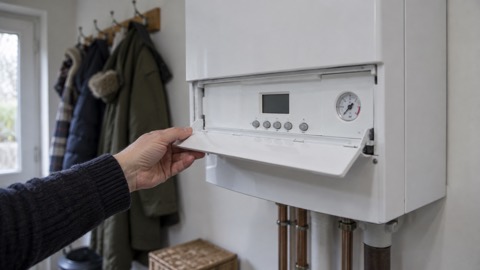
When the immediate warmth is sorted and the pipes are protected, arrange the repair properly. Get your heating system and cooking appliances checked, make sure you ventilate your home, and if you do not have gas or electric heating, make sure you have fuel20. Use a qualified heat pump engineer, and if the fault shows as a code on the controller, note the exact code before you call: it is the first thing the engineer will ask for. Our page on boiler fault codes, flashing lights and lockouts explained explains how fault codes work on heating appliances generally.
If you rent, the landlord is responsible for the heating: see broken boilers in rented homes. If the breakdown follows a supply interruption rather than a fault in the unit, start with what to do when the mains supply to your home goes off. And before the next cold snap, run through our checks to make before calling a boiler engineer: several of them apply to heat pumps too, and they save a call-out fee for something you could have fixed yourself.
Sources (20)
- Failure of National Electricity, Wiltshire and Swindon Prepared, 2026-10-25
- What you might need in a gas outage, Wiltshire and Swindon Prepared, 2026-10-25
- Adverse weather events, Llangattock Community Council, 2026-10-25
- Ice and burst pipes, North Wales Fire and Rescue Service, 2026-10-29
- Seasonal winter safety advice, Suffolk Fire and Rescue Service, 2026-10-29
- Keep warm in winter, Derbyshire County Council, 2026-10-29
- Be prepared: home and your community, Argyll and Bute Council, 2026
- Cold, snow and ice, Ready Scotland, 2026-03-25
- Snow and ice in Cornwall, Cornwall Fire and Rescue Service, 2025-10-01
- Keeping your home warm in winter, Met Office, 2026-10-26
- Flooding: after a flood, easy read, Nottinghamshire County Council, 2025-11-02
- After a flood: clearing up, nidirect, 2026-05-06
- Cold weather advice, Public Health Wales, 2026-06-16
- Heaters and electric blankets, Lincolnshire County Council, 2026-10-29
- 10 things you should do now to prepare for winter, Met Office, 2026-10-25
- Top tips for keeping warm, Nottinghamshire County Council, 2023
- Weather and health guidance, Public Health Wales, 2026-07-16
- Immersion heater advice from the Electrical Safety Council, Electrical Safety First, 2026-10-25
- Energy domestic consumer advice, England and Wales, Ofgem, 2024-11
- Keeping warm, healthy and safe in cold weather, Greater London Authority, 2026-10-25
 Checks Before Calling Engineer
 Boiler Checks When Moving In
 Power Cut Kit Checklist
 National Gas Emergency Service
 When the Mains Supply Goes Off
 Getting Supply Back After Outage
 Compensation for Supply Cuts
 Planned Pipe Works
 Help During a Long Outage
 Prepayment Meters
 LPG Homes in Winter
 Oil Boiler Breakdowns
 Boiler Breakdown in Cold Weather
 Boiler Fault Codes
 Boiler Pressure Gauge